- The paper introduces a simplified design method that replaces coupled AREs with up to four Lyapunov equations for coherent feedback H∞ control in quantum linear systems.
- The paper establishes necessary and sufficient conditions for physical realizability and robust disturbance attenuation, simplifying traditional quantum control frameworks.
- The paper validates the approach with numerical examples on quantum optical cavities and degenerate parametric amplifiers, demonstrating practical controller synthesis.
Coherent Feedback H∞ Control Design for Quantum Linear Systems
Introduction
This paper addresses the synthesis and analysis of coherent feedback H∞ controllers for quantum linear systems, specifically focusing on efficient methodology and theoretical simplification. Quantum linear systems span quantum optics, superconducting circuits, cavity QED, atomic ensembles, and optomechanical platforms, and are crucial in quantum technologies such as communication, computation, cryptography, metrology, and nano-electronics. The classical H∞ control tradition is adapted to the quantum field, incorporating fundamental quantum constraints (e.g., preservation of commutation relations and physical realizability) and extending robust disturbance attenuation paradigms into quantum feedback architectures.
Background and Prior Work
The classical H∞ control framework for linear systems relies on algebraic Riccati equations (AREs) for controller synthesis. In quantum control, the strict bounded real lemma and ARE-based synthesis were first generalized for quantum linear systems in prior works, such as James-Nurdin-Petersen (JNP08), which established physically realizable coherent feedback controllers by solving two coupled AREs under specific structural assumptions. These frameworks include passive and active system classes, address time-varying cases, and robustify against uncertainties in quantum Hamiltonians. Physical implementation of controllers requires quantum-mechanical realizability—a non-trivial constraint transcending mere control-theoretic performance.
Main Contributions
The central contribution is a significant theoretical and practical simplification of coherent feedback H∞ controller design. For a general quantum linear system, the authors demonstrate that:
- A physically realizable quantum controller can be synthesized by solving at most four Lyapunov equations, versus the conventional two coupled AREs.
- For passive quantum systems, necessary and sufficient conditions are captured by solving two uncoupled pairs of Lyapunov equations.
- When the system A matrix is symmetric, further reductions yield necessary and sufficient conditions without loss of generality.
- Contradicts standard practice by showing that several structural assumptions commonly adopted in classical control are automatically satisfied or equivalent in quantum control.
This reformulation is not only computationally more tractable (Lyapunov equations are linear), but also gives more direct insight into controller structure and quantum constraints.
System and Controller Architecture
The quantum plant and controller are formulated in real-quadrature operator representation, with the controller directly influencing and attenuating disturbances in the quantum system. The architecture is depicted as a feedback network:
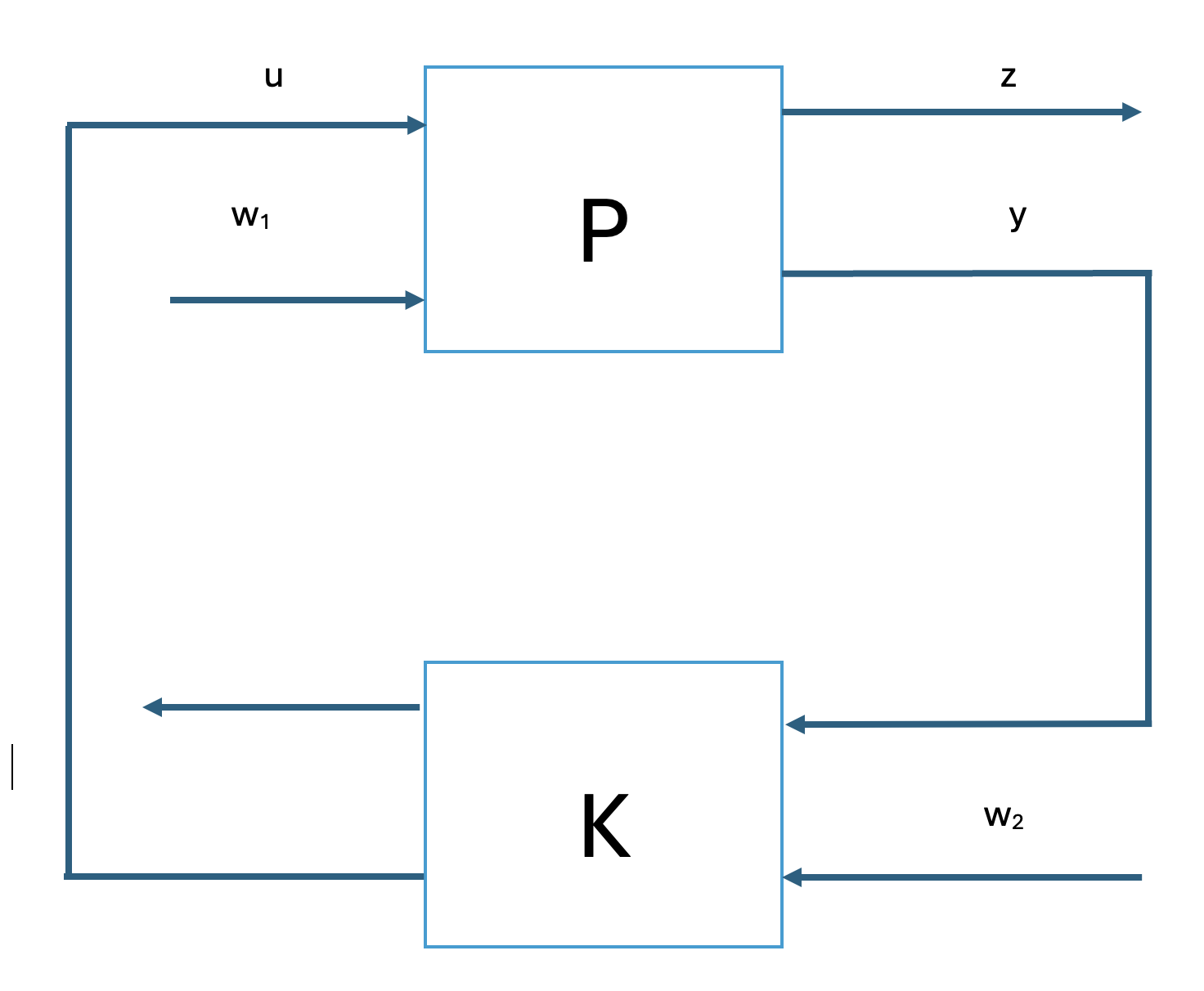
Figure 1: The coherent feedback system composed of a quantum plant P and a quantum controller K.
The system definition, transfer matrix formalism (for both complex and real representations), and commutation-preserving transformations underpin the control analysis.
Simplified Controller Synthesis: Lyapunov Equation Approach
The conventional H∞ design method solves two AREs with spectral radius criteria and stability requirements. In contrast, this paper replaces the AREs by up to four Lyapunov equations tied to stable/anti-stable decomposition of the plant's A matrix, resulting from Schur decomposition. For the general case, positive definite solutions for Lyapunov equations are required for controller existence, subject to certain spectral and definiteness constraints. In passive systems, the analysis further simplifies to uncoupled Lyapunov equations with explicit stability and realizability criteria.
Bold claim: For symmetric H∞0 matrices (notably ubiquitous in quantum optics), the Lyapunov equation formulation gives necessary and sufficient conditions for H∞1 performance and physical realizability.
Applications: Quantum Optical Devices
Empty Optical Cavity
An empty cavity is analyzed as a canonical example of a passive quantum linear system. Closed-loop H∞2 performance and controller synthesis are explicitly derived, with disturbance attenuation threshold and physical realizability constraints shown to match, exposing a fundamental trade-off.
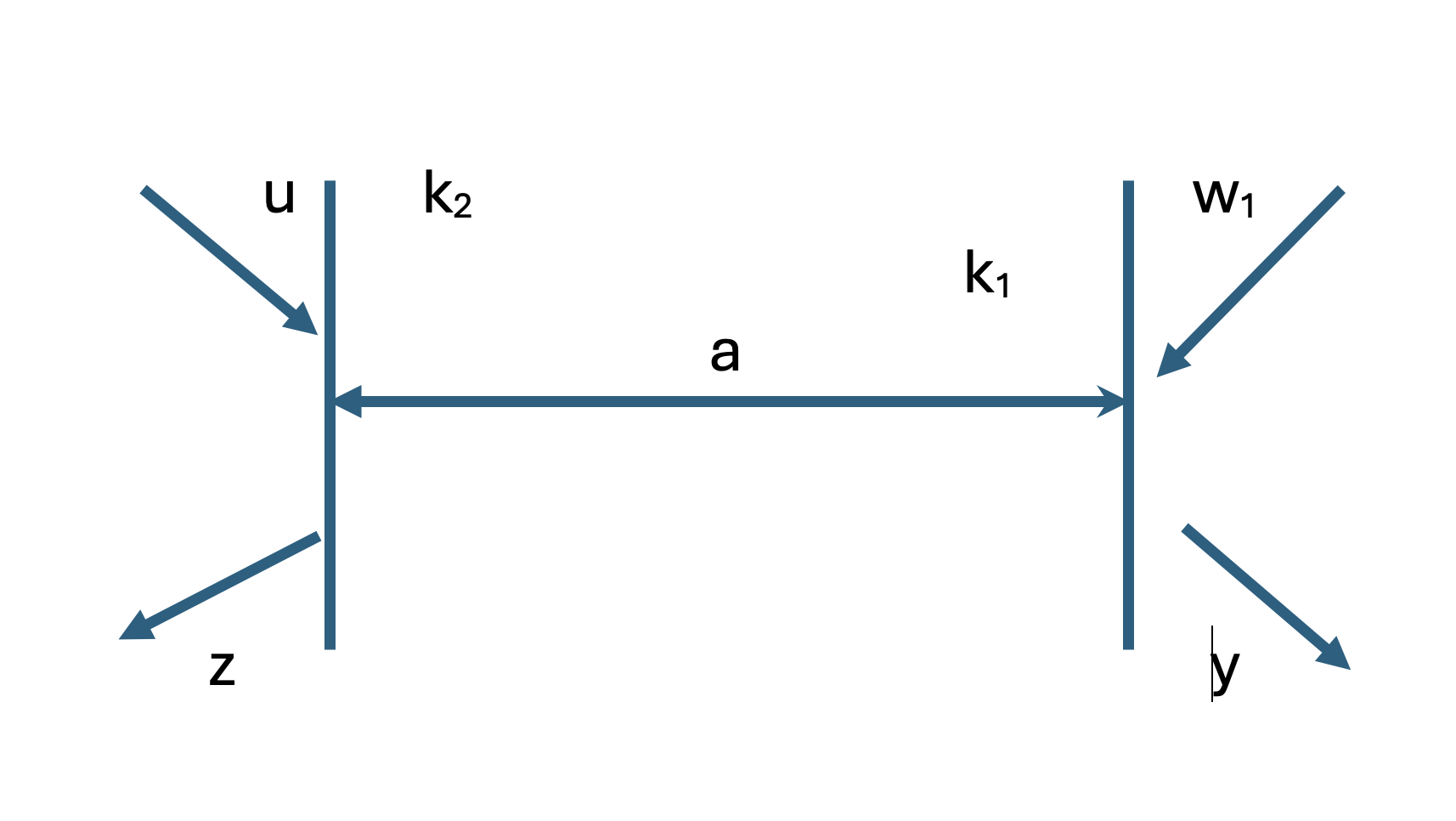
Figure 2: An empty cavity as a prototypical passive quantum system.
Strong numerical results are derived:
- The minimum disturbance attenuation level H∞3 is lower-bounded by cavity parameter ratios, for instance H∞4.
- Analytical solutions for controller realization and physical feasibility are constructed for several cavity parameter regimes.
Degenerate Parametric Amplifier (DPA)
The DPA exemplifies a non-passive system; controller synthesis is performed via the Lyapunov methodology for both cases H∞5 and H∞6, yielding explicit controller parameters and validating spectral and physical realizability conditions.
Practical and Theoretical Implications
The proposed controller synthesis method is computationally efficient, reduces numerical complexity, and provides direct routes to physically realizable quantum controllers in coherent feedback networks. This can facilitate robust, scalable controller design for quantum optical and optomechanical systems, with implications for quantum information processing, precision metrology, and quantum-enabled communication. The theoretical advance—Lyapunov-based synthesis—suggests future generalizations to time-varying, multi-input,multi-output, or uncertain quantum systems, potentially enabling direct integration in quantum device engineering and experimental quantum feedback implementations.
Conclusion
By leveraging structural properties inherent to quantum linear systems, this work reformulates coherent feedback H∞7 control synthesis as a procedure dependent on solving at most four Lyapunov equations rather than coupled Riccati equations. The simplification is both theoretically rigorous and computationally advantageous. Demonstrated via quantum optical cavity and DPA examples, the results provide practical methodology for robust feedback controller design with guaranteed quantum realizability and disturbance attenuation, positioning this framework as a foundation for future advances in quantum feedback control theory and technology (2604.06574).