- The paper establishes a unified Lipschitz regularity theory for generative drift fields, yielding sharp discretization rates in Wasserstein distance.
- It proves non-asymptotic sampling error rates scaling as √d/N and extends analysis to weakly log-concave settings with Hölder perturbations.
- The work transfers functional inequalities like Poincaré and log-Sobolev from Gaussian references to complex targets with dimension-free constants.
Lipschitz Regularity Framework for Flow Matching and Diffusion Models
Introduction and Modeling Paradigm
This paper delineates a rigorous framework for analyzing the quantitative Lipschitz regularity of vector fields and scores arising in flow-matching and diffusion-based generative models, focusing on sharp sampling rates and the transfer of functional inequalities. The foundational approach centers on continuous-time generative modeling via interpolations between simple reference distributions (typically Gaussians) and complex target distributions, reducing the generation problem to numerically simulating ODEs/SDEs where vector fields or scores are empirically learned from data. The regularity theory developed addresses three core aspects: stability of trajectories, discretization error, and analytic properties of induced transport maps.
Continuous-time generative models interpolate intermediate distributions pt, often parameterized as Gaussian mixtures (see Definition~1 for weak log-concavity), connecting a reference law p0 to the target p⋆. The stochastic (diffusion-based) and deterministic (flow-matching) regimes both anchor their transports in the same Gaussian mixture structure, enabling a unified analysis of score regularity and vector field stability.
Structural Assumptions and Regularity
The primary structural assumption is weak log-concavity: p⋆ is (α,β,K)-weakly log-concave, meaning it decomposes as p(x)=exp(−u(x)+a(x)), where u is C2 and α-strongly convex and a is p00-Hölder with constant p01. This covers both compact and full-support distributions with Gaussian-scale tails. The analytic machinery centers on properties of intermediate marginals and detailed posterior covariances in Gaussian mixture projections.
The central regularity objects are:
- One-sided Lipschitz modulus: enters stability via Grönwall-type exponents,
- Two-sided Lipschitz constants: control discretization errors,
- Time-regularity: necessary for sharp bounds in Euler-type samplers.
The paper establishes dimension-free integrability of these regularity quantities under minimal structural assumptions, substantially weakening requirements seen in prior literature.
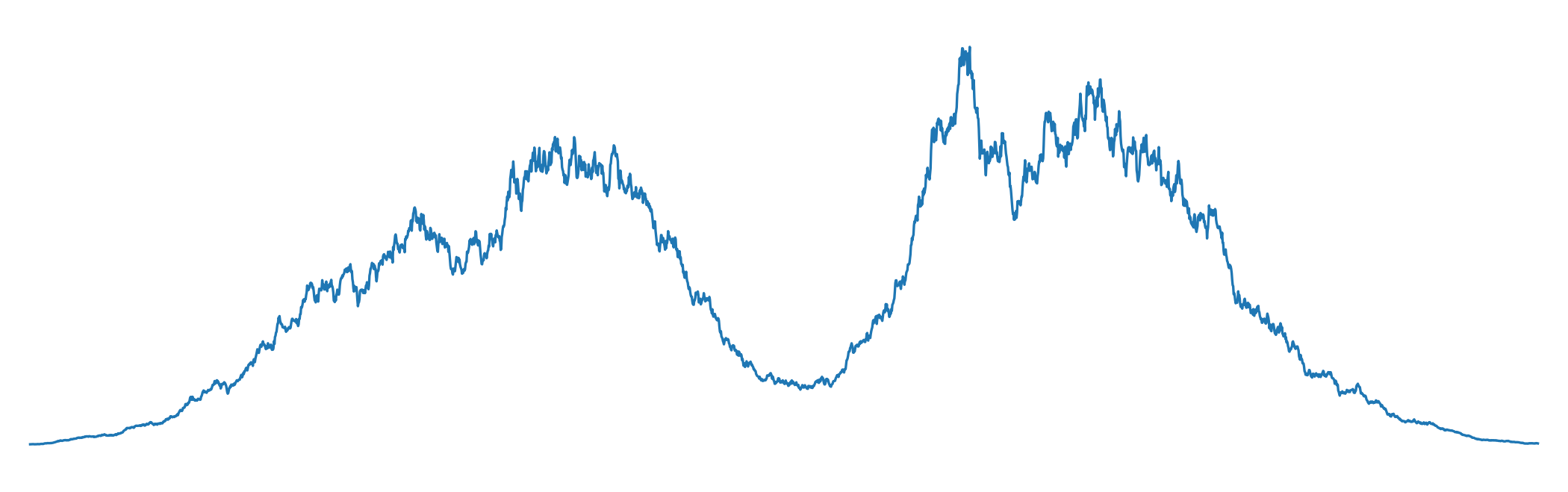
Figure 1: Illustration of Definition~1 for p02 Hölder regularity in weak log-concavity.
Core Contributions and Strong Claims
Sharp Regularity Theory
A unified regularity theory is proved for drifts in canonical generative dynamics (Lipman flow-matching, stochastic-interpolant, and diffusion models), capturing both dissipative and expansive regimes of noise schedules. Explicit bounds are provided for:
- One-sided Lipschitz constants: Guaranteed p03, with p04 independent of p05 and minimal dependence on the log-concavity parameters, regardless of the spatial domain of p06.
- Global spatial Lipschitz: p07 (sharp time singularity).
- Time-Lipschitz: p08, matching the terminal regime singularity.
The regularity bounds are proven intrinsically for the exact drifts/scores, not assumed a priori, contrasting with major earlier works. The analysis remains valid for rough (even non-p09) log-densities under Hölder control, thereby strictly generalizing log-Lipschitz perturbative regimes.
Wasserstein Sampling Error—Sharp Rates
The paper establishes non-asymptotic bounds for Euler-type samplers (both ODE and SDE) under only empirical regularity of the learned drift. The dominant discretization error for p⋆0-step grids is shown to scale linearly:
- p⋆1 up to logs,
- Constants do not deteriorate exponentially with the effective support radius of p⋆2,
This result is highlighted as achieving—up to logarithmic factors—the optimal discretization rate in Wasserstein distance for high-dimensional generative modeling, with substantial relaxation of structural assumptions relative to prior work.
Functional Inequality Transfer: Implications
By establishing integrability of the maximal eigenvalue of the drift Jacobian (one-sided Lipschitz), the paper constructs globally Lipschitz transport maps p⋆3 pushing forward the reference Gaussian to the target p⋆4. Theoretical implications include:
- Dimension-free Poincaré and log-Sobolev inequalities for p⋆5 with sharp constants depending only on p⋆6.
- The transfer of p⋆7-Sobolev inequalities via the flow-matching transport mechanism extends functional inequalities to a strictly broader class of probability measures, including rough Hölder perturbations (for p⋆8).
- This paradigm bridges generative model regularity and classical measure concentration/concentration-of-measure theory.
Numerical Results and Contradictory Claims
- The paper contradicts prior claims that strong log-concavity or bounded support are necessary for sharp p⋆9 guarantees and regularity, demonstrating that sub-Gaussian tails suffice for dimension-free constants.
- Previous analyses relying on uniform p⋆0 or p⋆1 regularity of learned scores incur stronger requirements than necessary; the presented approach aligns naturally with the denoising score-matching objective.
Geometric Grids and Compensated Singularities
Sampling rates are shown to be first-order in p⋆2, not deteriorating at terminal time, by exploiting geometric mesh discretization refining automatically to the evolving singularity in drift regularity. The analysis rigorously justifies practical discretization schemes used in diffusion and flow-matching models.
Comparison with Prior Literature
The theoretical guarantees extend and sharpen results from [arsenyan2025assessing], [wang2024wasserstein], and [beyler2025convergence], among others. The scope of weak log-concavity is broadened, and regularity is derived rather than assumed. The probabilistic techniques are augmented with functional analysis for covariance estimates under exponential tilting by rough Hölder perturbations, avoiding dimension-dependent bounds typical in direct pointwise arguments.
Implications for Generalization and Manifold Hypothesis
Statistical and geometric implications include enhanced generalization bounds for learning score-based models, with higher-order regularity consequences for minimax convergence rates. The paper sketches extensions to manifold-supported targets, arguing that the correct stability notion is localized to tubular neighborhoods rather than ambient supremum—a perspective anticipated to be critical for generative modeling in singular or low-dimensional regimes.
Practical and Theoretical Impact
The results open avenues for model-agnostic estimation of underlying regularity, optimal Wasserstein convergence for flows and diffusions, and robust propagation of learning errors. In future AI development, these theoretical guarantees suggest that generative models can achieve stable, efficient sampling and concentration phenomena under broad structural classes, laying the groundwork for scalable algorithms adapted to both high-dimensional and manifold-constrained distributions.
Conclusion
The paper provides a rigorous, dimension-sharp analysis of Lipschitz regularity for generative drift fields, demonstrating optimal Wasserstein discretization rates and enabling the transfer of functional inequalities to weakly log-concave probability measures. These results strictly extend the state-of-the-art in both practical sampling and theoretical measure analysis for flow-matching and diffusion models, establishing foundational tools for subsequent research in generative modeling, numerical analysis, and statistical learning (2604.06065).