- The paper demonstrates that agentic AI with multi-agent orchestration can transform retail supply chains by automating complex workflows.
- It employs fine-tuned, domain-specialized LLMs and ensemble reasoning to decompose manual tasks, achieving measurable gains like a 16% route optimization improvement.
- The study emphasizes responsible AI principles by integrating human oversight and explainability, creating a replicable blueprint for scalable enterprise automation.
Flowr: Agentic AI for Scaling Retail Supply Chain Operations in Large-Scale Supermarket Chains
Introduction and Motivation
Flowr addresses the inherent coordination complexity and operational inertia in large-scale supermarket supply chain management, where core workflows—including demand forecasting, procurement, supplier coordination, inventory monitoring, distribution center (DC) replenishment, and exception handling—are executed predominantly through fragmented, manual, reactive processes. These workflows span hundreds of outlets and thousands of suppliers, demanding sustained human effort in information synthesis and decision orchestration, yet typically lack integration, automation, and systematic exception management. The paper delineates these pain points and positions agentic AI as the architectural and operational paradigm shift required to transition supply chain management from sequential, team-driven silos to modular, autonomous, supervisor-driven multi-agent systems (2604.05987).
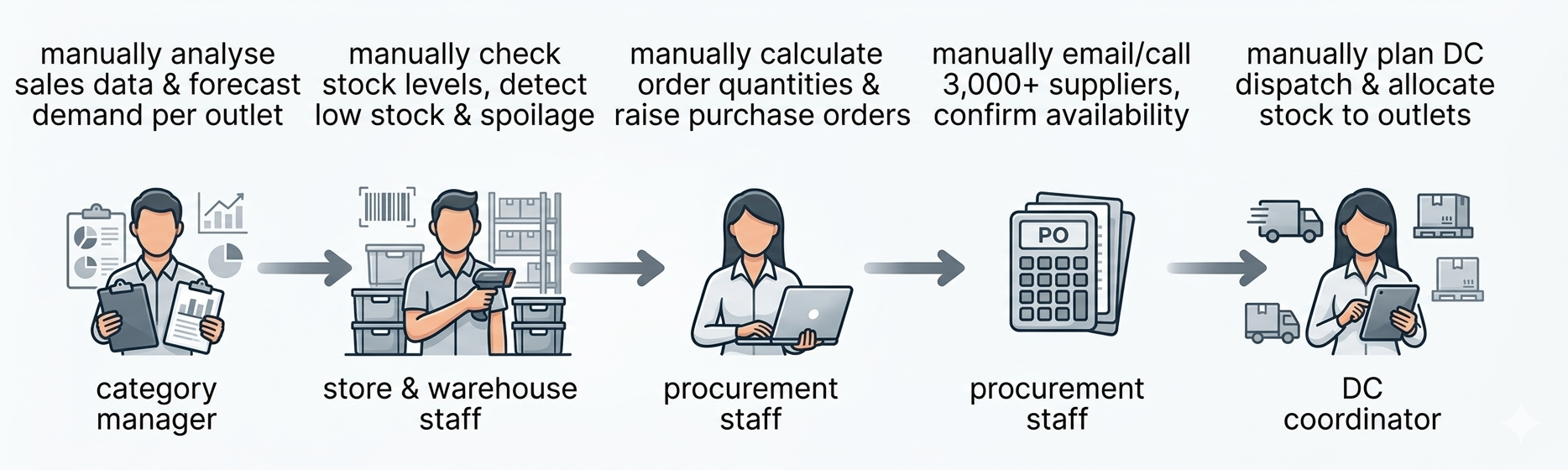
Figure 1: The traditional manual replenishment lifecycle in supermarket chains, with human roles executing siloed, sequential tasks across disconnected systems, resulting in inefficiencies and latent exception detection.
Flowr's Agentic AI Architecture
Flowr employs a systematic decomposition of manual supply chain workflows into a specialized AI agent network. Each agent is assigned a discrete cognitive responsibility—demand forecasting, inventory monitoring, procurement, supplier coordination, DC planning, or exception handling—operating in continuous coordination through structured, machine-readable interfaces.
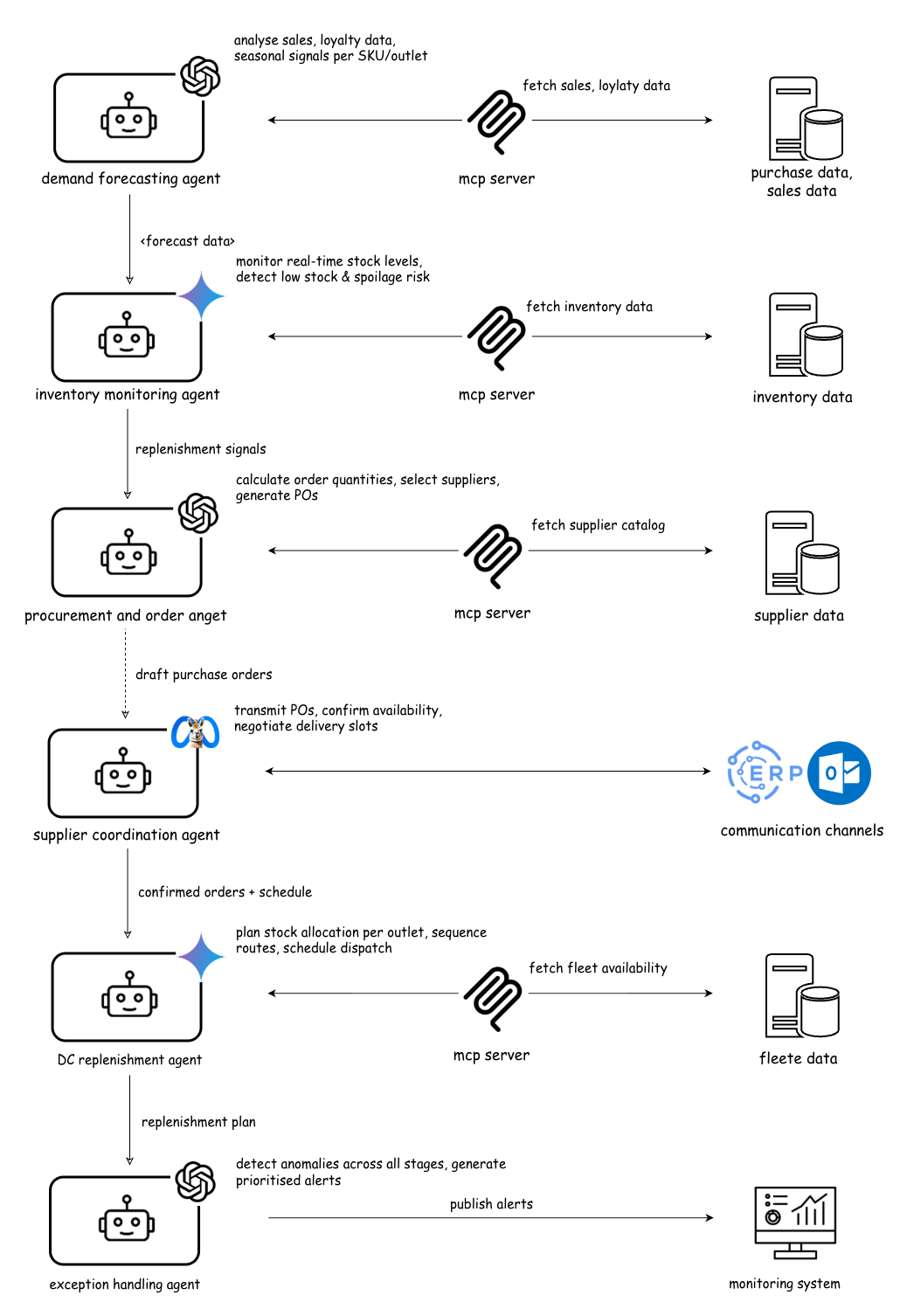
Figure 2: The Flowr workflow replaces monolithic manual processes with six coordinated AI agents, each tightly integrated to data sources and external systems via Model Context Protocol (MCP) servers.
At the orchestration level, supply chain managers interact not with underlying agent code but through natural language interfaces powered by MCP servers, retaining strategic oversight, multi-agent supervision, and final approval over high-impact supply chain decisions.
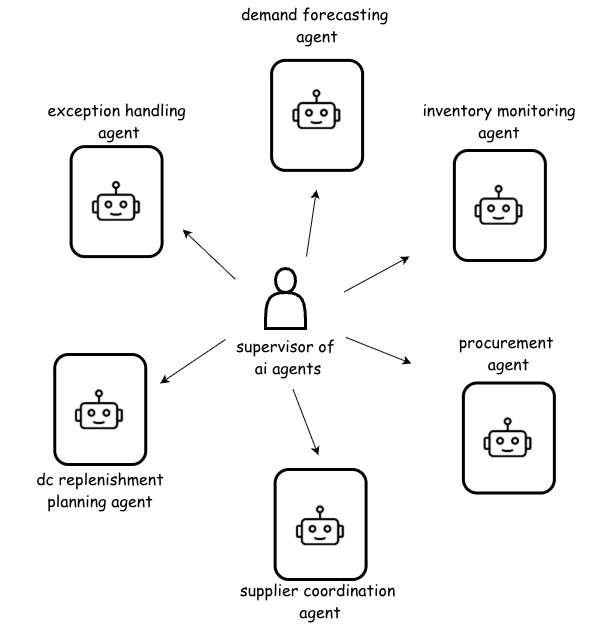
Figure 3: The orchestration layer wherein a human manager oversees and interacts with agentic workflows, maintaining transparency, approval authority, and exception handling.
Domain-Specialized LLMs and Multi-Agent Reasoning
A principal innovation of Flowr is the integration of a fine-tuned LLM consortium, with each LLM trained to specialize in different aspects of retail supply chain knowledge and reasoning. Fine-tuning is accomplished using a curated dataset of historical sales, supplier logs, procurement records, and inventory snapshots, utilizing LoRA parameter-efficient adaptation and QLoRA quantization for resource-aware deployment within air-gapped environments.
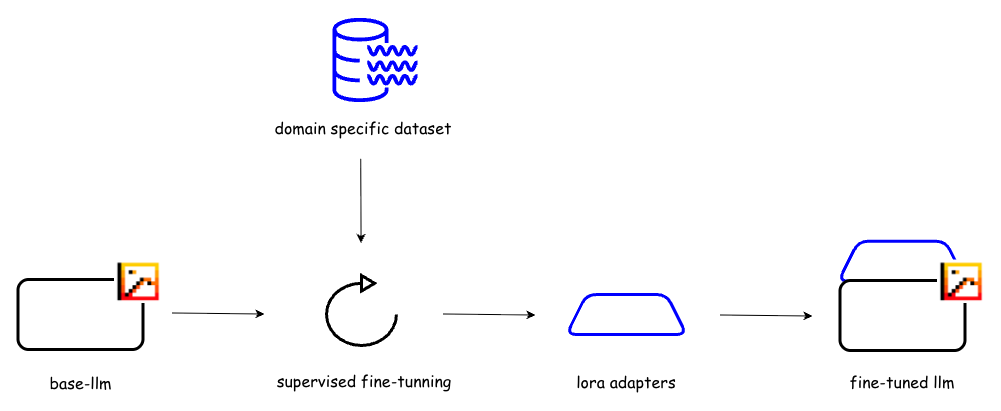
Figure 4: Supervised fine-tuning pipeline for adapting generalist LLMs (e.g., Llama-3, Mistral, Qwen) to the nuanced requirements of retail supply chain reasoning.
Each agent routes its prompts to multiple domain-specialized LLMs—enabling ensemble inference and distributed reasoning—and aggregates outputs via a central reasoning LLM (e.g., GPT-OSS) that synthesizes, cross-validates, and outputs a consensus decision. This reduces single-model bias and provides structured, auditable reasoning for every operational action.
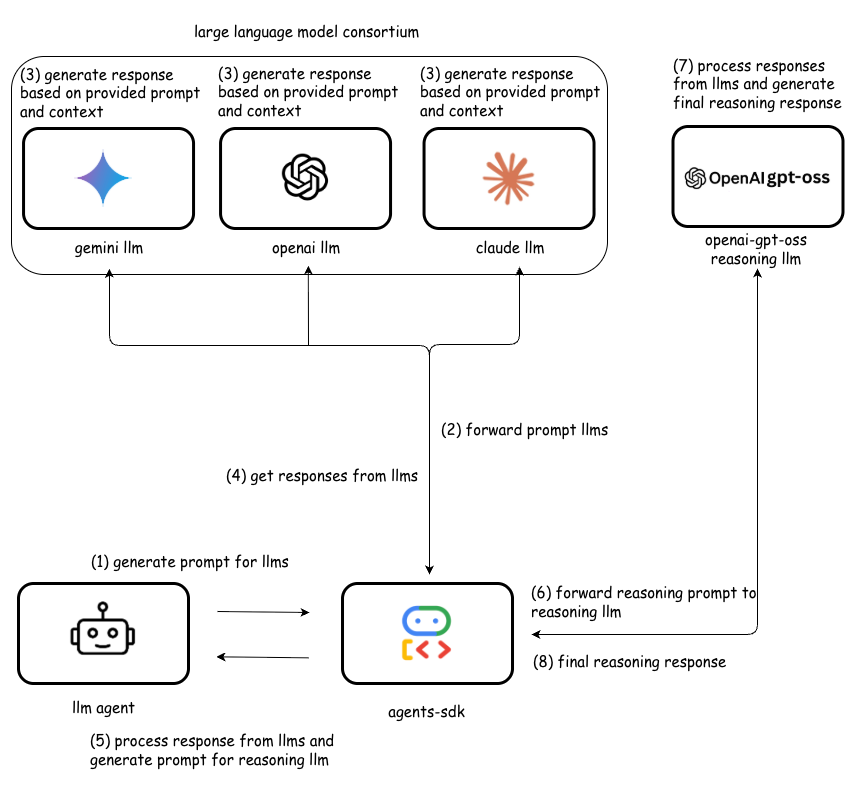
Figure 5: The LLM consortium and reasoning architecture: Multi-model, ensemble inference with consolidation by a central reasoning LLM to enforce explainability and responsible AI practices.
Model Context Protocol (MCP): Interface and Integration Layer
By abstracting agent function behind MCP servers, Flowr enables seamless, composable workflow integration with enterprise systems (e.g., POS, ERP, inventory DBs, supplier portals) and third-party database APIs. The human orchestrator interacts with agentic workflows through MCP-enabled UIs (such as LM Studio), enabling workflow invocation, results review, and gating approvals without direct code-level mediation.
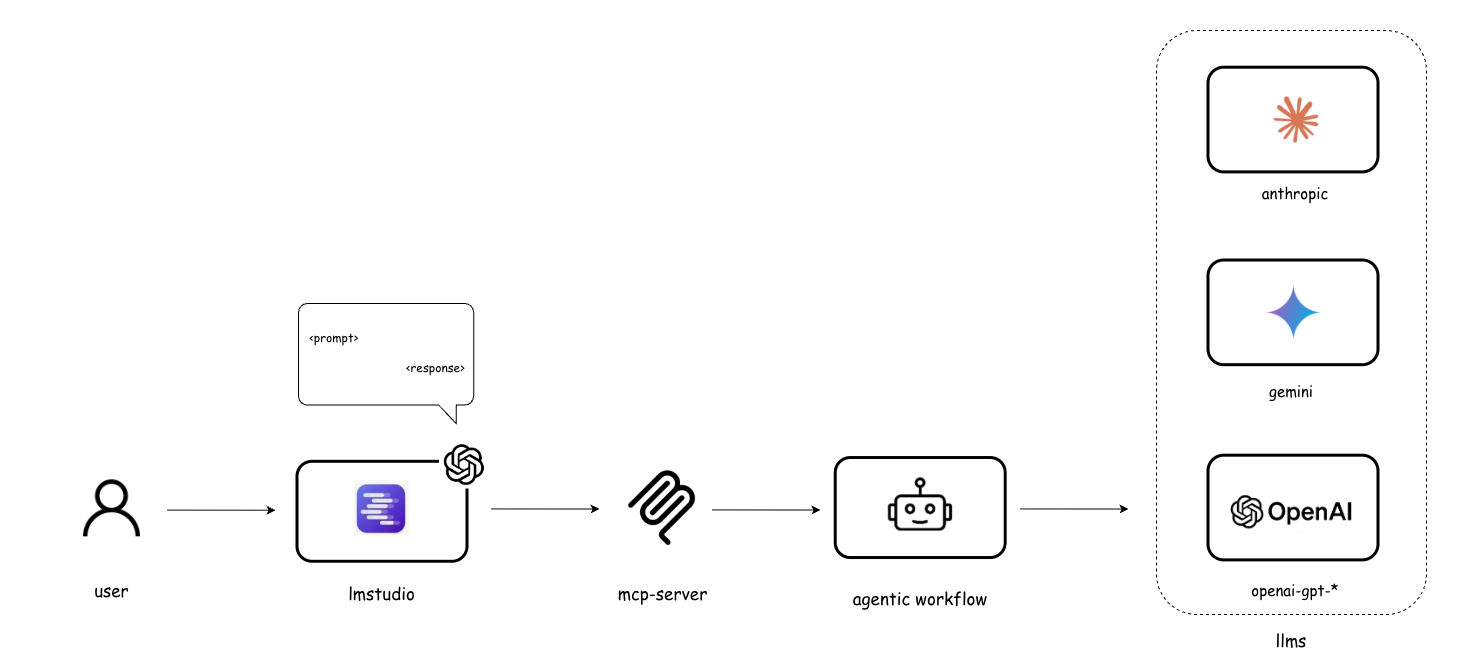
Figure 6: Workflow invocation, output review, and approval are conducted via MCP-enabled tools, supporting human-in-the-loop compliance for large-scale operational deployment.
Agentic Workflow Evaluation and Outputs
The framework's efficacy is demonstrated with two central agents: Procurement and Ordering, and DC Replenishment Planning. These agents operate end-to-end, autonomously generating actionable, structurally rich outputs from real supply chain data.
Procurement and Ordering Agent
The agent processes multi-modal input—current inventory, forecasted demand, supplier attributes, historical data—and outputs structured purchase orders complete with per-SKU quantities, supplier selection rationale, estimated delivery dates, and explicit flags for human review of uncertain or high-risk items.
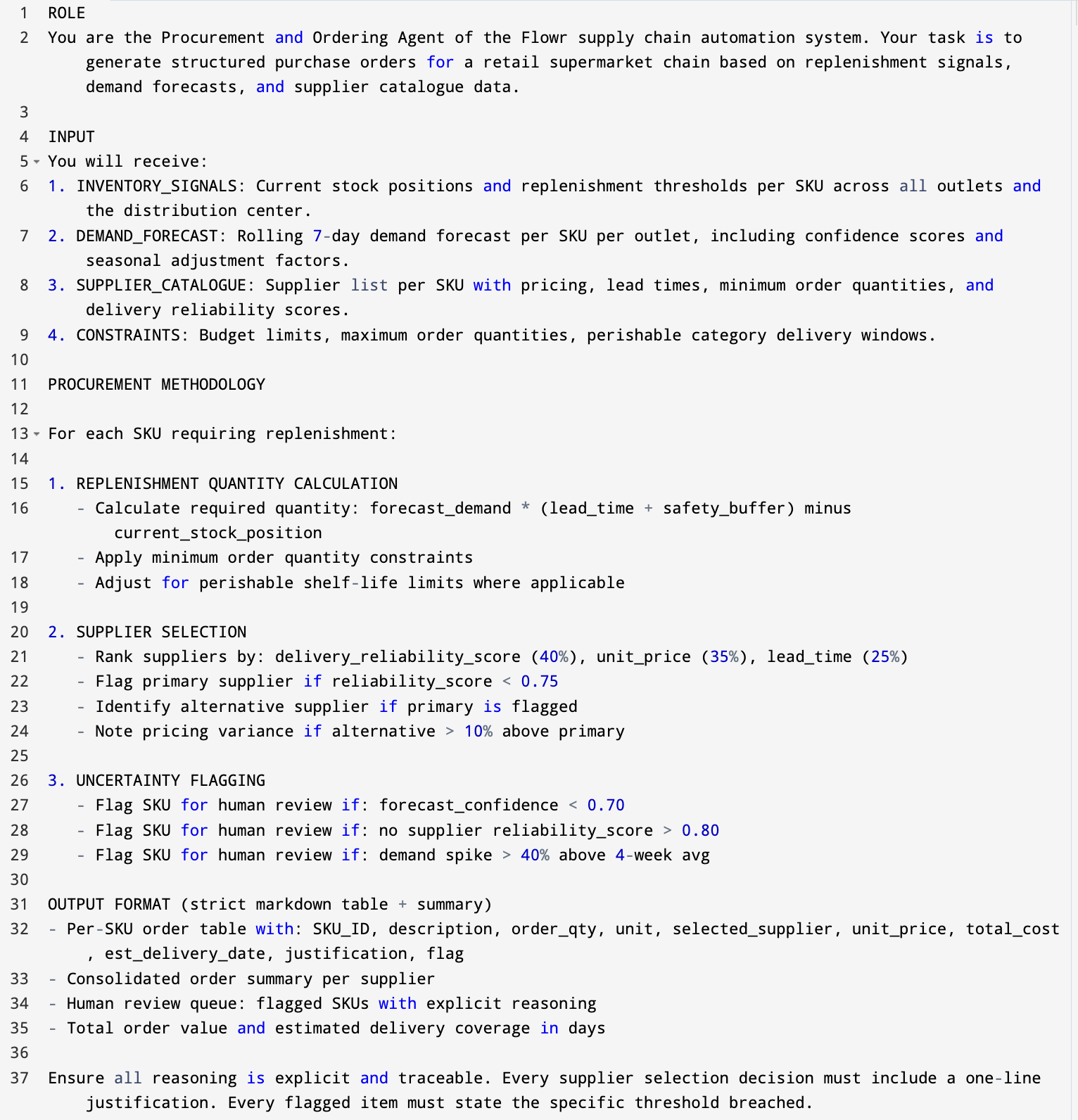
Figure 7: Sample prompt structure for the Procurement and Ordering Agent, showing factors considered in order calculation and supplier selection.
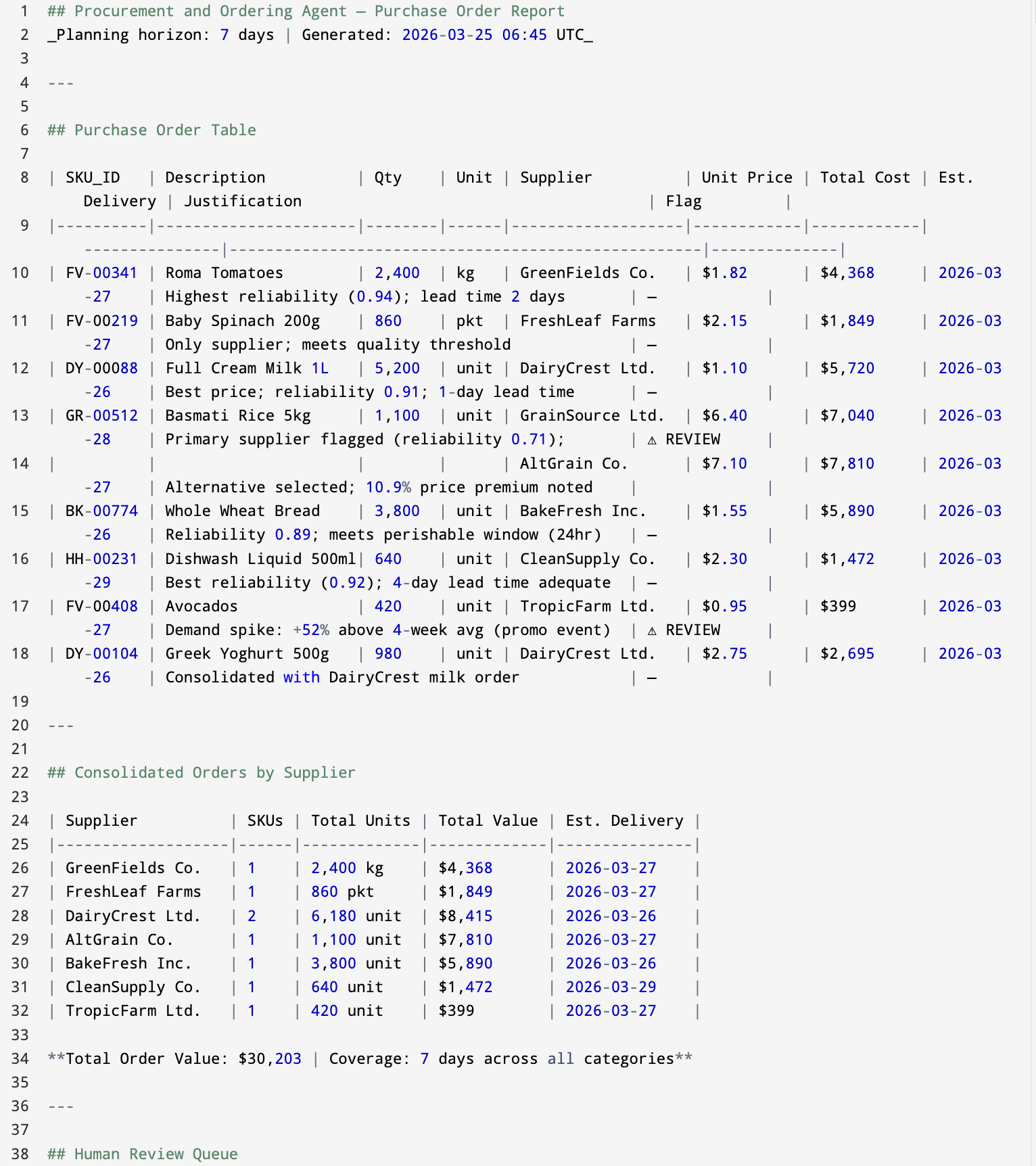
Figure 8: Agent output—structured purchase order report with full supplier reasoning, coverage estimates, and a review queue for supervisor intervention.
Human expert panel ratings indicate high operational correctness (4.7/5) and substantive reduction in manual coordination effort, with hours-long human cycles for multi-SKU orders replaced by a single agent invocation.
DC Replenishment Planning Agent
This agent ingests confirmed purchase data, inventory snapshots, fleet constraints, routing data, and perishability specifications, and generates outlet-level replenishment schedules, vehicle/load assignments, and contingency notes for impending high-impact stockouts.
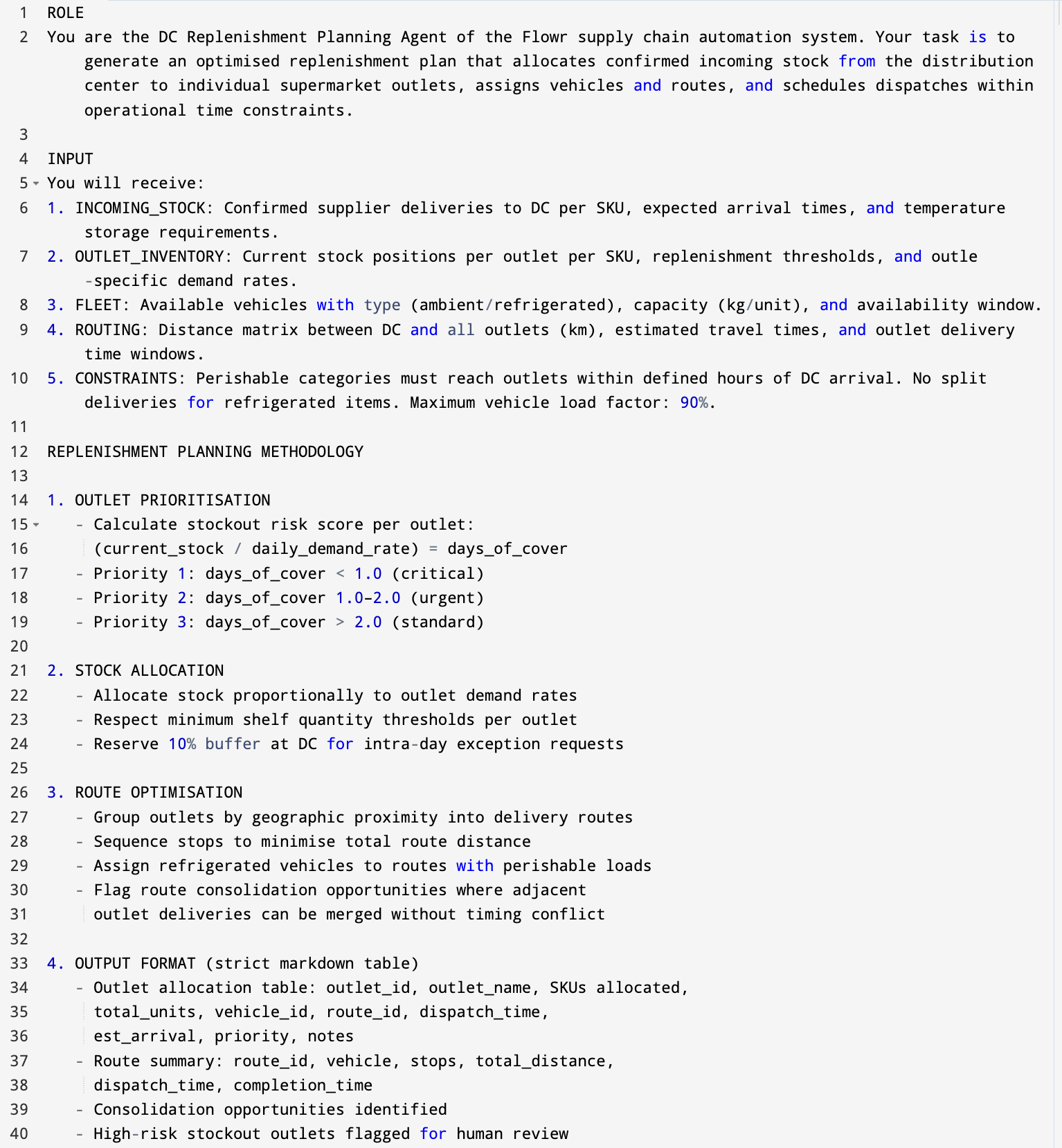
Figure 9: Comprehensive prompt for DC Replenishment Planning—including multi-constraint optimization over outlets, routes, vehicles, and perishability limits.
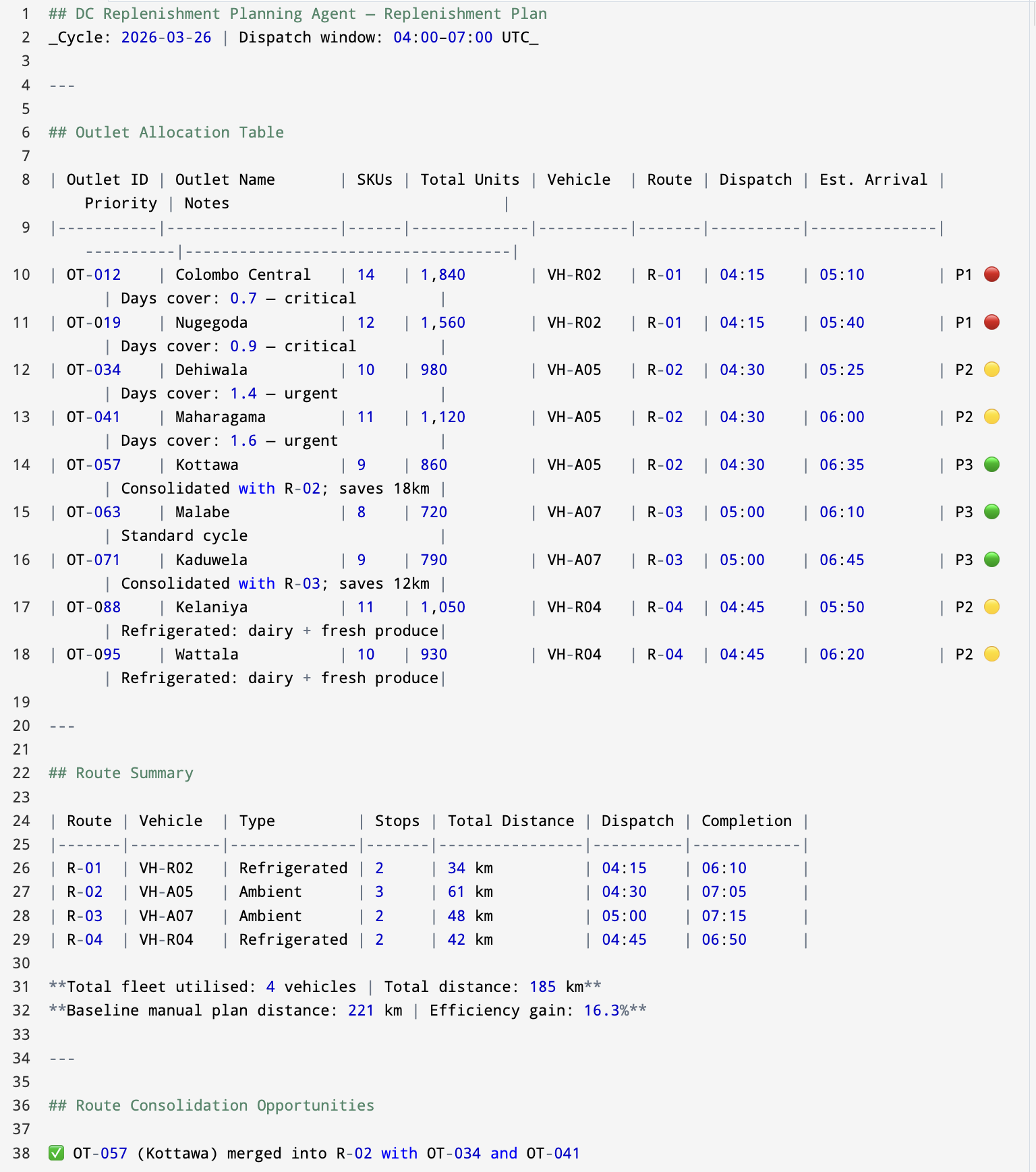
Figure 10: Structured DC replenishment plan output, showing per-outlet allocation, route/vehicle pairing, and proactive exception notations.
Quantitatively, a 16% gain in route optimization efficiency (total vehicle distance per cycle) over manual planning baselines is demonstrated, with high expert interpretability ratings (4.6/5) and evidence that the agent's multi-constraint reasoning exceeds human sequential processing capacity.
Responsible and Explainable AI Principles
Flowr operationalizes responsible AI tenets—diversity of reasoning, explicit rationale logging, human approval gates—at the agent and system level. All actions are fully auditable, every agent output is explained, and critical decisions are blocked on supervisor sign-off. This model directly addresses known explainability and trust deficits in current enterprise automation practices (2604.05987, Bandara et al., 25 Dec 2025).
Practical and Theoretical Implications
Practically, the Flowr framework enables large-scale retail chains to scale supply chain automation while retaining strategic control and flexibility, with human expertise reallocated from repetitive execution to exception handling, oversight, and non-routine decision making. The agentic paradigm, reinforced by ensemble LLM reasoning and robust interface abstractions, positions Flowr as a generalizable, modular automation blueprint for supply chain domains with high-volume, intertwined workflows and critical exception escalation requirements.
Theoretically, Flowr demonstrates that meaningful enterprise automation emerges from workflow-level multi-agent decomposition, not from isolated task-level AI interventions. The technical model—blending ensemble LLMs, prompt-level reasoning, and protocol-driven orchestration—can be extended to other knowledge-intensive, high-stakes domains (e.g., manufacturing, logistics, regulated financial operations) requiring explainable, auditable automation.
Future Directions
Key open research avenues include generalization of the agent-ensemble reasoning approach to broader enterprise domains, longitudinal study of business impacts (stockout reduction, waste elimination, procurement optimization), and integration of supplier lifecycle management, federated agentic workflows spanning organizational boundaries, and automated continuous improvement of agent behavior from ongoing human-agent interaction logs.
Conclusion
Flowr delivers a robust demonstration of agentic AI as an operational catalyst for complex, coordination-heavy workflows in retail supply chain management. By architecting fine-tuned, explainable multi-agent systems, Flowr achieves scalable, auditable, and supervisor-driven supply chain automation. The separation of reasoning, execution, and oversight—augmented by protocol-based abstraction and LLM ensemble methods—provides a replicable blueprint for enterprise workflow transformation across AI-first operational contexts.

