- The paper introduces a spectral identification framework that leverages eigenvalue dispersion to recover latent network structure.
- It employs semiparametric estimation with regularization to ensure consistent recovery of spectral properties in high-dimensional settings.
- Empirical tests reveal that diverse eigenmodes drive detection power, while degenerate networks hinder identification through exchangeable covariance.
Identification and Inference in Nonlinear Dynamic Network Models
Model Architecture and Theoretical Framework
The paper introduces a class of nonlinear dynamic network models defined by unobserved interaction matrices, which mediate the propagation of shocks through nonlinear operators acting on agent states. The canonical model is:
zt+1=(1−δ)zt+Af(zt,θ)+st+εt
where A is latent, f(⋅,θ) is a nonlinear operator, and εt is idiosyncratic noise. This generalizes linear network autoregression and encompasses economic phenomena—production linkages, contagion, spatial and social interactions, and dynamic coordination games. Identification and inference are complicated due to nonlinearity and latent structure, as different matrices A can generate indistinguishable observable dynamics without sufficient spectral heterogeneity.
Observational Equivalence and Spectral Non-identification
Observational equivalence arises because the dynamics depend on A only through a transformed operator B=(1−δ)I+ADf(z,θ). Spectral invariance asserts that similarity transformations yield indistinguishable behavior, and concentrated spectra (eigenvalues nearly equal) make the induced dependence observationally equivalent to common shocks or scalar heterogeneity. Thus, non-exchangeable covariance patterns are strictly necessary for identification. When the covariance structure is exchangeable (scalar or low-rank), the interaction matrix cannot be recovered, paralleling the reflection problem in social interactions.
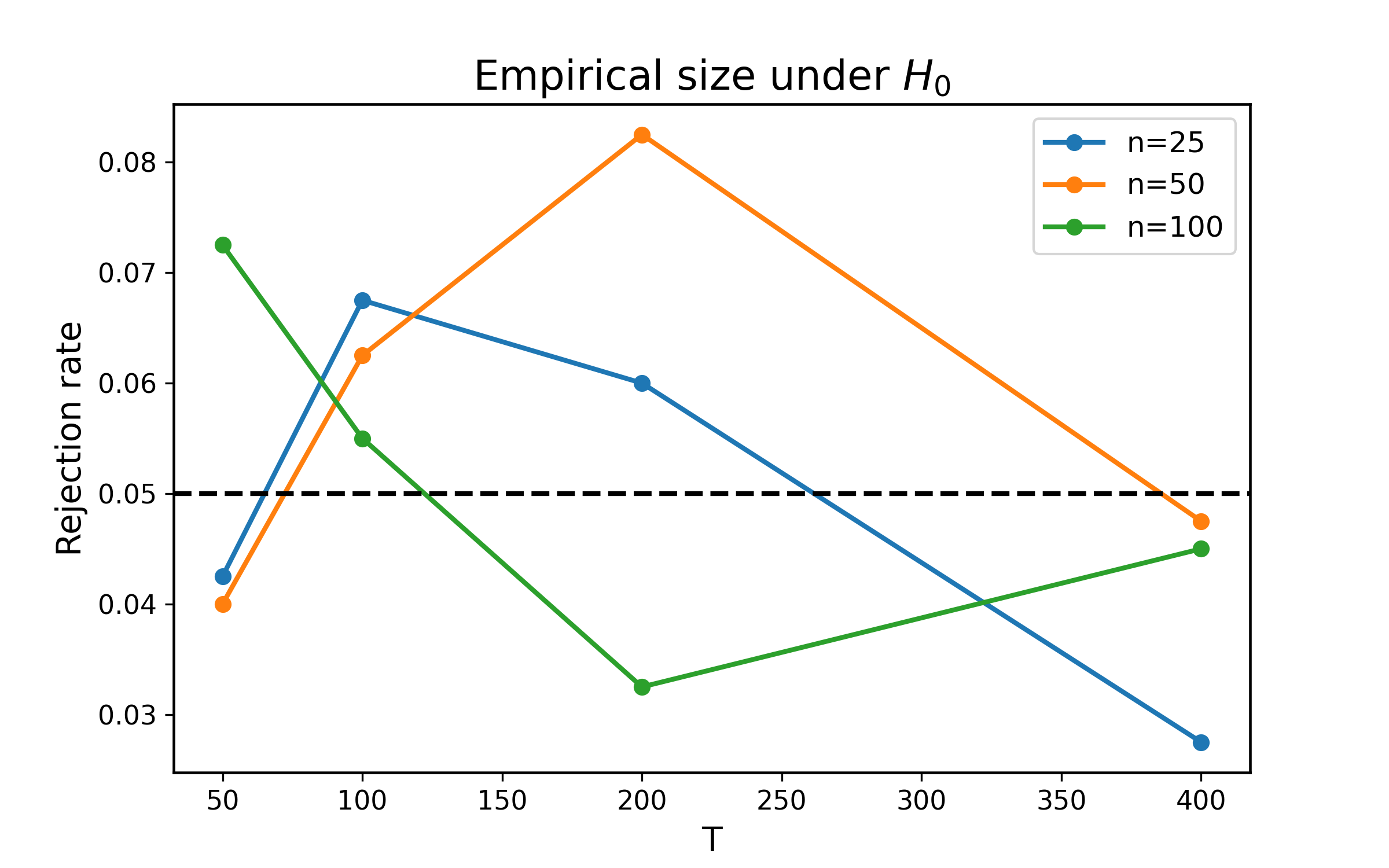
Figure 1: Empirical size under H0 across (n,T).
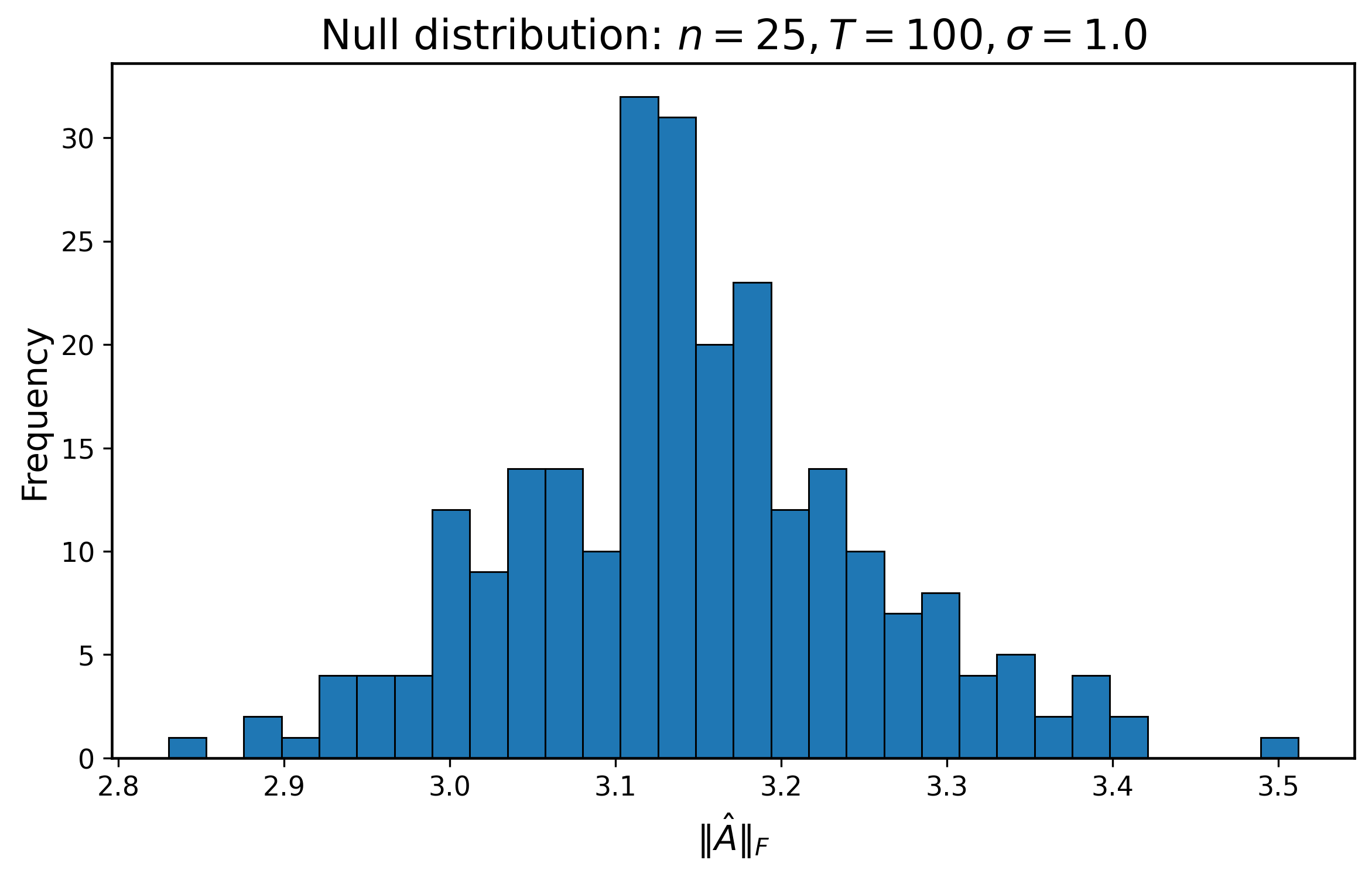
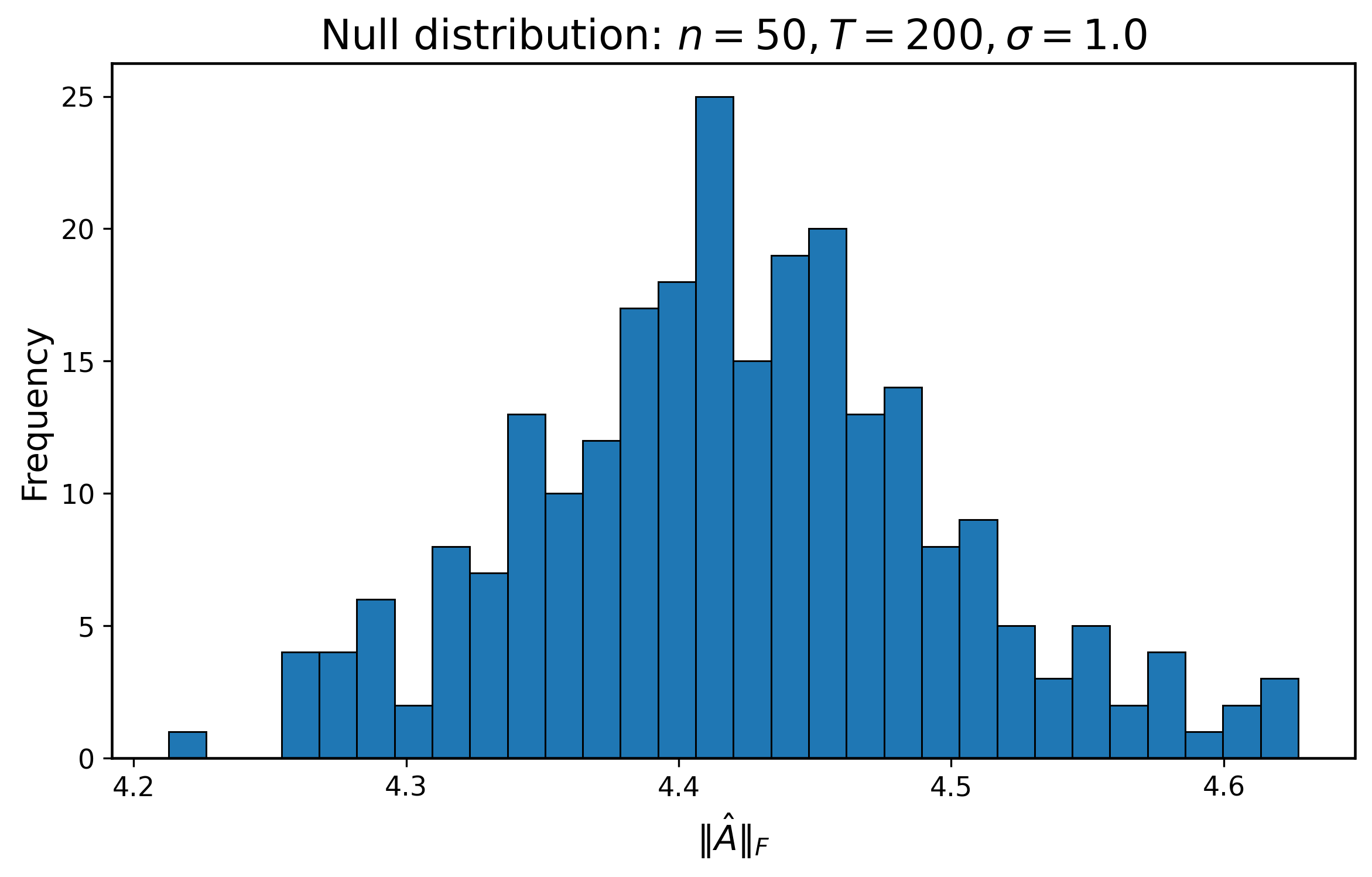
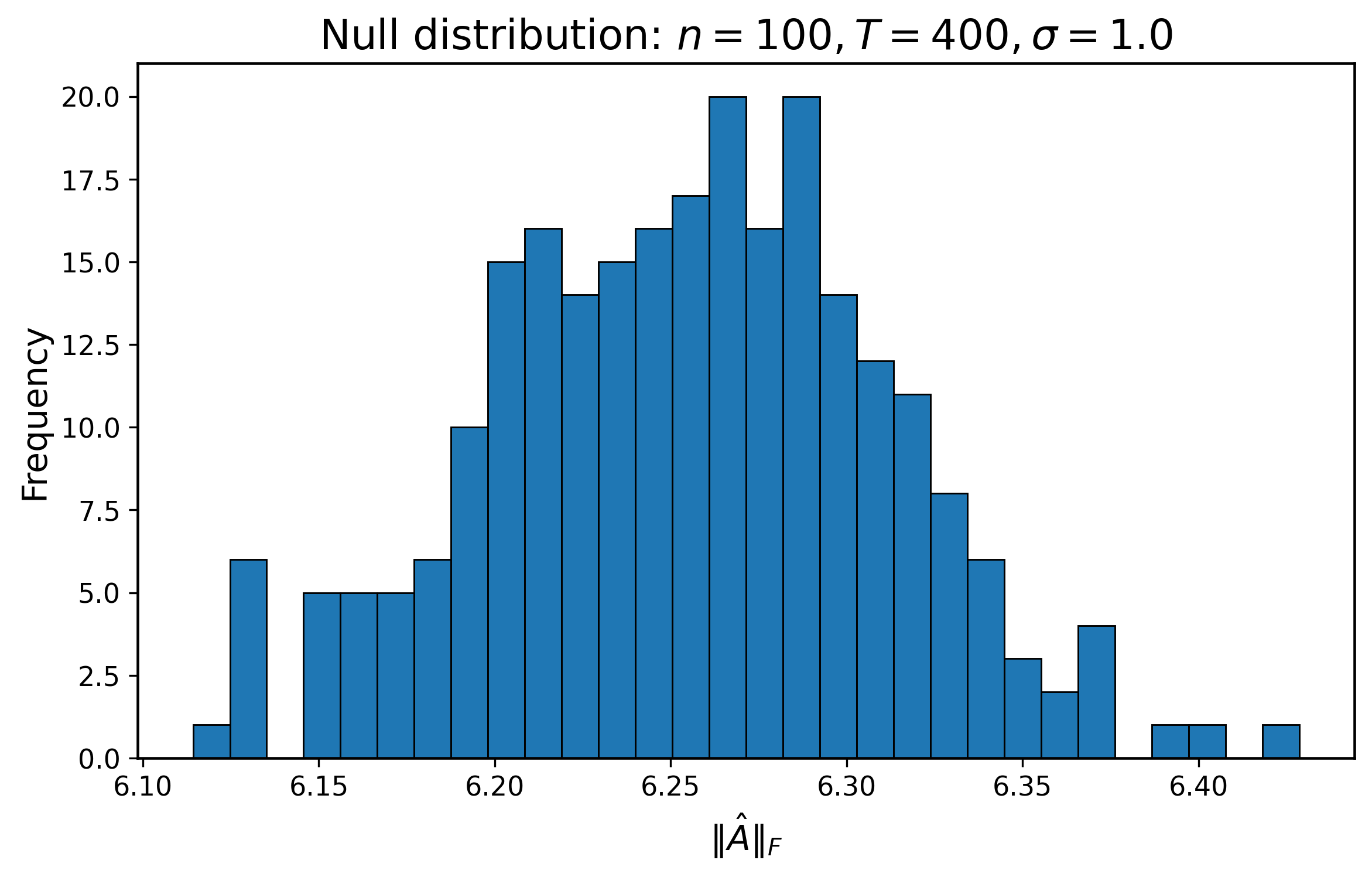
Figure 2: Finite-sample null distributions of ∥A^∥F illustrating proper null behavior.
Spectral Identification Principle and Mechanism
Identification is characterized through spectral decomposition:
A0
Distinct eigenvalues and full-rank A1 enable recovery of A2 up to similarity. The mapping from A3 to the covariance structure A4 is mediated by spectral amplification, where diverse eigenvalues induce heterogeneous amplification across modes, rendering rich cross-sectional dependence:
A5
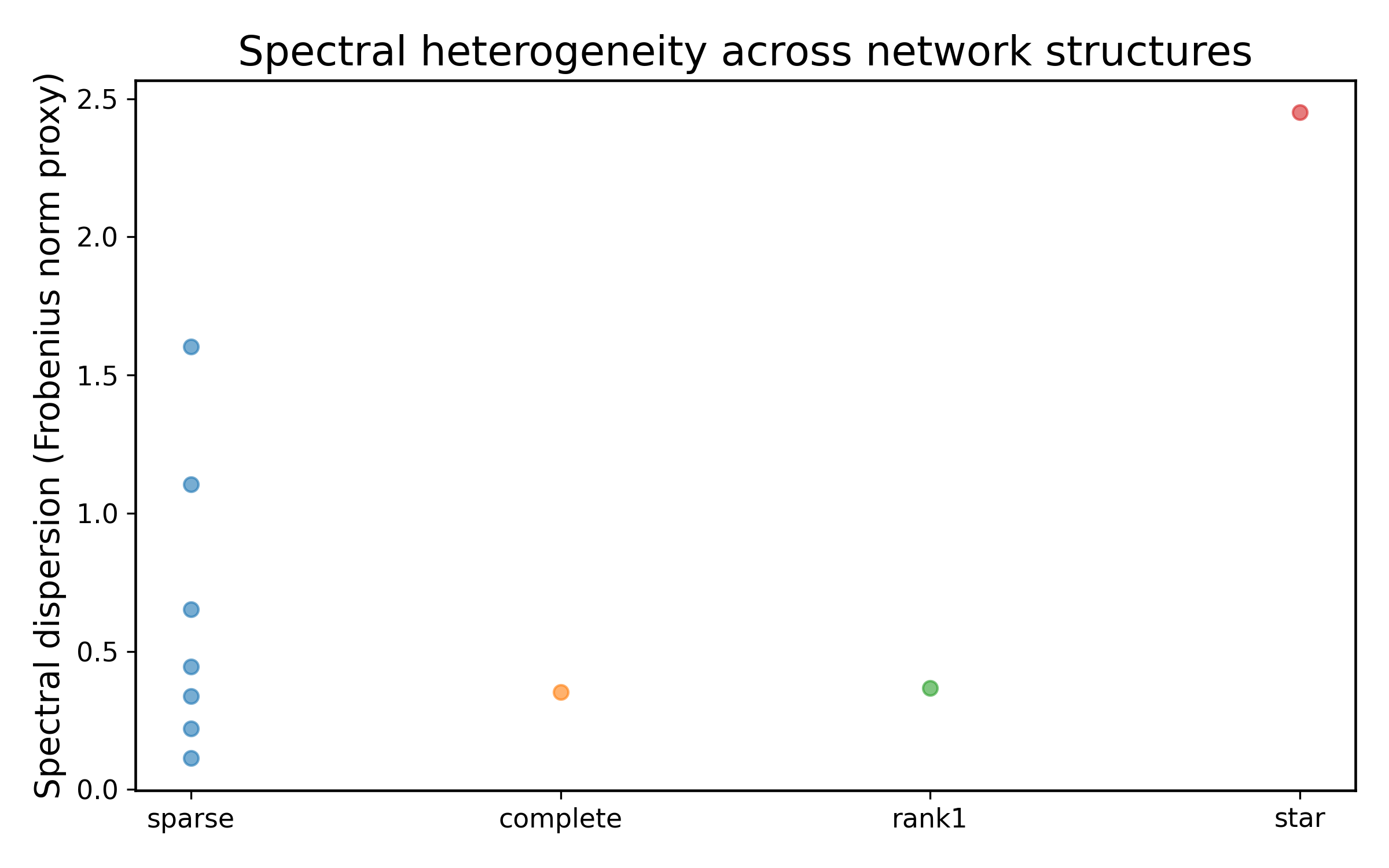
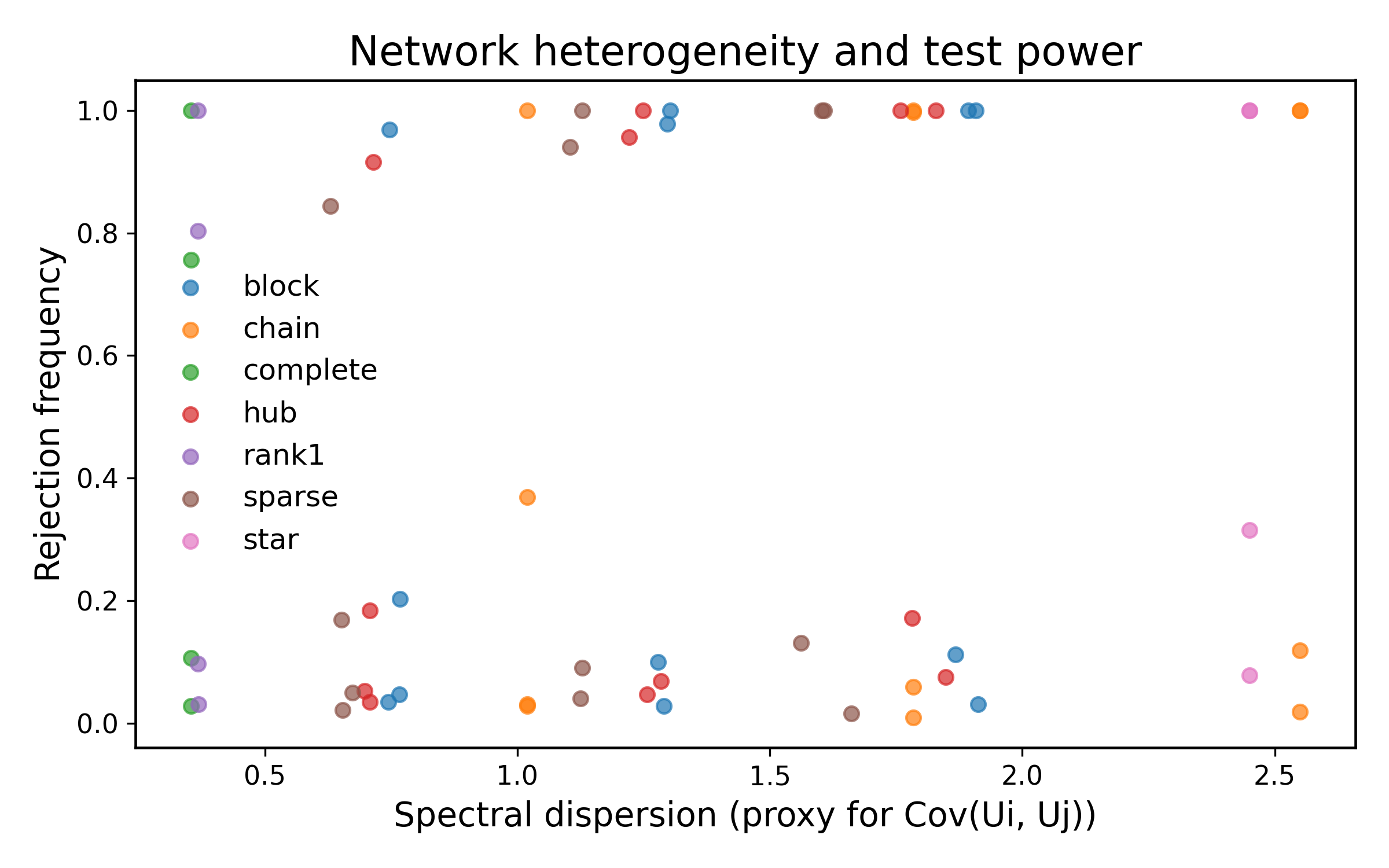
Figure 3: Spectral dispersion and covariance heterogeneity driving identification.
If spectral dispersion is low, induced amplification is approximately scalar; observational equivalence persists, so identification fails even with pronounced dependence.
Semiparametric Estimation and High-Dimensional Extensions
Semiparametric estimators are derived via moment restrictions on sample covariances:
A6
with sample analog A7 minimizing A8 for quadratic forms in moment deviations. Asymptotic normality and consistency are proven under ergodicity and spectral stability. High-dimensional estimation employs regularization (e.g., A9 penalty under sparsity) to ensure operator norm convergence, prioritizing spectral consistency due to its primacy in identification. Recovery of the spectral properties, rather than entrywise accuracy of f(⋅,θ)0, underpins the theoretical mechanism.
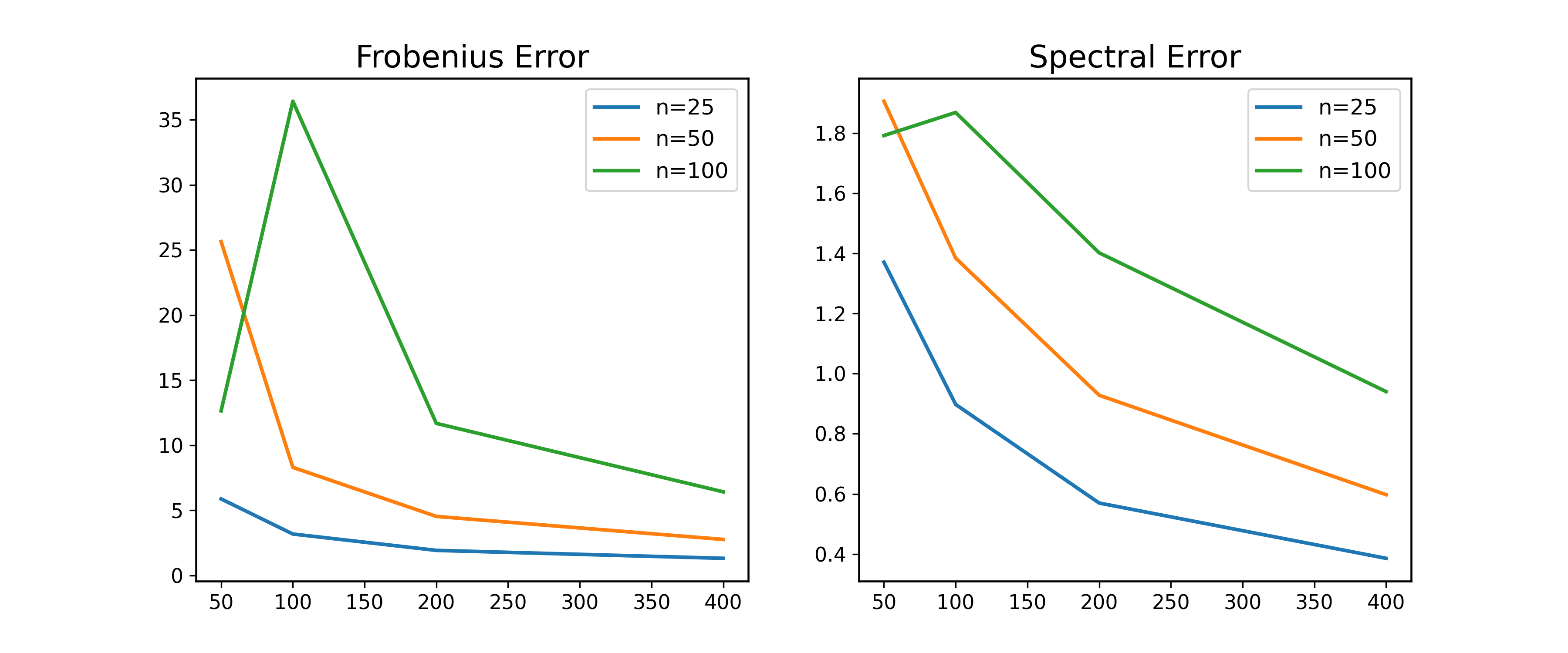
Figure 4: Frobenius and spectral estimation errors across sample sizes.
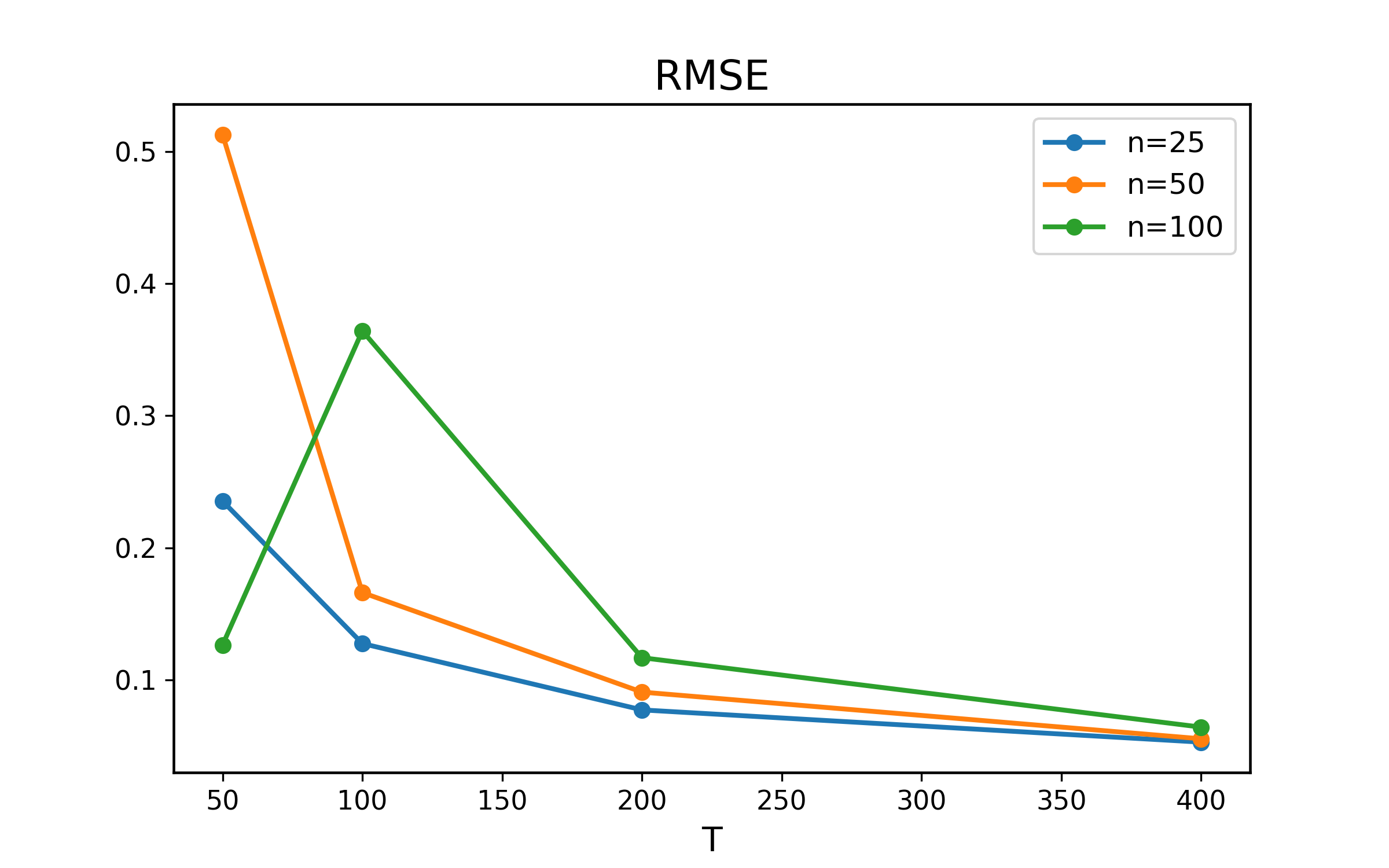
Figure 5: RMSE as function of increasing f(⋅,θ)1; spectral convergence precedes entrywise convergence.
Hypothesis Testing and Empirical Power
Network dependence is tested by exploiting deviations from exchangeable covariance structure. Frobenius and spectral norm statistics on deviation matrices are used:
f(⋅,θ)2
Size control is tight under f(⋅,θ)3 (exchangeable dependence). Power is driven by spectral heterogeneity: dispersed spectra yield pronounced non-exchangeable patterns, allowing reliable detection.
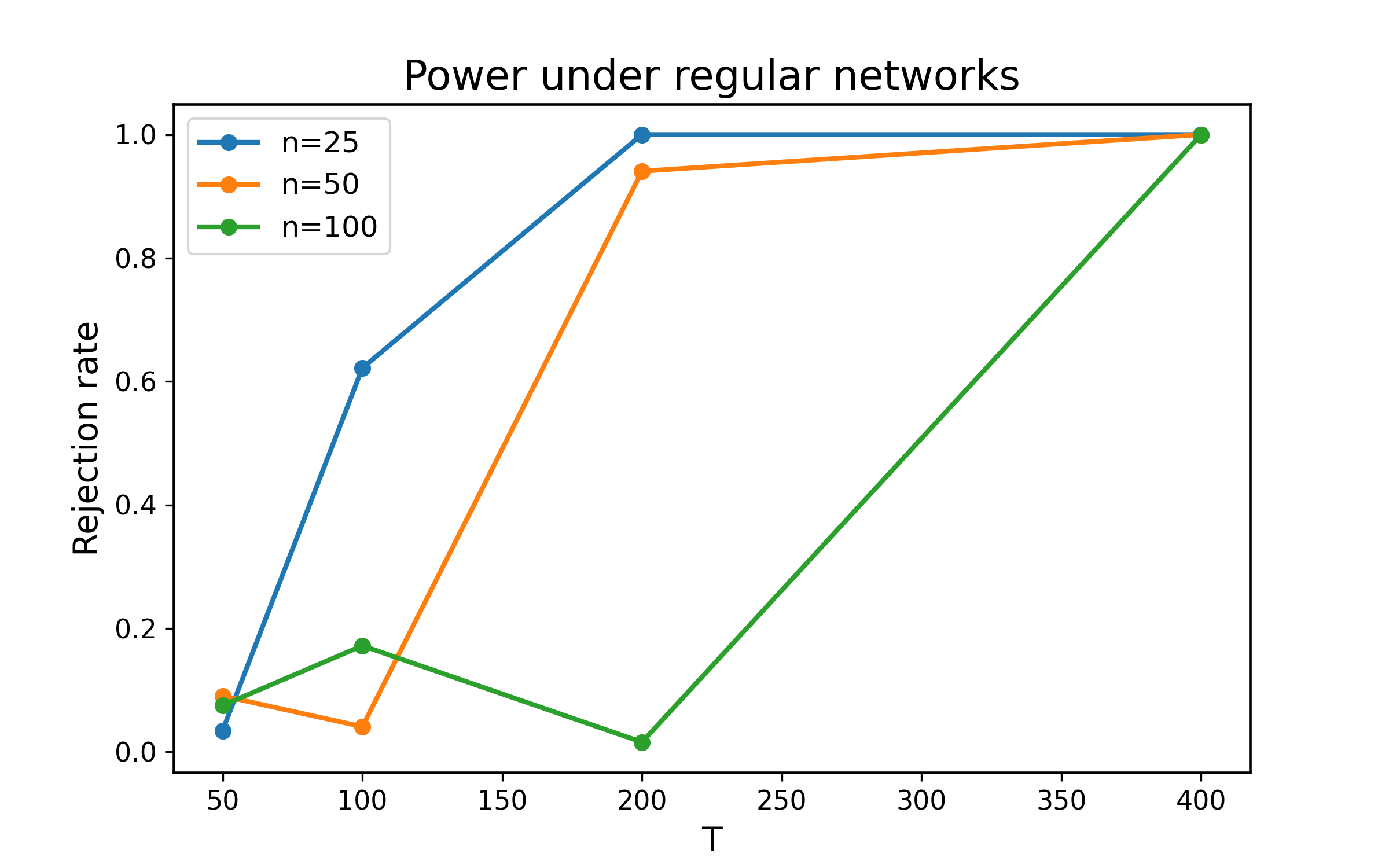
Figure 6: Power under regular network structures.
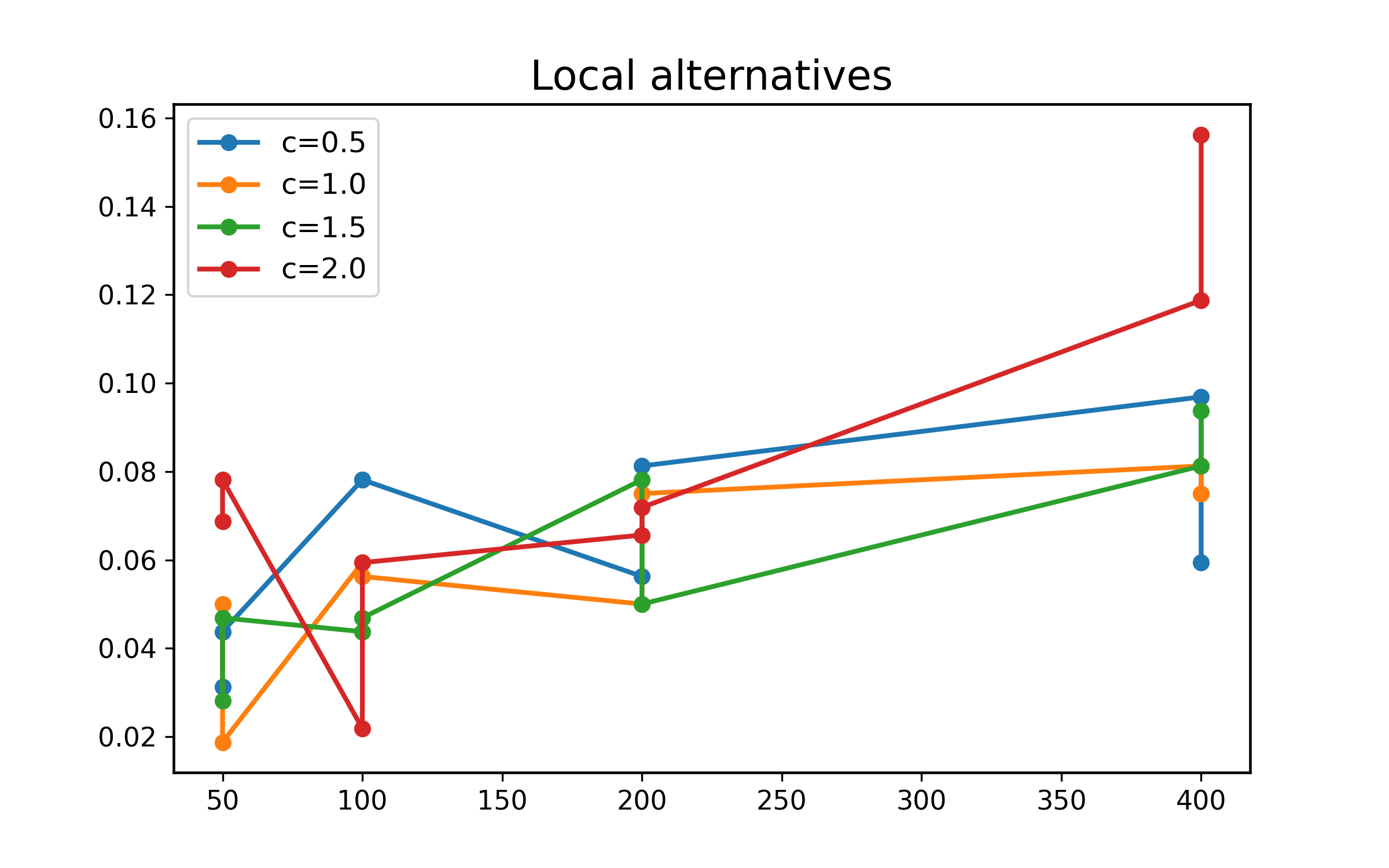
Figure 7: Power under local alternatives; accuracy reflects signal-to-noise via spectral heterogeneity.
Rejection rates rise with f(⋅,θ)4, commensurate with improved spectral estimation. For local alternatives (f(⋅,θ)5 diminishing with f(⋅,θ)6), rejection probabilities only slowly increase, confirming that tests are conservative absent strong structural variation.
Degenerate Networks and Identification Limits
Degenerate networks (complete, rank-one, star) demonstrate limited spectral dispersion; thus, induced covariance approaches exchangeable, frustrating identification. Rejection probabilities remain near the nominal rate for small f(⋅,θ)7, escalating only as sample size grows and minor deviations are accentuated.
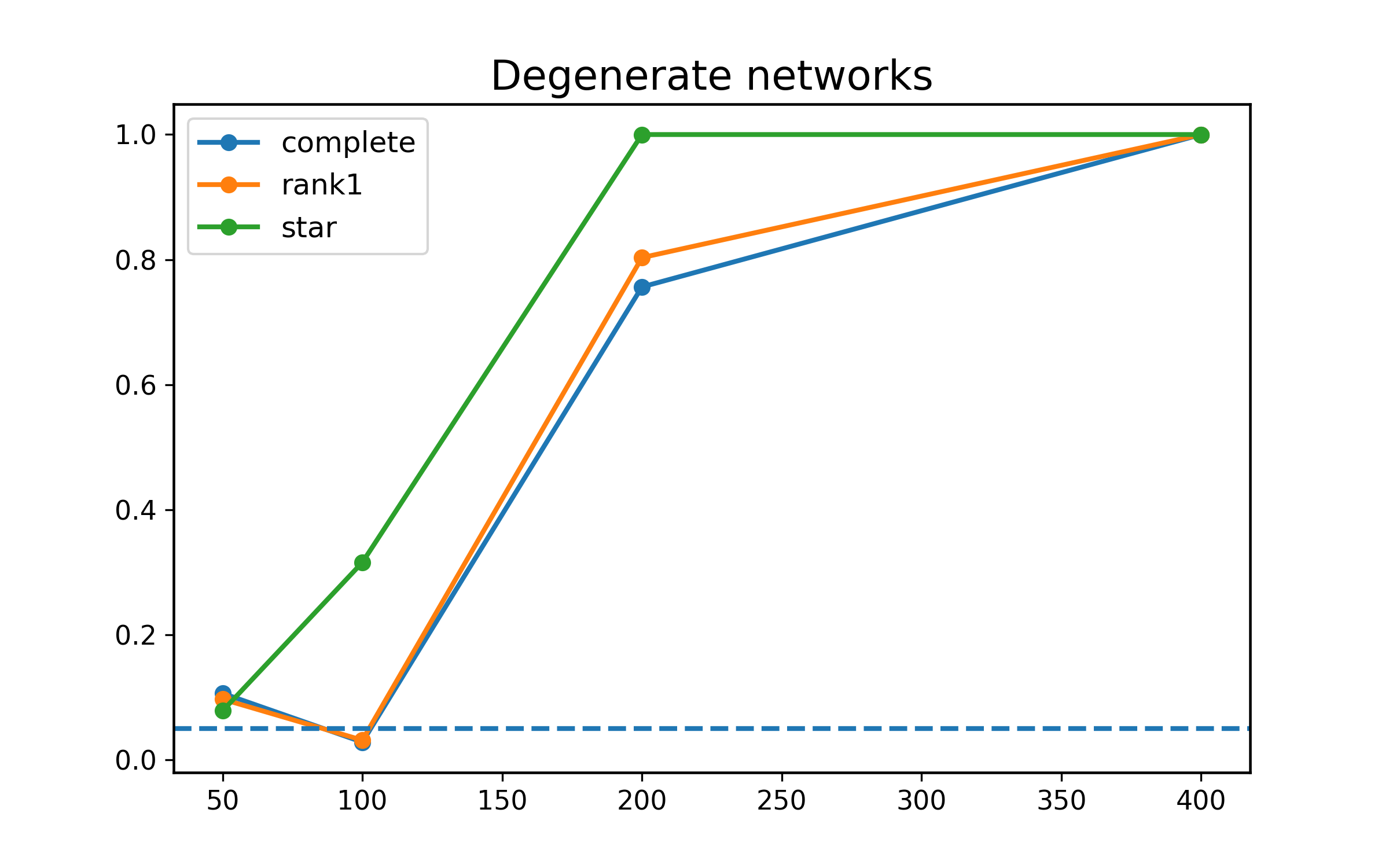
Figure 8: Rejection probabilities under degenerate network structures.
Empirical Link between Spectral Heterogeneity and Detectability
Empirical evidence confirms the tight connection between spectral dispersion and identifiability. Networks with higher spectral spread induce heterogeneous covariance structure, reliably detected by the test, while concentrated spectra prevent both identification and discrimination from scalar alternatives.
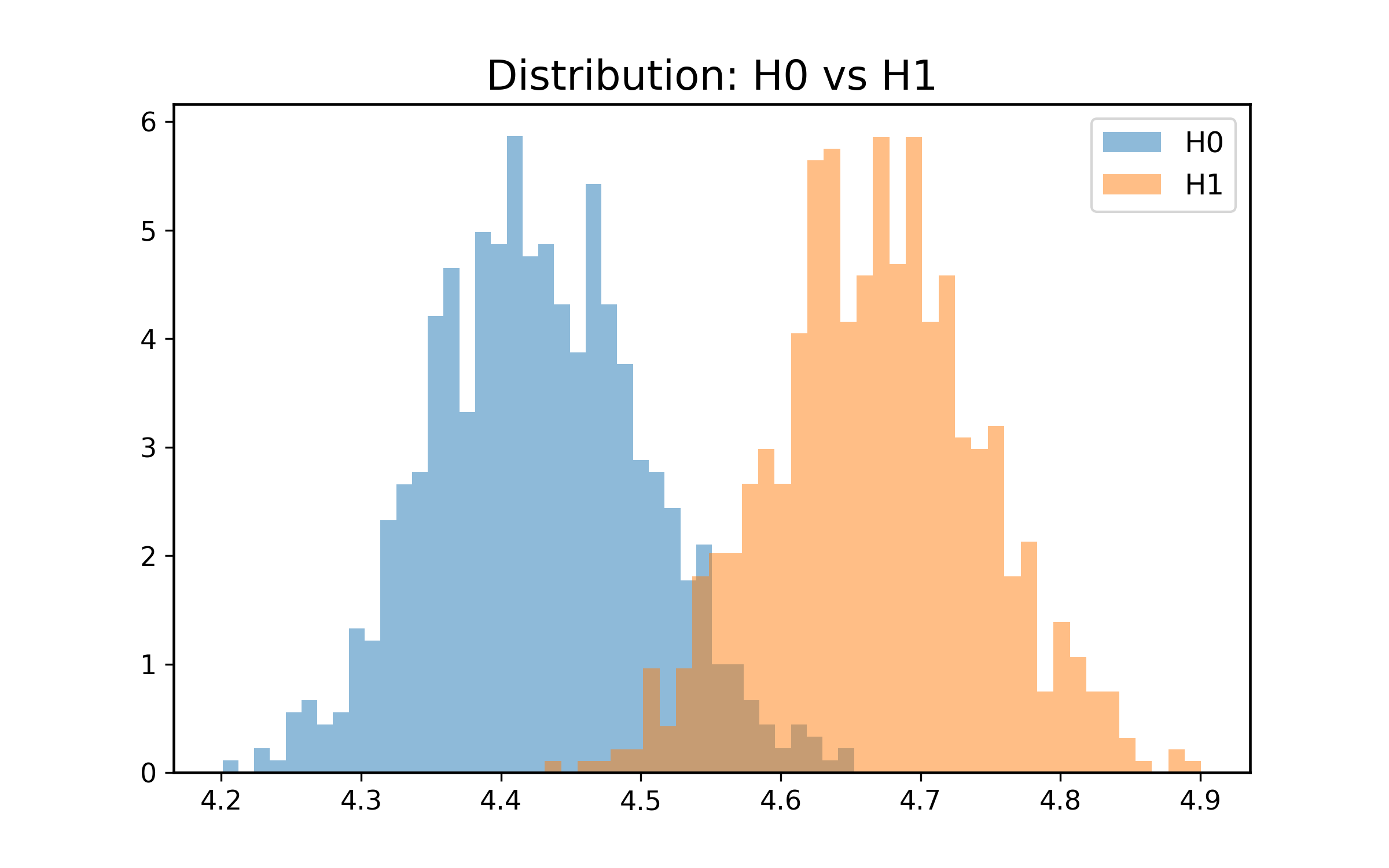
Figure 9: Distributional separation between f(⋅,θ)8 and f(⋅,θ)9; detection is contingent on spectral dispersion.
Implications and Future Directions
The results motivate caution in interpreting observed dependence as evidence of network effects; only sufficiently heterogeneous spectral structure can support identification. Practical applications in economic and social networks (production, finance) must recognize that network detection requires diverse eigenmodes, not merely aggregate dependence. Flexible modeling (ML or semiparametric) may fit dependence but fail to identify structural origins absent spectral richness. Extensions could focus on inference in time-varying, endogenous, or sparse networks and exploit additional structural features for identification.
Conclusion
Identification in nonlinear dynamic network models is fundamentally a spectral phenomenon. Structural recovery and inference depend not on the magnitude of dependence, but on its cross-sectional heterogeneity as encoded in the eigenstructure of the underlying interaction matrix. Semiparametric estimation and testing procedures succeed precisely when spectral dispersion generates non-exchangeable covariance patterns; they behave conservatively otherwise, reflecting theoretical limits. These results unify econometric identification with spectral propagation theory and establish critical conditions for credible inference in latent network models.