- The paper presents a quantum-inspired framework using unsharp measurement via adaptive Gaussian POVMs to achieve continuous, tunable image transformation.
- The method adaptively constructs measurement operators from Gaussian models of image histograms, achieving up to 35.2 dB PSNR and SSIM over 0.95.
- The approach bridges classical kernel regression with operator theory, demonstrating potential for quantum implementation via Naimark dilation.
Unsharp Measurement with Adaptive Gaussian POVMs: A Quantum-Inspired Framework for Image Processing
Introduction and Motivation
This paper introduces a principled quantum-inspired operator-theoretic framework for grayscale image transformation, leveraging unsharp measurements via adaptive Gaussian positive operator-valued measures (POVMs). Going beyond the limitations of traditional segmentation or thresholding—which introduce discontinuities, fail to capture uncertainty, and yield piecewise-constant outputs—the proposed approach views image transformation as a measurement-induced, inherently probabilistic process directly acting on pixel intensities embedded in a finite-dimensional Hilbert space.
By constructing measurement operators adaptively from Gaussian models of the underlying intensity histogram, the framework interpolates between fully unsharp (coarse-grained) and strictly projective (sharp) behavior. The transition is governed by a nonlinear sharpening parameter, allowing continuous control over the mapping from input to output intensities. The approach integrates data-adaptivity, statistical modeling, and operator-theoretic rigor, and establishes connections to kernel regression estimators and quantum mechanical expectation values.

Figure 1: The proposed pipeline constructs Gaussian-based POVMs from image statistics, sharpens the measurement, and reconstructs the image probabilistically.
Embedding and Measurement Model
Each grayscale intensity level is represented as a computational basis state in C256, and each image pixel is encoded as a pure-state projector. The global image is described as a density operator reflecting the intensity histogram. By adopting this formalism, classical image data become amenable to transformation via quantum measurement operators.
A set of K Gaussian kernels is fitted to the histogram—cluster centers either by K-means (leading to uniform spreads) or Gaussian Mixture Models (with learned spreads), forming the response functions over the intensity domain. Diagonal operators constructed from these responses are normalized pointwise to satisfy the POVM completeness condition, yielding a set of positive operators {Ek}.
Pixelwise measurement probabilities are computed as Pk(x,y)=Tr(Ekρx,y), assigning each intensity probabilistically to the K Gaussian components. Output pixel intensity is reconstructed as the expectation value with respect to these probabilities: I^(x,y)=∑k=1KμkPk(x,y). This structure establishes a convex, continuous mapping from original intensities, in contrast to hard-thresholding.
Adaptive Sharpening and the Unsharp-to-Projective Transition
A core contribution is a nonlinear sharpening transformation parameterized by γ>0. Applied to the normalized POVM elements, this operation refines the selectivity of the measurement: for γ=1, the mapping is maximally unsharp (broad averaging); as γ→∞, the system recovers projective measurements (piecewise-constant mapping). This mechanism enables explicit control of the smoothing-localization trade-off, offering tunable denoising and structure-preservation properties.
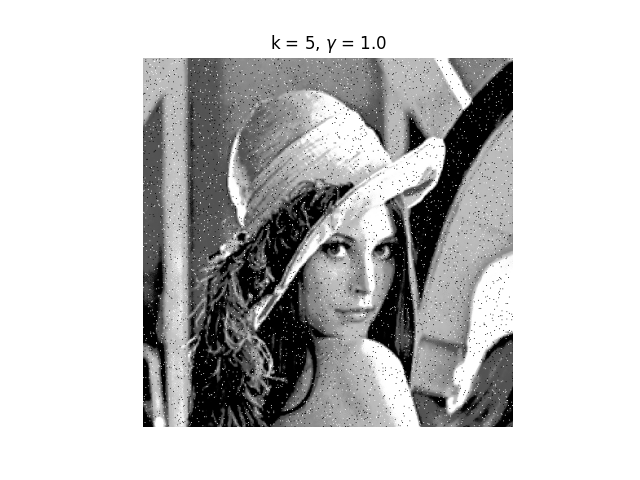
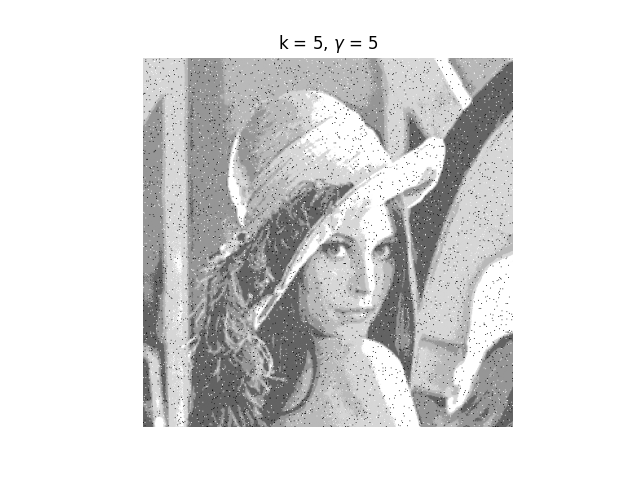
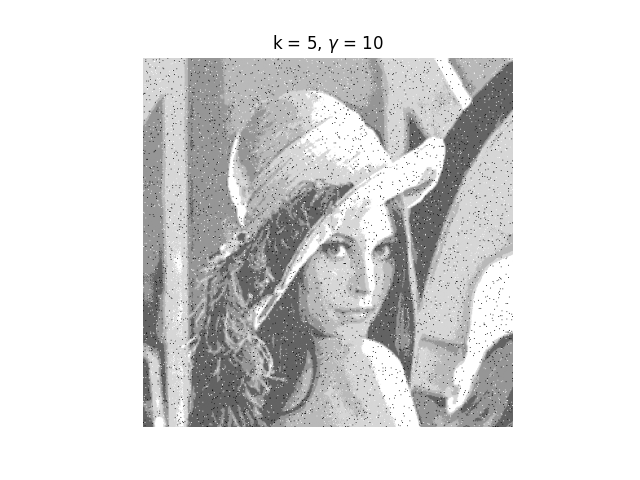
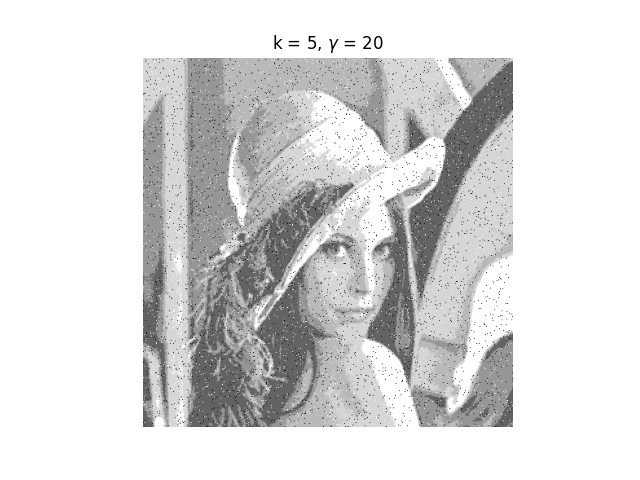
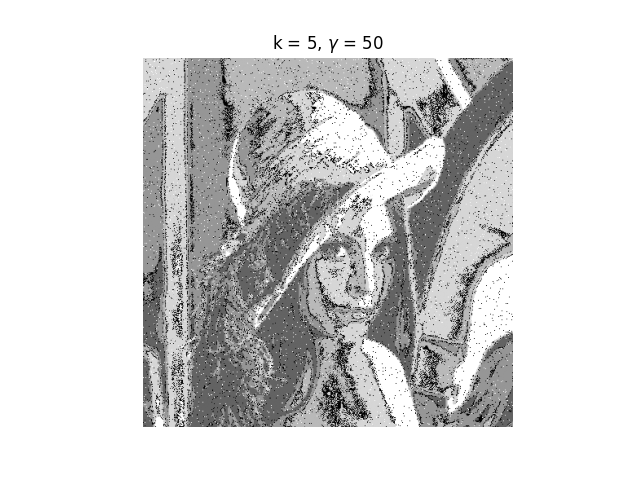
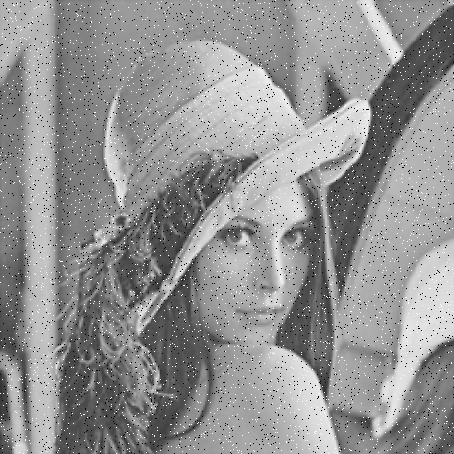
Figure 2: Visualization of output intensities under γ=1 (maximally unsharp), producing smooth, probabilistic mapping.
Experimental Evaluation and Comparative Analysis
The framework is evaluated on canonical grayscale images (Lena, Peppers, Barbara, and real-world urban/natural scenes). Representative intensities are estimated either by K-means clustering or GMM fitting, with the number of components K0 controlling the resolution.
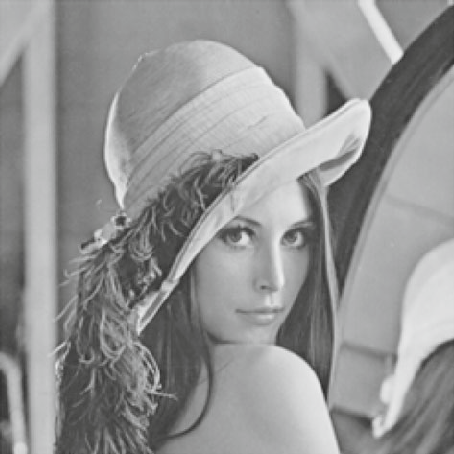
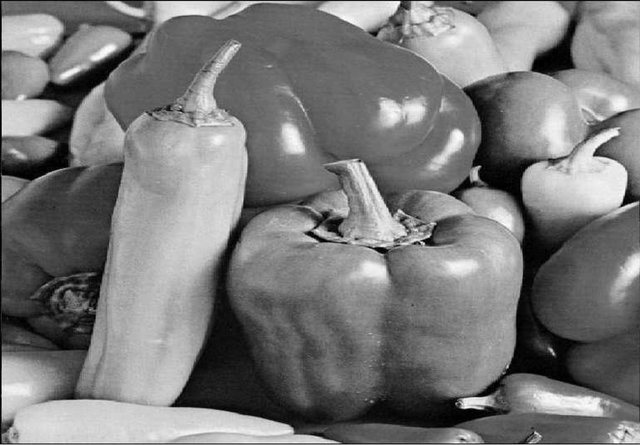
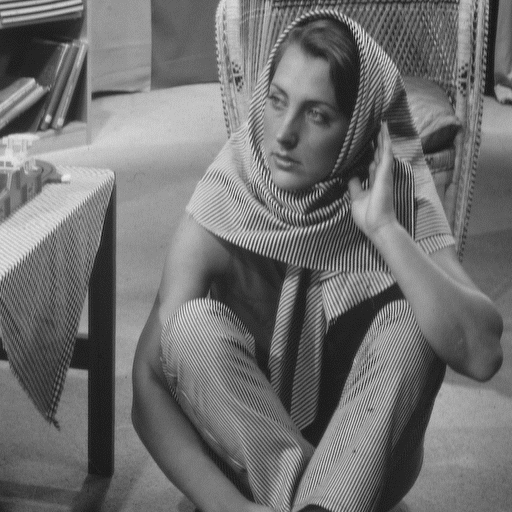
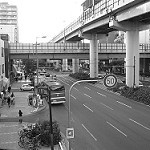
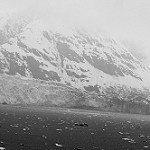
Figure 3: The Lena image, a standard benchmark for classical and quantum-inspired image processing evaluation.
Quantitative results demonstrate substantial improvements in perceptual and information-theoretic metrics over classical (Multi-Otsu, statistical recursive) and quantum (unsharp measurement-based) baselines:
- PSNR: Proposed (KMeans) achieves up to 35.2 dB (Lena), consistently outperforming others (e.g., Multi-Otsu K1 18 dB).
- SSIM: Proposed (KMeans) exceeds 0.95 in multiple benchmarks, indicating strong structural fidelity.
- Shannon Entropy Loss: Proposed (KMeans) maintains loss K2 12%, in contrast to 60–70% for baselines.
Computation time for the KMeans variant is also favorable, typically K31s per image.
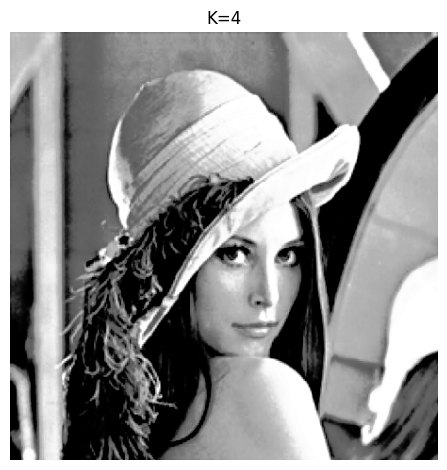
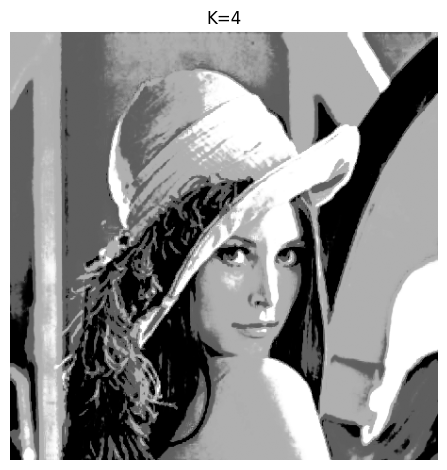
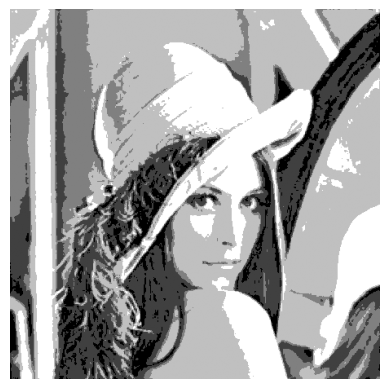
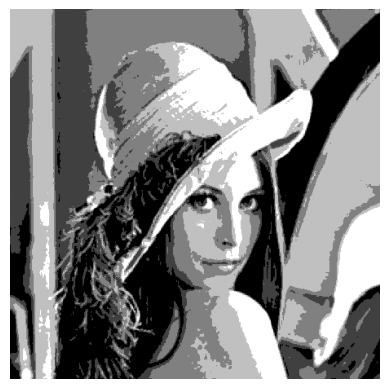
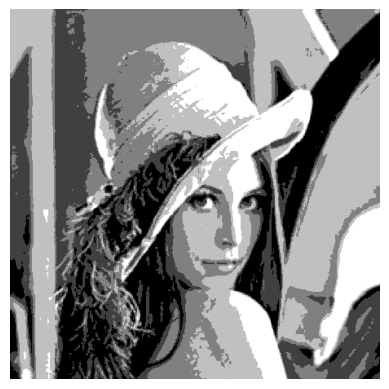
Figure 4: Output using the proposed K-Means-based adaptive Gaussian POVMs shows strong preservation of structure and details.
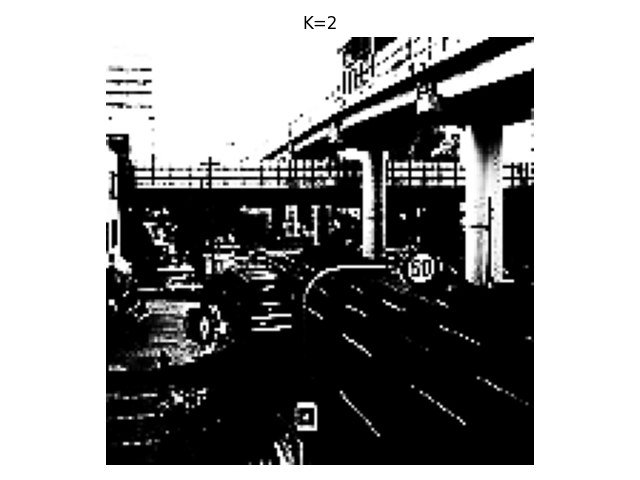
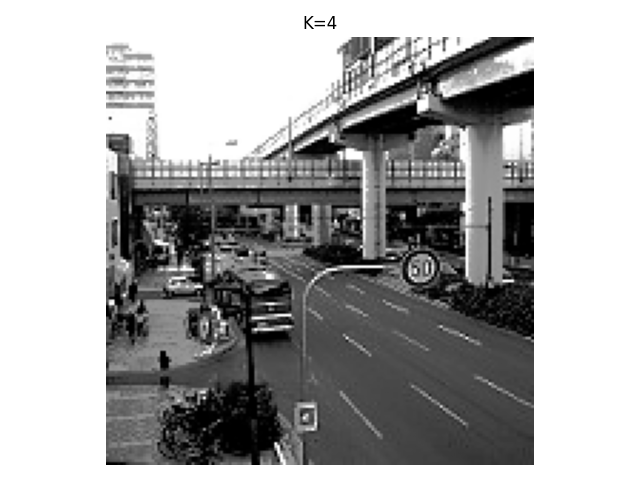
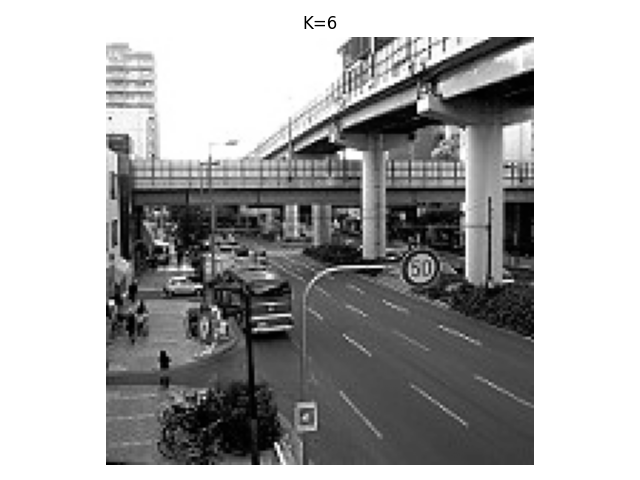
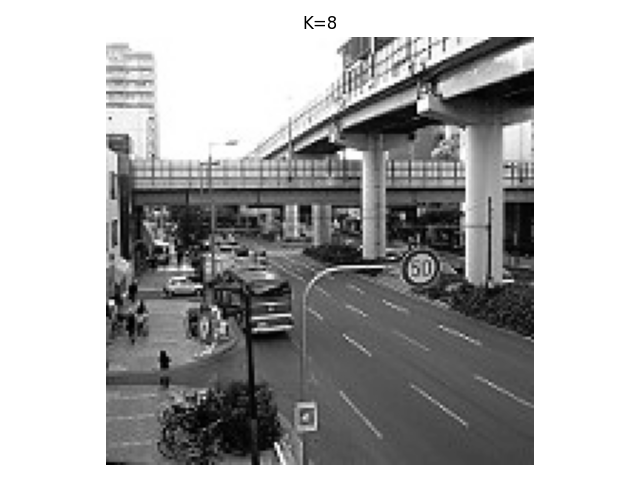
Figure 5: Result for K4 clusters, demonstrating coarse but structure-preserving segmentation.
Theoretical Properties: Adaptivity and Sharpness
A formal analysis establishes (Theorem 1) that increasing K5 (number of Gaussian centers) enhances the fidelity of the image reconstruction, approaching the identity transformation as K6. The convex combination structure guarantees consistent approximation of the original intensities.
Sharpness control (Theorem 2) proves that as K7, the framework exactly recovers the behavior of multiple-threshold (projective) partitioning, while intermediate values yield smooth, probabilistic mappings. Quantitative trends in PSNR/SSIM versus K8 validate this theoretical prediction.
Connections to Quantum Measurement and Physical Realizability
The framework's operator-theoretic rigor retains a direct quantum interpretation. The adaptive Gaussian POVM can be realized on a quantum device via Naimark dilation: a joint unitary maps the Hilbert space encoding the intensity to a joint system-ancilla space, with measurement on the ancilla reproducing the POVM statistics. The diagonal structure of the operators ensures the feasibility for near-term quantum hardware, and the explicit Kraus operator construction is provided.
Implications and Future Directions
Practical Implications: The proposed probabilistic, adaptive transformation framework is well-suited for tasks requiring flexible intensity smoothing, denoising, or non-trivial segmentation, and is robust to histogram variations, noise, and structural diversity.
Theoretical Implications: This work provides an operator-theoretic alternative to conventional image transformations, rigorously bridges classical kernel regression and quantum-measurement-based data processing, and offers a concrete method for continuous, data-adaptive transformations.
Future Directions: Extensions include:
- Application to multi-modal/color or high-dimensional image data via larger Hilbert spaces.
- Incorporation in hybrid quantum-classical models and image analysis pipelines.
- Investigation of end-to-end quantum algorithms for probabilistic reconstruction on NISQ-era hardware.
- Exploration of connections to quantum channel-based image denoising.
Conclusion
This paper establishes a robust, data-adaptive, quantum-inspired framework for image transformation, leveraging unsharp measurement via adaptive Gaussian POVMs. By systematically bridging quantum operator theory with practical image-processing requirements, including optimal parameterization of smoothing-localization trade-offs, the method achieves superior quantitative and perceptual performance over conventional approaches. The theoretical results ensure principled adaptivity and tunability, and the operator construction supports direct physical realizability on quantum devices. This positions the Gaussian-POVM measurement-inspired paradigm as a foundational tool for data-adaptive vision tasks within both classical and quantum information-processing domains.
[See "Unsharp Measurement with Adaptive Gaussian POVMs for Quantum-Inspired Image Processing" (2604.04685)]

