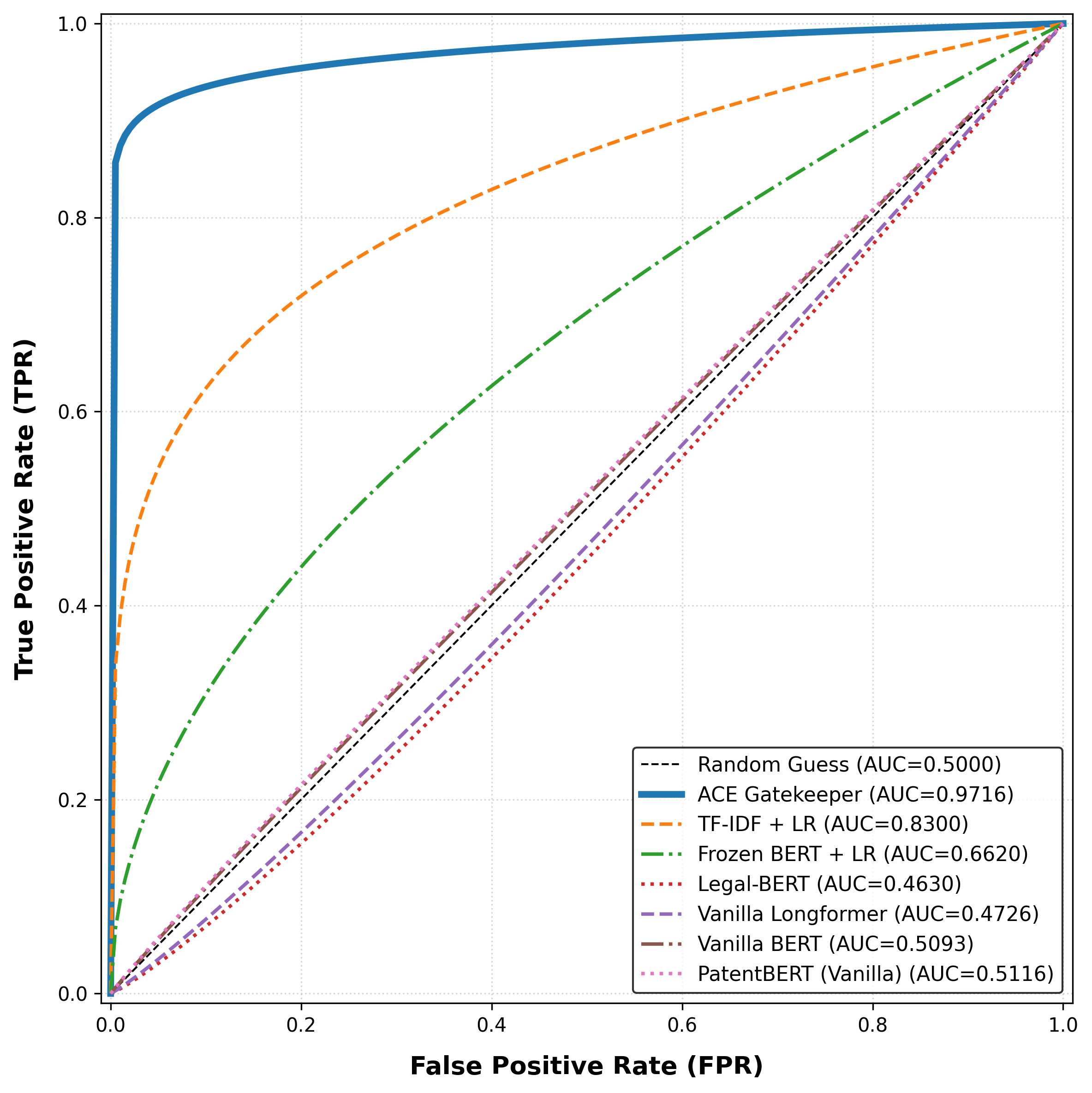
- The paper presents the ACE framework that combines uncertainty-aware triage with selective LLM escalation for patent claim validation.
- It employs a two-stage architecture with a PatentBERT encoder measuring predictive entropy, achieving 94.95% F1 and significant cost reductions.
- The analysis demonstrates that ACE balances legal scrutiny with computational efficiency, underscoring its potential for high-stakes NLP applications.
Adaptive Cost-Efficient Evaluation for Reliable Patent Claim Validation
Introduction and Significance
The paper "Adaptive Cost-Efficient Evaluation for Reliable Patent Claim Validation" (2604.04295) addresses the critical challenge of zero-defect tolerance in automated validation of patent claims. Patent claims are unique as they serve as both technical descriptions and legally defining elements, imposing requirements for flawless logical and structural precision. Traditional evaluation approaches in NLP, including both reference-based surface metrics and full-sequence LLM-based evaluators, prove inadequate: they either lack the capacity to catch intricate legal errors or become computationally infeasible for high-volume validation (Figure 1).
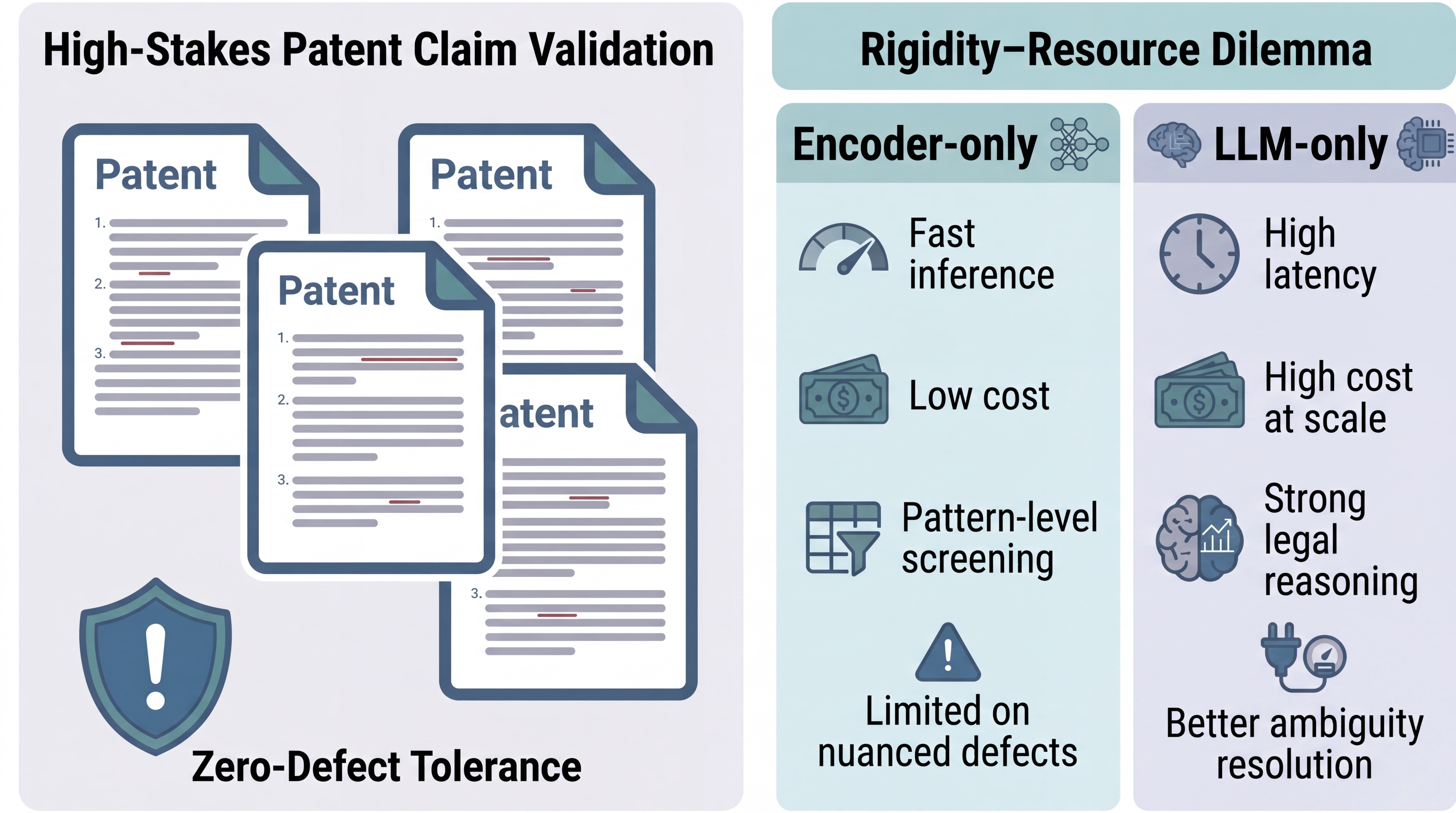
Figure 1: Patent claim validation necessitates zero-defect tolerance, revealing the inherent compromise between efficient encoders and resource-intensive LLMs.
The proposed ACE (Adaptive Cost-efficient Evaluation) framework leverages predictive entropy from a domain-adapted encoder to triage claims, escalating only ambiguous cases to an expert LLM auditor. This design decouples reasoning complexity from evaluation cost, thereby providing granular legal scrutiny at scale without prohibitive computational overhead. The paper’s contributions are contextualized by the introduction of a robust MPEP-aligned dataset (ACE-40k), fine-grained ablation studies, and comprehensive analyses of cost-accuracy trade-offs specific to patent law requirements.
Framework and Methodological Innovation
ACE operates via a hybrid, two-stage architecture (Figure 2). The high-throughput Gatekeeper, implemented via a multitask fine-tuned PatentBERT encoder, assesses each claim’s validity, estimating its predictive uncertainty through entropy over an extended error taxonomy. If the uncertainty exceeds a calibrated threshold, the claim is escalated to the Expert LLM, which employs an instruction-tuned Chain of Patent Thought (CoPT) protocol. This protocol enforces robust statutory reasoning by decomposing the claim, mapping to 35 U.S.C. standards, and generating a transparent, verifiable decision path.
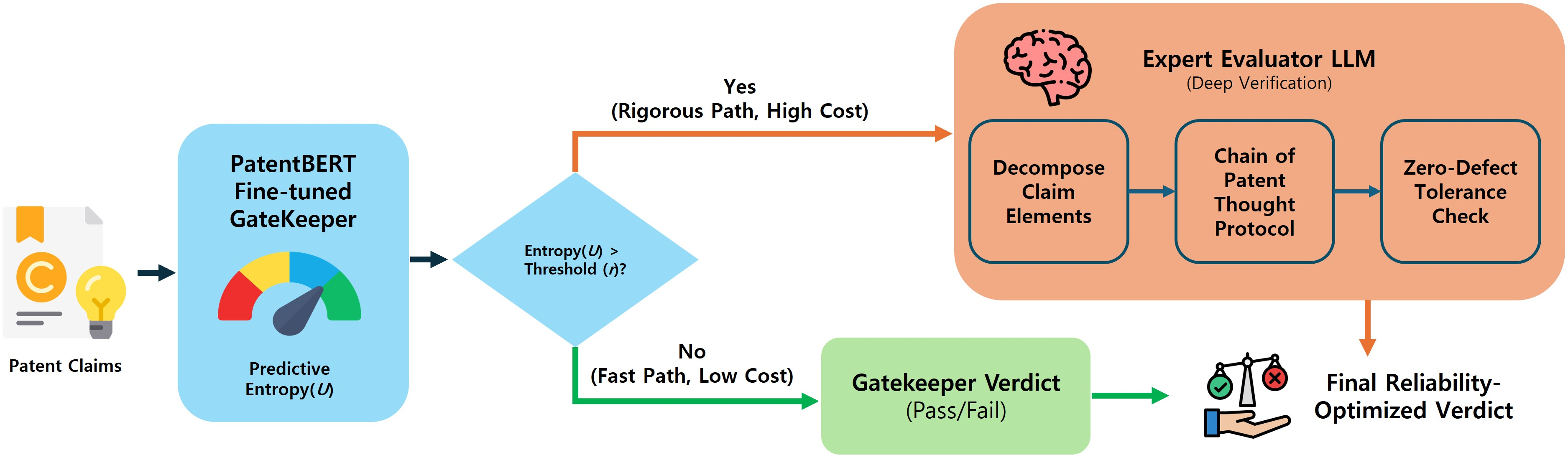
Figure 2: The ACE framework adaptively escalates high-uncertainty claims for deep LLM-based scrutiny while maximizing throughput for unambiguous claims.
The entropy-driven routing mechanism is operationalized via a dynamic risk-coverage analysis, producing an optimal escalation rate balancing retained F1 on low-uncertainty samples and minimizing LLM invocations. The deployment protocol is formalized to ensure high-reliability gates for the majority of claims, with only complex, legally nuanced cases incurring expensive LLM inference. The CoPT protocol itself is tightly schema-constrained, reducing both output variability and inference time compared to unconstrained text generation.
Empirical Evaluation and Results
Experiments are conducted on the novel ACE-40k benchmark, with a strictly balanced 1:1 valid/invalid claim distribution, further stratified by five legally motivated error categories (Antecedent, Dependency, Logical, Ambiguity, Syntax).
Key results:
Fine-grained analyses confirm that the Gatekeeper dominates on dependency errors (Recall: 92.37%) but exhibits its principal limitation in tracking antecedent basis errors (Recall: 82.77%), underscoring the necessity of generative reasoning modules (Figure 4).
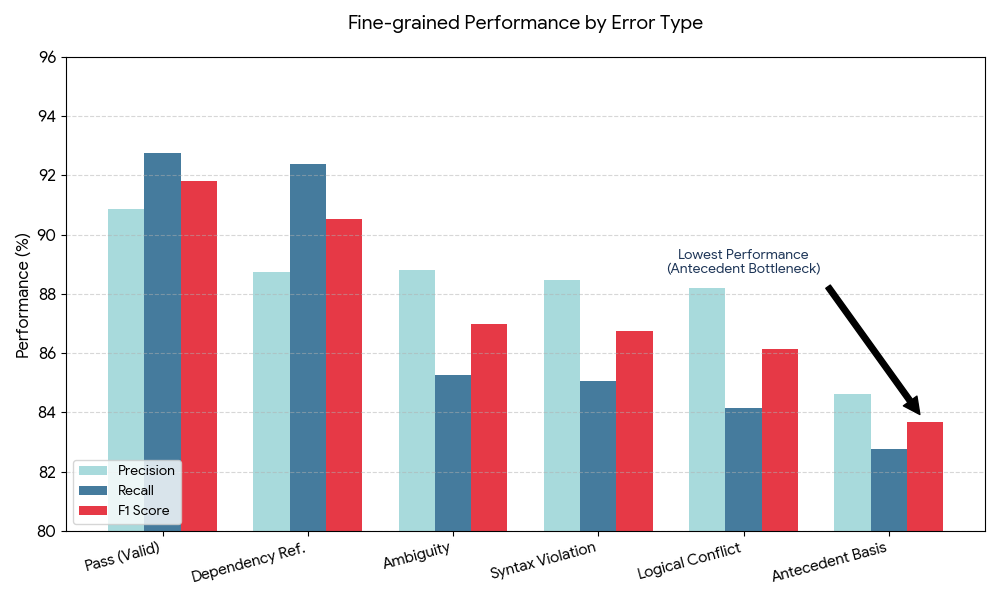
Figure 4: The Gatekeeper excels in dependency patterns yet reveals an "Antecedent Bottleneck," justifying escalation to the LLM.
A risk-coverage trade-off analysis reveals a critical operating point at an escalation rate of 20%, where 80% of claims are confidently handled by the encoder, and only the ambiguous 20% require resource-intensive CoPT reasoning, maximizing retained F1 and cost efficiency (Figure 5).
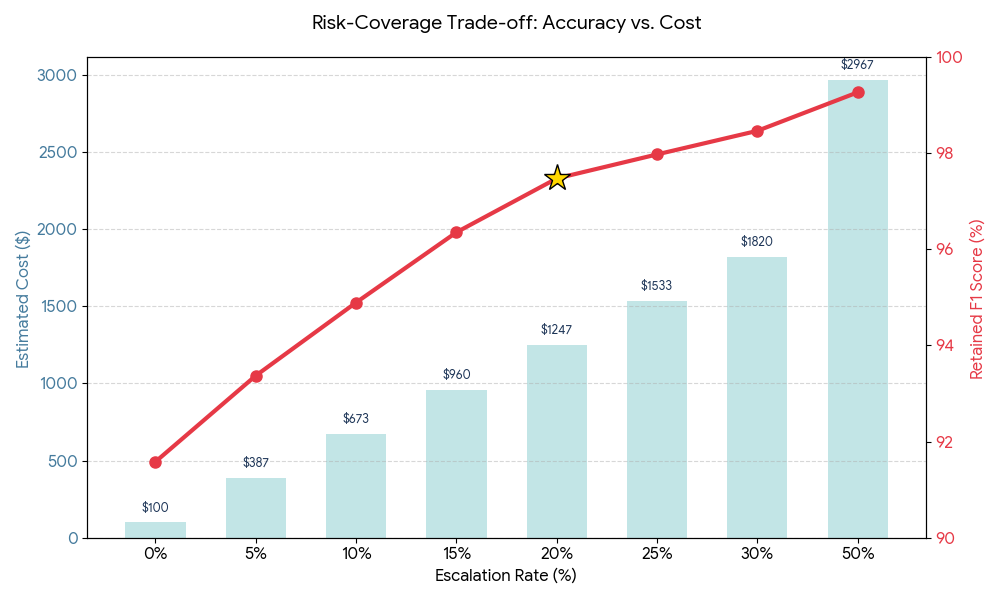
Figure 5: Retained F1 and operational cost as functions of the escalation rate, establishing the ACE routing threshold for optimal accuracy/cost.
Theoretical and Practical Implications
The ACE framework is emblematic of a shift towards uncertainty-aware, selective reasoning in high-stakes, high-volume NLP applications. By quantifying and leveraging model uncertainty, ACE efficiently fuses the throughput of encoders with the deep reasoning capacity of LLMs without incurring the full economic penalty of indiscriminate large-model inference. This problem formulation and solution represent a move beyond static checklists and rigid pipelines, allowing for dynamic depth modulation aligned with sample-level difficulty.
The paper's demonstration that structured, protocol-driven LLM generation (through CoPT) simultaneously improves reasoning quality and reduces inference latency counters assumptions about the cost of explainability. Further, the modular legal-reasoning protocol generalizes to domains requiring zero-defect validation, suggesting applicability to broader law, compliance, or contract analysis contexts.
Limitations and Extensions
The principal jurisdictional scope is restricted to U.S. patent law, calibrated against MPEP-guided error categories. However, the uncertainty-driven routing architecture and schema-constrained reasoning protocol are fundamentally domain-agnostic and can be reparametrized for other statutory schemas or high-integrity text domains. Evaluation focuses exclusively on internal claim validity, not full patentability (e.g., novelty, non-obviousness) which would require additional external world modeling.
The ACE-40k dataset's balanced nature differs from the typically imbalanced real-world distributions but robustness studies under 9:1 valid/invalid skews show the framework’s efficacy persists, with further reduced operational costs.
Future Directions
Extension of the ACE methodology involves (1) formal adaptation to non-U.S. legal ontologies, (2) further exploration of uncertainty quantification under deep distributional shift and open-set error modes, and (3) integration with end-to-end patent prosecution pipelines, including novelty and prior art analysis modules. Investigating whether model uncertainty can serve as a control primitive in other mission-critical AI workflows is a salient direction.
Conclusion
ACE achieves strict domain-aligned, zero-defect patent claim validation with significant computational cost savings. Its fusion of uncertainty-aware triage and explicit legal reasoning suggests a scalable path for deploying LLMs in production-grade, compliance-critical environments. The modular, protocol-driven design, combined with robust empirical gains and resource economy, provides a blueprint for reliable, adaptive validation architectures across high-stakes NLP applications.