- The paper introduces inversion algorithms that leverage algebraic structure to exactly recover all confidence set components, ensuring full detection of both bounded and unbounded regions.
- It reveals that grid search methods misclassify confidence intervals in over 40% of weak IV specifications, leading to substantial empirical inference errors.
- The study employs Chebyshev approximation to achieve controlled, finite-sample coverage for non-algebraic conditional tests amidst heteroskedastic and autocorrelated errors.
Confidence Sets under Weak Identification: Theoretical and Practical Advances
Introduction and Motivation
This paper tackles the foundational problem of constructing valid confidence sets and intervals in linear IV models under weak identification and nonstandard error structures (heteroskedasticity, autocorrelation, clustering). The central contribution is to provide inversion algorithms and numerical methods for confidence region construction that remain valid under weak identification, thereby addressing a practical and theoretical gap in empirical econometrics.
The paper identifies a critical disconnect: although weak-instrument robust tests (e.g., Anderson–Rubin, LM, CQLR, CLR) have emerged and are widely used, routine empirical practice inverts these tests via naïve grid search. The authors argue—with strong empirical illustration using the Euler equation of Yogo (2004) and extensive meta-analysis across 158 IV specifications—that grid search commonly leads to misleading inference, including missed components, incorrect boundedness, and qualitative region error.
Numerical Failures of Grid Search and Empirical Pathology
The empirical evidence shows that grid search inversion is not an innocuous algorithmic choice. For weakly identified IV designs, especially with high-dimensional or clustered/HAC robust errors, grid search frequently misses disconnected confidence set components and often truncates or misclassifies unbounded regions.
This issue is not hypothetical: in over 40% of specifications reviewed, grid-based intervals fail to match the true confidence set geometry (as constructed by exact or controlled-approximation methods), and misclassification of boundedness/unboundedness is common.
Notably, the source of these failures is entirely numerical—these arise even when the underlying statistical test is correct and robust.
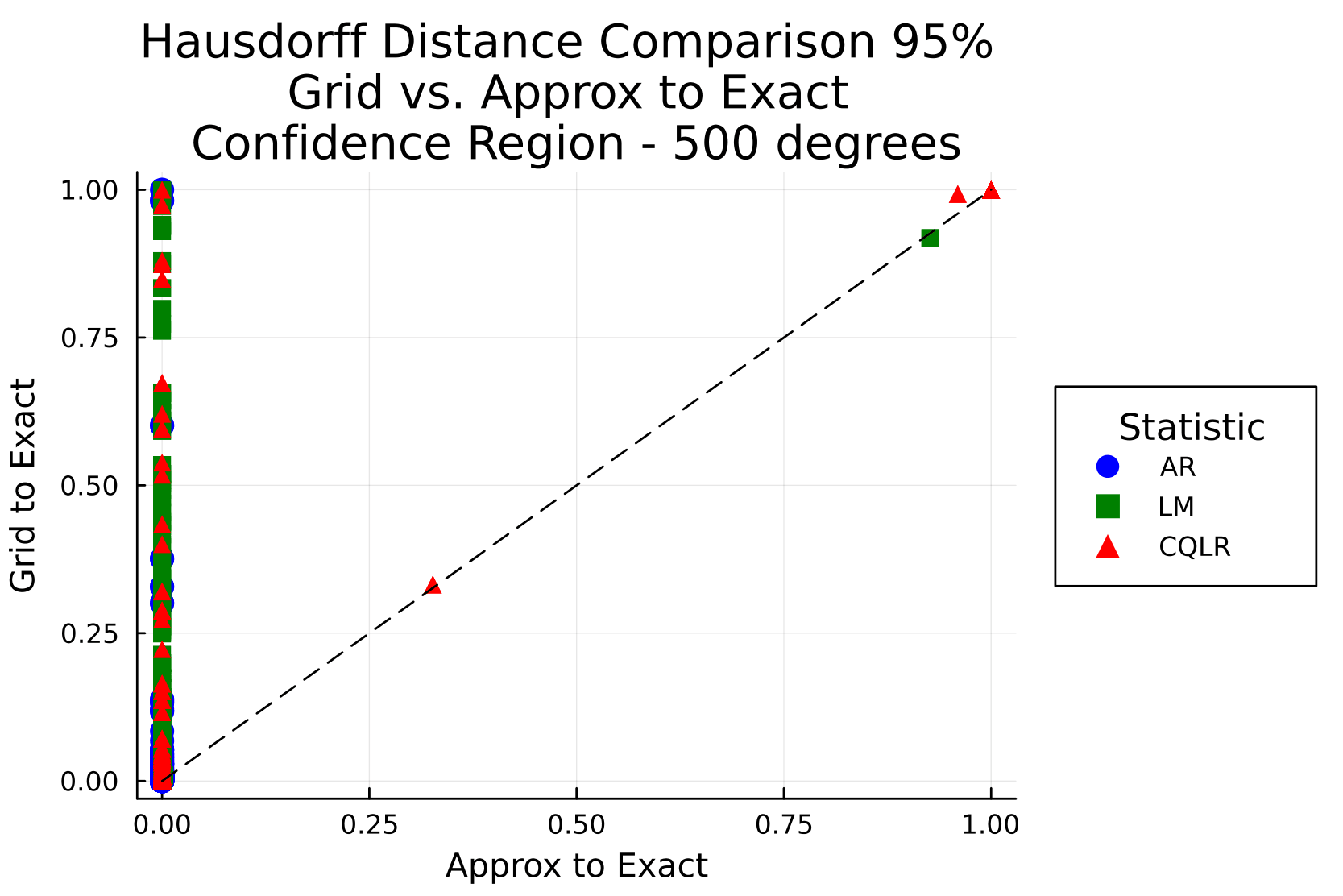
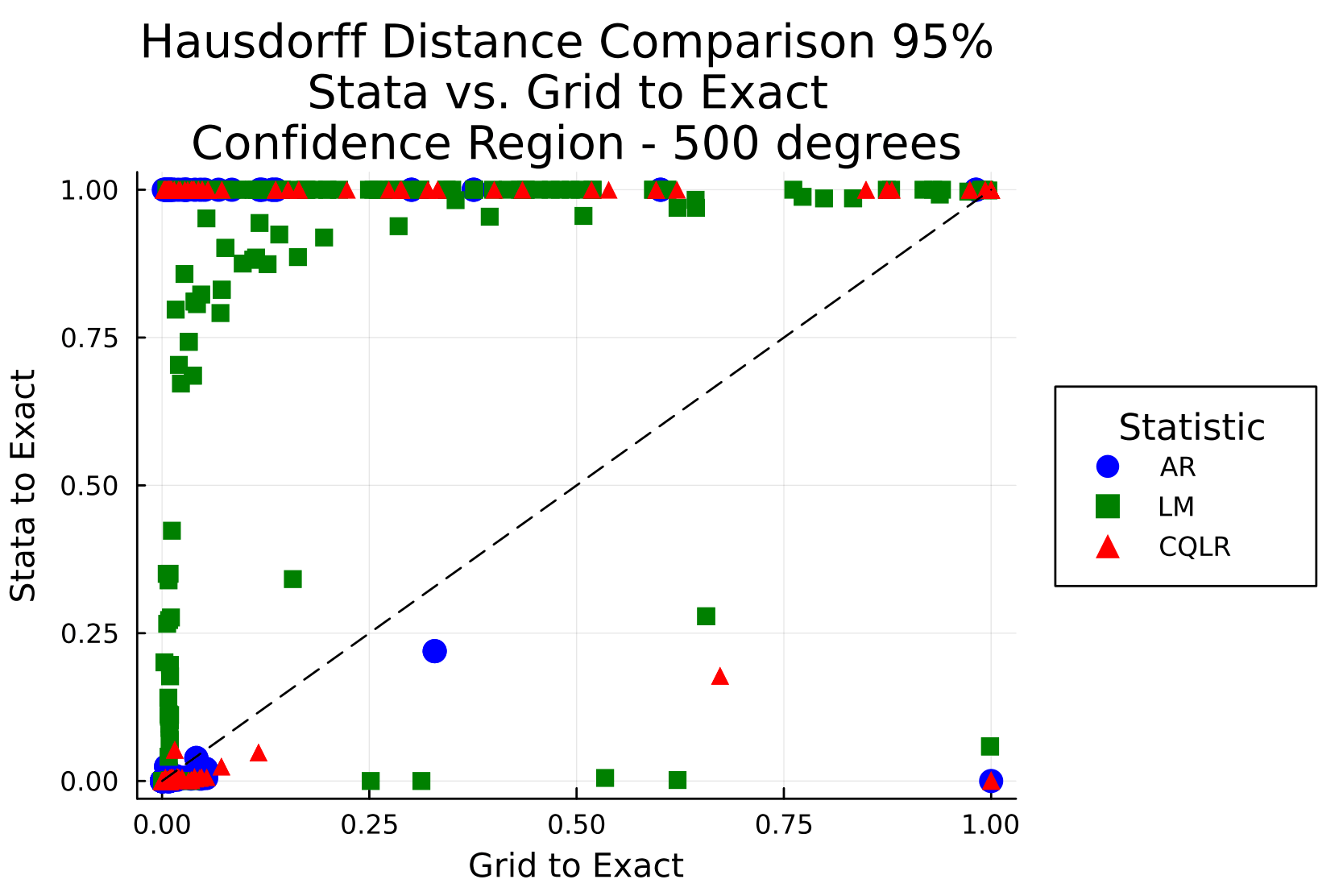
Figure 1: The normalized Hausdorff distance (accuracy loss) between Chebyshev-based and grid-based algorithms across empirical designs, showing dominant accuracy of the Chebyshev approximation.
Exact and Approximate Inversion: Exploiting Algebraic Structure
The core technical advance is the replacement of grid search by inversion algorithms that exploit the algebraic (rational/polynomial) relationship between test statistics (AR, LM, CQLR, etc.) and the parameter of interest.
AR and LM: Exact Algebraic Inversion
For AR and LM, the key insight is that their test statistics are rational functions of the structural parameter. Their boundaries are determined by real roots of polynomials whose degree is finite and computationally tractable (AR: degree $2k$; LM: up to degree $8k-4$). Exact inversion, then, reduces to global root-finding for these polynomials, guaranteeing that all intervals and disconnected components are recovered with no discretization error.
CQLR: Piecewise-Algebraic Exact Inversion
The CQLR statistic in HAC settings is more complex as the test is not globally invertible. The authors develop an interval decomposition algorithm: partitioning the parameter space into regions where the rank statistic is invertible, mapping the test statistic into the rank domain, then solving a set of polynomial inequalities, and finally mapping back to parameter space. This ensures complete recovery of all components regardless of geometric complexity.
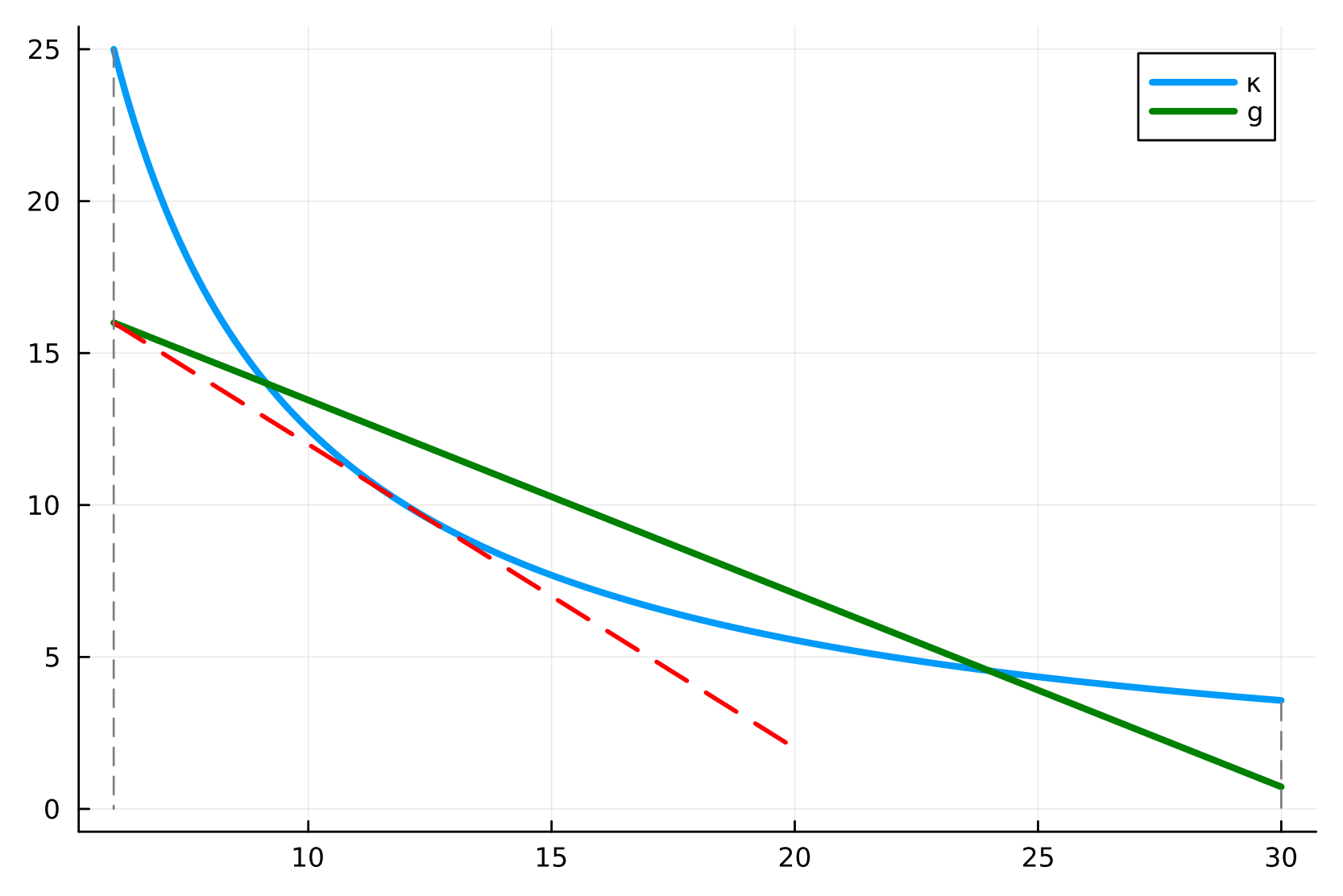
Figure 2: Schematic for Algorithm 1, illustrating decomposition and root-finding via intervals in the rank domain for CQLR inversion.
Chebyshev Approximation for Non-Algebraic Conditional Tests
For more general conditional statistics (CLR, CIL), where no tractable algebraic characterization exists, the paper formalizes a Chebyshev approximation framework. The parameter space is compactified via bijections (e.g., tan−1), and both the test statistic and the critical value function are uniformly approximated by Chebyshev polynomials over [−1,1].
This facilitates global root finding for the polynomialized inequality defining the confidence set, with the major advantages:
- Guaranteed detection of unbounded or disconnected regions: The approximation is global, not local.
- Uniform control of coverage distortion: Coverage error induced by numerical approximation is directly bounded; convergence is ensured as the polynomial degree increases.
- Stability and efficiency: Chebyshev nodes prevent Runge's phenomenon and offer superior boundary coverage compared to grid search.
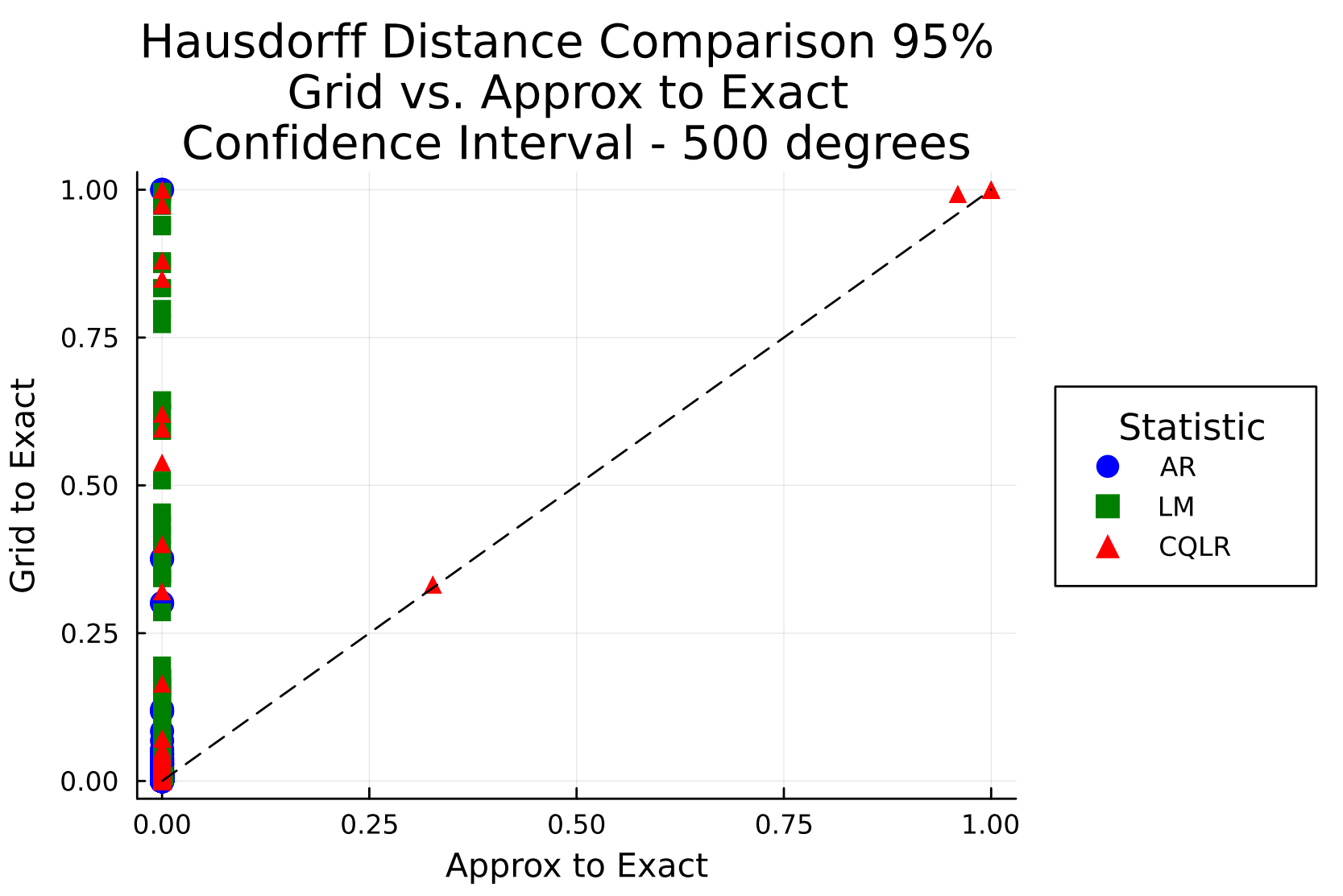
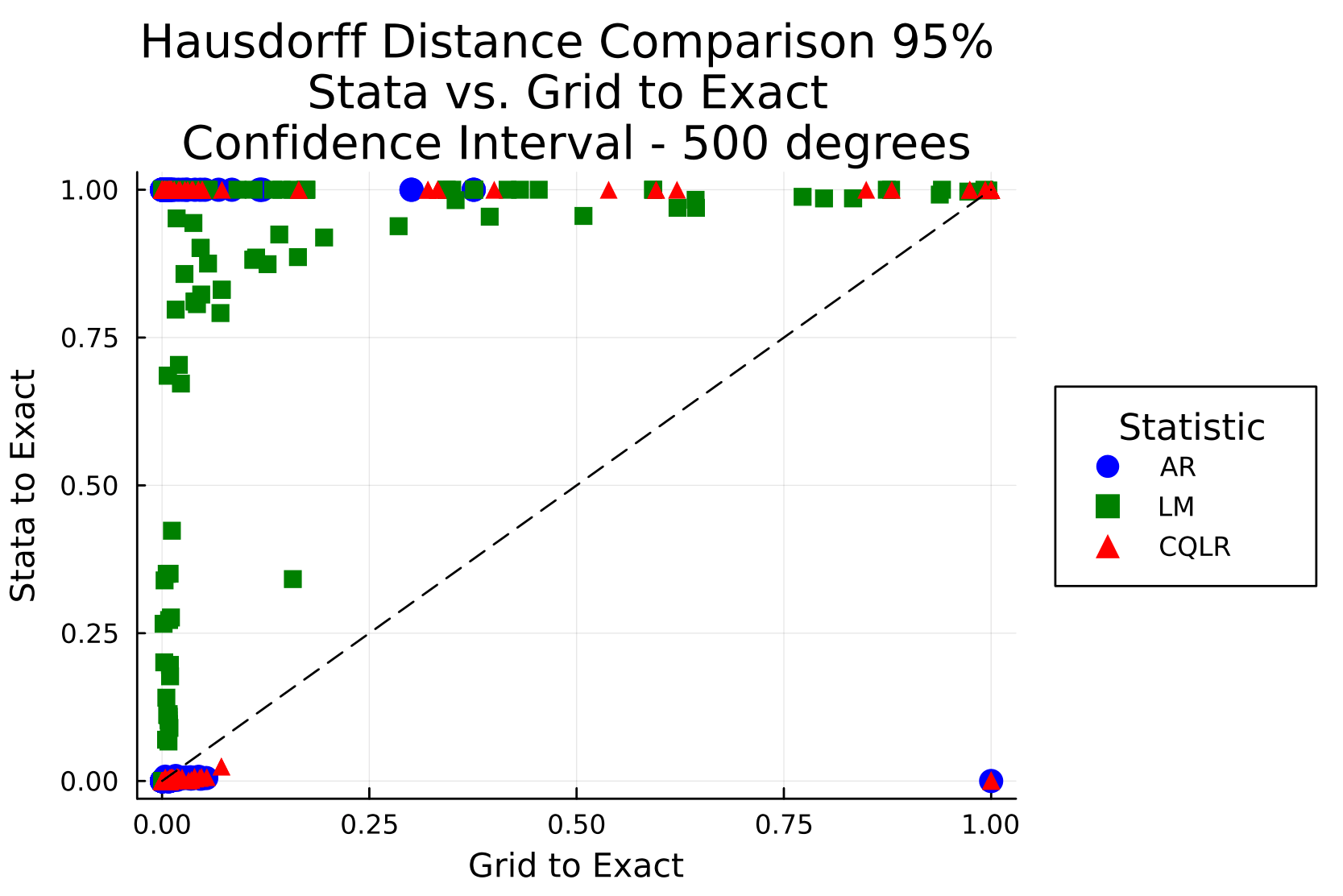
Figure 3: Hausdorff distance (approximation error) for Chebyshev-based and grid-based algorithms for confidence intervals, showing the improved performance of the Chebyshev method.
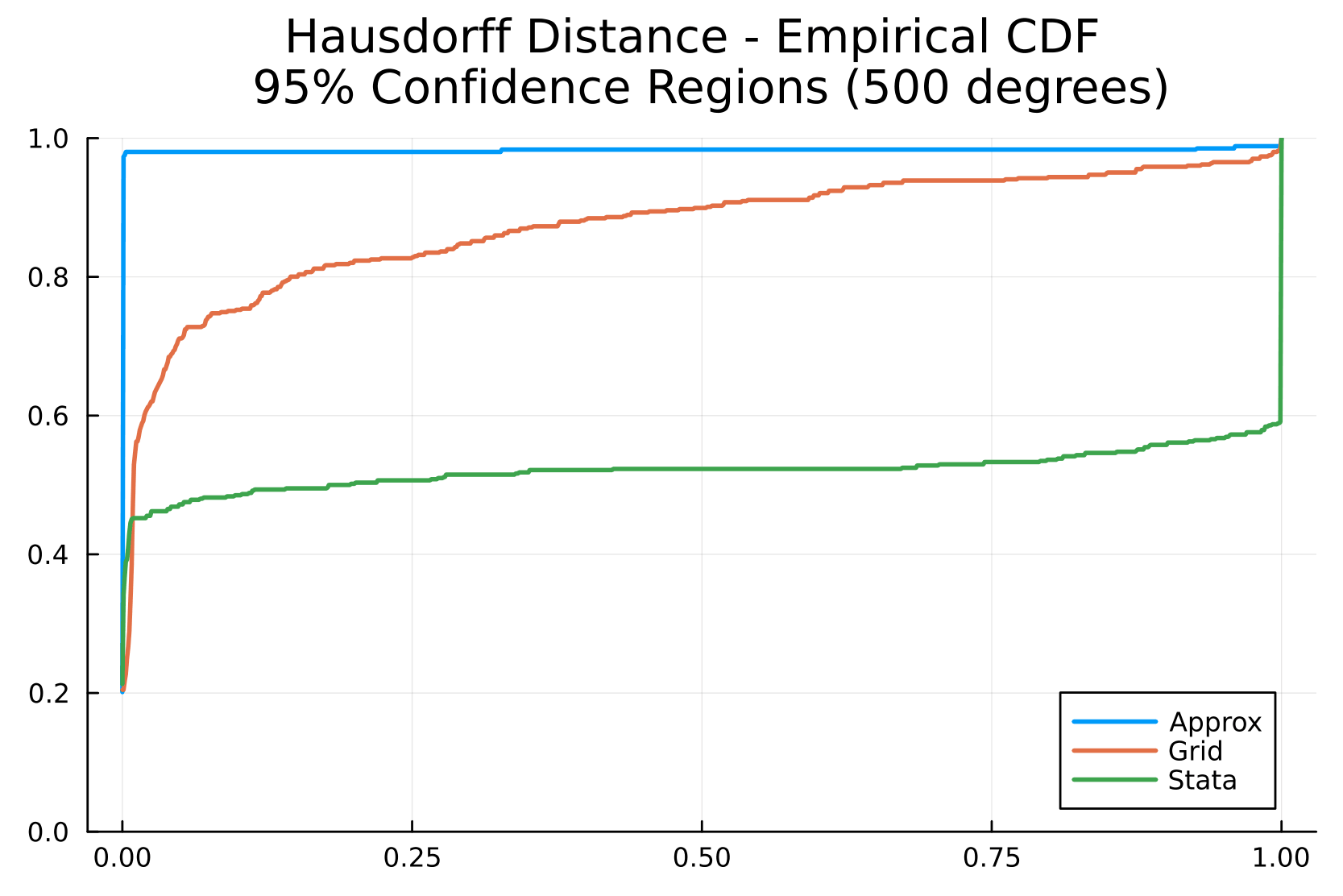
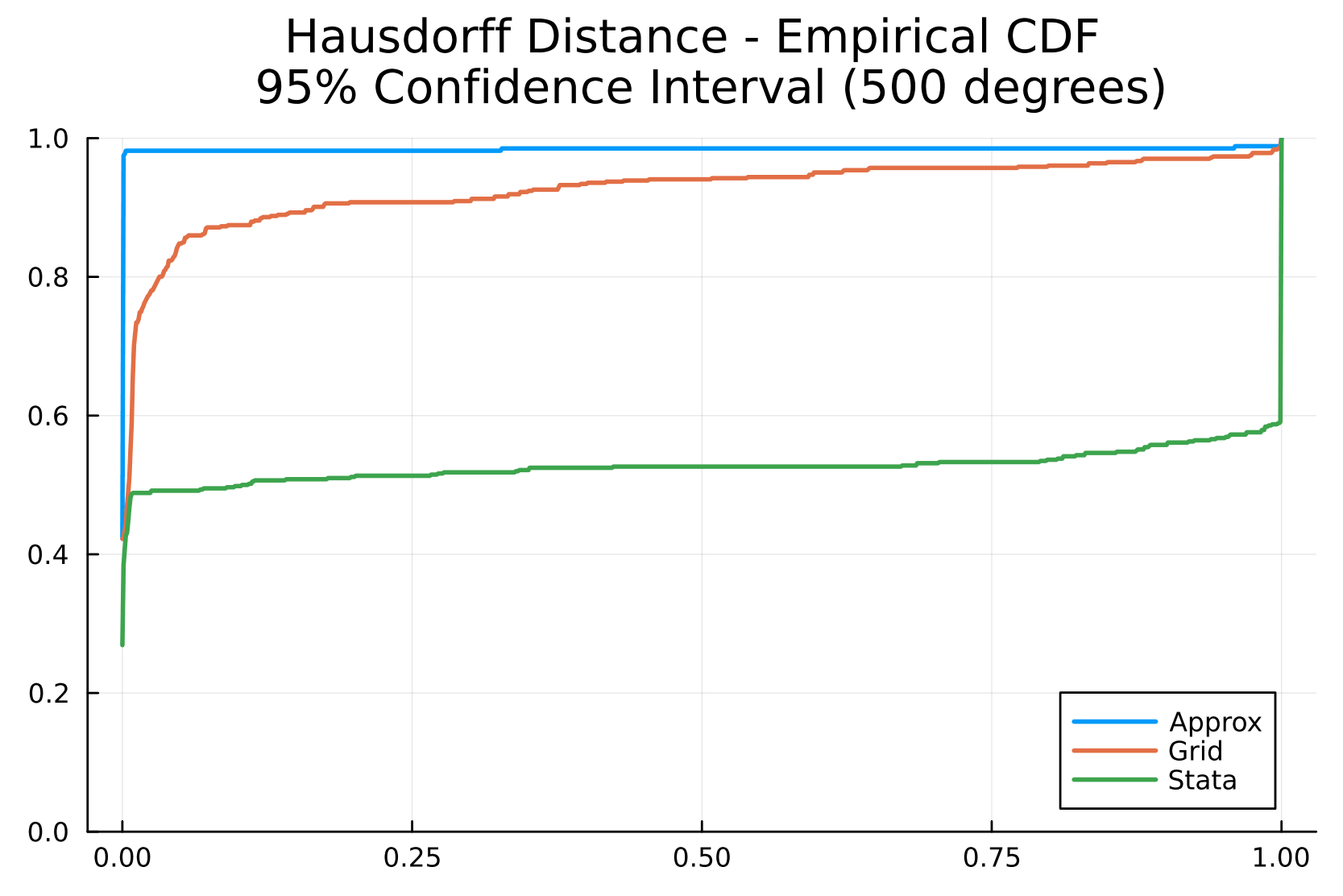
Figure 4: CDF of normalized errors; the Chebyshev approximation stochastically dominates grid-based methods in empirical accuracy.
Extensions to Rational and Nonlinear Moment Models
The algebraic inversion approach directly extends to IV models with rational or polynomial moment conditions, including GMM with polynomial moments (as in dynamic panels). The rational structure is preserved under quadratic forms, matrix inversion, and continuous updating GMM, thus the root-finding logic and partitioning generalize.
For fully nonlinear models, compactification and Chebyshev approximation again yield numerically reliable interval estimates, provided the test statistic is continuous and converges to well-defined limits at boundary values. Semi-algebraic set representation allows use of algorithms such as cylindrical algebraic decomposition for multidimensional parameter regions.
Implications and Theoretical Properties
Numerical inversion is not an afterthought or technicality but a first-order component in valid inference under weak identification and complex error processes. The paper provides formal guarantees that:
- Exact inversion recovers all confidence set components, irrespective of geometry (bounded/unbounded, connected/disconnected).
- Chebyshev approximation achieves arbitrarily accurate coverage for conditional tests such as CLR and CIL, with the approximation error controlled directly by polynomial degree.
- The coverage loss induced by approximation is explicitly bounded, yielding finite-sample reliability guarantees that are absent from grid search.
Practical consequences are substantial: empirical researchers using grid-based confidence sets in weak IV designs are often reporting intervals with incorrect geometry and erroneous inference about identification strength. These pathologies are eliminated by the methods here.
Conclusion
This paper provides an authoritative solution to the critical numerical inversion problem in weak-IV robust inference. By leveraging algebraic structure for exact root-finding, and Chebyshev-based controlled global approximation for general conditional tests, it enables both theoretically valid and practically robust confidence sets under weak identification and general errors. The framework is generalizable, encompassing IV, GMM, and related nonlinear models with polynomial/rational moments.
The implications for practice are immediate: researchers should abandon grid search in favor of algebraic or Chebyshev-based inversion algorithms when constructing confidence sets under weak identification. Future work may extend these results to high-dimensional and semi/nonparametric models where similar algebraic or global numerical strategies are applicable.
References
For full technical development and empirical evidence, see "Confidence Sets under Weak Identification: Theory and Practice" (2604.04279).

