- The paper presents a generalized numerical Gram matrix method to construct and classify Mutually Unbiased Bases (MUBs) in finite dimensions.
- It employs third- and fourth-order trace constraints to validate candidate MUB sets and demonstrates their equivalence through Clifford symmetry analysis.
- The study identifies isolated solution points in prime-power dimensions while reinforcing the nonexistence of maximal MUBs for d=6 in the explored phase space.
Generalized Numerical Construction of MUBs: A Group Theoretical Investigation
Introduction
This work addresses the foundational problem of constructing complete sets of Mutually Unbiased Bases (MUBs) in finite-dimensional Hilbert spaces, a key structure in quantum information and quantum foundations. MUBs provide optimal measurement schemes for quantum state tomography and are deeply connected to the geometry and algebra of finite-dimensional quantum systems. Analytical constructions of maximal sets of d+1 MUBs are well-understood for prime and prime-power dimensions, utilizing the Weyl-Heisenberg (WH) group and finite fields. However, for composite non-prime-power dimensions (notably d=6), the existence of such maximal sets remains unresolved. This paper develops a generalized numerical method for constructing and classifying MUBs, with no reliance on a priori group structure, and provides a comprehensive symmetry and invariance analysis.
Analytical and Numerical Construction of MUBs
Group-Theoretic and Algebraic Approach
In prime and prime-power dimensions, MUBs can be constructed analytically using group-theoretic methods. The WH group, generated by generalized Pauli shift and phase operators, admits a partition into maximal sets of pairwise commuting classes. These partitions are directly mapped to finite affine planes in the exponent representation, with the essential role played by finite field structure for the uniqueness of line intersection properties in the associated geometry. For prime-power d=pm, analogous constructions exploit tensor product operator bases with commutativity and disjointness constraints converting the problem to the classification of certain A-matrices over finite fields.
Gram Matrix Characterization
The core advancement is the translation of the MUB construction problem into the geometry of the Gram matrix. For a candidate set of d+1 MUBs, the complete Gram matrix G is a projection operator. The paper derives third- and fourth-order trace constraints, which are analytically necessary and sufficient for G to correspond to a valid set of MUBs:
- Tr(G3)=d
- Tr(G4)=d
These constraints reduce the search for MUBs to a high-dimensional phase optimization problem over the d3(d+1)/2 relative phase degrees of freedom, where a zero of the constraint function
d=60
certifies a valid solution. The paper leverages efficient numerical minimization strategies to explore this space.
Isolated vs. Continuous Solution Manifolds
Analysis of the solution space reveals that valid MUBs constructed via this method correspond to isolated points in the configuration space for d=61, as determined by restricted defect calculations and local curvature analysis of the constraint-satisfying manifold. This means that there are no non-trivial continuous families of inequivalent MUBs in these dimensions, in agreement with prior algebraic classifications.
Symmetry Structure and Classification
Triple Product Tensor and Bargmann Invariants
Gauge-invariant classification is achieved via the triple product tensor d=62, a set of third-order Bargmann invariants that encode all phase-coherent structural information about a set of MUBs. The generating set of arguments of d=63 provides an indisputable fingerprint for each configuration.
(Figure 1)
Figure 1: Unit circle plot of distinct Bargmann-invariant phases for d=64, evidencing all five phases are realized, each corresponding to a unique triple of basis vectors.
Projective equivalence, isomorphism under permutation, and symmetry group analysis are conducted by examining d=65. All numerically constructed solutions in d=66 are shown to be projectively equivalent (isomorphic) within a given dimension; no new, inequivalent MUB structures are observed.
Automorphism Groups and Clifford Structure
Permutation automorphism groups d=67, computed as symmetry groups of the triple product tensor, are rigorously identified with the Clifford group—the normalizer of the WH group in each dimension:
- d=68: d=69
- d=pm0: d=pm1
- d=pm2: d=pm3 (or, structurally, d=pm4)
These coincide in cardinality with the respective Clifford groups, and no additional projective or automorphic symmetry is detected, confirming conjectures on the completeness of Clifford symmetry for MUBs in these dimensions.
Numerical Results
Extensive numerical searches were conducted for d=pm5, d=pm6, and d=pm7, producing no evidence for continuous set families or inequivalent solutions. Quantitatively, the trace constraints are satisfied to extremely high precision (d=pm8). All found solutions exhibit generating sets and automorphism group structure identical to those arising from analytic WH/Clifford constructions.
For d=pm9, despite a broad numerical search and thousands of trials, no Gram matrix satisfying the projection and trace constraints was found, supporting prior evidence that no maximal set of A0 MUBs exists for this dimension within the explored region of phase space.
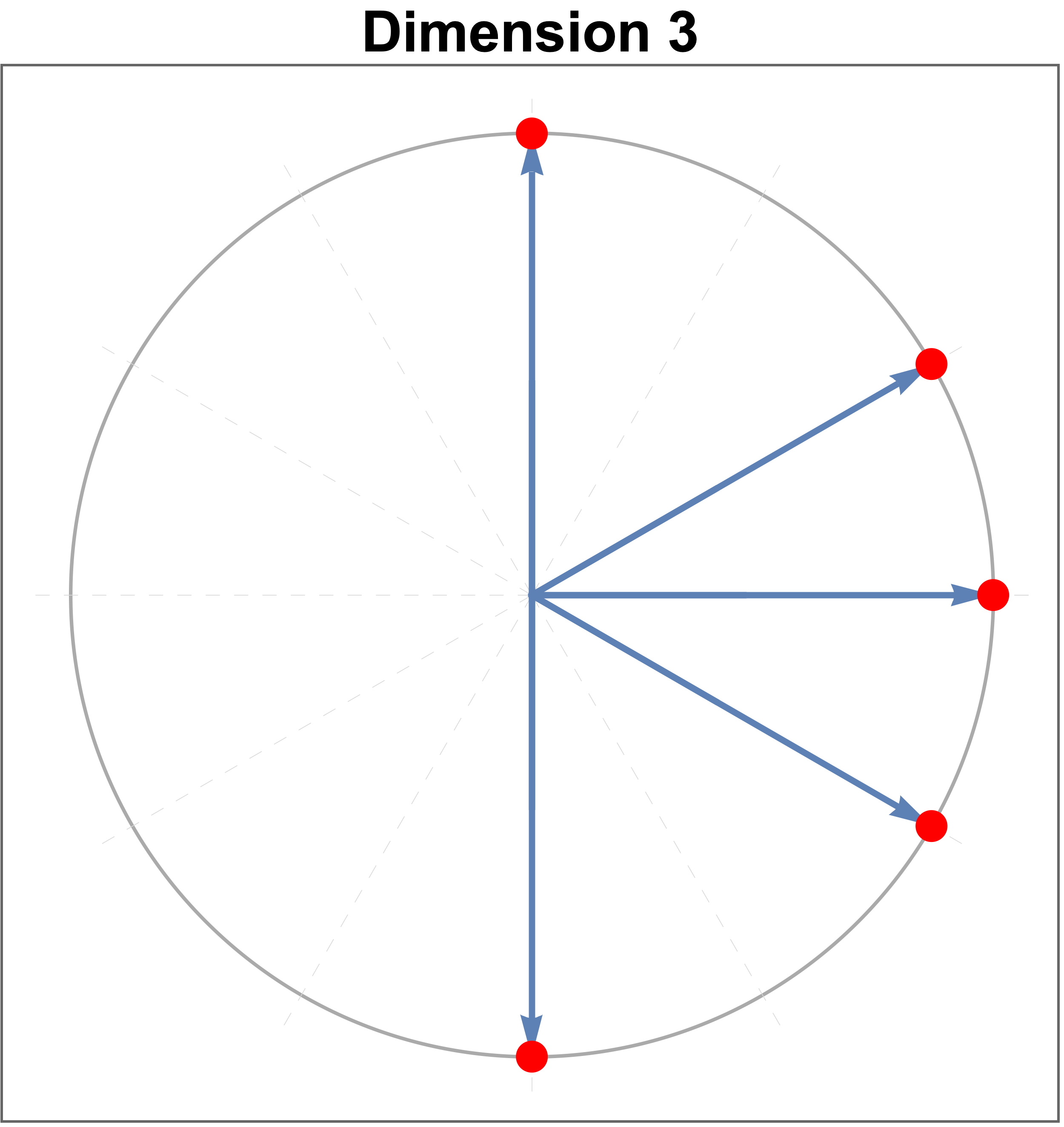
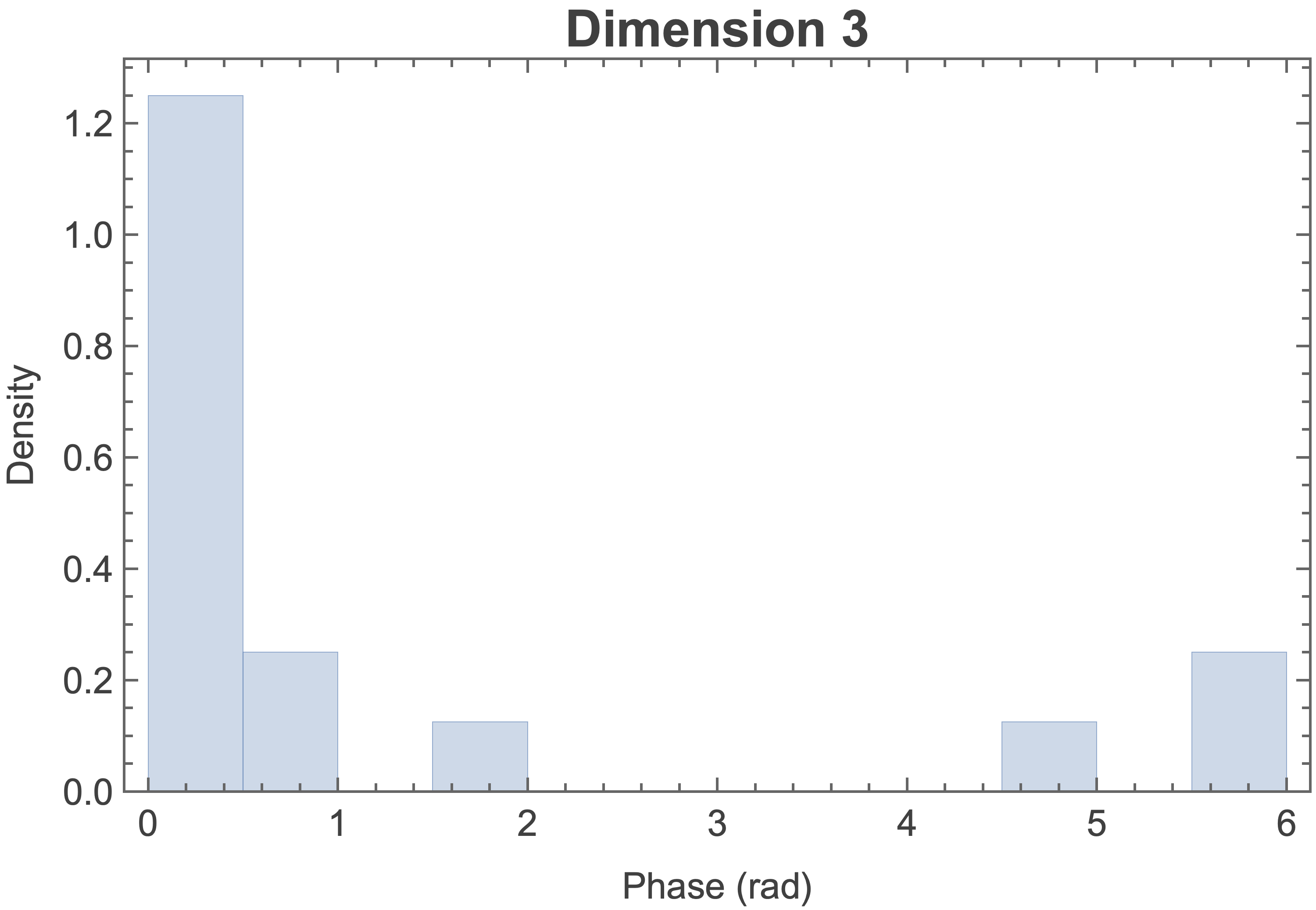
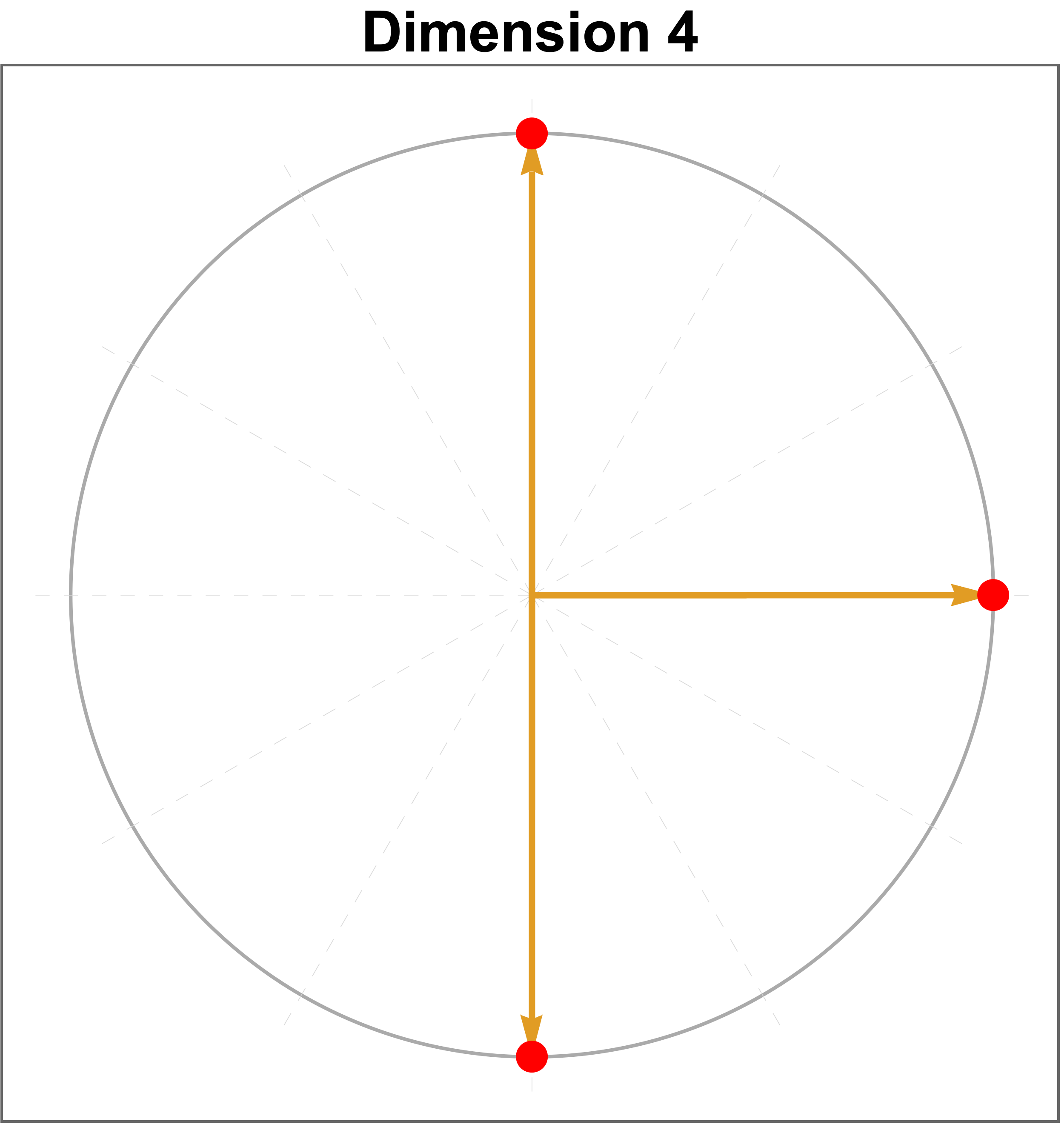
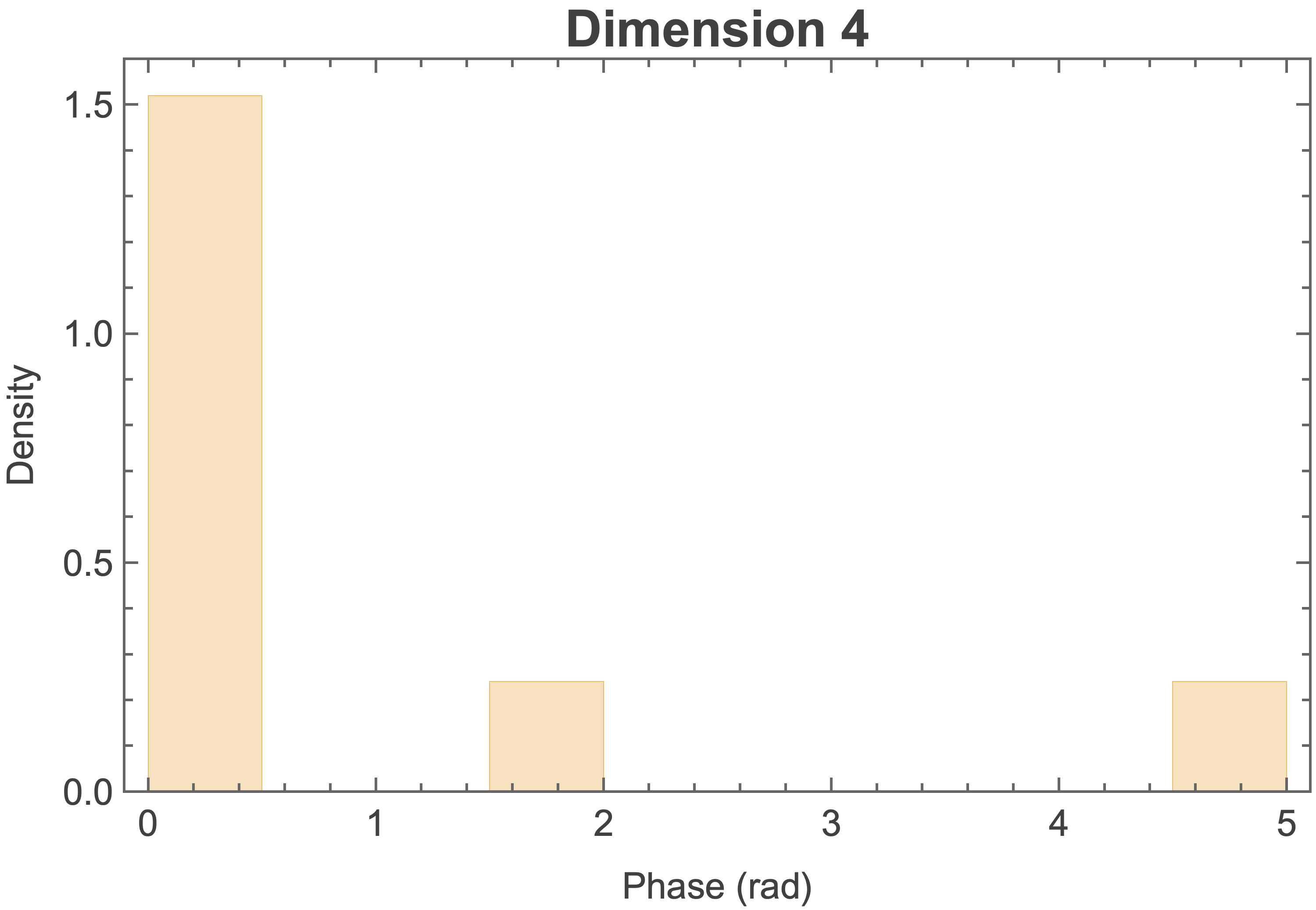
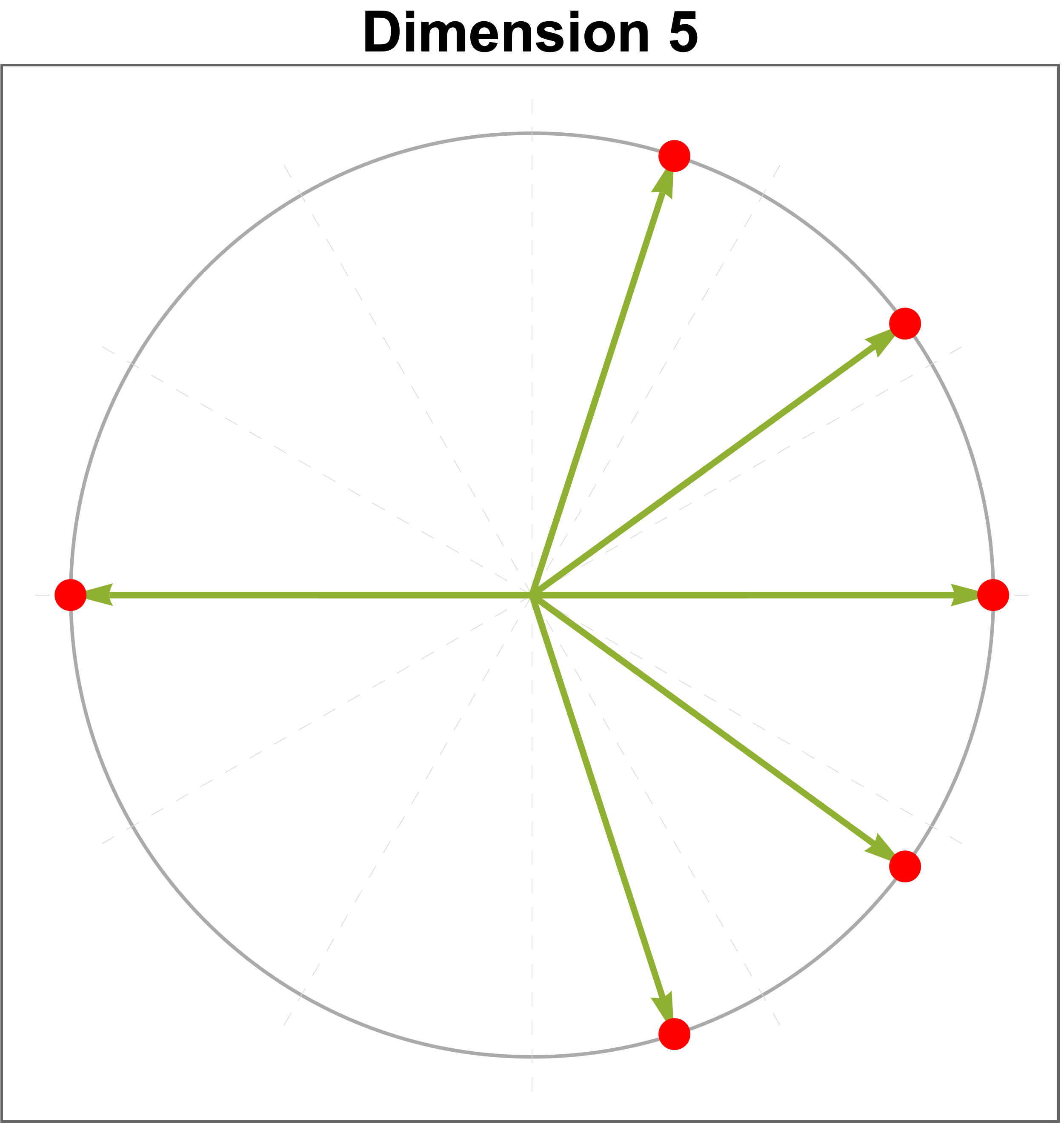
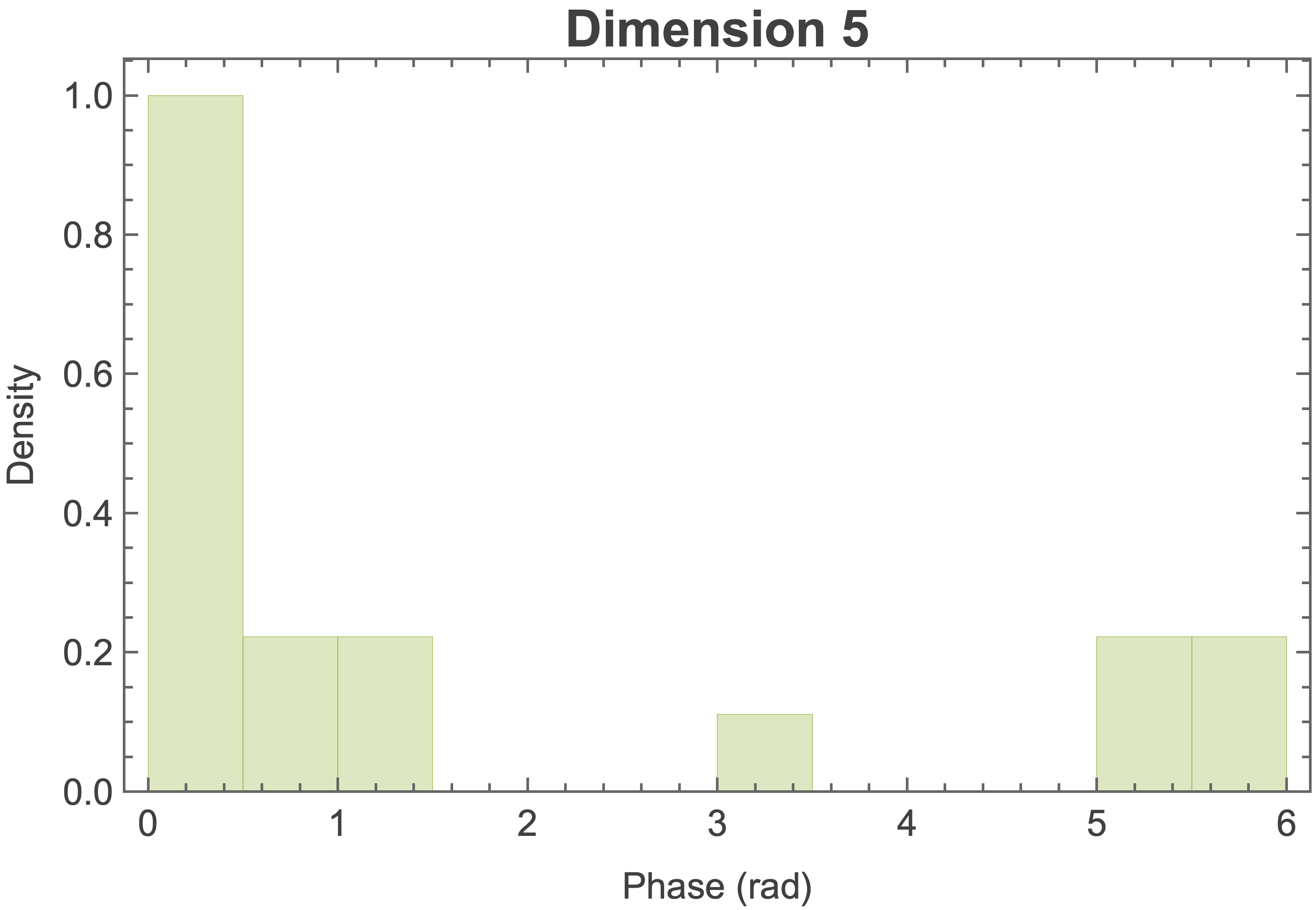
Figure 2: Diagram (unit circle, A1 case) depicting the five distinct argument phases of the triple products realized in MUB configurations.
Implications and Future Directions
This work rigorously substantiates that in dimensions A2 every complete MUB set is equivalent under projective/unitary and permutation symmetries, and their invariance group is precisely the Clifford group arising from WH group normalizers. No evidence is found for either inequivalent or continuous structure, nor any violation of the Clifford-based symmetry paradigm. At the level of practical quantum information, this shows that generalized, non-algebraic or non-group-covariant MUBs do not exist in these cases: all tomographically optimal measurement schemes are fundamentally linked to known group structures.
For dimensions beyond prime powers, especially A3, the absence of solutions in the explored numerical regime reinforces the standing open problem regarding the possible non-existence of maximal MUB sets and suggests the effectiveness of projection-based trace constraints as an exploration tool for structural impossibility proofs. Future research may focus on further tightening these constraints analytically, investigating global nullity within the phase parameter space, and extending group-theoretic and geometric invariance methods to classify possible sub-maximal or nonstandard sets in composite dimensions.
Conclusion
The generalized numerical Gram matrix approach unifies the search for MUBs with group-theoretic symmetry analysis without recourse to WH or finite field assumptions. Its success in reproducing only the known equivalence classes and Clifford symmetries in A4, and the null result in A5, significantly strengthens both the geometric and algebraic understanding of MUBs. This framework sets a robust baseline for future work exploring fundamental limits of quantum measurement design and the combinatorics of quantum state space.