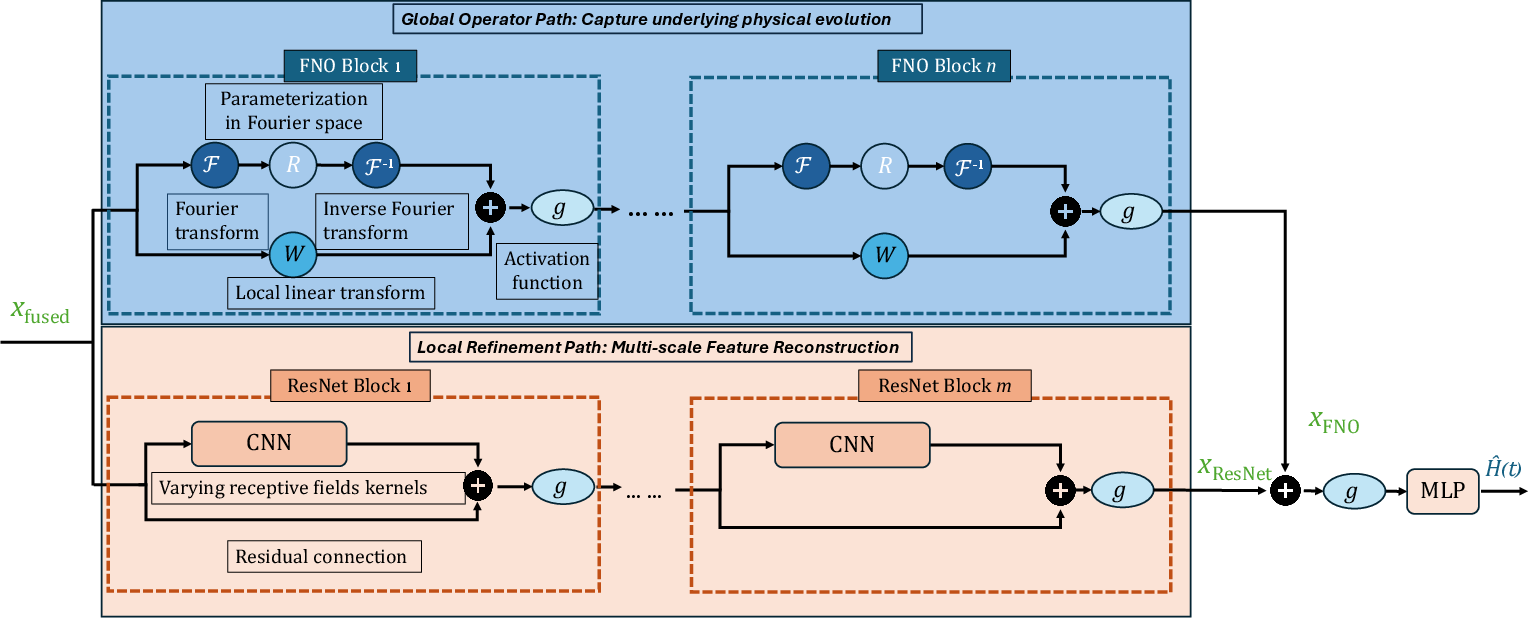
- The paper introduces a hybrid multi-scale ResNet-augmented Fourier Neural Operator that fuses global spectral modeling with local high-frequency refinement.
- The methodology leverages dual-stream processing of sequential and scalar features, achieving high R² (>98%) and reduced NRMSE for accurate transient predictions.
- The study demonstrates robust generalization across diverse materials and effective modeling of challenging minor-loop dynamics in magnetic hysteresis.
Multi-Scale ResNet-Augmented Fourier Neural Operator for High-Frequency Sequence-to-Sequence Magnetic Hysteresis Modeling
Introduction
Accurate dynamic modeling of magnetic hysteresis loops is crucial for high-fidelity simulations in power electronics, particularly under high-frequency nonsinusoidal excitations commonly encountered in modern systems. Conventional empirical and physics-driven models, such as Steinmetz equation variants, Jiles-Atherton, and Preisach models, exhibit limited accuracy or computational tractability when dealing with coupled nonlinearities, ringing effects, and minor loop phenomena under realistic operating regimes. Recent advances in neural operators and seq-to-seq neural network models offer a promising alternative by enabling direct trajectory-based mapping from magnetic flux waveforms B(t) to magnetic field H(t). However, methods such as vanilla FNOs typically exhibit spectral bias, attenuating high-frequency details and resulting in inadequate modeling of local transients. This work introduces a hybrid multi-scale ResNet-augmented FNO (Res-FNO), designed to address these critical challenges by explicitly integrating global spectral modeling (via FNO blocks) with localized high-frequency refinement (via multi-scale ResNet paths), and leveraging feature engineering to encode both scalar and sequential physical phenomena.
The magnetic hysteresis prediction task is posed as a sequence-to-sequence operator learning problem: P:B(t)↦H(t), where the model reconstructs the full trajectory of H(t) given B(t) and physical operating conditions. This fine-grained mapping is essential for capturing phenomena such as the frequency-dependent broadening of loops, nonlinear saturation, temporal ringing, and minor loops, thereby facilitating post hoc core loss computation and enabling the model to serve as a differentiable surrogate for integration in finite element analysis.
The primary training and evaluation benchmarks leverage challenging datasets from the MagNet Challenge 2023 and 2: Tier-2 materials (3C92, T37, 3C95, 79, ML95S) span ferrites, high-permeability materials, and alloys, covering frequencies up to 800 kHz, various temperatures, and nonsinusoidal waveforms, including those with strong ringing and minor loops. Subsets of the data are used to rigorously test generalization and sample efficiency under data-limited scenarios.
Proposed Multi-Scale Res-FNO Architecture
The model employs a dual-stream processing approach for input feature engineering. Sequential features—the B(t) waveform, its derivative dB/dt, and time t—are processed via 1D convolution to extract local and transitionary features relevant to high-frequency dynamics. Scalar features (temperature, frequency, ΔB) are embedded through an MLP and broadcast temporally to provide contextual encoding. These processed representations are additively fused to construct a latent tensor that retains both global and local contextual information at each time step.
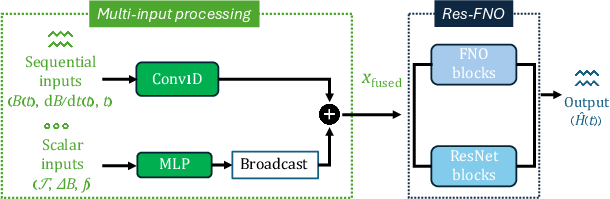
Figure 1: Overall structure of multi-scale Res-FNO comprising a multi-input fusion frontend and parallel FNO/ResNet backbone for spectral and multi-scale temporal processing.
Res-FNO Backbone
The backbone consists of parallel FNO and ResNet branches:
The outputs of FNO and ResNet paths are aggregated additively and mapped to final predictions via an MLP. This architecture ensures that the global waveform structure adheres to physical priors, while residual connections enable precise local reconstruction and compensation for spectral bias.
Feature Engineering and Normalization Strategies
Comprehensive feature channel engineering is central: Min-max scaling normalizes all input features to [−1,1], stabilizing optimization and mitigating numerical disparities in frequency content. The grid-invariance of the FNO enables temporal downsampling (e.g., reducing from 1024 to 205 or 504 points/period depending on material), significantly accelerating training without loss of high-resolution fidelity.
Loss Function
Pointwise MSE is used as the main optimization target:
H(t)0
This enables the model to prioritize accurate reconstruction of both overall trajectory and sharp transitions.
Results
Experimental Setup
Experiments adhere to the standardized train/test splits of the MagNet challenges, with additional validation splits for early stopping and hyperparameter tuning. Notably, Material 79 is used for most ablation, as it presents the most challenging, non-linear behaviors under limited data. Standardized downsampling is used for computational scalability, and the optimal configuration is carried forward across other materials.
Quantitative results (NRMSE, H(t)1) show that Res-FNO yields lower mean errors and higher robustness compared to pure FNO. The inclusion of H(t)2 as a sequential input is directly linked to superior modeling of transient oscillations. The ResNet path is crucial for local high-frequency structure; omitting it results in underestimation or smoothing of ringing and minor loop dynamics.
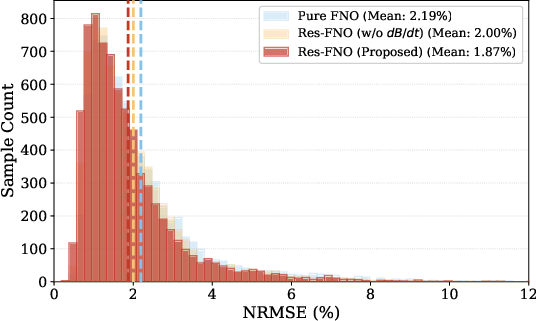
Figure 2: Distribution analysis of NRMSE errors for different architectures, highlighting improved accuracy and reliability for Res-FNO.
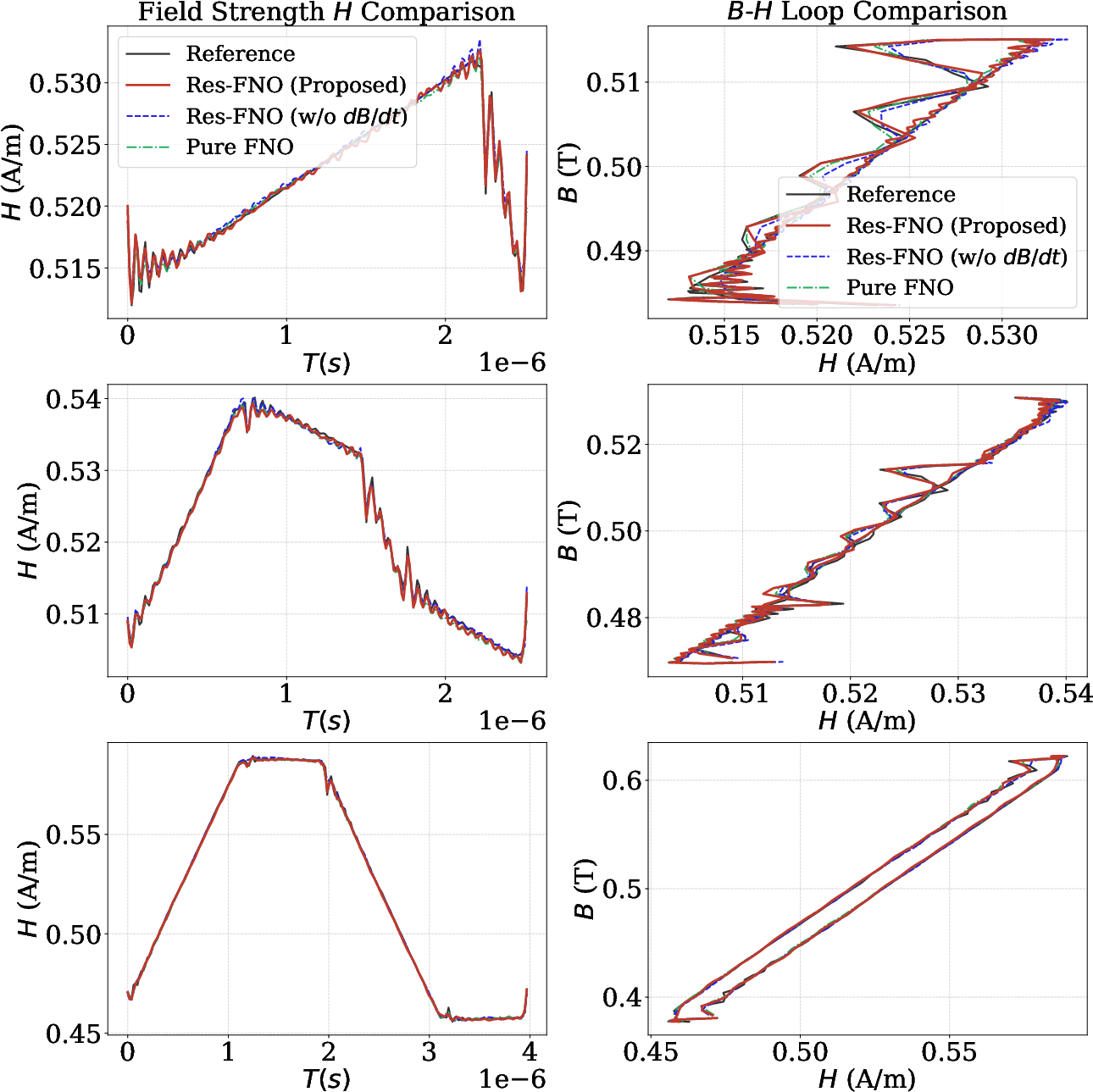
Figure 6: Comparison of H(t)3 predictions and H(t)4-H(t)5 loops for different models; Res-FNO consistently captures oscillatory transients and finer loop structure.
Generalization across Diverse Materials
Res-FNO models demonstrate strong extrapolative power: when trained on severely limited subsets of data, high H(t)6 (H(t)7) and low NRMSE are achieved for all four highly diverse test materials. This is observed under both ringing- and minor-loop-dominated excitation regimes.
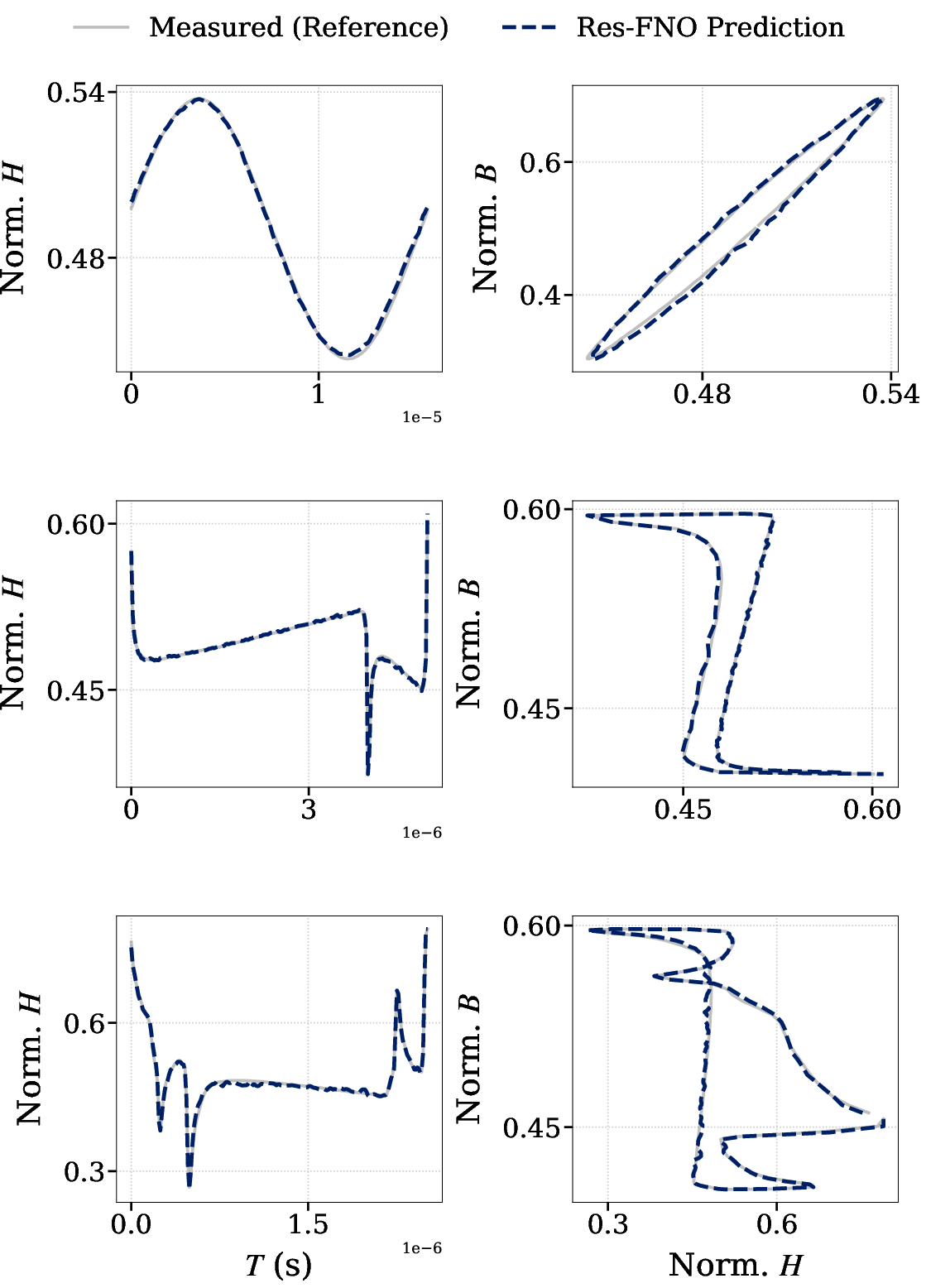
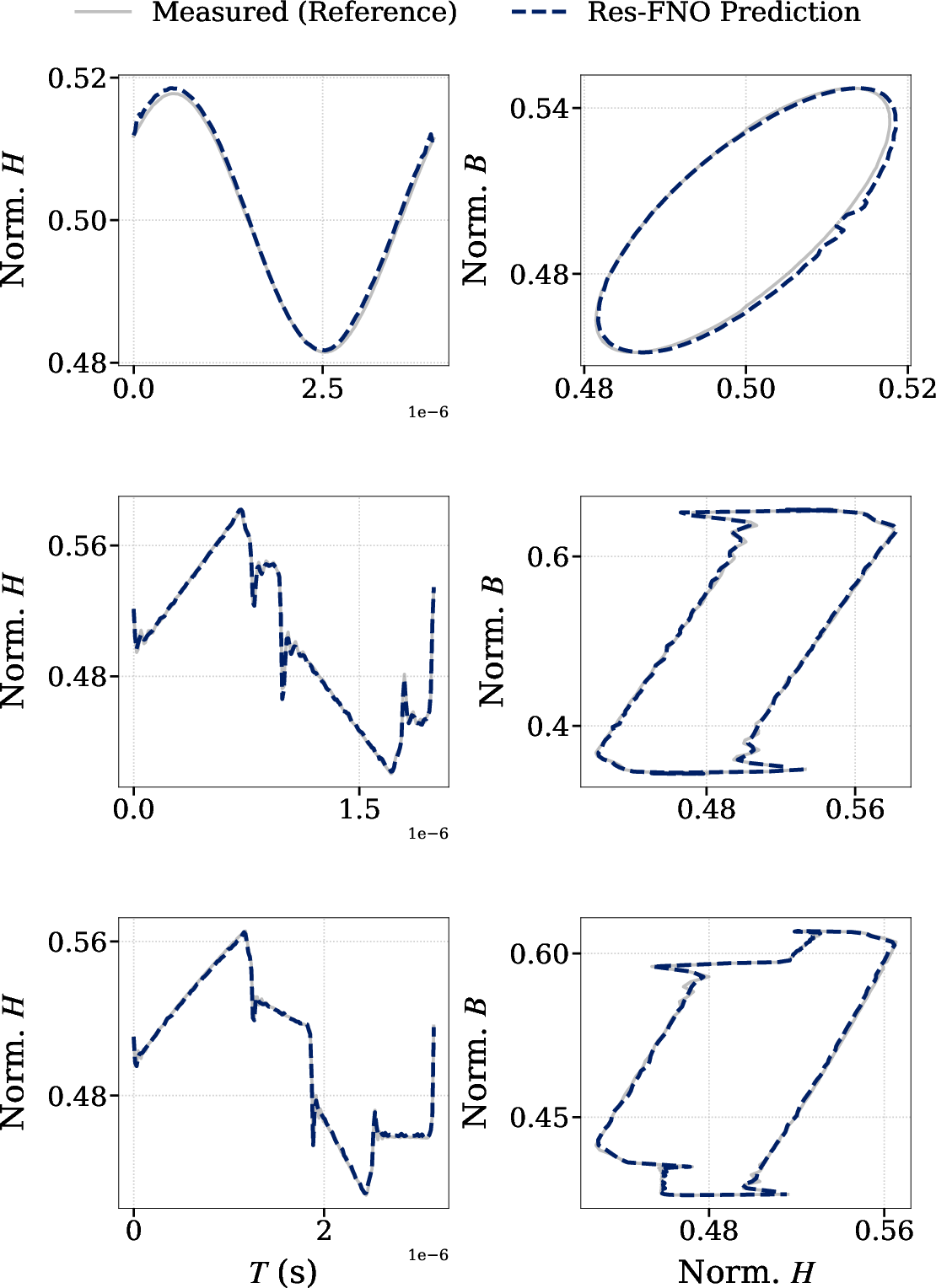
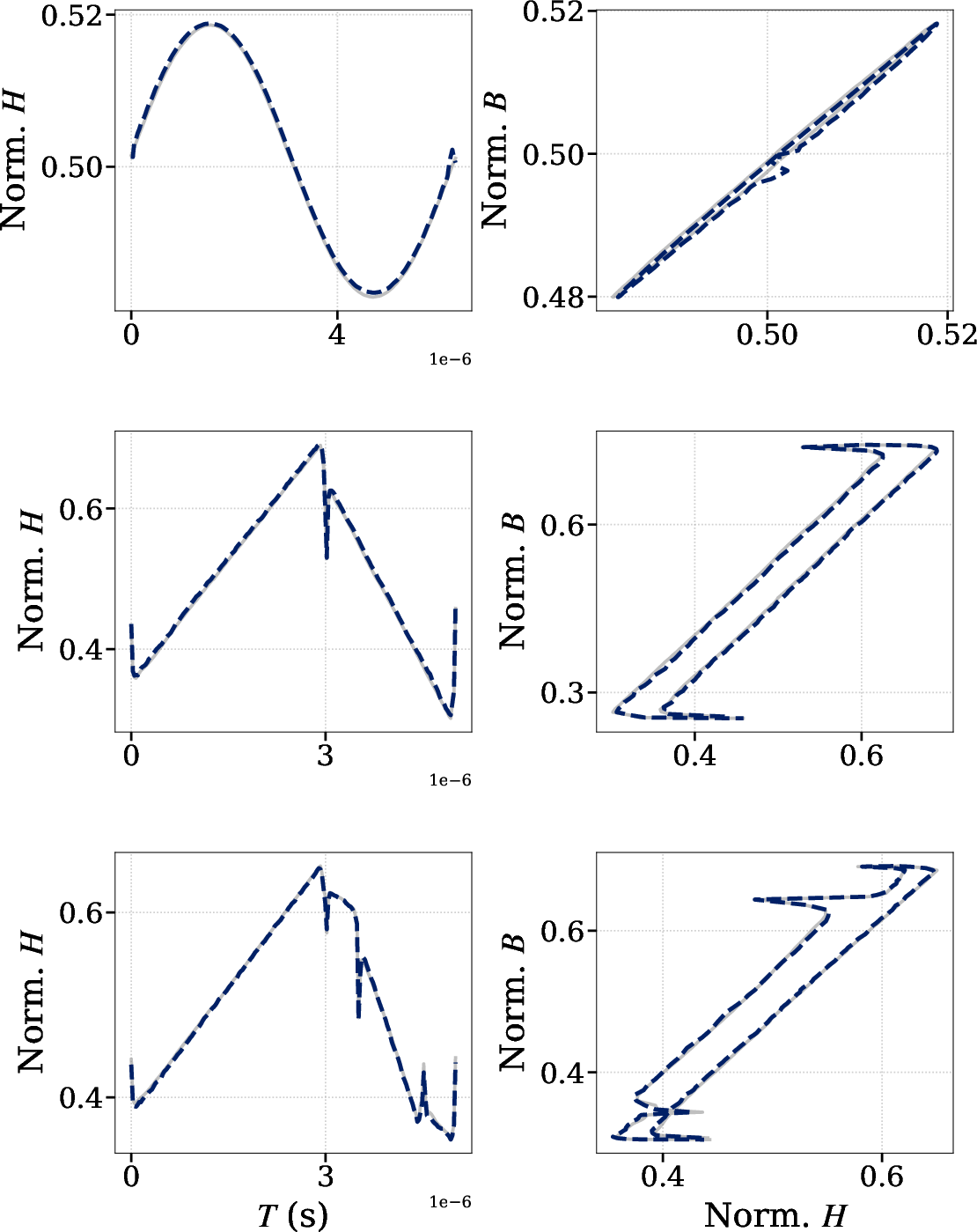
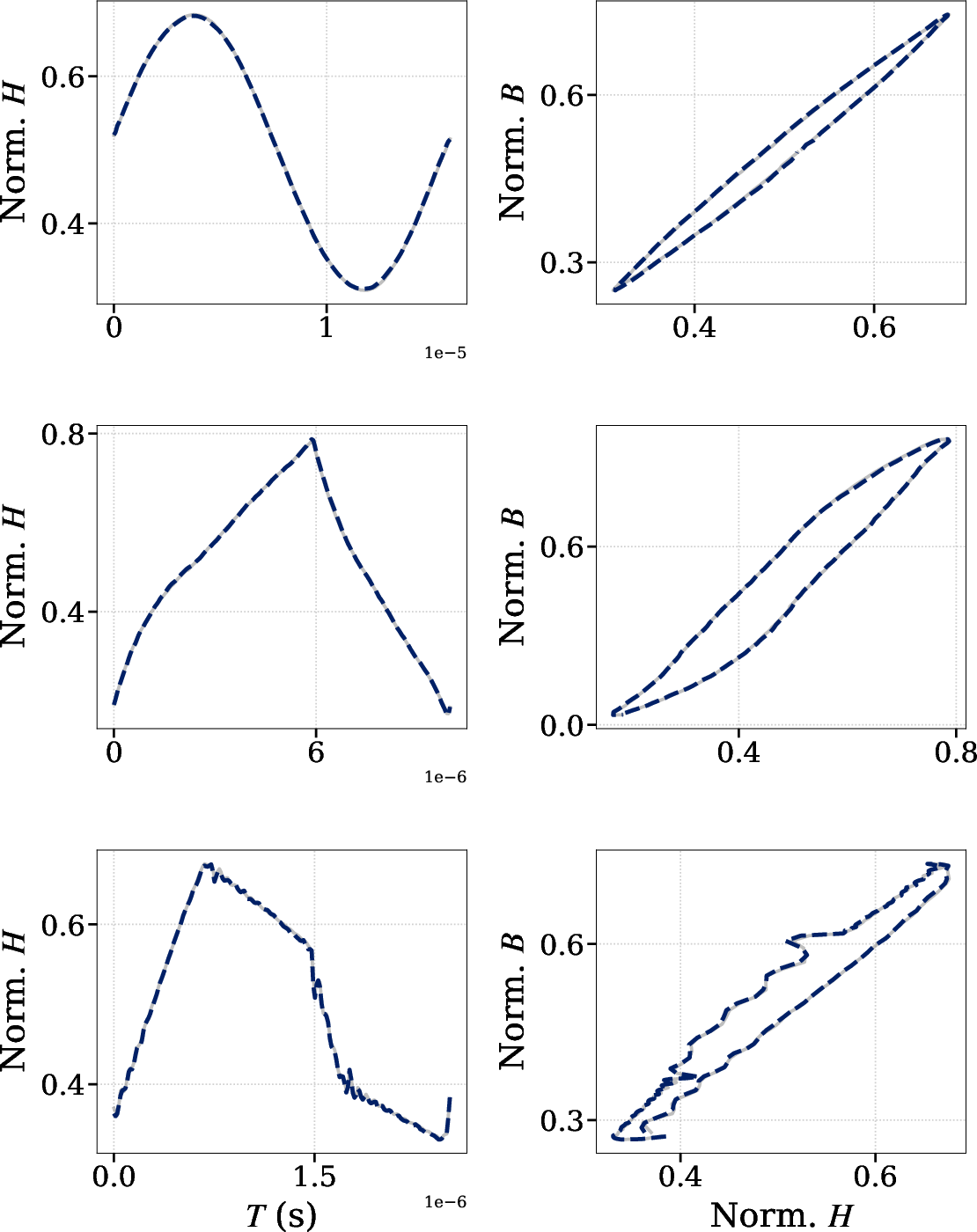
Figure 4: Predicted H(t)8-H(t)9 hysteresis loops for multiple materials, showing model robustness across disparate physical characteristics.
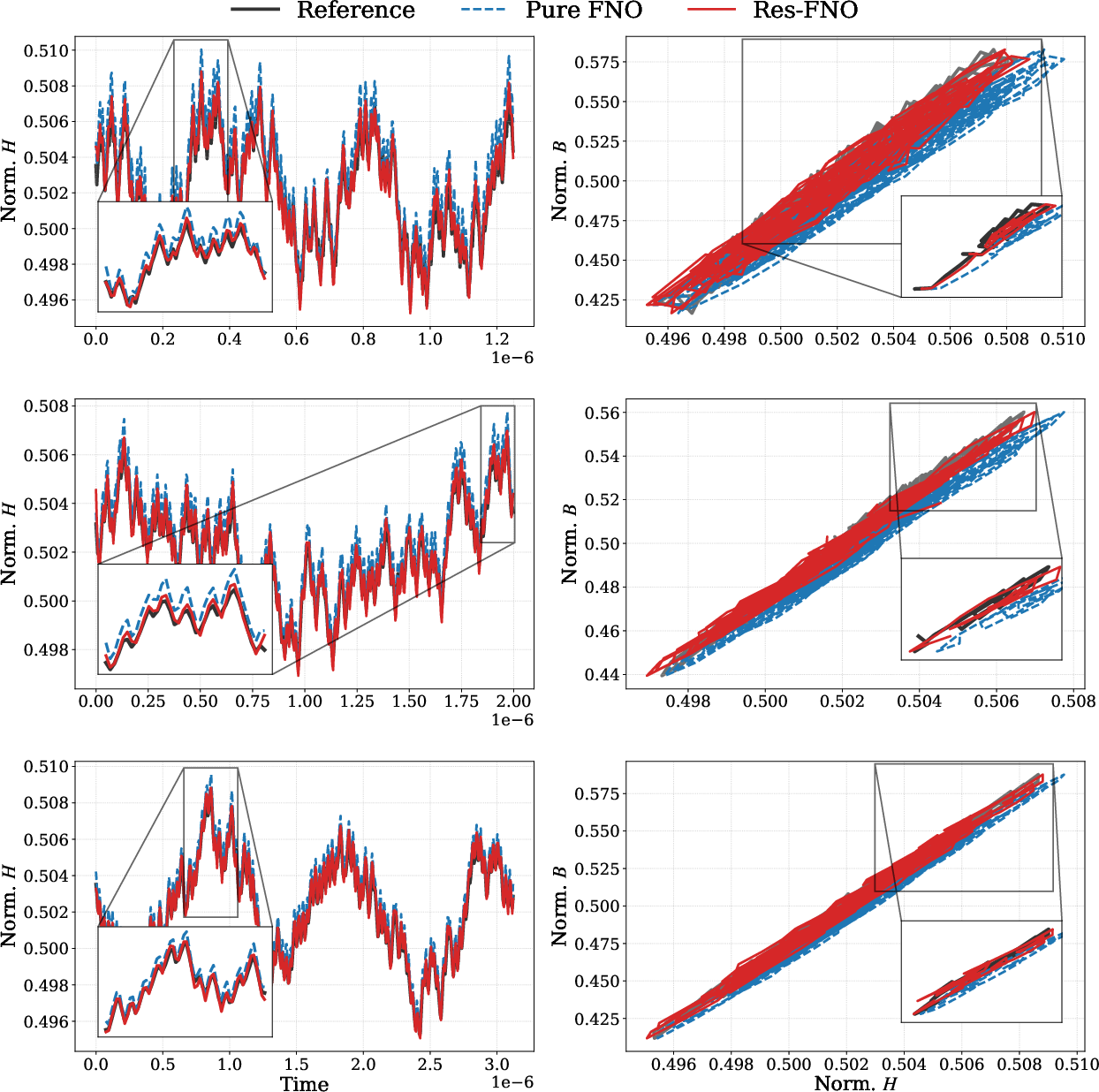
Figure 5: Comparison between Res-FNO and Pure FNO models for 3C90 under oscillatory excitation, demonstrating the elimination of phase lag and more accurate minor loop modeling.
Modeling Minor Loop Dynamics
For 3C90 with strongly oscillatory, minor-loop-dominated waveforms, Res-FNO outperforms pure FNO with a mean P:B(t)↦H(t)0 uplift of nearly 2% and a 30% reduction in NRMSE, despite being trained with only 10% of the available samples. Visualizations confirm the highly accurate reconstruction of rapid subcycle oscillations and correct amplitude/phase alignment throughout the hysteresis trajectory.
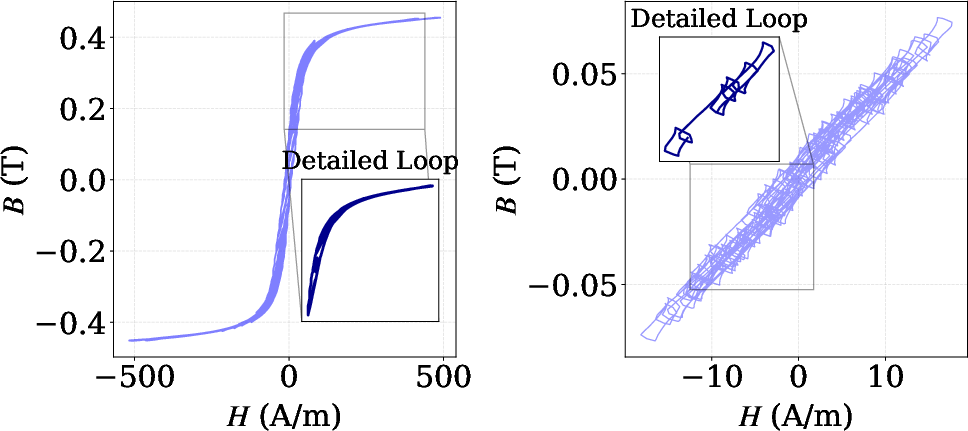
Figure 9: Observed minor loops in 3C90 at low and high frequency, emphasizing the need for multi-scale transient modeling.
Implications and Future Directions
The hybrid multi-scale Res-FNO addresses spectral bias in operator learning for hysteresis, offering robust generalization, significant sample efficiency, and accurate modeling of complex transient phenomena. Its compact parameterization, ability to integrate small and sparse datasets, and adaptability to arbitrary waveforms make it highly promising for in-the-loop EDA tools, hardware simulation, and general operator learning in nonlinear physical systems. Possible extensions include: transfer learning for unseen material regimes, integration with physics-informed loss regularizers, and further scaling of the multi-scale path to leverage even broader temporal hierarchies.
Conclusion
This study establishes the multi-scale Res-FNO as a highly effective approach for high-fidelity, data-efficient seq-to-seq learning of magnetic hysteresis under high-frequency and complex excitation. Through systematic architectural enhancements—multi-input fusion, derivative feature engineering, and parallel FNO-ResNet blocks—the model achieves state-of-the-art accuracy in global and local magnetic behavior reconstruction, demonstrating strong practical viability for power electronics and physical-system AI modeling.