- The paper introduces a geometry-aware neural operator framework that extends operator learning to variable interface problems using a TFPM basis.
- It leverages spectral convolutions and signed distance function encoding to accurately predict PDE solutions on dynamic domains.
- Experimental results show significant error reduction in complex 2D/3D problems, enhancing scalability and computational efficiency.
Geometry-Aware Operator Learning for Interface Problems on Varying Domains
Introduction and Motivation
The accurate and efficient resolution of linear PDE interface problems on varying domains is critical in numerous scientific and engineering applications. Traditional approaches such as FEM, FDM, IBM, and DG methods often become computationally intractable in situations involving dynamic geometries or moving interfaces due to the need for mesh adaptations and repeated solves. Furthermore, current neural operator frameworks designed for fixed geometries fail to generalize to the highly variable settings commonly encountered in shape optimization, material design, and transport phenomena.
The work "A Geometry-Aware Operator Learning Framework for Interface Problems on Varying Domains" (2604.04061) introduces an extension-based operator learning paradigm that leverages neural operators to address these interface problems, explicitly incorporating geometry variability both at the domain boundary and at internal interfaces. The integration of the Tailored Finite Point Method (TFPM) into the network architecture distinguishes this approach, providing a reduction in storage requirements and mitigation of dimensionality challenges. Rigorous theoretical analyses substantiate the method's continuity and error properties.
Operator Learning Architecture for Varying-Domain Interface Problems
The central methodological contribution is an extension-based neural operator framework that learns mappings of the form
G:a(x)Ω×b(x)Ω×f(x)Ω×g(x)∂Ω×αΓ×βΓ→u(x)
where both the domain Ω and internal interface(s) Γ may vary. Due to the incompatibility of these inputs with Banach space requirements, zero extensions are applied: all coefficients and conditions are mapped onto a fixed large superset domain via characteristic or signed distance function (SDF) representations. The domain and interfaces are encoded using either characteristic functions or SDFs, with rigorous encoding error analyses showing the scaling of discretization error and the comparative advantage of SDFs in representing complex and smooth boundaries.
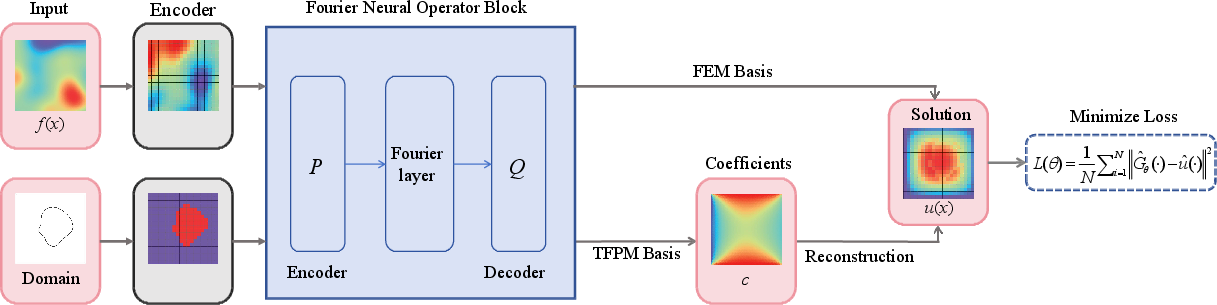
Figure 1: Neural network architecture.
The core architecture is based on the Fourier Neural Operator (FNO), featuring layers of learned spectral convolutions, augmented pointwise networks for high-dimensional encoding/decoding, and a set of input channels encoding both physics and geometry (domain, interface, coefficients, and data). When employing the TFPM basis, the network learns to predict local expansion coefficients rather than grid point values, inheriting both enhanced approximation power and lower memory footprints.
Theoretical Analysis: Continuity and Encoding Error
A major theoretical advance is the establishment of shape continuity for the Helmholtz operator under domain and interface perturbations. For both constant and variable interface conditions, the authors prove that the operator mapping is continuous (in the L2 sense) with respect to small geometric deformations, leveraging advanced results on the differentiability of boundary integral operators (Costabel 2012, Simon 1980). This provides robust guarantees for the geometry-aware learning process.
Detailed error analyses are presented for the characteristic function and SDF-based encodings. The RMSE for characteristic function encoding decays as O(n−1/2) with grid resolution n, while for SDF encoding, RMSE decays as O(n−3/2), with superior accuracy in smooth regions. However, the memory cost for SDFs with multiple interfaces is appreciably higher, imposing practical trade-offs in high-dimensional applications.
Neural Operator with Tailored Finite Point Basis
By integrating the TFPM basis into the neural operator, the network learns to predict local solutions of the parameterized PDE within grid cells, dramatically improving data compression and numerical fidelity, especially for high-frequency phenomena. Instead of reconstructing the solution from grid-point values, TFPM-based networks predict the coefficients of the analytic solution basis (e.g., exponential polynomials) within each subdomain cell. This results in both improved accuracy and resolution independence.
Experimental Validation
Comprehensive experiments cover:
- External domain variation: The framework accurately predicts solutions for PDEs on star-shaped domains with fixed interfaces, achieving L2 errors of 1.07% (normal derivative jump) and 2.69% (function value jump), outperforming the deformation-based method Geo-FNO by a significant margin.
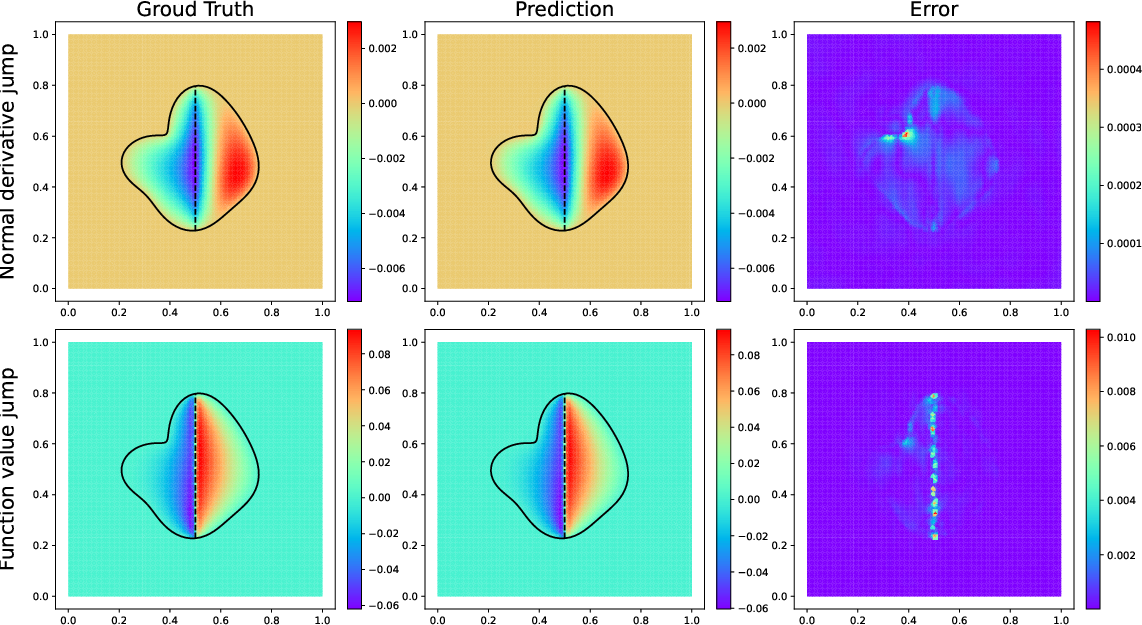
Figure 2: Prediction results when only the external region is varied. The relative L2 errors for the two experiments are 1.07% and 2.69%.
- Internal interface variation: With the domain fixed and a star-shaped interface, the model achieves 2.20% relative error, verifying its flexibility in handling arbitrary internal boundaries.
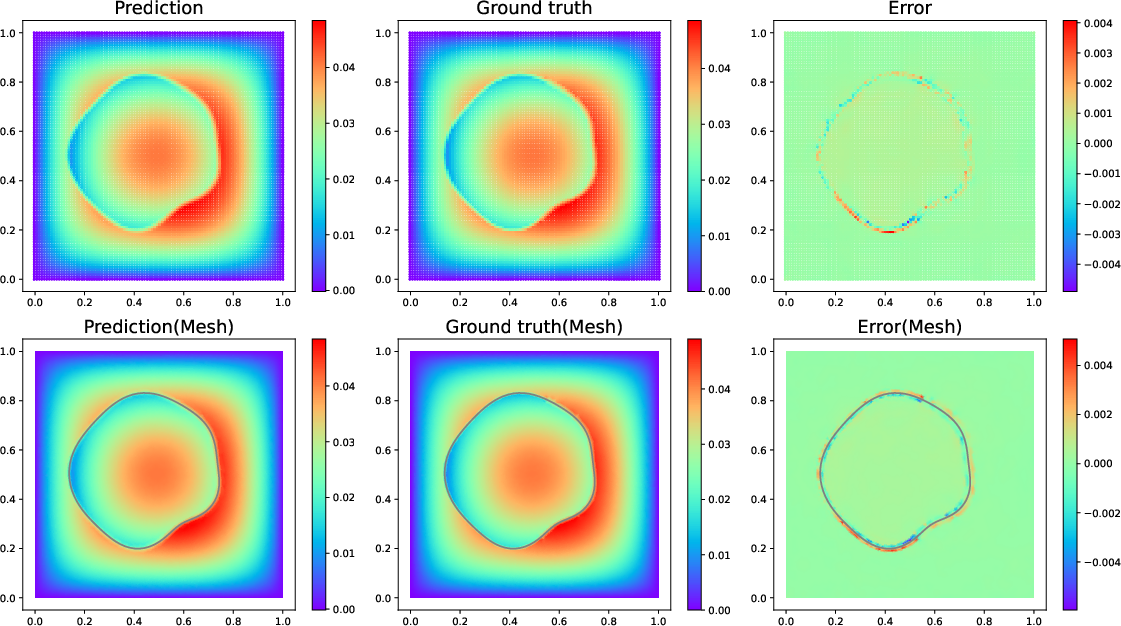
Figure 3: Prediction results for the star-shaped internal interface. The relative L2 error for this experiment is 2.20%.
- 2D/3D resolution and basis analysis: TFPM basis-based networks significantly outperform FEM-based approaches at both moderate and coarse grid resolutions. For a 3D Helmholtz interface problem, the TFPM model yields Ω0 error 0.60% on a Ω1 grid, highlighting superior scalability.
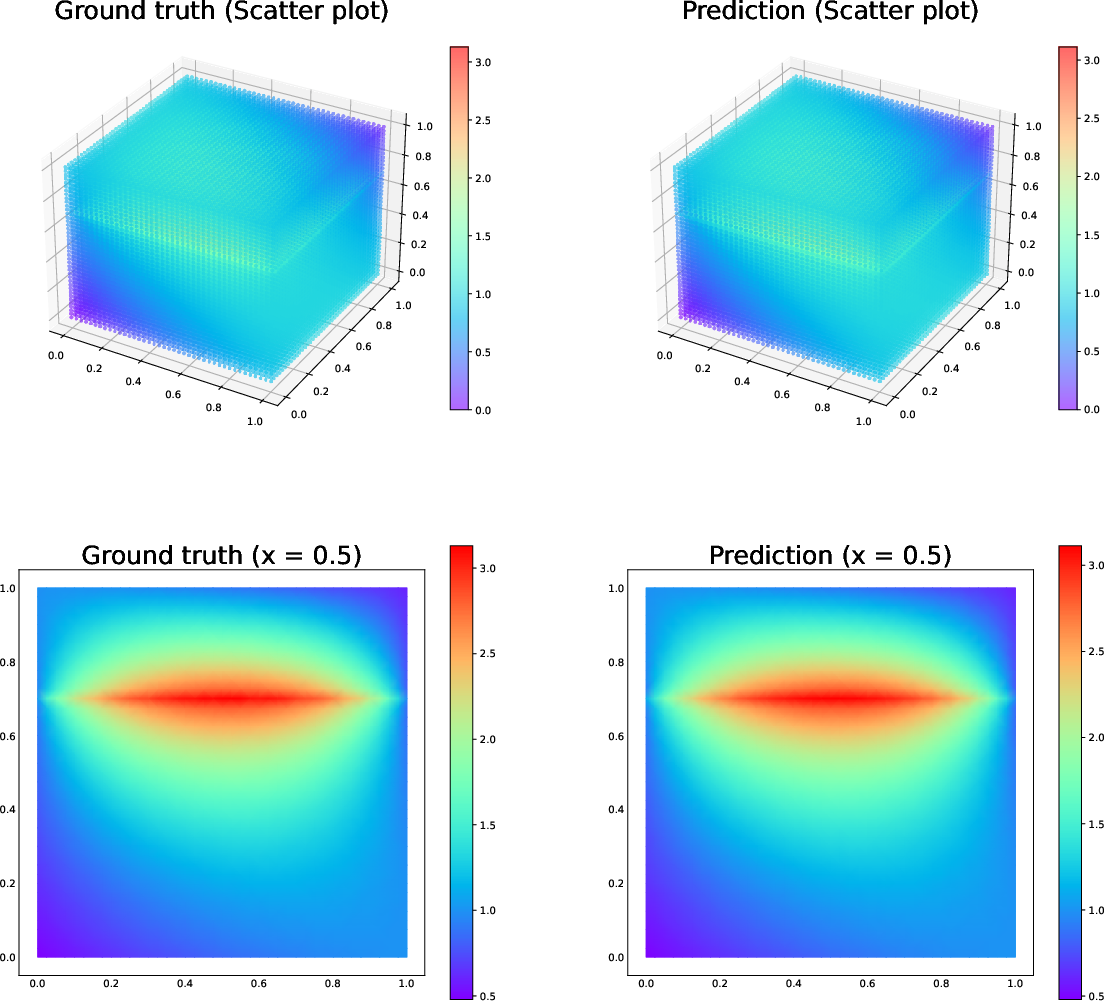
Figure 4: Prediction of 3D Example on TFPM basis. First row: 3D grid point distribution map; Second row: Cross-sectional view at Ω2.
- Transport across interfaces: Modeling time-dependent diffusion with interface resistance, the framework achieves 0.31% prediction error, accurately tracking interface-driven mass transfer and relaxation kinetics.
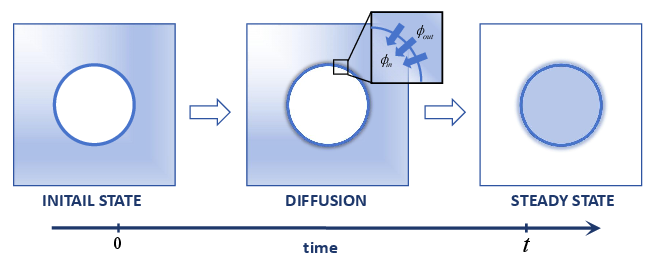
Figure 5: Schematic diagram of transport.
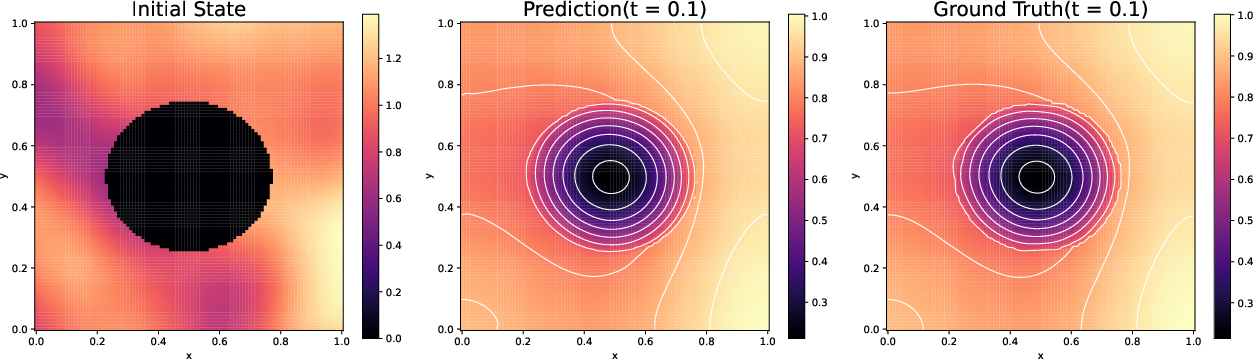
Figure 6: Prediction of transport kinetics of Ω3 Error 0.31%.
Implications and Outlook
This geometry-aware operator learning framework advances the state-of-the-art in data-driven PDE solvers by robustly integrating geometric variability and interface conditions. Its strong empirical performance and theoretical underpinnings make it particularly suitable for scenarios involving real-time shape optimization, inverse problems in materials science, and high-dimensional parametric studies. The demonstrated TFPM basis method offers a promising approach to combating memory limitations in higher dimensions.
Nevertheless, the method’s scalable encoding remains challenged by the curse of dimensionality due to regular grid discretizations. Future work must focus on developing adaptive, sparse, or low-rank encodings to compress domain and interface representations, facilitating efficient deployment in truly high-dimensional regimes and on variable topologies.
Conclusion
This work delivers a theoretically sound and empirically validated operator learning paradigm for variable-domain interface PDEs. Notable contributions include the formal extension of operator learning to both domain and interface variability, sharp encoding error bounds, the introduction of the TFPM basis for neural operators, and demonstration of robust accuracy on challenging 2D and 3D test problems. This methodology constitutes a practical step towards general-purpose, geometry-aware surrogate models for scientific computing.

