- The paper demonstrates a novel permanent magnet array geometry using a Halbach configuration that creates a localized, high-gradient field for laser-free microwave gates.
- The design employs a two-layer configuration with a compensation array to suppress vertical offsets while ensuring scalable integration with QCCD architectures.
- Simulation results show that optimized geometries achieve an axial gradient of approximately 51 T/m at a 1.6 mm ion height, minimizing decoherence during ion shuttling.
Permanent Magnet Array Engineering for Scalable Trapped-Ion Quantum Computing
Introduction
The implementation of large-scale, fault-tolerant trapped-ion quantum computers faces profound challenges in architecture, control, and integration of quantum logic elements. In "Novel permanent magnet array geometries for scalable trapped-ion quantum computing in a laser-free entanglement architecture" (2604.03116), a new design paradigm for permanent magnet arrays is proposed, targeting quantum charge-coupled device (QCCD) architectures where ion shuttling enables modular and scalable quantum operations. The paper addresses limitations of classical dipolar/quadrupolar arrangements, proposing instead a Halbach-based geometry achieving a localized, asymmetric magnetic field with a strong gradient region coupled to a field null, thereby enabling high-fidelity, laser-free microwave gates while minimizing transport-induced decoherence.
Magnet Array Design Principles
Central to the work is the engineering and optimization of a two-layer permanent magnet array based on a linear Halbach configuration. The architecture harnesses domain orientation of segmented cuboid magnets to obtain a unidirectional magnetic field on one side of the array, with the strong gradient region located near the edge. This stage is further enhanced by a parallel compensation array, whose domain alignment suppresses the vertical magnetic field offset without significantly perturbing the axial gradient. This configuration facilitates a scalable interface with planar, surface-electrode ion traps and is directly compatible with modern microfabrication constraints.
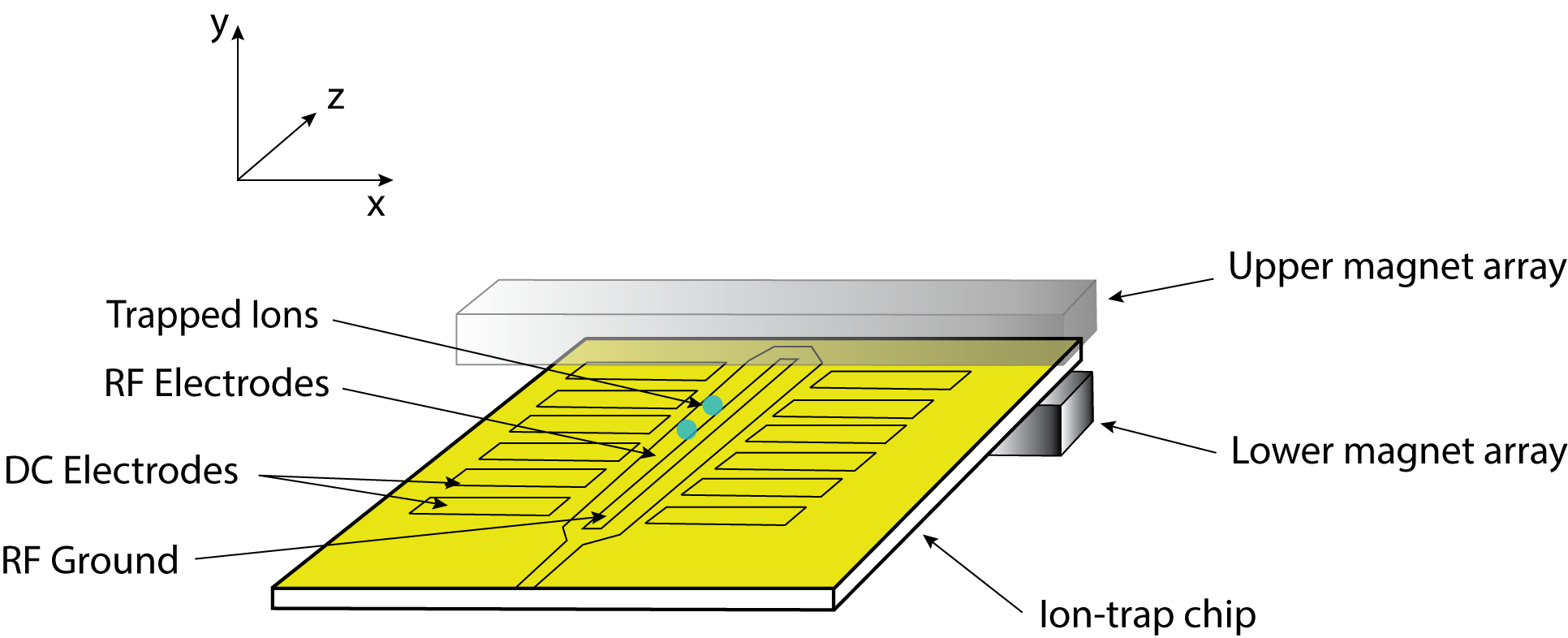

Figure 2: Illustration of a linear, surface ion-trap orientation to magnet arrays showing principal axes for simulation and analysis.
Micromagnetic simulations reveal that at the design ion height, the field is negligible outside a spatially localized region, with field extinction on the scale of millimeters—paralleling QCCD requirements for minimal cross-talk and perturbation during ion transport operations.
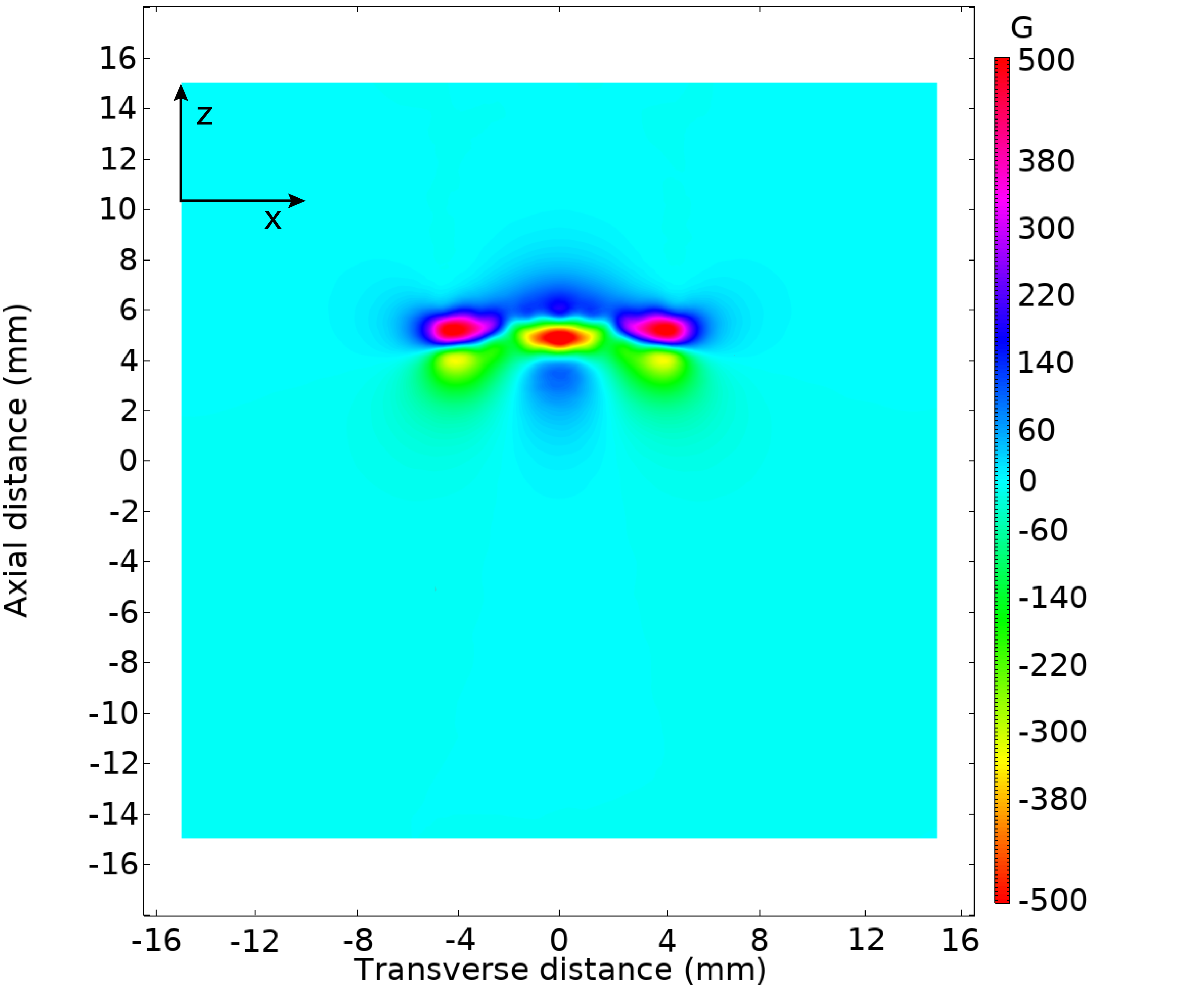
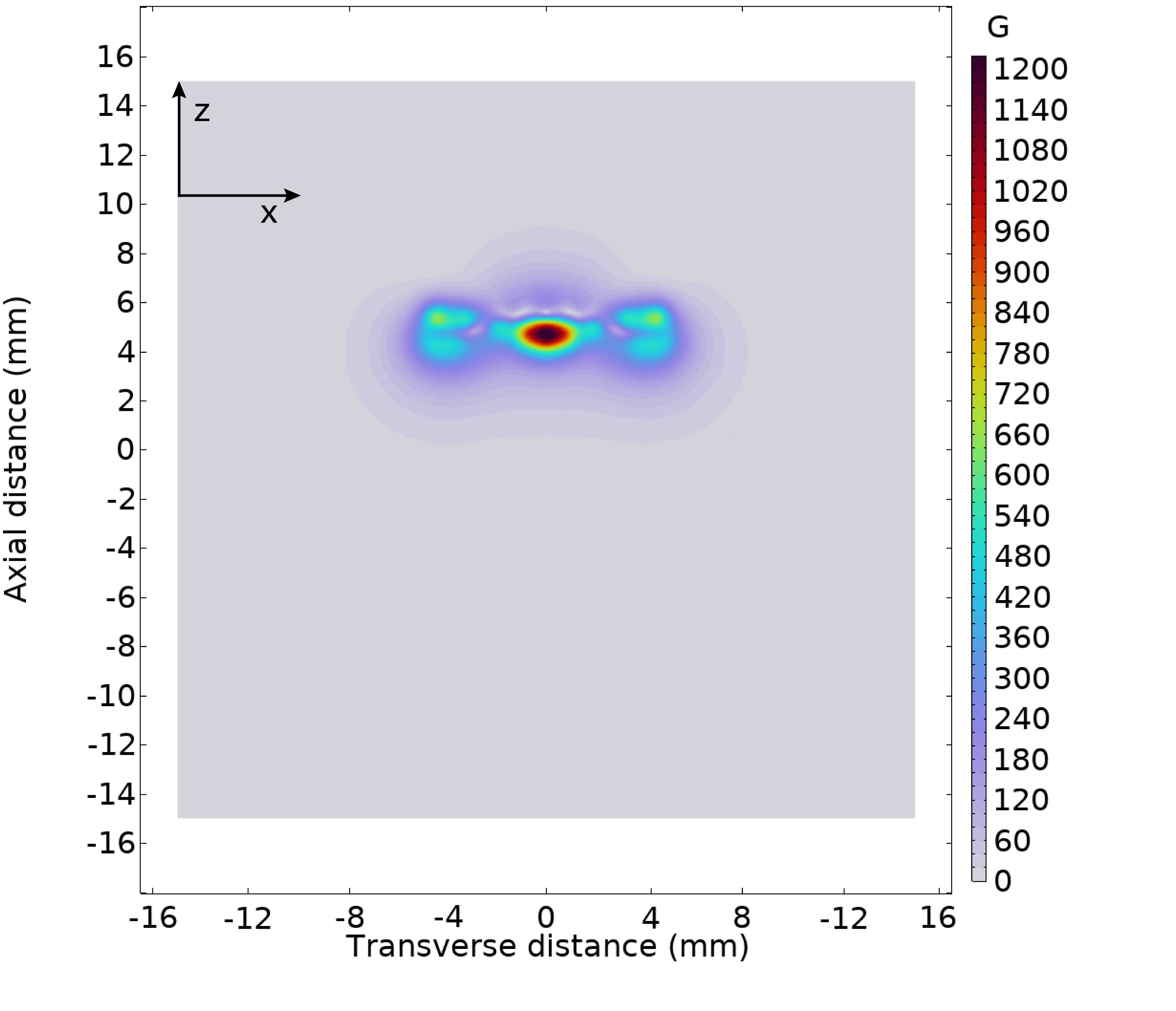
Figure 1: Contour plots illustrate the axial magnetic flux density and absolute field magnitude near the Halbach array surface, demonstrating the localized field gradient and null.
The use of the Halbach geometry allows deterministic field profiles, ensuring systematic and compensable phase evolution during ion shuttling instead of uncontrolled decoherence due to spatially varying fields. This is critical for precision in QCCD shuttling and the execution of multi-qubit gates leveraging state-dependent force via microwave/radiofrequency (RF) driving fields.
Field Engineering and Optimization
The detailed parametric optimization centered on maximizing the field gradient at a spatially localized field null while maintaining engineering feasibility. The analysis demonstrates that an ion traversing the edge of the array, $1.6$ mm away from the magnet edge, encounters a point with a strong axial gradient (∼90 Tm−1 in the initial design) and an absolute field below standard compensation thresholds (≲60 G), as shown by simulation data.
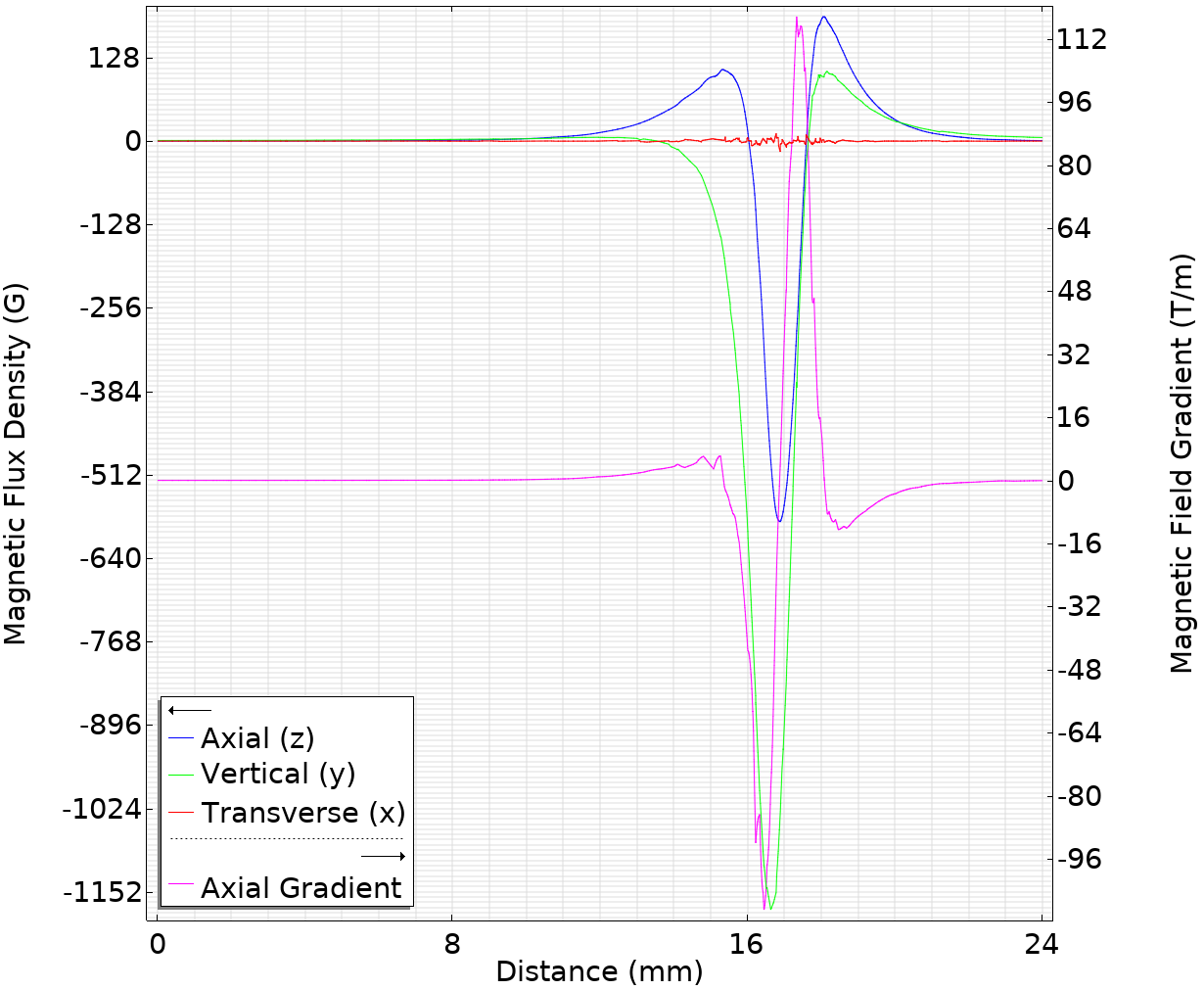
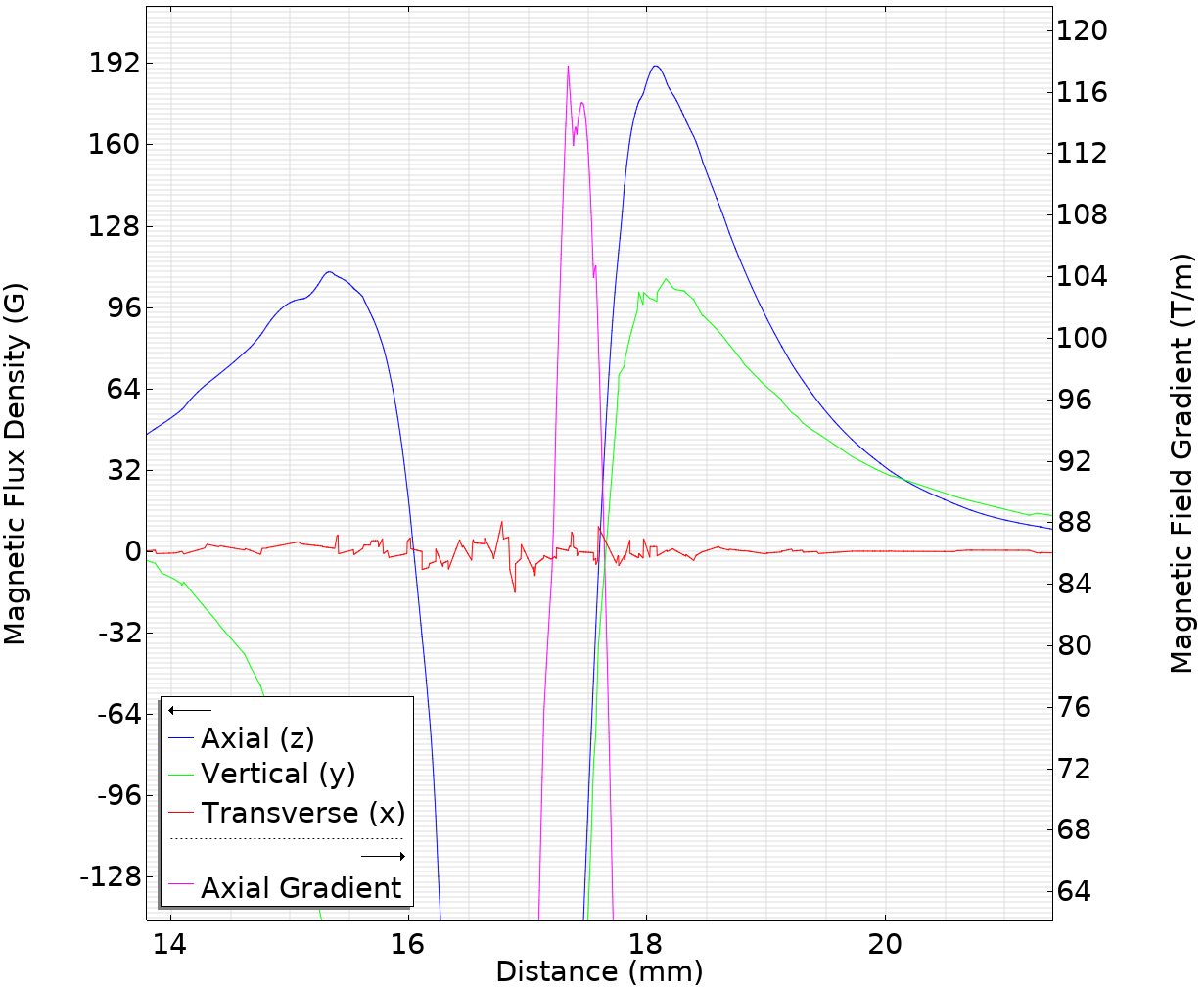
Figure 3: Magnetic field gradient (magenta) and field components (blue, green, red) as a function of position, corroborating the existence of a three-axis field null near the gradient maximum.
To further enhance manufacturability and field characteristics, the authors propose replacing the central cuboid magnets in each array with a rhombic prism geometry. This modification compresses flux lines, alters the field profile, and enables more flexible spatial engineering of the gradient and field null positions, supporting device miniaturization and integration.
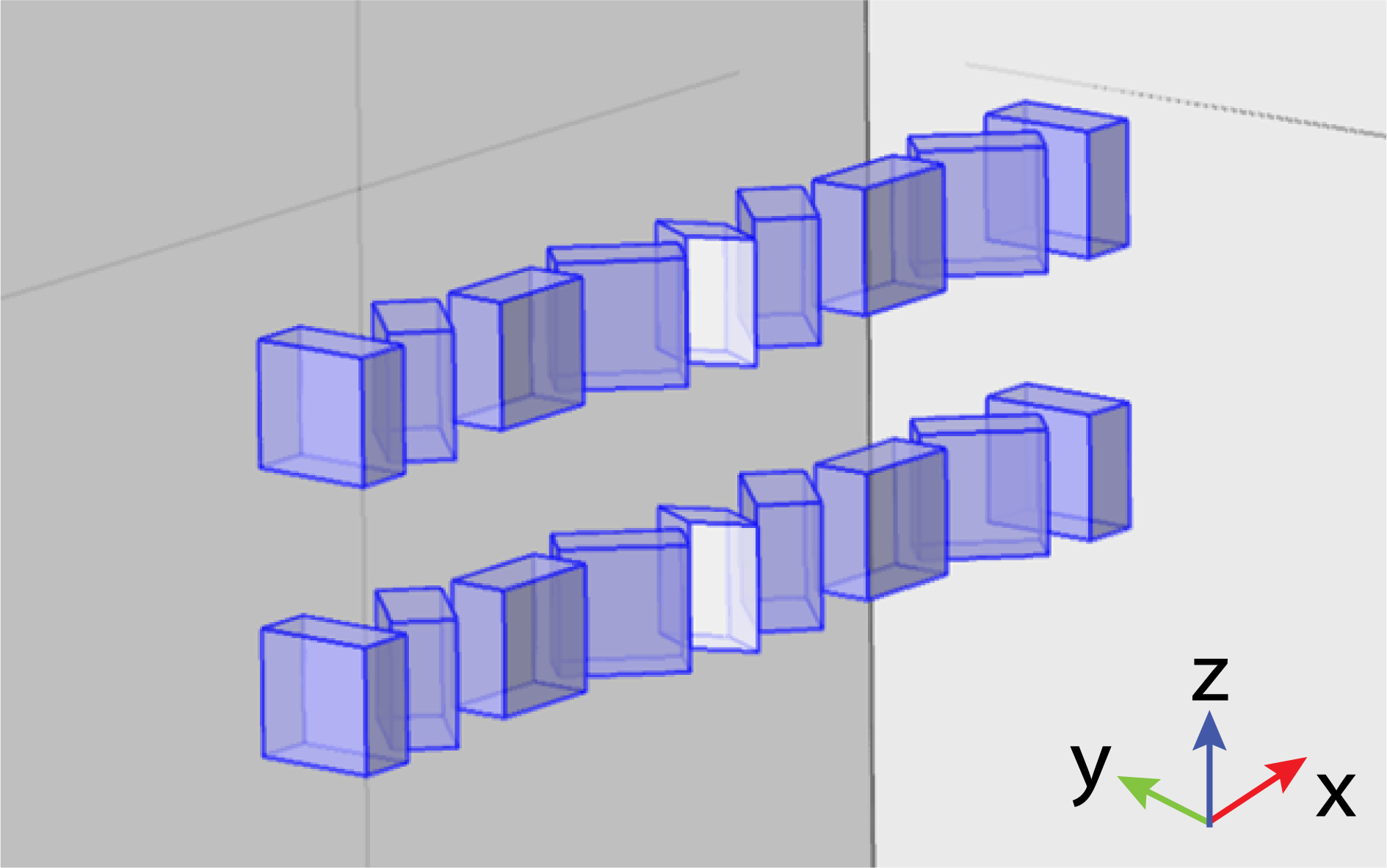
Figure 4: 3D view of the optimized magnet array in COMSOL Multiphysics, showing the integration of rhombic prism and cuboid segments.
The optimized rhombic design achieves an axial gradient of $51$ Tm−1 at a field null located $1.6$ mm from the array edge, with vertical and axial offsets well within calibration range. The parameter space exploration covered both device-level constraints (ion height, spacing) and practical aspects such as feasible magnetization strength, precision of array fabrication/alignment, and mechanical assembly.
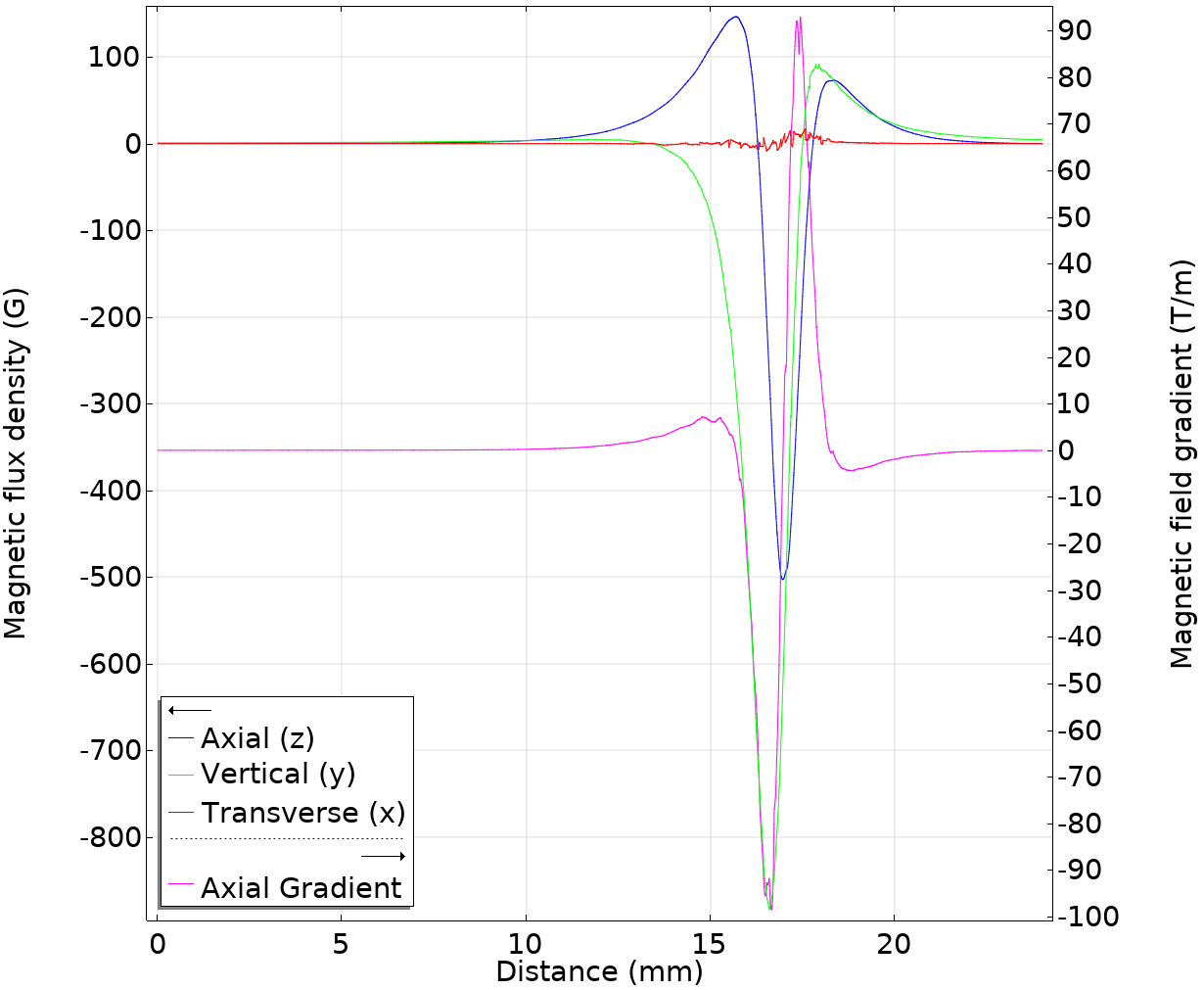
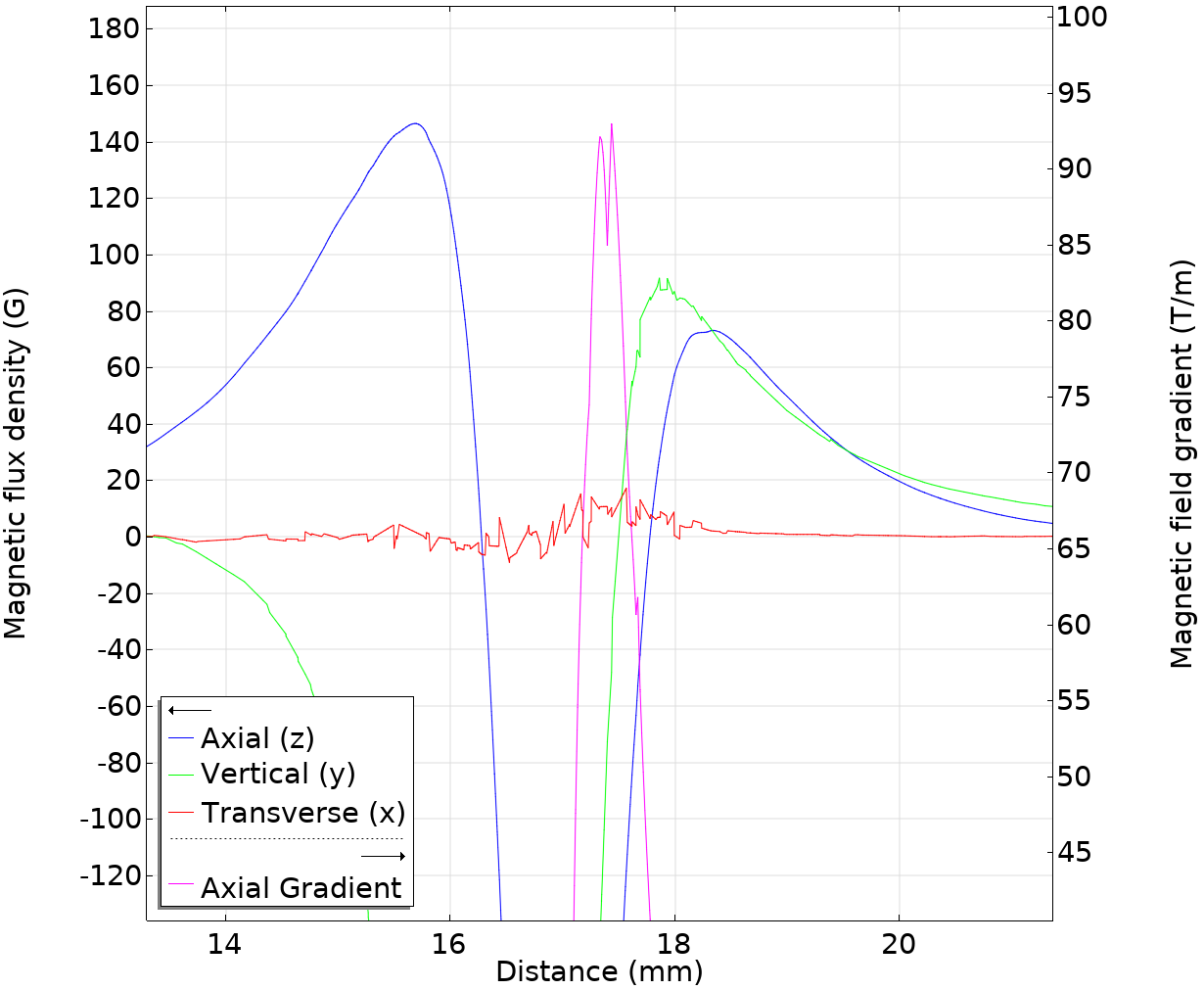
Figure 5: Magnetic field gradient and three-axis field components for the rhombic prism-based array, post-parameter optimization.
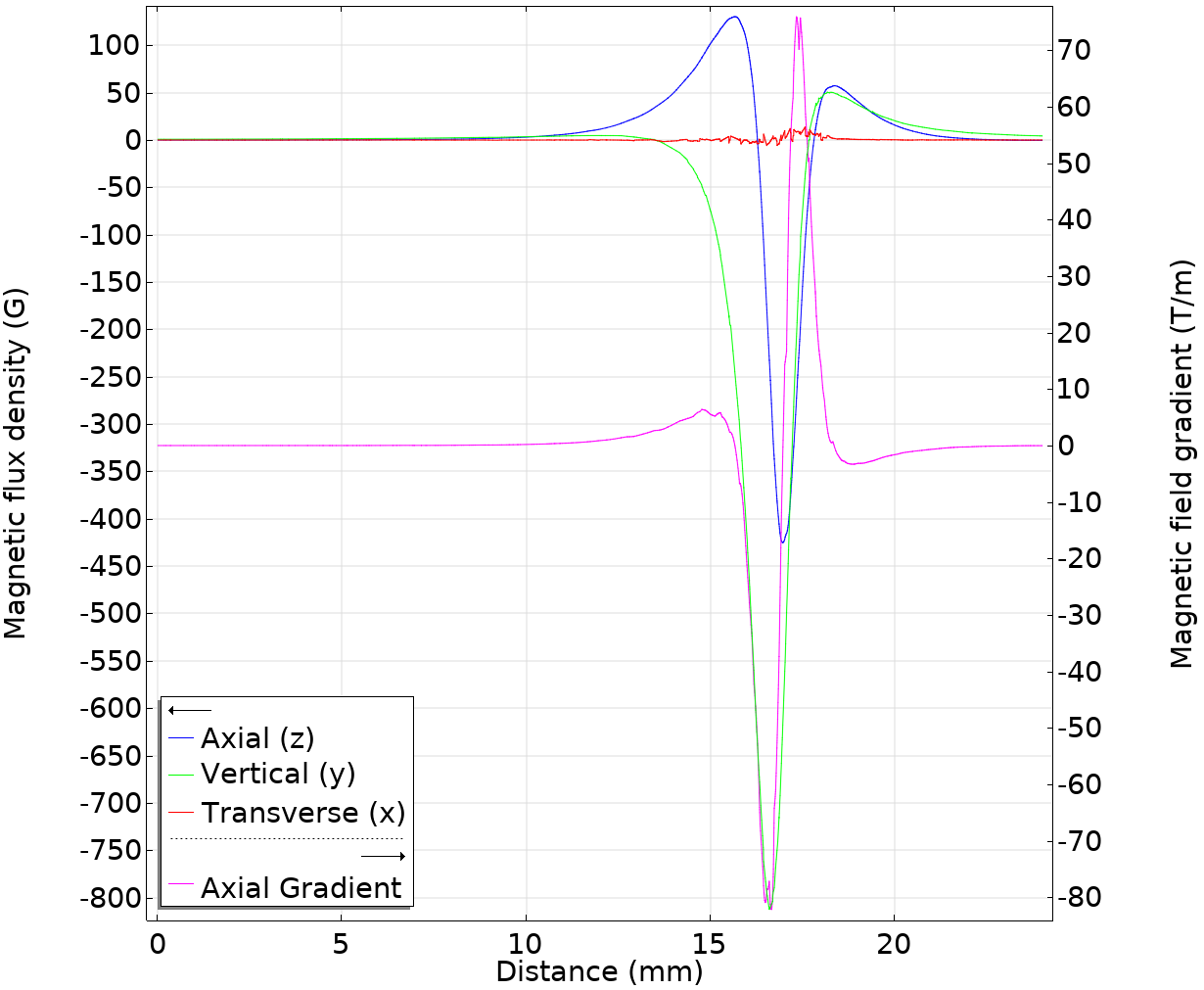
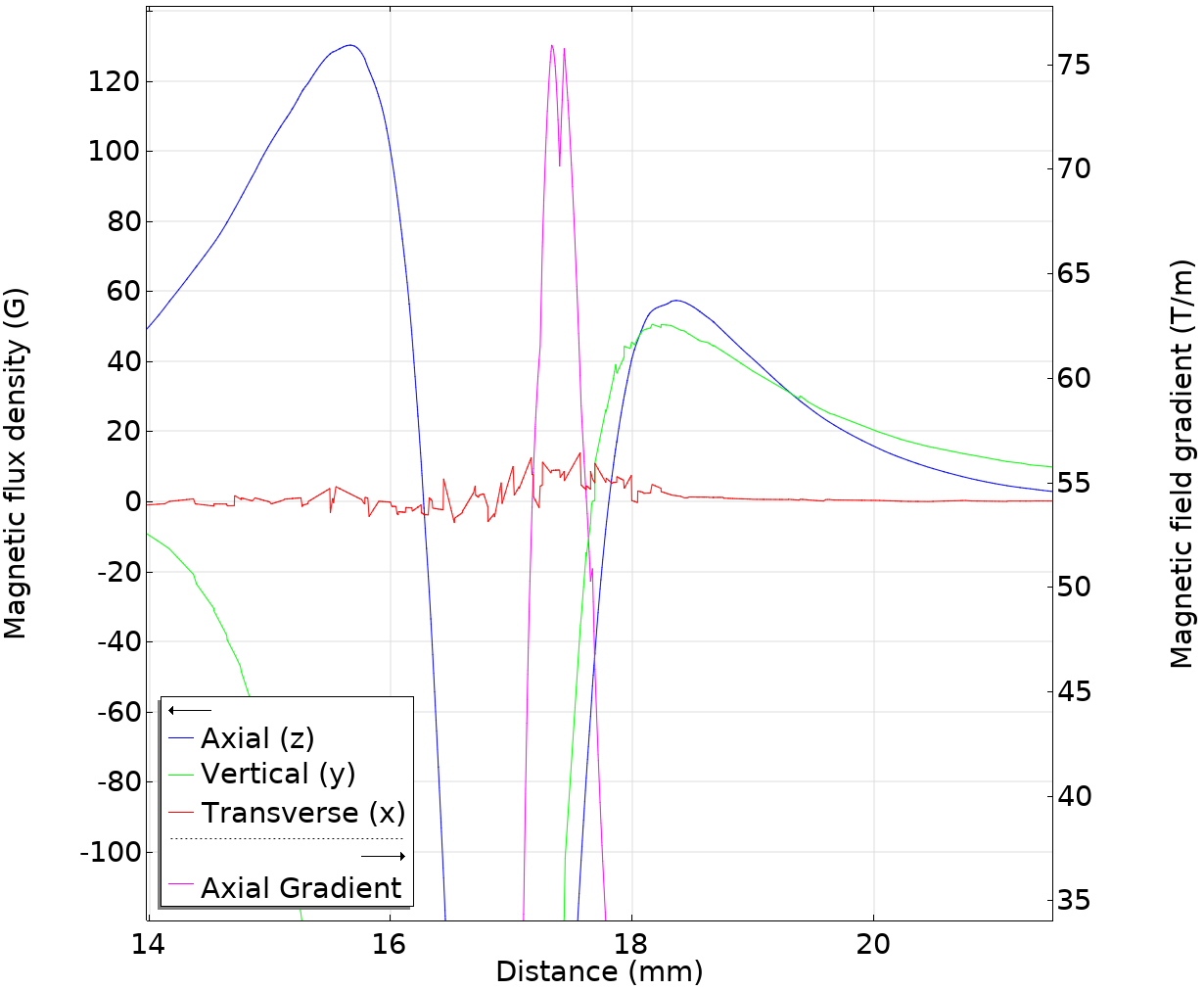
Figure 6: Magnetic field gradient in the optimized array, focusing on the approach to the field null from the weak field side, essential for transport minimization of qubit dephasing.
Integration and Scalability
A comprehensive mechanical and integration strategy is delineated involving a three-component mounting architecture—lower tungsten/titanium base for the principal array and trap, upper titanium support for the compensation array, and a precise alignment bracket. Materials are chosen for UHV compatibility, low outgassing, favorable thermal contraction coefficients, and microfabrication readiness.
This modular scheme supports the envisioned scaling in a 2D QCCD arrangement, where specialized entangling zones are located at array extremities. This approach ensures shuttling paths that avoid strong, inhomogeneous fields except at dedicated gate regions, an essential requirement for scalable modular ion trap designs.
The incorporation of permanent magnet arrays circumvents the significant heat dissipation and power instability issues associated with embedded current-carrying structures for generating gradients. Fine compensation using coils or integrated wires remains feasible but is now confined to low-power corrections, improving overall system stability and scalability [Siegele-Brown_2022].
Implications and Outlook
This work provides an experimentally accessible, theoretically justified permanent magnet array geometry that advances the prospects for scalable, shuttling-based trapped-ion quantum computing architectures utilizing microwave entanglement gates. The deterministic and systematic characteristics of the engineered field environment permit precise phase compensation in multi-qubit logic and offer a route to circumvent power and control bottlenecks present in current large-scale ion trap proposals.
The modularity and deterministic field profiles lend themselves to automated modeling and fabrication pipelines, suggesting favorable prospects for integration with advanced packaging and photonic interconnect solutions in future QCCD modules. The approach accelerates the move toward large qubit number devices that maintain high-fidelity logic operations without prohibitive scaling in engineering complexity or control overhead.
Conclusion
The presented Halbach-based permanent magnet array design attains a strong field gradient (∼51 Tm−1 after optimization) at a spatially localized three-axis null, with field magnitudes suitable for standard compensation and integration in large-scale, shuttling-based trapped-ion QCCD architectures. The design eliminates the intrinsic limitations of classical dipolar arrangements for scalable gate zone engineering and paves the way for deterministic, high-fidelity, microwave quantum logic without laser-induced decoherence. These developments offer a significant enabler for next-generation, modular trapped-ion quantum processors, and the concepts extend naturally to further optimization as microfabrication capabilities advance (2604.03116).

