- The paper presents a scalable, triggerless DAQ system that enables continuous, lossless data capture across 2720 channels with sub-ns synchronization.
- The paper details the integration of commercial digitizers and custom FPGA firmware, featuring advanced zero suppression and delta-Huffman compression for efficient online reduction.
- The paper validates the design with Quadrant-scale tests, demonstrating sustained 250 MB/s per digitizer throughput and robust long-term stability.
Introduction
The DarkSide-20k experiment is a next-generation direct dark matter search utilizing a dual-phase liquid argon TPC, specifically designed to detect WIMP-induced nuclear recoils with unprecedented sensitivity. A critical subsystem enabling this sensitivity is the Data Acquisition (DAQ) system, engineered for continuous, triggerless, and lossless operation over 2720 readout channels. This essay provides a comprehensive overview and analysis of the DarkSide-20k DAQ system, focusing on its architecture, technological solutions, control and synchronization, real-time data reduction strategies, and validation via full Quadrant-scale commissioning.
Detector and Readout Overview
DarkSide-20k's core detection volume is a dual-phase TPC with >35 t fiducial mass of underground argon, complemented by inner and outer veto systems for neutron and muon background suppression. The TPC’s optical system comprises two SiPM-based planes (top and bottom), together yielding 2112 readout channels sensitive to both prompt (S1) scintillation and secondary (S2) electroluminescence signals. Each readout channel is the analog sum of four SiPM Tiles, and both hardware and DAQ pipelines are optimized for high SNR and timing fidelity of single-photoelectron signals.
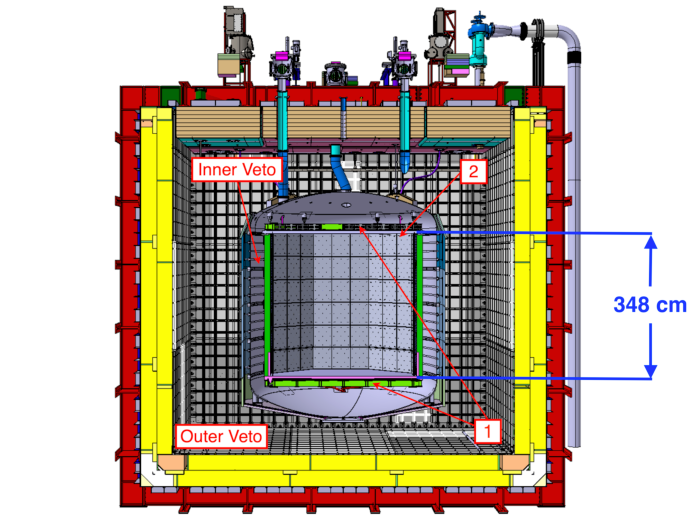
Figure 1: Cross-sectional view of the DarkSide-20k detector showing the TPC, optical planes, and veto systems.
DAQ Network Architecture
The DAQ architecture is hierarchically distributed to ensure throughput, scalability, and synchronization. Analog signals from the photosensors are routed to 48 CAEN VX2745 waveform digitizers (WFDs), each handling 64 channels with 16-bit, 125 MS/s ADCs. Custom FPGA firmware enables advanced, triggerless operation and onboard zero-suppression. The digitizers are grouped in four rooftop racks to minimize analog cable length and noise susceptibility.
Key hardware elements—WFDs, custom Global Data Manager (GDM), and Crate Data Managers (CDMs)—are networked together, with clock, command, and busy signals distributed optically from the GDM through CDMs. Each digitizer interfaces with dedicated Front End Processor (FEP) machines over 10 GbE. FEPs perform initial software data reduction, temporal sorting, and hit parameterization.
The DAQ network is completed by Pool Manager (PM) and Time Slice Processor (TSP) clusters. The PM dynamically assigns time-sorted data packets (Time Slices) from FEPs to available TSPs for event building, further filtering, event classification, and data merging before permanent storage.
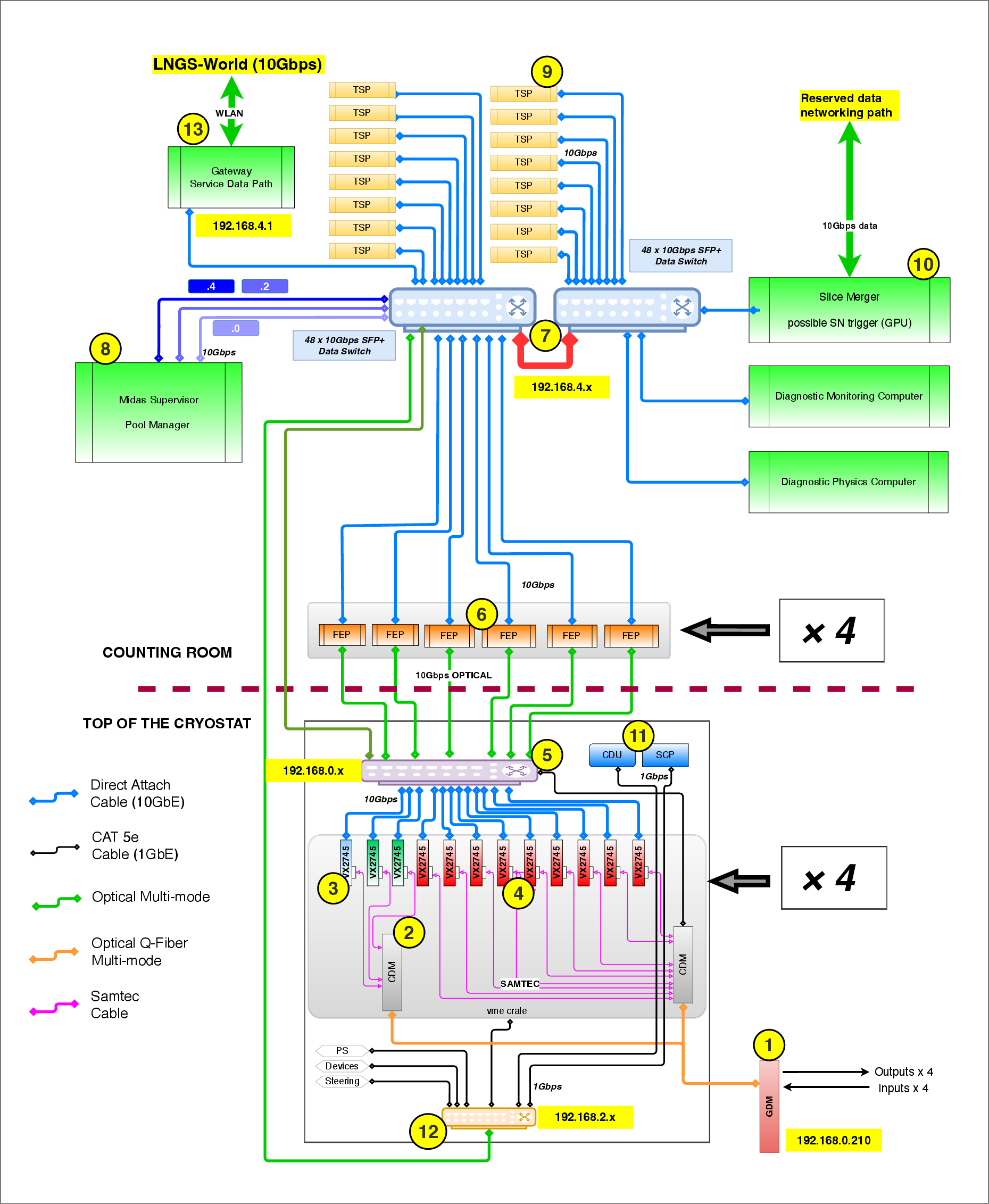
Figure 2: Schematic representation of the DAQ network, including digitizers, data managers, FEPs, TSPs, and storage.
Clock Distribution and Synchronization
Accurate timing (sub-ns inter-channel) and phase-coherent sampling across all digitisers are achieved through a discipline system based on an underground GPS-referenced rubidium clock. The GDM receives time packets via the LNGS laboratory’s precise timing infrastructure, disciplines a local 10 MHz standard, and fans out phase-aligned clocks and control signals via high-speed optical links to all 48 digitizers. Intra-channel time jitter has been measured below 500 ps.
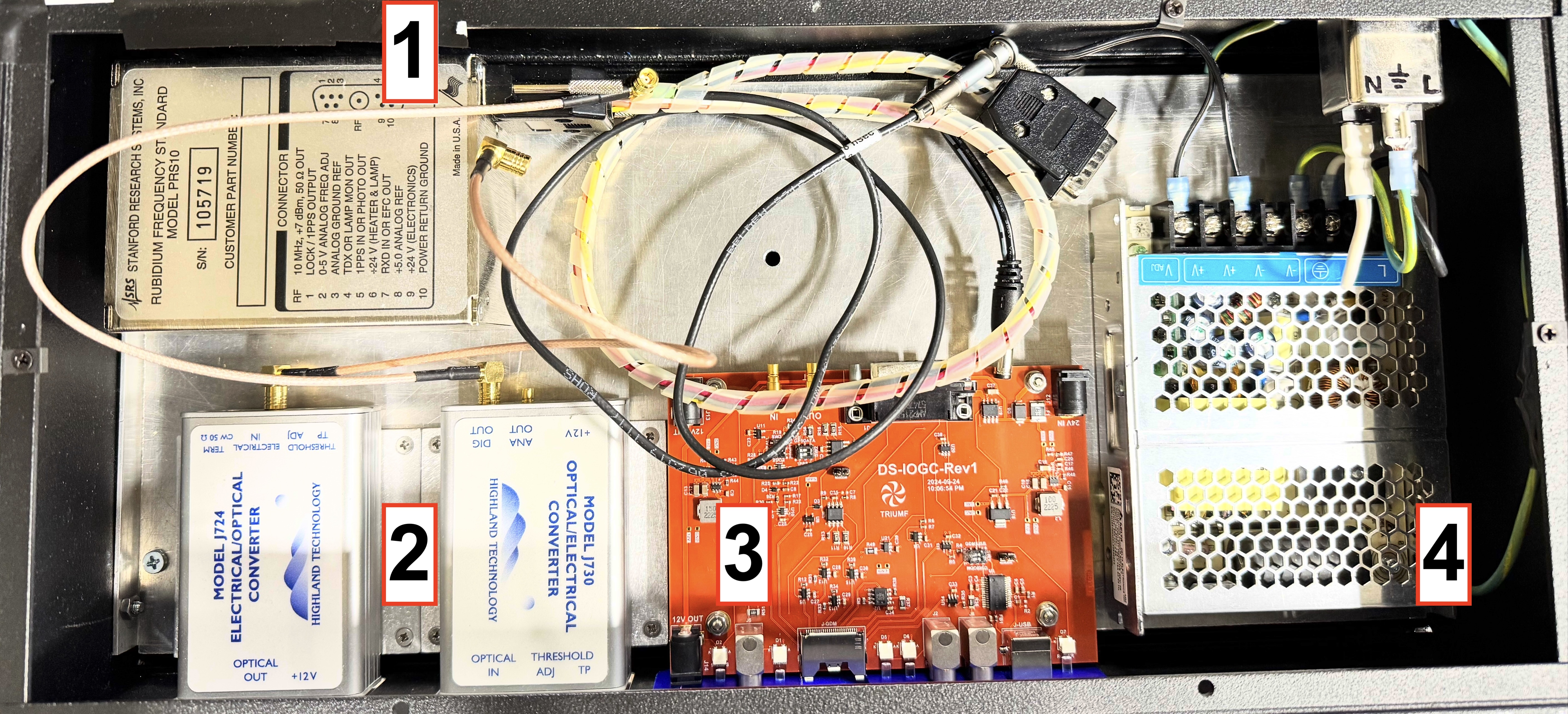
Figure 3: The clock and synchronization crate, including the rubidium clock, GPS receiver, and custom distribution electronics.
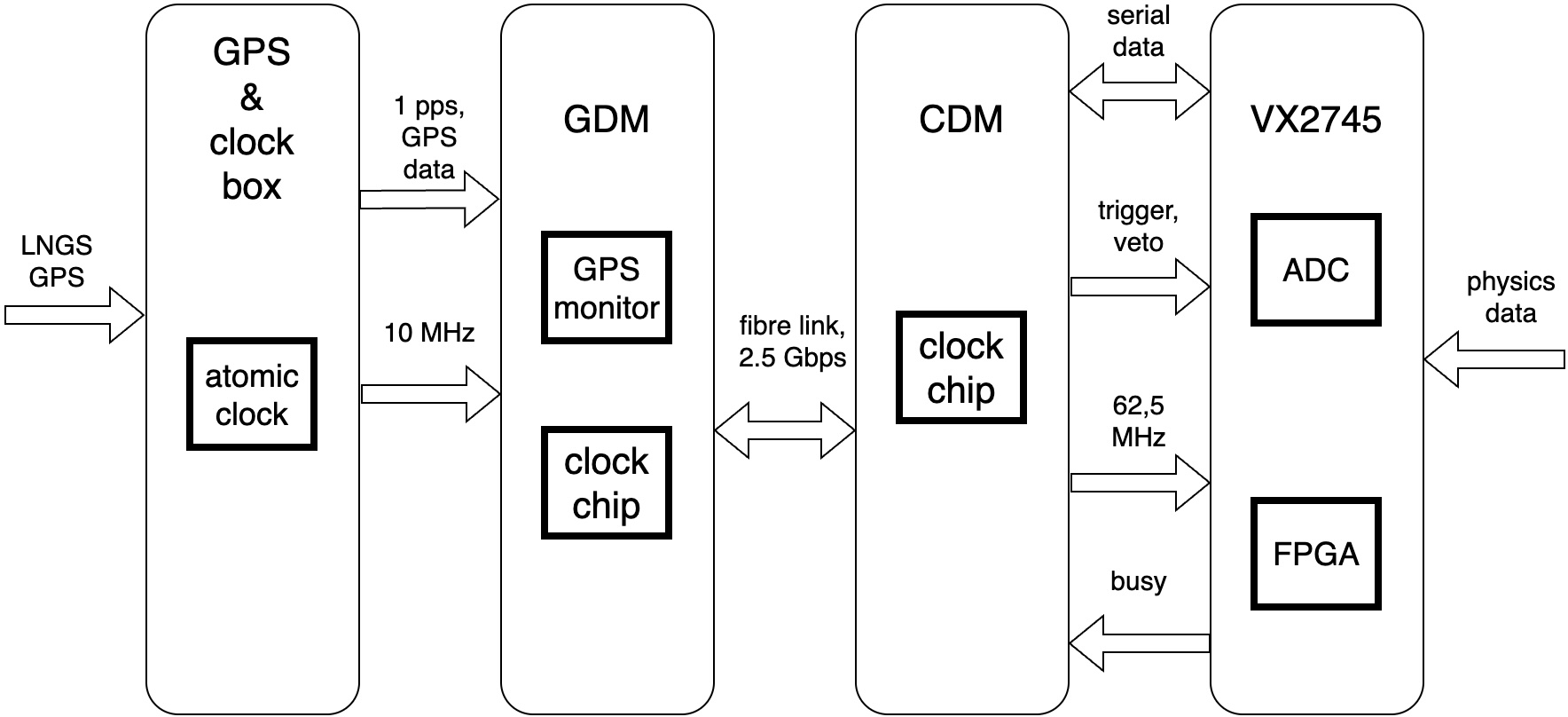
Figure 4: Clock and command distribution via GDM and CDM boards for phase-aligned operation of all digitizers.
Each VX2745 digitizer hosts a Xilinx ZU19EG SoC with access to OpenFPGA for custom acquisition and filtering firmware. The input signal for each channel is processed by a 64-tap FIR filter (implemented with 16 internal DSPs through time-multiplexing) for SNR improvement. A custom trigger logic identifies and extracts only significant waveform segments above configurable thresholds, with small pre/post-trigger windows for baseline and noise evaluation.
A key bottleneck, the channel data FIFO, is managed with busy logic that can suspend acquisition module-wide to prevent data loss. Simulations and hardware-validated tests demonstrate that splitting long waveform segments and lossless delta-Huffman compression (factor >2) mitigate overflow risk, maximizing sustainable throughput. Firmware-level zero suppression ensures only relevant waveform segments are transmitted.
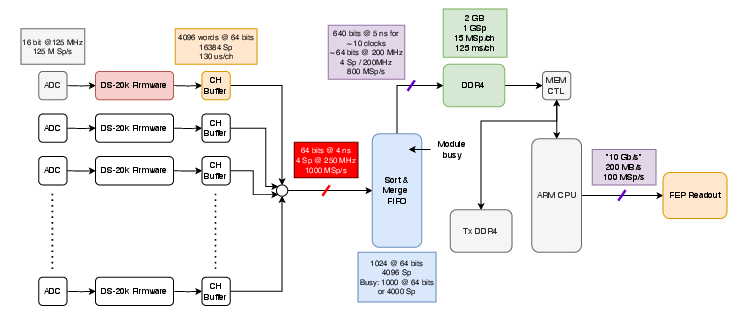
Figure 5: Data path and busy logic within the VX2745 digitizer showing segment buffering and transfer hierarchy.
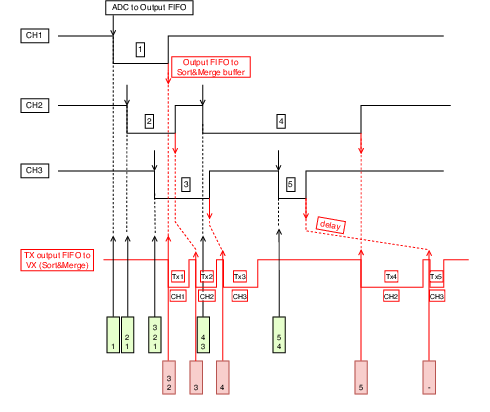
Figure 6: Logic of busy assertion and data flow control at the digitizer module level.
Front-End Processing and Online Hit Extraction
FEP machines aggregate and time-sort waveform segments from multiple digitizers. Baseline subtraction, gain calibration, and digital filtering (auto-recursive exponential plus matched filtering) are performed per segment. A custom peak finder identifies single-PE hits by subtracting a moving average and applying a charge-to-prominence cut, achieving >99% single-PE efficiency with negligible false positive rate.
Instead of entire waveforms, only the extracted timestamp, charge, and prominence for each hit are retained for routine data; full waveforms are stored for diagnostic and calibration runs. Significant data size reduction—by several orders of magnitude—is thus achieved at this stage with no-impact on WIMP search sensitivity.
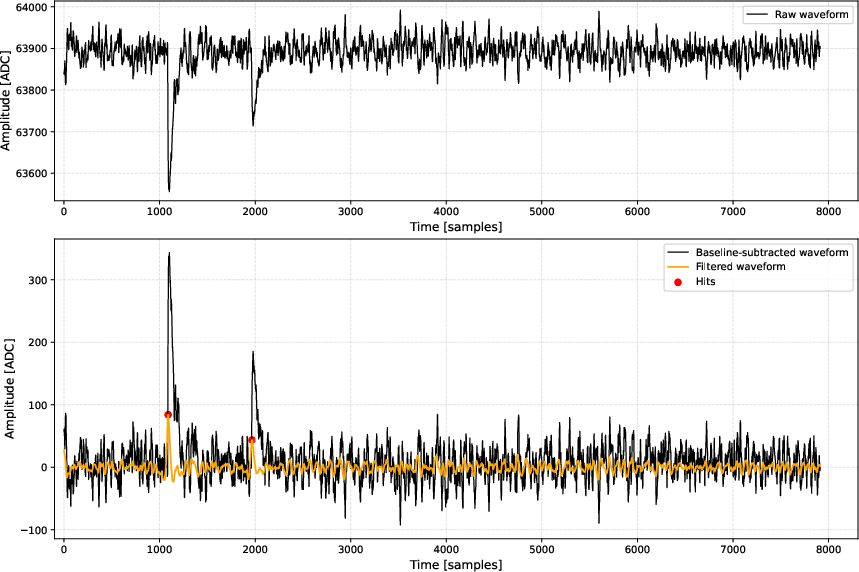
Figure 7: Waveform processing and hit extraction workflow in the FEP, with filtering and peak-finding.
Time Slice Assignment and Event Building
The DAQ system operates in a strictly triggerless mode and uses a time-based data partitioning approach. All incoming valid waveform segments are assembled into Time Slices (TS), each tagged and handled by a TSP.
The Pool Manager maintains queues of available TSPs and TS blocks, dynamically orchestrating data flow and load balancing. Data transfer between FEPs, TSPs, and storage is achieved with raw TCP sockets and ZeroMQ for control messages to minimize network and memory overheads. Events spanning TS boundaries are handled by duplicating overlap regions to adjacent slices.
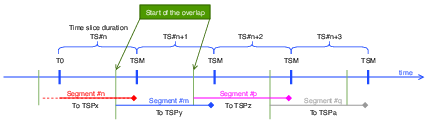
Figure 8: Illustration of time-slice segmentation, assignment to processors, and duplication to capture boundary events.
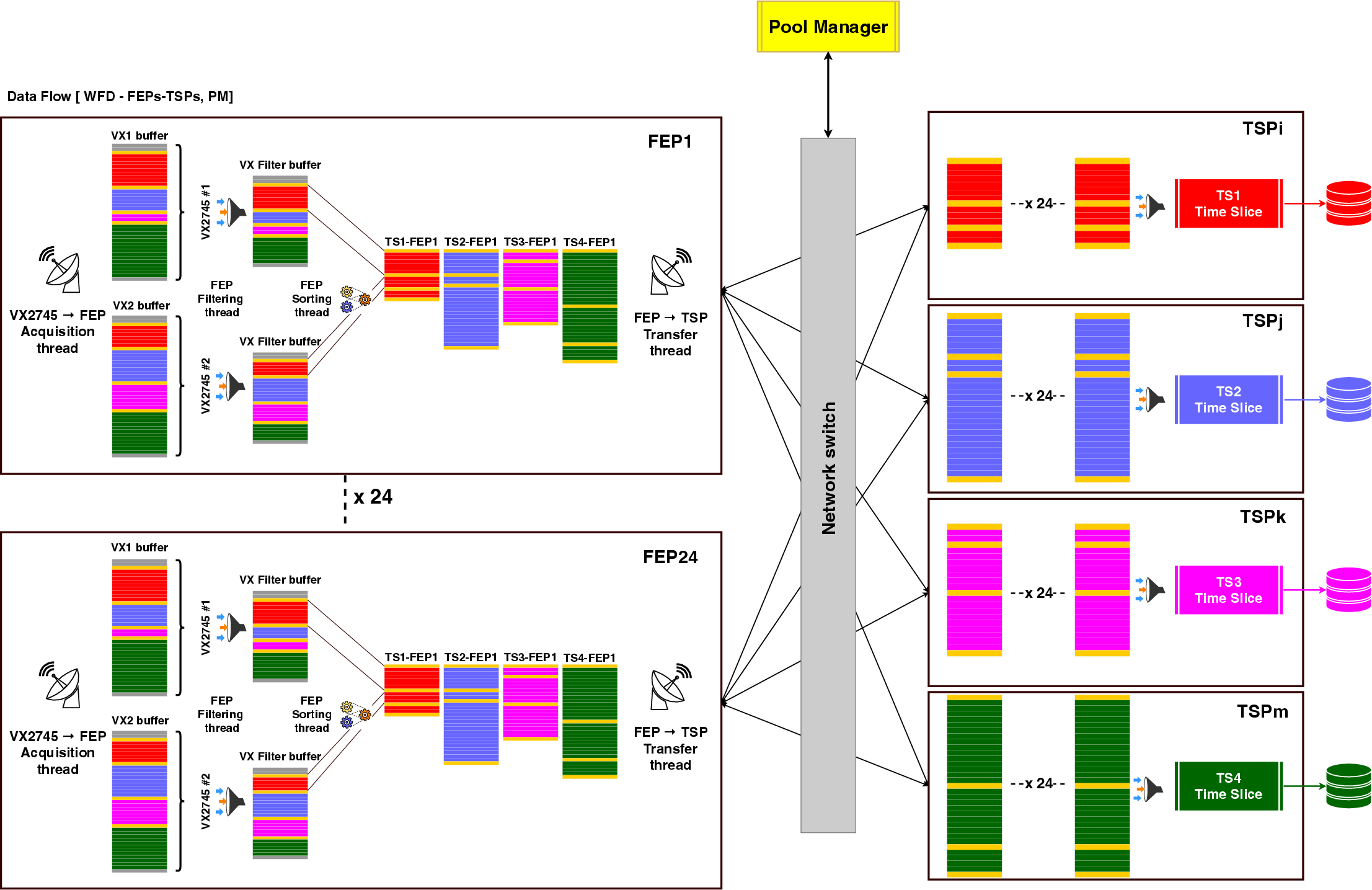
Figure 9: Data flow from WFDs to FEPs, TSPs, and Merger, orchestrated by the Pool Manager.
Full-System Validation: The Quadrant Test
A fully functional Quadrant (¼ scale system) was constructed at TRIUMF, including 12 digitizers and 6 FEPs, to validate architecture and firmware under load. Stress tests with 768 channels simultaneously pulsed at 2 kHz and 8 μs waveform windows (worst-case scenario) yielded stable, sustained throughput of 250 MB/s per digitizer—exceeding DarkSide-20k physics rate requirements. CPU utilization was well within margins, and data synchronization over all FEP threads evidenced coherent timing within the digitizer period. Operation over 300 hours corroborated long-term stability.
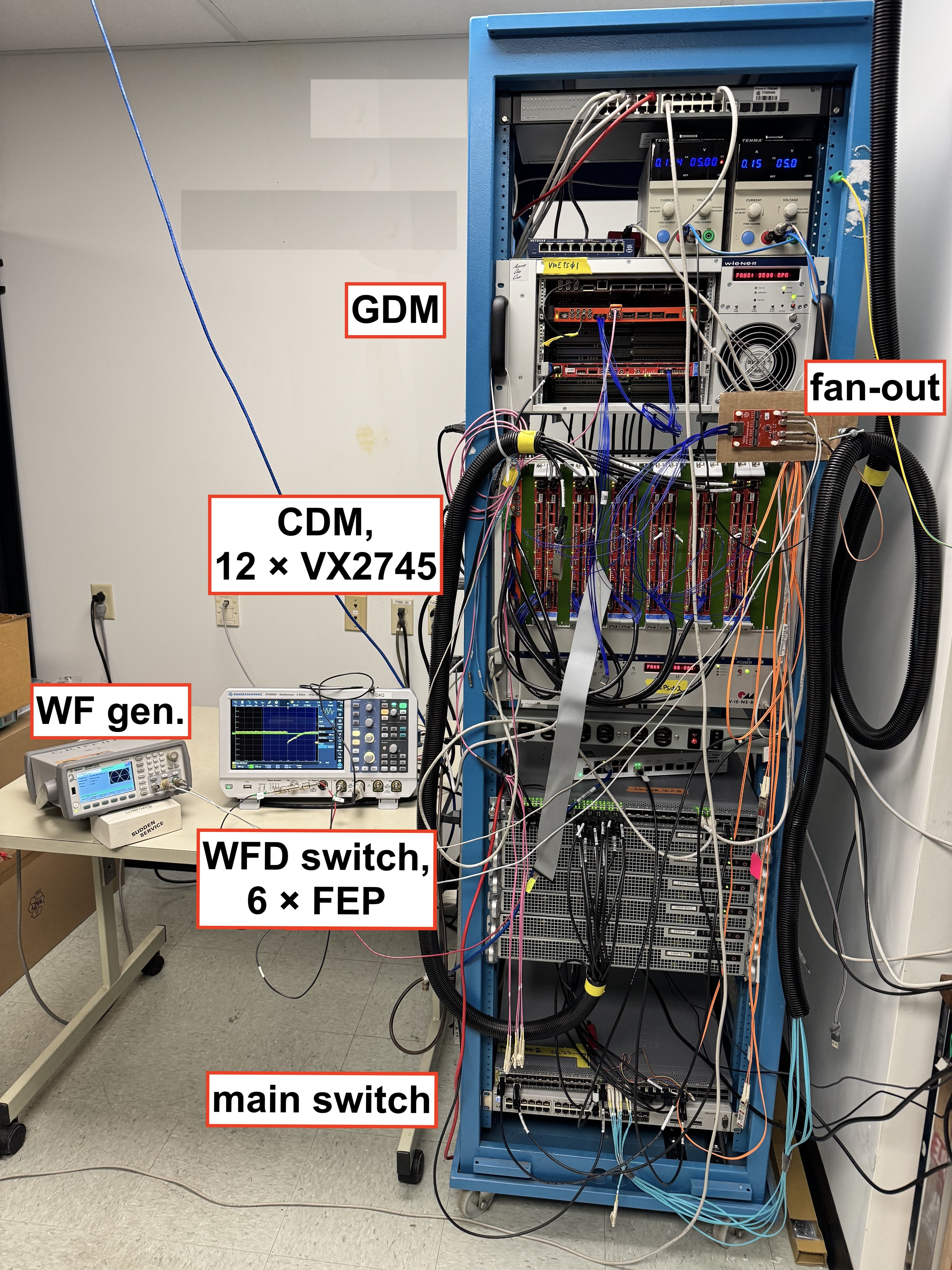
Figure 10: Photograph of the Quadrant setup at TRIUMF, comprising one production DAQ rack for full-scale validation.
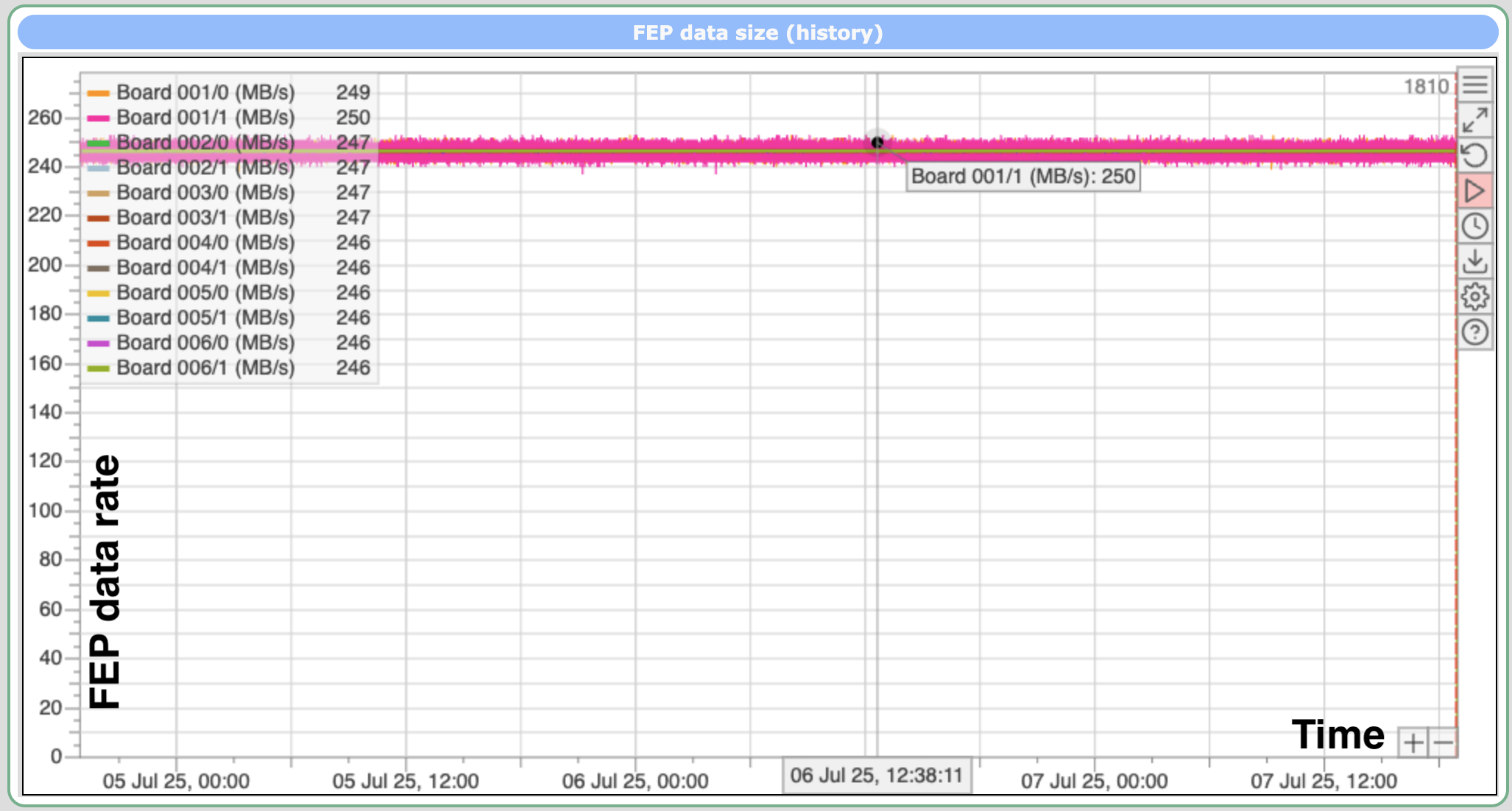
Figure 11: Data rate per digitizer to FEP during Quadrant commissioning: stable at 250 MB/s over 2.5 days.
Slow Control and Redundancy
The DAQ system integrates a comprehensive Slow Control layer based on CERN WinCC-OA SCADA, ensuring autonomous and redundant monitoring and control of all critical infrastructure—power, temperature, SiPM bias, HV, LV, and safety interlocks. Real-time data quality is monitored with automated trending and alarm systems, further enhancing DAQ robustness.
Implications and Future Developments
The modular, fully triggerless, and distributed DAQ model of DarkSide-20k demonstrates that commercial waveform digitizer hardware—augmented with custom FPGA code and data management electronics—can deliver the throughput, synchronization, and online reduction required for multi-tonne rare-event experiments. The explicit separation of online real-time and offline analysis, made possible by the time-slice and TSP architecture, provides flexibility for the future deployment of advanced event classification and anomaly detection algorithms (including GPU and AI-in-the-loop extensions for e.g., supernovae and axion burst detection).
This schema ensures that scaling the system or adapting to future LAr TPCs of even greater channel count and data rates is a matter of network and storage investments, not architectural overhaul.
Conclusion
The DarkSide-20k DAQ system is a robust, high-performance, and scalable platform built primarily from commercial components, validated through full Quadrant testing to operate at and above required physics data rates while providing precise synchronization and online data reduction. Its architecture directly supports the experiment’s scientific mission—background-free WIMP dark matter search—while offering extensibility for broader rare-event physics, multi-messenger coordination, and expansion to future large-scale TPCs. The technical solutions established here represent a new standard for DAQ in rare-event physics environments (2604.03059).

