- The paper demonstrates that GC mass fraction, rather than number fraction, robustly traces the host’s in-situ assembly history, offering a key relic diagnostic.
- It applies TNG100 simulations combined with analytic GC modeling to compare structural, photometric, and chemical signatures in compact massive galaxies.
- It finds that relic analogs exhibit narrow, unimodal GC metallicity distributions and compact ex-situ GC spatial structures, indicating minimal late accretion.
Tracing Relic Compact Galaxy Evolution Using Globular Cluster Systems
Introduction and Motivation
This work investigates the formation and evolutionary histories of compact massive galaxies (CMGs)—systems that retained high stellar densities since early epochs—and explores their link to relic galaxies, i.e., galaxies that have undergone minimal structural evolution since z∼2. The analysis is positioned at the intersection of galaxy and globular cluster (GC) system formation, leveraging numerical simulations (IllustrisTNG TNG100) combined with an analytic GC formation/evolution framework. The fundamental hypothesis is that GC populations encode signatures of host galaxy assembly history, providing diagnostics complementary to classic photometric or kinematic relic galaxy criteria.
Sample Selection and Simulation Framework
A well-defined sample of 17 CMGs (M⋆>1010M⊙, Re<2 kpc, surface density threshold Σ1.5>10dex) is drawn from the TNG100-1 simulation. The mass–size relation permits direct comparison with observed compact relics and ensures relevance to the high-redshift red nugget population and their local analogs.
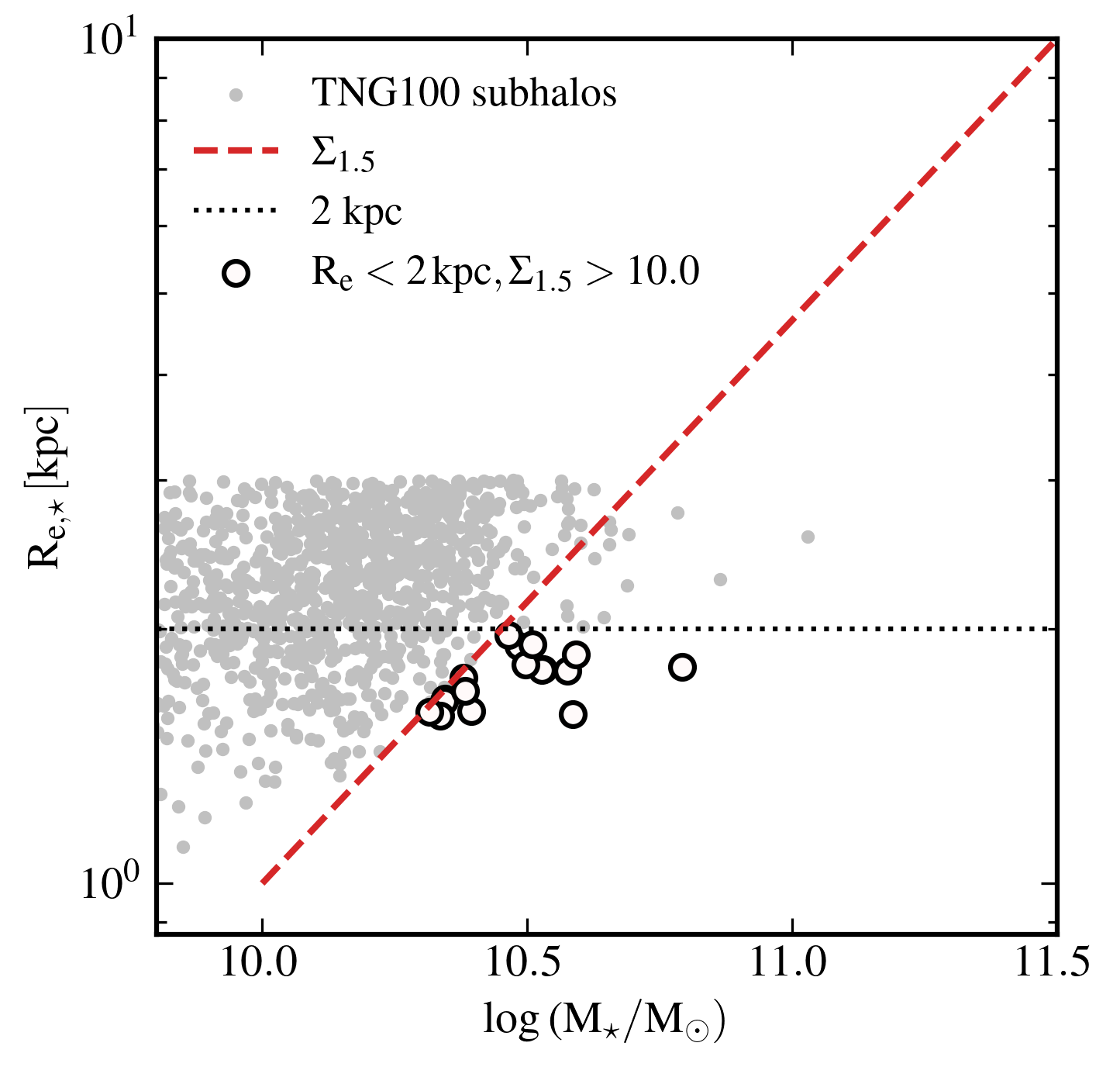
Figure 1: Stellar mass–size relation for compact massive galaxies at z=0 with compactness and size selection criteria highlighted.
GCs are assigned to each galaxy based on the model of Choksi et al., with in-situ/ex-situ partitions traced by merger tree information. Only GCs with masses >105M⊙ at z=0 are included, minimizing resolution-induced sampling biases.
Host and GC Assembly Histories
Stellar mass assembly histories exhibit diversity among the CMG sample, ranging from classical rapid formation/early quenching to more extended, accretion-driven evolution and tidal stripping. The majority (88%) of systems exhibit ex-situ stellar mass fractions below 20%, while a minority display clear signs of significant accretion or stripping.
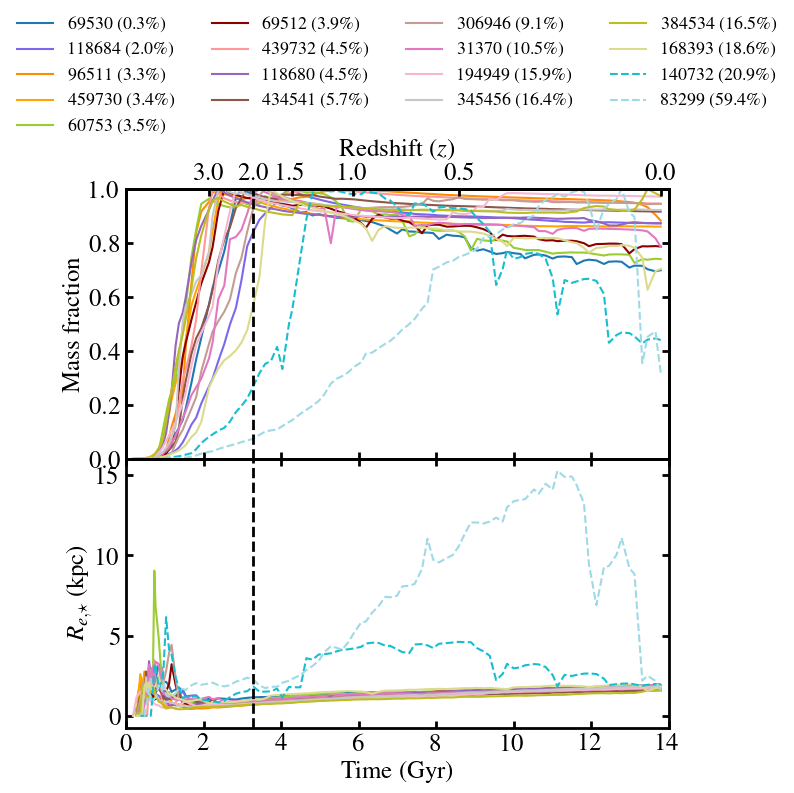
Figure 2: Stellar mass assembly histories highlighting in-situ and accreted fractions across the compact massive sample.
Critically, the sample contains both systems resembling classic relics—rapid assembly and negligible ex-situ fraction—and CMGs whose compactness results from structural transformation (e.g., stripping), underscoring the necessity of multi-tracer approaches.
GC Population Diagnostics: Correlation with Host Properties
A central result is the demonstration that GC system mass fraction (as opposed to number fraction) correlates more robustly with host in-situ mass fraction, thereby serving as a superior tracer of host assembly. The mean deviation from the identity line between host and GC in-situ fraction is 0.162 (mass-based) versus 0.319 (number-based), attributable to the tendency for more massive (and longer-lived) in-situ GCs.
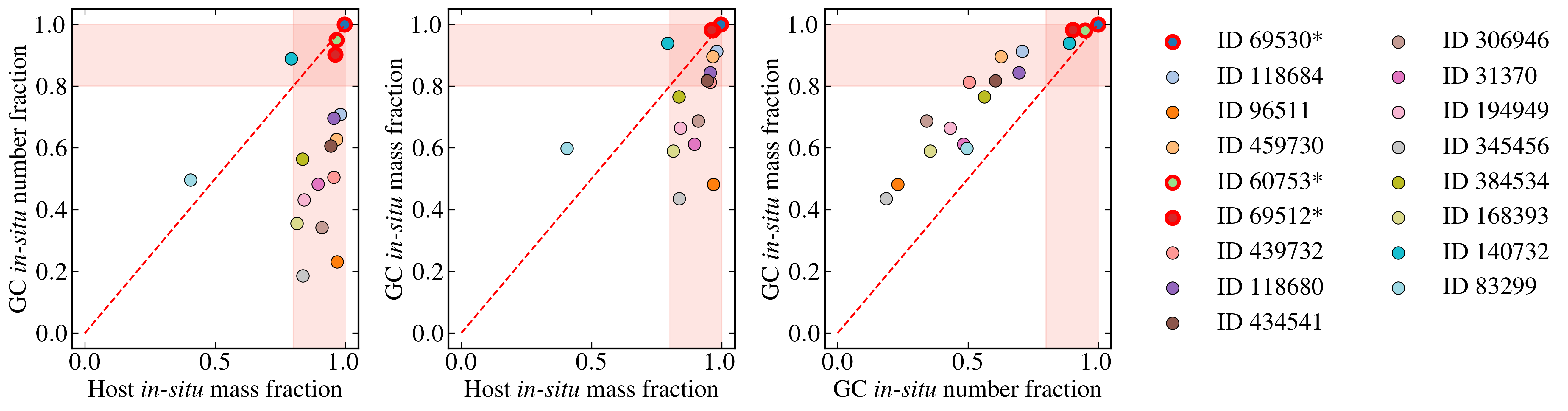
Figure 3: GC in-situ fraction versus host in-situ mass fraction; systems with high agreement flagged as optimal relic candidates.
Three systems (IDs 60753, 69512, 69530) consistently exhibit >90% alignment between host and GC in-situ fraction using both metrics, flagging them as strong analogs of observed relic galaxies. The methodology highlights the utility of joint GC-host diagnostics for robust relic selection.
Chemical Evolution: GC [Fe/H]–Age Distributions
A key prediction of two-phase galaxy formation is that relics—lacking significant late accretion—should display unimodal, metal-rich GC populations with narrow [Fe/H] distributions. The analysis demonstrates that the GC in-situ-dominated relic candidates exhibit mean σ[Fe/H]=0.36 (unimodal, narrow), compared to σ[Fe/H]=0.56 for the broader sample, quantitatively supporting this scenario.
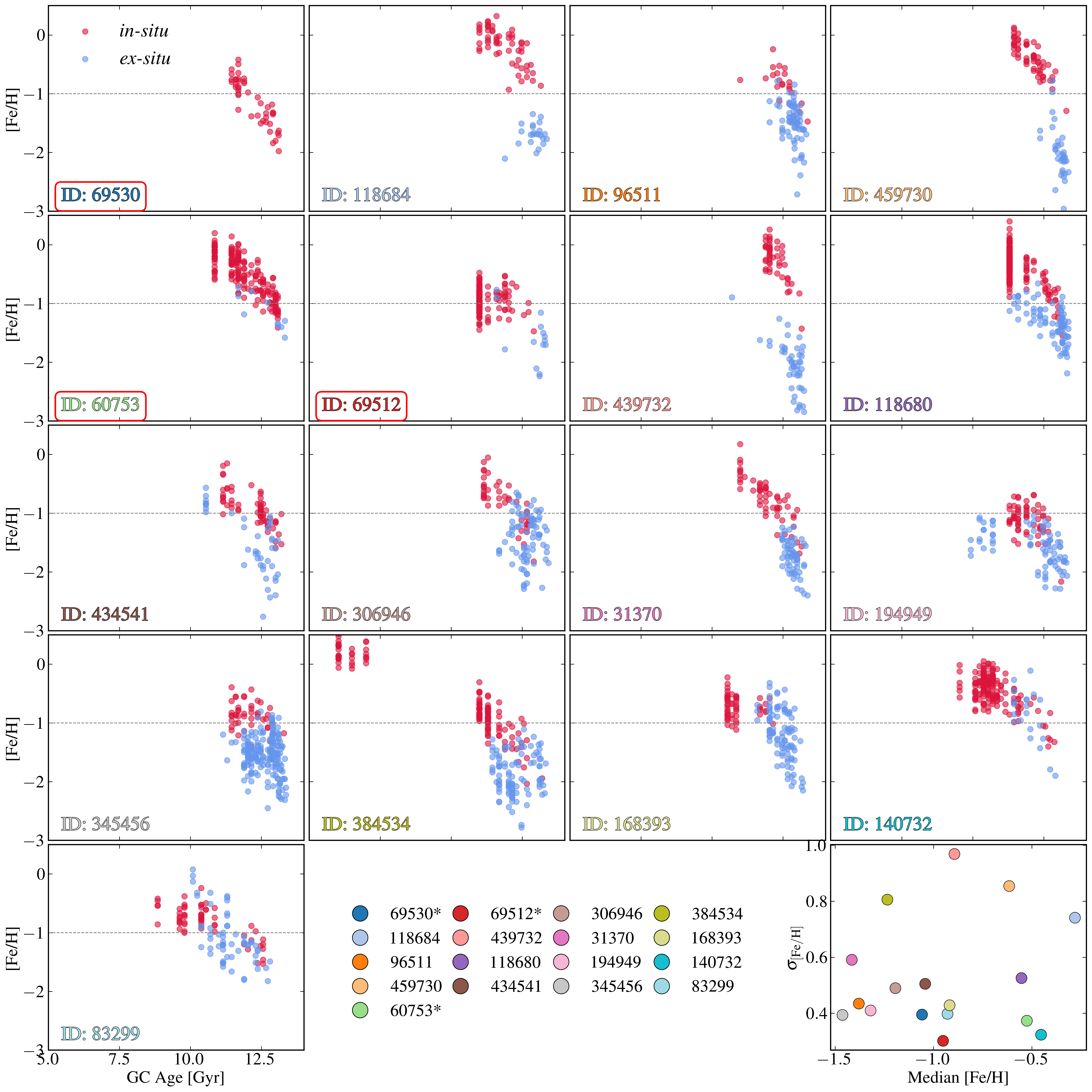
Figure 4: [Fe/H] distribution versus age for GCs in all hosts, with in-situ/ex-situ color coding; highlights identify optimal relic-like cases.
Histograms of GC metallicities reinforce these results: relic analogs show unimodal, metal-rich GC distributions ([Fe/H] M⋆>1010M⊙0 to M⋆>1010M⊙1), while more accreted or stripped systems present broader, often bimodal distributions.
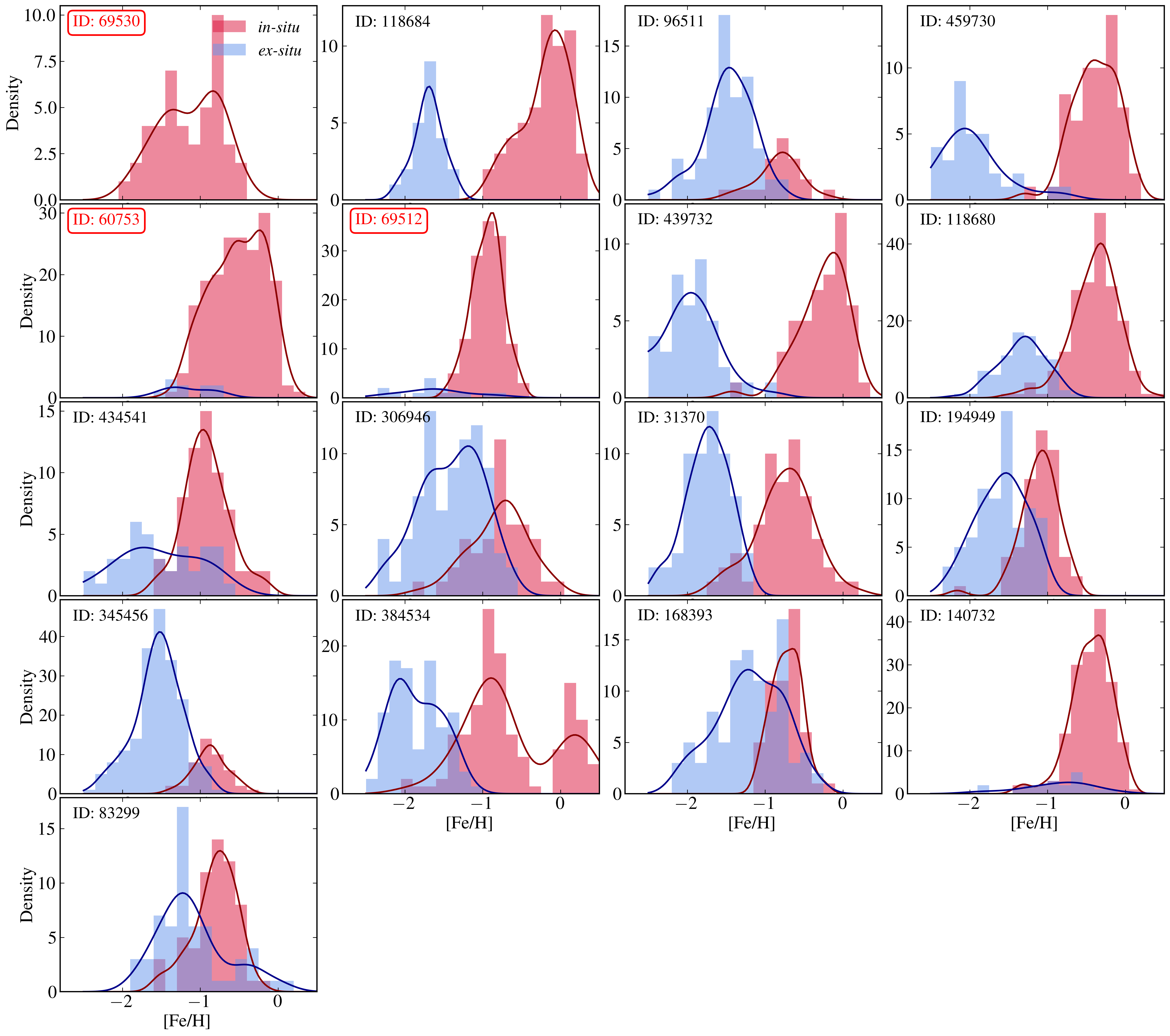
Figure 5: Histogram of GC [Fe/H] for each host, in-situ (red) and ex-situ (blue), sorted by host assembly history.
Median GC metallicity correlates tightly with in-situ GC fraction, with a mean [Fe/H] offset (M⋆>1010M⊙2–M⋆>1010M⊙3 dex) between the relic-analog and non-relic hosts.
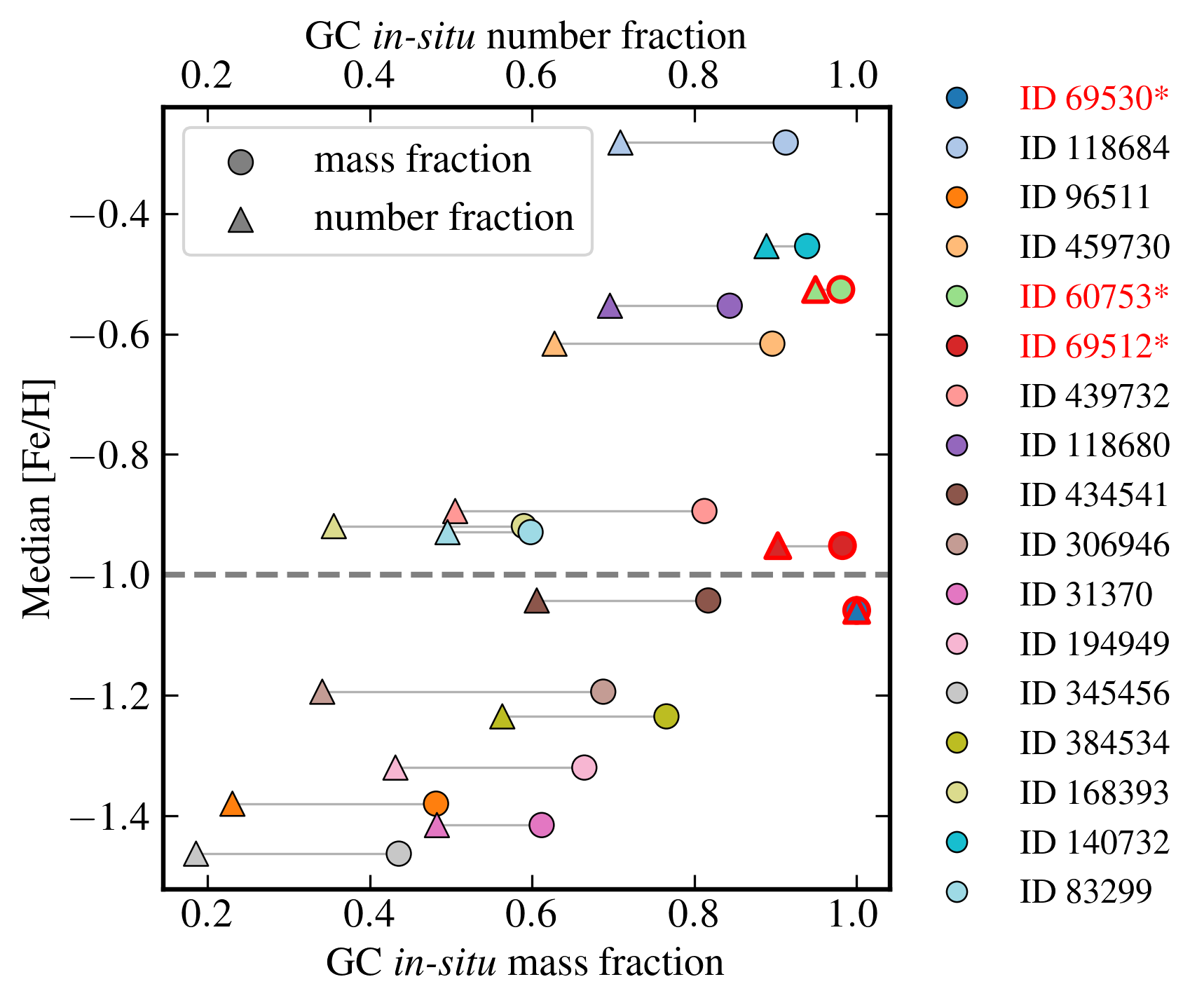
Figure 6: Host median [Fe/H] as a function of in-situ GC fraction, color-coded by galaxy ID.
Stellar Stripping and the Spatial Distribution of GCs
The study introduces a quantitative metric for stellar stripping (M⋆>1010M⊙4) and examines its correlation with the spatial extent of in-situ and ex-situ GC populations. Systems with strong stripping signatures present compact ex-situ GC distributions, with M⋆>1010M⊙5 approaching unity, as opposed to M⋆>1010M⊙6 more extended ex-situ populations in minimally stripped systems.
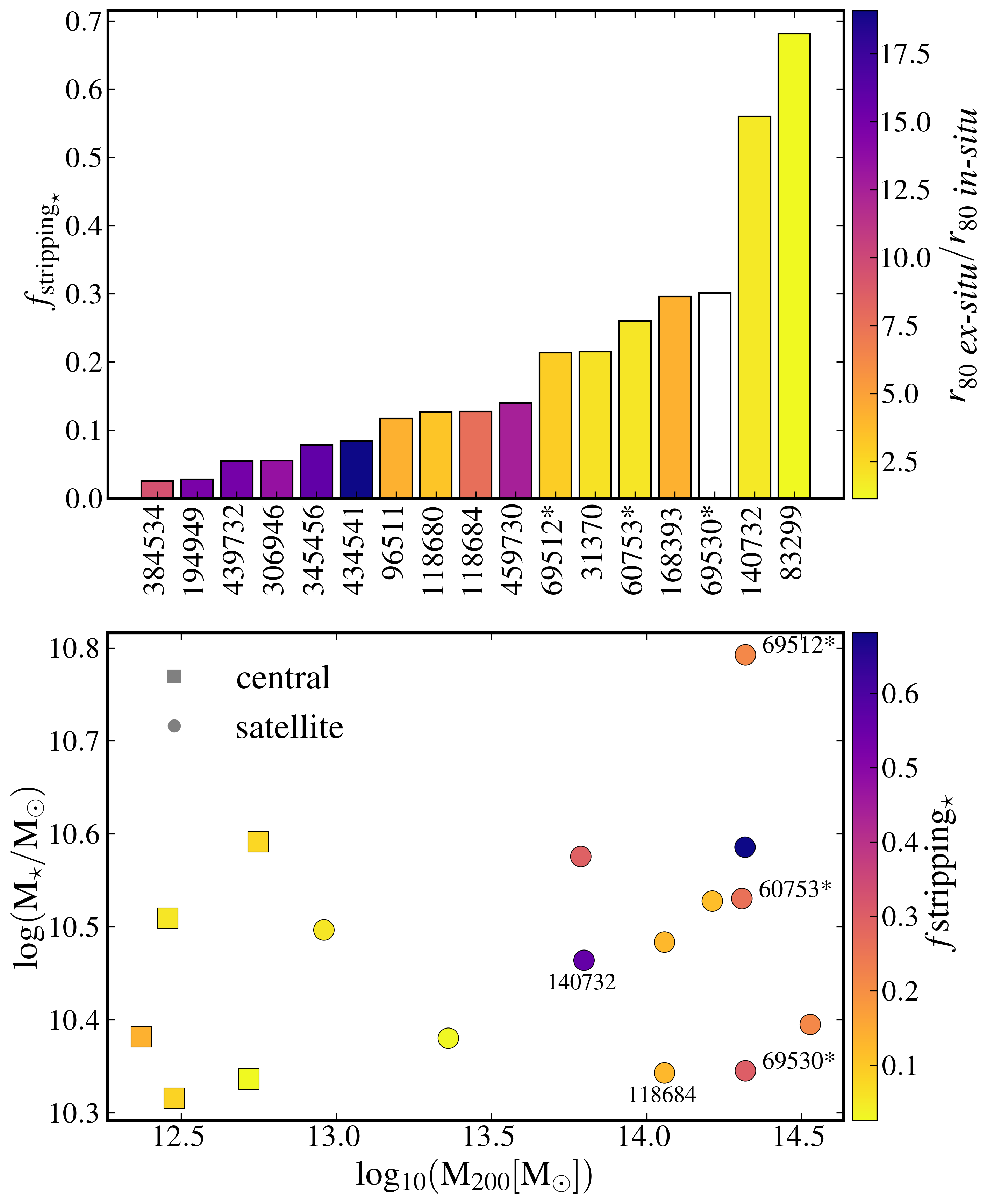
Figure 7: Stellar stripping fraction versus M⋆>1010M⊙7 ratio for each CMG, color-coded by various environmental indicators.
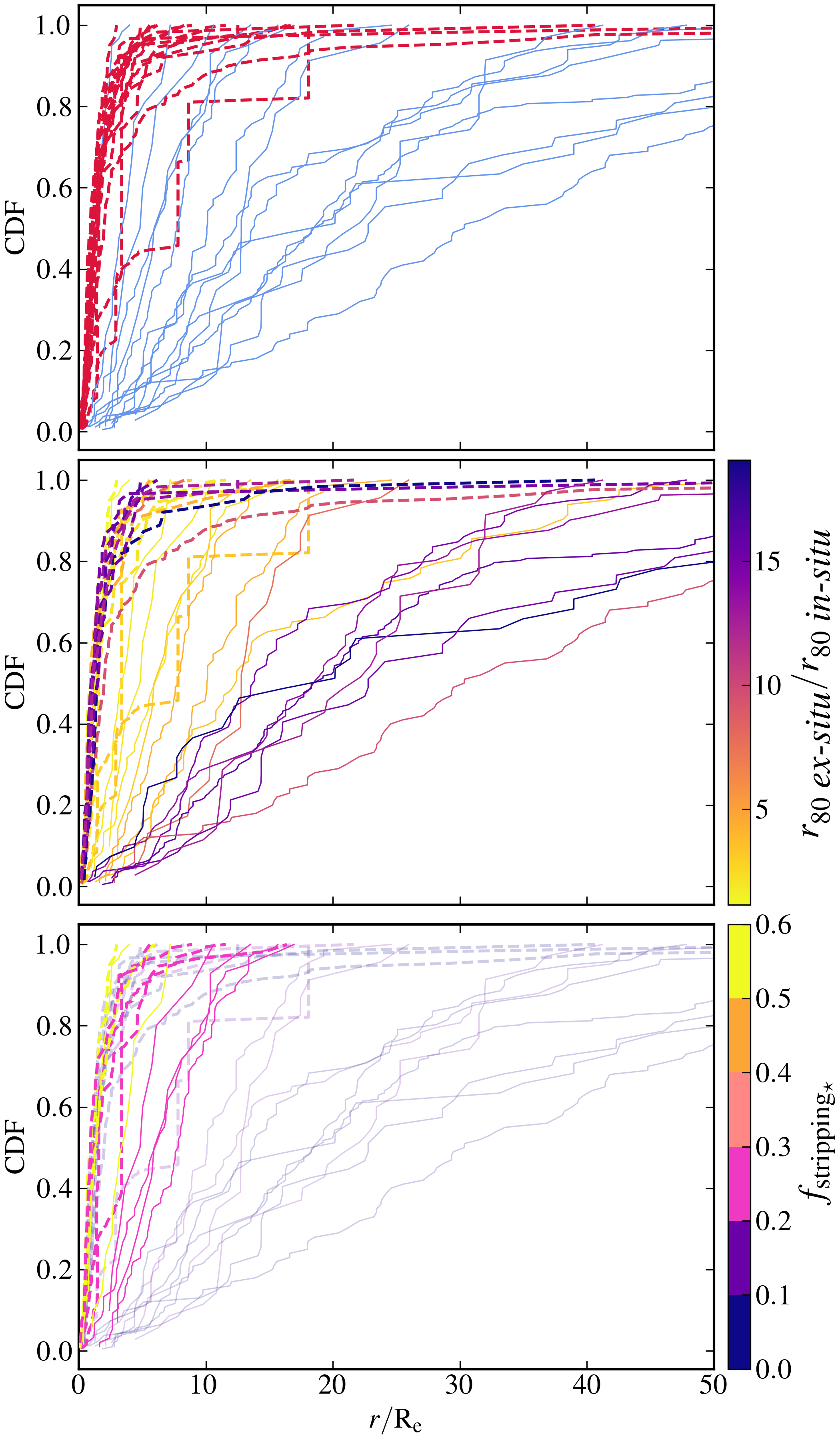
Figure 8: CDFs of galactocentric distance for in-situ and ex-situ GC populations across all hosts, with strong stripping cases highlighted.
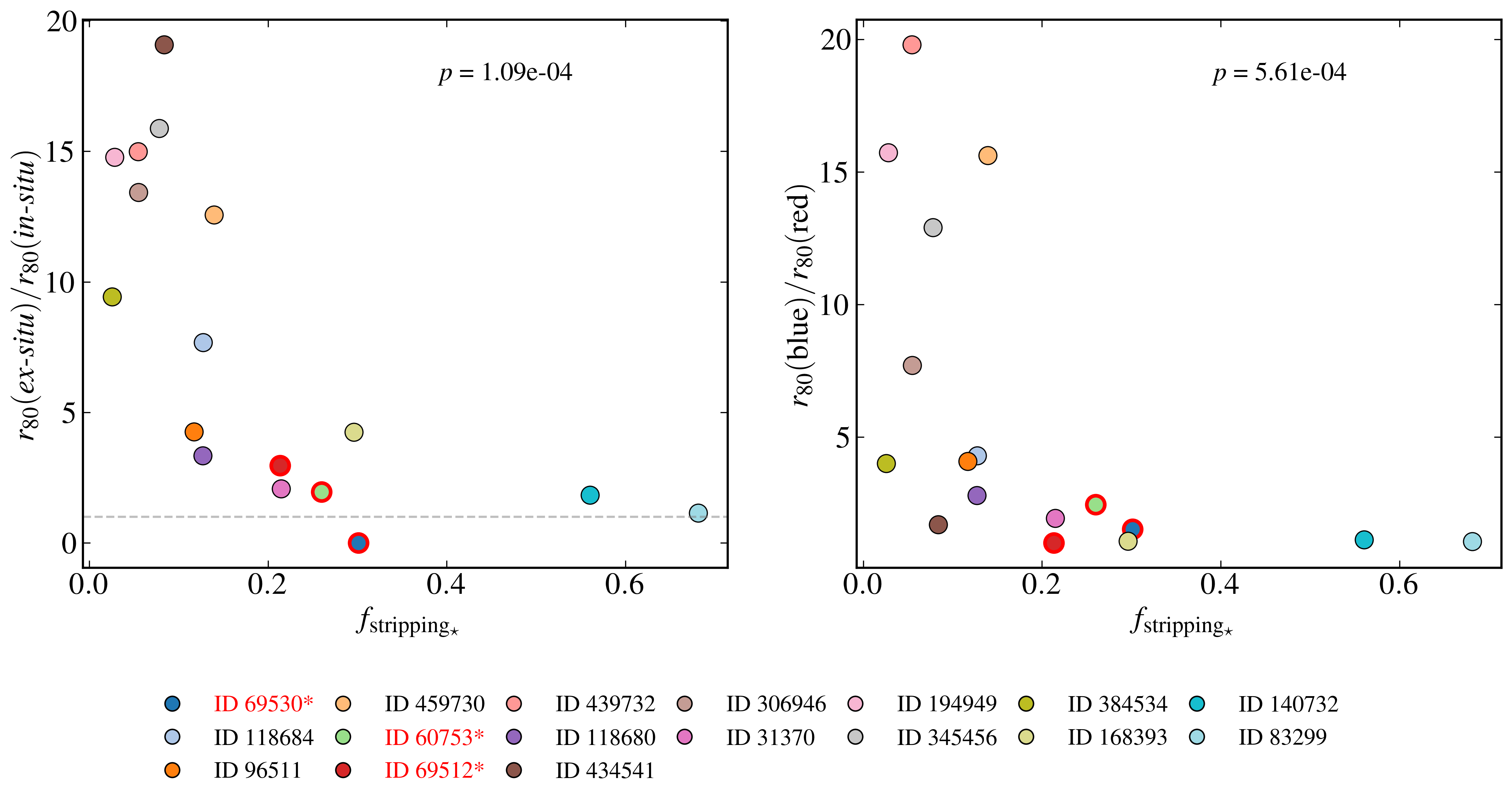
Figure 9: M⋆>1010M⊙8 ratio (ex-situ/in-situ) as a function of stripping fraction, showing strong anticorrelation.
The observed anti-correlation (M⋆>1010M⊙9) between stripping fraction and Re<20 ratio demonstrates that the relative compactness of ex-situ GCs is a sensitive diagnostic of a host's tidal interaction history, a factor critical for interpreting relic-like observational signatures, especially for galaxies in dense environments.
Implications and Future Developments
These findings refine the physical diagnostics for relic identification, advocating for a multi-tracer framework incorporating GC mass fraction, chemical homogeneity, and spatial structure, as opposed to host photometric/kinematic criteria alone. The results have direct relevance for both extragalactic GC surveys and next-generation cosmological simulations of galaxy/cluster co-evolution.
GC population analysis also offers potential for constraining the details of minor merger histories and the role of environmental processes (e.g., stripping) in shaping relic analogs—a central topic for the assembly histories of local early-type galaxies, and by extension, for interpreting the fossil record of high-redshift compaction and quenching.
Conclusion
By synthesizing TNG100 simulation data and advanced GC formation modeling, this study provides a detailed, model-driven approach to relic galaxy identification via globular cluster system diagnostics. The work quantitatively establishes GC mass fraction, unimodal and metal-rich GC distributions, and compact ex-situ GC spatial structure as robust diagnostics of relic status, and reveals the necessity of joint host–GC population analysis to disambiguate evolutionary pathways of compact massive galaxies. This approach will remain vital as new deep imaging and spectroscopy expand large samples of candidate relics and their associated GC systems.