- The paper rigorously derives the scaling of qth-order structure functions, showing a universal r-scaling (S_q(r) ∼ r) for all q.
- The paper employs extensive numerical simulations to validate that domain interfaces act as shock-like features driving anomalous intermittency in both TDGL and CH models.
- The paper reveals that energy transfers in coarsening systems bypass classical cascades, instead relaxing through nonlinear diffusion toward large-scale structures.
Structure Functions and Intermittency in Coarsening Systems
Introduction and Motivation
The analysis of coarsening systems, exemplified by domain growth after a quench in systems modeled via the time-dependent Ginzburg-Landau (TDGL) and Cahn-Hilliard (CH) equations, has longstanding parallels with the study of turbulence. While significant theoretical efforts have characterized second-order statistics, comprehensive quantitative understanding of higher-order correlations and intermittency in coarsening has remained underdeveloped. This paper addresses this deficiency by conducting a systematic investigation of structure functions Sq(r,t), providing analytic derivations, extensive numerical verification, and situating the analysis within the context of energy transfers that lack the spectral cascade familiar from turbulence. The study emphasizes anomalous scaling, the role of domain walls as analogs to Burgers shocks, and demonstrates the emergence of intermittent statistics in both conserved and nonconserved order parameter dynamics (2604.02855).
Theoretical Framework: TDGL and CH Models
The TDGL and CH equations govern the evolution of a scalar order parameter ψ(x,t) according to,
∂tψ=(−∇2)α(ψ−ψ3+∇2ψ),
with α=0 for Model A (TDGL, nonconserved dynamics) and α=1 for Model B (CH, conserved dynamics). Coarsening proceeds via the motion and annihilation/merger of domain interfaces, leading to growing characteristic lengthscale R(t)∼tϕ where ϕ=1/2 (TDGL), ϕ=1/3 (CH).
The stationary profiles in 1D consist of sequences of spatially separated kinks and anti-kinks, which can be analytically approximated by tanh profiles centered at interface positions Figure 1.
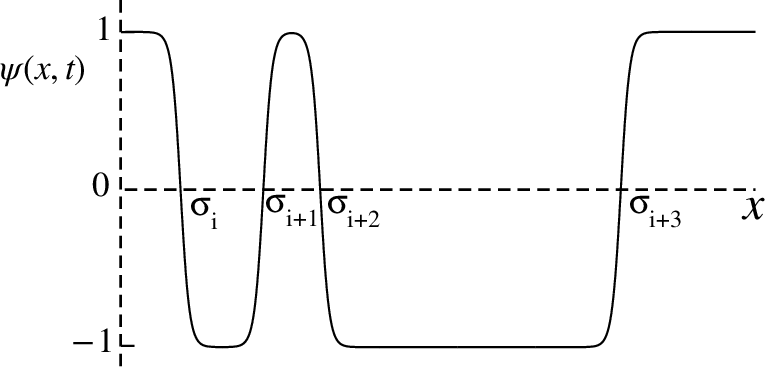
Figure 1: Plot of the order parameter ψ(x,t) versus x, showing typical TDGL profile featuring well-separated kinks and anti-kinks at locations ψ(x,t)0.
In 2D, the domain morphology involves volumes of positive and negative ψ(x,t)1, separated by interfaces of width ψ(x,t)2, whose total length ψ(x,t)3 evolves in time Figure 2.
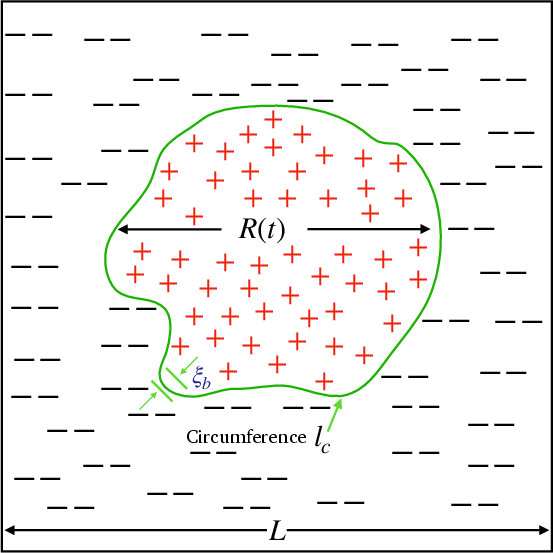
Figure 2: Schematic of a domain of size ψ(x,t)4 in a 2D system, highlighting interfaces of width ψ(x,t)5 and the circumference ψ(x,t)6 of the ψ(x,t)7 phase.
Energy Transfer Mechanisms and Absence of Cascades
Unlike Navier-Stokes or Burgers turbulence, the TDGL and CH equations do not possess quadratic invariants, precluding the emergence of traditional energy cascades. Modal energy evolution is instead governed by the interplay of source, dissipation, and nonlinear transfer terms,
ψ(x,t)8
where ψ(x,t)9 describes the rate of nonlinear triadic transfers and ∂tψ=(−∇2)α(ψ−ψ3+∇2ψ),0 again distinguishes between CH and TDGL. Analytic approximations and numerical calculations demonstrate that nonlinearities facilitate diffusion and direct relaxation toward large-scale structures, with no sustained transfer analogous to the Kolmogorov energy flux.
Porod's law delineates the spectral scaling in the high-∂tψ=(−∇2)α(ψ−ψ3+∇2ψ),1 limit, linking the energy spectrum to the presence of sharp interfaces:
∂tψ=(−∇2)α(ψ−ψ3+∇2ψ),2
Structure Function Analysis and Scaling Phenomenology
The main analytic result concerns the scaling form of the ∂tψ=(−∇2)α(ψ−ψ3+∇2ψ),3th-order structure function,
∂tψ=(−∇2)α(ψ−ψ3+∇2ψ),4
For ∂tψ=(−∇2)α(ψ−ψ3+∇2ψ),5 (within the interface width),
∂tψ=(−∇2)α(ψ−ψ3+∇2ψ),6
whereas for ∂tψ=(−∇2)α(ψ−ψ3+∇2ψ),7 (across domains/interfaces), the scaling crosses over sharply to
∂tψ=(−∇2)α(ψ−ψ3+∇2ψ),8
i.e., ∂tψ=(−∇2)α(ψ−ψ3+∇2ψ),9 for all α=00. This scaling is associated with the statistics dictated by rare, spatially localized jumps at interfaces, mirroring the role of shocks in Burgers turbulence. This result holds for both TDGL and CH models and for arbitrary spatial dimension, modulo dimensional-specific pre-factors.
Numerical Results: Verification and Characterization
The authors perform large-scale simulations of both equations in 1D and 2D to verify analytic predictions. Figure 3 displays the temporal evolution of the order parameter, clearly illustrating domain coarsening and interface sharpening.
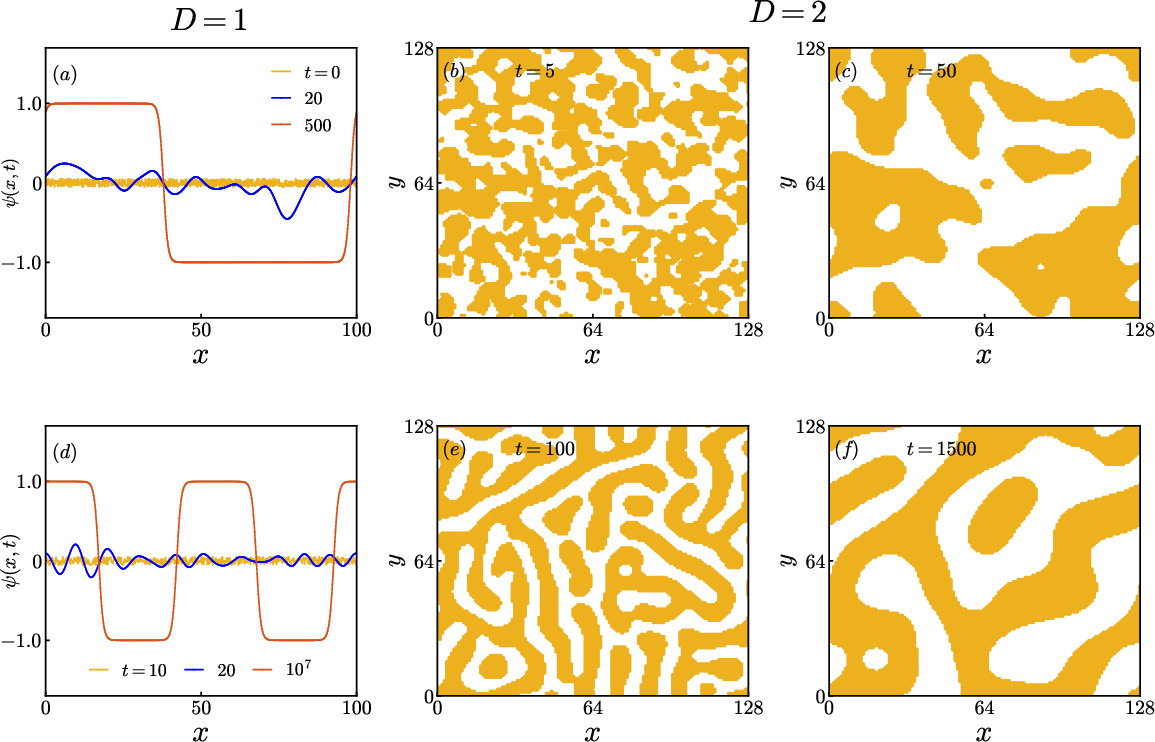
Figure 3: Evolution of α=01 in 1D and 2D TDGL/CH models, showing coarsening with time.
For the 1D TDGL case, the profile and its structure functions are shown in Figure 4. The data confirms α=02 for α=03 and α=04 for α=05 over several decades, with collapse of the normalized quantity α=06 for α=07, in agreement with kink-counting theory.
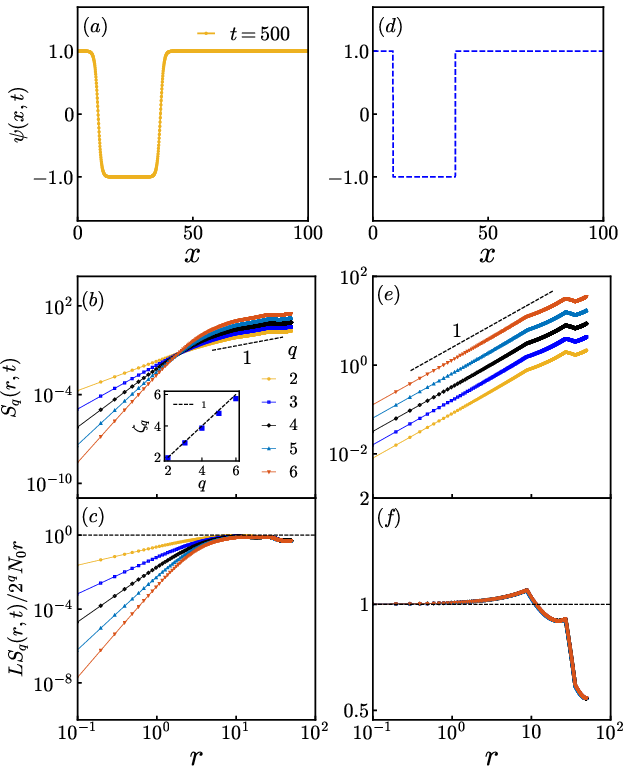
Figure 4: 1D TDGL structure functions and normalized scaling, confirming analytic predictions for both original and "hardened" profiles.
Analogous scaling is obtained in 2D TDGL and for the CH equation (Figure 5 and Figure 6), with boundary-detection and normalization methodologies confirming the scaling relations and revealing the impact of interface undersampling in 2D discretization.
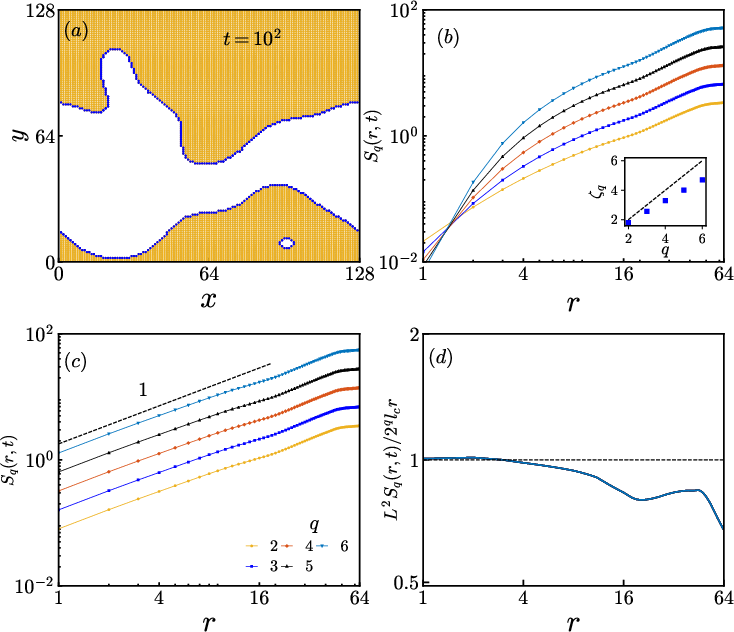
Figure 5: 2D TDGL: hardened field snapshot, structure functions, and normalized form.
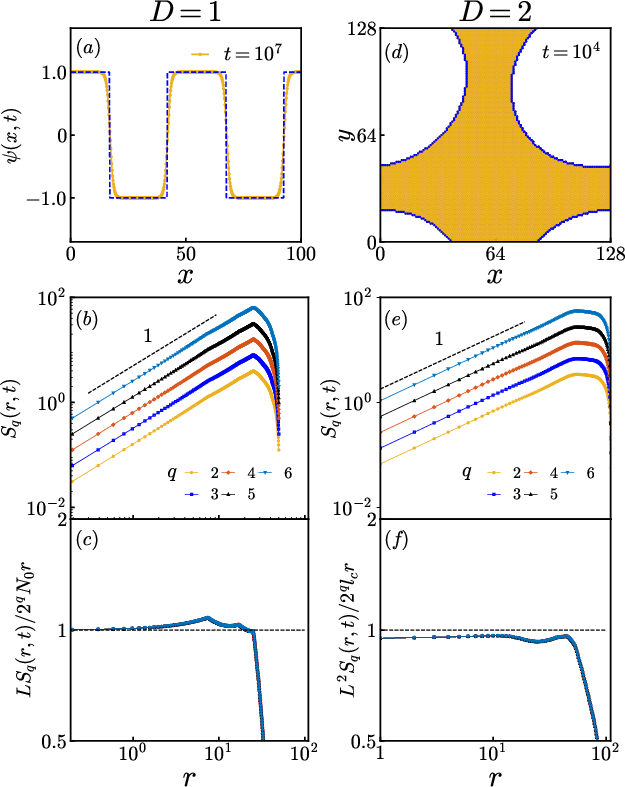
Figure 6: Structure function analysis for 1D and 2D CH equations, validating scaling in both unhardened and hardened variants.
Further analysis of low-α=08 exponents, small-α=09 asymptotics, and interface-width dependence are presented, reinforcing the robustness of the scaling regime and the anomalous, interface-dominated nature of higher-order statistics.
Implications, Theoretical Consequences, and Outlook
The identification of universal scaling α=10 for all α=11 in the intermediate regime substantiates the presence of strong intermittency, reflecting the singular, non-Gaussian statistics imposed by domain wall structures. This is in sharp contrast to the multifractal anomalous scaling encountered in isotropic Navier-Stokes turbulence (Kolmogorov theory and its corrections), and is more akin to the Burgers case dominated by shocklets.
Importantly, the findings confirm that higher-order statistics in coarsening are insensitive to details of the microscopic dynamics, being governed primarily by the existence and evolution of sharp interfaces, whose spatial statistics determine the scaling. This has implications for understanding universality classes, late-stage domain patterns, and the general mechanisms underlying intermittency outside of the turbulence context.
From a methodological perspective, the work motivates further application of turbulence-based tools (energy transfers, flux diagnostics, structure function hierarchies) to broader classes of nonequilibrium pattern-forming systems, including reaction-diffusion, active matter (e.g., Toner-Tu dynamics), and model H (coupled order parameter and hydrodynamics). Particularly in AI and complex systems, where non-Gaussian, scale-dependent fluctuations are widespread, analogous methodologies for quantifying the degree and origin of intermittency may be developed.
Conclusion
This work provides a precise, quantitative theory of intermittent fluctuations in coarsening systems modeled by TDGL and Cahn-Hilliard dynamics, grounded in analytic derivations and supported by direct numerical simulations. The strong result, α=12 (α=13 for all α=14) for distances exceeding the interface width but less than the domain scale, constitutes anomalous scaling governed by the geometry and statistics of topological defects. These insights clarify the connection between turbulence phenomenology and coarsening, highlight the pivotal role of nonlinear energy transfer in pattern selection, and suggest broad avenues for the export of turbulence diagnostics to nonequilibrium and pattern-forming media (2604.02855).

