- The paper determines Glimpse-C02 as an old, metal-rich globular cluster with an absolute age of ~11.9 Gyr based on deep HST/WFC3 near-IR photometry.
- It employs a star-by-star differential reddening correction to sharpen the CMD, allowing reliable identification of key evolutionary sequences.
- The study constrains structural and dynamical parameters, reporting a core radius of 8.72'' and a total mass of ~3.57×10⁴ M☉, indicative of advanced dynamical evolution.
Stellar Populations and Structural Properties of the Ultra-Obscured Galactic Globular Cluster Glimpse-C02
Introduction
The Galactic globular cluster (GC) Glimpse-C02 constitutes one of the most heavily extincted stellar systems in the Milky Way. Its photometric and physical properties have historically been elusive due to severe interstellar extinction and the resulting high differential reddening, making it poorly explored compared to other GCs. The present study exploits high-resolution HST/WFC3 near-infrared (NIR) data, complemented by VVVX/VIRCAM wide-field imaging, to construct and analyze the deepest available color-magnitude diagram (CMD) and to derive the cluster's fundamental stellar population and dynamical parameters.
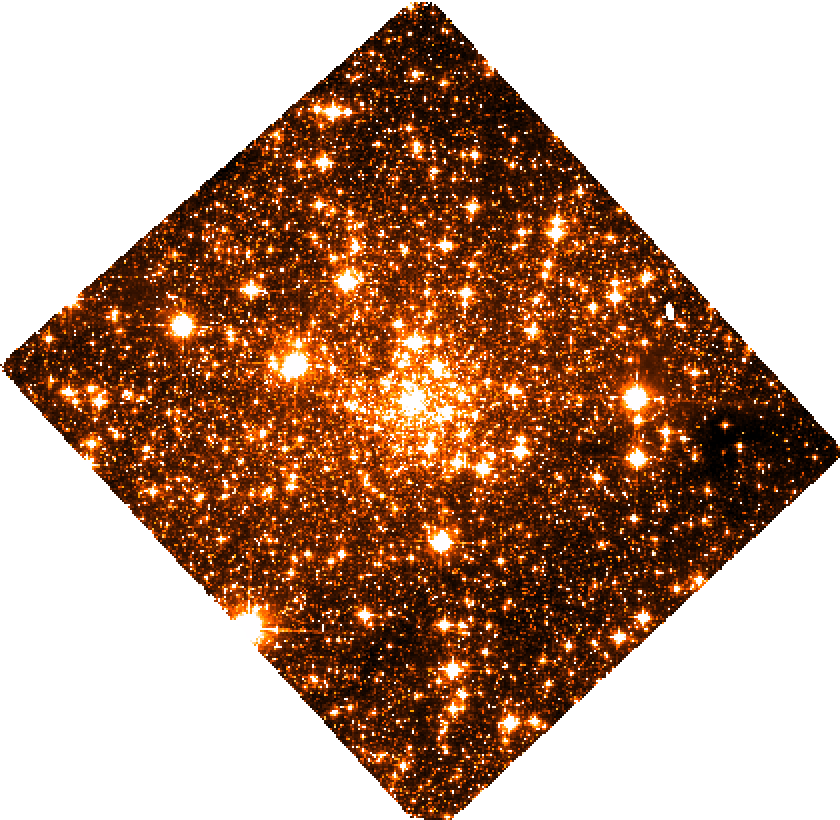
Figure 1: A WFC3/IR image centered on Glimpse-C02 obtained in F160W (199 s), highlighting extreme crowding and the severe extinction affecting the cluster.
Observational Strategy and Data Reduction
Photometric analysis is based on an HST/WFC3 IR dataset: F110W and F160W images probe the cluster center with ∼0.13 arcsec/pixel spatial resolution over 136×123 arcsec2. To capture the full radial extent, these data are combined with VVVX/VIRCAM J and Ks wide-field images. Source extraction leverages DOLPHOT for HST and DAOPHOT/ALLFRAME for VIRCAM, incorporating state-of-the-art astrometric registration using 2MASS-Gaia cross-matching and photometric calibration in the VEGAMAG system.
The resulting high-fidelity CMDs extend ≈ 10 mag, with comprehensive cleaning based on PSF-fit quality metrics, and are assembled for both the cluster core and the field region to optimize evolutionary sequence analysis.
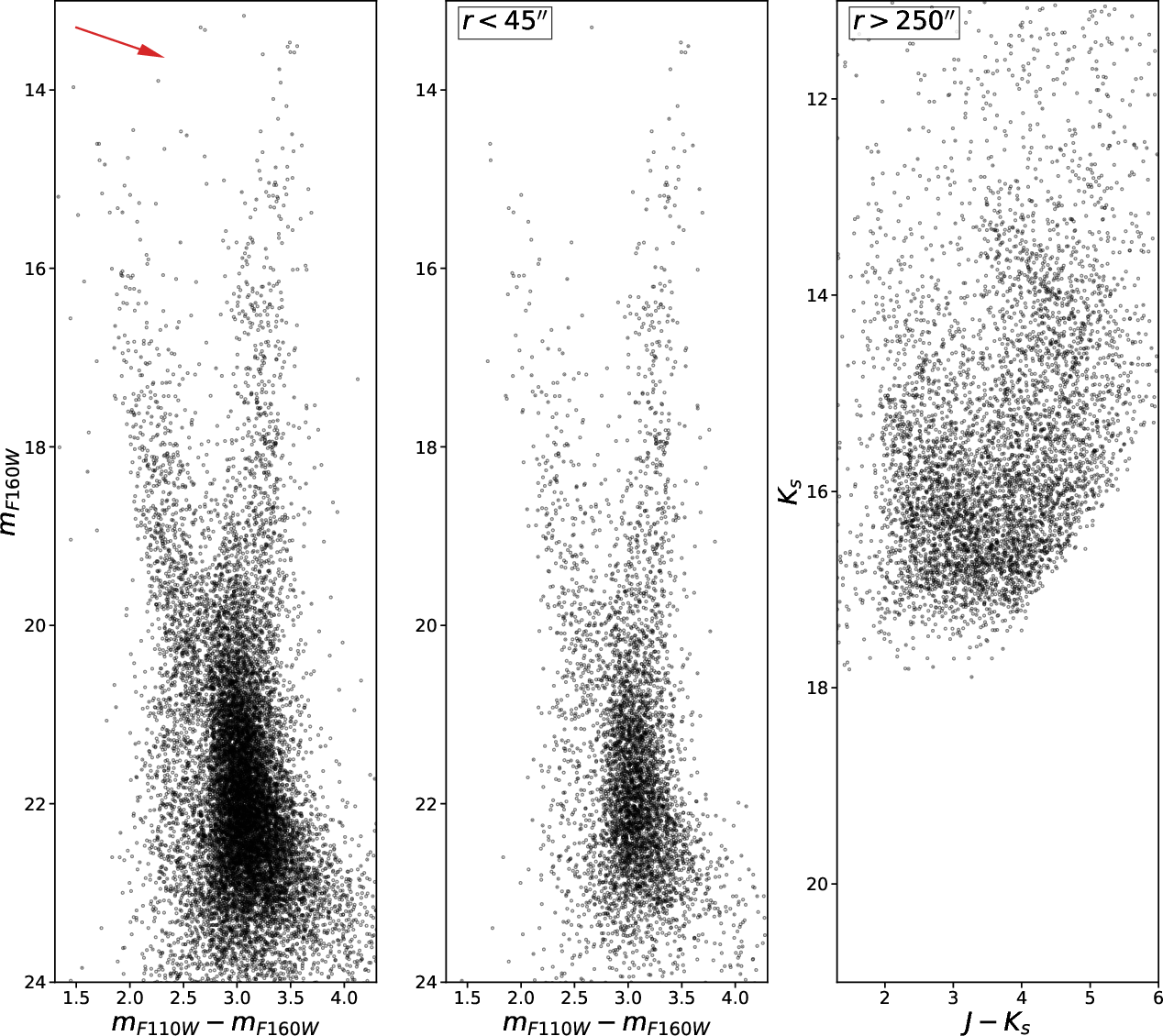
Figure 2: Glimpse-C02 CMDs in F160W vs. F110W–F160W before and after cleaning, with clear discrimination between cluster members and field contamination.
Differential Reddening and Extinction Correction
The field of Glimpse-C02 exhibits not only extraordinarily high average extinction (E(B−V)≈6.33) but also extreme differential reddening on scales of a few arcseconds due to spatially variable dust structures. The authors apply a star-by-star differential reddening correction using a local mean ridge line (MRL) fitting technique, informed by the Cardelli et al. extinction law, to generate a high-resolution reddening map.
This map reveals spatial variations in color excess of up to δE(B−V)≈2.5 mag, confirming that Glimpse-C02 is among the most differentially-reddened clusters known in the Milky Way.
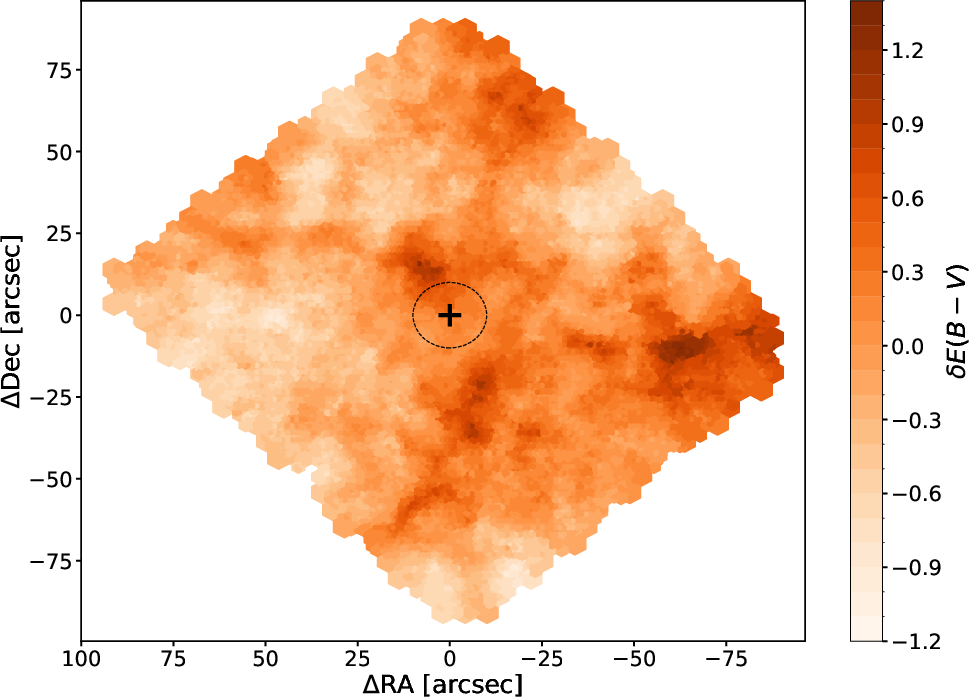
Figure 3: Differential reddening map across the HST/WFC3 field, showing patchy, filamentary extinction structures and an extreme dynamic range in δE(B−V).
Application of this map yields significantly sharpened CMD sequences, with major spread reduction along the RGB and MS turnoff, crucial for reliable stellar population analysis.
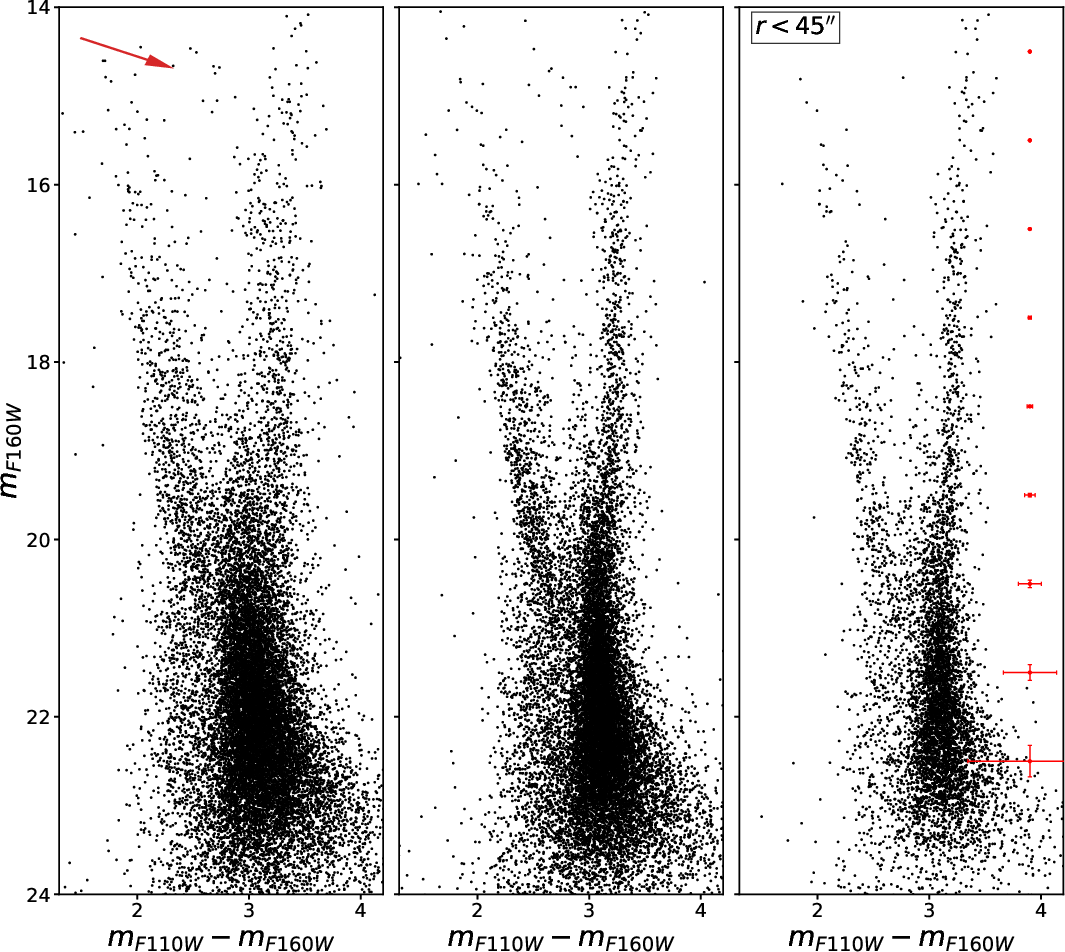
Figure 4: CMDs before and after differential reddening correction, demonstrating improved sequence definition, especially for the RGB and MS-TO region.
Stellar Population Properties
For the first time, the main sequence turnoff (MS-TO) of Glimpse-C02 is robustly identified at mF160W≈20, and the CMD extends three magnitudes below it, revealing the old, Population II character of the cluster. The RGB morphology and absence of a blue horizontal branch indicate high metallicity, consistent with previous K-band spectroscopic estimates.
CMD comparison with the bulge GC NGC 6440, which shares similar [Fe/H], provides empirical priors for age, distance modulus, and extinction, refined via Monte Carlo Markov Chain (MCMC) isochrone fitting using BaSTI 136×1230-enhanced models.
Key results:
- Distance: 136×1231 kpc (136×1232)
- Reddening: 136×1233
- Metallicity: 136×1234
- Absolute Age: 136×1235 Gyr (first measurement for this cluster)
Structural Analysis and Cluster Dynamics
Employing star counts on the high-resolution HST core and wide-field VIRCAM imaging, the cluster's center of gravity is measured with sub-arcsecond uncertainty, offset by 136×1236 from legacy catalog values. Surface brightness and radial density profiles are constructed and modeled using single-mass King models, constraining Glimpse-C02's dynamical state:
- Core radius: 136×1237 arcsec
- Concentration parameter: 136×1238
- Tidal radius: 136×1239 arcsec
Background field contamination is rigorously accounted for, and the consistency among density and surface brightness profiles supports the reliability of these parameters.
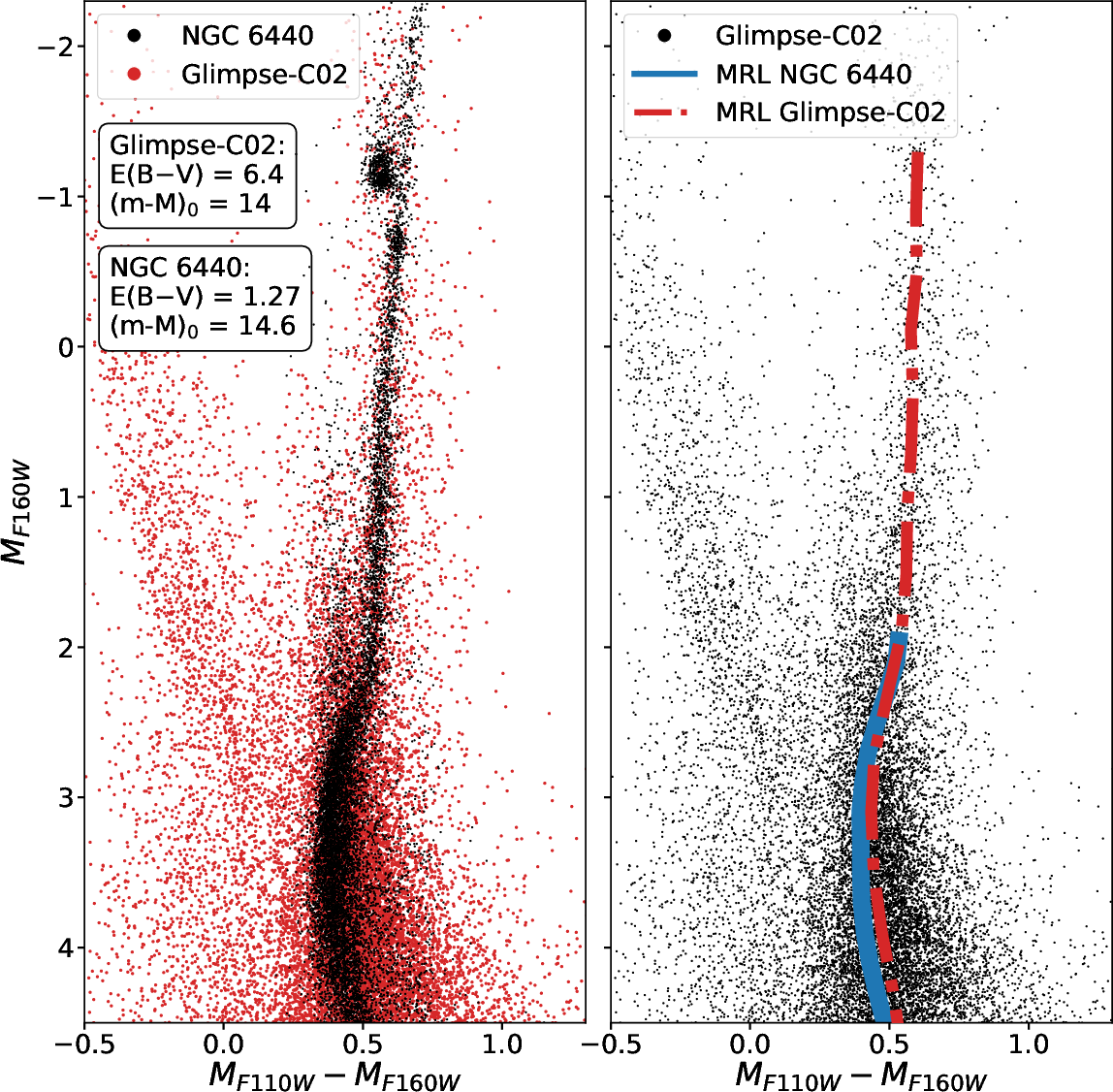
Figure 5: Radial density profile with field decontamination, best-fit King model overlay, and marked core/half-light radii.
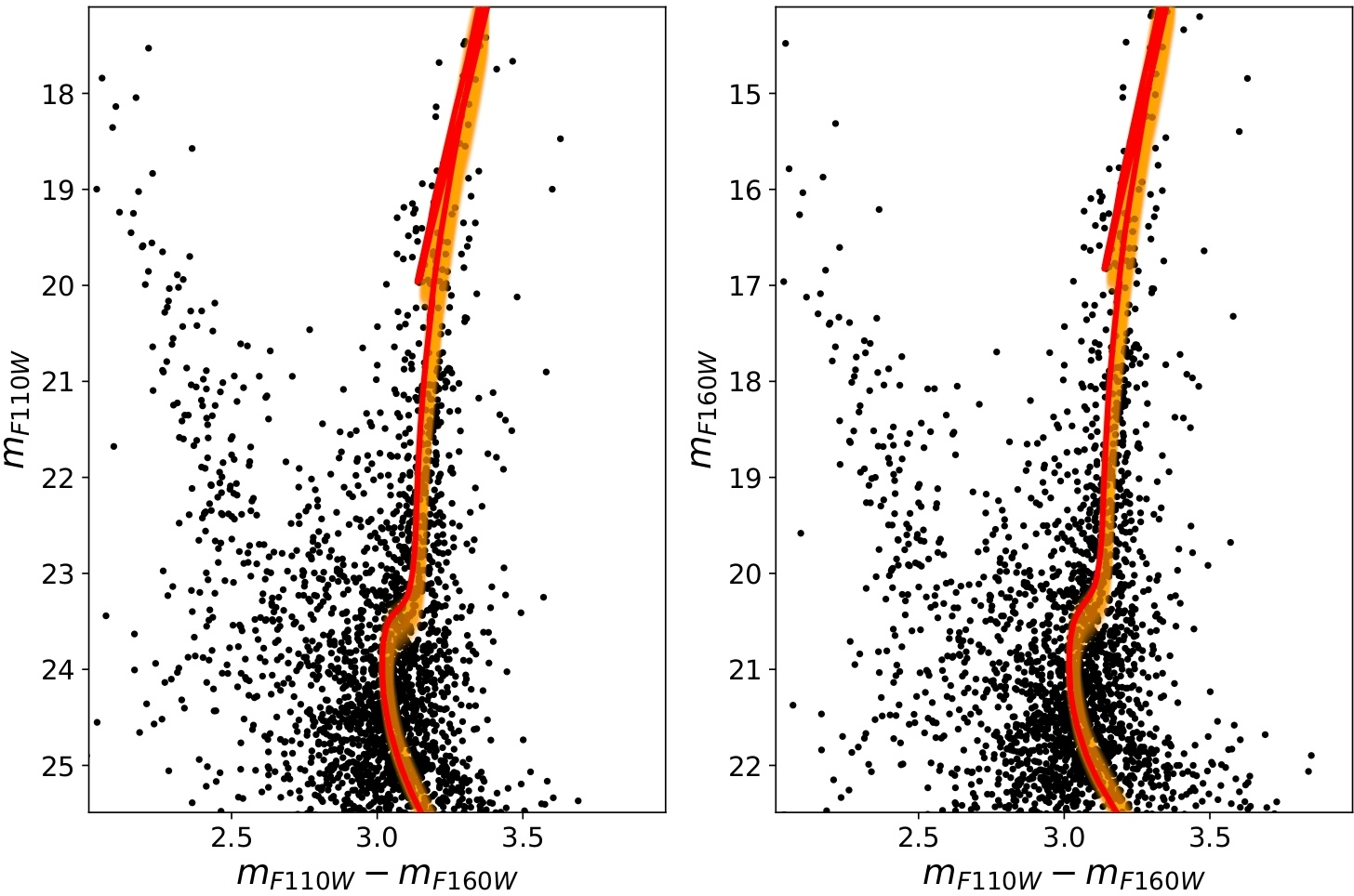
Figure 6: Surface brightness profile in F160W and corresponding King model fit, independently confirming concentration and structural radii.
From the integrated 20-band magnitude (21) and adopted 22, the total mass is inferred as 23, placing Glimpse-C02 at the low-mass end of the Galactic GC distribution but with a high concentration, indicative of advanced dynamical evolution (24).
Implications and Future Directions
This analysis robustly classifies Glimpse-C02 as an old, metal-rich, dynamically evolved bulge GC, lying at 25 kpc Galactocentric distance—closer to the Galactic Center than previously estimated. These findings have strong implications for the demographic mapping and assembly history of inner Milky Way GCs, especially those whose observations are hindered by dust. The extreme differential reddening highlighted in this study further underlines the importance of IR space- and ground-based surveys for uncovering obscured populations.
Kinematic data (proper motions and radial velocities), currently lacking, are essential for definitively determining the cluster's orbital parameters and in-situ origin hypothesis. Forthcoming second-epoch HST or JWST imaging and spectroscopic follow-up will enable member decontamination, proper motion studies, and detailed dynamical history reconstruction.
Conclusion
The deep HST/IR photometry and rigorous differential reddening correction have enabled the first robust determination of Glimpse-C02's stellar population and dynamical parameters. The cluster emerges as a paradigmatic example of an obscured, old, and metal-rich GC likely associated with the Galactic bulge, exhibiting high concentration and advanced dynamical age. Given the substantial uncertainties posed by field contamination and residual reddening, further progress will depend on improved IR astrometry (e.g., JWST) and kinematic datasets. The methodologies applied here represent the state-of-the-art for dissecting the most challenging regions of the Milky Way and will be instrumental in future surveys targeting the inner Galaxy.
Reference: "Revealing the stellar population of the ultra-obscured Galactic globular cluster Glimpse-C02" (2604.00096).