- The paper introduces a meta-model framework that aggregates multiple simulation models, reducing prediction error from 7.59% to 3.81%.
- It integrates diverse datacenter scenarios, modeling failures and heterogeneous workloads to deliver robust and explainable insights.
- The study demonstrates CO₂-aware migration strategies that cut emissions by up to 97.5% compared to static scheduling.
Introduction and Motivation
Simulation-based decision support for datacenter design, operation, and sustainability is increasingly critical given the rising global impact of datacenter energy consumption and CO2 emissions. However, standard simulators—such as OpenDC, SimGrid, or CloudSim—use monolithic, specialized prediction models, often tuned to select operational scenarios, and are thus susceptible to systematic inaccuracies and lack adaptability when deployed outside their design regime. Recognizing this limitation, the authors introduce M3SA: a Multi- and Meta-Model Simulation Analyzer framework, which generalizes the simulation process to leverage diverse independent models simultaneously and integrate their outputs into robust meta-predictions. The stated objective is to address both performance and climate-impact evaluation under realistic heterogeneous datacenter conditions, improve explainability and accuracy, and support actionable “what-if” and “how-to” analyses for operators and policymakers (2603.29778).
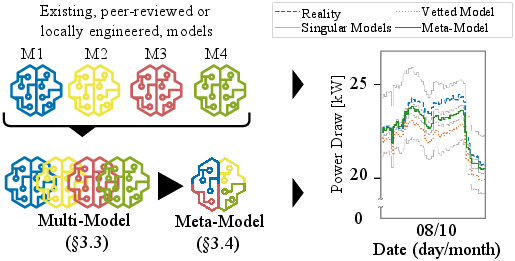
Figure 1: M3SA Multi-Model simulation uses multiple models simultaneously. M3SA Meta-Model integrates all results.
System Model and Design Principles
A key element of the M3SA framework is the capability to interface with generic discrete-event datacenter simulators, abstracting operational phenomena such as scheduling, failures, and workload variability.
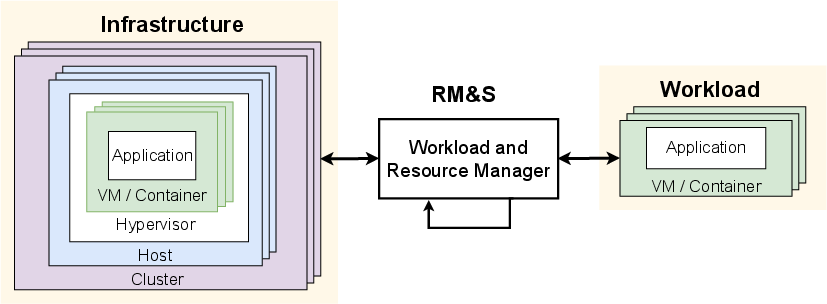
Figure 2: System model for datacenter operation highlighting workload, physical/virtual infrastructure, and trace-driven evaluation.
The authors encapsulate three core requirements:
- Integration of multiple calibrated models with unified visualization and systematic comparison.
- Construction of a meta-model to aggregate individual outputs and mitigate model-specific biases.
- Efficient and reproducible simulation at scale with minimal overhead.
Architecturally, M3SA implements the “Simulate First, Compute Later” paradigm, functioning as a post-processing layer that orchestrates multi-model execution and meta-model aggregation. This allows transparent coupling to a black-boxed simulator while facilitating extensibility and adoption.
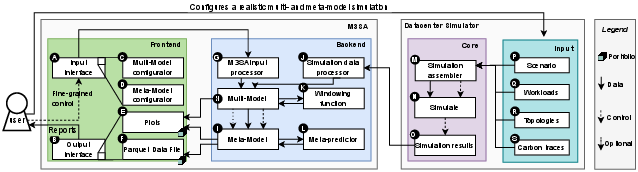
Figure 3: Architecture of M3SA, a Multi- and Meta- Model Simulation Analyzer, integrated with a black-boxed simulator.
The Multi-Model component executes selected sets of singular models over user-specified traces. It centralizes predictions, implements windowing (with adaptive aggregation), and outputs compressed data for further analysis or plotting.
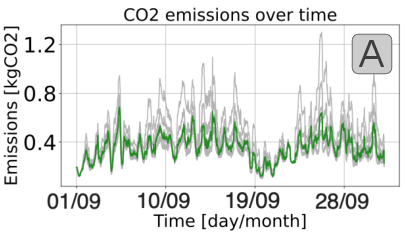
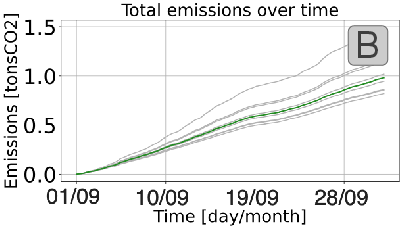
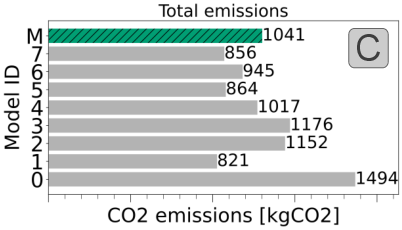
Figure 4: Sample M3SA plots showing singular (gray) and aggregate Meta-Model (green), for both time-series and cumulative analyses.
For visual-performance trade-offs, M3SA incorporates parametrizable windowing to balance data granularity and runtime efficiency. Notably, with 200,000+ samples (2 years of operational data), M3SA achieves sub-5–7 minute runtime (including all model computations, with <20% overhead).
The Meta-Model leverages ensemble principles analogous to ML bagging. Given aligned model outputs, user-configurable aggregation operators (e.g., mean, median) combine predictions per timestep after strict filtering to ensure robustness against timestamp ambiguity and simulation non-determinism.
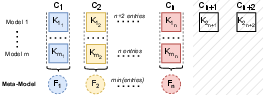
Figure 5: The Meta-Model predictor, aggregating predictions of m models for each timestep C1 to Cn; surplus steps are discarded.
Quantitative robustness is evaluated with MAPE and can be extended to robust error metrics such as RMSE, MAE, or NAD.
Experimental Methodology and Key Findings
The authors prototype M3SA atop OpenDC and validate it through three empirical studies:
1. Peer-Reviewed Experiment Reproduction and Model Aggregation
A direct reproduction of the FootPrinter experiment assesses power prediction accuracy over a 7-day HPC trace. M3SA (multi-model, 4 models) yields improved explainability and substantially reduces average prediction error (MAPE drops from 7.59% for mean singular model to 3.81% for the meta-model using median). Residual model bias is directly observable, enabling model vetting and the selection of robust combinations.
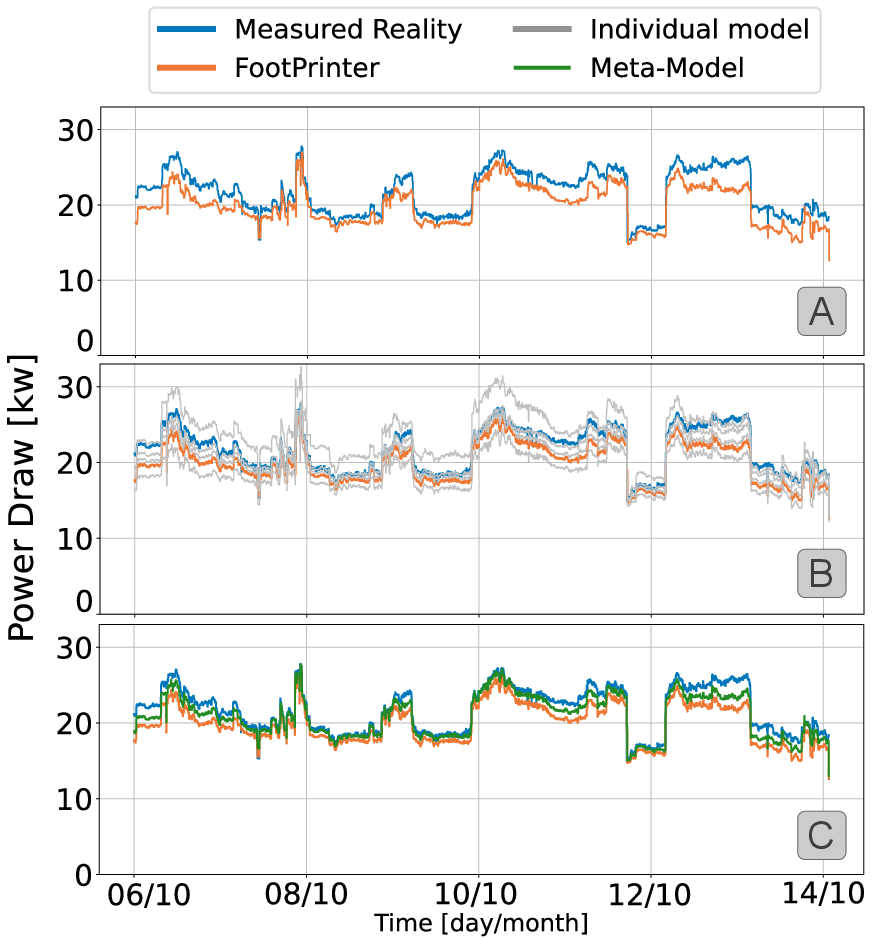
Figure 6: Simulation results versus measured ground truth: (A) FootPrinter baseline, (B) M3SA Multi-Model, (C) M3SA Meta-Model aggregation.
M3SA introduces minimal runtime overhead—less than 20% even at multi-year trace scale—while providing significantly increased model robustness.
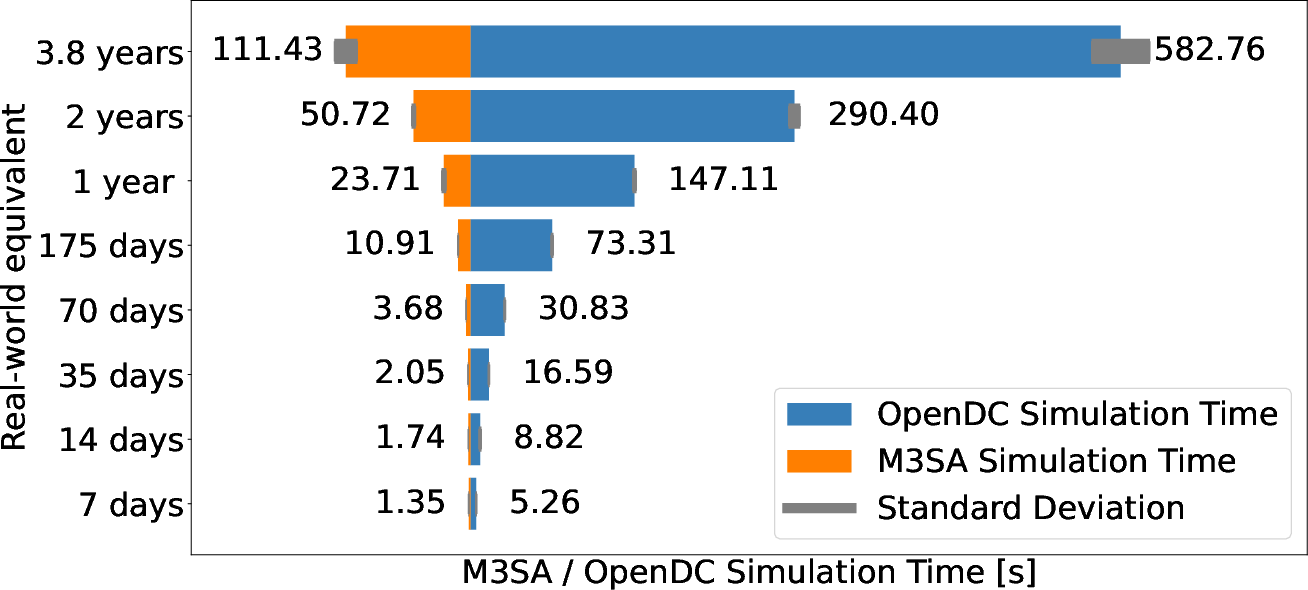
Figure 7: M3SA performance overhead compared to OpenDC simulation time across varying workload durations.
2. Evaluation Across Heterogeneous Workloads and Failure Conditions
Leveraging both scientific and business-critical cloud workload traces, M3SA shows the ability to systematically estimate the impact of operational failures on sustainability metrics. Importantly, the system exposes highly model-dependent and scenario-specific emission variations: For example, under long-duration jobs, failure-induced reruns can increase emissions by ~22%, compared to near-zero impact when jobs are short.
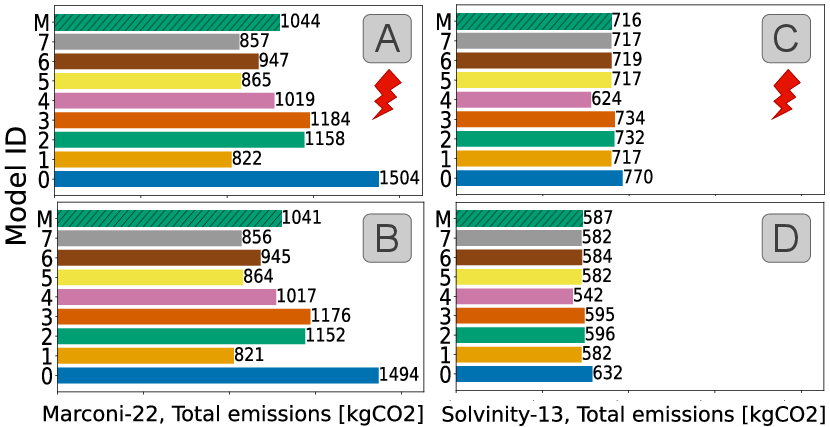
Figure 8: Total emissions for Marconi-22 (scientific) and Solvinity-13 (business-critical) workloads, comparing fail/no-fail, with singular and meta-model outputs.
M3SA distinctly reveals overestimation in specific models (e.g., square-root model overpredicts by 54%), a problem that would remain hidden under the traditional single-model simulation paradigm.
3. CO2-Aware Scheduling and Migration
The role of M3SA in optimization of CO2 emissions through location-aware migration is studied using 29 EU countries and variable migration granularities. The system executes a greedy migration algorithm operating at intervals from 15 min to 24 h, evaluating cumulative emissions for each configuration.
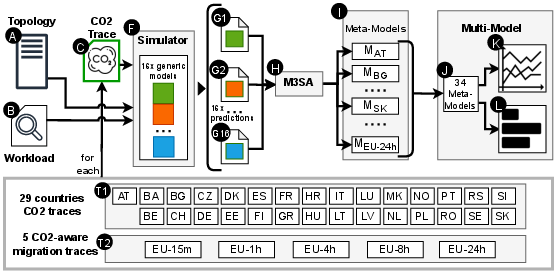
Figure 9: Overview of experiment 3 assessing CO2 footprint of a workload run in 29 countries with multiple migration intervals.
The results demonstrate a 160-fold difference in emissions between worst and best locations (e.g., Germany vs. Switzerland), and show that frequent migration (15–60 min) reduces average emissions by 97.5%, and by up to 11% compared to static scheduling to the best location.
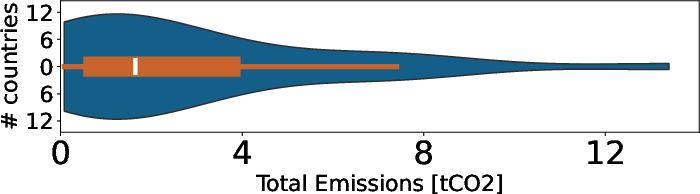
Figure 10: CO2 distributions across locations (violin and box plot, per-country meta-models, June 2023).
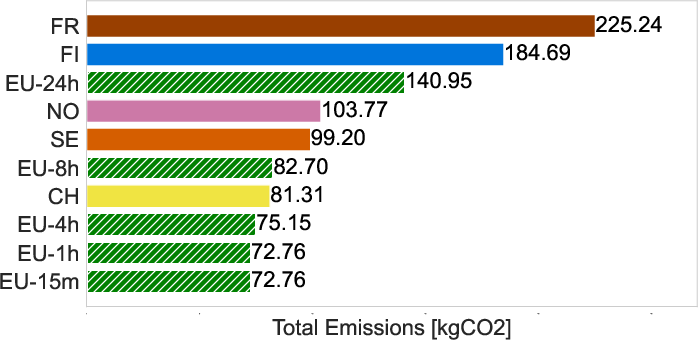
Figure 11: Top-10 migration configurations with lowest cumulated CO2, as a function of migration granularity.
Practical and Theoretical Implications
The M3SA framework provides a systematic approach to simulation-enabled datacenter decision-support, addressing key deficits in extant single-model approaches:
- Explainability: By exposing discrepancies among models, it enables practitioners to reason about model failure cases, diagnose biases, and derive confidence intervals.
- Robustness: Meta-model aggregation demonstrably reduces error rates and increases reliability, critical for capacity planning and sustainability reporting in regulatory contexts.
- Scalability and Flexibility: M3SA operates at the scale required for real-world operational data, and its decoupled design promotes integration with diverse simulators.
For datacenter management, these features enable robust C-level decision-making under uncertainty, closing the gap between experimental/simulation research and operational deployment. The ability to model operational phenomena such as equipment failures and CO2-intensive migration further supports compliance with emerging environmental regulations and dynamic sustainability targets.
From a methodological perspective, M3SA constitutes a canonical application of ensemble simulation principles in the computer systems domain, paralleling established practices in climate science and ecology. Its open architecture enables future research directions, including:
- Weighted aggregation strategies, potentially learned adaptively.
- ML-based meta-models leveraging historical error correlations.
- Integration into feedback-driven digital twins for real-time optimization.
Conclusion
M3SA represents a substantial advance in datacenter infrastructure modeling, supporting multi-model and meta-model analysis to enhance accuracy, explainability, and robustness without significant computational penalty. The architecture is scalable, portable, and supports open science workflows. Numerical evidence underscores that model aggregation using M3SA achieves up to 50% lower error rates compared to the mean singular model, and delivers actionable insights for reducing operational carbon emissions by up to two orders of magnitude via CO2-aware migration (2603.29778).
Future work should investigate dynamic weight allocation, more computationally sophisticated meta-models, and event-driven integration within digital twin frameworks for online closed-loop datacenter management.