- The paper demonstrates that anisotropy in confining potentials induces inhomogeneous melting in finite dust clusters with distinct spatial pathways.
- It employs high-resolution particle tracking and Langevin Dynamics simulations to quantify melting thresholds using the Lindemann criterion and SVD analysis.
- Findings highlight that confinement geometry is a robust control parameter for phase transitions, with implications for colloids, trapped ions, and programmable matter.
Anisotropy-Induced Inhomogeneous Melting Dynamics in Finite Dust Clusters
Experimental System and Control of Anisotropy
The paper reports a systematic study of inhomogeneous melting in finite dusty plasma clusters, with primary emphasis on the effect of confining potential anisotropy. The experimental platform consists of a seven-particle monolayer cluster of melamine–formaldehyde spheres, confined in a capacitively coupled plasma device. The geometry of the confinement is tunable via electrode segment actuation, enabling precise continuous variation of the anisotropy parameter α—the ratio of electric field strengths along orthogonal in-plane directions—over two orders of magnitude. External, collimated laser radiation provides a highly controllable source of homogeneous stochastic heating.
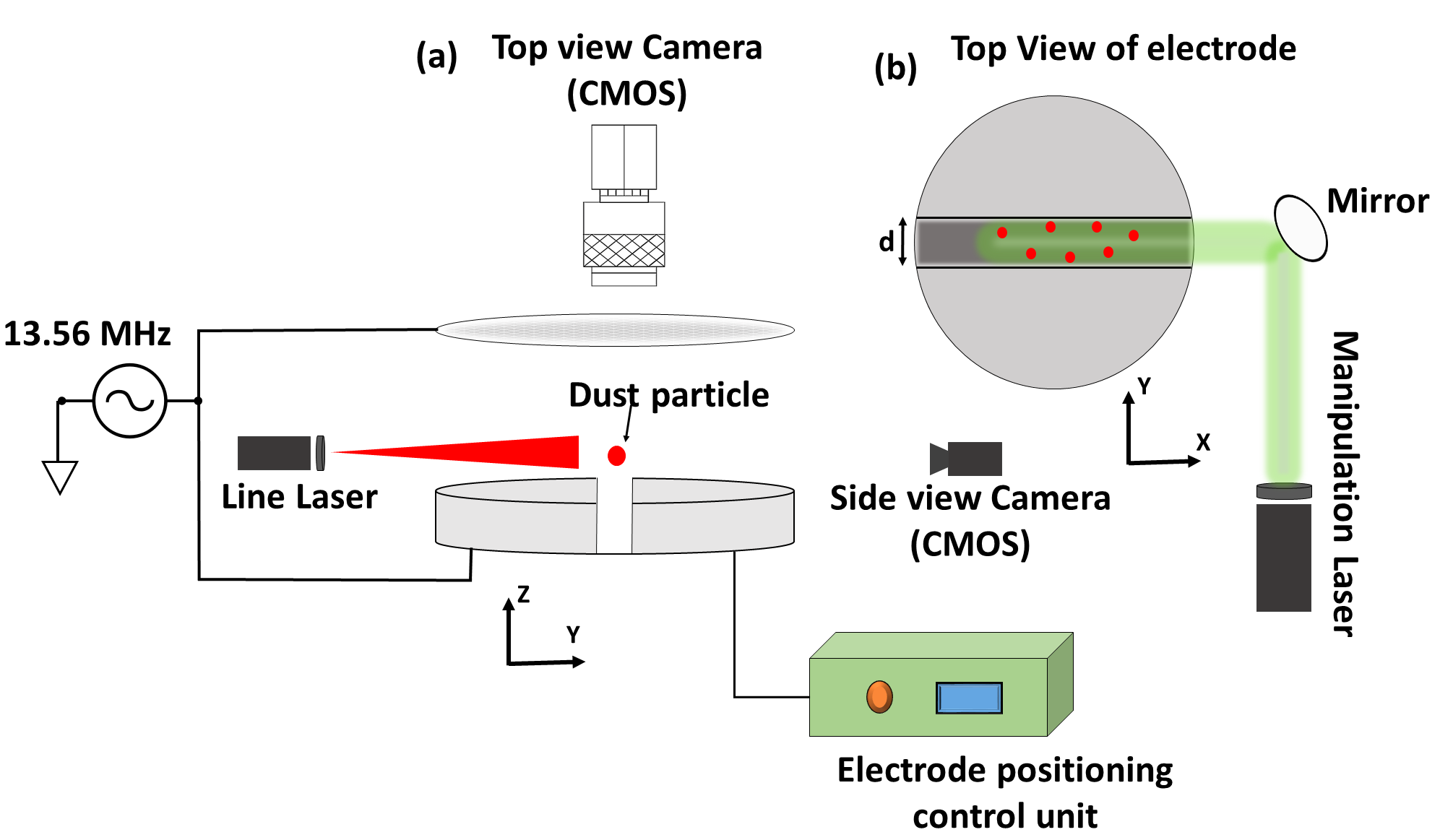
Figure 1: (a) Schematic of the experimental setup for studying finite dust clusters with variable anisotropy; (b) top view of electrode channel responsible for confining the particle ensemble.
The system's equilibrium configurations as α decreases transition from circular, through elliptical, to a quasi-1D arrangement characterizing strong anisotropy. High-resolution imaging and particle tracking enable comprehensive quantification of single- and many-body dynamics. This platform is optimized to resolve phase-space trajectories and collective excitations at the level of individual constituents, bridging the gap to idealized model systems and theoretical simulations.

Figure 2: Equilibrium cluster configurations for different α, revealing the progression from 2D (isotropic) to elliptical and quasi-1D geometries with increasing anisotropy.
Inhomogeneous Melting Pathways: Observations
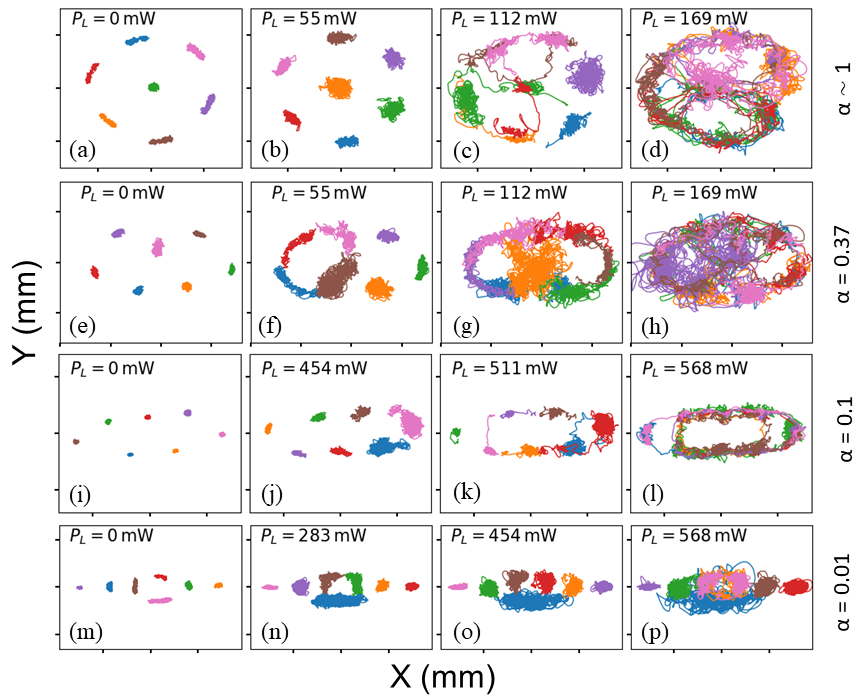
The melting transition is induced by increasing the laser power at constant plasma conditions and fixed α. Trajectory analysis over long durations reveals a pronounced dependence of melting pathway and spatial heterogeneity on the anisotropy.
Quantitative characterization using the Lindemann criterion confirms that the critical threshold for melting, as captured by the abrupt increase in root-mean-square displacement, shifts systematically with α. Specifically, stronger anisotropy necessitates larger heating power for structural destabilization, corroborating the trap-geometry dependence.
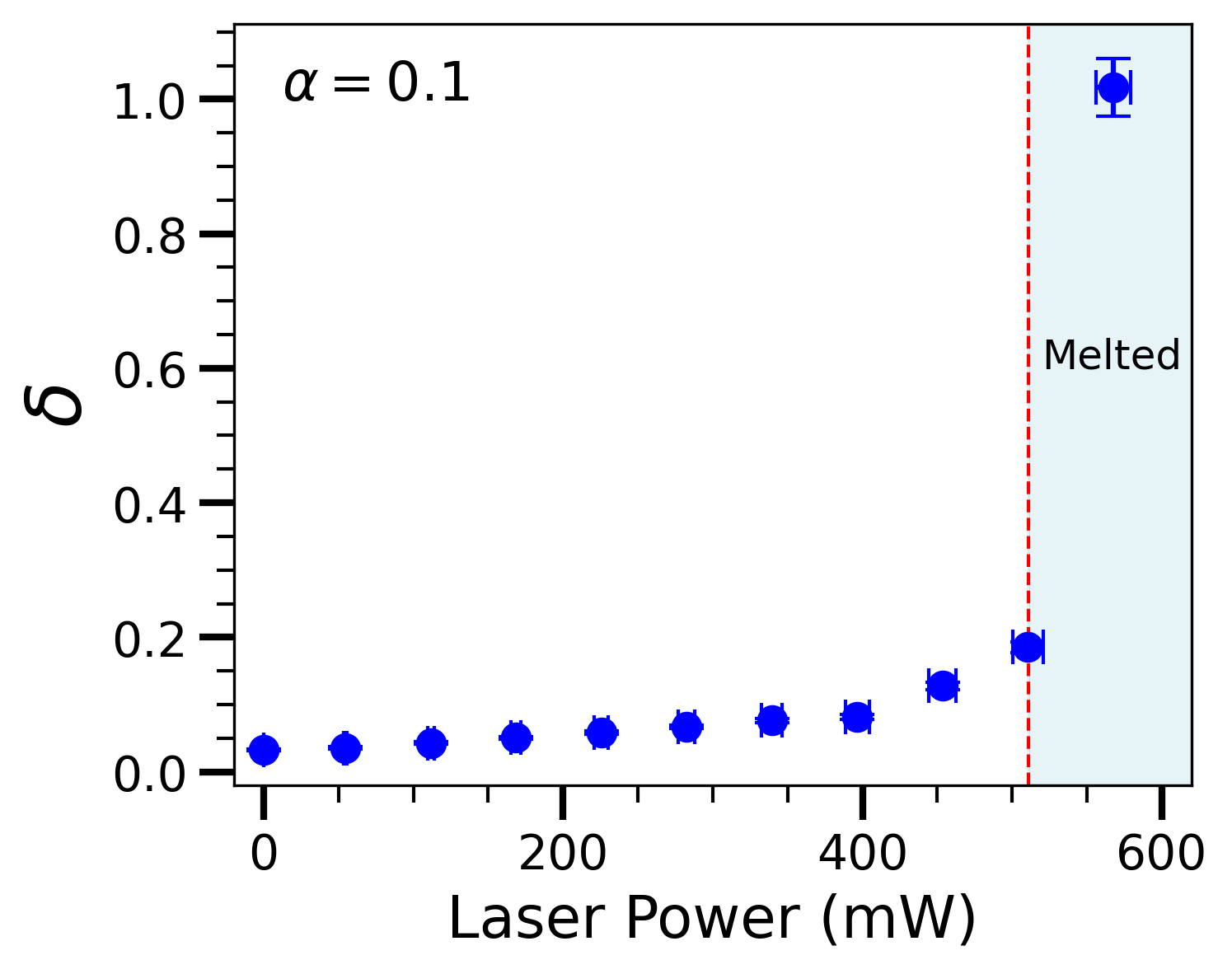
Figure 4: Evolution of Lindemann parameter δ with laser power for α=0.1, exhibiting a sharp rise at the melting transition.
Simulations and Collective Mode Analysis
To establish generality and explore particle-resolved mechanisms, Langevin Dynamics simulations were performed for screened Coulomb (Yukawa) systems with varying anisotropy. These simulations quantitatively reproduce the observed melting pathways, including internal “core” or “end” localized melting modes seen in the most strongly anisotropic geometries.
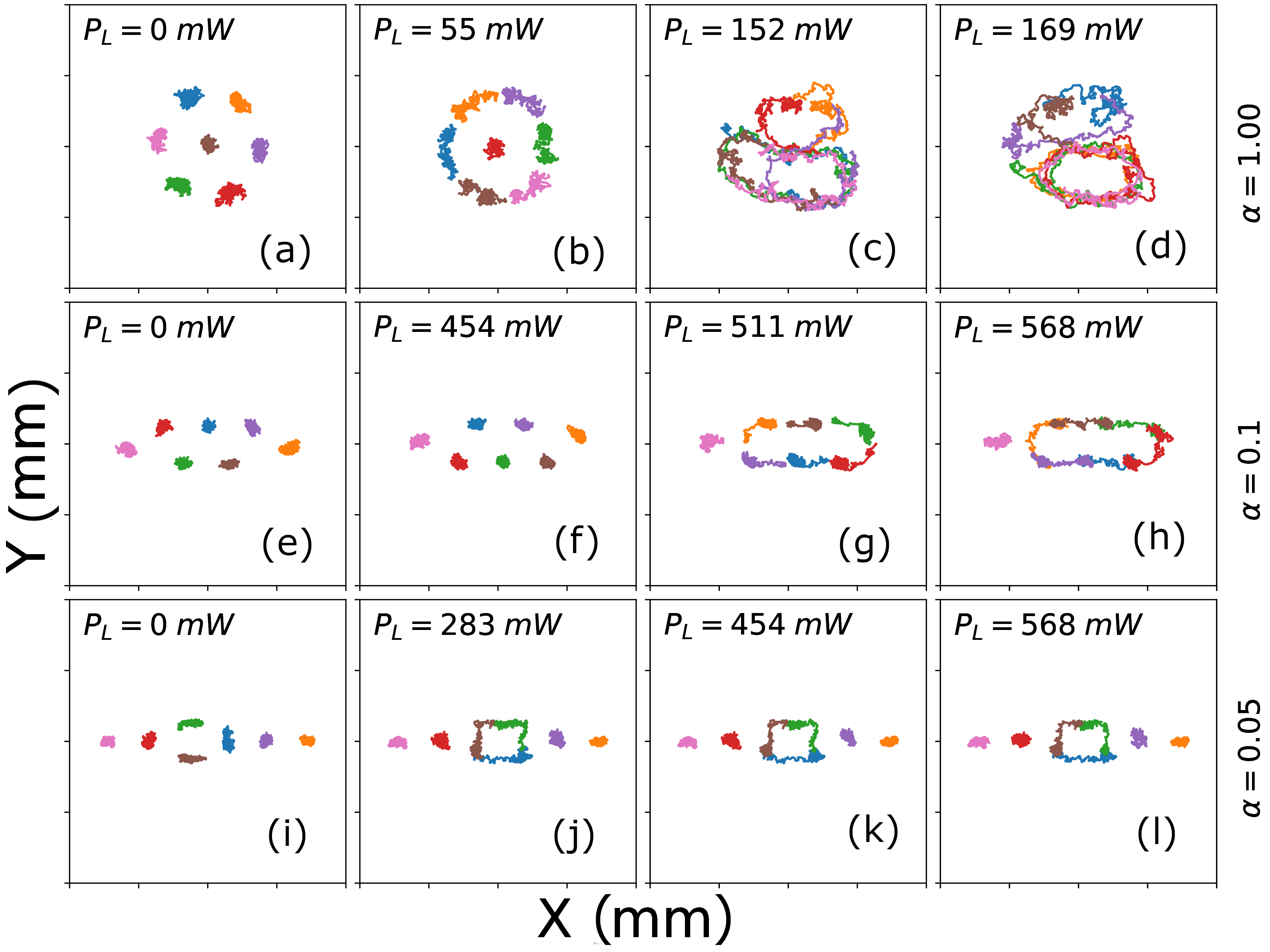
Figure 5: Simulated particle trajectories for an anisotropically confined Yukawa system, recapitulating the experimentally observed spatially inhomogeneous melting patterns.
The melting dynamics are further elucidated via Singular Value Decomposition (SVD) of the trajectory data, enabling identification and tracking of collective spatial-temporal modes (topos). At low heating power, the dominant modes are well-defined (breathing, sloshing, azimuthal), consistent with classical normal mode theory. As heating approaches the threshold, energy is redistributed among these modes, leading to nonlinear coupling, breakdown of orthogonality, and emergence of complex spatial patterns combining multiple original modes.
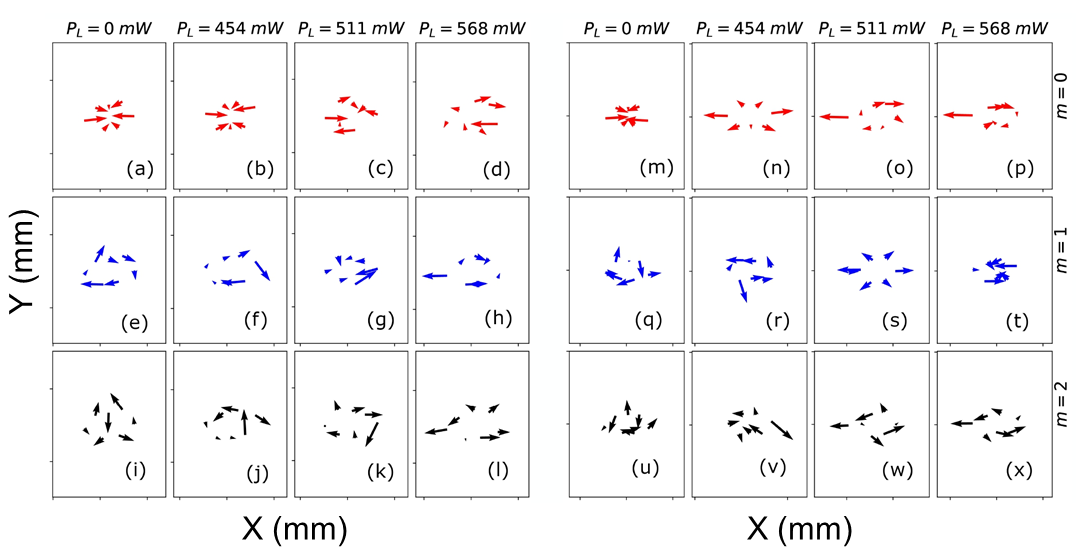
Figure 6: Experimentally measured and simulated spatial patterns (topos) of the first three SVD modes under various heating conditions for α0; higher heating produces mode mixing.
Analysis of relative modal weights with increasing heating confirms the transfer of energy away from low-order “ordered” modes into mixed or higher-order fluctuations, an unambiguous signature of melting under nonequilibrium drive.
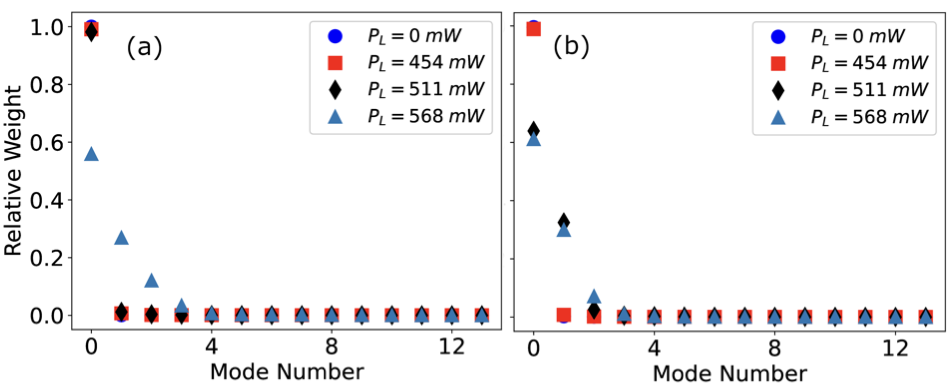
Figure 7: Relative weights of collective modes as functions of laser power in experiment and simulation for α1, showing the critical redistribution of modal energy at melting onset.
Implications and Prospects
The results constitute the first experimental verification of theoretical predictions for anisotropy-induced inhomogeneous melting in small dusty plasma clusters (2603.29682). Importantly, the findings position geometric trap anisotropy as a robust and tunable control parameter for phase transitions and melting scenarios in finite, strongly coupled systems. The mode-resolved analysis further establishes a mechanistic link between collective excitation spectrum evolution, network connectivity, and the loss of crystalline order—a perspective applicable to a broad range of mesoscopic platforms, including trapped ions, Wigner islands, colloidal assemblies, and even engineered quantum simulators.
This work highlights the importance of symmetry breaking and confinement in shaping nonequilibrium phase behavior. Insights from these results may fuel the development of programmable matter and new strategies for control of melting, glassy dynamics, and transport in coupled particle systems. The approach and methodology outlined are readily extensible to larger, heterogeneous, and actively driven clusters.
Conclusion
This study demonstrates, with combined experiment and simulation, that melting in finite dusty plasma clusters can be made spatially inhomogeneous by tuning the anisotropy of the confining potential, with distinct pattern formation regimes observed for different degrees of anisotropy. The melting transition is governed by the interplay between anisotropy, collective mode coupling, and external stochastic drive, leading to spatially complex phase-space behaviors and modal energy redistribution. These results have fundamental implications for understanding and engineering phase transitions in finite strongly correlated systems.