- The paper demonstrates that trend-following strategies outperformed alternatives, achieving a mean ROI of +14.71% with minimal trading frequency.
- The paper uses the MAS-Utopia simulation with 10,000 agents and over 520,000 high-frequency steps to isolate pure trading logic.
- The paper reveals that wealth compounding under an egalitarian UBI mechanism leads to evolutionary stratification, challenging standard retail heuristics.
Evolutionary Selection for Trend-Following in Agent-Based Financial Markets
Introduction
"Be Water: An Evolutionary Proof for Trend-Following" (2603.29593) presents a rigorous agent-based simulation, MAS-Utopia, to ascertain the evolutionary fitness of different trading heuristics in a stylized, frictionless, and egalitarian market equipped with a robust UBI mechanism. By eliminating exogenous factors such as capital inequality and transaction costs, the analysis isolates selection pressure strictly on the trading logic of agents. Five archetypes—Trend-Following, Mean-Reversion, Sniper, Grid, and HFT—are instantiated, and the dynamics of economic and memetic evolution are studied across five years of high-frequency data.
Methodological Foundation
Simulation Architecture
MAS-Utopia integrates 10,000 agents, each initialized with heterogeneous, interpretable genomes specifying leverage, sizing, stop-loss, take-profit elasticity (volatility anchoring), behavioral biases, and market focus. Each agent’s genetic representation constrains permissible strategic behaviors, enabling selection dynamics with explicit mapping from behavioral parameters to survival statistics. The simulation utilizes over 520,000 temporal steps drawn from the OHLCV matrix of 100 assets, which ensures non-stationary, fat-tailed regime shifts.
The model enforces several microstructure constraints to address common backtesting pathologies, including a hard liquidity shackle (Lmax) and endogenous margin calculus. This precludes infinite compounding and ensures leverage/stop-loss constraints are structurally binding—mirroring real-world institutional dampening on outsized risk-taking.
Memetic Evolution with UBI Foundation
Bankrupted agents are subjected to strict purge-reincarnation: all agents are reborn with equal capital but may inherit elite strategies via Gaussian-mutation with probability 0.5, or are randomly reinitialized. This system constructs an egalitarian baseline where any stratification or emergence of fitness is purely attributable to the relative evolutionary merit of strategic archetypes, eliminating confounds arising from initial wealth disparity or market friction.
Empirical Findings
Positive-Sum Wealth Accumulation
Contrary to assumptions of zero-sum or loss-dominated retail markets, aggregate wealth in MAS-Utopia increases over the experiment's horizon, from $100M to $110M Figure 1.
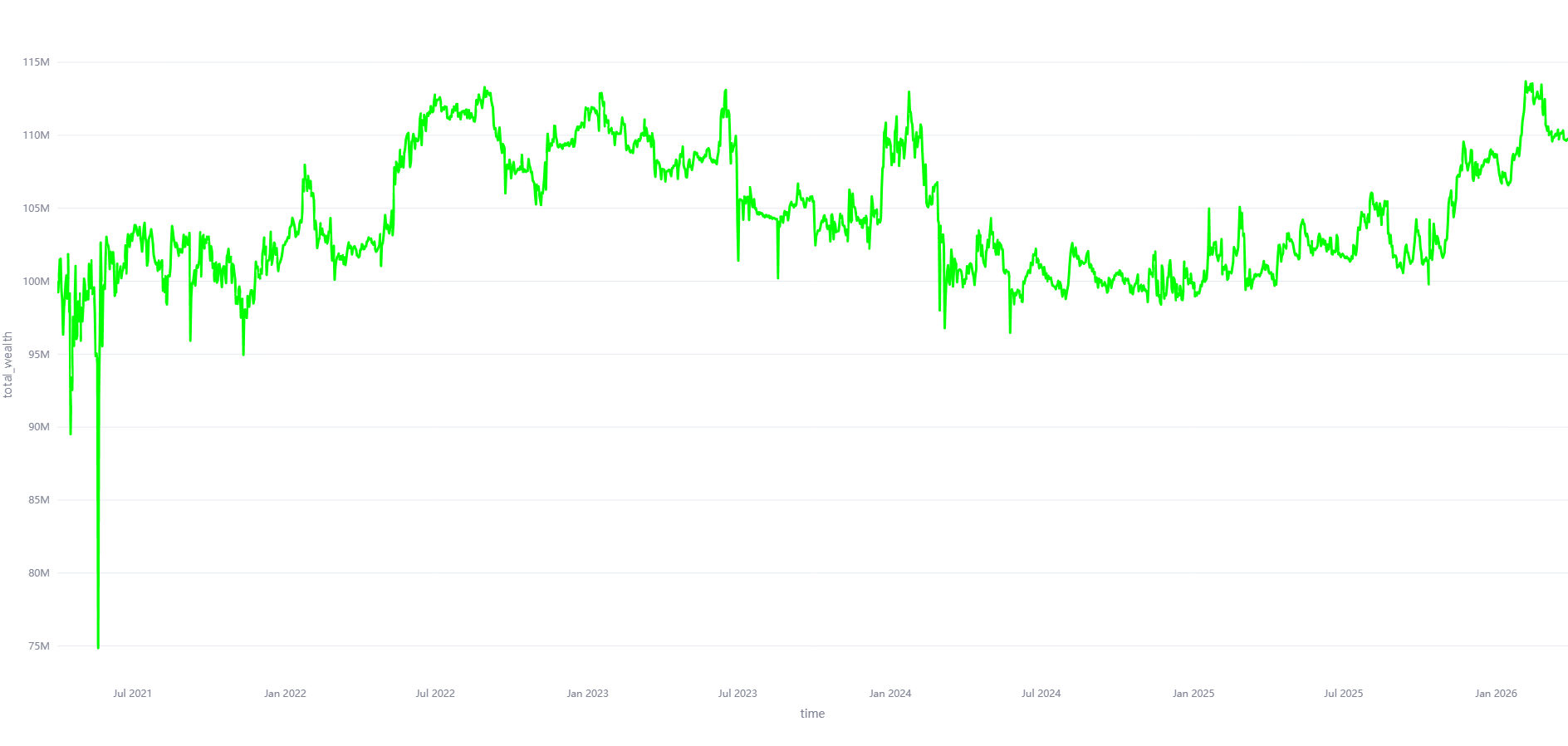
Figure 1: Aggregate wealth of the 10,000-agent society over 5 years. The net positive growth indicates a successful positive-sum outcome.
This growth is not uniform: the early dip reflects selection pressure removing high-risk, maladaptive actors, while subsequent compounding is enabled by rapid propagation of robust strategies. The collective ability to harness the underlying market beta is only realized after sufficient purging of high-leverage contrarians.
Evolutionary Domination of Trend-Following
The ecological succession analysis quantitatively demonstrates the evolutionary filter favoring Trend-Following over all alternatives Figure 2. Initially equally distributed, Trend-Followers come to dominate almost the entire surviving population.
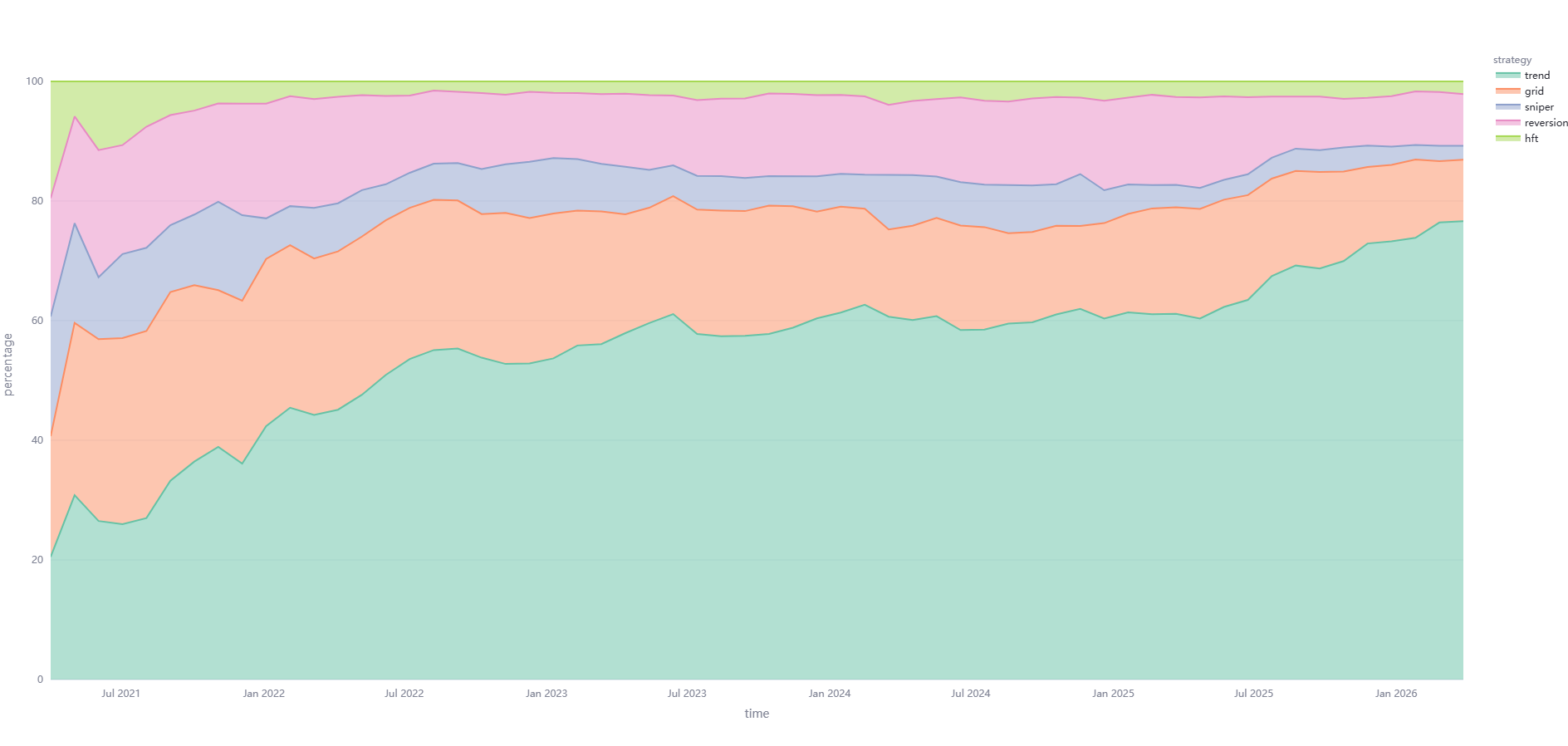
Figure 2: Ecological succession of the five trading archetypes. The Trend-Following strategy (light green) exhibits clear evolutionary dominance.
The Trend-Following archetype achieves a significant outperformance in mean ROI (+14.71%) with the least trading frequency (312 trades per surviving agent), demonstrating a highly robust risk-adjusted fitness profile. High-frequency and contrarian, mean-reverting strategies are systematically purged due to sensitivity to volatility clustering and negative skew—consistent with the “option seller” pathology.
Wealth Stratification under Egalitarian UBI
Stratification emerges as a function of compounding and selection, not exogenous capital inertia, as shown in the Lorenz curve Figure 3 and the sharply delineated wealth trajectory of the elite (Top 1%) agents Figure 4.

Figure 3: Lorenz Curve of all agents.
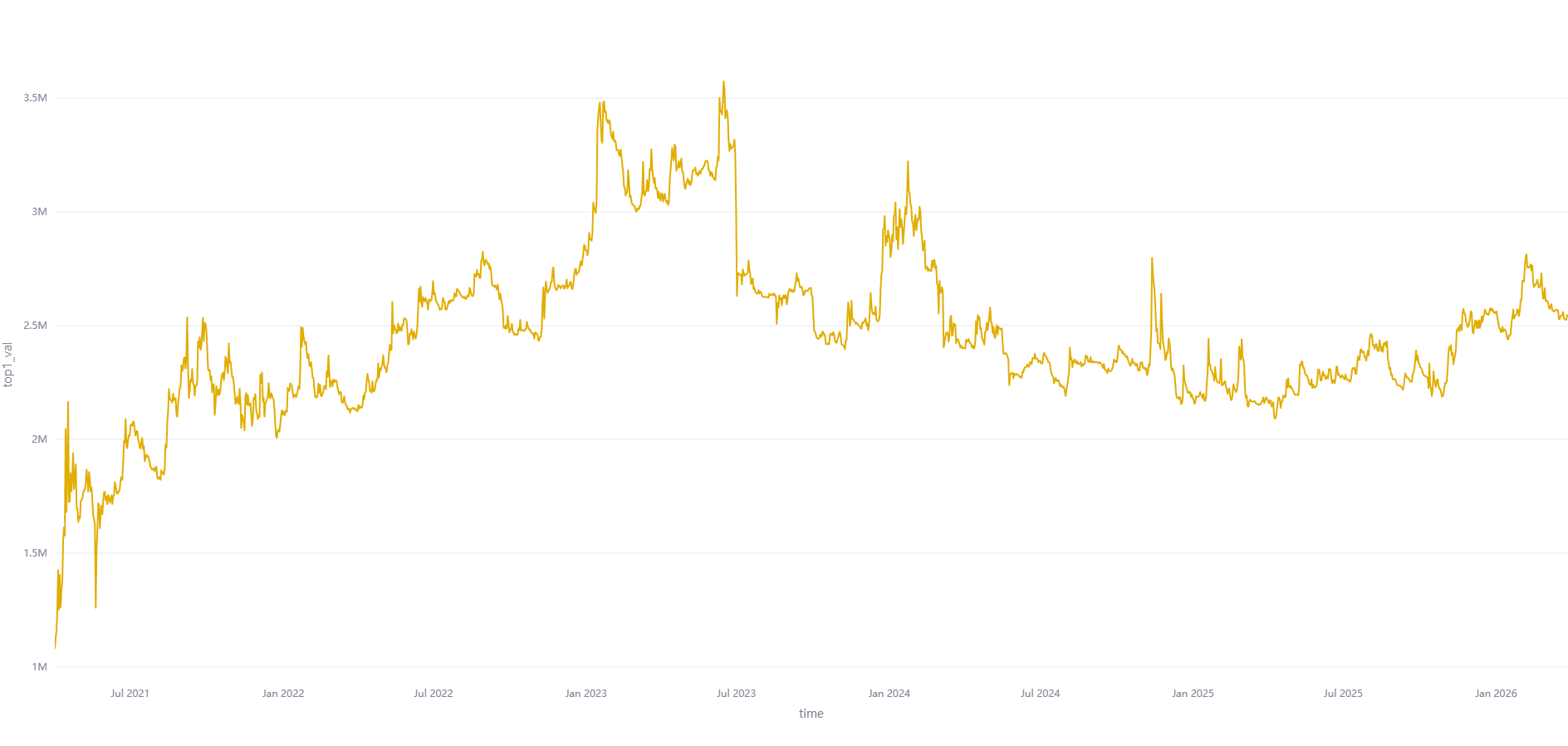
Figure 4: Total wealth held by the Top 1\% of the population over 5 years. This index serves as a proxy for the health and adaptability of the elite class.
The Gini coefficient stabilizes at a structurally capped value due to constant reseeding by UBI restarts, suppressing runaway oligopoly. However, elite status is continually contested and turned over by generational strategy innovation, as indicated by upward mobility indexes Figure 5.
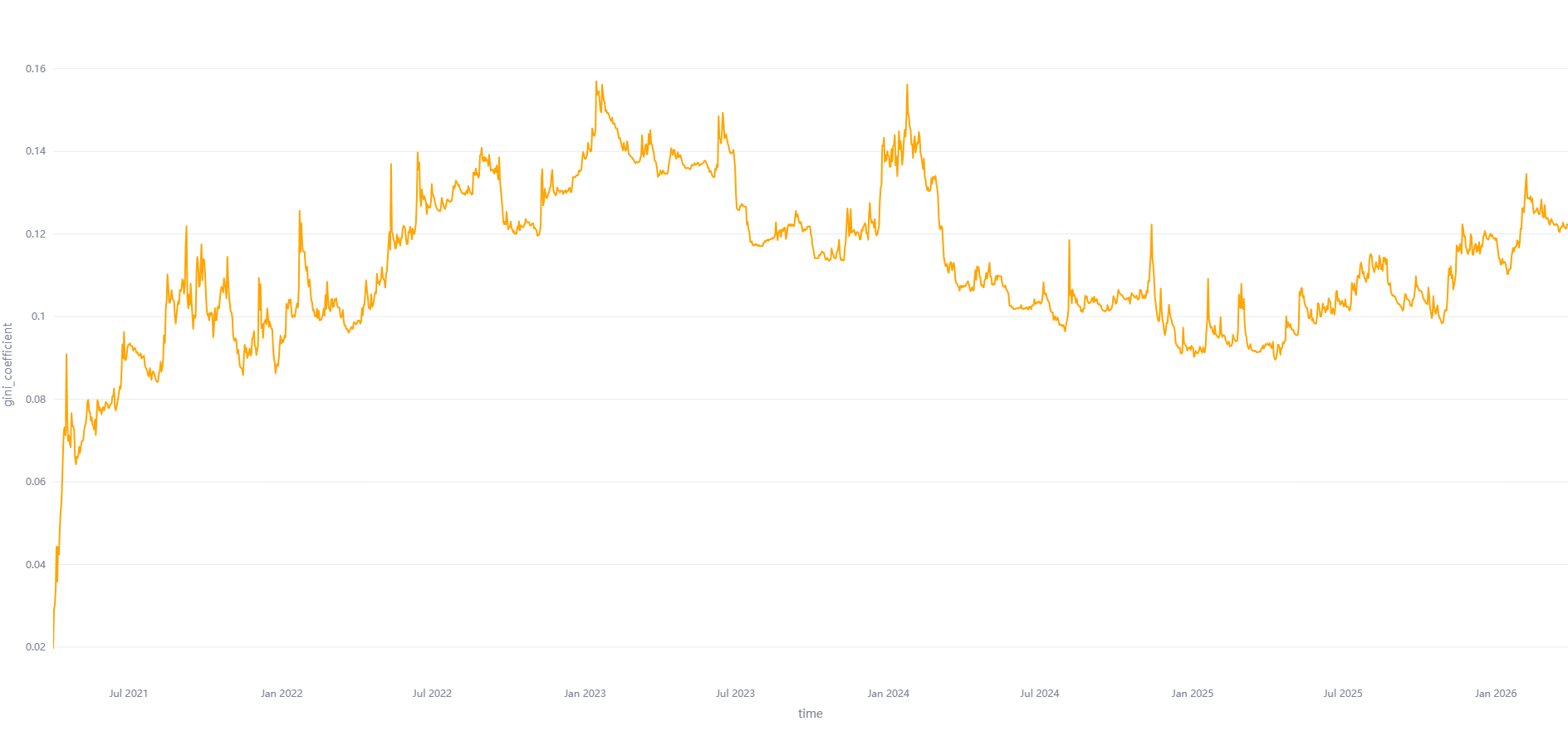
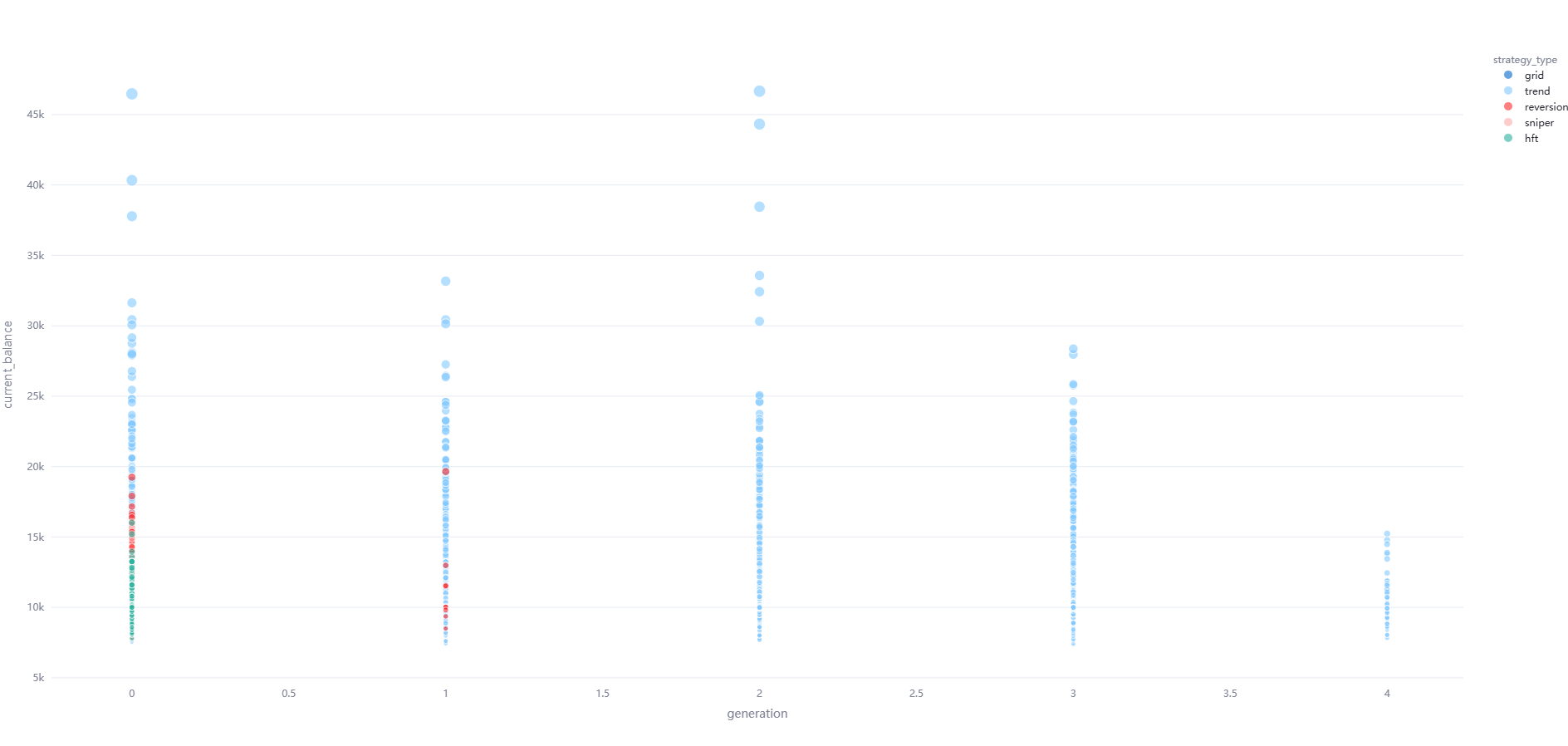
Figure 5: Left: Gini coefficient stabilizing. Right: Upward wealth mobility across generations.
Survival Zone and Genotypic Analysis
Analysis of agent genotype clusters reveals that sustained profitability is tightly localized to regions with low leverage (l<10) and moderate stop-loss elasticities (1<θSL<4) Figure 6. High leverage and wide stops universally result in extinction. The surviving population distribution is overwhelmingly dominated by Trend-Followers.
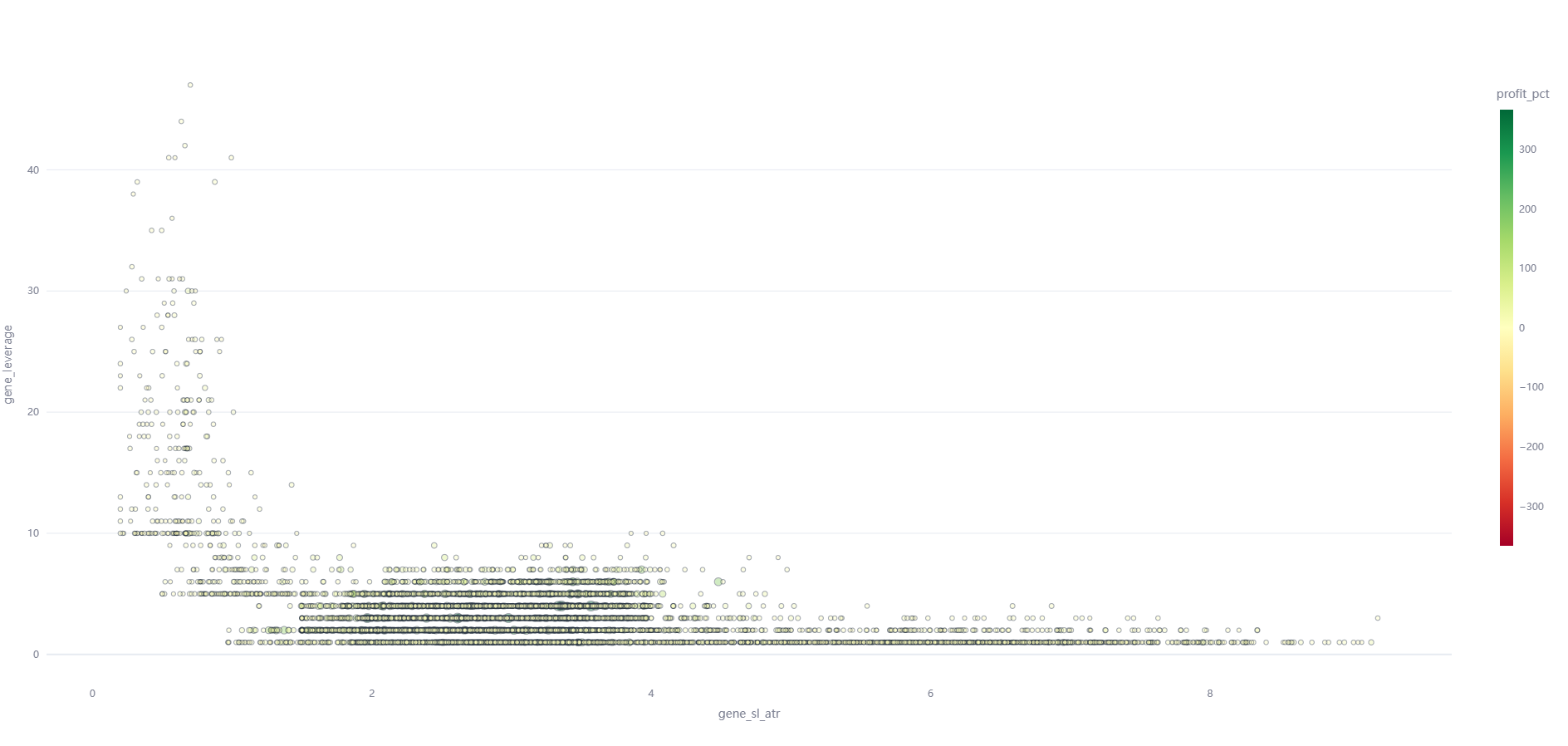

Figure 6: Left: Genotype heatmap of surviving agents. Right: Final population distribution.
The compounding trajectories of the top 30 agents, all of Trend-Following genotype, also consistently remain within this “Survival Zone” Figure 7.
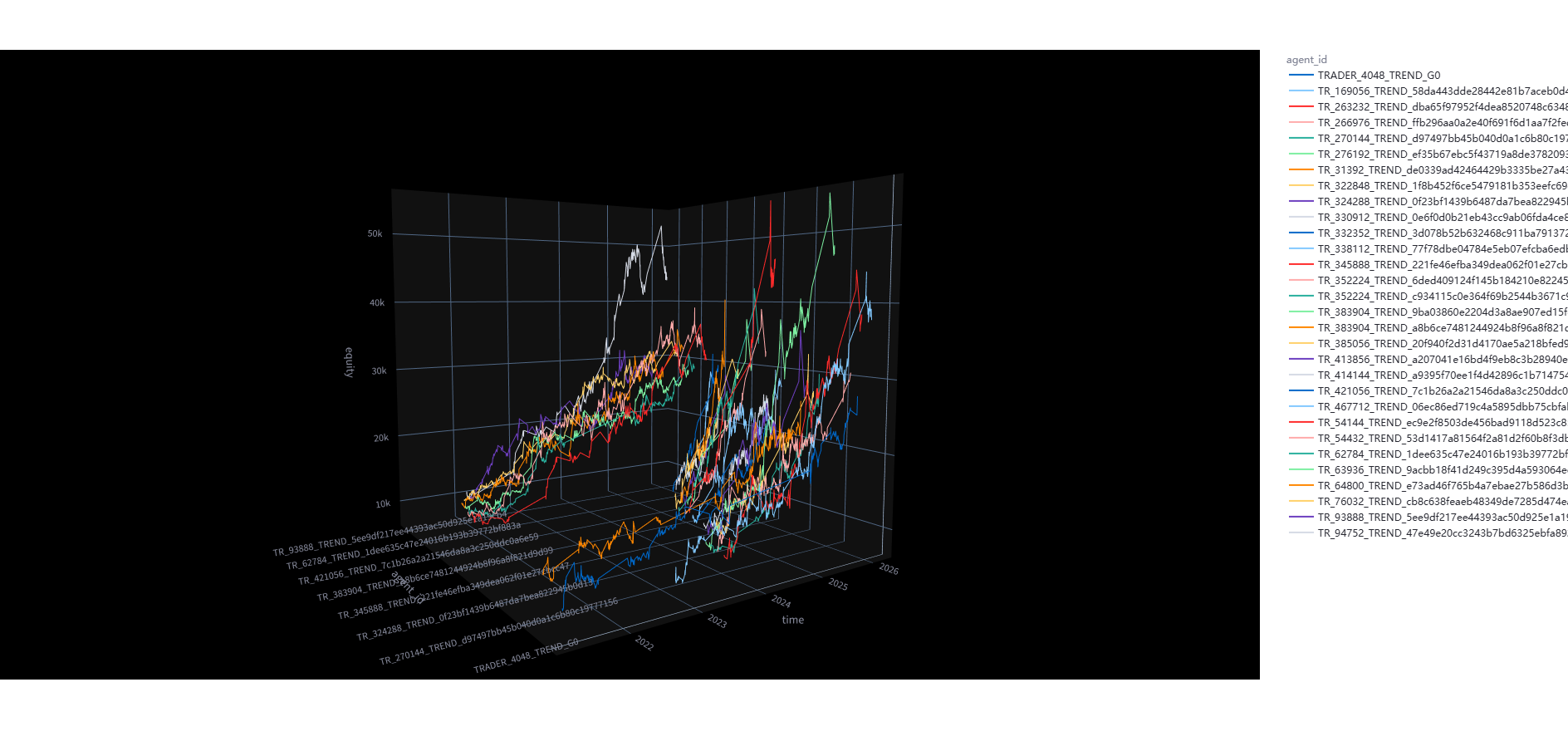
Figure 7: 3D wealth trajectories of the Top 30 elite agents over time.
Sim2Real Deployment: LLM-Driven Investing Prosthesis
The simulation’s logic is operationalized into an LLM-driven, real-world investment system comprising three hierarchical layers:
- Global Macro-Scanner: Selects candidates via anomaly detection in equities universes.
- Watchlist Sentinel: Triggers only on regime-defining, high-conviction events (e.g., MACD golden cross), incorporating anti-notification-bombardment logic Figure 8.
- LLM Tactical Protocol: The LLM provides chain-of-thought transparency Figure 9, as well as a final, actionable trade plan that strictly aligns with trend-following risk discipline Figure 10.

Figure 8: The Layer 2 Radar output, delivered via IM. It identifies a single asset with a MACD golden cross and provides a preliminary AI score, demonstrating the system's filtering and anti-bombardment capabilities.
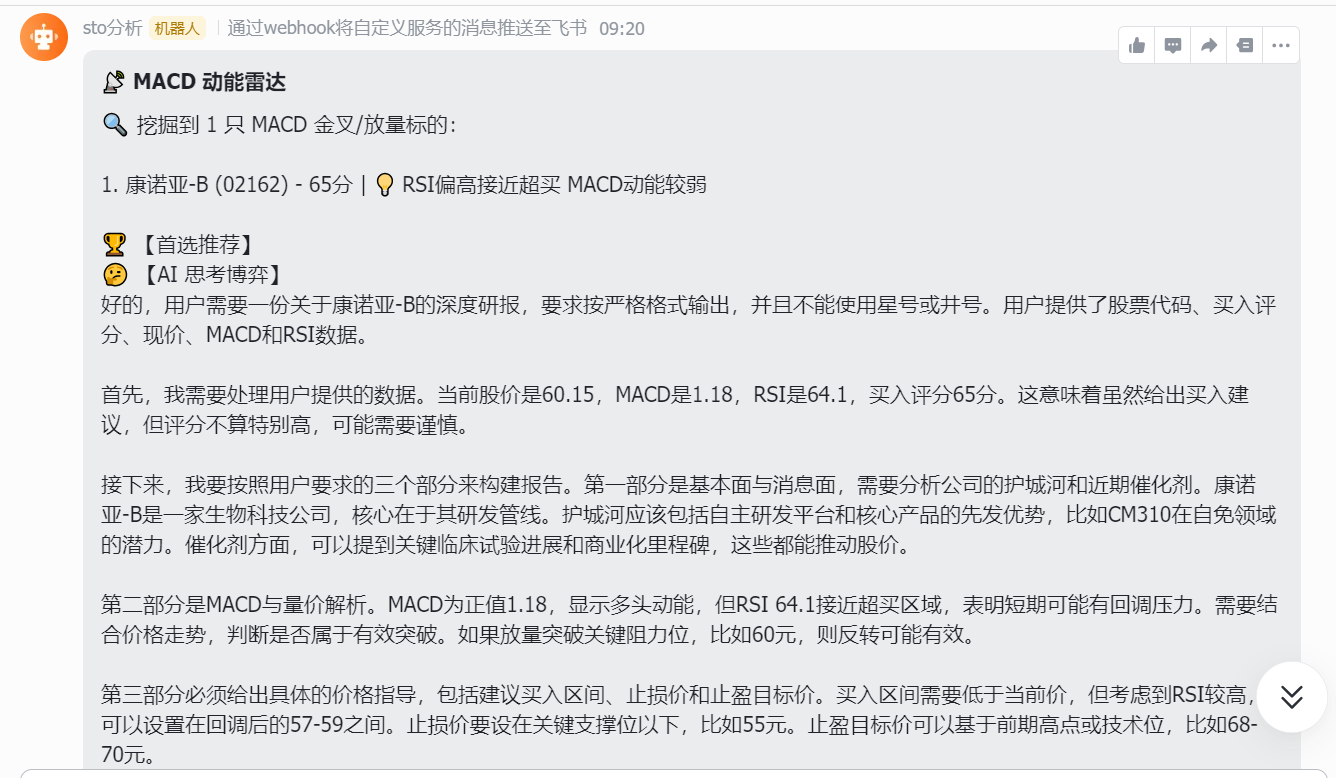
Figure 9: Explicit extraction of the LLM's Chain-of-Thought reasoning. This provides the user with transparent, interpretable insight into the AI's decision-making process before presenting the final conclusion.

Figure 10: The final, structured tactical report delivered to the user. It provides a holistic analysis and a concrete, risk-managed trading plan, directly translating the simulation's survival laws into an actionable format.
This pipeline closes the Sim2Real loop, ensuring rigorous alignment between simulated evolutionary selection and actual investment recommendations.
Theoretical and Practical Implications
Theoretical Consequences
The findings provide computational affirmation of the momentum factor’s dominance in fat-tailed, high-compounding-risk environments. The systematic extinction of mean-reversion heuristics, regardless of behavioral refinement, strongly contradicts normative retail intuitions and supports the necessity of positive-skew strategies as the only stable evolutionary equilibrium. Additionally, persistent stratification under UBI demonstrates that compounding dynamic inequality is not purely a function of institutional inertia but an endogenous feature of leveraged, path-dependent markets.
Practical and Policy-Level Implications
For individual investors, these findings substantiate the necessity of disciplined, low-leverage trend alignment and offer a robust refutation of high-frequency contrarian retail heuristics. Market designers and regulators should note the evolutionary fragility of “gamified” trading and consider policy levers such as progressive leverage limits or turnover taxes to enhance collective financial well-being. For social policy, the model highlights that UBI, while inadequate as an inequality eliminator, is crucial as a systemic stabilizer facilitating continual learning and elite turnover, thus averting monopolistic collapse.
Conclusion
"Be Water: An Evolutionary Proof for Trend-Following" (2603.29593) delivers a rigorous empirical demonstration that in complex, fat-tailed markets, robust survival and social prosperity align with disciplined, trend-following logic, not contrarian overfitting or leveraged speculation. The evolutionary lens, operationalized both in a simulated and real-world LLM context, systematically refutes retail mean-reversion dogma. The simulation’s architecture and findings set a precedent for future work integrating more complex agent learning and endogenous pricing, and advocate for cross-disciplinary design principles in financial AI systems and macro policy frameworks.

