- The paper introduces Majorana’s scaling transformation that converts the nonlinear Thomas–Fermi equation into first-order ODEs to handle both neutral and weakly ionized atoms.
- The methodology employs convergent power series expansions, enabling precise computation of physical constants, binding energy coefficients, and key integrals.
- Results benchmark against historical data with agreement up to 13 digits, offering a robust analytic and computational framework for atomic modeling.
Introduction
The Thomas–Fermi (TF) equation, historically pivotal in atomic physics, describes the electrostatic potential in large atoms via a nonlinear second-order differential equation. While the standard neutral-atom solution has long been extensively studied, the full implications of Majorana's hitherto overlooked scaling transformation have only become clear in recent decades, following the publication of his private notes. This work provides an expert analysis of Majorana's method, extending it beyond the neutral solution to the case relevant for weakly ionized atoms, developing power series techniques for both cases, and verifying the accuracy of integrals and physical constants against historical tabulations.
The Thomas–Fermi Framework and Majorana’s Reduction
The standard TF equation is given by
f′′(x)={x−1/2f(x)3/2,f(x)≥0 0,f(x)≤0
with physically relevant boundary conditions specified for either the neutral-atom (f(0)=1, f′(0)=−B, f(x)∼x−3 as x→∞) or weakly ionized atom (f(1)=0, f′(1)=−Λ2) case. Majorana's central observation was that via appropriate scale-invariant constructions, the TF equation could be mapped to a first-order ODE with an advantageous analytic structure.
Three key scale-invariant quantities are defined: P(x)=x3/2f(x)1/2, Q(x)=−x4f′(x), R(x)=−f(x)−4/3f′(x), each providing distinct representations suitable for different boundary conditions.
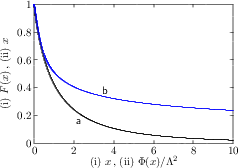
Figure 1: The TF solutions for the neutral atom (f(0)=10, curve a) and weak ionization (f(0)=11, curve b) exhibit markedly different behavior across the domain.
Majorana’s transformation converts the TF equation into first-order ODEs:
- For the neutral atom (case (i)), an ODE for f(0)=12 as a function of f(0)=13 is derived, leading to a Majorana-type equation for f(0)=14 (with f(0)=15, f(0)=16).
- For weak ionization (case (ii)), a structurally analogous ODE governs the function f(0)=17 (with f(0)=18, f(0)=19).
This reduction is not merely an aesthetic improvement; it yields computational and series representations with superior analytic properties compared to the traditional approaches.
Numerical Solutions: Power Series and Convergence
Adopting the Majorana parametrization allows for convergent power series expansions throughout the entire physically relevant domain (f′(0)=−B0), overcoming the non-overlapping convergence intervals plaguing direct series solutions for f′(0)=−B1 and f′(0)=−B2. The expansion coefficients can be systematically obtained via recurrence relations, and carry algebraic structure, being rational linear combinations of f′(0)=−B3.
For the neutral atom solution, the expansion
f′(0)=−B4
exhibits rapid convergence, and coefficients can be evaluated analytically or to arbitrary numerical precision. Analogous results hold for f′(0)=−B5 in the ionized case. The robustness of these series underpins highly accurate computation of all physical quantities derived from the TF functions.
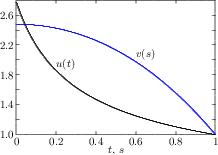
Figure 2: f′(0)=−B6 and f′(0)=−B7, arising from the Majorana reduction, form the fundamental numerical backbone for the neutral and weakly ionized solutions respectively.
The exponential integrals arising in, for example, the calculation of f′(0)=−B8 or f′(0)=−B9 coefficients,
f(x)∼x−30
are rendered tractable by the convergent series for f(x)∼x−31 and f(x)∼x−32.
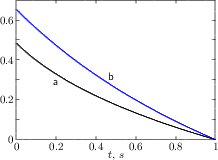
Figure 3: The behavior of sums in f(x)∼x−33 and f(x)∼x−34 for the asymptotic coefficient evaluation underscores the stability and convergence of the Majorana-based expansions.
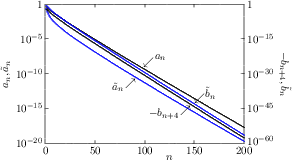
Figure 4: The lin-log plot of series coefficients f(x)∼x−35, f(x)∼x−36, f(x)∼x−37, f(x)∼x−38 illustrates geometric decay and confirms convergence across the domain.
Key Numerical Results and Benchmarking
Applying the Majorana-based series yields updated and highly accurate values for essential TF constants:
- f(x)∼x−39, x→∞0, x→∞1, x→∞2
These confirm and surpass the accuracy of earlier tabulated values obtained by computationally intensive shooting and matching procedures in the 1980s. Quantities such as the locus of maximum x→∞3, the binding energy coefficients x→∞4, and the integrals of various powers of x→∞5 are efficiently evaluated.
The method also yields highly accurate integrals important for theoretical and applied atomic physics, such as
x→∞6
and
x→∞7
for the ionization energy in the large-x→∞8 limit.
These integrals and coefficients are directly benchmarked against historical results and reveal agreement to at least 13 digits, highlighting the practical utility of the approach.
The binding energy of neutral atoms, in atomic units, is expanded as
x→∞9
with f(1)=00 and f(1)=01 computed via the Majorana parametrization, leveraging the explicit formulae derived for f(1)=02 and integrals over f(1)=03. Oscillatory and relativistic corrections—involving further nonlinear expressions in f(1)=04 and its derivatives—are similarly accessible using the new computational strategy.
Ionization energies for large f(1)=05 are efficiently evaluated via the transformation, providing updated reference values critical for high-precision atomic modeling.
Implications and Outlook
The paper demonstrates that Majorana’s transformation, when appropriately extended, furnishes a universal analytic and computational framework for both neutral and weakly ionized TF atoms. The scaling approach is not only a significant simplification over traditional methods but also opens the way for generalizations to other scaling-invariant nonlinear ODEs, including the Lane–Emden equation and related polytropic models.
Practically, the ease and precision with which integrals, asymptotics, and physical constants can be computed indicate this method should supplant previous numerically intensive approaches in quantum chemistry and atomic physics applications involving large-f(1)=06 atoms or mean-field models.
From a theoretical perspective, Majorana’s transformation elucidates the homology and scaling structures inherent in broad classes of nonlinear ODEs and enables exact or highly precise series solutions across their full physical domain.
Conclusion
The revisitation of the TF equation through Majorana’s scaling transformation delivers both analytic elegance and substantial practical computational advantages. The reduction to convergent first-order series methods for neutral and ionized solutions consolidates essential physical constants and integrals with unprecedented efficiency and accuracy, validating and extending the results of prior numerical studies. Future research may leverage this methodology to further classes of scaling-invariant equations and refine treatments of ionization and energetics in atomic systems.

