Calibri: Enhancing Diffusion Transformers via Parameter-Efficient Calibration
Abstract: In this paper, we uncover the hidden potential of Diffusion Transformers (DiTs) to significantly enhance generative tasks. Through an in-depth analysis of the denoising process, we demonstrate that introducing a single learned scaling parameter can significantly improve the performance of DiT blocks. Building on this insight, we propose Calibri, a parameter-efficient approach that optimally calibrates DiT components to elevate generative quality. Calibri frames DiT calibration as a black-box reward optimization problem, which is efficiently solved using an evolutionary algorithm and modifies just ~100 parameters. Experimental results reveal that despite its lightweight design, Calibri consistently improves performance across various text-to-image models. Notably, Calibri also reduces the inference steps required for image generation, all while maintaining high-quality outputs.



Paper Prompts
Sign up for free to create and run prompts on this paper using GPT-5.
Top Community Prompts
Explain it Like I'm 14
What is this paper about?
This paper introduces a simple way to make modern image‑generating AI models (called Diffusion Transformers, or DiTs) produce better pictures faster. The method is named Calibri. Instead of retraining the whole model, Calibri gently “rebalances” how much each part of the model contributes—like adjusting a few volume sliders on a mixing board—using only about 100 extra numbers. This small tweak leads to noticeably higher image quality and fewer steps needed to generate an image.
What questions did the researchers ask?
The paper explores three easy-to-understand questions:
- Do all parts (“blocks”) of a Diffusion Transformer help equally, or are some parts less helpful (or even harmful)?
- If we give each block a simple “strength knob” (a single number that scales its output), can the overall images get better?
- Can we find the best settings for those knobs quickly and cheaply, without retraining the whole model?
How did they do it?
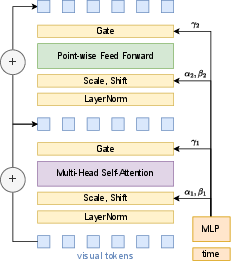
Think of a Diffusion Transformer as a long assembly line that turns random noise into a picture, step by step. It has many repeated “blocks,” each with attention and MLP layers, that transform the image representation. Here’s the approach in everyday terms:
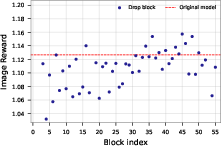
- Checking block importance: They tested what happens if they turn off different blocks (set their output to zero). Surprisingly, sometimes turning off a block improved the final image. That means not all blocks are perfectly balanced.
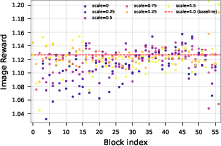
- Adding simple “strength knobs”: For each block, they added one small knob (a single scaling number) that can make the block’s output stronger or weaker. They found there’s usually a better setting than the original default.
- Calibrating with a “judge” and a try‑and‑improve strategy:
- “Reward models” act like automatic judges that score images based on human preferences (e.g., HPSv3, ImageReward, Q‑Align).
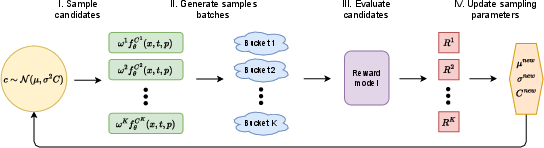
- To find good knob settings, they used an evolutionary algorithm called CMA‑ES. You can think of it like trying many combinations, keeping the best ones, and gradually improving—without needing to know the exact internal math (“black‑box” optimization).
- They only tune around 10² parameters (for example, 57, 76, 114, 216, or 482), which is tiny compared to millions of model parameters.
- Different levels of knobs:
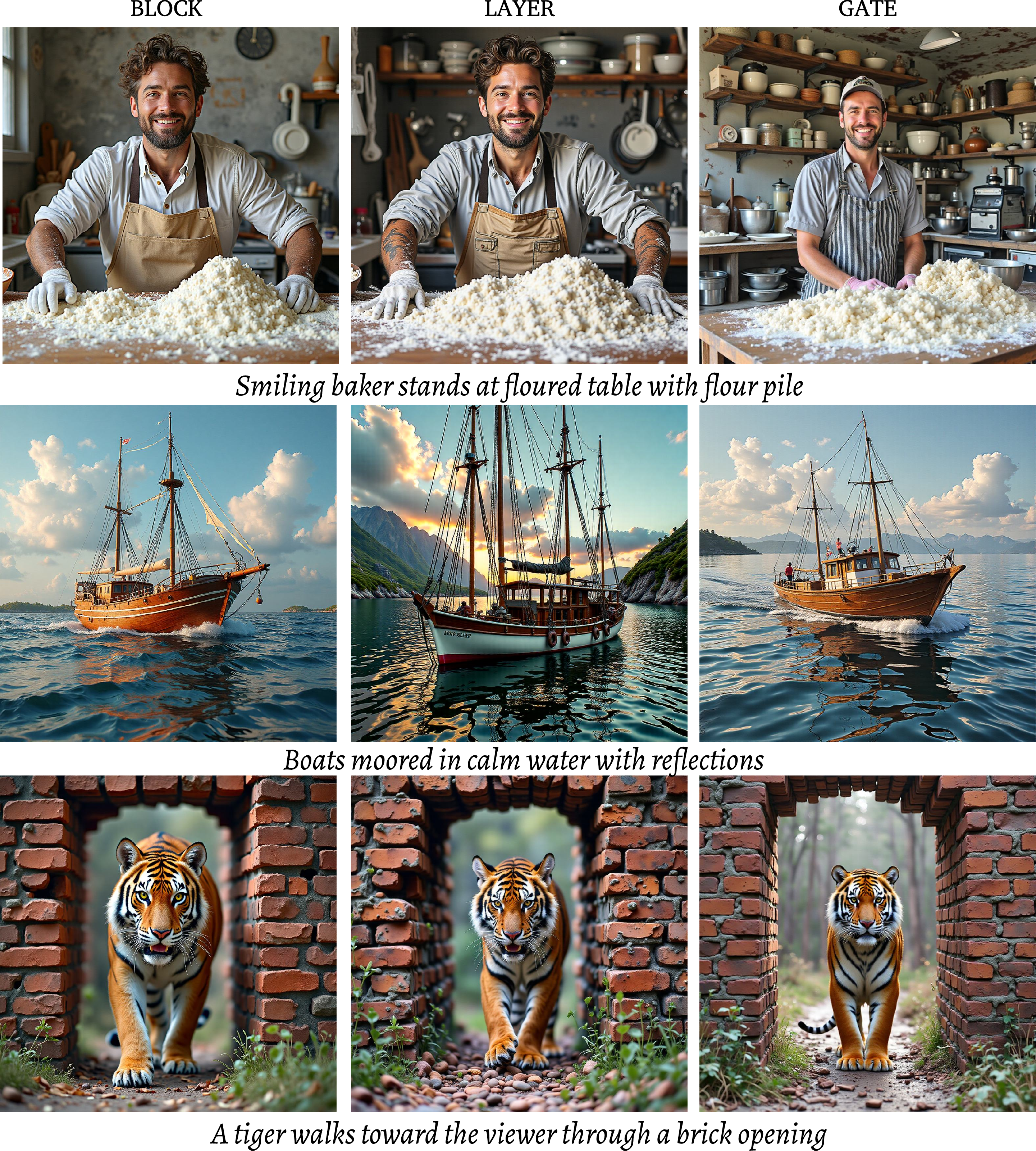
- Block scaling: one knob per block (coarse adjustment).
- Layer scaling: separate knobs for attention and MLP inside each block (finer adjustment).
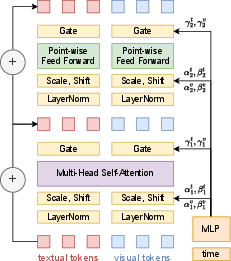
- Gate scaling: special knobs for how text and image information mix in multimodal blocks (finest adjustment).
- Calibri Ensemble:
- Instead of using just one calibrated model, you can combine two or more calibrated versions—like mixing multiple chefs’ recipes—to get better results.
- This also fits well with classifier‑free guidance, a standard way of guiding image generation.
What did they find?
In short, it works—and it works across several leading text‑to‑image models.
- Better images with fewer steps:
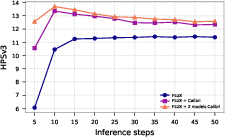
- Across FLUX, SD‑3.5 Medium (SD‑3.5M), and Qwen‑Image, Calibri bumped up quality scores (HPSv3, ImageReward, Q‑Align).
- It also cut the number of sampling steps needed. For example, the best quality shifted from about 30–50 steps down to roughly 10–15 steps.
- Tiny change, big impact:
- By tuning only ~100–400 scaling knobs, they improved results without retraining the whole model.
- Human users prefer Calibri:
- In a large user study (200 people, 5,600 comparisons), people preferred Calibri’s images more often, both overall and for better matching the text prompt.
- Plays nicely with alignment methods:
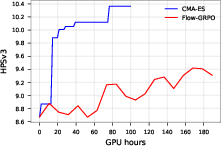
- When combined with other alignment/training methods (like Flow‑GRPO), Calibri still boosts performance—even though those methods already tried to optimize the model.
- Calibri reached similar or better scores than heavy fine‑tuning, while changing far fewer parameters.
- One‑time cost, ongoing speed‑up:
- Calibrating takes some GPU time up front, but only once. After that, the model keeps its speed and quality benefits during regular use.
Why does this matter?
- Faster and cheaper image generation: Getting better pictures in fewer steps saves time and computing power.
- Simple and safe adjustment: Calibri doesn’t rewrite the model’s brain; it just rebalances how loud each part speaks. That’s low risk, high reward.
- Works across models: The improvements showed up on multiple state‑of‑the‑art text‑to‑image systems, hinting that this technique is broadly useful.
- Easy to combine: You can layer Calibri on top of other methods or use it with ensembles for extra gains.
Limitations and what’s next
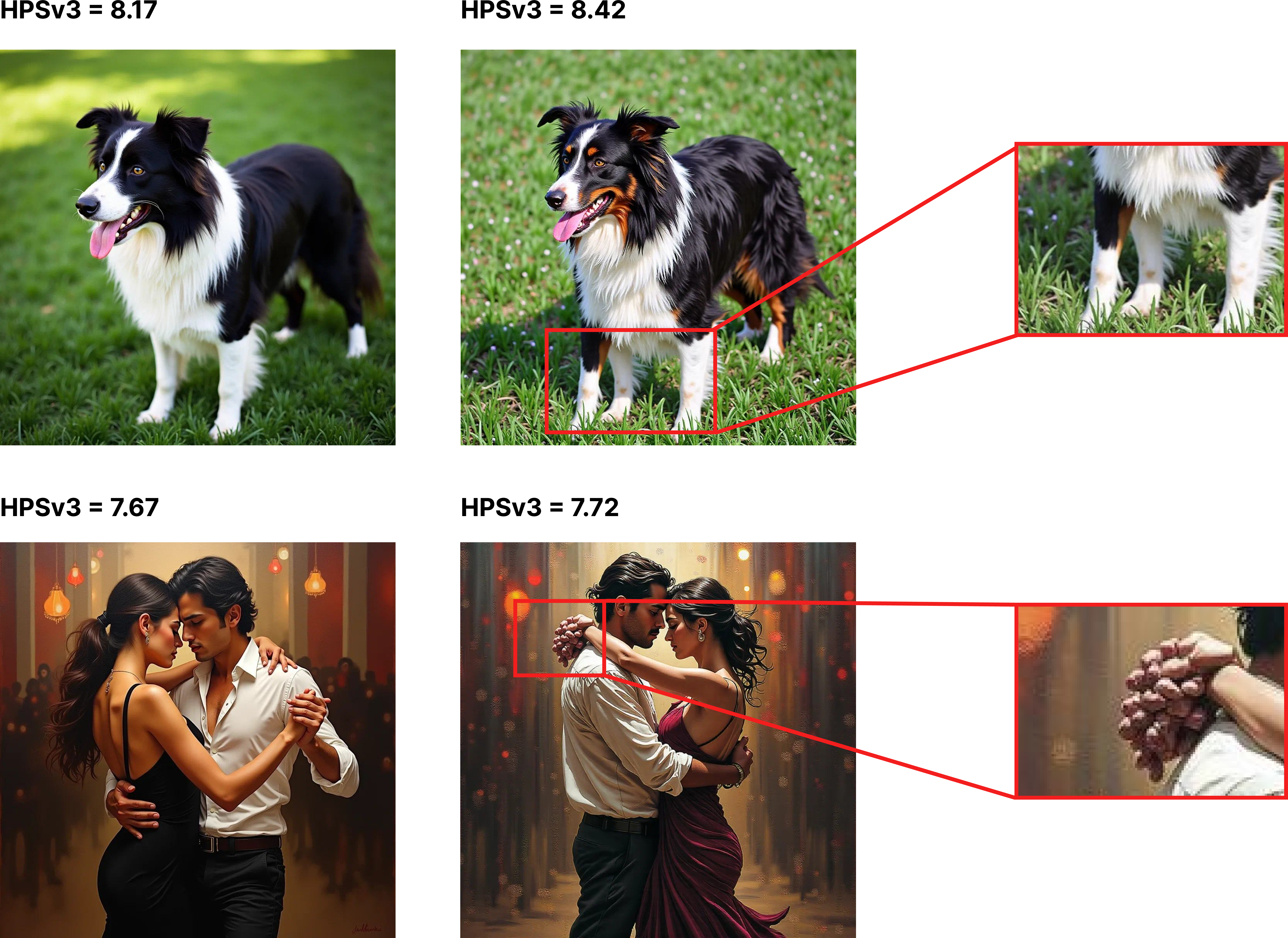
- Calibri relies on reward models—automatic judges of image quality—that sometimes miss subtle issues (like weird fingers or extra limbs). As these judges improve, Calibri should get even better.
- The best knob settings depend on the model and chosen reward, so there’s a small one‑time calibration cost. Still, the long‑term speed and quality gains make it worthwhile.
Overall, Calibri shows that a light, clever tune‑up—like adjusting a few sliders—can unlock hidden performance in powerful image‑generating models, making them faster and more pleasing to use.
Knowledge Gaps
Knowledge gaps, limitations, and open questions
Below is a single, concrete list of missing pieces and unresolved questions that future work could address:
- Theory of why it works: No principled explanation for why static scalar rescaling of DiT blocks/layers improves denoising; interactions with residual connections, LayerNorm, and time conditioning remain uncharacterized.
- Time/prompt adaptivity: Calibrations are global, prompt-agnostic, and time-invariant; the paper does not explore timestep-conditioned or prompt-/content-adaptive scaling, which could outperform fixed scalars.
- Sampler/scheduler dependence: Robustness across sampling methods and noise schedules (e.g., DDIM vs. flow samplers, different step allocations) is not studied.
- NFE generalization: Coefficients are searched at 15 steps; it is unclear how well they transfer to fewer/more steps and whether separate calibrations per NFE are required.
- Resolution and aspect ratios: Calibration is trained at 512×512; generalization to 768/1024+, different aspect ratios, and high-res pipelines (e.g., refiner stages) is untested.
- Cross-backbone transferability: Whether learned scalars transfer within model families (e.g., Flux variants, SD-3.x sizes) or across versions is not evaluated.
- Temporal/video applicability: The method’s effect on video diffusion/flow models and spatiotemporal consistency is not assessed.
- Editing and controllability: Impact on instruction-guided editing, layout control, or negative prompts is not measured.
- CFG dependence: Sensitivity to classifier-free guidance settings (scale, use of negative prompts) and to CFG-distilled vs. standard CFG remains unclear.
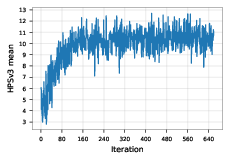
- Reward-model dependence and hacking: Optimization is tightly coupled to a single primary reward (HPSv3); the extent of reward hacking and robustness across alternative/ensemble rewards is not systematically analyzed.
- Diversity trade-offs: The paper acknowledges potential diversity loss but does not quantify it with standard intra-prompt diversity metrics (e.g., LPIPS variance, dispersion) or provide mitigation.
- Safety and bias: Effects on unsafe content, demographic bias, stereotype amplification, and style biases are not evaluated.
- Interpretability of learned scalars: Which layers/gates are consistently up-/down-weighted across seeds, prompts, and backbones is not analyzed; links to “vital layers” are suggestive but not quantified or generalized.
- Gate vs. layer scaling behavior: Gate scaling improved HPSv3 but underperformed on other rewards; the paper does not diagnose why or propose criteria for choosing granularity per objective.
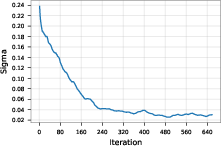
- Stability and variance: Convergence stability of CMA-ES across random seeds, initialization (σ), and candidate budgets is not reported.
- Sample efficiency and scaling laws: How reward evaluation budget, search space dimension, and model size affect returns (e.g., diminishing returns curves) is not quantified.
- Optimizer choice: No comparison with other black-box strategies (NES, Bayesian optimization, CMA variants) or simple heuristics (e.g., gradient-norm-based rescaling).
- Alternative search spaces: Only static scalars are explored; time-dependent scalars, per-head attention scaling, cross-attention-only scaling, or modulation of time-embedding parameters are unexplored baselines.
- Ensemble net efficiency: Ensembling increases per-step compute; the paper does not report end-to-end wall-clock latency and energy vs. reduced NFE to establish net speedups.
- Calibration reuse and drift: How often coefficients need re-optimization under prompt-distribution shift and whether online/continual calibration is feasible remains open.
- Overfitting and data leakage: Intermediate selection uses HPDv3 test prompts; a clean train/val/test protocol and cross-benchmark generalization checks are missing.
- Task and domain coverage: Evaluation is limited to a few T2I backbones and benchmarks; generalization to other domains (e.g., artwork vs. photorealism, long compositional prompts, multilingual prompts) is not broken down.
- Human study rigor: The user study lacks inter-rater reliability, statistical significance reporting, and per-category breakdown; evaluation spans only two models.
- Robustness to negative cases: Failure modes (anatomical artifacts, text spelling), brittleness to adversarial/long prompts, and worst-case analyses are not reported.
- Interaction with training-time alignment: Joint training of model weights with scalars, distilling calibrated ensembles into a single model, and the persistence of gains after further fine-tuning are unexplored.
- Numerical/stability constraints: Bounds on scalars, potential for exploding/vanishing residuals, and conditioning on long sequences or very deep stacks are not analyzed.
- Baseline comparisons: No comparison to simple training-free improvements (e.g., residual/Norm reweighting heuristics, attention scaling, FreeU-like adaptations for DiTs) or to scheduler-parameter tuning.
- Modal-specific calibration: For MM-DiT, calibrating cross-attention/multimodal interaction specifically (beyond coarse gate scaling) is not isolated and analyzed.
- Attribution of fewer-step gains: The mechanism by which calibration reduces optimal NFE (e.g., accelerating denoising vs. improving early-step fidelity) is not investigated.
Practical Applications
Immediate Applications
Below are concrete, deployable use cases that can be implemented with today’s DiT-based text-to-image systems, given the paper’s findings that Calibri improves quality and halves inference steps by tuning only ~10² parameters via CMA-ES and reward models.
- Sector: Software (AIGC platforms), Creative Industries, Advertising/Marketing, E‑commerce
- Application: Post‑hoc “calibration plugin” to boost image quality and cut cost
- What it is: Integrate Calibri as a lightweight, black‑box optimizer to re-weight DiT blocks/layers, improving preference metrics (HPSv3, PickScore) and human preference while reducing NFE (e.g., from 30–100 steps to ~10–30).
- Tools/products/workflows:
- A CLI/SDK (“Calibri Calibrator”) that wraps model inference with CMA‑ES over ~50–500 scalar scales and a chosen reward model.
- Brand- or campaign-specific calibration by optimizing on a curated prompt bucket.
- Ship calibrated checkpoints (or scale vectors) alongside existing FLUX/SD‑3.5/Qwen‑Image deployments.
- Assumptions/dependencies:
- Access to a DiT-based backbone with hooks to insert scaling (block/layer/gate).
- A suitable reward model that correlates with business goals (e.g., HPSv3 for preference, PickScore for product appeal).
- One‑time offline calibration compute (e.g., 32–150 GPU‑hours for strong models; more for weaker backbones).
- Calibration built at 512×512; verify generalization across resolutions.
- Sector: Consumer Apps, On‑device AI, Edge AI
- Application: Faster on‑device image generation via fewer sampling steps
- What it is: Deploy calibrated small/medium DiT text‑to‑image models on laptops/phones/edge devices with reduced NFE for near‑real‑time generation.
- Tools/products/workflows:
- Mobile inference integrations (CoreML/NNAPI/ONNX) with static scale vectors baked into model weights.
- Assumptions/dependencies:
- DiT/flow-based backbone support on device; careful memory budget.
- Post‑quantization performance can be recovered or enhanced by Calibri (test against device constraints).
- Sector: Media/Entertainment, Game Development
- Application: Rapid concept art pipelines and batch asset generation
- What it is: Use Calibri to reduce time-to-first-visual and bulk generation costs for ideation, storyboarding, and asset iteration.
- Tools/products/workflows:
- Calibri Ensemble for quality-critical passes; fallback to single model for high-volume runs.
- A/B testing of calibrated vs. baseline in asset pipelines.
- Assumptions/dependencies:
- Ensemble increases per‑step compute; step reduction may offset total cost.
- reward models aligned with art‑direction; human review loop recommended.
- Sector: Education, EdTech, Communication
- Application: Classroom creativity tools and rubric-aligned visuals
- What it is: Calibrate for clarity/readability and text‑alignment using Q‑Align or similar metrics to generate didactic illustrations.
- Tools/products/workflows:
- Prebuilt “readability” calibration profile; teacher-friendly UIs to toggle calibrated checkpoints.
- Assumptions/dependencies:
- Reward must reflect pedagogical quality; validate to avoid reward hacking.
- Sector: MLOps, Model Providers, Open‑Source Ecosystem
- Application: Release “calibrated model” variants and parameter packs
- What it is: Publish scale vectors (block/layer/gate) and CFG-aware ensembles as drop‑in upgrades to popular DiT checkpoints.
- Tools/products/workflows:
- Model cards documenting calibration target, prompt bucket, and expected NFE.
- Automated calibration CI based on CMA‑ES and standardized prompt suites.
- Assumptions/dependencies:
- License compatibility for distributing modified checkpoints.
- Monitoring for drift and periodic re‑calibration.
- Sector: Alignment Research, RLHF Practitioners
- Application: Low-parameter post‑alignment or co‑training with RLHF
- What it is: Use Calibri alone or stacked on GRPO/DPO/Direct‑Reward fine‑tuning to boost target metrics with 10⁵× fewer trainable parameters than full fine‑tunes.
- Tools/products/workflows:
- “Align‑then‑Calibrate” or “Calibrate‑then‑Align” recipes; reward‑model ensembles to reduce overfitting to a single signal.
- Assumptions/dependencies:
- Avoid reward model over-optimization; track quality (Q‑Align), preference (HPSv3), and diversity.
- Sector: Sustainability, Policy, FinOps
- Application: Compute and carbon footprint reduction per image
- What it is: Replace high‑NFE samplers with calibrated low‑NFE runs to lower cloud spend and emissions.
- Tools/products/workflows:
- FinOps dashboards reporting NFE, GPU hours, and emissions pre/post calibration.
- Assumptions/dependencies:
- Verified quality parity or gains at reduced NFE on in‑house prompt distributions.
- Sector: Research/Academia (Interpretability)
- Application: Layer contribution audits and “vital layer” discovery
- What it is: Use per‑block scaling/ablation to identify harmful or redundant blocks; generate insights for architecture design and training curricula.
- Tools/products/workflows:
- Automated block‑ablation and scaling sweeps with reward/evaluator panels; visualization of per‑layer impact.
- Assumptions/dependencies:
- Reward fidelity; triangulate with human studies to avoid misleading conclusions.
- Sector: Content Platforms, Safety Operations
- Application: Text–image balance and guidance calibration
- What it is: Gate-level scaling in MM‑DiT to tune emphasis on textual vs. visual streams for better instruction following or style retention, and to stabilize CFG‑distilled models.
- Tools/products/workflows:
- Predefined “alignment profiles” per content policy (e.g., higher text‑faithfulness).
- Assumptions/dependencies:
- Needs careful offline evaluation to avoid new failure modes; safety review remains mandatory.
Long‑Term Applications
These opportunities require additional research, new reward models, broader validation, or engineering beyond what is reported in the paper.
- Sector: Video Generation, Creative Tools
- Application: Calibrated video DiTs for faster, higher‑quality sampling
- What it is: Extend block/layer/gate scaling and CMA‑ES to spatiotemporal transformers to cut NFE while improving temporal coherence and prompt fidelity.
- Tools/products/workflows:
- Video‑specific reward models (temporal consistency, motion smoothness, text alignment).
- Assumptions/dependencies:
- New evaluators for video; validation on flicker and drift; higher calibration cost.
- Sector: Simulation, Robotics, Autonomous Systems
- Application: Low‑cost synthetic data generation at scale
- What it is: Calibrated DiTs (or DiT‑based scene generators) to produce more accurate, prompt‑faithful synthetic data for perception training within tight compute budgets.
- Tools/products/workflows:
- Domain‑specific reward models for object fidelity, pose, occlusions; pipelines that couple generation with detection/segmentation metrics.
- Assumptions/dependencies:
- Strong domain rewards; verification against real‑world distributions; legal/audit constraints for synthetic data.
- Sector: Healthcare/Medical Imaging (High‑risk domain)
- Application: Domain‑specific calibration for data augmentation and anonymized visuals
- What it is: Carefully calibrated diffusion transformers for modality‑specific synthesis (e.g., dermoscopy illustrations for education).
- Tools/products/workflows:
- Clinically validated reward models that penalize anatomical artifacts; rigorous governance and IRB oversight.
- Assumptions/dependencies:
- Not for diagnosis or clinical decision‑making; strong safety, bias, and compliance review required.
- Sector: Productization, B2B Services
- Application: Calibration‑as‑a‑Service (CaaS)
- What it is: Hosted services that take a customer’s prompts/goals and return calibrated scale vectors/checkpoints aligned to chosen KPIs and brand style.
- Tools/products/workflows:
- Multi‑tenant CMA‑ES farms; customer‑provided reward proxies or co‑trained RMs; model‑card disclosures and SLAs.
- Assumptions/dependencies:
- IP/licensing for derivative checkpoints; privacy of prompt corpora; continuous monitoring for drift.
- Sector: Model Compression & Deployment
- Application: Joint calibration with quantization/pruning/LoRA
- What it is: Use Calibri to recover quality after compression or to reduce reliance on larger adapters, enabling smaller, faster on‑prem or on‑device deployments.
- Tools/products/workflows:
- Post‑compression calibration pipelines; hardware‑aware reward signals (latency/energy).
- Assumptions/dependencies:
- Stability of scaling under aggressive quantization; integration with toolchains (TensorRT/TVM).
- Sector: Safety & Policy
- Application: Reward‑driven safety alignment packs
- What it is: Couple Calibri with safety reward models to down‑weight layers implicated in unsafe generations and bias; ship “safety‑calibrated” profiles.
- Tools/products/workflows:
- Safety evaluators (toxicity, violence, IP infringement); auditing dashboards.
- Assumptions/dependencies:
- Mature safety reward models; governance to prevent reward hacking and preserve diversity.
- Sector: Research (Adaptive Inference)
- Application: Per‑prompt or per‑timestep dynamic calibration
- What it is: Replace fixed scalars with small learned controllers that predict scales from prompt/time to tailor layer contributions on the fly.
- Tools/products/workflows:
- Tiny gating networks; fast online optimizers; budget‑aware schedulers to auto‑select NFE.
- Assumptions/dependencies:
- Risk of instability; needs safeguards against prompt‑dependent reward exploits.
- Sector: Cross‑Modal & Multimodal Systems
- Application: Calibration for text‑image‑audio or 3D generation
- What it is: Apply gate‑level scaling to manage inter‑modal attention (e.g., text ↔ image ↔ audio) in MM‑DiT variants for better alignment and consistency.
- Tools/products/workflows:
- Multimodal reward models; co‑optimization of modality‑specific gates.
- Assumptions/dependencies:
- New architectures and evaluators; careful handling of modality dominance.
- Sector: Standards & Governance
- Application: Calibration profiles in model cards and procurement
- What it is: Include NFE‑vs‑quality tradeoff curves and calibration metadata in model documentation for transparent procurement and compliance.
- Tools/products/workflows:
- Standardized prompt suites and metrics; reproducibility checklists.
- Assumptions/dependencies:
- Community buy‑in; shared benchmarks that reflect diverse use cases.
Notes on feasibility and risks common across applications:
- Reward model dependence: Gains hinge on how well the chosen reward reflects human and domain preferences. Current reward models may miss artifacts (e.g., anatomy), so include human QA or multiple rewards.
- Generalization: Calibrations created on specific prompt buckets and 512px images should be validated across tasks, resolutions, and styles.
- Diversity: Reward optimization can reduce sample diversity; monitor distribution coverage and consider multi‑reward or entropy‑aware objectives.
- Engineering access: Requires code‑level access to insert scaling multipliers or to load calibrated checkpoints; closed APIs may limit deployment.
- Compute: Calibration is a one‑time cost but varies by model strength and search‑space size; plan for periodic re‑calibration as data drifts.
Glossary
- Ablation: An experimental procedure where components of a model are removed or disabled to assess their impact on performance. "we performed a controlled ablation by bypassing the layer output via its residual connection"
- Autoguidance: A training-free guidance technique where a model is guided by a weaker or altered version of itself during generation. "which can be seen as a special training-free case of Autoguidance"
- Black-box optimization: Optimization where the objective function’s internal structure is unknown or non-differentiable, and only input-output evaluations are available. "Calibri frames DiT calibration as a black-box reward optimization problem"
- Block scaling: Coarse-grained calibration that uniformly scales the outputs of all layers within a transformer block. "we use block scaling, as it empirically yields the fastest convergence"
- Classifier-Free Guidance (CFG): A guidance technique for diffusion models that enhances conditioning by combining conditional and unconditional predictions. "Relation to Classifier-Free Guidance."
- CFG-distilled model: A model where classifier-free guidance has been distilled into a single network to avoid requiring separate conditional/unconditional passes at inference. "Since FLUX is a CFG-distilled model"
- Covariance Matrix Adaptation Evolution Strategy (CMA-ES): A gradient-free evolutionary optimization method that adapts a multivariate Gaussian to search over parameters. "we employ the Covariance Matrix Adaptation Evolution Strategy (CMA-ES)"
- Cross-attention: An attention mechanism that conditions one set of tokens (e.g., image) on another set (e.g., text). "cross-attention layers for text-image conditioning"
- Diffusion Transformer (DiT): A diffusion model architecture that replaces U-Net with a transformer backbone for denoising and generation. "the more advanced Diffusion Transformer (DiT)"
- Differentiable Diffusion Preference Optimization (DDPO): An alignment method that optimizes diffusion models with differentiable rewards derived from preferences. "Differentiable Diffusion Preference Optimization (DDPO)"
- Direct Preference Optimization (DPO): A preference-based alignment technique that directly optimizes model outputs to match human preferences without reinforcement learning. "Direct Preference Optimization (DPO)"
- Flow matching: A generative modeling framework that learns continuous flows to transform noise into data, often used as an alternative to standard diffusion sampling. "incorporating innovative techniques such as flow matching to enhance their capabilities"
- Flow-based model: A generative model that transforms simple distributions into complex ones via invertible mappings, used here in the context of rectified/flow transformers. "for a DiT-based diffusion or flow-based model f_{\theta}(x, t, p)"
- Flow-GRPO: An online reinforcement learning method (GRPO) applied to flow matching models for alignment with reward signals. "fine-tuned with Flow-GRPO to analyze its performance in alignment-sensitive setups"
- Gate-wise calibration: Fine-grained scaling that independently calibrates modality-specific pathways (e.g., visual vs textual gates) within multimodal transformers. "Gate-wise calibration becomes particularly important for architectures with multimodal interactions"
- GenEval: An object-focused evaluation metric for text-to-image alignment quality. "Flow-GRPO checkpoint aligned with GenEval metric"
- Group Relative Policy Optimization (GRPO): A reinforcement learning algorithm that optimizes policies based on relative performance within groups, used for aligning generative models. "Group Relative Policy Optimization (GRPO)"
- HPSv3: A reward model/metric that estimates human preference scores across a wide spectrum of image qualities. "with optimization guided by HPSv3 reward"
- ImageReward: A learned reward model for evaluating how well generated images align with text prompts and human preferences. "we compute Image Reward scores"
- Layer scaling: Calibration that assigns distinct scaling coefficients to individual layers within a block for finer control. "Layer Scaling: Extending the calibration to finer granularity, layer-wise scaling adjusts individual layers"
- LayerNorm: A normalization technique applied across features for each token to stabilize and accelerate training. "Both layers apply LayerNorm to the incoming data"
- MM-DiT (Multimodal Diffusion Transformer): A DiT variant that processes text and image tokens with separate transformer streams and a shared multimodal attention mechanism. "the Multimodal Diffusion Transformer (MM-DiT)"
- Multi-Head Self-Attention (MHSA): A transformer mechanism that allows tokens to attend to each other via multiple parallel attention heads. "Standard DiT block consists of Multi-Head Self-Attention (MHSA) layers"
- MultiModal Attention Layer: The attention mechanism in MM-DiT that enables interaction between visual and textual token streams. "Inter-modal communication is restricted to the MultiModal Attention Layer"
- PickScore: A learned preference-based metric for evaluating text-to-image outputs, often used for alignment. "aligned with PickScore reward"
- Q-Align: A visual scoring framework that evaluates image quality using discrete, text-defined levels. "Q-Align"
- Rectified flows: A class of flow-based generative models that use rectified dynamics for improved sampling and alignment. "including diffusion models and rectified flows"
- Residual connection: A skip pathway that adds a layer’s input to its output, aiding gradient flow and stability. "by bypassing the layer output via its residual connection"
- Reward model: A learned model that scores generated outputs to reflect human preferences, used as an objective for calibration. "as measured by a reward model"
- Skip Layer Guidance (Spatiotemporal Guidance): A guidance technique that leverages skipping or weighting layers to steer generation, related here as a special case of ensembling guidance. "generalizes Skip Layer Guidance (also referred to as Spatiotemporal Guidance)"
- T2I-CompBench++: A benchmark suite of prompts and evaluations for compositional text-to-image generation. "we used train and test prompts from T2I-compbench++"
- Time embedding: A conditioning vector that encodes the diffusion timestep to modulate network layers during denoising. "are modulated by a time embedding"
- U-Net: A convolutional encoder-decoder architecture with skip connections, historically used as the backbone for diffusion models. "Early diffusion models predominantly utilized U-Net backbones"
- Vital layers: Particularly important transformer layers whose presence or absence significantly affects generated outputs. "identified 'vital layers' within the transformer"
Collections
Sign up for free to add this paper to one or more collections.

