- The paper introduces a neural diffusion intensity model using neural parameterization of SDEs, ensuring closed-form posterior guarantees and efficient amortized inference.
- The methodology reforms nonparametric estimation as ELBO maximization with a novel drift correction that preserves the diffusion structure via enlargement of filtrations.
- Empirical results on synthetic and real datasets validate superior prior recovery and computational speed-ups compared to traditional MCMC methods.
Neural Diffusion Intensity Models for Point Process Data: An Authoritative Summary
Motivation and Theoretical Foundations
Point process data are ubiquitous across neuroscience, social dynamics, finance, and queueing, and are frequently characterized by pronounced overdispersion. Traditional Poisson processes—with fixed deterministic intensity functions—fail to capture this between-realization variability. Cox processes, or doubly stochastic Poisson processes, resolve this discrepancy via latent stochastic intensity functions. Diffusion-driven Cox processes (DDCPs) enable interpretable modeling by parameterizing the latent intensity with solutions to stochastic differential equations (SDEs), encoding mechanistic dynamics such as mean-reversion and state-dependent volatility.
The principal challenge is nonparametric estimation of the SDE coefficients from observed event sequences, an inherently infinite-dimensional problem. Traditional posterior inference over intensity paths is intractable and highly reliant on computationally expensive MCMC methods. This paper introduces an amortized variational framework—Neural Diffusion Intensity Models—that bypasses these limitations by learning SDEs with neural network parameterizations and providing closed-form structural guarantees for the posterior under conditioning.
Enlargement of Filtrations and Posterior Structure
A central theoretical contribution is the application of enlargement of filtrations (EoF) to the characterization of the posterior intensity process. Conditioning on point process observations yields a new drift correction term while preserving the underlying diffusion structure. Explicitly, given the prior SDE
dZt=bθ(Zt,t)dt+σ(Zt,t)dBt,
the posterior SDE retains the same diffusion coefficient σ, but the drift is modified:
dZt=[bθ(Zt,t)+σ(Zt,t)2h(Zt,t,T′,X)]dt+σ(Zt,t)dB~t,
where h is a score-type correction dependent on the future log-density of the event sequence, and B~t is a Brownian motion in the enlarged filtration. This result establishes path-space conjugacy and guarantees that the variational family contains the true posterior for sufficiently expressive architectures, eliminating variational gap concerns.
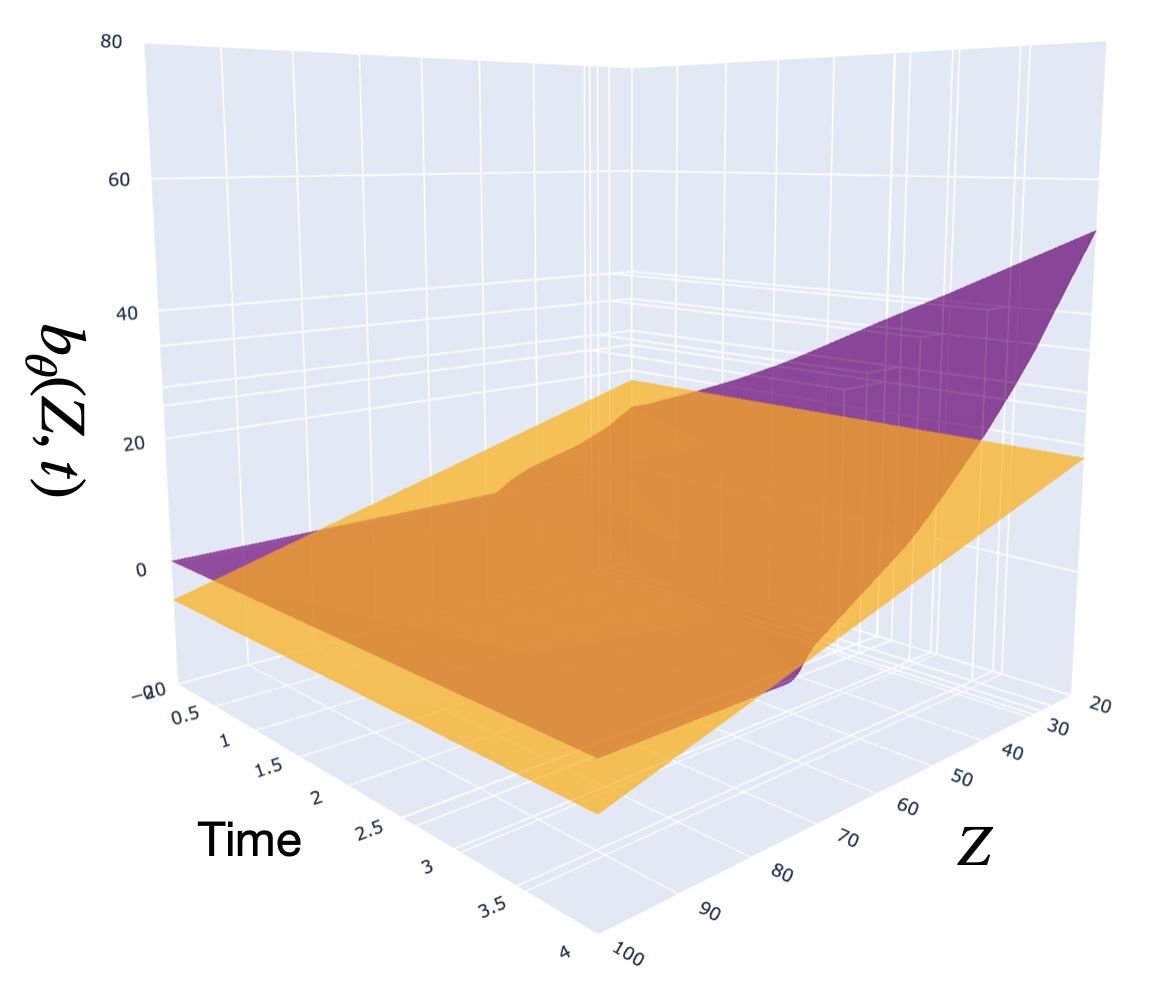
Figure 1: Comparing learned prior drift bθ(Zt,t) (purple) to the ground truth drift b~(Zt,t).
Variational Inference and Amortization
The methodology reformulates nonparametric maximum likelihood estimation as the maximization of an evidence lower bound (ELBO). The variational posterior is parameterized by a neural drift correction uβ:
dZt=[bθ(Zt,t)+σ(Zt,t)uβ(Zt,t,T′,N0:T′)]dt+σ(Zt,t)dBt.
The ELBO possesses a closed-form structure with the KL term reducible to an explicit integral over the squared drift correction.
An amortized encoder architecture is constructed using DeepSets, mapping variable-length event sequences to posterior intensity paths by direct simulation of the drift-corrected SDE. This facilitates single forward-pass inference for new observations, replacing repeated MCMC runs and enabling scalability.
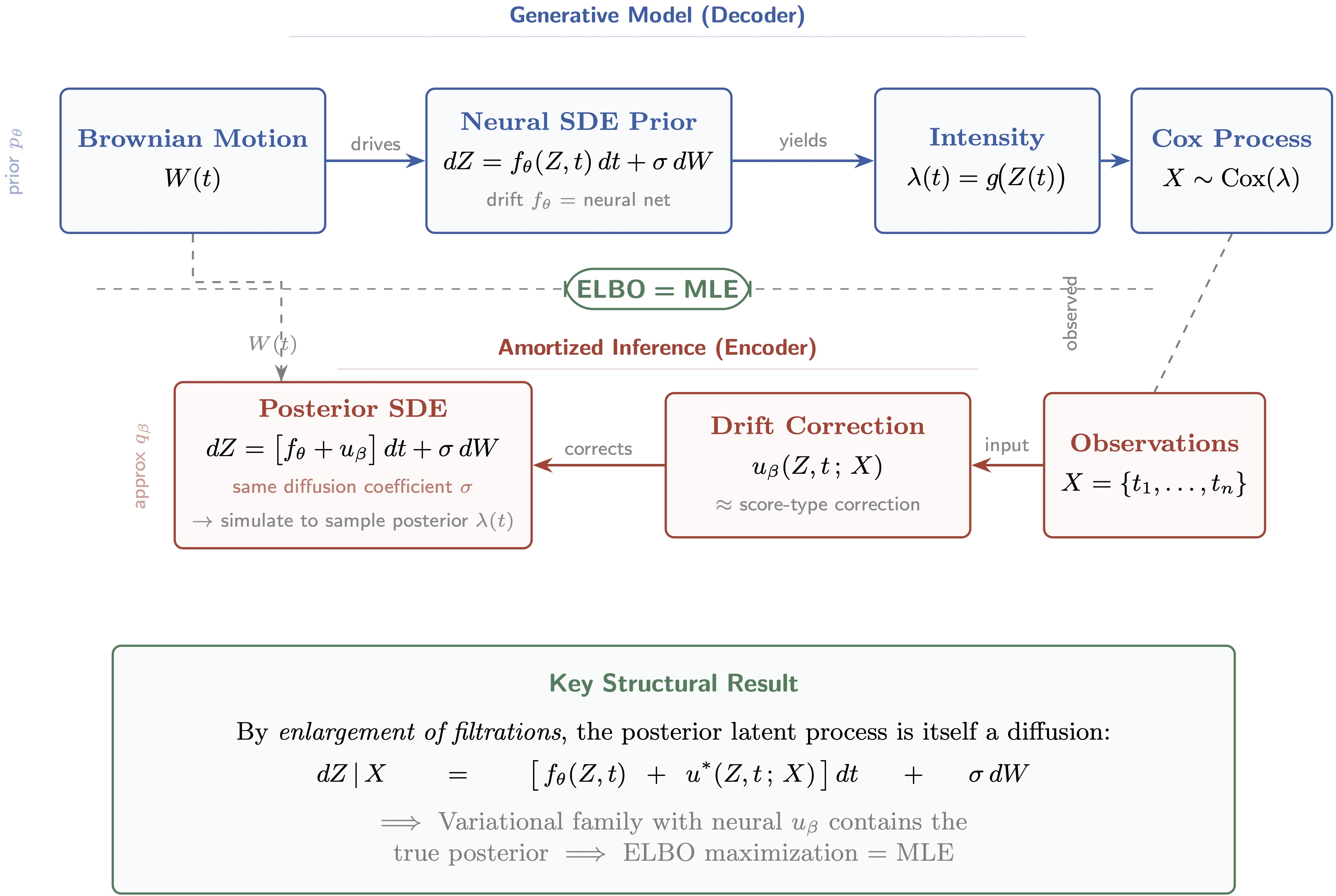
Figure 2: Amortized variational inference architecture for Neural Diffusion Intensity Models.
Empirical Results: Prior Recovery and Posterior Characterization
Synthetic experiments employ the Cox-Ingersoll-Ross (CIR) model to validate prior and posterior recovery. The learned neural drift bθ captures relevant features of the CIR drift, and generative samples closely match ground-truth distributions in terms of empirical mean and variance.
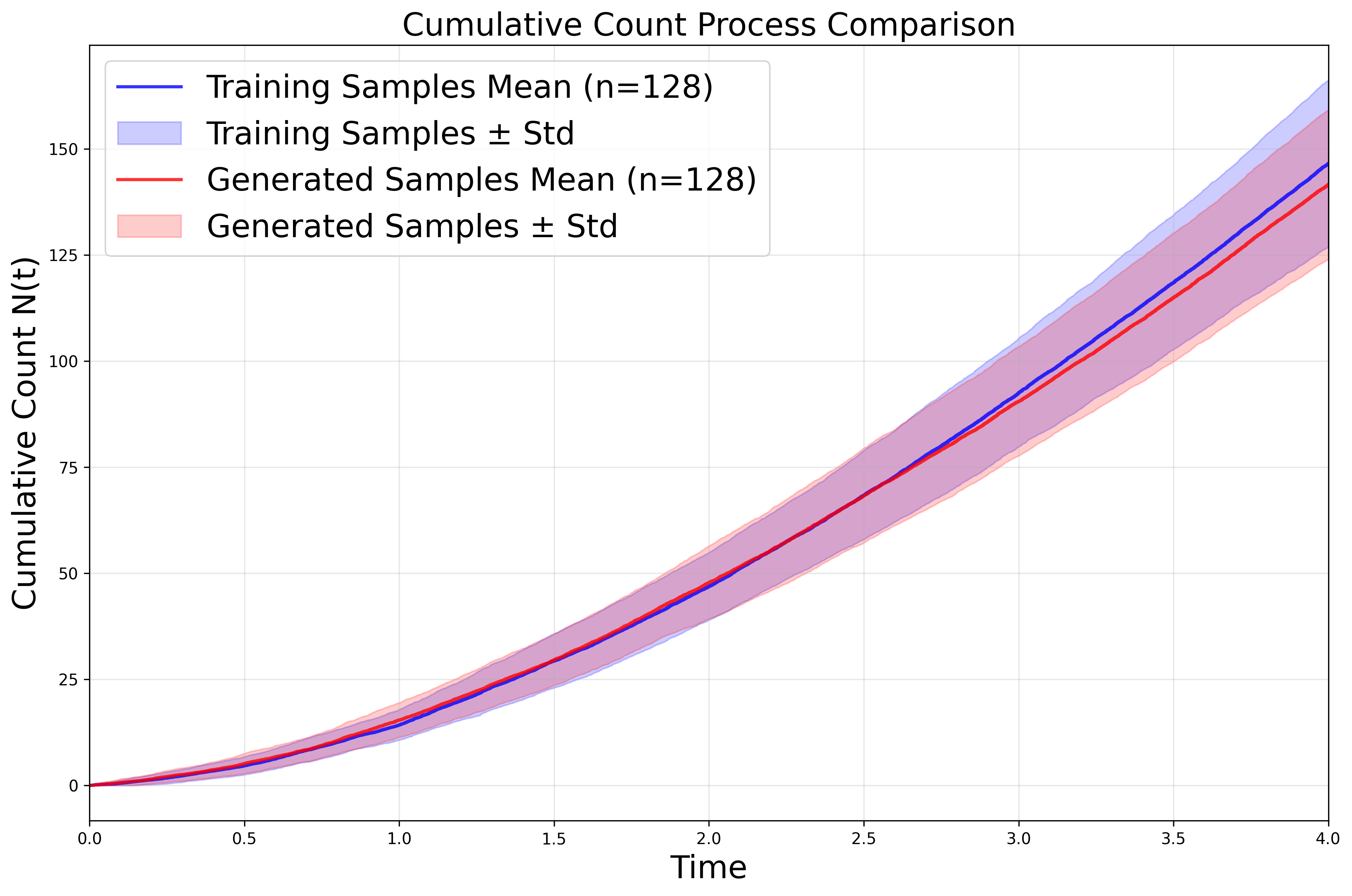
Figure 3: The learned data samples (red) compared to the true data samples (blue).
Posterior inference is rigorously compared against high-fidelity MCMC, demonstrating that the amortized approach accurately tracks the true posterior even in outlier cases, with significant computational efficiency gains.
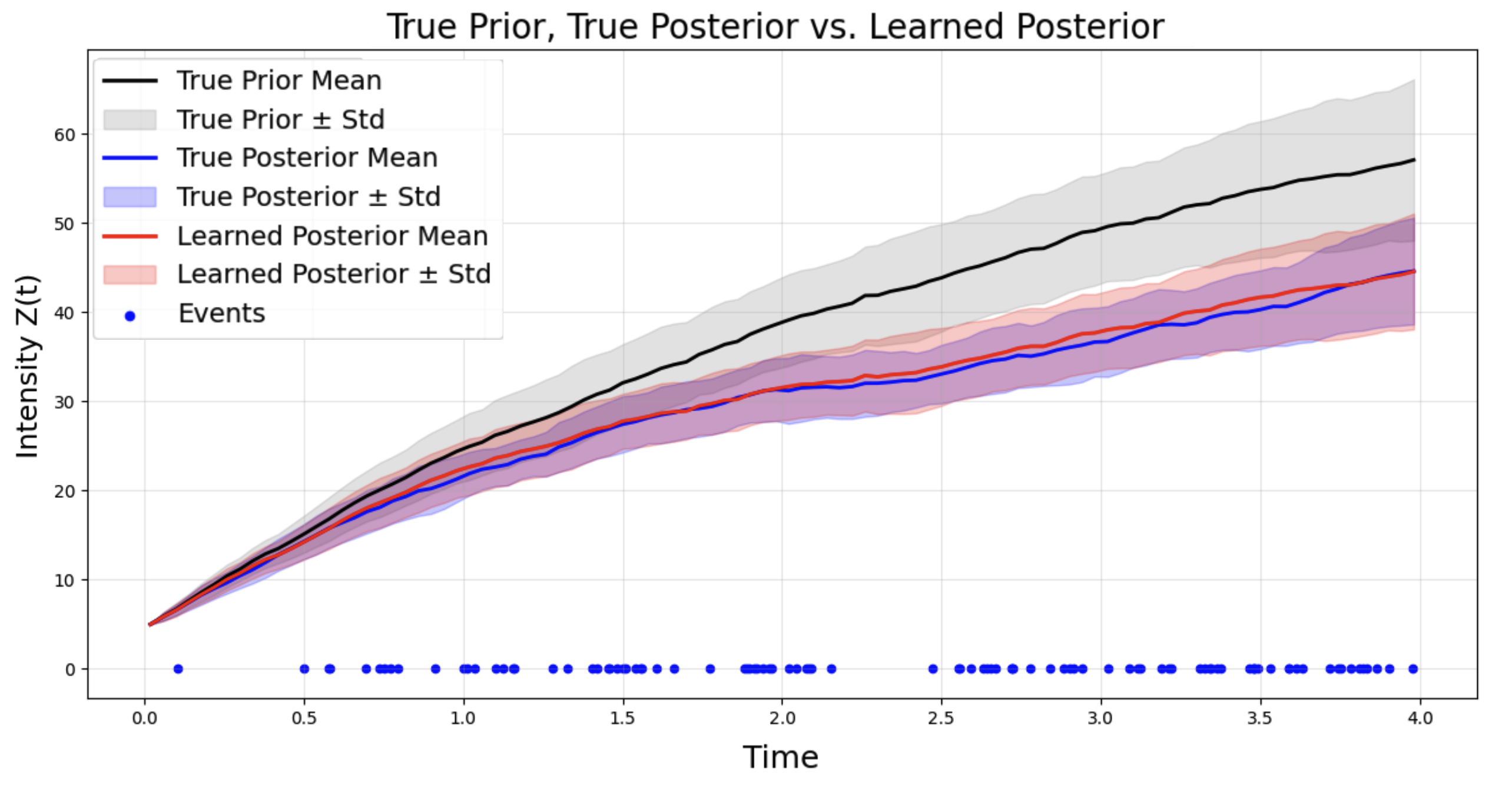
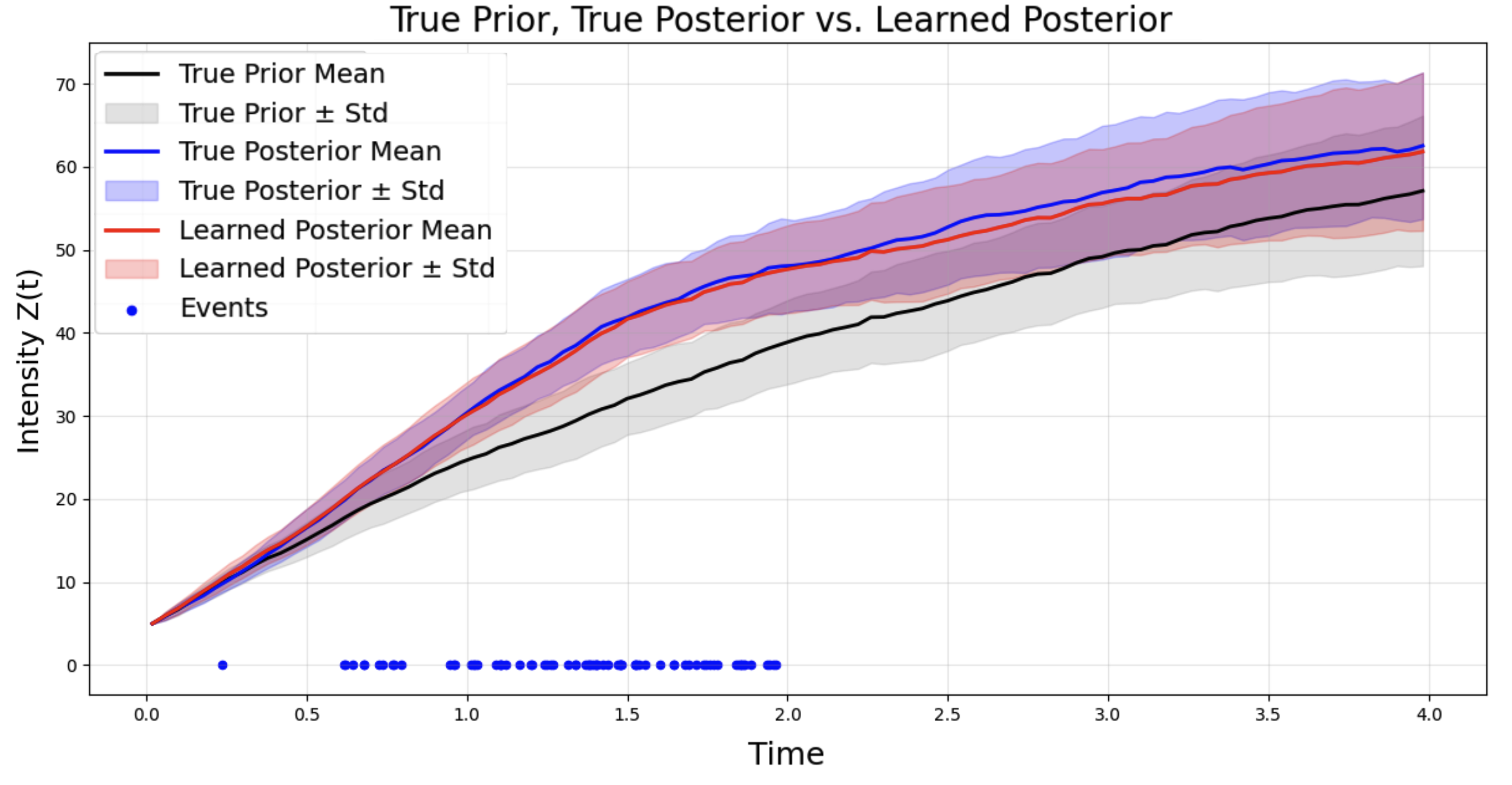
Figure 4: Posterior Inference with complete data N0:T.
Robustness to overfitting is assessed via Wasserstein distances—increasing training sample size eliminates train-test discrepancy, confirming generalization of the amortized correction.
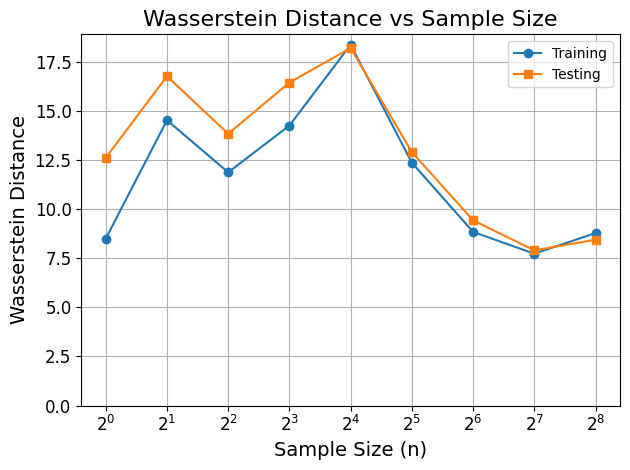
Figure 5: Train vs. test Wasserstein distance between amortized posterior samples and high-fidelity MCMC posterior samples as a function of the training sample size n.
Comparison with Expectation-Maximization and Practical Implications
Against an EM baseline, the variational method attains comparable or superior prior quality (as measured by pathwise L2 deviation) within an equivalent computational budget. More critically, posterior inference for amortized models is one to two orders of magnitude faster than MCMC, especially for partial-observation scenarios.
Real-World Data: U.S. Bank Call Center
Application to a large-scale call center dataset demonstrates that neural diffusion intensity models capture key patterns and overdispersion in arrival statistics, with strong agreement in mean trends. However, modeling flexibility in the diffusion coefficient is necessary to improve variance matching—suggesting future refinements in neural parameterization.
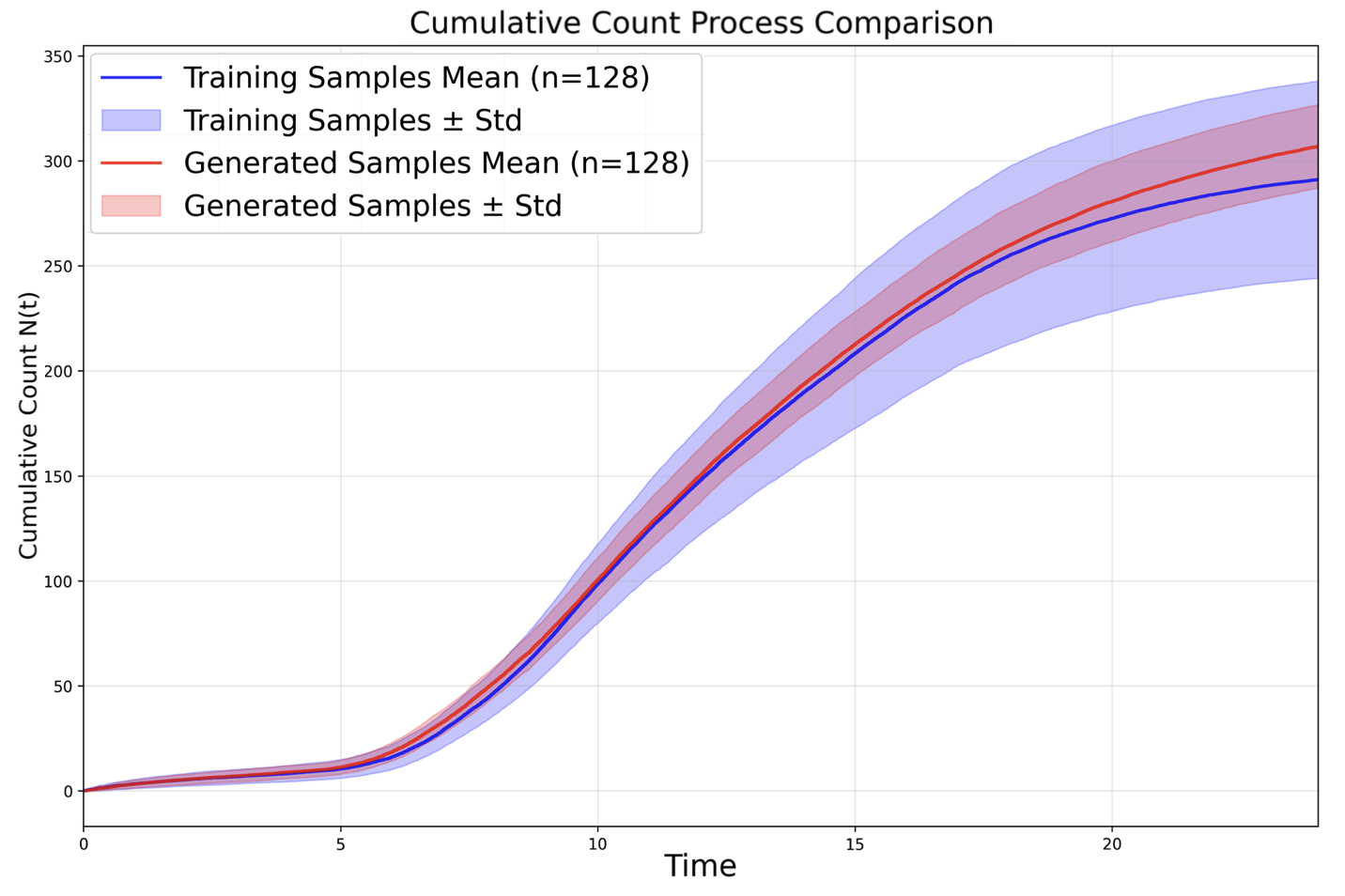
Figure 6: The learned data samples (red) compared to the true data samples (blue).
Overdispersion: Theoretical and Practical Consequences
Analysis of empirical variance curves showcases nonlinear growth characteristic of Cox processes, with downstream effects on queue length variability. Non-intensity-based models are insufficient to represent such heterogeneity, emphasizing the necessity of stochastic intensity modeling.
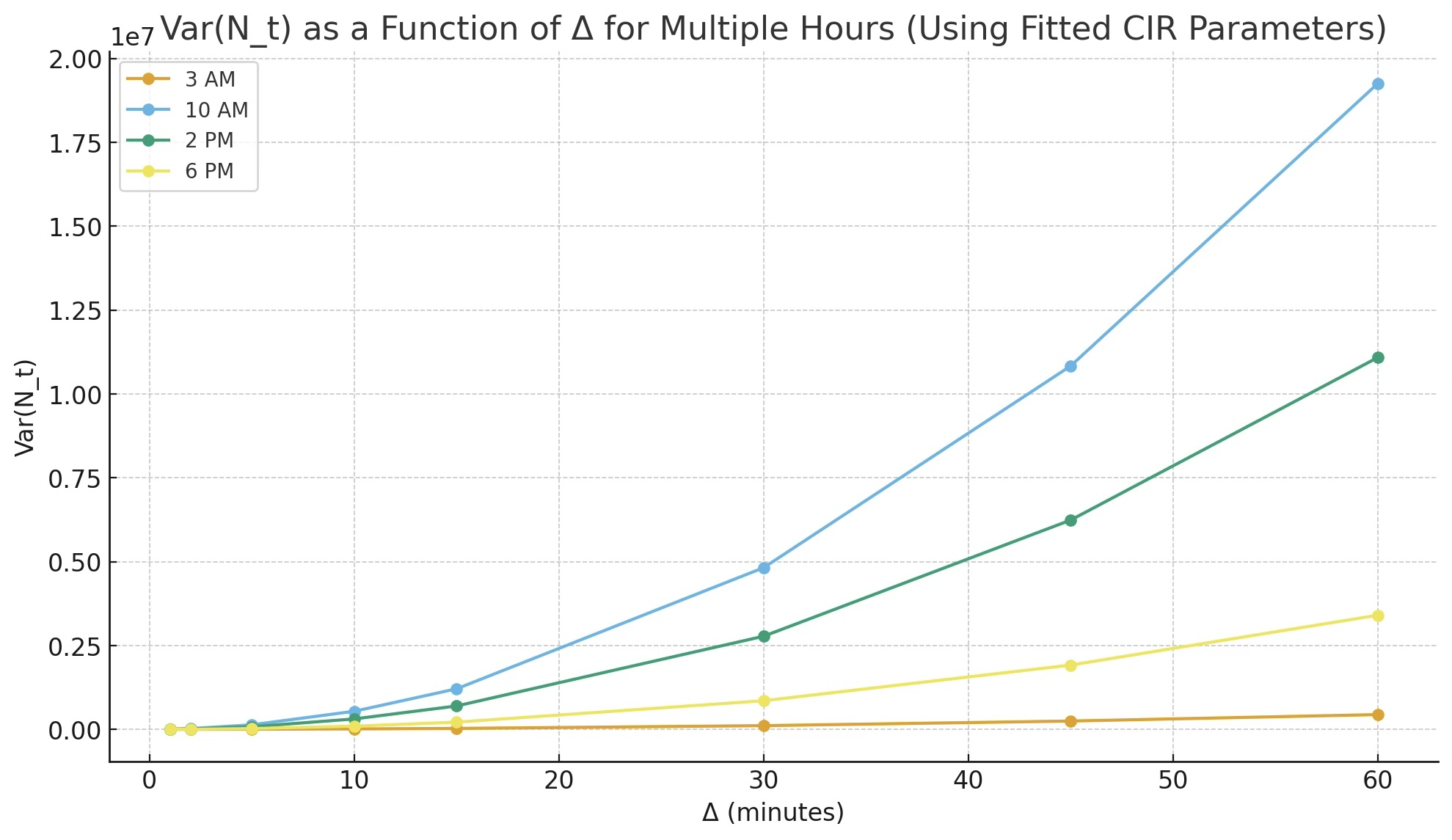
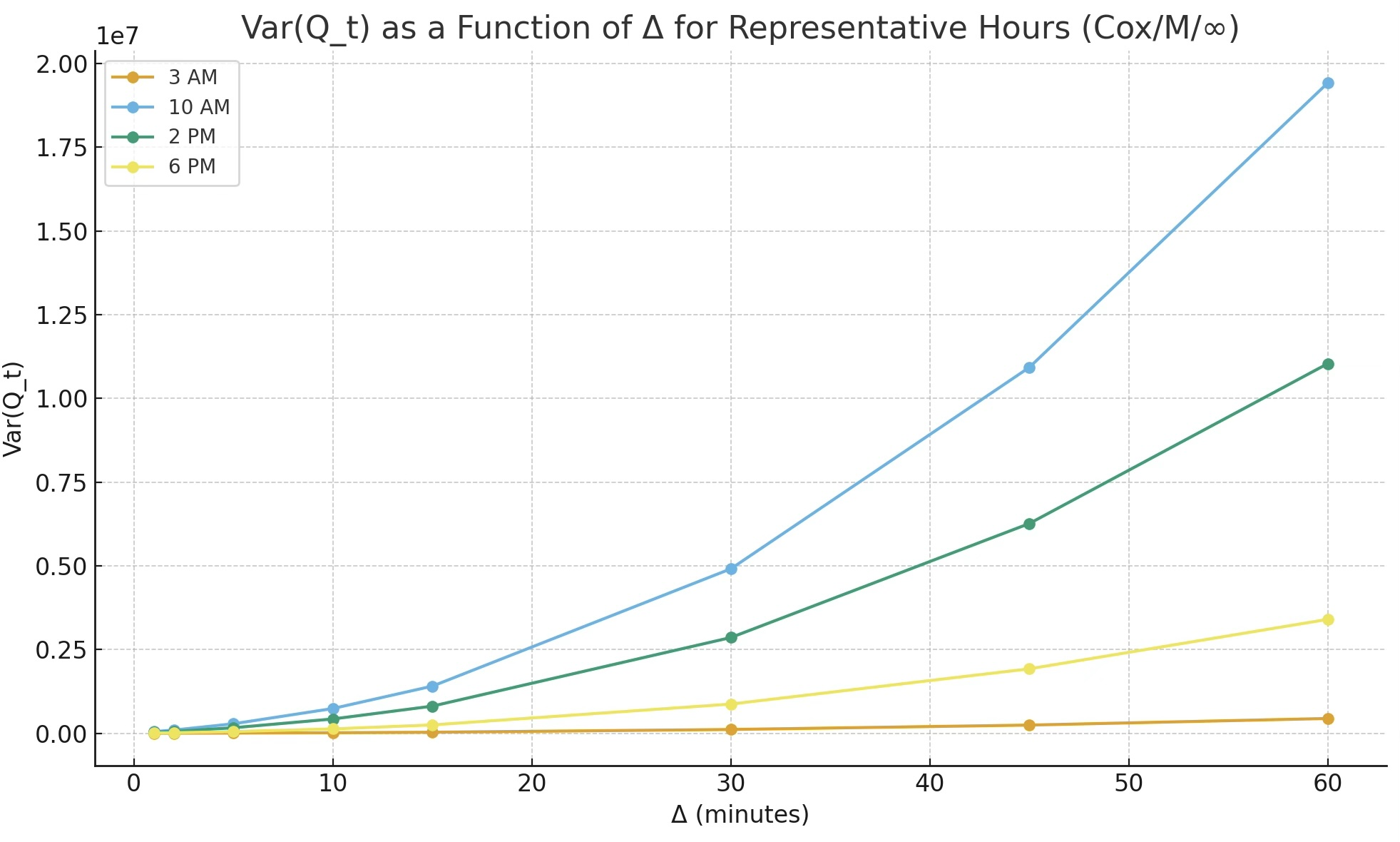
Figure 7: Variance of event counts as a function of Δ, with CIR intensity model.
Conclusion
This work advances Cox process modeling by leveraging neural SDEs and variational inference. Enlargement of filtrations yields explicit structural understanding of the posterior, enabling rigorous amortization and elimination of variational gaps. The framework substantially accelerates inference compared to classic MCMC-based EM approaches, and is empirically validated on synthetic and real-world data. These results extend beyond Cox processes and suggest broader applications for conditional diffusion models in complex event-driven systems. Future directions include enhancing parameterization of the diffusion coefficient and exploring extensions to multivariate and spatiotemporal point process data.
Reference: "Neural Diffusion Intensity Models for Point Process Data" (2602.24083)