- The paper presents a structured framework that integrates live coding, automated feedback, and iterative practice as core teaching strategies.
- It emphasizes immediate engagement with authentic datasets by transitioning from simplified examples to domain-relevant projects.
- This approach fosters psychological safety and inclusivity, enabling scalable data science education with improved learning outcomes.
Ten Simple Rules for Teaching Data Science: A Technical Assessment
Core Principles and Pedagogical Philosophy
The paper "Ten simple rules for teaching data science" (2602.02874) systematically delineates a set of instructional guidelines developed and iteratively refined in active data science classrooms. These rules are rooted in evidence-based pedagogical strategies borrowed from computer science and statistics education, situated within the unique interdisciplinary requirements and cognitive demands of data science.
The authors explicitly prioritize immediate engagement through authentic data analysis tasks, emphasizing that learners should begin manipulating real datasets and producing visualizations in their first session, a design that intentionally avoids the deferral of practical relevance until technical foundations are established.
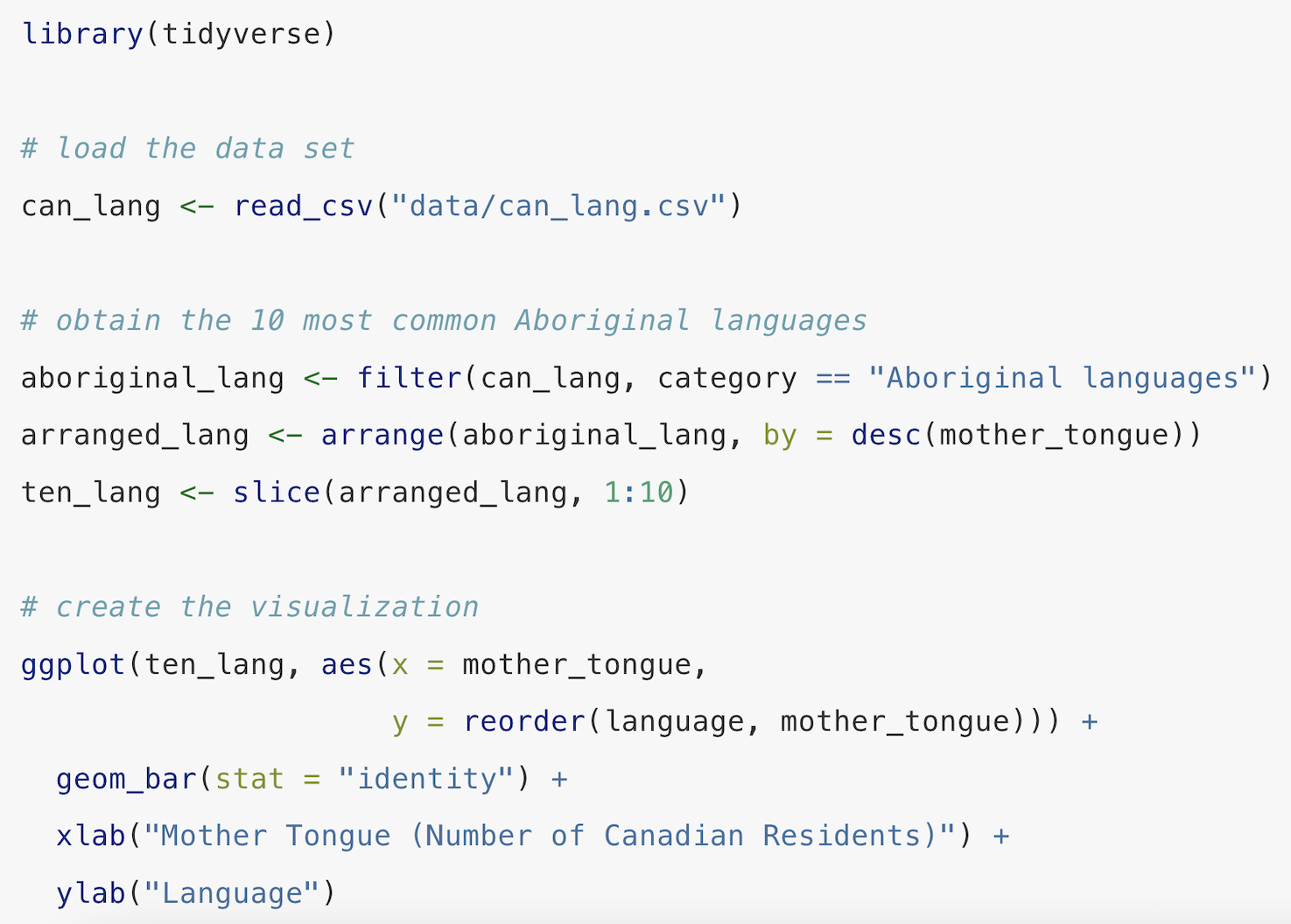
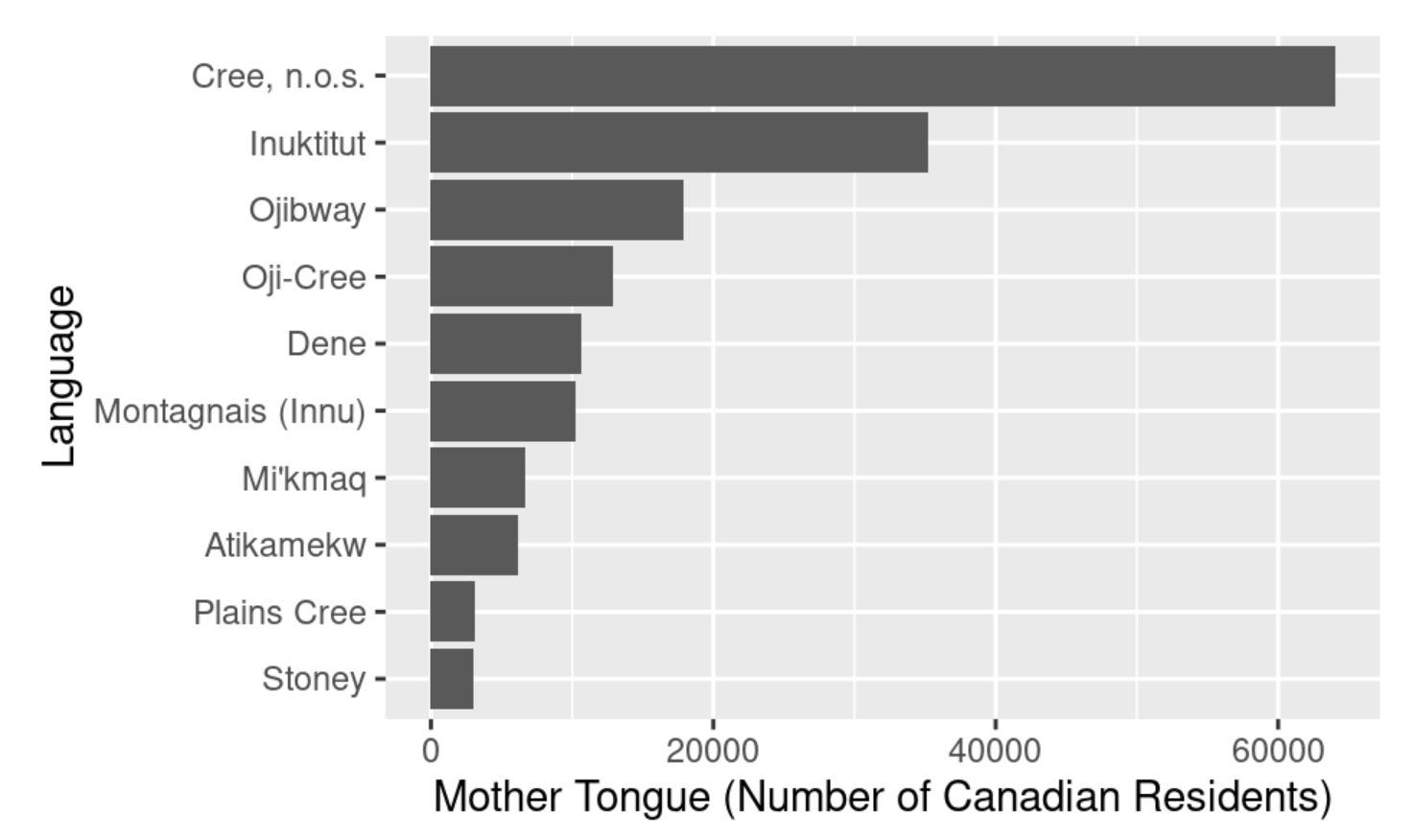
Figure 1: Example code from an introductory exercise that immediately immerses students in data analysis from the outset.
The outlined principles further underscore the importance of participatory live coding, substantial iterative practice with rapid feedback, and a progression from tractable toy examples to accessible, domain-relevant real data. The methodology actively foregrounds inclusivity, cultural/historical contextualization, and collaborative learning as scaffolds for both cognitive gain and affective engagement.
Rule Synthesis and Technical Rationale
Experiential Learning and Practice
The advocacy for learning by doing is operationalized through participatory live coding in the classroom, ensuring students are exposed not only to technical solutions but also to instructor workflow, error-handling, and debugging strategies. The participatory aspect slows the instructional pace and enables modeling of best practices. The repetition principle, anchored in formative assessment literature, is reinforced by leveraging automated testing frameworks (e.g., learnr, NBgrader, Otter Grader), which provide actionable, granular feedback with minimal latency.
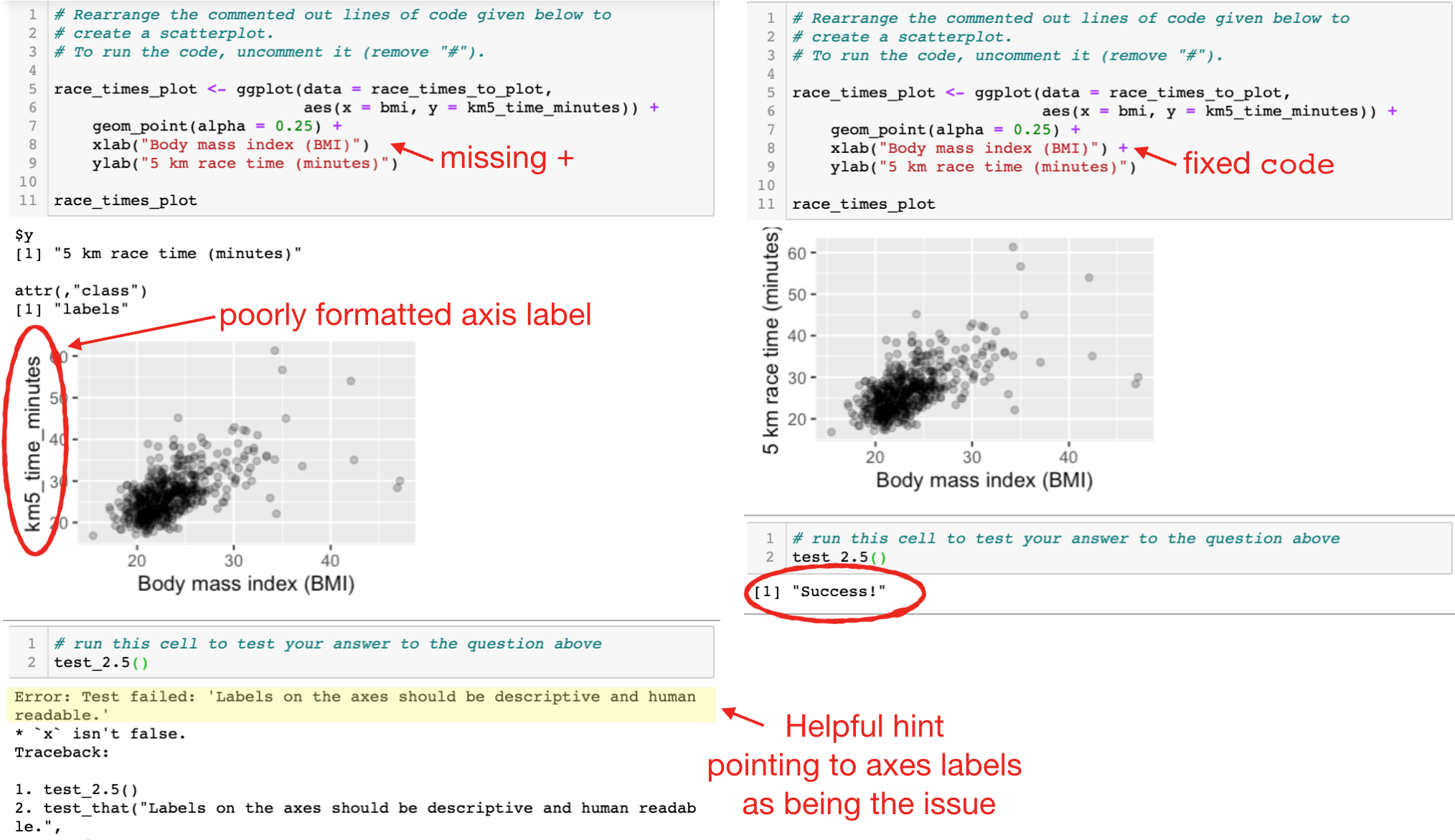
Figure 2: Example of automated software test feedback that provides immediate formative insights to students during coding tasks.
Data Complexity and Accessibility
Pedagogically, the staged introduction of analytical tools begins with toy datasets to minimize extraneous cognitive load. This scaffolding strategy transitions to real, richly contextualized datasets only after foundational competence is achieved. However, explicit caution is advised to avoid expert blind spots by selecting data that is simultaneously non-trivial but accessible—ensuring that domain-specific complexity does not occlude learning objectives focused on data analytic techniques. Local relevance (e.g., census, public policy data) and current events are invoked as plausible engagement levers.
Sociocultural Integration and Safety
The necessity for a psychologically safe learning environment is rigorously defended, with explicit institutionalization of codes of conduct, transparent reporting mechanisms, and prompt response protocols. Peer learning and collaborative project-based assignments are institutionalized, and instructors are encouraged to scaffold conflict management, feedback, and teamwork skills. Checklist workflows, typically adopted in high-reliability organizations, are imported into educational peer review to concretize quality standards and reduce oversight in group assessment.
Complete Workflow Exposure
Students are ultimately required to synthesize acquired skills through the completion of course projects that span the full data science lifecycle. These may be scoped (through fixed topics, data, or methods) to mitigate assessment complexity, especially at scale, but must ensure end-to-end engagement with messy, authentic data workflows (from acquisition to reporting), reflecting professional practice. The didactic sequence is thereby engineered such that foundational, technical, and collaborative skills are recursively integrated across increasing scales of complexity.
Numerical and Contrarian Claims
The paper makes several bold recommendations—most notably, that substantive analytic engagement should not be deferred and should occur on the first day of instruction. This directly contradicts curricula that insist foundational technical skills must precede practical application. The authors also prescribe "tons and tons" of practice, quantified by an example in which file I/O is practiced over 15 times in a single course, reflecting an explicitly high intensity iterative design.
The advocacy for immediate, automated feedback is claimed to meaningfully impact learning outcomes, and the argument is extended beyond data science into generalizable domains, citing evidence from both animal learning and human cognitive studies. The authors unequivocally assert that psychological safety is a prerequisite for effective learning, arguing for its explicit codification and continuous reinforcement.
Practical and Theoretical Implications
Methodologically, these rules constitute a reproducible design pattern for data science curricula, with ramifications for program-level learning outcome optimization and instructor training. The explicit integration of live coding, automated feedback, collaborative work, and project-based progression anticipates and addresses common technical and socio-emotional failure points in STEM education. The recommendations for historically and culturally situated instruction support improved comprehension of software toolchains and reduced student frustration—itself a nontrivial factor in retention and performance.
From a practical perspective, the guidance enhances scalability via automation (for feedback and grading), while checklist-enabled peer review and scoped project design offer solutions for managing assessment overhead in large cohorts. In terms of theory, the approach extends experiential constructivist models to computational disciplines, strengthening the alignment of technical skills, workflow reasoning, teamwork, and critical reflective practice.
Future Directions
As data science continues to integrate heterogeneous methods spanning machine learning, cloud computing, and domain-specific pipelines, the ten rules presented will require dynamic adaptation to evolving toolchains and workforce requirements. Notably, extensions to topics such as ethical AI, data privacy, and responsible computing could be naturally incorporated within this framework. Additional research is warranted into the longitudinal impacts of these interventions on workforce readiness and diversity, as well as the effectiveness of these strategies when mediated by AI-driven instructional supports, such as intelligent tutoring systems and adaptive feedback engines.
Conclusion
The paper presents a granular, technical framework for teaching data science, constructed from sustained practical experience and pedagogical theory. By foregrounding experiential engagement, iterative practice with automated feedback, inclusivity, accessible data context, and comprehensive workflow projects, it delivers a structured yet flexible basis for curricular innovation in postsecondary data science education. These rules offer actionable guidance for educators committed to developing both technical competence and collaborative capacity in the next generation of data scientists.

