Revisiting p-$^{11}$B Fusion: Updated Cross-sections, Reactivity, and Energy Balance
Abstract: Recent experimental progress has substantially improved the available cross-section data for the p-${11}$B fusion reaction, particularly in energy regions that previously lacked direct measurements. In this study, we develop a high-precision analytical parameterization of the p-${11}$B reaction cross-section over the 0--10 MeV energy range, incorporating the new experimental data into a continuous and numerically efficient representation. Using this parameterization, we evaluate the thermonuclear reactivity of the p-${11}$B reaction and examine the effects of the dominant resonance at 0.6 MeV and a newly observed resonance around 4.7 MeV. Furthermore, we assess the energy balance by analyzing the fusion power density and the electron bremsstrahlung power density. Our results indicate that p-${11}$B fusion is not precluded by bremsstrahlung constraints when contemporary cross-section data and self-consistent thermal modeling are employed.
Paper Prompts
Sign up for free to create and run prompts on this paper using GPT-5.
Top Community Prompts
Explain it Like I'm 14
A simple explanation of “Revisiting p–11B Fusion: Updated Cross-sections, Reactivity, and Energy Balance”
What is this paper about?
This paper looks at a promising kind of nuclear fusion called proton–boron-11 (p–11B) fusion. Unlike the more common deuterium–tritium fusion, p–11B mostly makes harmless helium particles and very few neutrons. That could mean cleaner, safer reactors. The authors use new, better measurements to update how likely this reaction is to happen, then ask a big question: can p–11B fusion make more power than it loses as light (a kind of X-ray-like glow called bremsstrahlung) in a hot plasma?
What questions are the scientists trying to answer?
- How can we build a more accurate, easy-to-use formula for the chance that p–11B fusion happens at different energies?
- How do “sweet spots” in the reaction (called resonances), especially a well-known one around 0.6 MeV and a newly measured one near 4.7 MeV, change the overall reaction rate in a hot plasma?
- When we compare fusion power made versus power lost as light, is p–11B fusion still worth pursuing?
How did they study it? (Methods explained simply)
- Measuring chances: In fusion, the “cross-section” tells you the chance two particles fuse—like the odds two speeding cars actually collide. It depends on how fast they’re going (their energy).
- Getting past the “electric hill”: Protons and boron both have positive charge and push each other away. At low energy it’s very hard to get close enough to fuse—like trying to roll a ball over a hill. Scientists factor out this “hill” effect with something called the astrophysical S-factor. Think of S-factor as the “pure” nuclear part of the fusion chance, with the hill taken into account separately.
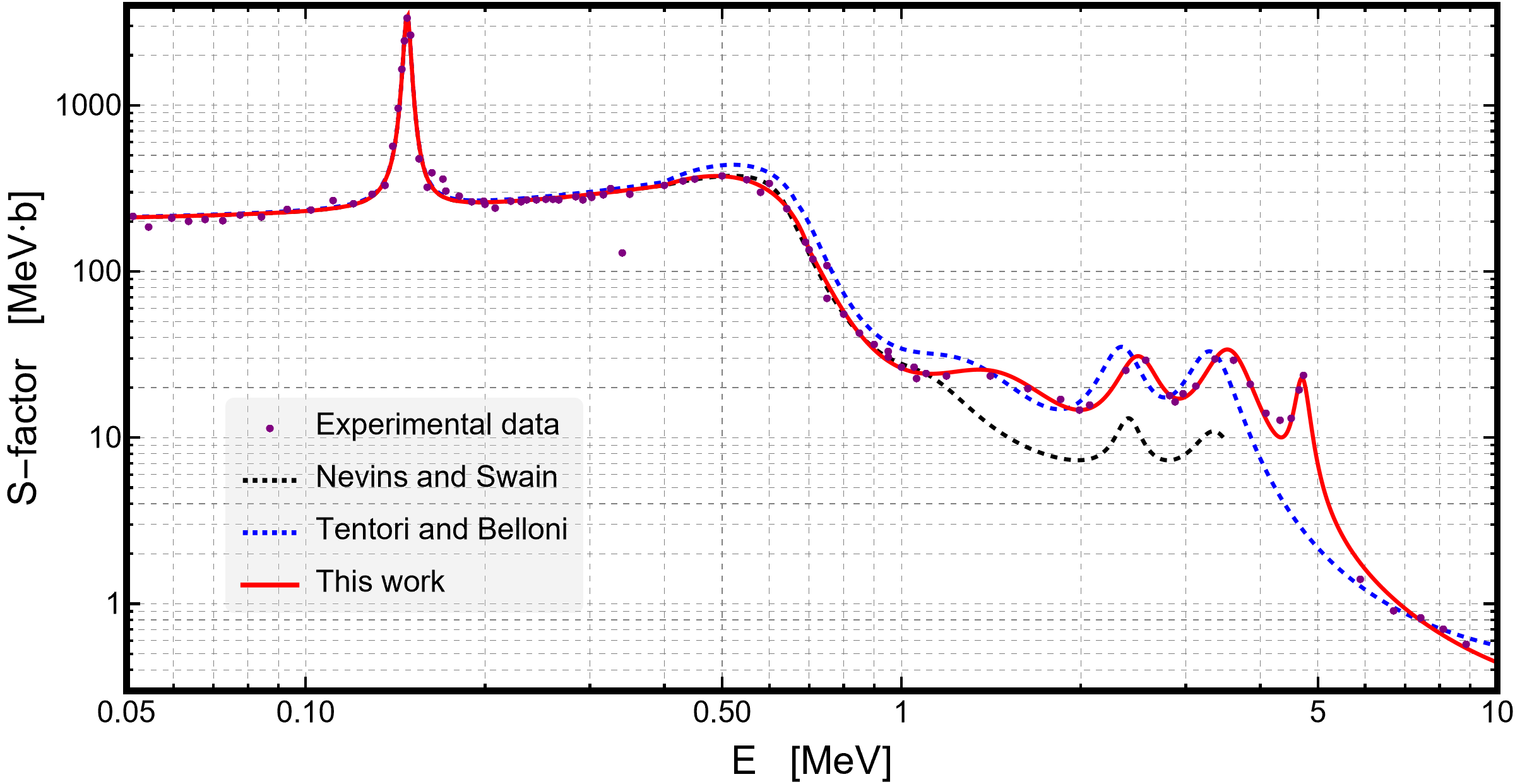
- Fitting the data: The authors combined old and new lab data and built a smooth formula for the S-factor from 0 to 10 MeV (a MeV is just a unit of energy). They used:
- Older precise data at low energies,
- New high-precision data that fill in gaps and reveal a new “bump” (resonance) around 4.7 MeV,
- Higher-energy data showing the reaction falls off at big energies.
- They modeled the resonances as bell-shaped peaks (standard in nuclear physics) and stitched the energy ranges together so everything matches smoothly.
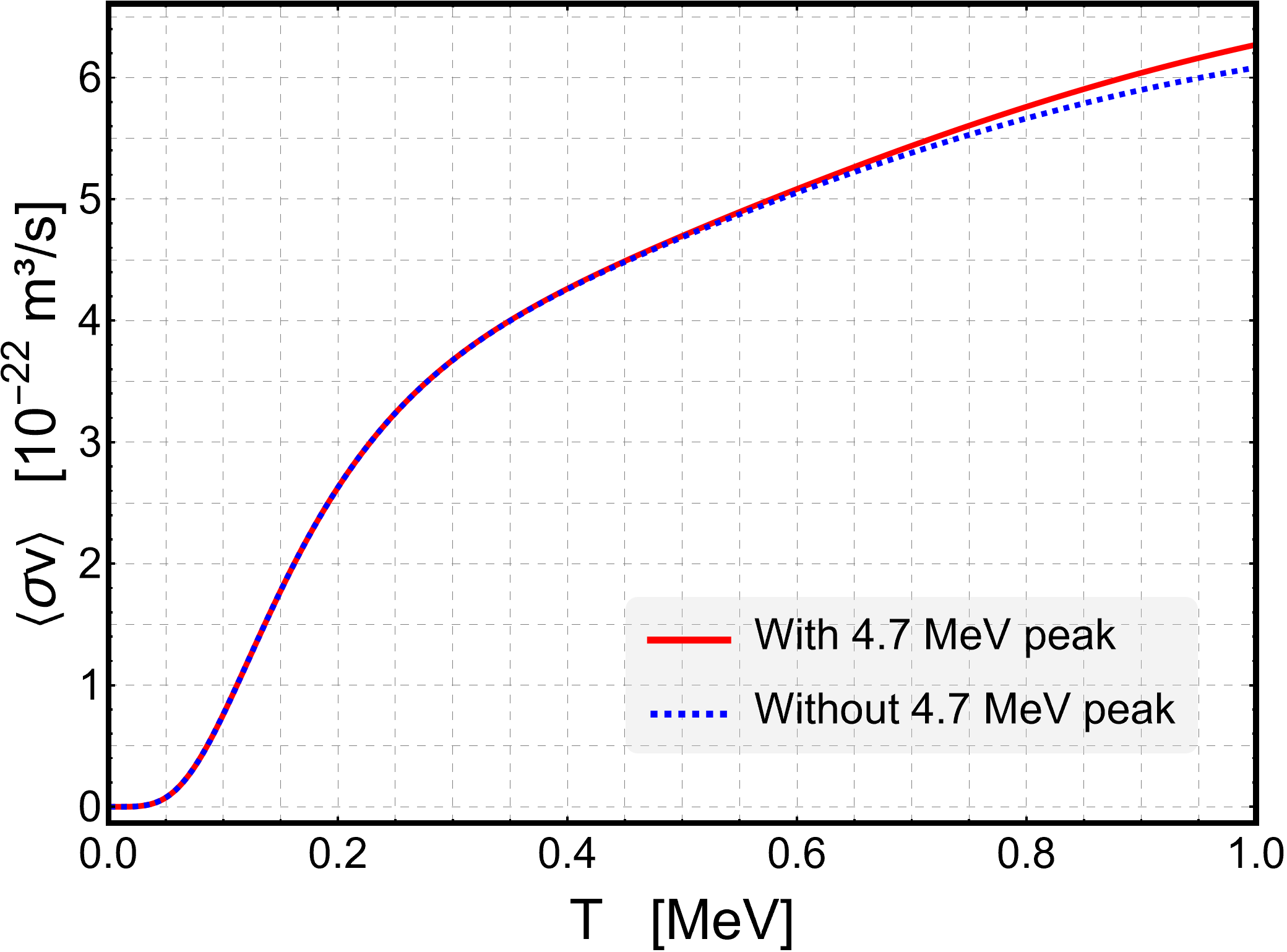
- From chance to reaction rate: In a hot plasma, particles have many speeds—like water molecules in boiling soup. The “reactivity” is the overall fusion rate after averaging over all those speeds. The authors computed this average using their new fit.
- Power made vs. power lost:
- Fusion power density: how much power per volume you can make from fusion, based on the reactivity and the energy released (8.7 MeV per p–11B reaction).
- Bremsstrahlung losses: electrons whizzing past heavy ions (like boron) get deflected and radiate light (like X-rays). That’s a big energy leak in hot plasmas with heavy ions.
- A key detail: electrons don’t have to be the same temperature as ions. If electrons are cooler than ions, they radiate much less. The authors calculate the electron temperature self-consistently, by balancing how electrons gain heat (from ions) with how they lose it (as light).
What did they find, and why does it matter?
- Better, up-to-date fusion “odds”: Their new formula matches the latest measurements very well, especially capturing a newly observed resonance near 4.7 MeV.
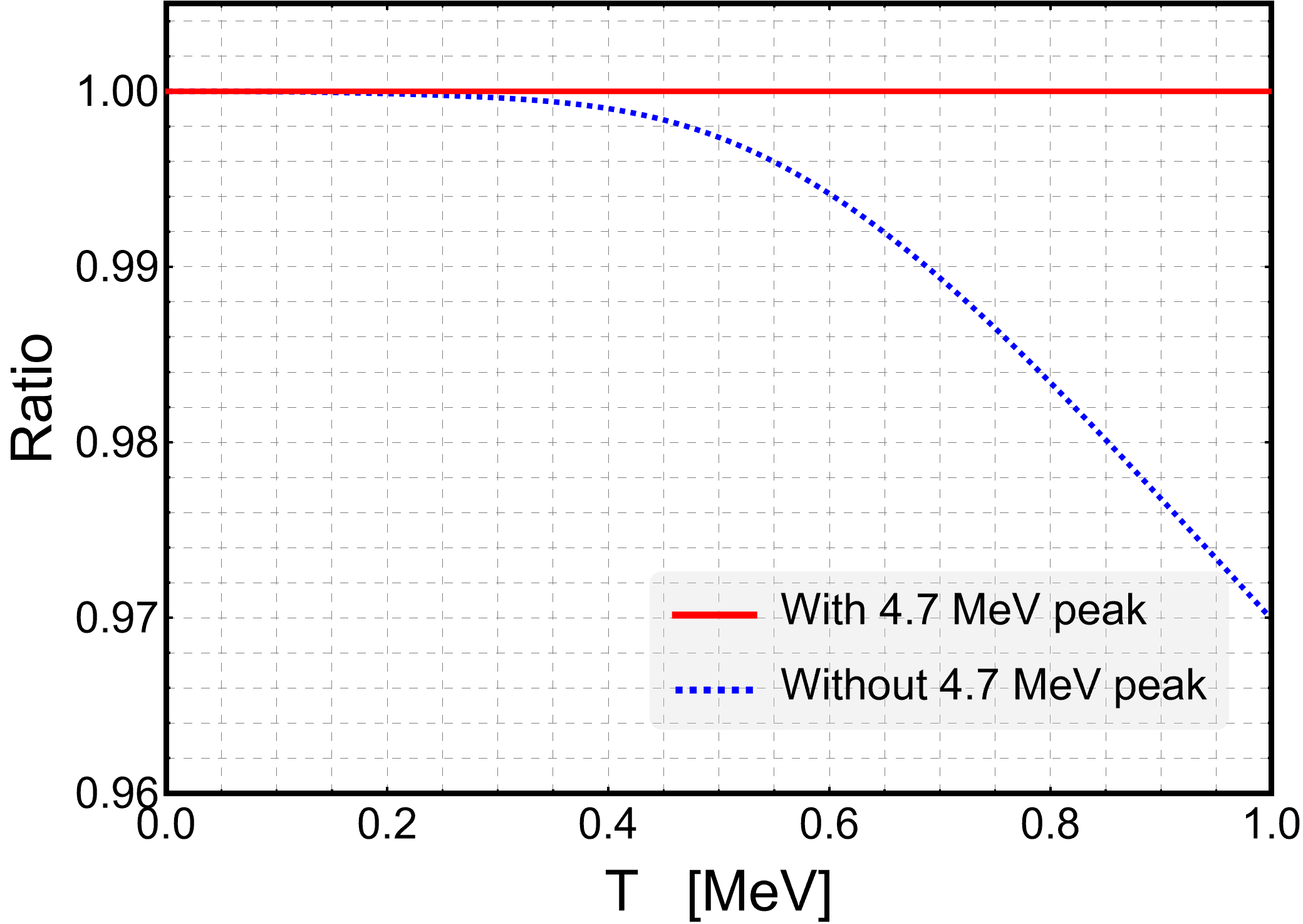
- The 4.7 MeV bump helps only at very high temperatures: This new resonance barely affects the reaction rate unless the ions are extremely hot (above about 0.4 MeV). That’s hotter than the main temperature range where p–11B might work best.
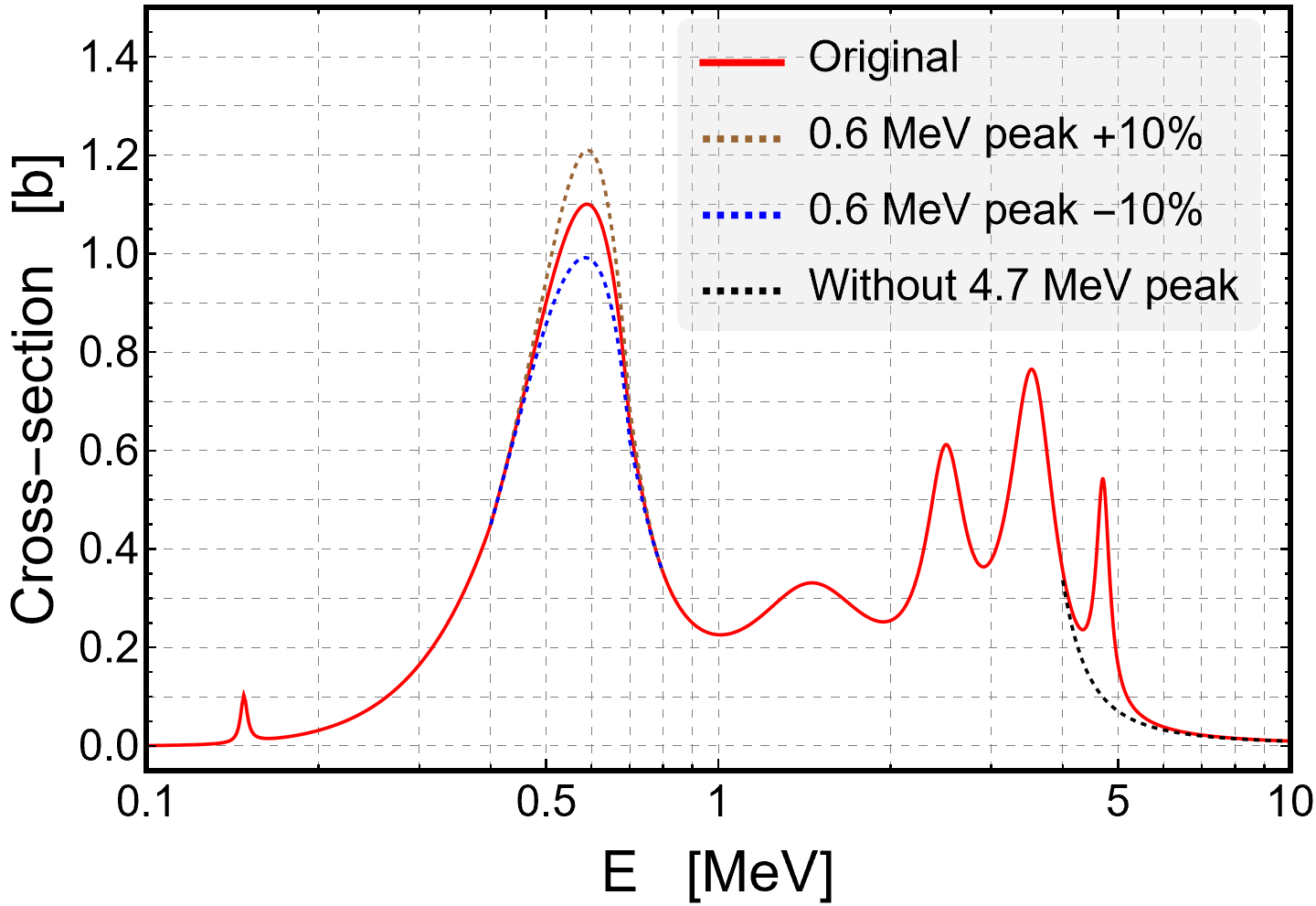
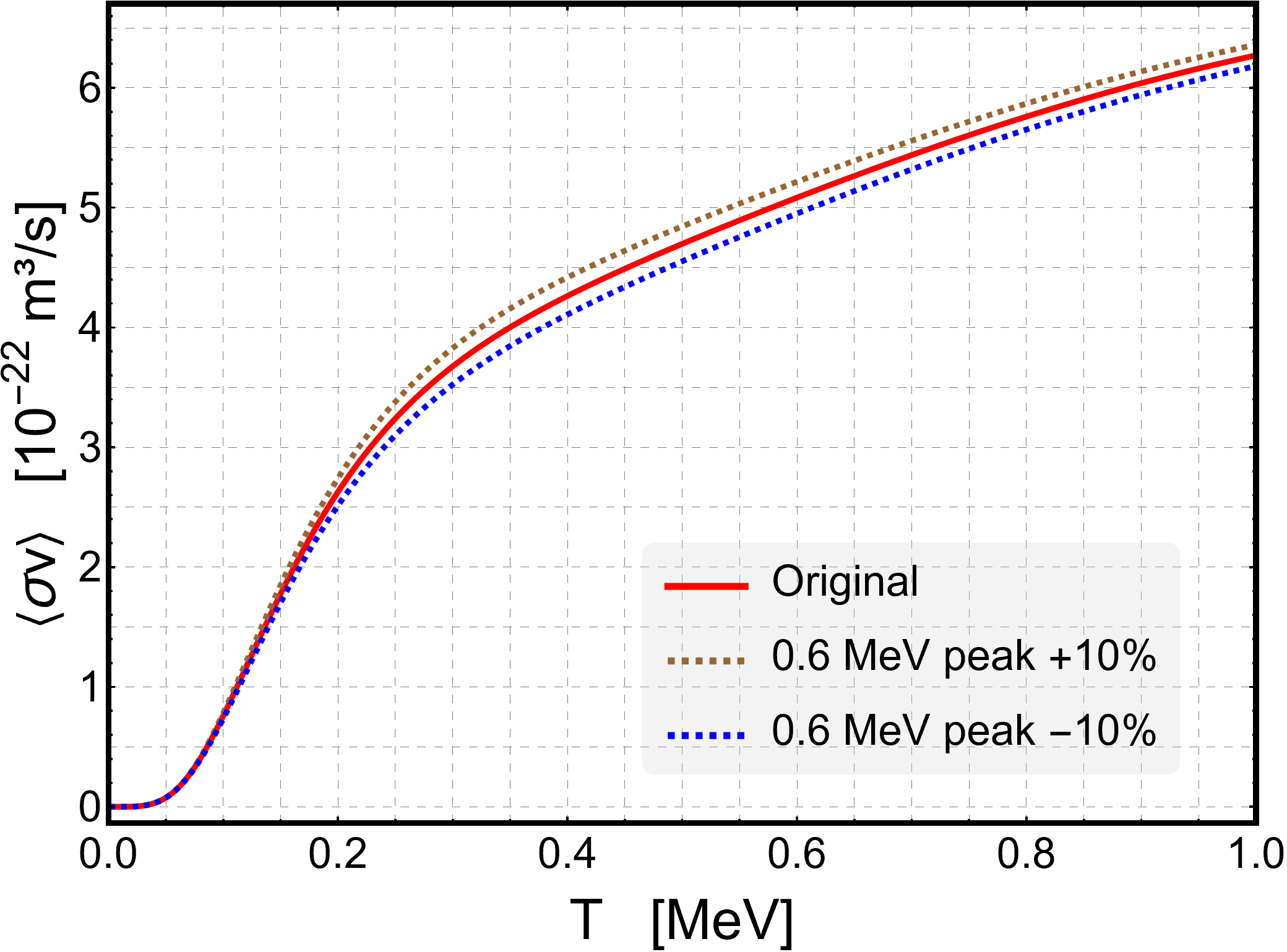
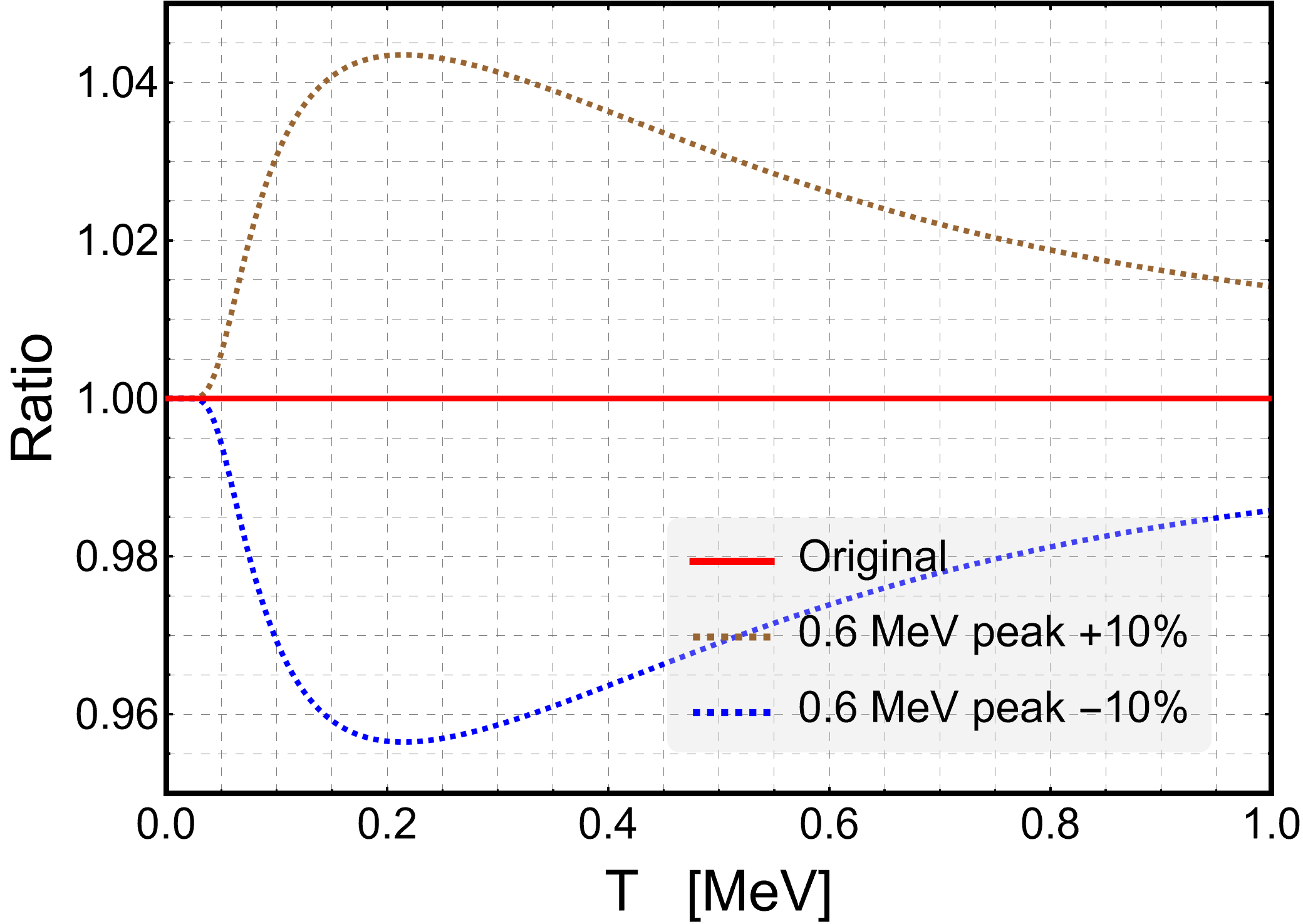
- The 0.6 MeV resonance is the star: Small changes (±10%) in the strength of the big 0.6 MeV resonance cause noticeable changes (a few percent) in the overall reaction rate across the most relevant temperatures. So, getting this resonance exactly right is very important.
- Energy balance:
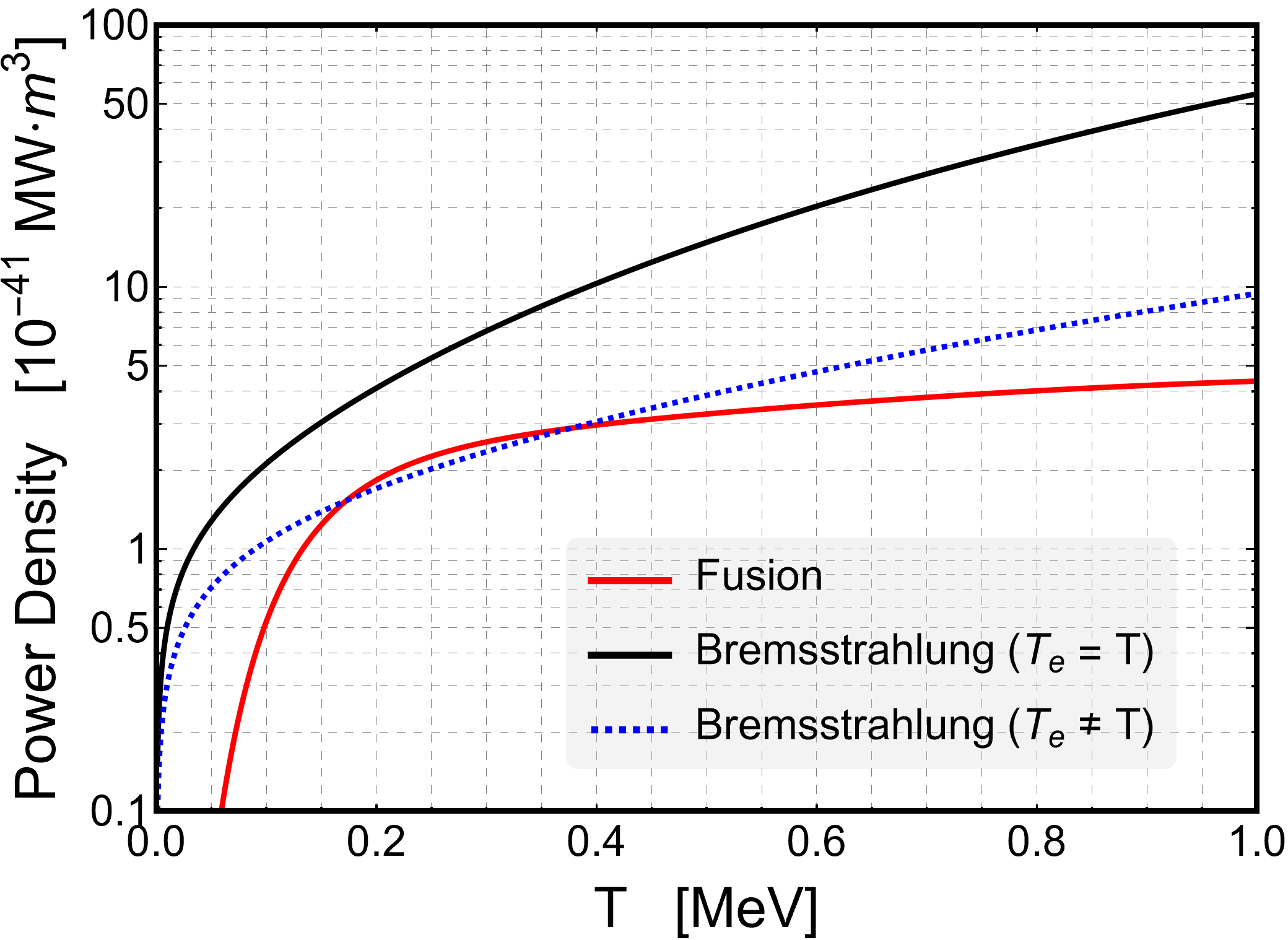
- If you force electrons and ions to have the same temperature, bremsstrahlung losses beat fusion power everywhere—bad news.
- But if you let the electron temperature be set naturally (by balancing heating from ions and radiative cooling), electrons stay cooler, and losses drop a lot.
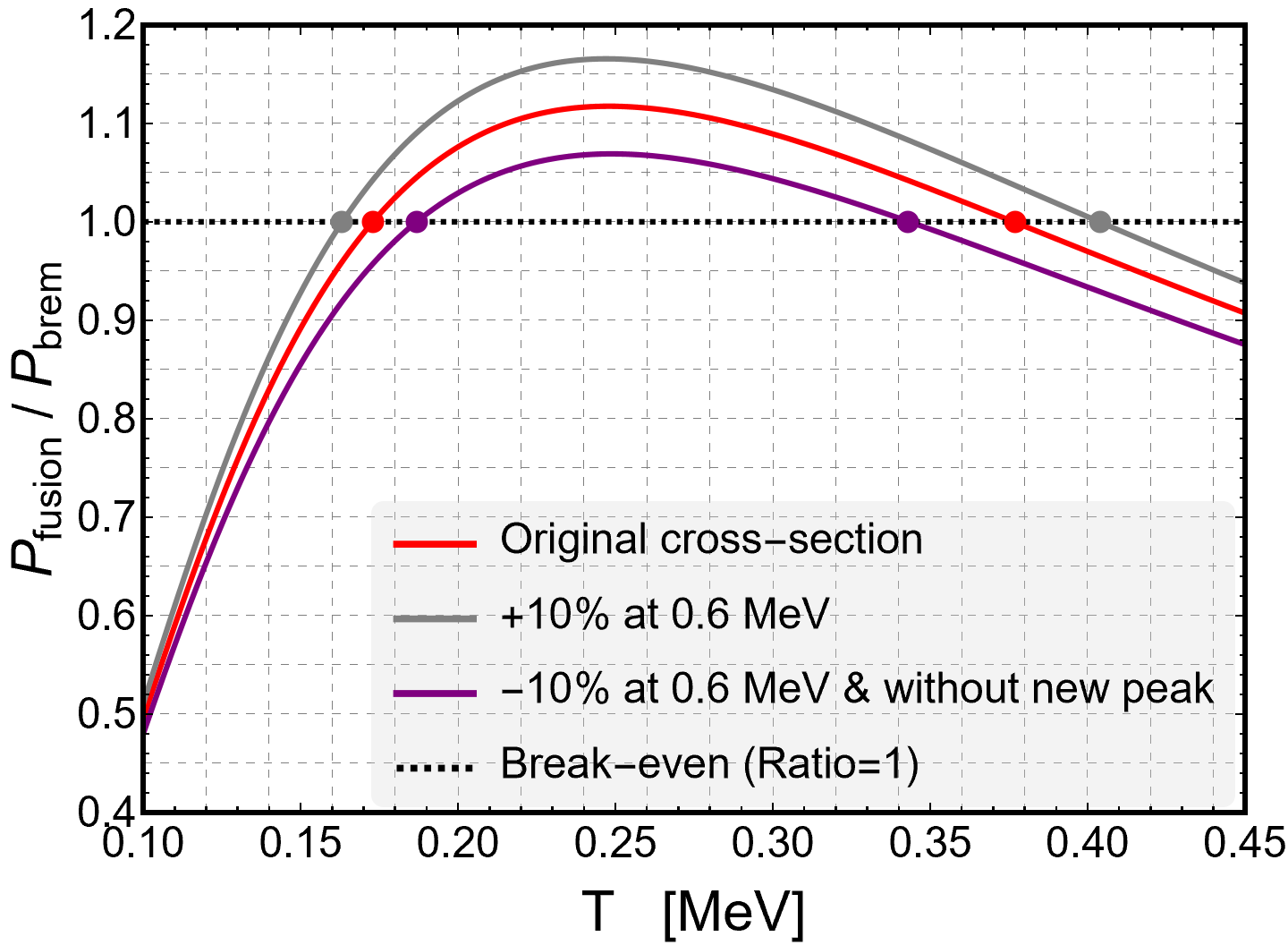
- In that realistic case, there’s a temperature window (around 0.17 to 0.38 MeV ion temperature) where fusion power can exceed bremsstrahlung losses. This remains true even if you make conservative assumptions (like shrinking the 0.6 MeV resonance and ignoring the 4.7 MeV one).
- Why it matters: Many older arguments said p–11B fusion could never beat bremsstrahlung losses. With new data and a more realistic thermal model, this paper shows that p–11B is not ruled out by that problem.
What could this mean for the future?
- p–11B fusion still looks challenging but remains a serious candidate for cleaner fusion power, because it makes almost no troublesome neutrons.
- The path forward:
- Improve measurements of the 0.6 MeV resonance to shrink uncertainties.
- Design plasmas and reactors that keep electrons cooler than ions (which reduces light losses).
- Explore approaches that boost fusion rates without overheating electrons (for example, shaping the ion energy distribution).
- If these ideas pan out, p–11B could enable simpler reactors with fewer radioactive materials and possibly more direct ways to turn fusion energy into electricity.
Knowledge Gaps
Knowledge gaps, limitations, and open questions
The paper leaves the following concrete gaps and unresolved questions that future research could address:
- Independent confirmation and full characterization of the newly reported 4.7 MeV resonance (spin–parity, partial widths, interference with nearby states, decay channels), using multiple experimental techniques and fine energy steps (e.g., 4.5–4.9 MeV).
- Sparse and low-fidelity cross-section data in the 5–10 MeV range (noted by ): obtain higher-precision measurements with well-controlled absolute normalization to constrain the high-energy tail that affects reactivity at MeV.
- Absence of parameter uncertainties and covariance for the fitted : provide a full statistical error model and propagate it to and power-balance metrics to produce confidence bands on conclusions.
- Model dependence of the cross-section parameterization (piecewise polynomials plus additive Breit–Wigners): benchmark against physics-based R-matrix or coupled-channel fits that include interference and channel coupling, and quantify differences in predicted reactivity.
- Limited sensitivity analysis of the dominant 0.6 MeV resonance: extend beyond ±10% amplitude changes to include centroid shifts and width variations, with systematic propagation to and the bremsstrahlung crossover temperatures.
- Energy-loss modeling limited to electron bremsstrahlung: explicitly quantify synchrotron, cyclotron, line/recombination radiation, transport/conduction, and wall/impurity radiation for representative devices to validate the claim that bremsstrahlung dominates.
- Use of Rider’s bremsstrahlung formula: cross-validate with modern relativistic brems models and gaunt factors across –400 keV, and quantify the resulting uncertainty in .
- Applicability of the electron–ion energy exchange coefficient for two-temperature, magnetized, or non-Maxwellian plasmas: evaluate under these conditions and assess collisional timescales versus confinement times.
- Assumption that all fusion energy is deposited into ions: calculate the actual alpha energy partition into ions vs electrons as functions of , , and species fractions; include this in the electron energy balance and re-evaluate the bremsstrahlung window.
- Practical maintenance of : identify heating schemes, transport controls, and stability constraints required to sustain electron–ion disequilibrium; analyze microinstabilities and turbulence that may equilibrate and .
- Fixed composition (, ): optimize the proton–boron mixture to maximize net power (including effects on and bremsstrahlung), and map sensitivity to composition variations and impurity content.
- Neglect of helium ash accumulation: model alpha ash build-up, its impact on , bremsstrahlung, dilution of reactants, and net power over time; assess removal strategies and allowable ash fractions.
- Maxwellian assumption for ions: compute reactivity and energy balance for non-Maxwellian ion distributions (e.g., tails, beams, fast-ion populations) associated with proposed “non-equilibrium” operation.
- Parameterization cutoff at 10 MeV: assess contributions to from MeV at the upper end of the proposed window; extend measurements and fits if needed.
- Lack of device-level performance metrics: translate normalized results into required pressure, triple product (), confinement time, and expected for magnetically confined and inertial approaches; identify feasible operating points.
- Side reactions and neutron production: update and quantify cross-sections for channels like under the proposed – conditions; estimate activation, shielding, and energy penalties.
- Radiative transfer assumptions: test the optically thin assumption by modeling bremsstrahlung and line-radiation absorption/re-emission at relevant densities; evaluate how reabsorption modifies net loss.
- Dataset reconciliation and systematics: perform a joint re-analysis of Becker, Mazzucconi, and Buck datasets to quantify absolute normalization differences, target effects, and systematic uncertainties; prioritize additional independent measurements.
- Reproducibility and transparency: release the fitting code, data-processing pipeline, and reactivity/energy-balance scripts to enable external validation and rapid incorporation of new measurements.
- Impact of magnetic field on losses: explicitly quantify synchrotron vs bremsstrahlung over internal -field ranges compatible with proposed operation; identify acceptable that preserves the bremsstrahlung-favorable window.
- Species-dependent temperatures: allow and compute reactivity and energy transfer with multi-species temperature separation; determine whether asymmetric heating improves net power.
- Alpha transport and knock-on effects: model alpha slowing-down spectra, secondary heating of reactants, and possible fast-ion tail formation; evaluate implications for , , and the stability of the favorable energy-balance window.
Practical Applications
Immediate Applications
The paper delivers an updated, high-precision analytical parameterization of the p–11B fusion cross-section (0–10 MeV), reevaluates thermonuclear reactivity with new resonance data, and re-assesses energy balance using self-consistent electron temperatures. These results can be put to work immediately in modeling, experimental planning, and research portfolio decisions:
- Updated cross-section libraries and reactivity tables for fusion modeling
- Sector(s): Energy, Software, Academia
- What to do: Integrate the paper’s S-factor/cross-section parameterization and reactivity into transport and reactor-design codes (e.g., ASTRA, TRANSP, Aurora, CORSICA, COMSOL-based workflows), and publish updated lookup tables for Ti-dependent reactivity.
- Potential tools/products/workflows: Python/C++ modules wrapping the analytic S(E) and σ(E), tabulated ⟨σv⟩ vs Ti for design scans, updates to internal nuclear data packs in fusion codes.
- Assumptions/dependencies: Validity of the fit over 0–10 MeV; use of Maxwellian reactivity; reliance on modern data (Becker, Mazzucconi, Buck); sparse data above ~5 MeV.
- Rapid re-mapping of ignition/operating windows for p–11B devices
- Sector(s): Energy R&D, Academia
- What to do: Recompute Lawson-like criteria, Q contours, and net power windows for p–11B concepts using the updated ⟨σv⟩ and self-consistent Te<Ti energy-balance treatment.
- Potential tools/products/workflows: Design-of-experiments scans over Ti, density, mix ratios (f1≈0.5, f2≈0.1), and magnetic-field regimes to identify viable operating points.
- Assumptions/dependencies: Bremsstrahlung modeled via Rider expressions; other loss channels (transport, synchrotron) not explicitly included in the headline balance.
- Experimental campaign planning around key resonances (0.6 MeV and ~4.7 MeV)
- Sector(s): Laboratory Plasma Physics, Accelerator Facilities
- What to do: Target beam energies and diagnostics for precision measurements near the dominant 0.6 MeV resonance and the newly identified ~4.7 MeV feature to reduce reactivity uncertainties and validate the fit.
- Potential tools/products/workflows: α-particle telescopes, event-by-event discrimination, target purity protocols, beam-time proposals optimized by sensitivity studies.
- Assumptions/dependencies: Accurate background subtraction; solid/gas target effects; model-independence of detection; facility beam stability.
- Operational strategies emphasizing Te<Ti to reduce bremsstrahlung
- Sector(s): Tokamaks, FRCs, Mirrors, Magneto-Inertial Fusion
- What to do: Design heating and control schemes that keep electrons cooler than ions (e.g., ion-focused NBI/ICRH, electron cooling via low-B operation) to enter the identified net-power window.
- Potential tools/products/workflows: Feedback control on Te/Ti using bremsstrahlung diagnostics; scenario planning with updated energy-balance curves.
- Assumptions/dependencies: Ability to maintain sustained Te<Ti in the presence of turbulence; device-specific transport and synchrotron losses must still be quantified.
- Technology down-selects and funding prioritization for aneutronic fusion
- Sector(s): Policy, Finance, Program Management
- What to do: Rebalance research portfolios toward p–11B concepts that can exploit Te<Ti regimes and ion-dominated plasmas, based on the paper’s finding that bremsstrahlung does not preclude net power under self-consistent conditions.
- Potential tools/products/workflows: Techno-economic models updated with new ⟨σv⟩, bremsstrahlung losses, and operating windows; staged milestones for resonance-focused R&D.
- Assumptions/dependencies: Still high technical risk; engineering challenges (confinement, impurity control, α exhaust) remain; energy-balance window sensitive to resonant cross-section uncertainties near 0.6 MeV.
- Shielding and safety assessments for p–11B experiments
- Sector(s): Safety Engineering, Regulatory, Laboratory Operations
- What to do: Update neutron and prompt radiation inventories (very low neutron fraction ~10⁻⁵) and reassess shielding for p–11B testbeds relative to D–T/D–D baselines.
- Potential tools/products/workflows: MCNP/FLUKA updates with revised reaction channels and yields.
- Assumptions/dependencies: Side channels (e.g., p+11B→n+11C) remain minor; secondary activation and γ backgrounds must still be evaluated.
- Direct energy conversion feasibility studies
- Sector(s): Power Conversion R&D, Energy
- What to do: Use the improved net-power window to re-evaluate electrostatic or inductive direct-conversion concepts for α energy capture from p–11B plasmas.
- Potential tools/products/workflows: End-to-end simulations linking α-source spectra (from updated ⟨σv⟩) to converter geometry, space-charge management, and grid-integration models.
- Assumptions/dependencies: Accurate α spectra and fluxes; converter lifetime and materials survivability; system-level efficiency.
- Benchmarking for laser-driven and magneto-inertial p–11B experiments
- Sector(s): High-Energy-Density Physics (HEDP), ICF/MIF
- What to do: Apply the parameterization to interpret yields and optimize pulse shapes/target designs, while adapting for non-Maxwellian ion distributions.
- Potential tools/products/workflows: Post-shot analysis pipelines, hybrid kinetic-reactivity corrections.
- Assumptions/dependencies: Departure from Maxwellian requires modified averaging; target mix and hydrodynamics dominate uncertainties.
- Curriculum and training materials
- Sector(s): Academia, Education
- What to do: Incorporate the updated S-factor, cross-sections, and energy-balance analysis into graduate coursework and lab modules on fusion nuclear data and reactor physics.
- Potential tools/products/workflows: Jupyter notebooks with callable S(E), σ(E), and ⟨σv⟩; problem sets comparing Te=Ti vs Te<Ti cases.
- Assumptions/dependencies: None beyond standard pedagogical adoption.
- Detector development and calibration for α spectroscopy
- Sector(s): Instrumentation, Diagnostics
- What to do: Use the refined cross-section shapes near 0.6 MeV to set count-rate expectations and optimize α telescope design and calibration.
- Potential tools/products/workflows: Monte Carlo count-rate calculators driven by updated σ(E).
- Assumptions/dependencies: Detector thresholds, angular acceptance, and background rejection performance.
Long-Term Applications
Several applications depend on further data, scaling, and engineering maturation. The paper’s findings define targets and reduce uncertainty for these developments:
- Aneutronic reactor concepts with direct energy conversion
- Sector(s): Energy
- What could emerge: Compact reactors leveraging Te<Ti operation and α direct conversion for high electrical efficiency and reduced activation.
- Assumptions/dependencies: Robust confinement at high Ti, impurity control, α exhaust and space-charge mitigation, materials that tolerate α loads.
- High-β, low-B devices favoring ion-dominated plasmas
- Sector(s): Energy (FRCs, mirror machines, magneto-inertial fusion)
- What could emerge: Machine designs that exploit the identified net-power window and reduce electron heating.
- Assumptions/dependencies: Stability and transport control at high β; scalable heating to maintain Ti≫Te.
- Resonance-targeted non-Maxwellian/beam-driven p–11B operation
- Sector(s): Energy
- What could emerge: Fast-ion distributions tuned to the 0.6 MeV resonance via optimized ICRH/NBI to raise effective reactivity without elevating Te.
- Assumptions/dependencies: Control of wave–particle interactions and fast-ion instabilities; collisionally sustained anisotropy.
- Advanced real-time control of Te/Ti and bremsstrahlung
- Sector(s): Software, Controls, Diagnostics
- What could emerge: Feedback systems using bremsstrahlung monitors and Thomson scattering to regulate heating actuators and maintain Te<Ti.
- Assumptions/dependencies: Fast, reliable diagnostics; actuator authority; model-based control robustness.
- Nuclear data standards and evaluated libraries including the 4.7 MeV resonance
- Sector(s): Nuclear Data, Software, Academia
- What could emerge: ENDF/TENDL-style updates and community-standard p–11B datasets driving consistent results across codes.
- Assumptions/dependencies: Additional precision measurements (especially 5–10 MeV), peer-led evaluations, uncertainty quantification.
- Policy and regulatory frameworks for urban/industrial siting of aneutronic plants
- Sector(s): Policy, Regulatory, Energy Infrastructure
- What could emerge: Safety codes emphasizing low activation and reduced shielding relative to D–T, enabling siting near loads.
- Assumptions/dependencies: Demonstrated low neutron/γ outputs; proven containment and off-normal safety cases.
- Boron-11 fuel supply chains and quality standards
- Sector(s): Materials, Supply Chain, Energy
- What could emerge: Industrial-scale 11B procurement/enrichment and purity specifications tied to plasma performance and impurity control.
- Assumptions/dependencies: Cost-effective enrichment and logistics; defined impurity thresholds.
- High-voltage direct conversion and MVDC grid interfaces
- Sector(s): Power Electronics, Grid Integration
- What could emerge: Efficient electrostatic converters and medium-voltage DC systems tailored to α energy recovery.
- Assumptions/dependencies: Converter endurance, high-voltage insulation, power-quality compliance.
- α-particle energy recovery and material solutions
- Sector(s): Materials, Thermal Management
- What could emerge: α-transparent structures, radiation-hardened electrodes, and heat-handling systems for ~3 MeV α loads.
- Assumptions/dependencies: Radiation damage models; manufacturable, long-life materials.
- Space power systems using compact aneutronic reactors
- Sector(s): Aerospace, Defense
- What could emerge: Low-activation, high-specific-power power sources with reduced shielding mass for deep-space missions.
- Assumptions/dependencies: Mass and thermal rejection constraints; reactor miniaturization.
- Muon-catalyzed p–11B fusion
- Sector(s): Energy (speculative)
- What could emerge: Concepts leveraging muon catalysis to reduce operating thresholds.
- Assumptions/dependencies: Breakthroughs in inexpensive, intense muon sources and muon recycling; currently highly speculative.
Key cross-cutting assumptions and dependencies
- Physics/modeling: The updated cross-section relies on recent datasets; uncertainties remain near the 0.6 MeV resonance and above ~5 MeV. Reactivity assumes Maxwellian ions unless otherwise stated; non-thermal schemes require bespoke averaging. Bremsstrahlung modeled with Rider expressions; other losses (transport, synchrotron) can be dominant in real devices.
- Plasma operations: Achieving and sustaining Te<Ti is central to the positive net-power window; requires tailored heating, low internal magnetic fields, and transport management.
- Engineering: Practical viability hinges on confinement performance, impurity control (especially at high Z), α exhaust, and materials resilience.
- Programmatic: Realizing long-term applications requires coordinated nuclear data improvements, specialized diagnostics, and rigorous uncertainty quantification to de-risk design choices.
Glossary
- alpha particle: A helium-4 nucleus (2 protons and 2 neutrons) emitted as a charged fusion product. "produces only charged (He) particles and no prompt high-energy neutrons"
- aneutronic fusion: Fusion reactions that produce negligible neutrons, reducing activation and shielding needs. "is a very attractive aneutronic fusion reaction pathway"
- astrophysical S-factor: A rescaled form of the nuclear reaction cross-section that factors out Coulomb barrier and geometric effects to highlight nuclear interactions. "the experimental cross-section data are transformed into the astrophysical -factor, defined as"
- Breit-Wigner (resonance): A Lorentzian-like formula describing the energy dependence of a nuclear resonance’s contribution to the cross-section. "where the last Breit-Wigner term represents the narrow resonance at 148~keV"
- bremsstrahlung: Electromagnetic radiation from charged particles (here, electrons) decelerated by electric fields of ions. "the electron bremsstrahlung power density"
- center-of-mass energy: The energy of the interacting particles measured in their combined center-of-mass frame. "as a function of the center-of-mass energy "
- coefficient of determination (R2): A statistical measure of fit quality indicating the fraction of variance explained by a model. "The coefficient of determination reaches "
- Coulomb barrier: The electrostatic repulsive energy barrier between positively charged nuclei that must be overcome (or tunneled through) for fusion. "the Gamow factor associated with Coulomb barrier penetration/tunneling"
- deuterium-tritium (D-T): A widely used hydrogen isotope fuel pair for fusion with high reactivity and significant neutron production. "conventional deuterium-tritium (D-T) or other fusion fuels"
- effective charge number (Z_eff): A plasma parameter weighting ion charge states by their densities, relevant to radiation losses. "where is the electron temperature and $Z_{\mathrm{eff} = \sum_i n_i Z_i^2 / \sum_i n_i Z_i$ is the effective charge number"
- electron-ion energy exchange coefficient: The collisional rate coefficient governing energy transfer between electrons and ions. "where $\nu_{\mathrm{trans}$ is the electron-ion energy exchange coefficient (see Eq. (2.17) in~\cite{Braginski_1961})"
- event-by-event discrimination: Detector capability to identify and classify particles individually in each recorded interaction. "enables event-by-event discrimination between reaction-produced particles and scattered protons"
- fusion power density: Power per unit volume produced by fusion reactions in a plasma. "we assess the energy balance by analyzing the fusion power density and the electron bremsstrahlung power density"
- Gamow energy: A characteristic energy scale setting the strength of tunneling through the Coulomb barrier in charged-particle reactions. "is the Gamow energy of the p-B system"
- Gamow factor: The exponential tunneling probability factor for charged-particle fusion through the Coulomb barrier. "represents the Gamow factor associated with Coulomb barrier penetration/tunneling"
- ignition: The regime where fusion self-heats the plasma sufficiently to sustain itself without external heating. "ignition (where the plasma is sustained by the fusion reactions alone)"
- inverse kinematics: Experimental setup where a heavier ion beam strikes a lighter target, aiding detection and kinematic reconstruction. "inverse-kinematics experiments employing beams on gaseous hydrogen targets"
- Maxwellian velocity distribution: The thermal equilibrium distribution of particle speeds in a plasma. "by convolving the reaction cross-section with a Maxwellian velocity distribution"
- Maxwellian-averaged reactivity: The reaction rate coefficient <σv> averaged over a Maxwellian distribution of particle velocities. "the resonance-induced modification of the Maxwellian-averaged reactivity"
- monolithic silicon telescope: A stacked solid-state detector system for precise particle identification and energy measurement. "employed a monolithic silicon telescope that enables event-by-event discrimination"
- non-equilibrium population of energetic reacting ions: A departure from thermal (Maxwellian) equilibrium with an enhanced energetic tail, boosting fusion rates. "maintaining a non-equilibrium population of energetic reacting ions, the fusion power further increases"
- Q (fusion gain): The ratio of fusion power produced to external power input to the plasma. "a high (=fusion power/input power)"
- reaction cross-section: An energy-dependent measure of the probability that a nuclear reaction occurs during a collision. "The reaction cross-section , as a function of the center-of-mass energy "
- reduced mass: The effective inertial mass μ = m1 m2/(m1+m2) used in two-body dynamics. "where is the reduced mass of the p-B system"
- resonance: A peak in the reaction cross-section at specific energies due to quasi-bound or compound nuclear states. "the dominant resonance at 0.6 MeV"
- sequential-decay model: A nuclear reaction model where products are emitted in steps via intermediate states. "to a theoretical sequential-decay model"
- synchrotron radiation: Electromagnetic radiation emitted by charged particles accelerated in magnetic fields. "radiated power in the form of synchrotron and bremsstrahlung radiation"
- thermonuclear reactivity: The Maxwellian-averaged reaction rate coefficient <σv> for a thermal plasma. "we evaluate the thermonuclear reactivity of the p-B reaction"
- weighted least-squares minimization: A fitting method that accounts for different uncertainties by weighting data points accordingly. "with parameters obtained from weighted least-squares minimization"
Collections
Sign up for free to add this paper to one or more collections.