- The paper demonstrates that high-cadence spectroscopic monitoring reveals the role of stellar magnetic transients in shaping exoplanet atmospheres.
- It outlines rigorous methodology using time-resolved Hα, Ca II H&K, and continuum diagnostics to differentiate flare-induced atmospheric effects.
- The facility's design promises to resolve ambiguities in habitability models by linking stellar activity with exoplanetary atmospheric evolution.
Transients as Determinants of Habitability: An Expert Analysis
Introduction
The white paper "Transients as Determinants of Habitability" (2512.12456) articulates the foundational scientific and technical motivations for deploying a next-generation, 12-meter class ground-based spectroscopic facility optimized for time-domain stellar activity studies. As the detection and characterization of exoplanets enter the regime of atmospheric and surface habitability inference, understanding the impact of stellar magnetic transients—predominantly flares, spots, and associated particle events—on planetary environments becomes an unequivocal necessity. The authors present a rigorous case for bridging current knowledge gaps by leveraging wide-field, high-cadence spectroscopy across a vast stellar parameter space, particularly targeting young and low-mass stars with high flare rates and complex magnetic behavior.
Scientific Rationale: Magnetic Transients and Exoplanetary Habitability
Stellar magnetic activity, manifesting as flares, spots, faculae, and coronal mass ejections (CMEs), exerts direct and stochastic control over the atmospheres and potential biospheres of exoplanets, especially those orbiting M dwarfs where the majority of temperate exoplanets reside. The energy partition and temporal structure of these events (10³⁰–10³⁵ erg, with impulsive UV/blue continuum enhancements and energetic particle fluxes) can result in drastic atmospheric transformations—ranging from ozone layer depletion and ion-molecule chemistry alteration to catastrophic atmospheric escape. The authors underscore that the duality of these processes—being both destructive and, under certain radiative and temporal conditions, catalytic for prebiotic chemistry—necessitates empirical quantification of flare SEDs, rates, and corresponding particle fluences.
This context motivates time-resolved, multi-wavelength spectroscopy to deconvolve continuum and line diagnostics (e.g., Hα, Ca II H&K, Paschen and Balmer continua) during the rapid rise and decay phases of transients. Existing photometric archives (Kepler, TESS) are critically limited by the absence of simultaneous spectral information, precluding physical characterization of flare-induced atmospheric loss and surface habitability thresholds. The paper elucidates how the proposed facility will enable these measurements at unprecedented S/N and temporal resolution.
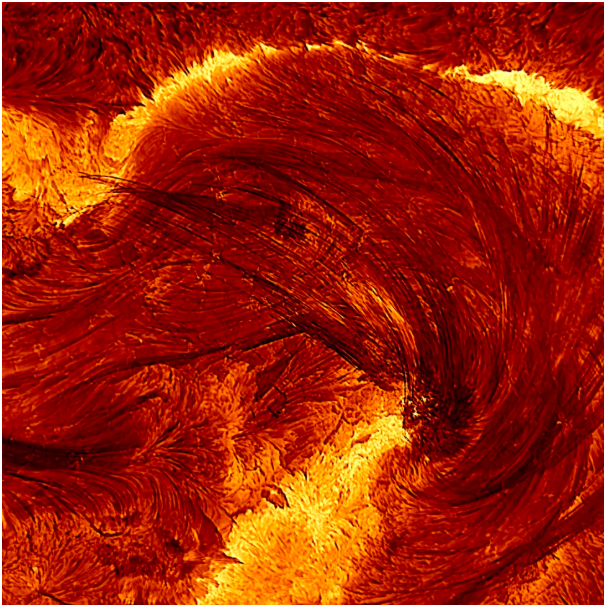
Figure 1: Inouye Solar Telescope image of a solar flare on August 8, 2024, exemplifying the spatial complexity and dynamism of magnetic transient phenomena impacting exoplanetary environments.
Linking Stellar Activity to Exoplanet Demographics
Transforming the classical habitable zone framework requires incorporating dynamic, time-dependent radiative and particle environments. Active M dwarfs, for example, present high-frequency, high-energy flare environments that—absent empirical SED and particle measurements—remain virtually unconstrained in terms of net habitability effect. The paper details how the facility's multiplexed MOS and IFS capabilities allow for both single-event high-cadence monitoring and population-level statistical studies, crucial for mapping flare/spot distributions and biasing of transmission spectroscopy used in atmospheric retrievals.
A particularly strong claim concerns the facility's ability to resolve ambiguous or contradictory interpretations of habitability, for which flares can be simultaneously hazardous (ionizing, atmospheric stripping) and essential (driving prebiotic pathways via UV catalysis), dependent on the interplay of event energy, frequency, and planetary context.
Implications for Stellar–Planetary Angular Momentum Evolution and Migration
The paper advances the understanding of the dynamical coupling between stellar magnetic activity and planetary orbital evolution. Enhanced stellar activity can induce magnetic braking, alter wind torques, and generate torque-driven migration, enhancing the frequency of planet engulfment or destabilization, particularly around young, magnetically active stars. These phenomena underpin long-term planetary survival prospects in habitable zones and introduce secondary architectural constraints for exoplanet demographics.
The proposed facility is positioned as critically complementary to next-decade space missions such as JWST, HWO, Roman, and Ariel, which fundamentally depend on precise correction for stellar contamination and variability. The authors emphasize that without contemporaneous high-fidelity spectroscopic monitoring—tracking flare and spot events—interpretations of atmospheric composition, climate state, and especially candidate biosignature retrievals remain susceptible to profound systematic error. Furthermore, integration with Euclid and LSST-derived variable star catalogs is expected to yield demographic models linking stellar space weather properties directly to planetary habitability metrics.
Key Unresolved Questions Enabled by Next-Generation Spectroscopy
The white paper identifies seven pivotal questions, each targeting a distinct axis in star–planet interaction science:
- Quantitative mapping from stellar magnetic activity to exoplanet atmospheric escape and photochemical pathways.
- Empirical trace of chromospheric and coronal plasma evolution during flare events, yielding constraints on mass motions and particle injection.
- Identification and characterization of the dominant physical mechanisms driving the most energetic flares in various spectral types.
- Time-resolved evolution and mapping of spots and faculae, critical for decontaminating planet signal retrievals.
- Influence of transients on protoplanetary disk chemistry, ionization balance, and atmosphere formation during planet assembly.
- Correlation of full SED evolution during flares to the photochemical and ultimately biogenic outcomes on close-in exoplanets.
- Boundary conditions delineating when magnetic activity acts as an atmospheric destroyer versus a biosynthetic agent.
The breadth and specificity of these questions anchor the proposed facility as a linchpin for the empirical habitability science of the next decade.
Technical Requirements and Facility Architecture
The science case translates into stringent technical specifications: a 12-meter aperture for S/N≥100 at V∼14m in ≤60s exposures to ensure real-time capture of flare dynamism; a dual-mode instrument suite combining low-resolution IFS (R∼4,000) and high-resolution MOS (R∼40,000) for exhaustive line and continuum characterization; full 350–2000 nm coverage; cadences down to 1–10s in IFS mode and ≤1 min in MOS; multiplexed targeting of ≥50 stars per field; and continuous monitoring over ≥6 hr blocks to guarantee statistical completeness over flare/spot cycles. Rapid detector readout and calibration stability are requisite for authentic time-domain capability.
Theoretical and Practical Implications, and Future Prospects
This facility architecture aims to establish empirical constraints for models of planetary atmospheric evolution under real, time-varying stellar irradiation and particle conditions—a deficit in current atmospheric evolution and biosignature modeling frameworks. The resulting dataset is poised to recalibrate the selection function for targets in upcoming biosignature and climate assessment campaigns with missions such as HWO, ensuring that the astrophysical “noise” from the host star is not misinterpreted as planetary signal.
The integration of velocity-resolved line diagnostics, time-resolved SEDs, and population-level activity rates will not only clarify habitability thresholds but could potentially reveal new evolutionary pathways, including the possibility for life to originate or persist under extreme flare-driven conditions around common M dwarfs. Predictive models developed from such datasets could eventually inform target selection, mission design, and synthetic modeling efforts for both the astrophysical and planetary science communities.
Conclusion
"Transients as Determinants of Habitability" methodically establishes the necessity and transformational impact of time-domain, high-cadence spectroscopic surveys with next-generation ground-based facilities. By enabling direct physical measurement of magnetic transients and quantifying their consequences for planetary atmospheres and habitability, the proposed facility represents a critical infrastructure component for the empirical exoplanet science era. Its synergy with future space- and ground-based surveys will advance both the theoretical and observational boundaries of star–planet interaction science and delineate the fundamental astrophysical preconditions for life beyond the Solar System.