- The paper introduces a comprehensive open dataset of one million high-fidelity cislunar trajectories generated via the SSAPy framework with detailed force models.
- It reports that 54% of orbits remain stable past one year while only 9.7% persist for six years, highlighting key stability and resonance patterns.
- The dataset facilitates standardized testing for space domain awareness, navigation, and ML-driven orbit analysis by offering reproducible, meticulously documented simulations.
An Open Benchmark of One Million High-Fidelity Cislunar Trajectories
Introduction and Motivation
Accurate and large-scale simulation of cislunar dynamics is critical for space domain awareness (SDA), future lunar infrastructure, and mission design in the expanding operational regime between geosynchronous Earth orbit (GEO) and beyond the lunar orbit. The paper "An Open Benchmark of One Million High-Fidelity Cislunar Trajectories" (2512.11064) introduces a comprehensive, open-access dataset comprising one million long-term, high-fidelity cislunar orbit propagations. These trajectories are evolved for up to six years using the SSAPy framework with detailed force models including high-degree Earth and Moon gravity, solar and terrestrial radiation pressure, while omitting planetary gravities for computational expediency.
The dataset is motivated by several converging needs: robust references for validating orbital prediction algorithms under non-Keplerian force environments, large-scale statistical baselines for SDA strategy development, rigorous testbeds for navigation and tracking algorithm benchmarking, and foundational data for ML/AI-based trajectory analysis in cislunar space. The publication emphasizes standardization, reproducibility, and openness in both methods and data product formats.
Data Generation: Models and Implementation
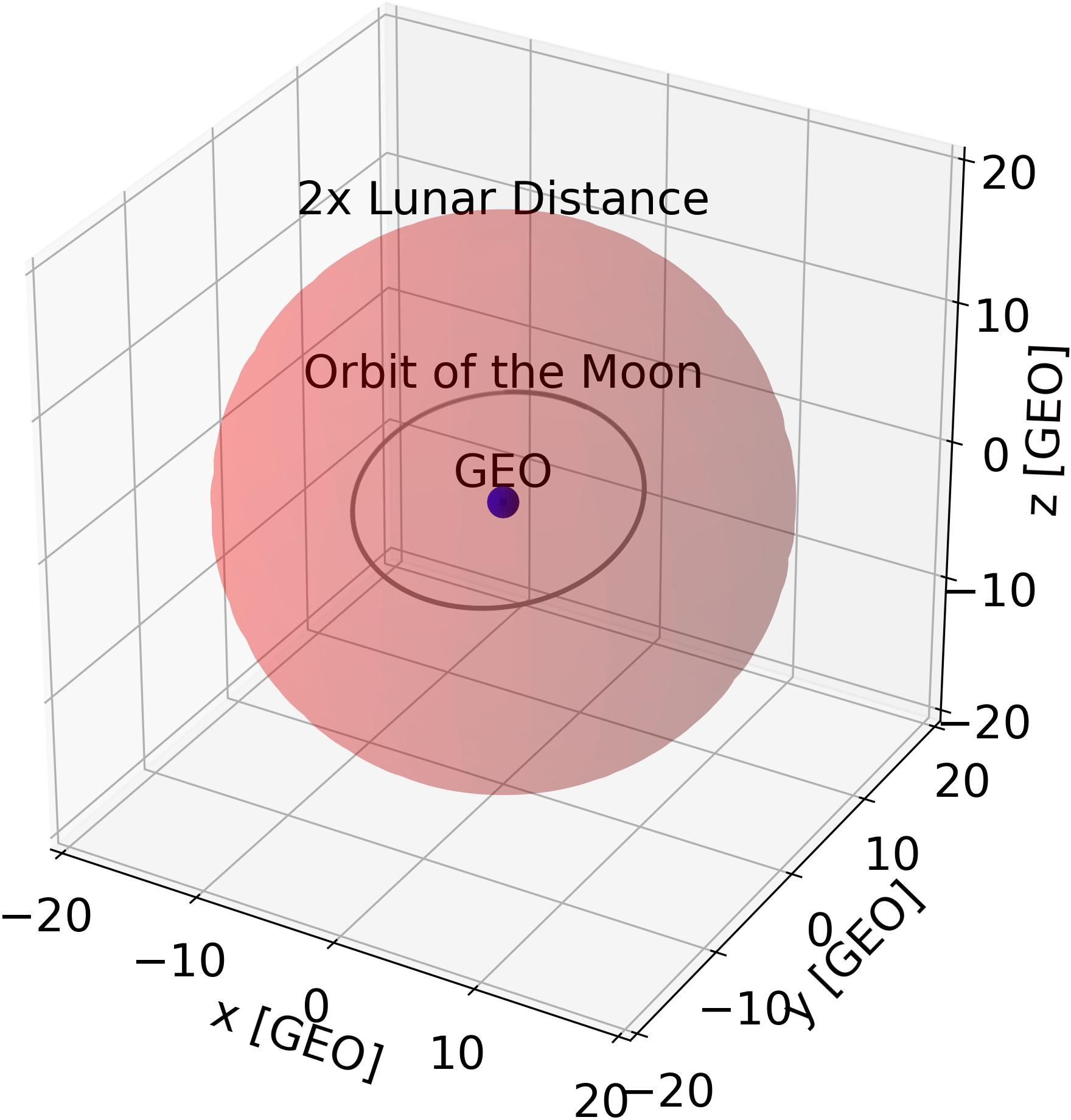
All trajectories are initialized at a unified epoch (1980-01-01 00:00:00 TT, GCRF frame), sampling osculating elements uniformly across a defined cislunar regime: semi-major axis from GEO (42,164 km) to twice the lunar distance (∼768,800 km), covering eccentricities in [0, 1), and inclinations in [0, π/2]. Each orbit's initial configuration, propagation settings, and stopping conditions are explicitly documented for reproducibility.
The SSAPy tool supports high-fidelity, parallelized integrations with a comprehensive force model:
Dataset Description
Each orbit in the baseline dataset is represented by a time series (state vectors, osculating elements, ancillary observables) with per-orbit attributes capturing integration settings, ejection events, and metadata. Output formats include flat CSV for summary statistics and HDF5 for comprehensive time series and extended attributes, enabling diverse downstream use.
Notably, for subsets of orbits, 25 "nearby" perturbed initializations are propagated to assess local divergence growth and stability sensitivities, quantified via covariance series—critical for uncertainty quantification and ML-based orbit classification pipelines.
The dataset contributes standardized, extensible data for the cislunar regime, directly supporting open benchmarking and facilitating community-driven augmentation (e.g., varied epochs or long-horizon low-fidelity simulations).
Empirical Findings and Orbit Characterization
Numerical analysis reveals that approximately 54% of the sampled orbits remain stable past one year, while only 9.7% persist up to six years. "Stable" is stringently defined by not encountering lunar collision, not dropping below GEO, and not escaping beyond 2 lunar distances.
Trajectories exhibit characteristic families well-known in cislunar dynamics:
- Retrograde Orbits: Many such orbits are destabilized before six years, often due to descents below GEO.
- L1/L2 Bound Orbits: Examples persist between the lunar L1 and L2 points, relevant for mission architectures targeting halo or near-rectilinear orbits.
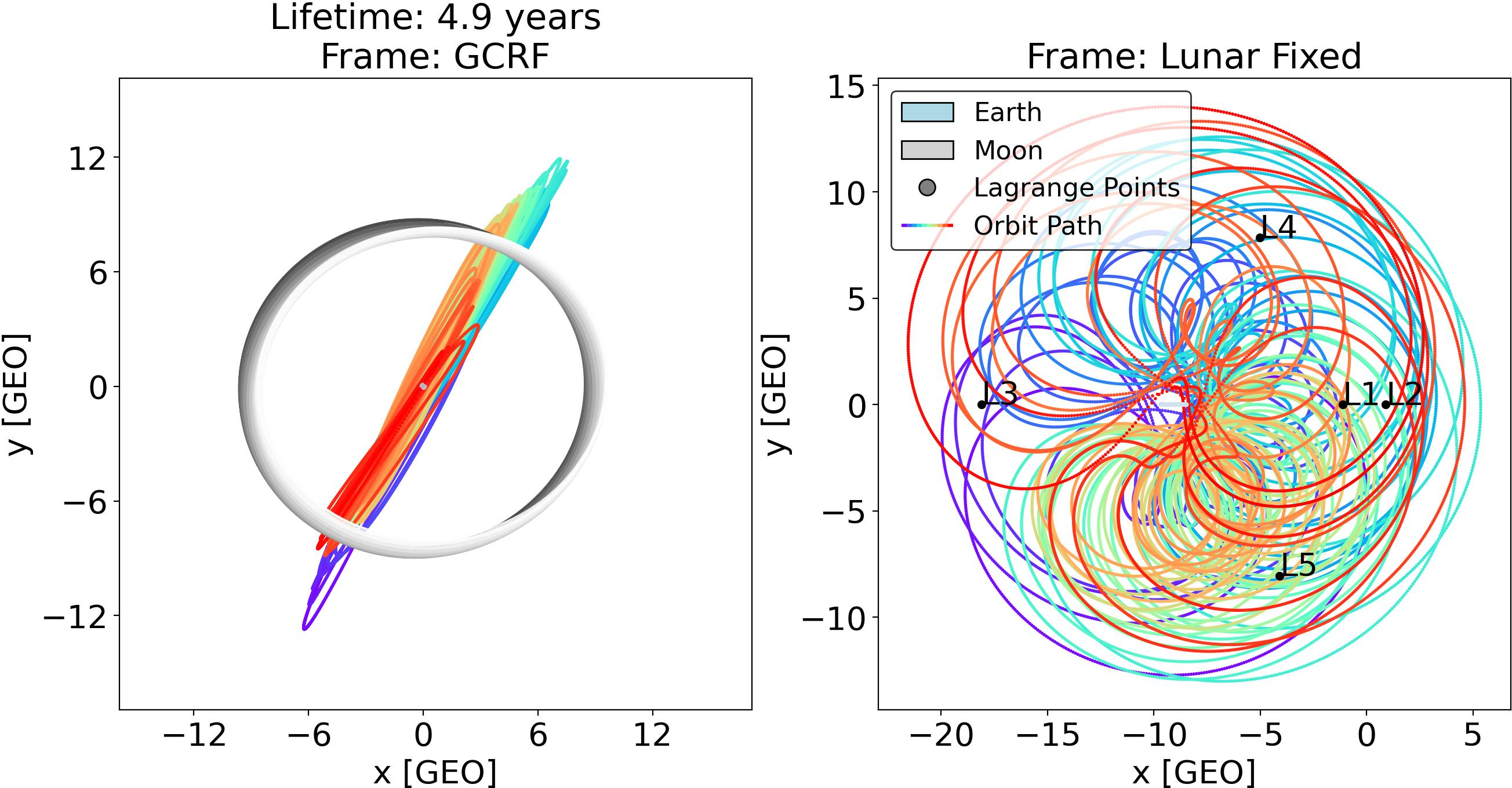
Figure 2: Representative retrograde orbit, which is ejected before completing the integration window due to descent below GEO.
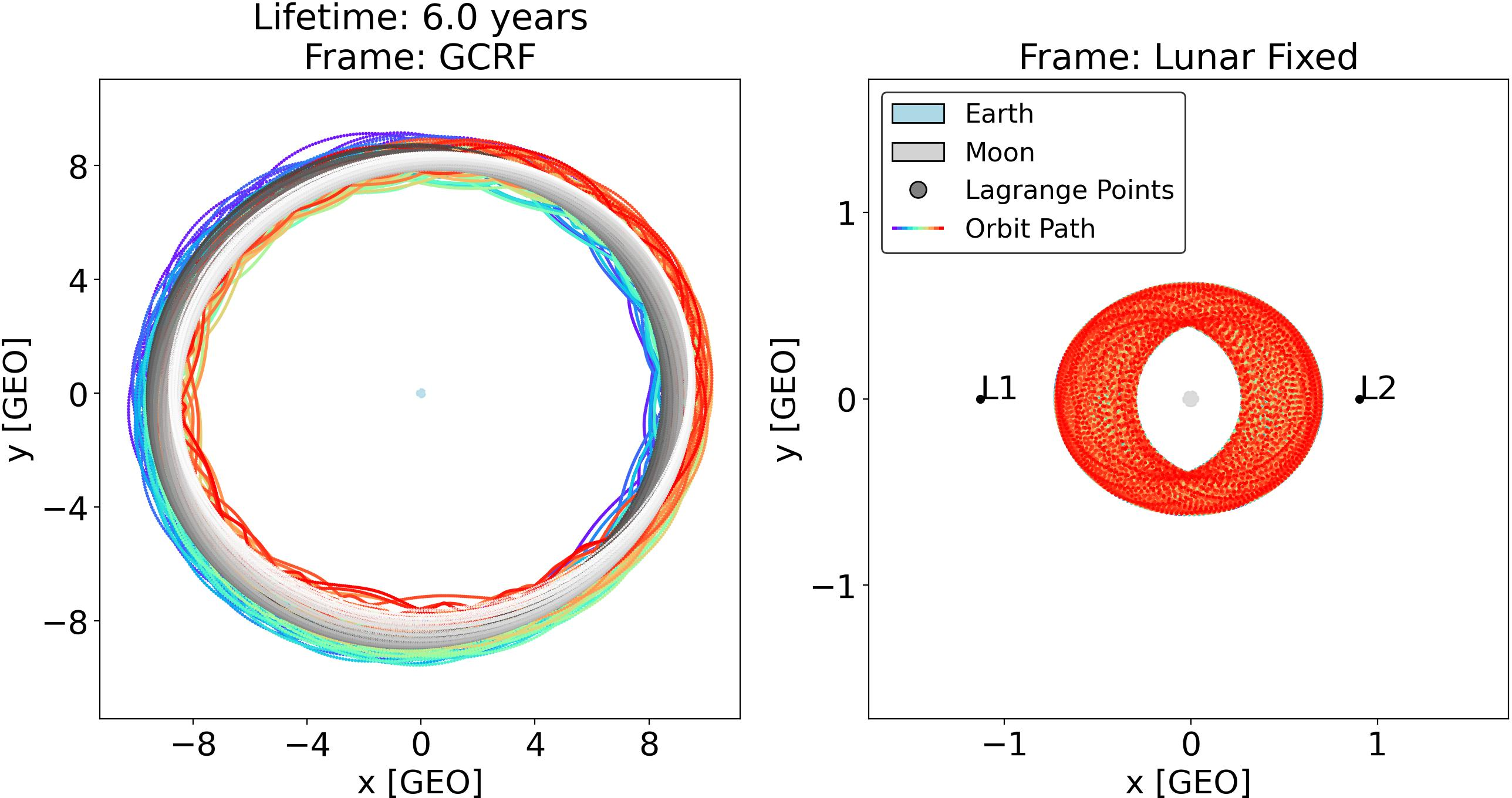
Figure 3: Example of a lunar-centered orbit remaining constrained between L1 and L2, illustrating bounded libration.
The dataset distinctly captures co-orbital families, such as L4 and L5 Trojans, which demonstrate notably enhanced stability even over extended timescales, consistent with dynamical expectations but quantified here at unprecedented statistical scale.
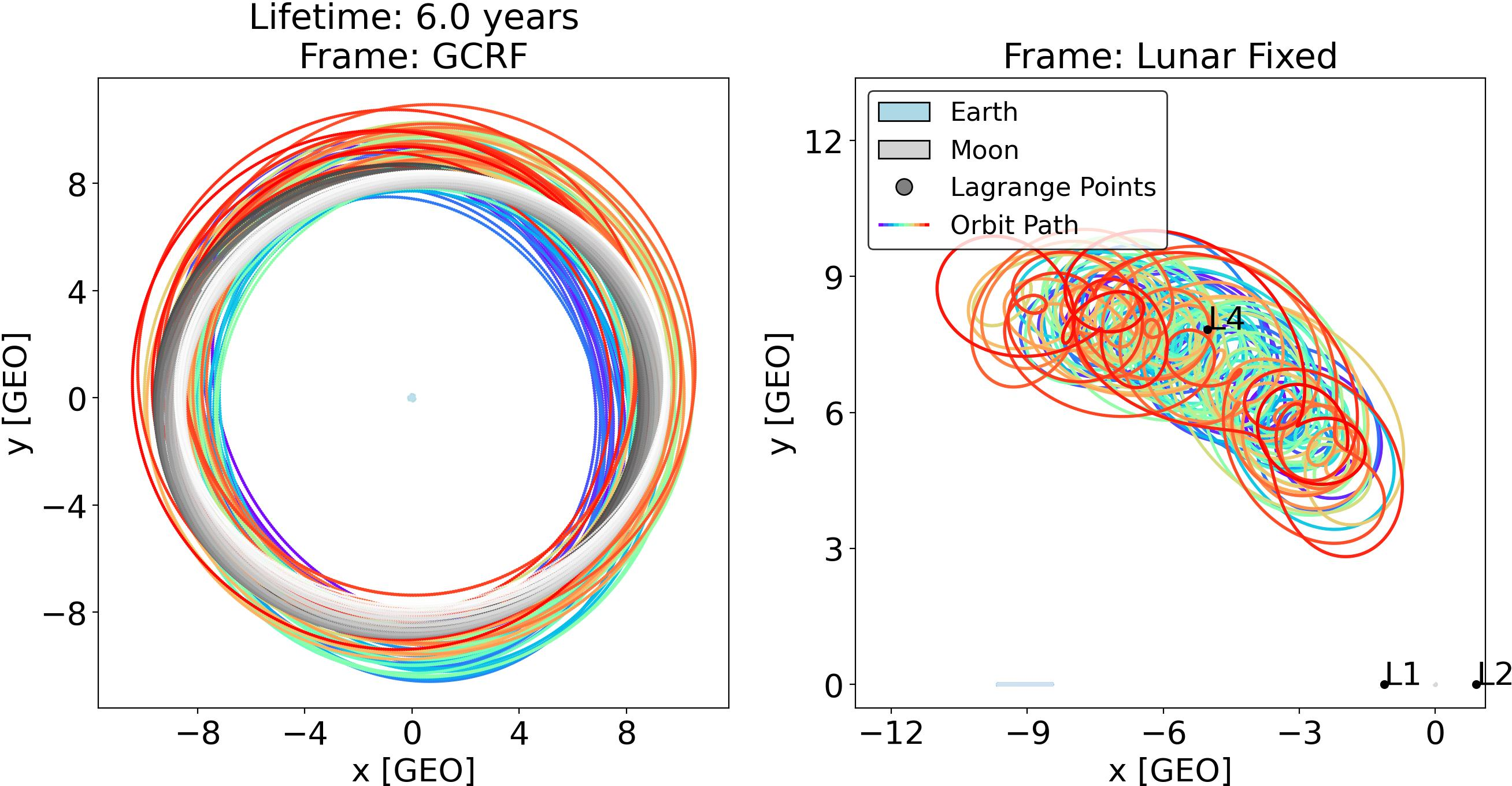
Figure 4: Stable L4 (leading) librator dynamics from the dataset, a typical long-lived co-orbital realization.
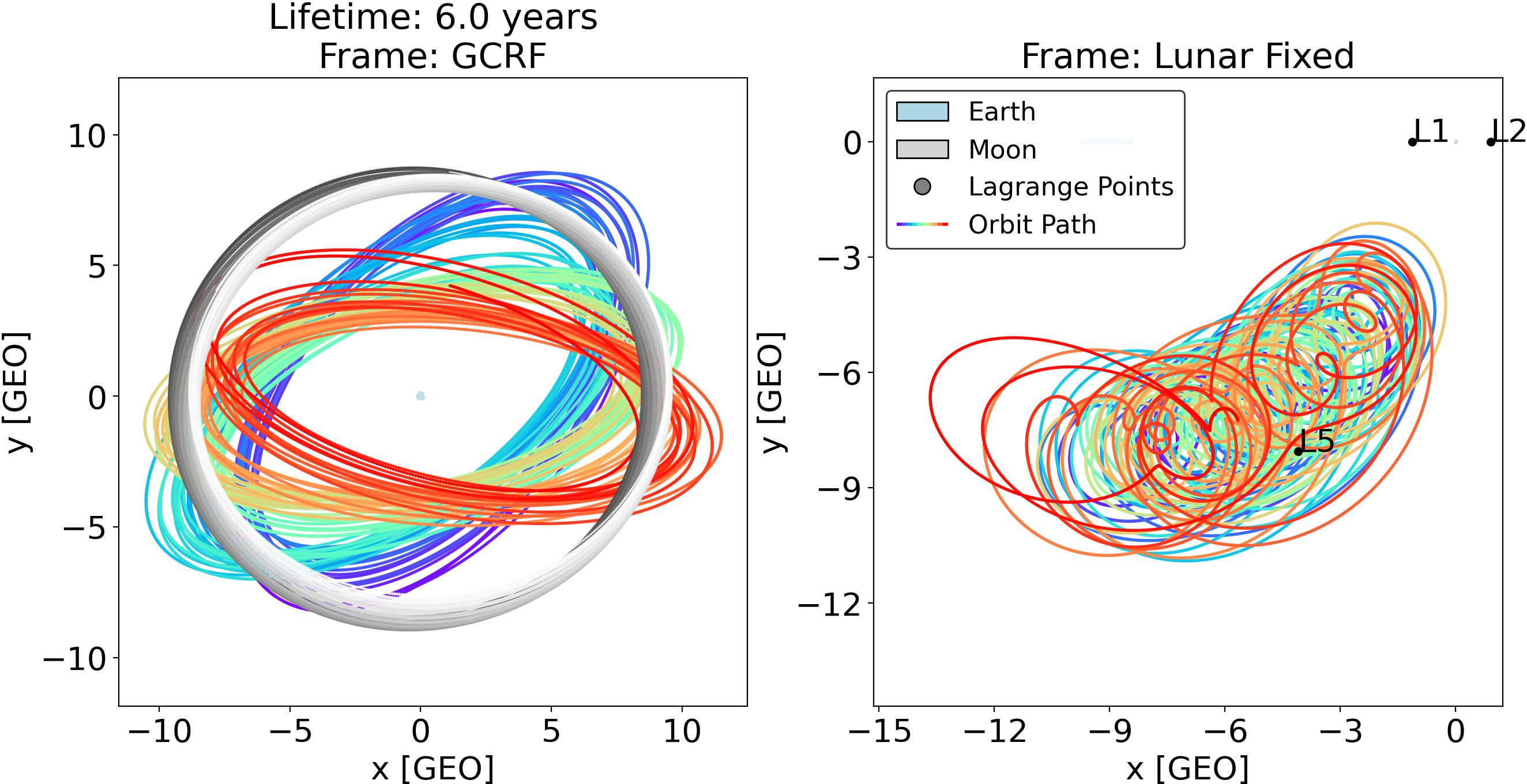
Figure 5: L5 (trailing) Trojan orbit as extracted from the propagated ensemble, evidencing multi-year persistence.
Stability and Resonance Structures
Lifetime histograms reveal that orbital survival in the cislunar regime is structured by a combination of initial orbital element selection and location relative to strong resonances and commensurabilities with lunar motion.
The fraction of surviving orbits as a function of time is well-described by a simple half-life exponential decay, with modest improvements by introducing a "stretched" exponential fit:
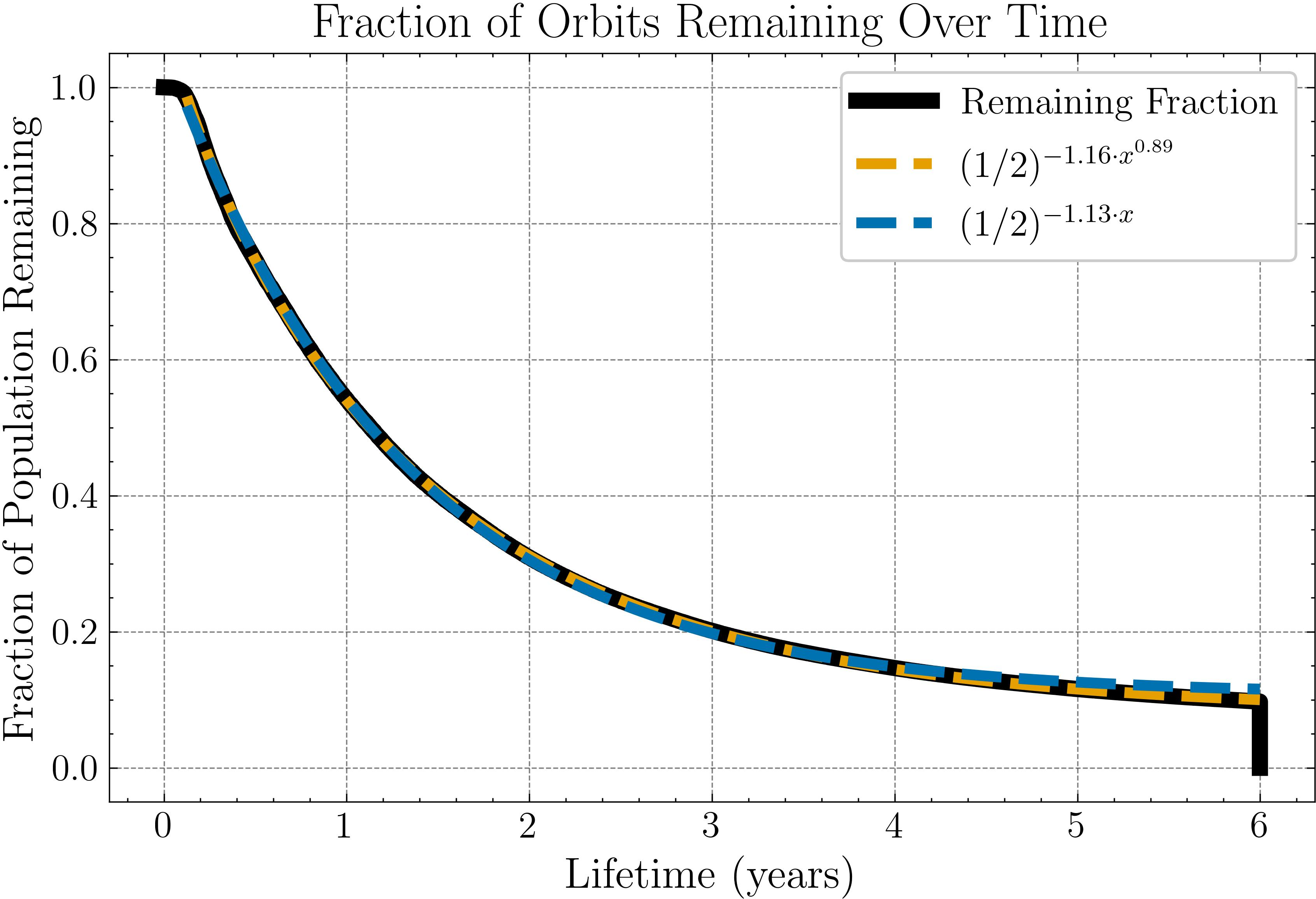
Figure 6: Decay of cislunar orbital population over six years, with exponential fit overlays highlighting characteristic timescales.
The post-integration distributions elucidate stable bands in (a,e) space:
- A robust stability feature near a≈5 GEO radius, with capacity for significant eccentricity
- Bands of instability in the range a≈7−9 and $10-12$ GEO, likely correlated with lunar perturbation resonances
- Persistence of co-orbitals and certain low-eccentricity, high-inclination orbits near and beyond lunar distance
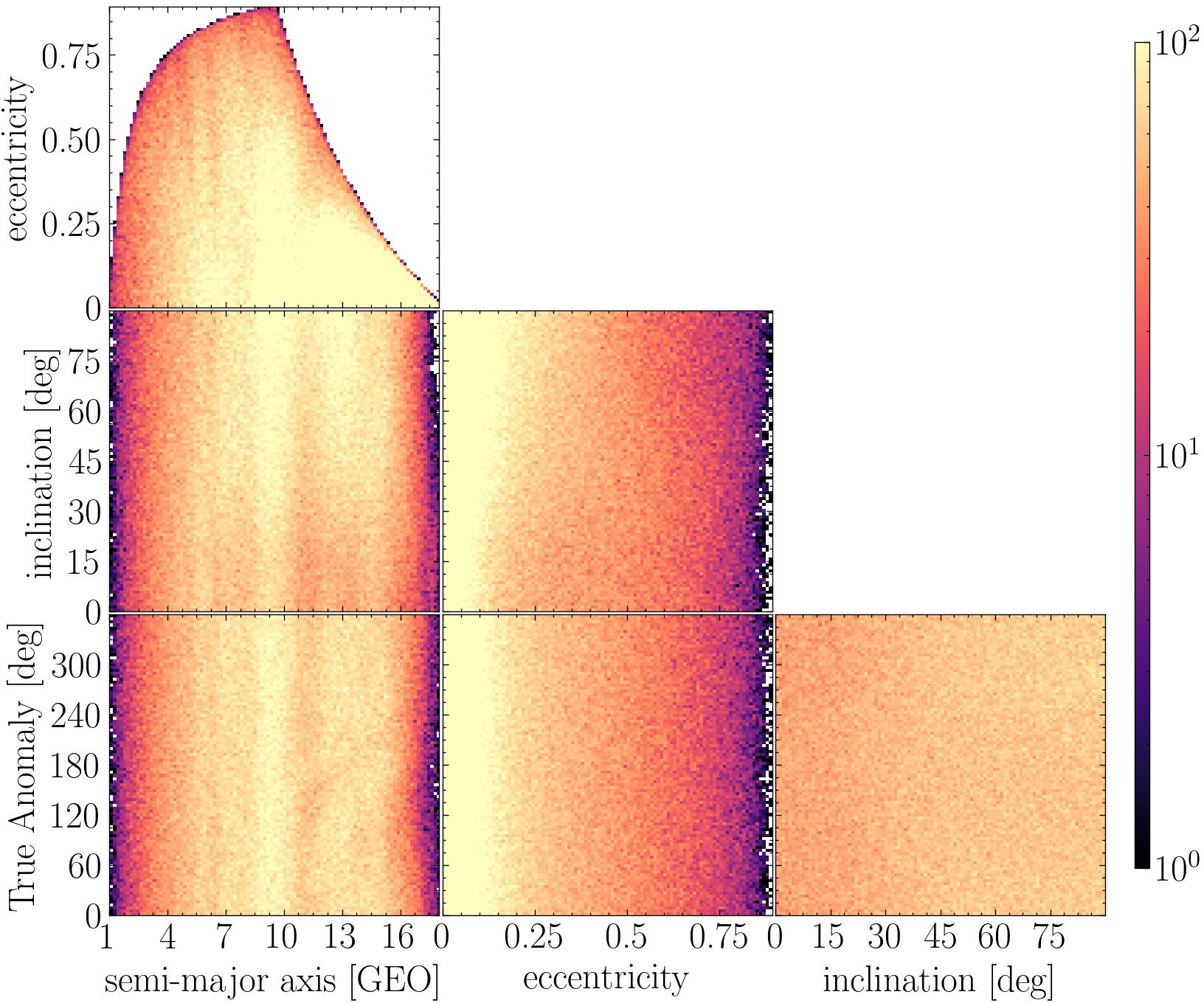
Figure 7: Initial (a,e) distributions for one-year survivors show preferred domains of orbital element space.
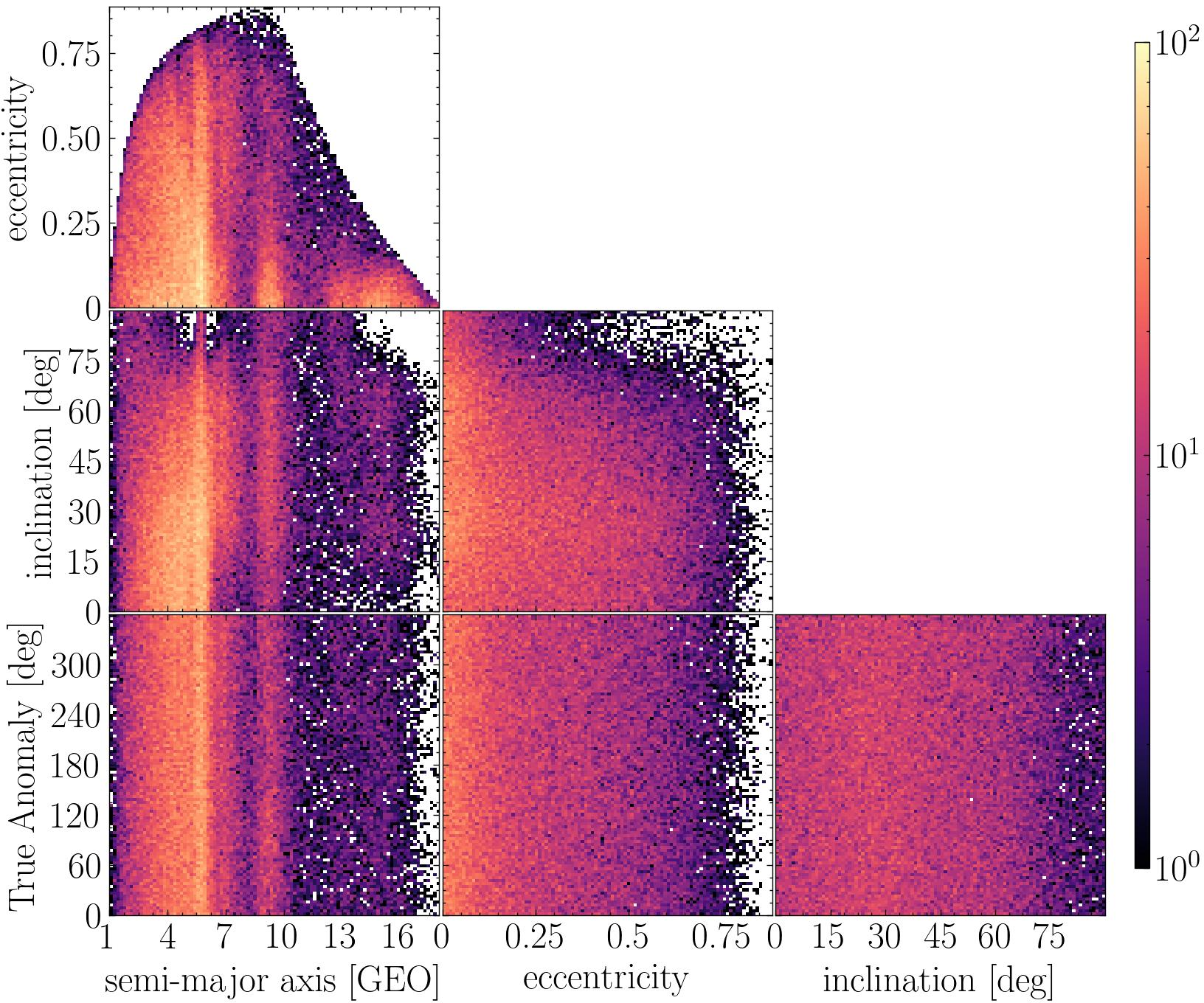
Figure 8: After six years, only orbits in pronounced stability bands remain, revealing preferred families for long-term stationkeeping.
These results, while not claiming new dynamical families, provide a rigorously benchmarked, empirical census of orbital lifetimes and resonance structure for the chosen epoch, suitable for direct use in method validation and supervised ML applications.
Practical and Theoretical Implications
The dataset's principal practical value is its utility as a benchmark for:
- SDA and tracking pipelines, including validation of AI/ML classification or orbit-prediction models under realistic force perturbations
- Navigation and autonomous guidance system testing for future lunar missions, including stationkeeping and transfer window analysis
- Algorithmic comparison under standardized, reproducible force environments and data formats
Theoretically, the dataset acts as a testbed for resonance mapping, instability band identification, and the exploration of three-body dynamics impact as a function of initial condition and epoch. As such, it lays groundwork for future meta-studies of cislunar phase space structure, resonance overlap, and sensitivity analysis across epochs.
Future Perspective
By explicitly documenting all force model settings, propagation parameters, and offering full pipeline reproducibility, the dataset anticipates extension through multi-epoch ensembles (for mapping phase space as a function of solar-lunar geometries) and integration with global cislunar SDA initiatives. The explicit inclusion of both stable and ejecting orbits, plus their detailed termination causes, further supports operational planning, risk assessment, and long-horizon mission design.
Community-driven development is facilitated via open repository access, with clear protocols for generating supplementary datasets (e.g., alternative epochs, relaxed modeling settings, or focused subdomain studies). This approach positions the dataset as a foundation for both operational and foundational research into cislunar mission architectures, traffic management, and domain awareness (2512.11064).
Conclusion
The paper delivers a robust, extensible benchmark dataset of one million high-fidelity cislunar trajectories, standardized for open use in analysis and algorithm development related to orbital mechanics, SDA, and lunar mission strategy. With rigorous empirical characterization of stability domains, clear documentation, and open access, this resource directly supports the accelerated development of next-generation cislunar operational frameworks, method benchmarking, and AI-driven analysis, establishing a baseline for future comparative studies and method validation in the rapidly evolving cislunar regime.