- The paper introduces AgentGit, a framework that adds Git-like rollback and branching to MAS workflows, improving error recovery and exploration.
- It details methods for checkpointing state and enabling parallel task exploration, reducing redundant computations and execution time.
- Experimental validation shows that AgentGit outperforms traditional MAS frameworks in efficiency and resource utilization.
AgentGit: A Scalable Version Control Framework for MAS
The paper "AgentGit: A Version Control Framework for Reliable and Scalable LLM-Powered Multi-Agent Systems" introduces a new framework designed to enhance the execution of Multi-Agent Systems (MAS) that utilize LLMs. This framework brings Git-like functionalities such as rollback and branching to MAS workflows, addressing critical challenges in reliability and scalability that confront existing frameworks, which often fall short in handling complex tasks.
The Need for Enhanced MAS Frameworks
Current MAS frameworks are hindered by limitations in their architecture, particularly a lack of rollback mechanisms that are crucial for error recovery and efficient workflow execution. Without these, any failed execution leads to irrecoverable states, resulting in wasted computational resources and limiting the potential for exploration and optimization. The introduction of these mechanisms aims to transform linear and often fragile pipelines into robust, resilient systems capable of ensuring consistent and reliable operation even in dynamic environments.
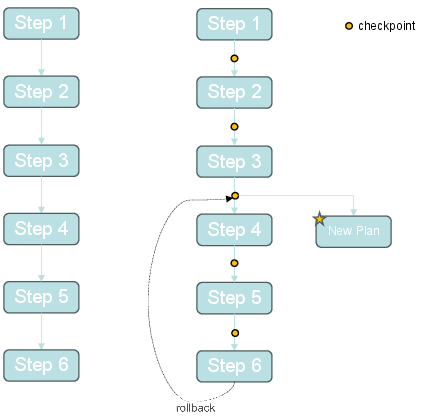
Figure 1: Comparison of task execution workflows: standard model vs. AgentGit with rollback functionality.
Key Innovations of AgentGit
Rollback and State Management
AgentGit introduces a rollback mechanism allowing the system to revert to previously stable states efficiently. This mechanism ensures that agent actions can be undone, thereby enabling error recovery without necessitating a complete re-execution of the workflow from the start. It supports the creation of checkpoints that save extensive state details, including session history and intermediate reasoning processes. When an error occurs, the system can restore to a specified checkpoint, continuing execution from a reliable state, thus preserving both computational resources and time.
Branching for Parallel Exploration
Branching in AgentGit is another significant improvement, akin to version control in collaborative software development. This feature permits the creation of separate branches from any state checkpoint, allowing various strategies to be explored concurrently without interfering with the original process path. Each branch runs independently, facilitating the testing of multiple hypotheses simultaneously, significantly enhancing the exploration capacity of MAS in large and complex task landscapes.
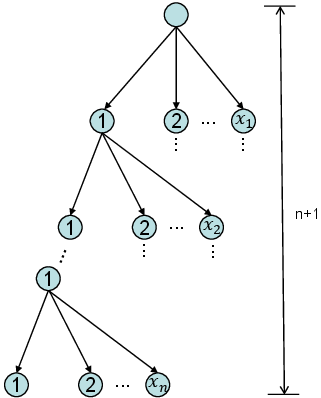
Figure 2: Tree diagram illustrating the branching structure of the task execution process.
Together, these two primary features not only contribute to reducing redundant executions but also support parallel exploration, which is crucial for scalability in complex systems.
Complexity Analysis
The performance improvements offered by AgentGit are theoretically substantiated by a detailed complexity analysis. The paper reveals that the execution steps required by traditional frameworks increase linearly and often exponentially with added complexity, while AgentGit's rollback feature allows incremental and parallel exploration.
Sstd=ni=1∏nxi,Srollback=i=1∑n(j=1∏i−1xj⋅xi)
Where Sstd and Srollback represent the execution steps needed for standard frameworks and AgentGit, respectively. As tasks grow in complexity, AgentGit shows an efficiency that asymptotically outperforms linear execution models significantly.
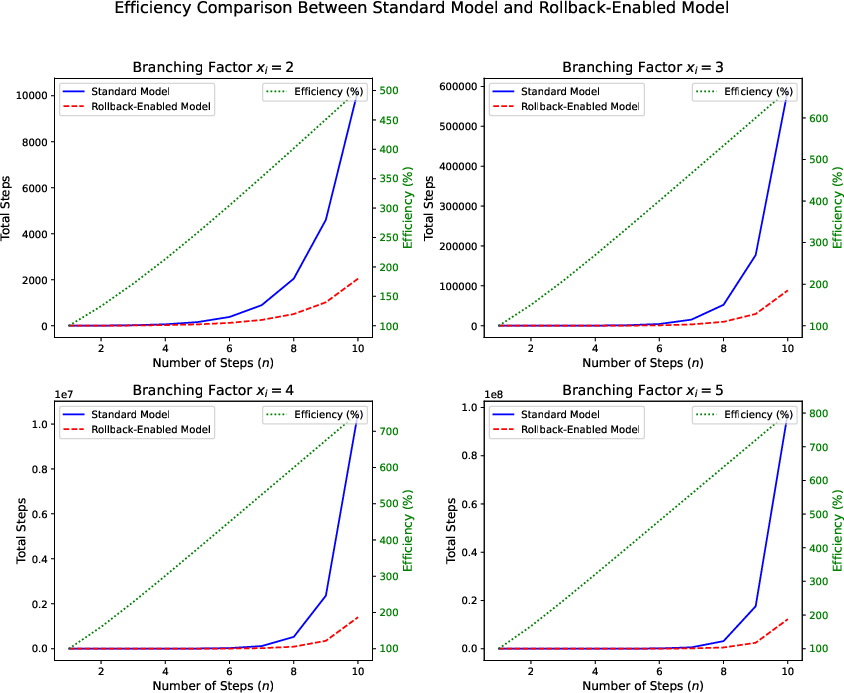
Figure 3: Visualization of the total steps required and efficiency trends for the standard model and rollback-enabled model under varying xi and n.
Experimental Validation
Experiment Design
The paper validates AgentGit's capabilities through an experiment simulating a real-world MAS task: retrieving and analyzing paper abstracts from arXiv. The task involves multiple steps and explores different frameworks, including LangGraph, AutoGen, and Agno, with and without AgentGit’s functionalities.
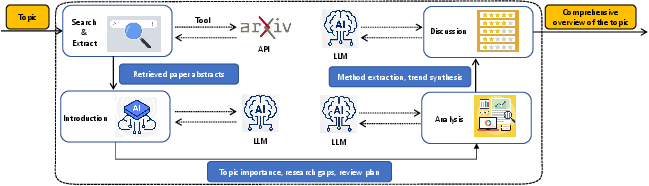
Figure 4: Workflow of the MAS task scenario for retrieving abstracts of papers related to a specific topic.
Results and Analysis
Experimental results exhibit marked improvements in execution time and resource utilization when employing AgentGit. Specifically, the rollback mechanisms resulted in reduced execution times due to the elimination of redundant computations, while the branching capability supported simultaneous exploration of alternatives.
Execution time and token usage metrics demonstrate that AgentGit achieves comparable or superior performance with significantly fewer resources, highlighting its efficiency in executing complex workflows across various scenarios.
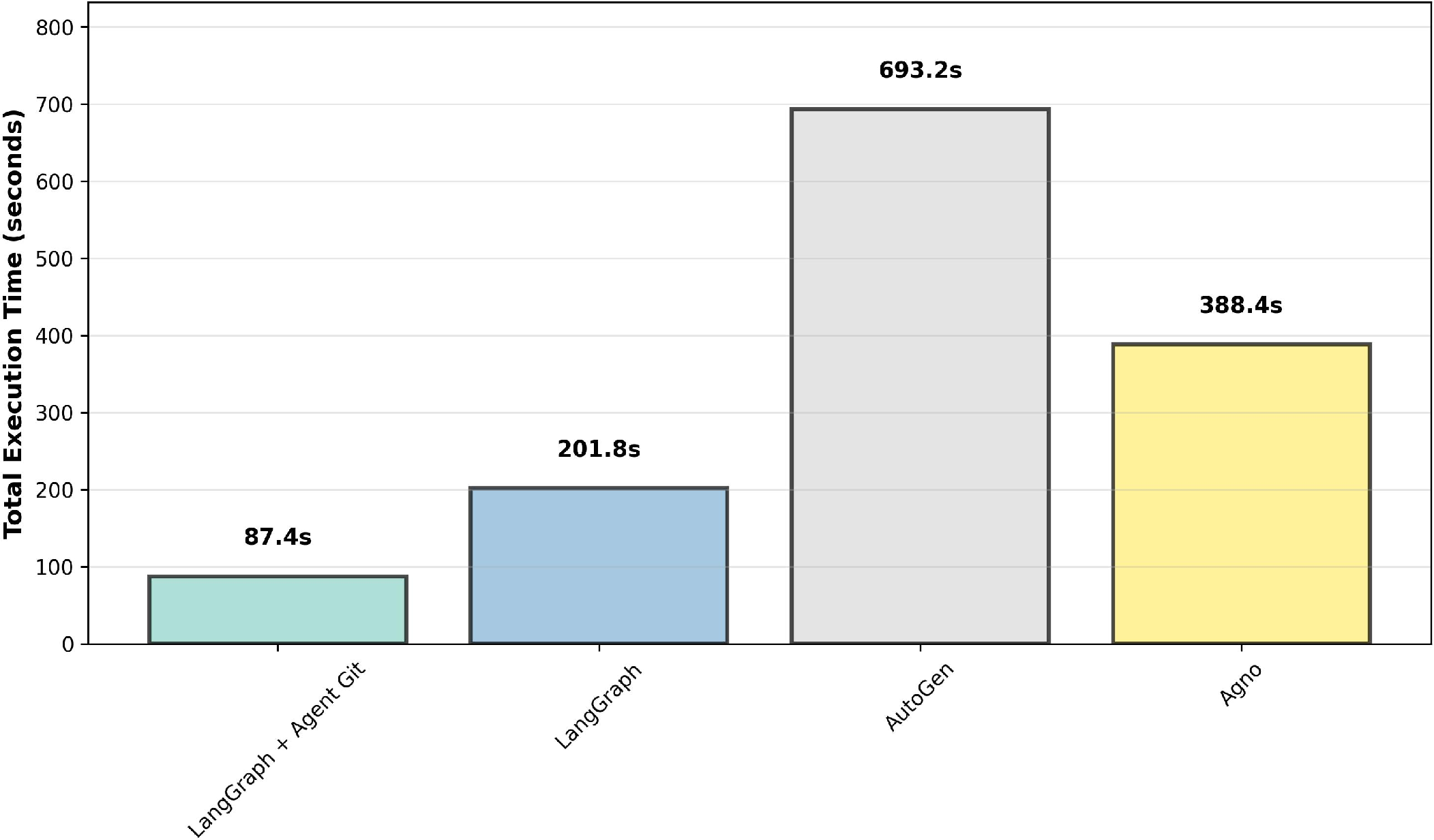
Figure 5: Execution time comparison of different frameworks for completing the task.
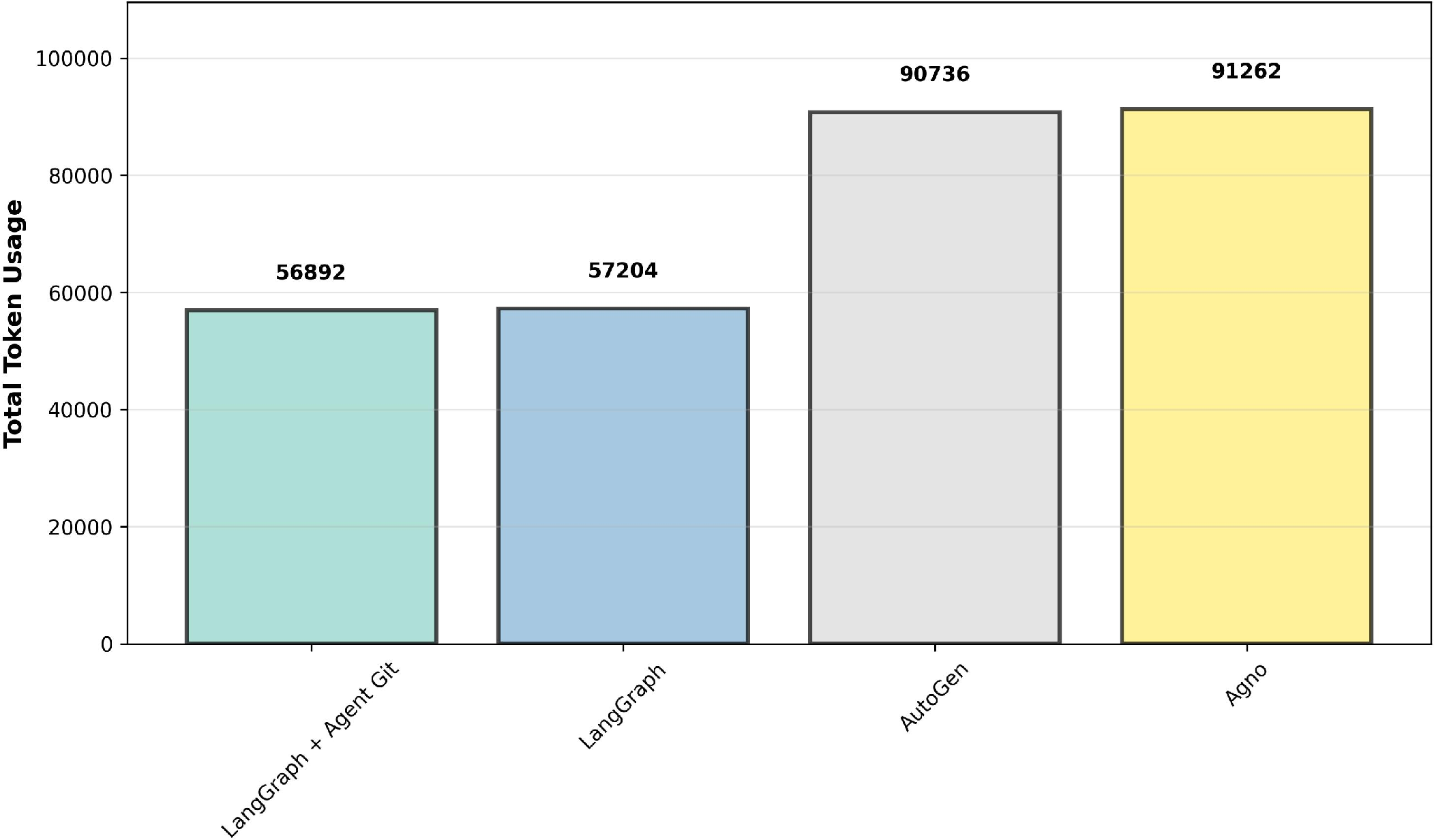
Figure 6: Token usage comparison of different frameworks for completing the task.
Conclusion
AgentGit represents a significant advance in the development of resilient, efficient, and scalable MAS frameworks by integrating crucial version control functionality into the agentic workflow process. It demonstrates clear efficiency gains in executing complex tasks through parallel exploration and systematic error handling, validating its practical utility across diverse use cases. This positions AgentGit as a foundational platform for future MAS architectures, with its adaptable nature paving the way for its adoption in broader AI systems and applications.