- The paper introduces IF-Track, a framework that models human reasoning as a dynamic flow by quantifying uncertainty and cognitive effort.
- It employs Hamiltonian dynamics and large language model estimations to distinguish between deductive, inductive, and abductive reasoning patterns.
- The study reveals individual cognitive signatures and error typologies influenced by personality traits and AI interactions.
The Universal Landscape of Human Reasoning
Introduction
The paper introduces Information Flow Tracking (IF-Track), a novel framework designed to model the dynamics of human reasoning through the quantification of information entropy and cognitive effort at each reasoning step. Leveraging LLMs as probabilistic encoders, IF-Track provides a unified metric space that captures the nuances of reasoning processes across various tasks. Unlike classical logic or probabilistic models that focus on specific output aspects or individual modeling, this approach offers a comprehensive view of reasoning dynamics, allowing for precise error pattern identification and analysis of individual differences.
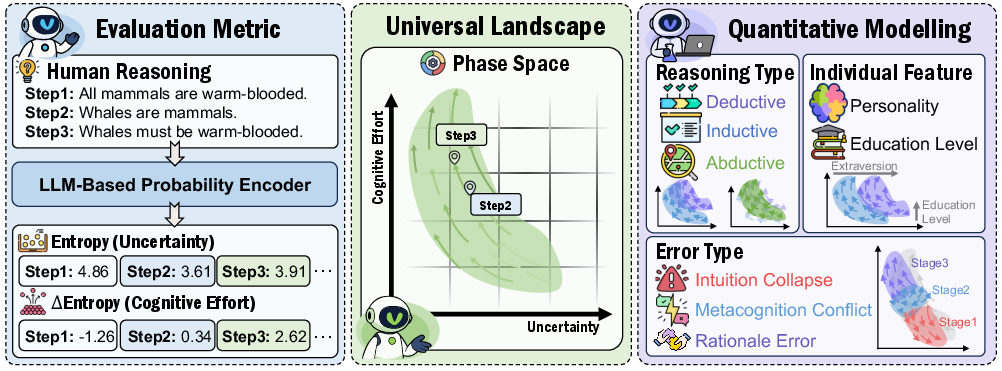
Figure 1: Theoretical Framework and Modelling Applications of IF-Track.
Theoretical Framework and Implementation
The theoretical underpinning of IF-Track lies in modeling reasoning as a trajectory within a two-dimensional information phase space, characterized by uncertainty (information entropy) and cognitive effort (information gain). This formulation parallels Hamiltonian systems, ensuring that reasoning evolves as a conservative flow with preserved informational energy. The conjugate variables—uncertainty and cognitive effort—create a phase space where reasoning transitions from intuitive exploration to analytic consolidation.
Algorithmic Implementation
IF-Track operationalizes its framework by encoding reasoning steps using LLMs to estimate conditional probabilities, which in turn quantify uncertainty and effort. The model employs Hamilton's canonical equations to govern the dynamics of reasoning trajectories, ensuring that information flow is both structured and efficient. This setup enables the detection of reasoning errors and identification of individual cognitive signatures based on deviations from typical trajectories.
Results and Applications
Modeling Universal Human Reasoning
IF-Track successfully tracks reasoning as an approximately incompressible information flow, consistent with Liouville's theorem. Unlike static methods that present chaotic and temporally unordered patterns, IF-Track unifies reasoning into a coherent and interpretable flow. The framework reveals that reasoning paths exhibit globally consistent dynamics, with uncertainty decreasing as cognitive effort increases steadily.
Distinguishing Reasoning Types and Errors
The model distinguishes between deductive, inductive, and abductive reasoning by analyzing trajectory patterns. While deductive reasoning is characterized by rapid uncertainty reduction and high initial cognitive effort, inductive reasoning displays exploratory dynamics with slower initial certainty gains. Abductive reasoning, conversely, blends exploration with hypothesis refinement, reflecting its intermediary standing between deduction and induction.
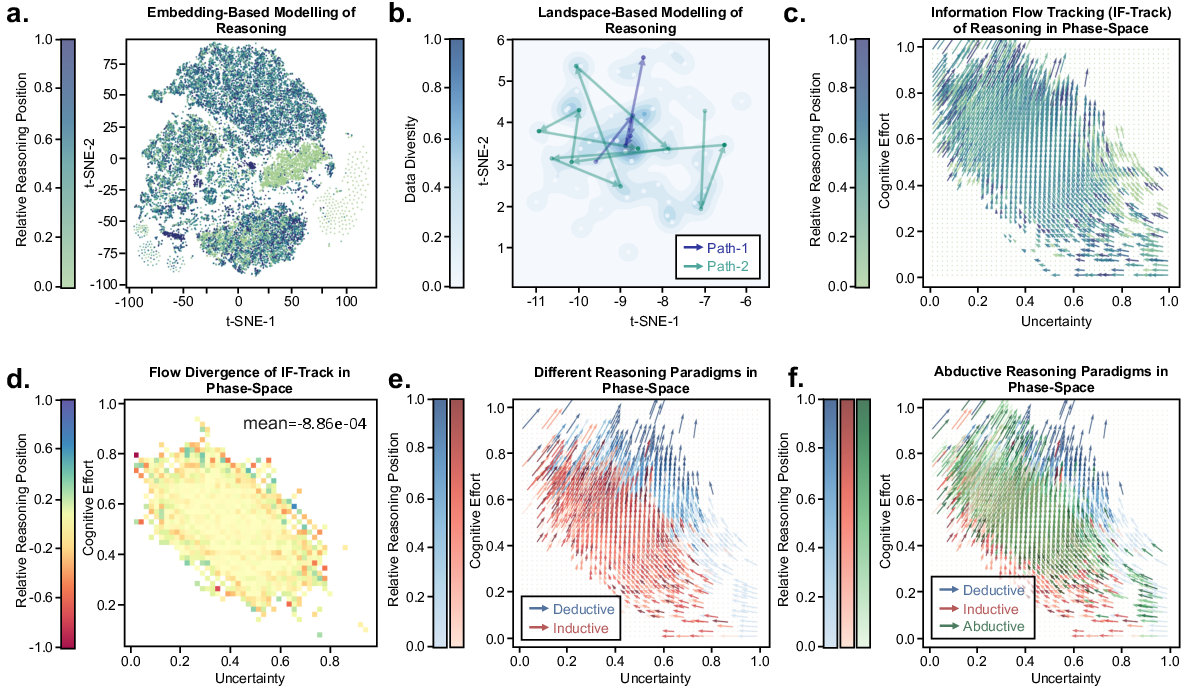
Figure 2: Comparison of static representations of reasoning trajectories and relevant reasoning paradigms modeling.
Additionally, IF-Track classifies reasoning errors into stages such as intuition collapse, metacognition conflict, and rationale error based on trajectory deviations. Each stage is distinctly placed within the information phase space, allowing for precise error typology and cognitive progression analysis.
Individual Differences and Psychological Insights
Personality traits such as extraversion, agreeableness, and conscientiousness modulate reasoning dynamics, as evidenced by their distinct impact on uncertainty and cognitive effort profiles. For instance, extraverts tend to engage more in exploratory reasoning, while individuals high in agreeableness prefer certainty and focus. IF-Track also highlights correlations between educational attainment and reasoning characteristics, with higher education levels associated with broader hypothesis search spaces at early reasoning stages.
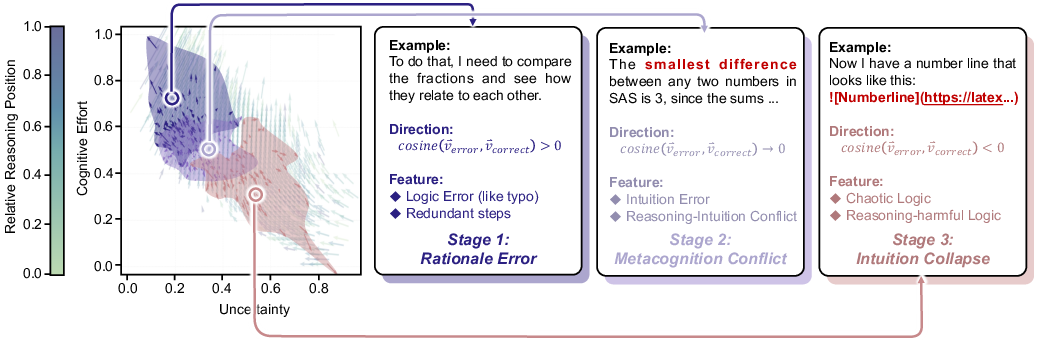
Figure 3: Three categories of reasoning errors identified by IF-Track, positioned in the uncertainty–effort phase space.
Implications for Psychological Theories and AI
IF-Track contributes to the debate over single-process versus dual-process reasoning theories by quantifying the flow continuum from intuitive to analytic modes within a unified framework. This resolves the apparent dichotomy by demonstrating how dual-process phenomena are internalized within a single-process global architecture.
Moreover, the model analyzes how LLMs influence human reasoning. The interactions between humans and models lead to a convergence in reasoning structures, indicating that frequent LLM usage can subtly reshape human cognitive strategies.
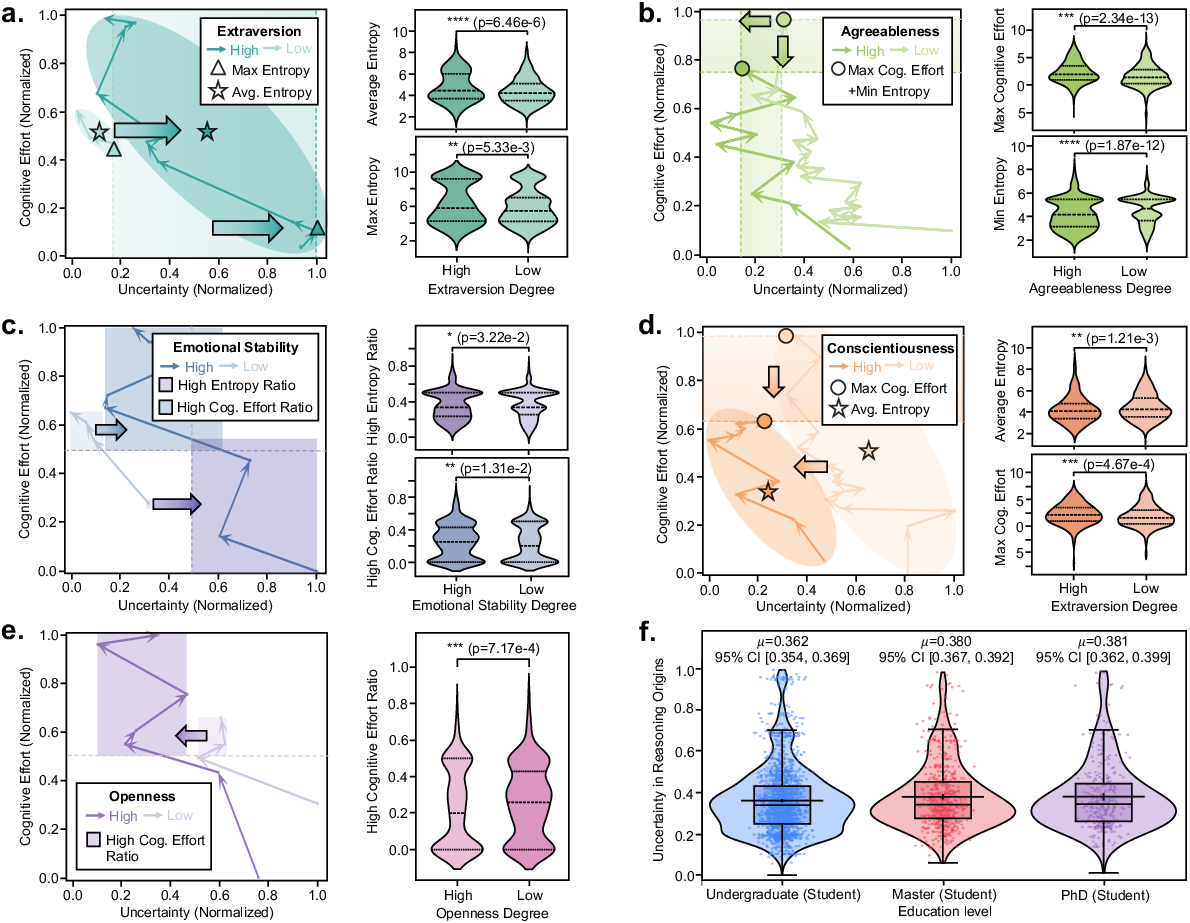
Figure 4: Personality-related modulation of reasoning trajectories and cognitive–informational dynamics.
Conclusion
The Universal Landscape of Human Reasoning, as modeled by IF-Track, offers significant insights into the mechanistic processes underlying human cognition. By establishing a quantitative bridge between theory and practical measurement, IF-Track enhances our understanding of reasoning errors, individual differences, and the impact of AI on human thought. Future directions include extending this framework to real-time neural recordings and adaptive cognitive training, which could further illuminate human reasoning dynamics and inform AI-driven educational interventions.

