- The paper introduces the SRS module which adaptively selects and reassembles information-rich patches to optimize forecasting accuracy.
- It employs a gradient-friendly MLP scoring system to identify optimal patches and enhance the representation space.
- Experiments on real-world datasets demonstrate state-of-the-art performance in electricity, solar, and traffic forecasting.
Enhancing Time Series Forecasting through Selective Representation Spaces: A Patch Perspective
Introduction and Background
Time series forecasting (TSF) is pivotal in various domains such as economics, traffic, energy, and AIOps. Traditional methodologies often struggle with modeling long-term dependencies and leveraging semantic information from time series effectively. Recent advances underline the significance of partitioning time series into patches, thus encapsulating contextual semantic information while enhancing computational efficiency.
However, conventional patching methods typically employ adjacent patches with fixed strides, resulting in constrained representation spaces and potentially suboptimal forecasts. This constraint arises from the fixed representation spaces' assumption that relevant information is uniformly distributed across all patches. Such uniformity overlooks periods of change, shifts, and anomalies, which may introduce undesirable elements into the prediction models.
Selective Representation Space Module
The paper introduces the Selective Representation Space (SRS) module, a novel plug-and-play component designed to adaptively enhance the representation of time series data. The SRS module employs two core strategies: Selective Patching and Dynamic Reassembly. Selective Patching intelligently chooses information-rich patches from the time series, while Dynamic Reassembly determines their optimal order for processing. These strategies collaboratively optimize the representation space, significantly improving forecasts by integrating contextual time series data more effectively.
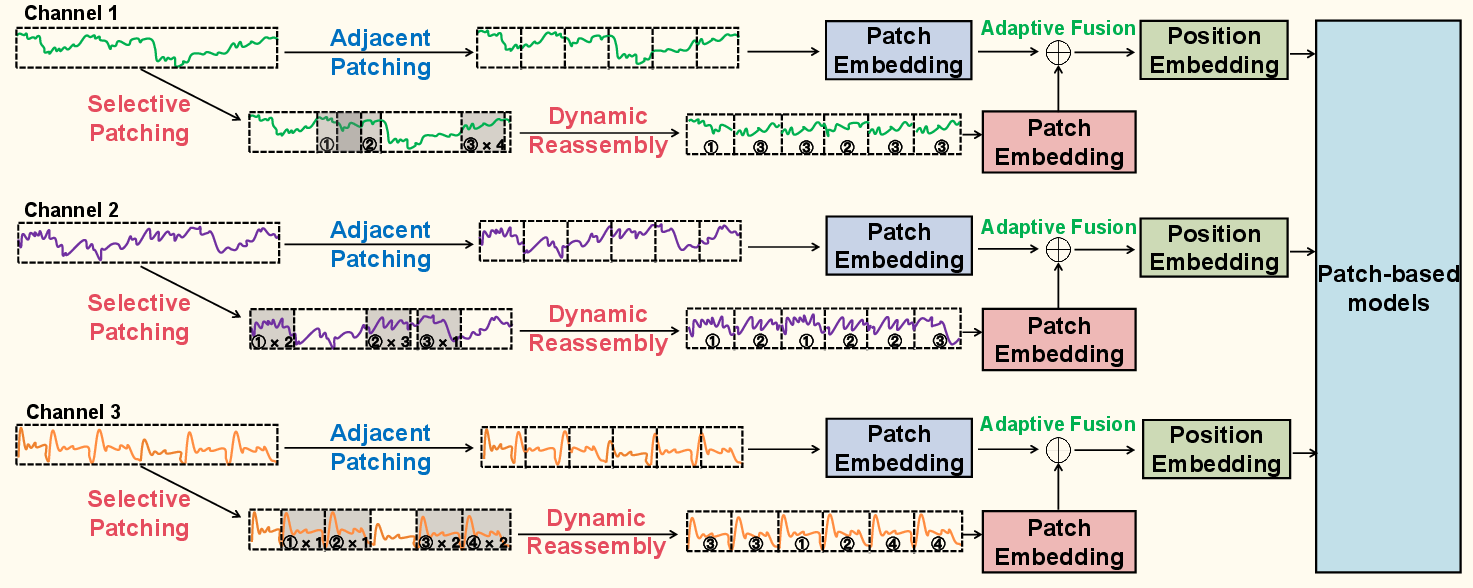
Figure 1: The overall pipeline of the SRS module, illustrating the adaptive selection and integration of patches.
Architectural Dynamics
The architecture of the SRS module features several distinct components working in harmony. The Selective Patching utilizes a gradient-friendly MLP-based scoring system, allowing the model to adaptively select the optimal patches from potential candidate patches. These patches are sampled repeatedly to ensure that beneficial data points are emphasized.
Subsequently, Dynamic Reassembly sorts selected patches, optimizing their sequence based on their respective scores. This process ensures that the representation space is fully optimized for predictive accuracy. The flexibility introduced by Dynamic Reassembly allows our module to handle permutation-sensitive downstream components, thereby enhancing performance outcomes.
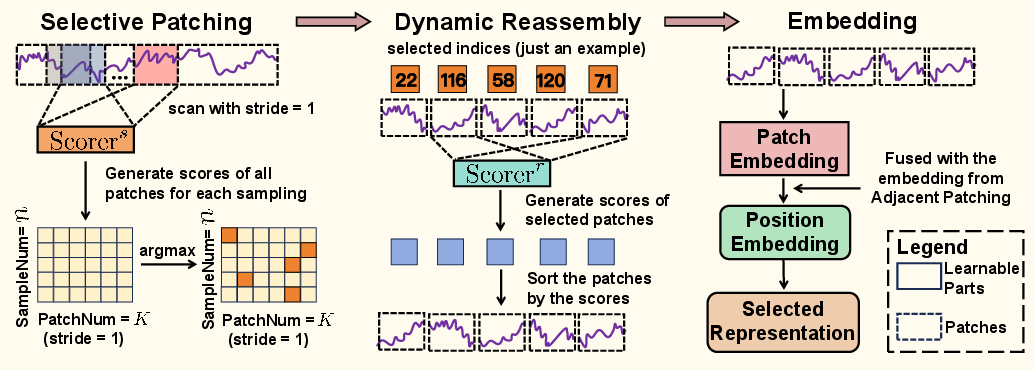
Figure 2: The detailed architecture of the SRS module highlighting Selective Patching and Dynamic Reassembly.
Evaluation and Results
The evaluation demonstrates the SRS module's capability to significantly outperform existing models by constructing superior representation spaces. When integrated into the SRSNet model (comprising a simple MLP head and the SRS module), benchmarking across various real-world datasets reveals state-of-the-art performance levels.
Comprehensive experiments depict the efficacy of SRSNet in diverse environments, showcasing the adaptability of constructed representation spaces across domains such as electricity consumption, solar production, and traffic monitoring.
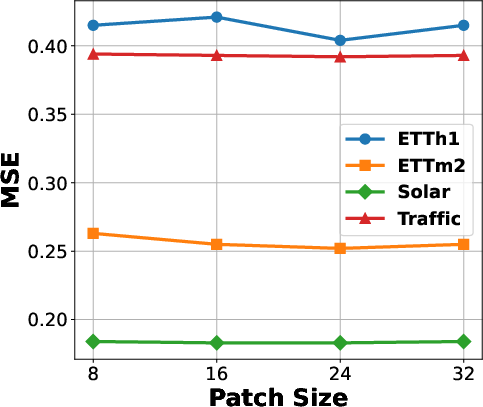
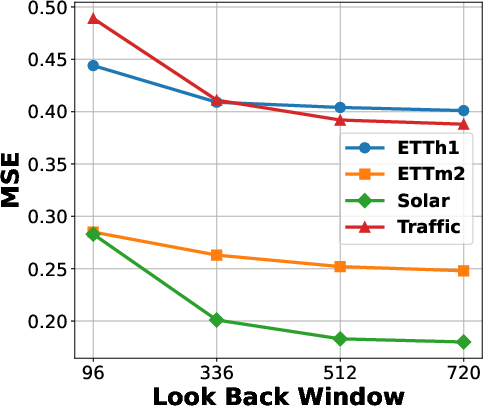
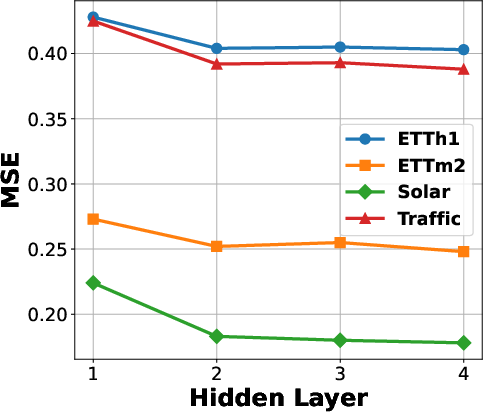
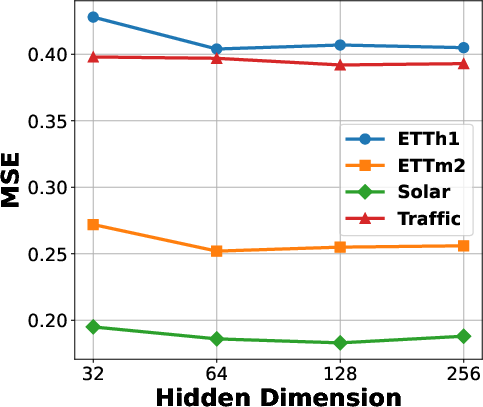
Figure 3: Parameter sensitivity studies showcasing the robustness of main hyper-parameters in SRSNet.
Implications and Future Perspectives
The paper proposes a transformative perspective on time series forecasting, where selective representation spaces dynamically adapt to optimize contextual information utilization. The implications for practical applications are vast, potentially revolutionizing TSF in both commercial and scientific fields by enabling more accurate forecasts.
The potential future developments in AI include refining the SRS module to improve its generalization capacities further, scaling its applications in larger and varied datasets, and enhancing its integration within sophisticated neural architectures.
Conclusion
The introduction of the SRS module represents a significant advancement in time series forecasting techniques, enabling models to construct flexible, adaptive representation spaces. Through the innovative use of Selective Patching and Dynamic Reassembly, SRSNet achieves unprecedented levels of accuracy and efficiency, positioning it as a leading method in multivariate time series forecasting.

