- The paper empirically validates the Planetary Infrared Excess technique by isolating WASP-17b's nightside emission through empirical stellar spectrum removal.
- The study leverages consecutive JWST NIRSpec G395H transit and eclipse observations to derive thermal structure and assess heat redistribution efficiencies.
- Results reveal a nightside temperature near 1000 K with tentative SO2 detection, highlighting transport-induced chemistry and limitations of model-based subtraction.
Nightside Emission and Chemistry of WASP-17b: Empirical Validation of the Planetary Infrared Excess Technique
Introduction
This study presents the first empirical validation of the Planetary Infrared Excess (PIE) technique using JWST NIRSpec G395H observations of the hot Jupiter WASP-17b. The PIE method, previously only demonstrated in theory, enables the extraction of planetary emission spectra—including from the nightside—by removing the stellar contribution from combined light measurements. The authors leverage consecutive transit and eclipse observations to empirically isolate the stellar spectrum, circumventing the limitations of current stellar models. The resulting nightside emission spectrum of WASP-17b is analyzed to constrain its thermal structure and atmospheric composition, with a particular focus on transport-induced chemistry.
Data Acquisition and Stellar Spectrum Calibration
The analysis is based on two JWST NIRSpec G395H visits: one during transit (nightside in view) and one during secondary eclipse (dayside in view), separated by less than the stellar rotation period. The data reduction pipeline (Eureka!) is applied in a strictly parallel fashion to both visits to ensure consistency. The in-eclipse spectrum provides a direct measurement of the stellar flux, which is used as an empirical reference for stellar removal.
The authors demonstrate that PHOENIX stellar models, while providing a reasonable fit to the observed stellar spectrum, exhibit residuals at the 1–2% level—an order of magnitude above the planetary signal. This underscores the necessity of empirical stellar spectrum removal for PIE applications.
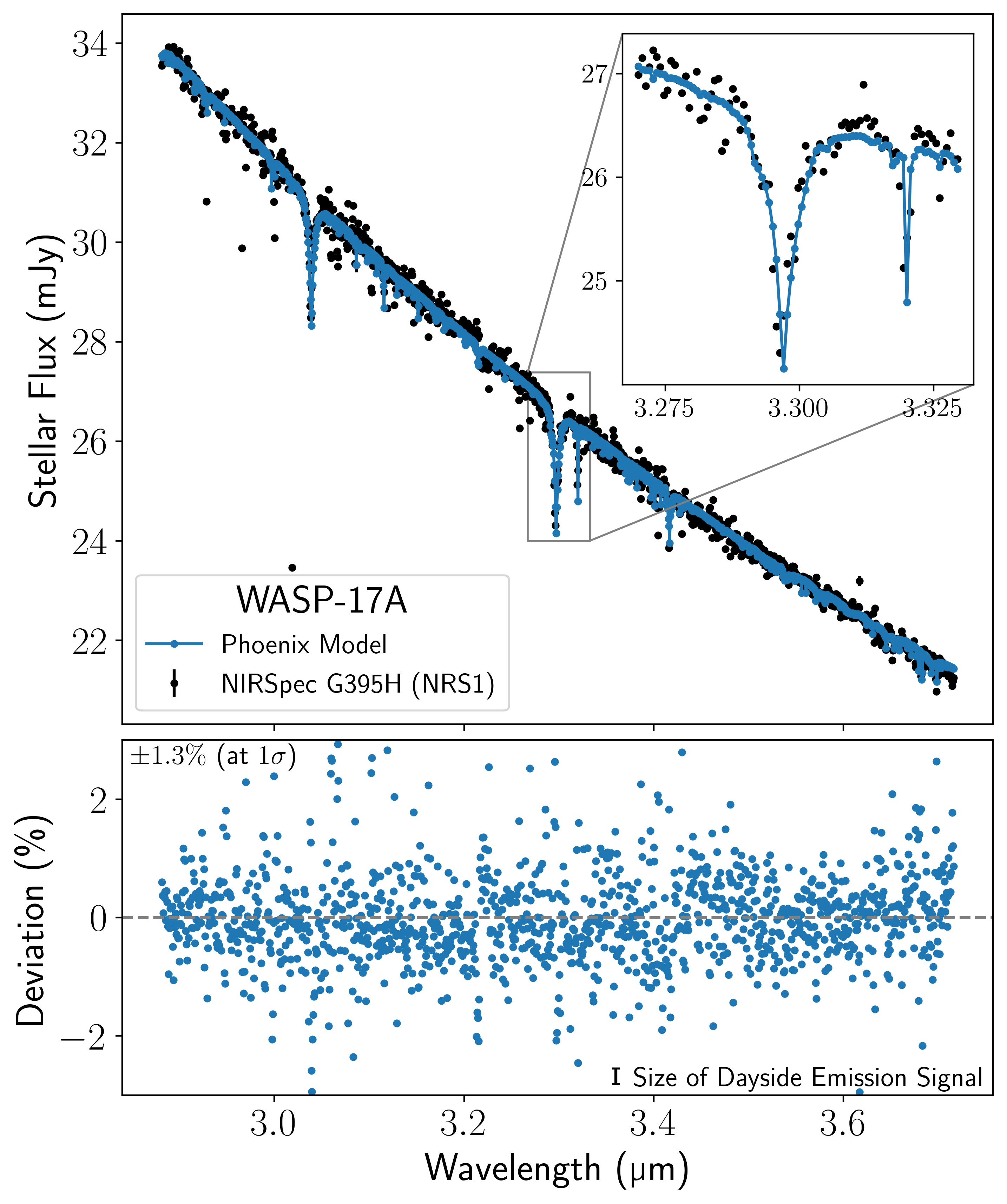
Figure 1: PHOENIX model fit to the calibrated stellar spectrum of WASP-17A, illustrating the residuals that limit model-based stellar subtraction for PIE.
Extraction of Day and Nightside Emission Spectra
The PIE signal is extracted by dividing the out-of-eclipse (dayside) and out-of-transit (nightside) spectra by the in-eclipse stellar spectrum, after careful outlier rejection and error propagation. The resulting spectra reveal the planetary infrared excess from both hemispheres.
The dayside PIE spectra are in excellent agreement with traditional secondary eclipse analyses, validating the method. Notably, a pre- and post-eclipse asymmetry in the dayside spectra is observed, consistent with a longitudinal hotspot offset due to atmospheric dynamics. The nightside spectra exhibit significantly lower flux, consistent with blackbody emission at ∼1000 K, and show no significant pre/post-transit asymmetry.
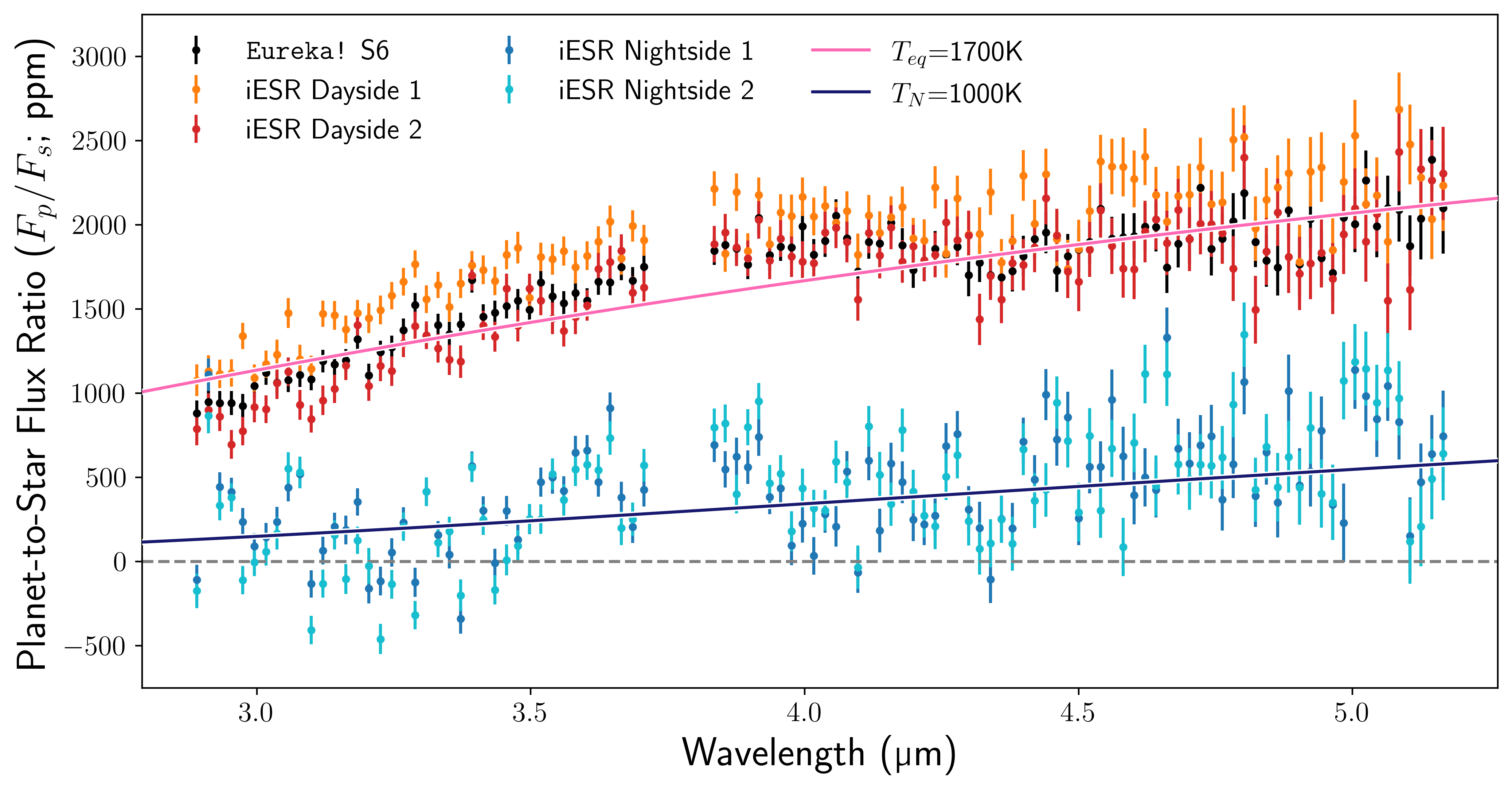
Figure 2: Planetary infrared excess spectra for WASP-17b, showing both dayside and nightside emission compared to blackbody curves at 1700 K and 1000 K.
Atmospheric Retrievals and Error Inflation
Atmospheric retrievals are performed using the POSEIDON code, with a suite of molecular opacities and a double-gray Guillot PT profile parameterization. The retrievals include an error inflation parameter to account for unquantified uncertainties, particularly those arising from combining data across visits.
The dayside emission spectrum yields an equilibrium temperature of 1650±95 K, while the nightside is constrained to 1007±250 K. The inclusion of error inflation is critical for the nightside, with an effective noise floor of 224 ppm, reflecting the compounded uncertainties from multi-epoch synthesis.
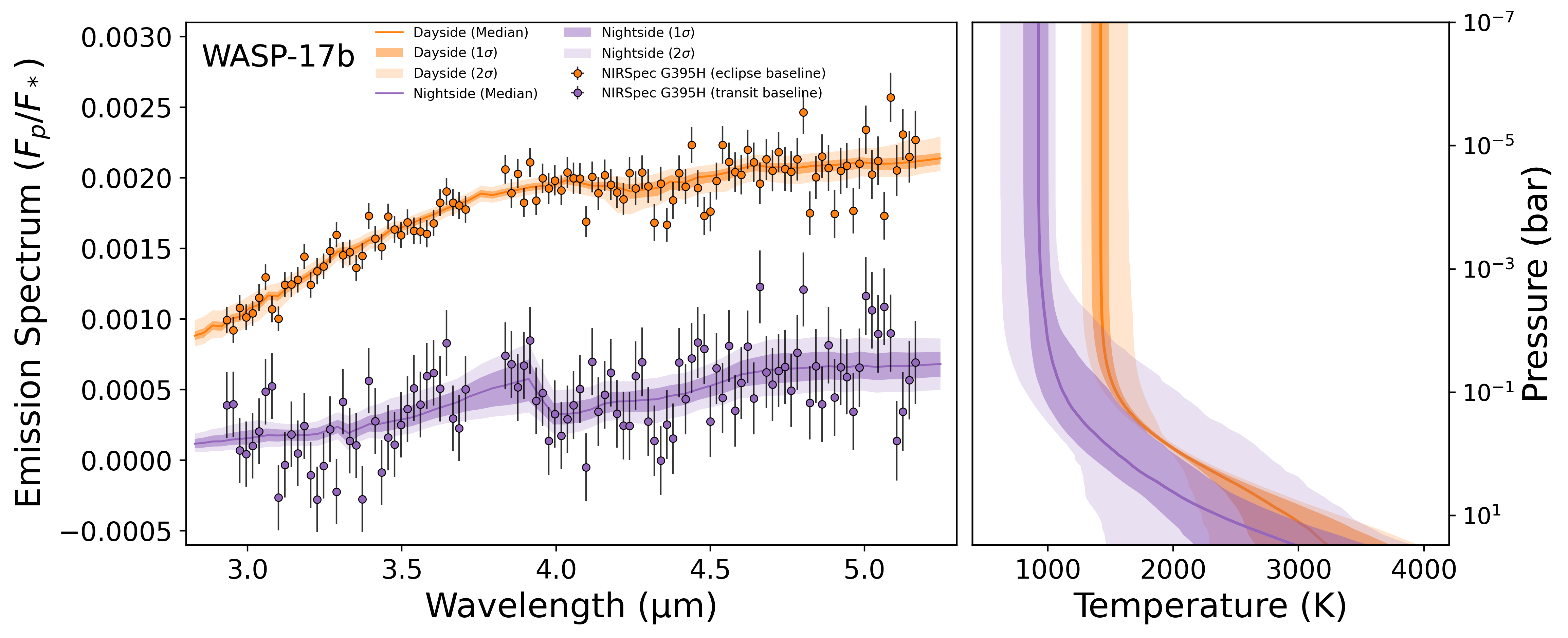
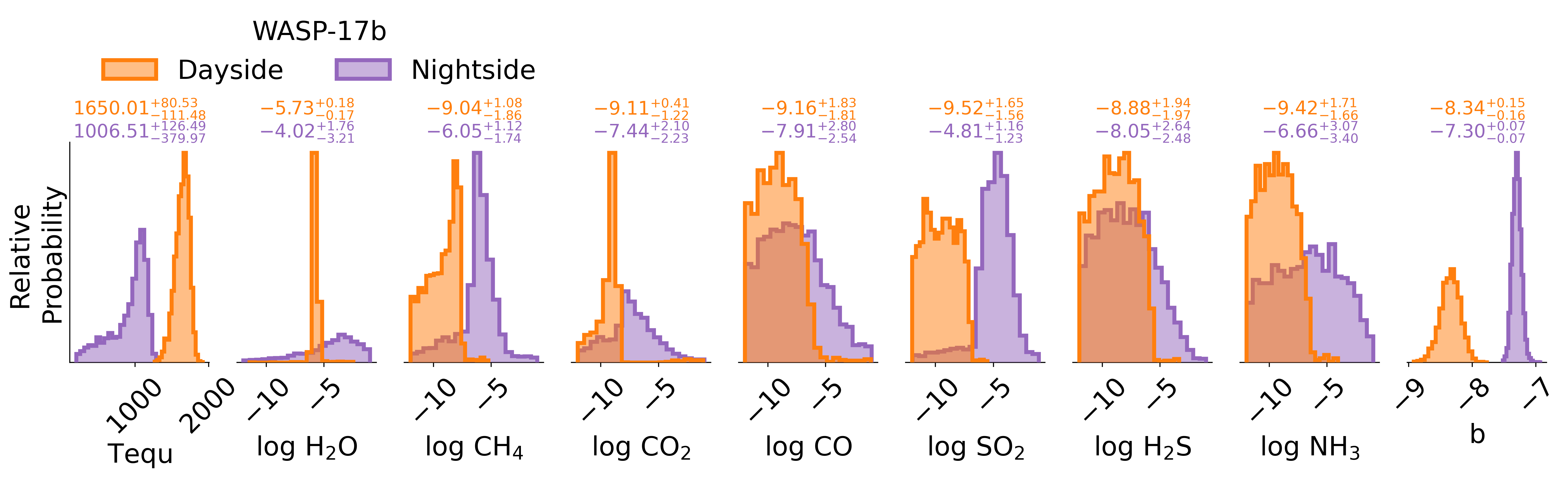
Figure 3: Retrieval results for the day and nightside emission spectra, including posterior distributions for key atmospheric parameters.
Pressure Contribution Functions
The pressure levels probed by the emission spectra are quantified via contribution functions. Both day and nightside fluxes in the G395H bandpass predominantly emerge from the ∼1 mbar region, with a broad range spanning several orders of magnitude in pressure.
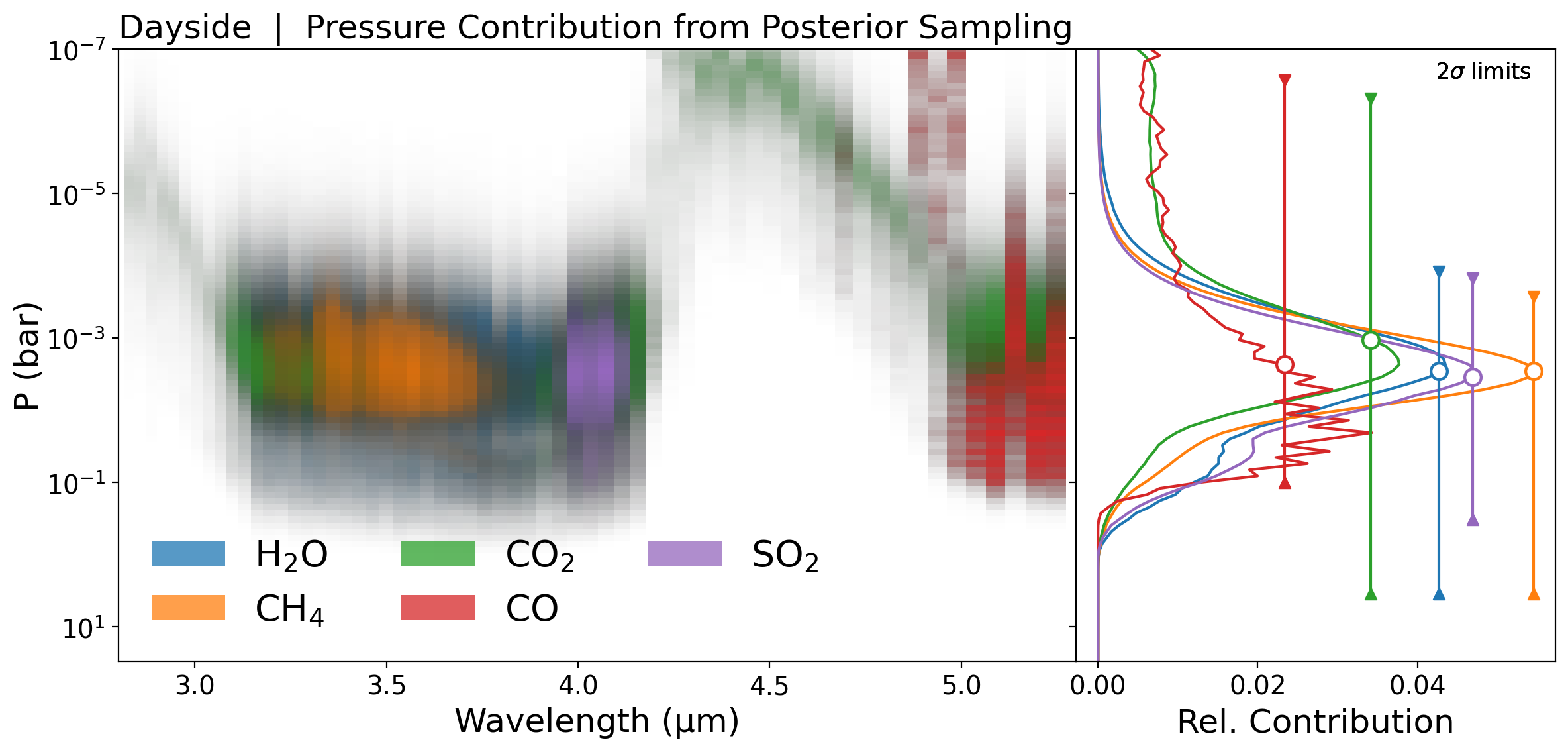
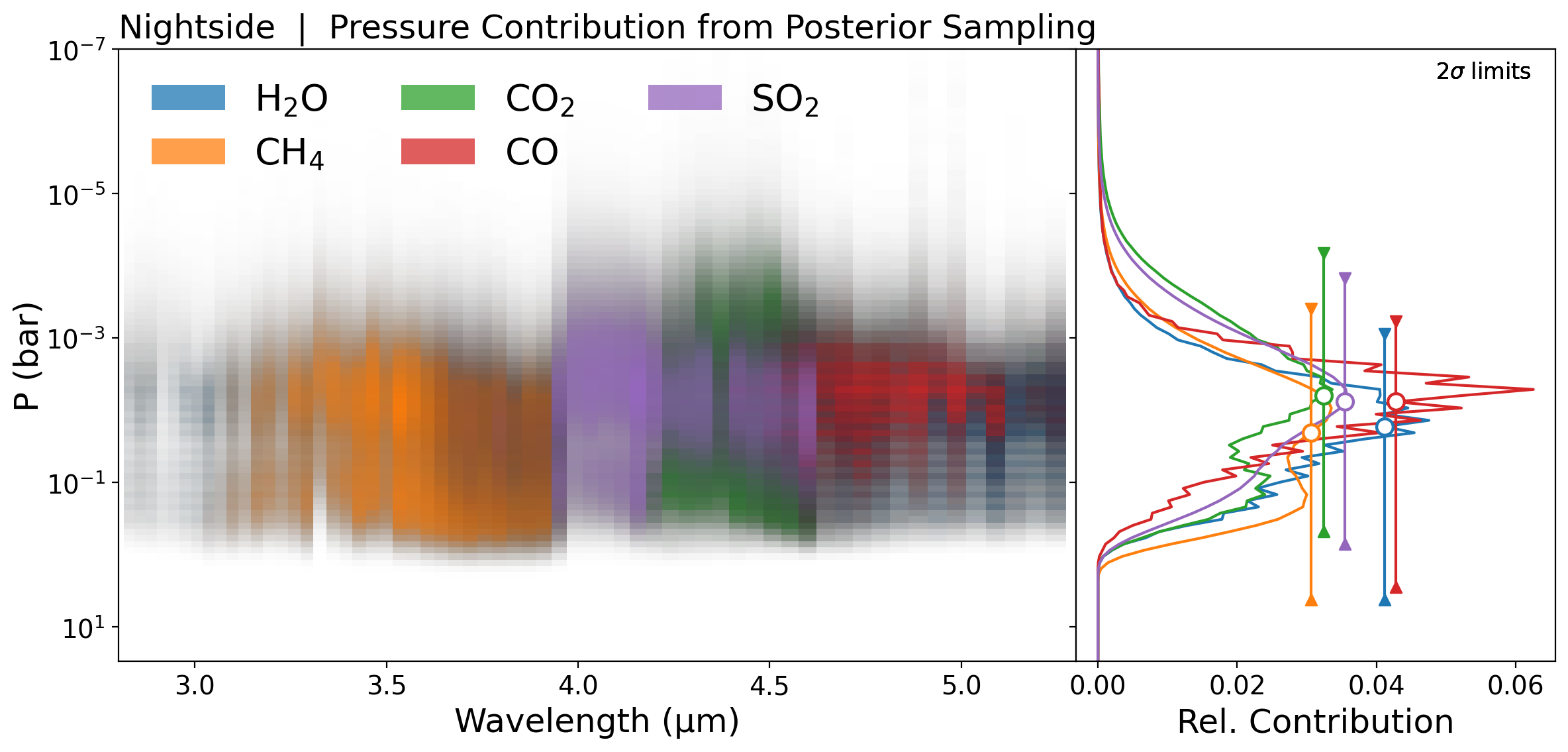
Figure 4: Pressure contribution functions for major molecular species, indicating the atmospheric layers probed by the emission spectra.
Atmospheric Chemistry and Transport Modeling
A two-column photochemical model, based on VULCAN, is used to interpret the retrieved abundances in the context of day-night transport. The model explores a grid of metallicities, C/O ratios, vertical mixing strengths, and zonal wind speeds.
- H2O: The retrieved dayside and nightside H2O abundances are consistent with metallicities between solar and 50× solar.
- SO2: The tentative detection of SO2 on the nightside (2.3σ) is only reproduced in models with efficient horizontal transport (zonal winds ≳100 m/s) and super-solar metallicity. In the absence of zonal winds, nightside SO2 is negligible.
- CH4: The nightside CH4 abundance is higher than the dayside, consistent with transport-induced quenching and the expected temperature dependence.
- CO2: The retrieved nightside CO2 abundance is anomalously low compared to the dayside, contrary to thermochemical expectations, suggesting possible unknown chemical or transport processes.
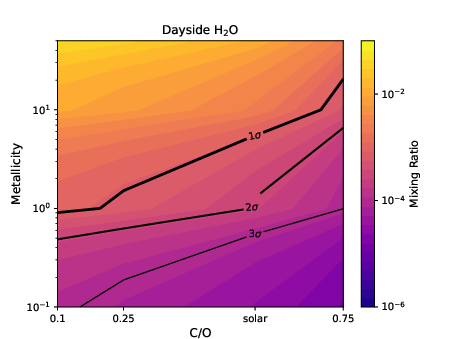
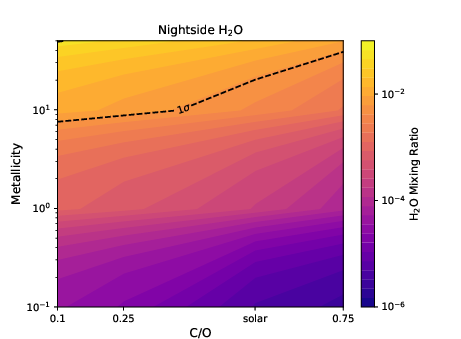
Figure 5: Dayside and nightside H2O abundances as a function of metallicity and C/O ratio, compared to model predictions.
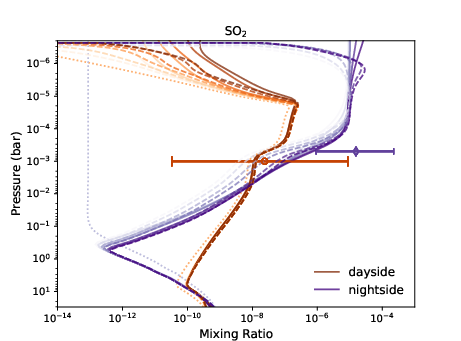
Figure 6: Dayside and nightside SO2 abundance profiles for varying zonal wind speeds and vertical mixing strengths.
Energy Balance and Heat Redistribution
The measured dayside and nightside temperatures are used to constrain the heat redistribution efficiency (f) and Bond albedo (AB) of WASP-17b. The analysis yields f=0.54−0.08+0.06 and AB=0.42−0.10+0.06, indicating relatively inefficient day-night heat transport and a nonzero Bond albedo. These results are consistent with independent constraints from MIRI/LRS eclipse mapping and the presence of high-altitude clouds.
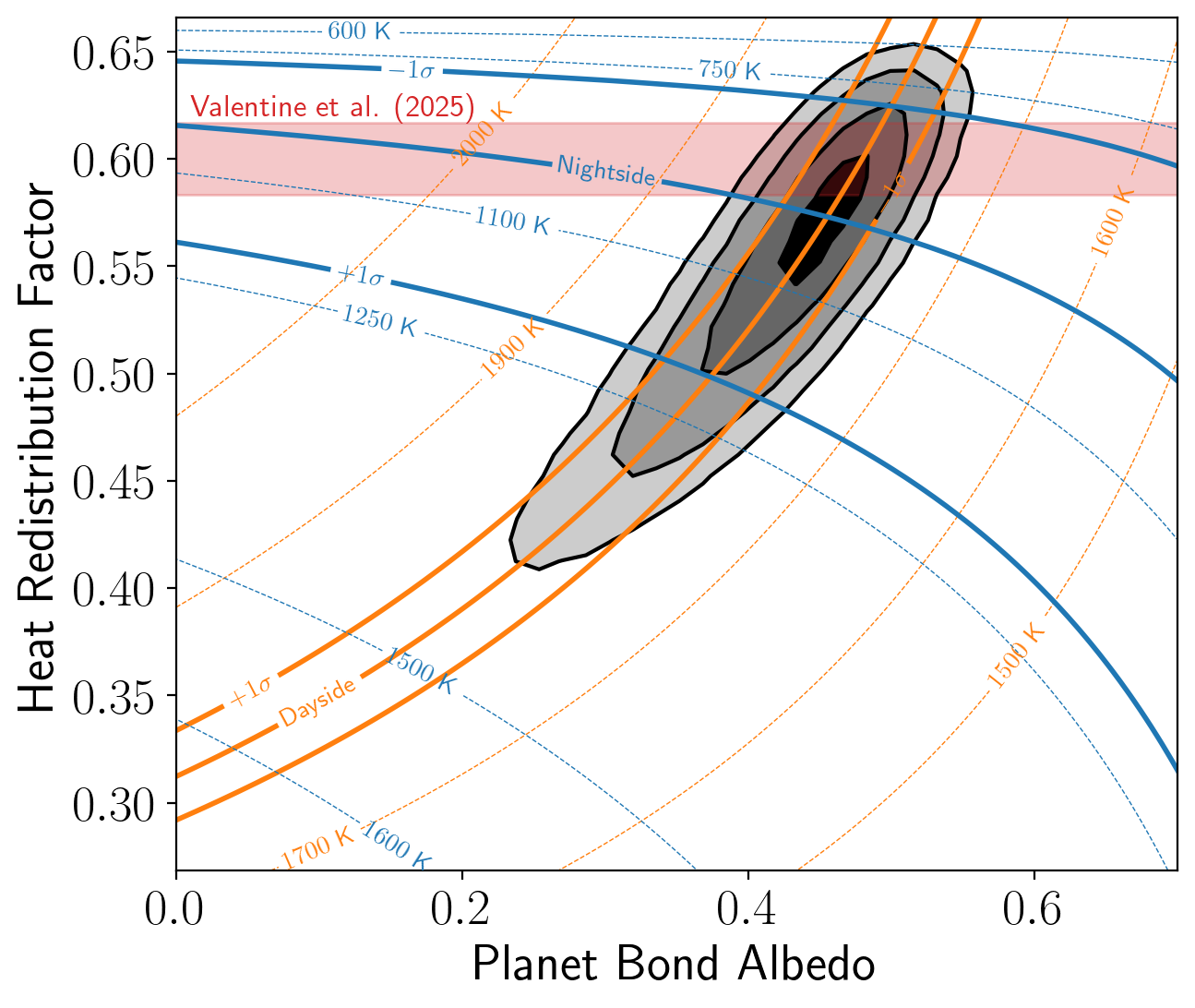
Figure 7: Joint constraints on heat redistribution and Bond albedo from the measured day and nightside equilibrium temperatures.
Instrumental and Astrophysical Limitations
The PIE technique, as implemented here, is shown to be robust for NIRSpec G395H observations of WASP-17b with closely spaced transit and eclipse visits. However, attempts to apply the method to NIRISS SOSS and MIRI LRS data were unsuccessful due to instrument-specific systematics and visit-to-visit variability. The method is also sensitive to stellar variability; for stars with significant activity or for observations separated by more than a stellar rotation period, empirical stellar removal may be compromised.
Implications and Future Prospects
This work empirically validates the PIE technique for exoplanet emission spectroscopy, enabling the study of planetary nightsides without the need for full phase curves. The detection of nightside SO2 provides tentative evidence for transport-induced chemistry, consistent with recent theoretical predictions and observations of other hot Jupiters. The results highlight the importance of instrument stability, closely spaced observations, and the need for improved stellar models for broader applicability.
The PIE method opens a pathway for efficient characterization of non-transiting exoplanets and the 3D structure of hot Jupiter atmospheres. Future developments should focus on mitigating instrument systematics, refining stellar models, and extending the technique to a wider range of targets and instruments.
Conclusion
The study demonstrates that the PIE technique, when applied with empirical stellar spectrum removal, can robustly extract both dayside and nightside emission spectra from JWST NIRSpec G395H data. The nightside spectrum of WASP-17b reveals a temperature near 1000 K and tentative SO2 absorption, consistent with transport-induced chemistry and inefficient heat redistribution. The method's success is contingent on instrument stability and minimal stellar variability between visits. These results establish PIE as a viable approach for exoplanet atmospheric characterization and motivate further methodological and observational advances.

