Lynx: Towards High-Fidelity Personalized Video Generation
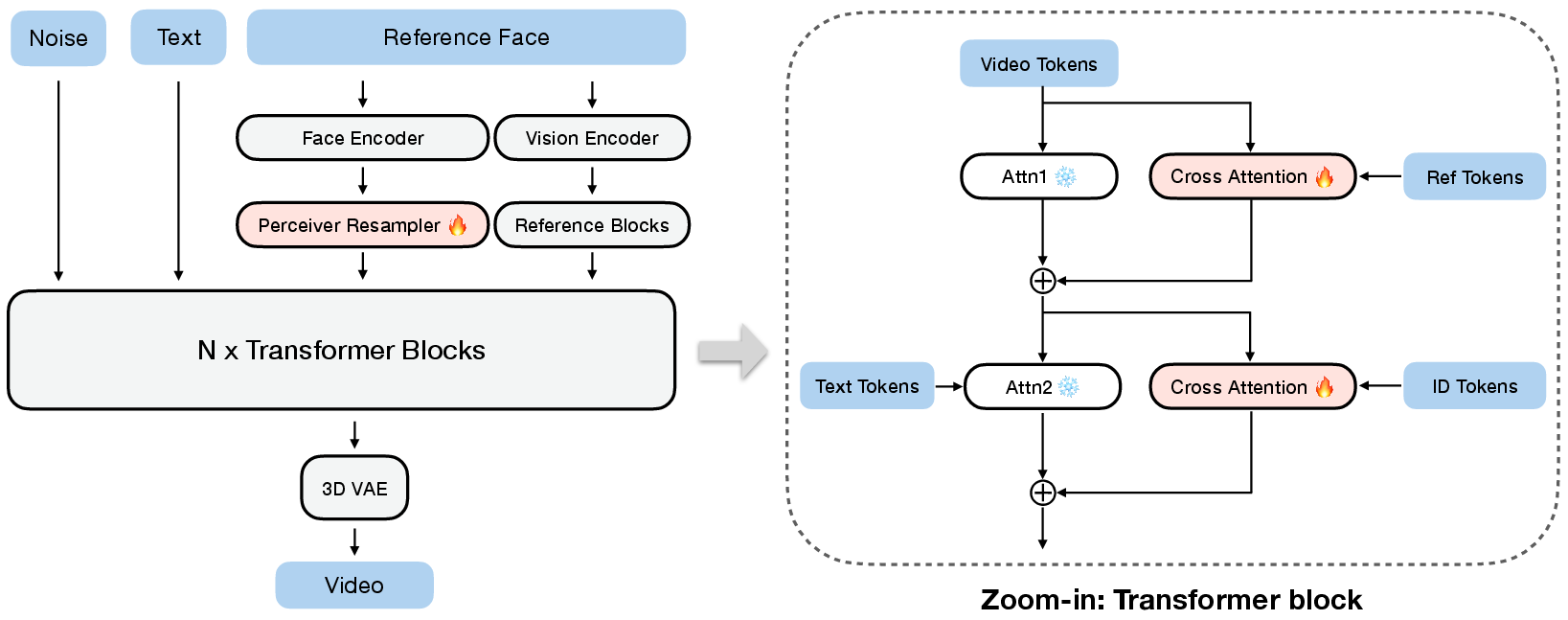
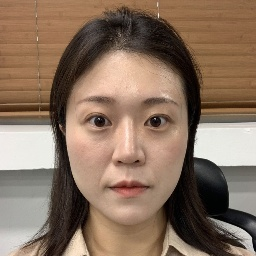
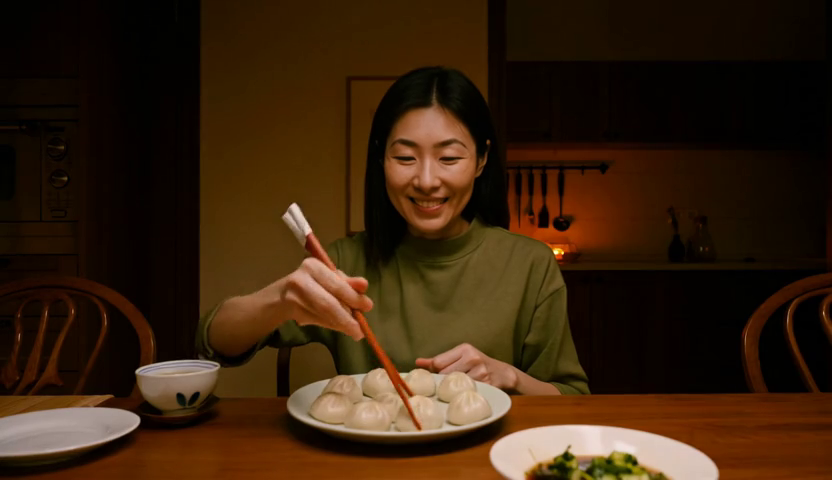
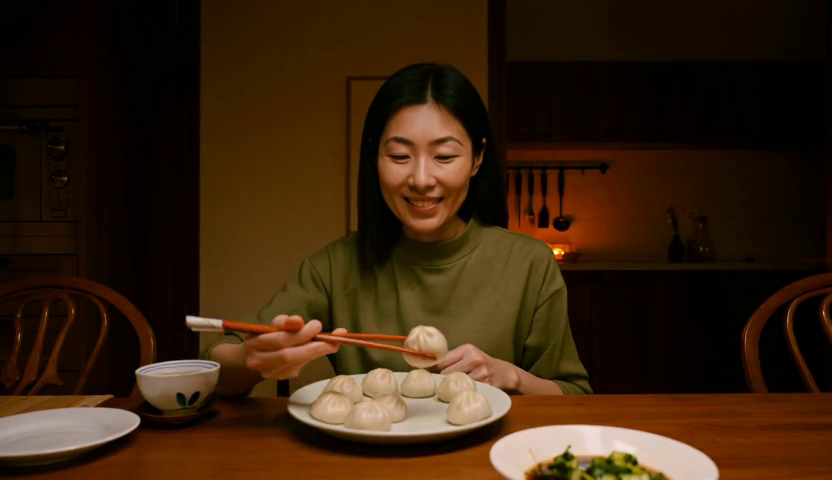
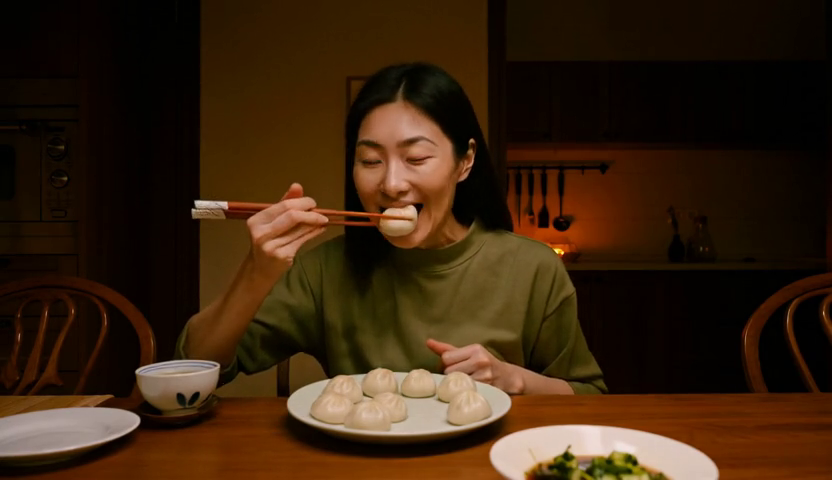
Abstract: We present Lynx, a high-fidelity model for personalized video synthesis from a single input image. Built on an open-source Diffusion Transformer (DiT) foundation model, Lynx introduces two lightweight adapters to ensure identity fidelity. The ID-adapter employs a Perceiver Resampler to convert ArcFace-derived facial embeddings into compact identity tokens for conditioning, while the Ref-adapter integrates dense VAE features from a frozen reference pathway, injecting fine-grained details across all transformer layers through cross-attention. These modules collectively enable robust identity preservation while maintaining temporal coherence and visual realism. Through evaluation on a curated benchmark of 40 subjects and 20 unbiased prompts, which yielded 800 test cases, Lynx has demonstrated superior face resemblance, competitive prompt following, and strong video quality, thereby advancing the state of personalized video generation.














Paper Prompts
Sign up for free to create and run prompts on this paper using GPT-5.
Top Community Prompts
Explain it Like I'm 14
What is this paper about?
This paper introduces Lynx, a computer model that can make short videos of a specific person using just one photo of their face. The main challenge is to keep the person’s identity looking the same across all video frames while still following the text prompt (what the user asks for) and keeping the motion and visuals realistic.
What were the researchers trying to do?
In simple terms, they wanted to:
- Make a video of a person that really looks like the same person in the input photo.
- Follow a user’s text prompt about what should happen in the video.
- Keep the video smooth and natural, with good lighting and details.
- Do all this quickly and efficiently, without retraining the whole big model for each new person.
How does Lynx work?
Think of Lynx like a smart video-making robot built on top of a powerful base model. The base model knows how to make nice videos from text. Lynx adds two small “add‑ons” that help it remember and use the person’s identity from one photo.
The base idea: diffusion and transformers, in plain words
- Diffusion model: Imagine starting with a TV full of static (random noise) and slowly cleaning it until a clear video appears. The model learns how to do this step by step.
- Transformer: This is like a very good attention system that helps the model focus on the right parts of the video and the prompt while generating frames over time.
Two add-ons that preserve identity
- ID-adapter: This is like giving the model a compact “face ID card.” A face-recognition tool (ArcFace) turns the person’s photo into a unique number-like summary (an “embedding”). A small helper (Perceiver Resampler) turns that into a short set of “identity tokens,” which the model can “look at” during generation. When the model draws each frame, it pays cross-attention to these tokens—like glancing at the ID card to make sure the face stays the same.
- Ref-adapter: This is like giving the model a high-detail reference map of the person’s look (skin texture, hair strands, lighting cues). A VAE encoder compresses the photo into a detailed feature map. A “frozen” copy of the base model (a teacher that doesn’t change) processes this reference so Lynx can pull in fine details at every layer using cross-attention. This helps keep tiny but important features consistent.
Together, the ID-adapter keeps who the person is, and the Ref-adapter keeps how they look in detail.
Training strategy: teaching Lynx in steps
- Progressive training: First, Lynx learns on images (treating each image like a 1‑frame video) so it gets really good at the person’s look. Then it trains on real videos so it learns natural motion and timing.
- Smart batching for different sizes: Videos and images come in many shapes and lengths. Lynx cuts them into patches and “packs” them into one long sequence, but uses masks so each video only “talks to itself.” Think of it like packing different puzzles into one box while keeping each puzzle’s pieces separated.
Data pipeline: building the training set
To pair a person’s photo with matching videos and prompts, the team:
- Collected large sets of images and videos.
- Used face-editing tools to add variety:
- Expression augmentation (changing facial expressions) to avoid overfitting to one expression.
- Relighting (changing lighting and background) to handle different environments.
- Verified identity with face-recognition checks and filtered out weak matches.
- Built over 50 million training pairs, sampled in a balanced way.
What did they find?
On a test set with 40 people and 20 prompts (800 videos total):
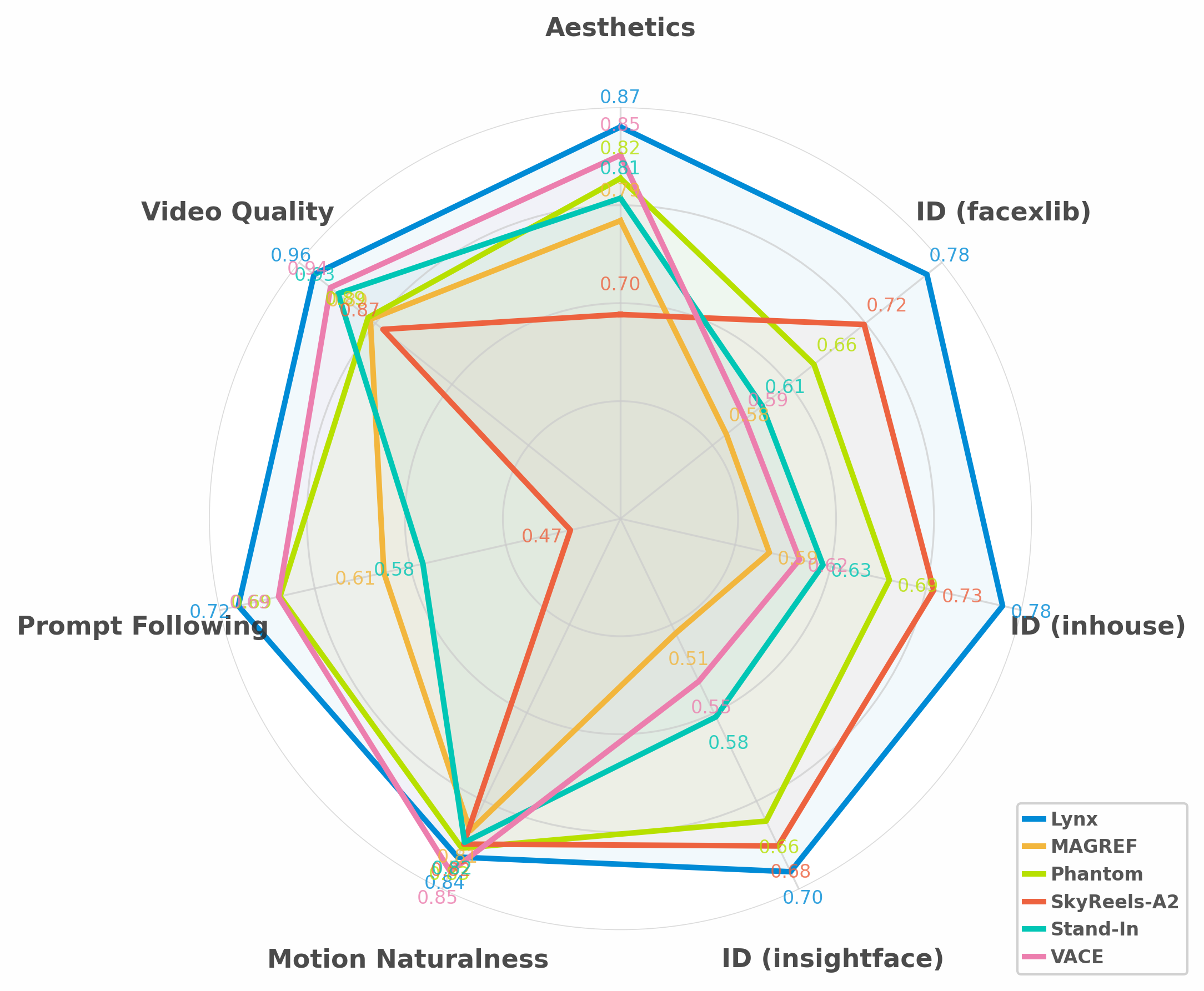
- Identity match: Lynx preserved the person’s face best, according to three separate expert face-recognition evaluators.
- Prompt following and video quality: Using an automated judge (Gemini-2.5-Pro), Lynx scored the highest or near-highest in prompt alignment, overall video quality, and aesthetics, and stayed competitive in motion naturalness.
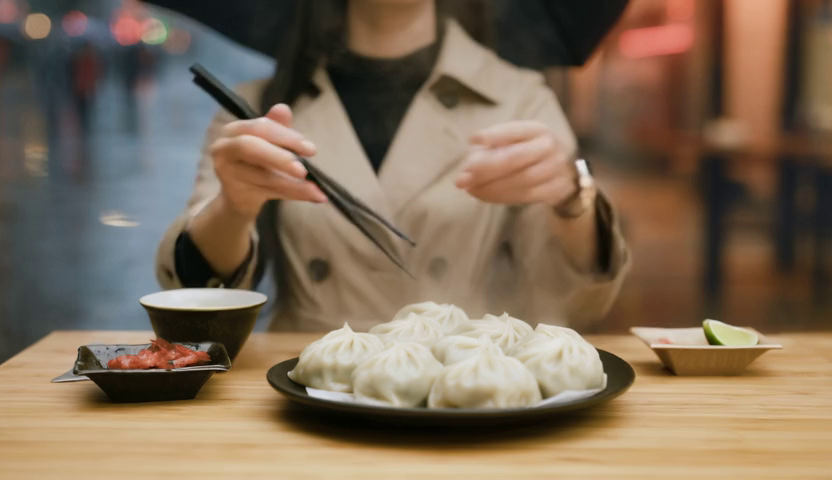
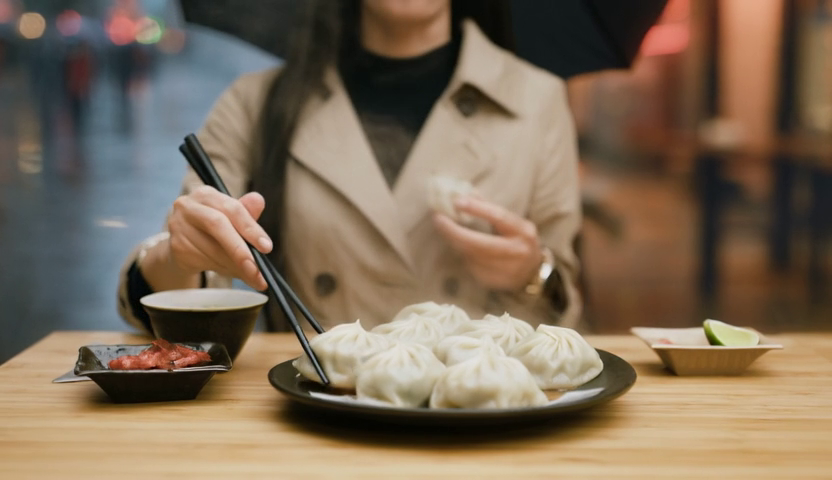
- Visual examples showed fewer issues like background copy-paste artifacts, lighting glitches, or drifting faces, compared to other top methods.
In short, Lynx makes videos that look like the same person, follow the prompt well, and look clean and realistic.
Why does this matter?
- Personalized storytelling: Creators can put a real person into new scenes and actions using only one photo—useful for entertainment, ads, education, and social media.
- Efficiency: Because Lynx uses small add-ons instead of retraining the whole big model for each person, it’s faster and more practical.
- Quality and consistency: Keeping identity stable while allowing flexible scenes and motion has been hard; Lynx pushes the state of the art here.
A note on responsible use: Since this technology recreates people’s likenesses, it should be used with permission and care to avoid misuse.
Overall, Lynx shows a strong, scalable way to make personalized videos from a single image, balancing who the person is (identity), what happens (prompt), and how it looks (quality and realism).
Knowledge Gaps
Knowledge gaps, limitations, and open questions
Below is a concise list of what remains missing, uncertain, or unexplored in the paper, framed to be actionable for future research.
- Limited reference modality: the method only supports personalization from a single image; it does not explore multi-image/video references, reference selection/fusion strategies, or how multiple views affect identity fidelity and editability.
- Face-centric identity: identity preservation is evaluated and designed primarily for faces; full-body identity (body shape, hairstyle, clothing, gait) and non-human subjects (pets, avatars) are not addressed or measured.
- Long-term temporal fidelity: identity drift over long videos and under large viewpoint changes, fast motion, motion blur, or occlusion is not quantified; the maximum supported duration and scalability of temporal consistency are unspecified.
- Multi-subject scenarios: robustness when multiple identities appear in the same scene (group shots, interactions, occlusions) and maintaining per-subject consistency is not studied.
- Controllability trade-offs: there is no systematic analysis of how identity strength interacts with prompt editability (e.g., controlling the “weight” of ID vs. text conditions), nor of schedules/gating strategies to balance resemblance and creativity.
- Adapter design ablations: the paper does not provide ablations on the ID-adapter and Ref-adapter choices (e.g., injection layers, number and dimensionality of tokens, cross-attention heads, gating, register tokens, per-layer weighting) to justify the architecture.
- Identity encoder dependence: ArcFace is used without comparing alternative encoders (e.g., AdaFace, MagFace, partial-profile encoders) or testing robustness to extreme poses, occlusions, accessories (glasses, masks), and domain shifts.
- Training stability of the Perceiver Resampler: the failure to train the Resampler from scratch is reported but not investigated; root-cause analysis and alternative objectives (contrastive, triplet, curriculum, multi-view pretraining) are needed to enable video-domain training without reliance on InstantID pretraining.
- Reference pathway semantics: the frozen reference pathway uses the prompt “image of a face” and noise level 0; it’s unclear how this choice affects conditioning bias, and whether reference prompts or noise scheduling could improve generalization beyond faces or reduce artifacts.
- Motion quality gap: Lynx underperforms VACE on motion naturalness; no targeted techniques are proposed (e.g., motion priors, trajectory control, physics constraints) or analyses of failure modes in dynamic scenes.
- Efficiency and scalability: inference/training latency, memory footprint, throughput, and scalability to high resolution (e.g., 1080p/4K), long clips, and streaming generation are not reported; the extra cost of the frozen reference pass and per-layer cross-attention is unknown.
- NaViT-style frame packing: the impact of spatio-temporal packing versus bucketing on convergence, quality, and temporal coherence is not evaluated; optimal mask designs and positional encoding strategies (3D-RoPE variants) remain unexplored.
- Data pipeline transparency: the 50.2M person–video pairs are not released; data composition, demographic breakdown, distribution of poses/lighting, and the proportion of augmented vs. real pairs are not reported, limiting reproducibility and fairness assessment.
- Augmentation effects: the specific contributions of expression augmentation (X-Nemo) and relighting (LBM) are not quantified via ablation; potential overfitting to augmented artifacts and their impact on generalization are unexamined.
- Fairness and bias: although diverse subjects are included, there is no stratified analysis across demographics (race, age, gender) for identity fidelity and video quality; potential biases in ArcFace and Gemini-based scoring are not assessed.
- Evaluation scale and reproducibility: the benchmark is small (40 subjects × 20 prompts) and partially contains AI-synthesized portraits; there is no human preference study, inter-rater reliability, or correlation analysis between Gemini scores and human judgments.
- Proprietary evaluator dependence: reliance on Gemini-2.5-Pro introduces reproducibility and transparency concerns; the paper does not provide open-source evaluation protocols or measure the scoring variance across runs/prompts.
- Face similarity computation details: the process for frame selection/aggregation (which frames, how many, averaging strategy) for cosine similarity is unspecified, making resemblance scores difficult to replicate and compare.
- Editability stress tests: robustness to aggressive semantic edits (age change, hairstyle/clothing change, stylization), negative prompts, and domain transfer (e.g., realistic-to-stylized) while maintaining identity fidelity is not systematically tested.
- Layer-wise conditioning dynamics: how identity/reference conditioning strength should vary across layers and timesteps, and whether adaptive or learned per-layer schedules improve performance, remains untested.
- Safety, consent, and misuse: the paper does not discuss safeguards against identity forgery, watermarking, consent management, or detection of malicious use; there is no evaluation of spoof-resistance or defenses against adversarial ID inputs.
- Cross-modal extensions: integration with audio (lip-sync, speech), motion control signals (pose/depth/optical flow), or multi-modal prompts for finer control is left to future work without concrete designs or experiments.
- Generalization beyond human-centric prompts: applicability to non-portrait video generation (e.g., identity-conditioned actions in sports, outdoor scenes, crowd scenarios) is not explored.
- Training budget and settings: compute budget, hardware configuration, optimizer/schedule details, and hyperparameters (e.g., adapter learning rates, token counts) are insufficiently specified for full reproduction.
Each of these points can be addressed through targeted ablations, expanded datasets and benchmarks, rigorous fairness and human-in-the-loop evaluations, and detailed reporting of training/inference protocols.
Practical Applications
Immediate Applications
Below are actionable use cases that can be deployed with current capabilities of Lynx’s adapter-based personalized video generation and its training/data pipeline.
- Bold sectors: Media/UGC platforms, Marketing/Advertising, Software
- Personalized short-form video creation from a single selfie, following a text prompt while preserving identity (e.g., creator shout-outs, promo clips, influencer content at scale).
- Tools/workflows: A “Lynx Studio” web app or API; mobile SDK for selfie capture and prompt entry; batch generation for campaign variants; content review and safety filters.
- Assumptions/dependencies: Rights and consent for using a person’s likeness; access to the base DiT video model (e.g., Wan2.1) under compatible licenses; GPU inference; clean face input (frontal, adequate resolution).
- Bold sectors: Entertainment, Game studios
- Rapid previsualization with digital doubles from headshots (storyboards, animatics, NPC promos/cutscenes featuring real players’ faces).
- Tools/workflows: Plug-in adapters (ID-adapter, Ref-adapter) for existing studio pipelines; prompt libraries; shot templates.
- Assumptions/dependencies: Alignment between prompts and desired motion; studio IP policies; quality control to avoid uncanny motion in edge cases.
- Bold sectors: Education, Corporate training/L&D
- Lightweight virtual presenters: generate instructor or executive-led explainer segments from a single photo with script prompts.
- Tools/workflows: LMS integration; template prompts for typical modules; auto-captioning; compliance labeling (“AI-generated”).
- Assumptions/dependencies: Script quality; speaker likeness consent; audio-lip synchronization requires separate modules (not covered by Lynx out-of-the-box).
- Bold sectors: Customer support, Commerce
- Branded support avatars with consistent identity for greeting, troubleshooting, and FAQs (short personalized clips, seasonal specials).
- Tools/workflows: CRM integration; scheduling and automated prompt generation; tone/style presets for brand consistency.
- Assumptions/dependencies: Governance for identity use; opt-in mechanisms; moderation to prevent hallucinated claims.
- Bold sectors: Social, Daily life
- Personalized greetings, invitations, and e-cards (holiday wishes, birthday messages), created from a selfie and a natural language description.
- Tools/workflows: One-click templates; prompt curation; sharable links; watermarking.
- Assumptions/dependencies: Mobile-friendly inference; simple privacy controls; basic content provenance tags.
- Bold sectors: Academia (Vision/ML), Benchmarking
- Reusable evaluation pipeline for identity fidelity, prompt following, aesthetics, and motion naturalness (replicating the Gemini-based scoring and multi-extractor face similarity).
- Tools/workflows: “Identity-Fidelity Scorecard” scripts; multi-model face embedding comparators (ArcFace variants + in-house equivalent); standardized unbiased prompts and subject sets.
- Assumptions/dependencies: Access to evaluator APIs or local scoring models; careful prompt curation to limit bias.
- Bold sectors: ML Engineering, Model training
- Spatio-temporal frame packing for mixed-resolution, mixed-duration training, improving dataloader efficiency without bucketing; progressive image-to-video curriculum.
- Tools/workflows: FramePack dataloader utilities; 3D-RoPE positional encoding setup; curriculum schedules; adapter initialization from InstantID-like checkpoints.
- Assumptions/dependencies: Compatible DiT-based backbones; reliable adapter init (Perceiver Resampler pretraining); significant compute for video stage.
- Bold sectors: Data curation
- Expression and relighting augmentation to enrich person–video pairs while controlling identity drift (X-Nemo for expression, LBM for relighting).
- Tools/workflows: Augmentation suite integrated with identity verification filters; weighted sampling for single- vs multi-scene balance.
- Assumptions/dependencies: Licenses for augmentation tools; strong post-augmentation face-matching filters; diverse demographic coverage.
- Bold sectors: Policy, Platform trust & safety
- Immediate content provenance practices: visible labels for AI-generated outputs; opt-in capture flows; identity-consent gating prior to ID-token creation.
- Tools/workflows: Consent verification steps; audit logs linking identity embeddings to consent artifacts; standardized disclosure labels.
- Assumptions/dependencies: Platform policy adoption; region-specific legal compliance (personality/image rights; minors; sensitive contexts).
Long-Term Applications
These use cases are feasible with additional research, scaling, productization, or integration (e.g., multi-modal control, real-time performance, advanced safety/compliance layers).
- Bold sectors: Entertainment/Film, Digital humans
- Scalable digital doubles for extras, background actors, or controlled stunt previsualization with robust multi-shot consistency and scene choreography.
- Tools/workflows: Multi-subject adapters; scene graph/motion controllers; continuity tools across shots; rights management dashboards.
- Assumptions/dependencies: Extended context modeling for multi-shot narratives; improved temporal control; strong legal frameworks for synthetic talent usage.
- Bold sectors: AR/VR/Telepresence
- Real-time personalized avatars for conferencing and social VR that preserve identity while adapting to user intent and expression; privacy-first “face-preserving” filters.
- Tools/workflows: Streaming adapters with low-latency inference; audio-/pose-driven control; device-level acceleration.
- Assumptions/dependencies: Edge inference on consumer hardware; stable audio–visual alignment; robust identity preservation under extreme poses/occlusions.
- Bold sectors: Advertising/Personalization at scale
- Programmatic campaigns that render countless variants of the same person in different contexts, languages, and product narratives, driven by CRM segmentation.
- Tools/workflows: Campaign orchestration pipelines; consent-aware identity token vaults; A/B testing frameworks for motion/scene templates.
- Assumptions/dependencies: Mature consent management; mitigation for deepfake misuse; strict guardrails and watermarking that survive post-processing.
- Bold sectors: Retail/Fashion
- Personalized try-on and lifestyle sequences featuring a customer’s face across outfits and scenes, benefiting discovery and engagement.
- Tools/workflows: Garment/scene controllers; body pose conditioning; integration with catalog metadata.
- Assumptions/dependencies: Accurate body synthesis beyond head/face; fine-grained control to avoid identity drift; clear disclosure and opt-in.
- Bold sectors: Accessibility, Healthcare
- Therapeutic or assistive video companions (e.g., familiar faces delivering reminders, therapy content, or anxiety-reducing prompts), tuned to patient preferences.
- Tools/workflows: Clinical content curation; caregiver consent gating; privacy-preserving deployments.
- Assumptions/dependencies: Clinical validation; alignment with medical privacy laws; safeguards against unintended psychological effects.
- Bold sectors: Education
- Personalized tutors/mentors with adaptive visual presence, multi-lingual delivery, and curriculum-aligned motion cues; cohort-wide customization with identity-safe variants.
- Tools/workflows: Audio-driven mouth/gesture synchronization; scripted pedagogy prompts; safety filters for minors.
- Assumptions/dependencies: Robust lip-sync; reliable emotion/motion control; child safety and parental consent frameworks.
- Bold sectors: Security/Risk, Red-teaming
- Stress-testing face authentication and anti-spoofing systems using synthetic yet identity-preserving sequences under varied lighting/expressions.
- Tools/workflows: Synthetic adversarial dataset generation; controlled scenario libraries; forensic watermarking for test corpora.
- Assumptions/dependencies: Institutional approvals; clear separation of research vs. malicious use; sharing norms for synthetic testbeds.
- Bold sectors: Research infrastructure
- Generalizable adapter kits (ID-adapter + Ref-adapter) for multiple video backbones; standardized “person–text–video” triplet datasets; bias-aware benchmarks.
- Tools/workflows: Open adapter APIs; reproducible training recipes; unified evaluation suites (identity, prompt, motion, aesthetics).
- Assumptions/dependencies: Community adoption; cross-model compatibility; long-horizon benchmarks for multi-modal and multi-subject settings.
- Bold sectors: Policy/Regulation
- Codified consent standards and provenance requirements for identity-preserving generation; watermarking/metadata mandates; auditing and takedown protocols.
- Tools/workflows: Regulator-backed content provenance registries; platform compliance SDKs; standardized disclosure taxonomies.
- Assumptions/dependencies: Harmonized global policy; robust watermarking that resists editing; scalable audit processes.
Cross-cutting assumptions and dependencies that impact feasibility
- Technical: Access to DiT-based video foundation models (and licenses), sufficient compute for inference/training, quality facial input (frontal, well-lit), and reliable identity embeddings (ArcFace or equivalent). For advanced control, integration with audio-driven motion, pose tracking, and multi-subject handling is needed.
- Legal/ethical: Explicit consent for likeness use, strong disclosure and provenance, protections against impersonation/deepfake misuse, and demographic fairness considerations during training and evaluation.
- Operational: Scalable moderation pipelines, prompt curation to avoid harmful content, user-friendly safety defaults, and persistent watermarking/metadata throughout content distribution.
Glossary
- 3D Rotary Position Embeddings (3D-RoPE): A positional encoding scheme for transformers that encodes spatial and temporal positions by rotating embeddings in three dimensions. "For positional encoding, we apply 3D Rotary Position Embeddings (3D-RoPE)~\cite{su2104enhanced} independently to each video."
- ArcFace: A face recognition method/loss that produces highly discriminative facial embeddings using an additive angular margin. "The ID-adapter employs a Perceiver Resampler to convert ArcFace-derived facial embeddings into compact identity tokens for conditioning,"
- Attention mask: A masking mechanism in transformer attention that restricts token interactions, preventing undesired cross-sample attention. "An attention mask ensures that tokens only attend within their own video, preventing cross-sample interference."
- Bucketing: A training strategy that groups inputs into predefined aspect ratio/resolution buckets to enable efficient batching. "Traditional training in the image domain often relies on bucketing to handle multi-resolution inputs."
- CLIP image encoder: The vision backbone from CLIP that produces image embeddings aligned with text representations. "ConceptMaster~\cite{huang2025conceptmaster} employs a CLIP image encoder and a learnable Q-Former to fuse visual representations with corresponding text embeddings for each concept."
- ControlNet: An auxiliary conditioning network for diffusion models that injects structured controls (e.g., edges, poses) without degrading generation quality. "InstantID~\cite{wang2024instantid} incorporates a ControlNet~\cite{zhang2023adding} module for input decoupling and finer-grained control."
- Cosine similarity: A metric that measures the angle between two vectors, commonly used to compare identity embeddings. "To measure identity fidelity, we compute cosine similarity using three independent feature extractors."
- Cross-attention: An attention mechanism where queries from one sequence attend to keys/values from another, enabling conditioning on external inputs (e.g., text or reference features). "As with ID-adapter, we apply separate cross-attention at each layer to integrate the corresponding reference tokens."
- Dense VAE features: Spatially dense latent features produced by a VAE encoder, used to inject fine-grained details into generation. "the Ref-adapter integrates dense VAE features from a frozen reference pathway, injecting fine-grained details across all transformer layers through cross-attention."
- Diffusion Transformer (DiT): A transformer-based architecture for diffusion generative models that scales well and models spatio-temporal dynamics. "Built on an open-source Diffusion Transformer (DiT) foundation model, Lynx introduces two lightweight adapters to ensure identity fidelity."
- DreamBooth: A fine-tuning method that personalizes text-to-image diffusion models to specific subjects from a small set of images. "DreamBooth~\cite{ruiz2023dreambooth} and LoRA-based variants~\cite{hu2022lora} require fine-tuning either the full base model or additional low-rank adapters."
- Flow Matching: A generative framework that learns continuous vector fields to transform noise into data distributions. "Wan is built upon the DiT architecture~\cite{peebles2023scalable}, combined with the Flow Matching~\cite{lipman2022flow} framework."
- Frequency decomposition: Decomposing signals into frequency components to enforce consistency or apply constraints in generation. "ConsistID~\cite{yuan2025identity} enforces facial identity consistency via frequency decomposition."
- Gemini-2.5-Pro API: An evaluation API/model used to automatically score videos on prompt alignment, aesthetics, motion naturalness, and overall quality. "we construct an automated pipeline with the Gemini-2.5-Pro API~\footnote{https://ai.google.dev/gemini-api/docs}, instructing the model to score aesthetic quality, motion naturalness, prompt alignment, and overall video quality."
- ID-adapter: An adapter module that injects identity features (from face embeddings) into the base model via cross-attention. "Instead of restructuring and fine-tuning the full base model, Lynx adopts an adapter-based design with two specialized components: the ID-adapter and the Ref-adapter."
- Identity embeddings: Vector representations of a subject’s identity derived from face recognition models. "employ lightweight conditioning mechanisms based on identity embeddings or reference features,"
- Identity tokens: Fixed-length token embeddings that encode identity information for conditioning the generator. "convert ArcFace-derived facial embeddings into compact identity tokens for conditioning,"
- InstantID: A tuning-free identity injection approach enabling rapid, zero-shot personalization in diffusion models. "InstantID~\cite{wang2024instantid} incorporates a ControlNet~\cite{zhang2023adding} module for input decoupling and finer-grained control."
- IP-Adapter: A lightweight adapter that injects identity/reference features into diffusion models for personalization. "IP-Adapter~\cite{ye2023ip-adapter} represents identity features with a face recognition encoder and injects them into the base model through adapters."
- Latent diffusion: Diffusion modeling performed in a compressed latent space (via a VAE) rather than pixel space to improve efficiency. "Early latent diffusion methods extended image foundation models with U-Net architectures to the video domain by incorporating temporal modules such as 3D convolutions and temporal attention."
- LBM: A portrait relighting method used to vary illumination and backgrounds for data augmentation. "We apply LBM~\cite{chadebec2025lbm} to relight faces and replace backgrounds under varying illumination conditions, enhancing robustness to lighting variation (Figure~\ref{fig:augmentation}b)."
- LoRA: Low-Rank Adaptation; a parameter-efficient fine-tuning technique that adds small low-rank matrices to pretrained weights. "DreamBooth~\cite{ruiz2023dreambooth} and LoRA-based variants~\cite{hu2022lora} require fine-tuning either the full base model or additional low-rank adapters."
- MMDiT: A dual-stream variant of DiT designed for more expressive spatio-temporal modeling in video diffusion. "Diffusion Transformers (DiT)~\cite{peebles2023scalable} and their dual-stream variant MMDiT~\cite{esser2024scaling} demonstrated more expressive spatio-temporal modeling,"
- NaViT: A vision transformer approach (Patch n’ Pack) that efficiently batches inputs of arbitrary aspect ratios and resolutions. "we adopt the NaViT approach~\cite{dehghani2023patch} to efficiently batch heterogeneous inputs."
- Patchified tokens: Tokens obtained by splitting inputs into fixed-sized patches for transformer processing. "we concatenate the patchified tokens of each video into a single long sequence,"
- Perceiver Resampler: A module that maps high-dimensional features into a fixed number of learned tokens for downstream conditioning. "a Perceiver Resampler~\cite{alayrac2022flamingo} (also known as the Q-Former~\cite{li2023blip}) is trained to map it into a fixed-length token embedding representation."
- Q-Former: A learnable query transformer that produces compact token representations from input features. "(also known as the Q-Former~\cite{li2023blip}) is trained to map it into a fixed-length token embedding representation."
- Ref-adapter: An adapter that integrates reference image features across all transformer layers via cross-attention to enhance fidelity. "the Ref-adapter integrates dense VAE features from a frozen reference pathway, injecting fine-grained details across all transformer layers through cross-attention."
- Register tokens: Learnable tokens concatenated to sequences to improve transformer representations or act as memory slots. "The token embedding is concatenated with 16 additional register tokens~\cite{darcet2023vision} and cross-attended with the input visual tokens."
- ReferenceNet: A reference pathway design that processes the input reference through a (frozen) model to provide multi-layer features for conditioning. "we instead process the reference image through a frozen copy of the base model (with noise level as 0 and text prompt as "image of a face"), similar to the design of ReferenceNet~\cite{hu2023animateanyone}."
- Spatio-temporal self-attention: Self-attention that jointly models spatial and temporal dependencies among visual tokens. "Each DiT block first applies spatio-temporal self-attention over visual tokens,"
- U-Net architectures: Encoder–decoder convolutional networks with skip connections commonly used in diffusion models. "Early latent diffusion methods extended image foundation models with U-Net architectures to the video domain by incorporating temporal modules such as 3D convolutions and temporal attention."
- Variational autoencoders (VAEs): Probabilistic encoders/decoders that learn compact latent representations to enable efficient training and generation. "variational autoencoders (VAEs)~\cite{kingma2013auto} compress raw videos into compact latent representations,"
- Weighted sampling: A data sampling strategy that draws items with specified probabilities to balance diverse sources during training. "these different types of pairs are retrieved through weighted sampling to balance data diversity."
- X-Nemo: A face expression editing model used to augment expression diversity in training data. "We employ X-Nemo~\cite{zhao2025x} to edit a source face so that it matches the target expression, thereby enriching expression diversity (Figure~\ref{fig:augmentation}a)."
Collections
Sign up for free to add this paper to one or more collections.

