Papers
Topics
Authors
Recent
Search
2000 character limit reached

Inversion of biological strategies in engineering technology: in case underwater soft robot

Published 16 Apr 2025 in cs.RO | (2504.11722v1)

Abstract: This paper proposes a biomimetic design framework based on biological strategy inversion, aiming to systematically map solutions evolved in nature to the engineering field. By constructing a "Function-Behavior-Feature-Environment" (F-B-Cs in E) knowledge model, combined with NLP and multi-criteria decision-making methods, it achieves efficient conversion from biological strategies to engineering solutions. Using underwater soft robot design as a case study, the effectiveness of the framework in optimizing drive mechanisms, power distribution, and motion pattern design is verified. This research provides scalable methodological support for interdisciplinary biomimetic innovation.
Authors (4)

Summary

  • The paper introduces the F-B-Cs in E model to convert biological functions, behaviors, characteristics, and environments into effective engineering strategies.
  • It employs NLP techniques and a VIKOR multi-criteria decision-making method to evaluate and optimize propulsion strategies in underwater soft robotics.
  • Practical applications such as tail-swing and fluid injection propulsion demonstrate improved efficiency and adaptability in soft robot designs.

Inversion of Biological Strategies in Engineering Technology: A Case Study on Underwater Soft Robots

Introduction

The paper "Inversion of biological strategies in engineering technology: in case underwater soft robot" explores an innovative biomimetic design framework that systematizes the translation of biological strategies into engineering applications with a particular focus on underwater soft robots. The fundamental contribution is the formulation of a "Function-Behavior-Characteristic-Environment" (F-B-Cs in E) knowledge model. This model facilitates efficient conversion from biological strategies, which are inherently evolved for natural systems, into viable engineering solutions. This research indicates a potential to optimize drive mechanisms, power distribution, and motion pattern design within the context of underwater soft robotics.

Biomimetic Design Framework

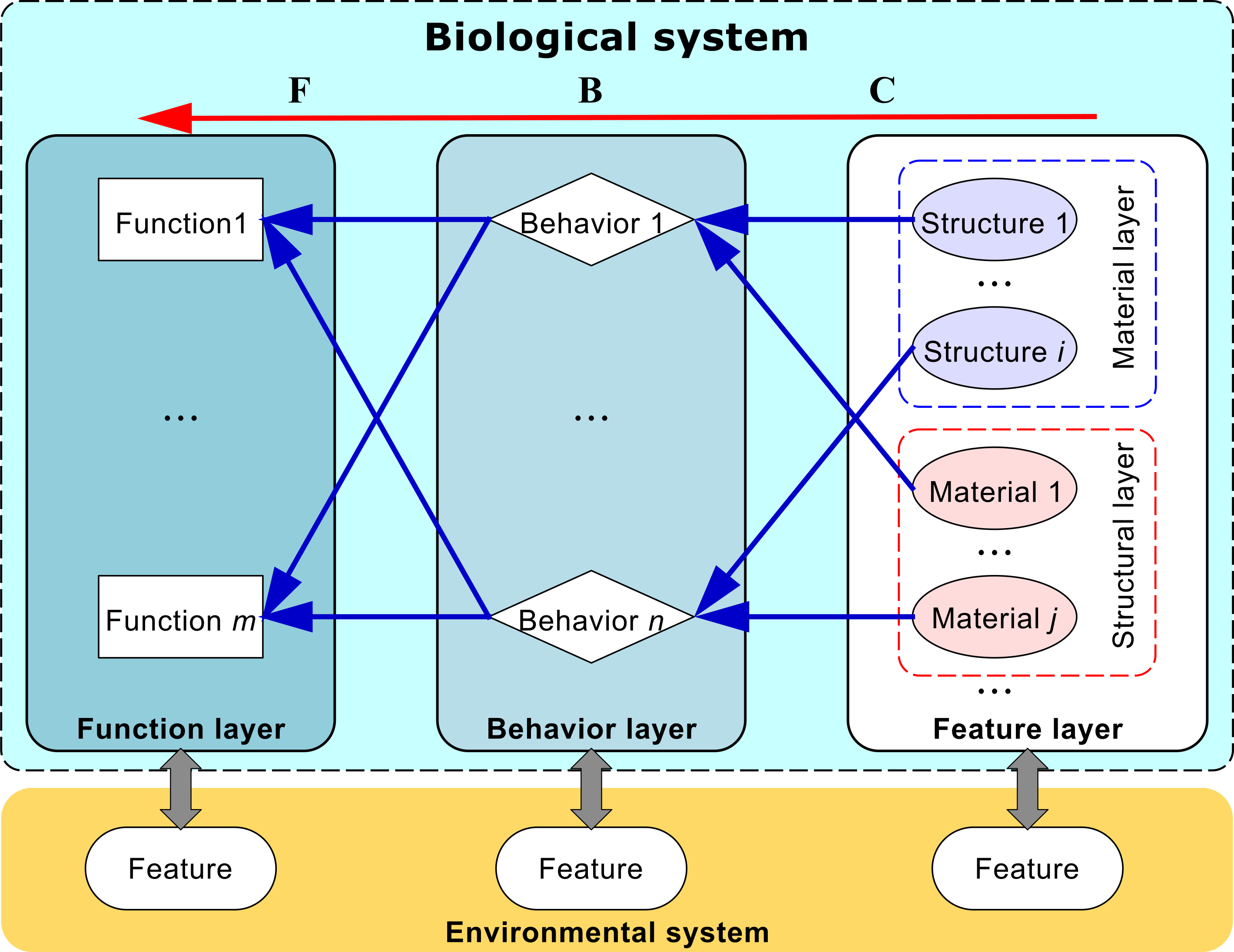
The approach delineates four progressive stages for biomimetic design: problem definition, biological prototype screening, principle extraction, and engineering transformation. The complexity of biological systems poses a significant challenge in extracting applicable strategies, leading to inefficiencies in integrating biological knowledge with engineering systems. The proposed F-B-Cs in E model aims to standardize descriptions of biological system functions (Function), behaviors (Behavior), characteristics (Characteristic), and environmental associations (Environment), establishing a bridge that connects biological and engineering realms more effectively. Figure 1

Figure 1: Knowledge framework based on characteristics-behaviors-functions in environmental systems.

Textual Knowledge Framework and Strategy Inversion

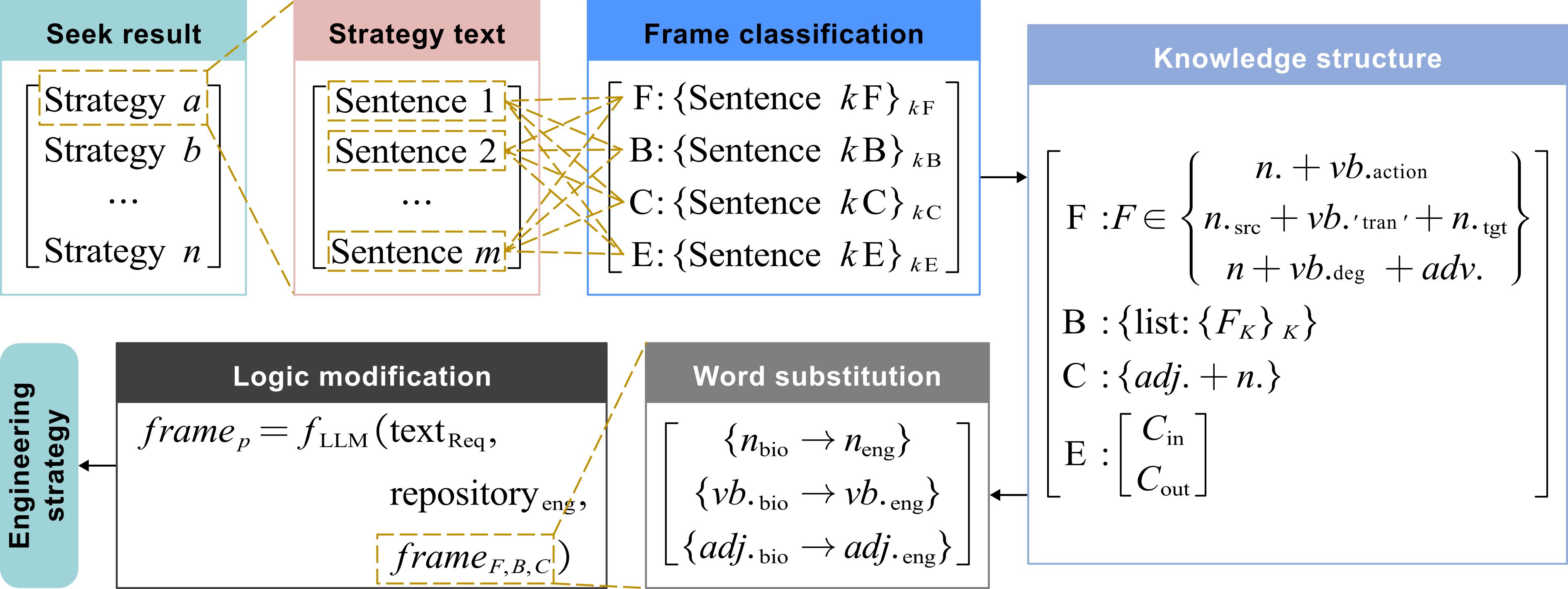
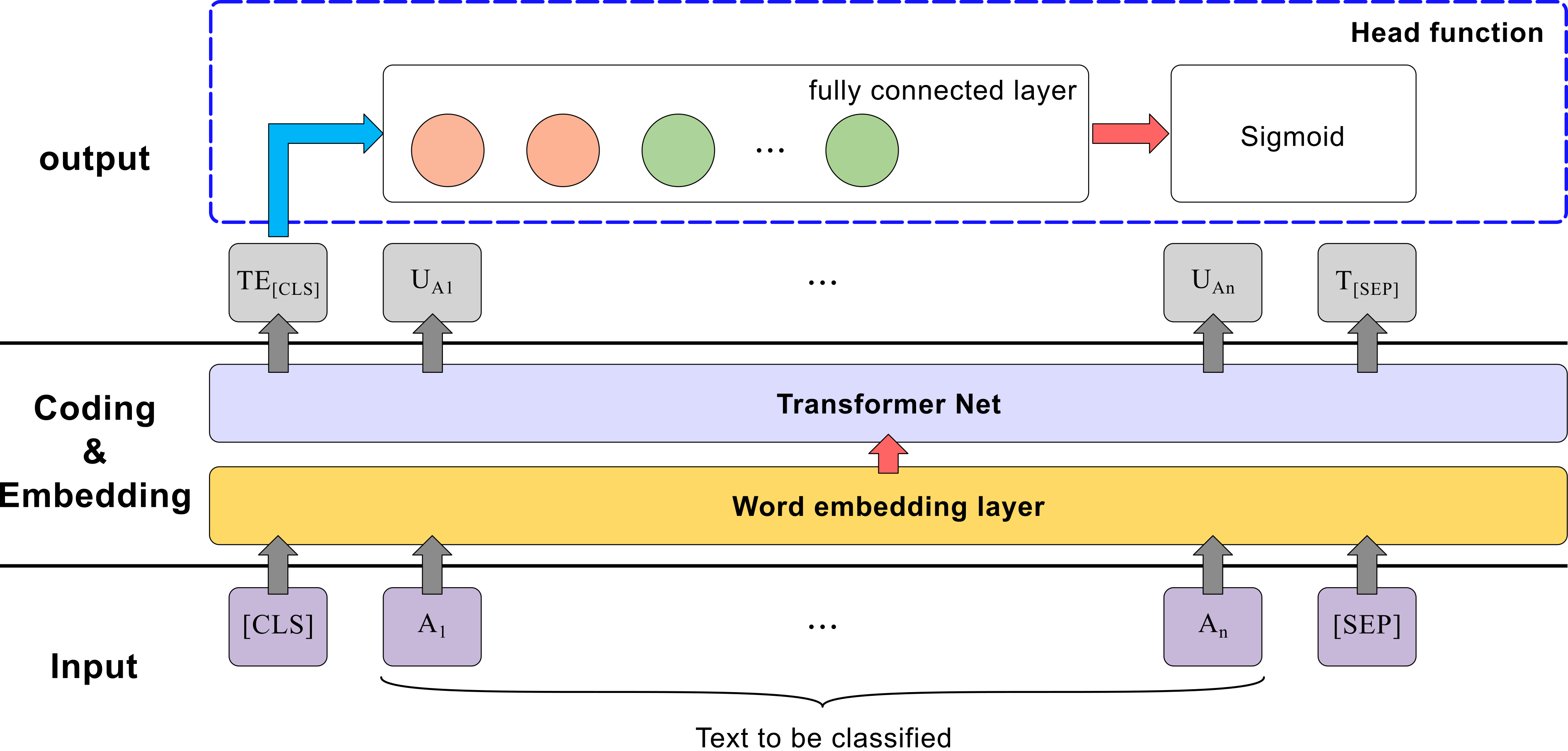
The model's textual framework categorizes biological strategy texts into functions, behaviors, characteristics, and environments for clearer strategy descriptions. A pivotal aspect is the multi-label classification driven by NLP techniques and GPT-based models for strategic text transformation into engineering contexts. The process enriches decision-making capabilities in biological strategy mapping, providing a robust tool for interdisciplinary innovation. Figure 2

Figure 2: Structure of the label classification model.

Decision-Making and Engineering Strategy Optimization

The paper utilizes a hybrid multi-criteria decision-making method (VIKOR model) to evaluate and rank applicable engineering strategies. This approach balances preference-based subjective evaluations with objective engineering metrics, thereby optimizing the translation of biological strategies into engineering solutions. The process aligns with systematic decision-making methods, facilitating scalable implementation in complex design scenarios. Figure 3

Figure 3: Bionic text conversion based on F-B-Cs model in E knowledge framework.

Application to Underwater Soft Robotics Design

The framework is applied to the design of underwater soft robots, focusing on various propulsion strategies such as tail-swing and fluid-injection techniques. These strategies are inspired by biological locomotion methods in aquatic environments. Detailed studies including tail-swing and fluid injection propulsion provide practical cases for demonstrating the framework's applicability.

Tail-Swing Propulsion Strategy

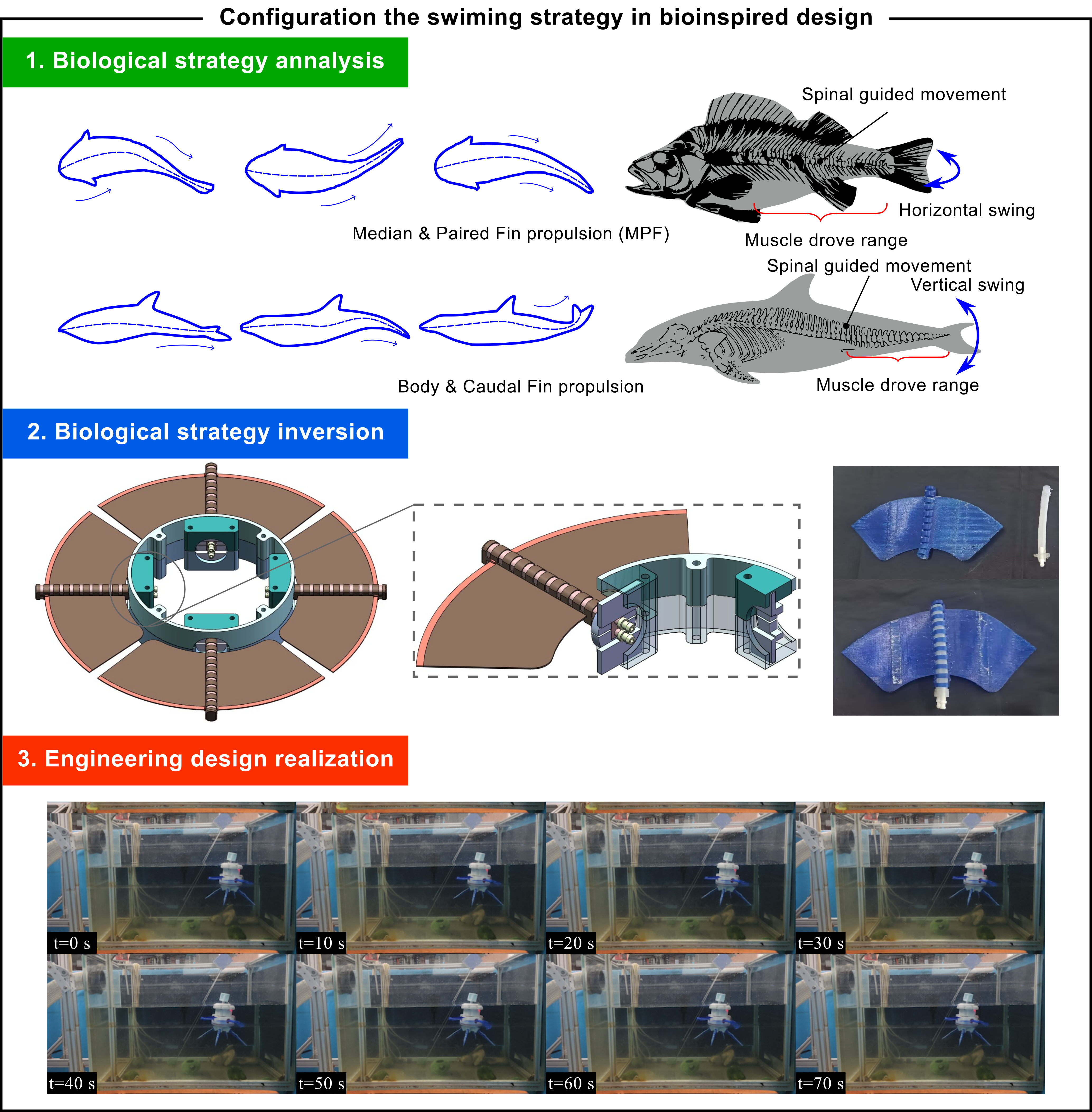
Tail-swing propulsion in soft robots draws inspiration from fish and whale movement, translating muscle activity and oscillatory motions into engineering models for efficient underwater locomotion. This approach highlights the adaptability of evolutionary biological strategies in soft robotics design, emphasizing the value of borrowing natural strategies for human-engineered applications. Figure 4

Figure 4: Case: tail swing propulsion strategy.

Fluid Injection Propulsion Strategy

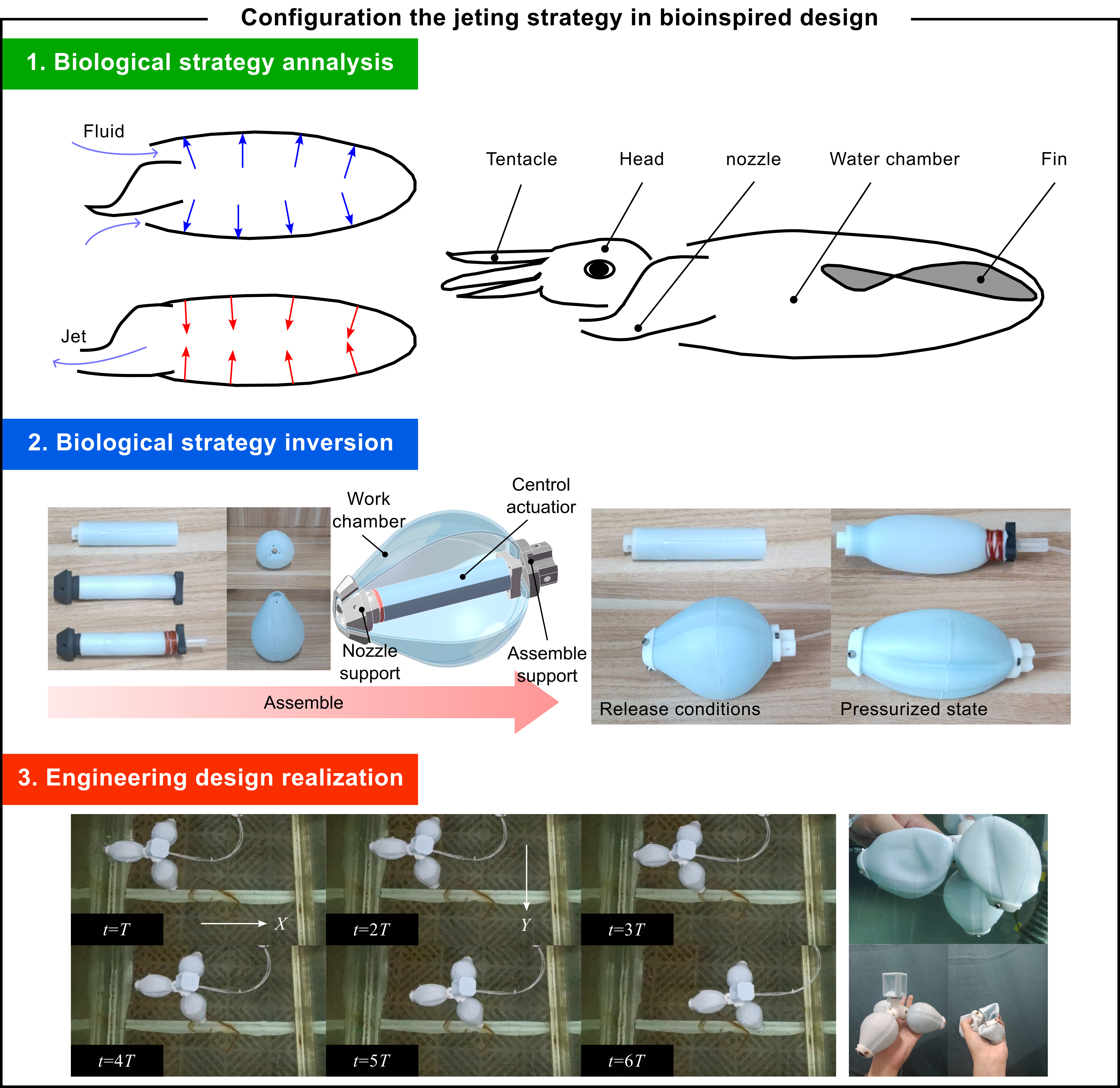
In this propulsion model, the design mimics the jet propulsion systems of cephalopods. Biomechanical optimization features from marine organisms such as elastically stored potential energy and rapid fluid expulsion are used to inform the design of efficient propulsion units in soft underwater robots, demonstrating significant advances in engineering efficiency. Figure 5

Figure 5: Case: fluid injection propulsion strategy.

Autonomic Peristalsis

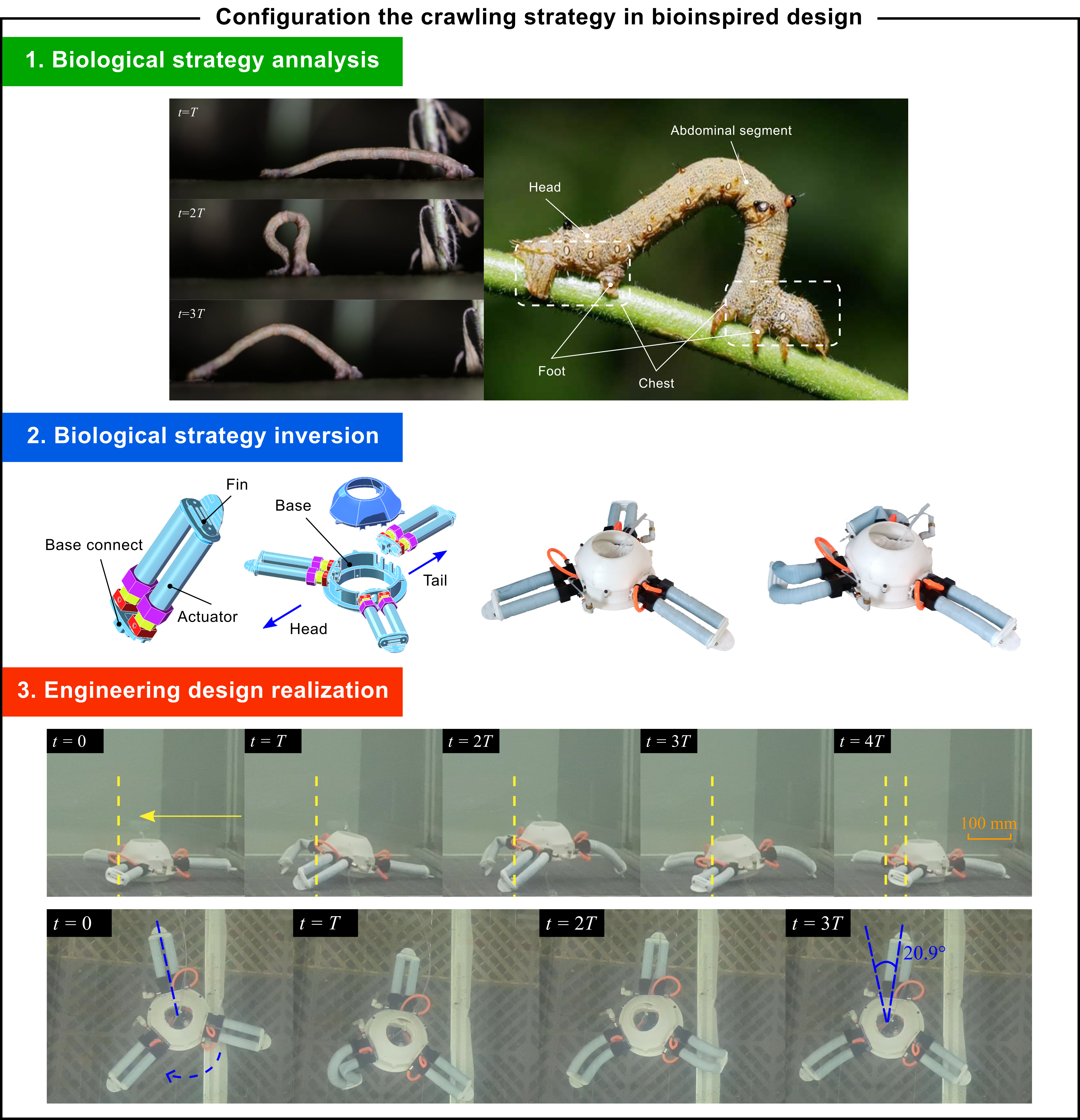
The paper explores crawling mechanisms similar to an inchworm's movement, leveraging anisotropic deformation capabilities, and providing insights into constructing robotic motion strategies. This emphasizes the utility of soft robotics in dynamic and unstructured environments where flexibility and adaptability are foremost. Figure 6

Figure 6: Case: crawling strategy based on autonomic peristalsis.

Conclusion

The research offers a systematic biomimetic framework for converting complex biological phenomena into practical engineering solutions. The demonstrated strategy inversion shows promising enhancements in efficiency and applicability in soft robotics. The exploration of various propulsion strategies underscores the potential for future innovations in adaptive robotics and emphasizes the need for scalable design frameworks in diverse engineering environments. As this field progresses, the integration of high-fidelity biological models and expanded multi-criteria decision frameworks will play a significant role in shaping advanced engineering methodologies.

Paper to Video (Beta)

No one has generated a video about this paper yet.

Whiteboard

No one has generated a whiteboard explanation for this paper yet.

Explain it Like I'm 14

What is this paper about?

This paper shows a clear, step-by-step way to copy smart ideas from nature and use them in engineering. The authors build a “translation guide” between biology and engineering and use AI to read biology texts, pick out useful tricks (like how a squid jets forward), and turn them into designs for machines. They test their method by making and testing soft underwater robots that move like fish tails, squids, and inchworms.

What questions did the researchers ask?

The authors wanted to solve four simple questions:

  • How can we describe a living thing’s strategy (what it does, how it works, and why) in a way engineers can use?
  • Can AI help read lots of biology papers and pull out the key ideas automatically?
  • When there are several nature-inspired ideas, how do we pick the best one for the job?
  • Does this process actually work on a real problem, like building better soft underwater robots?

How did they do it?

To make this understandable, think of their method as a recipe with three main steps: build a shared language, teach AI to read, and choose the best plan.

1) The F-B-C-E map: a shared language

They created a simple model called F-B-C-E to describe a biological strategy:

  • Function (F): What the system is trying to do (the goal), like “move forward” or “reduce drag.”
  • Behavior (B): How it does it (the process), like “flapping” or “pumping.”
  • Characteristic (C): What it’s made of or its special features, like “flexible fins” or “elastic chamber.”
  • Environment (E): Where it works, like “underwater with currents.”

You can think of F-B-C-E as a fill-in-the-blank template: what-it-does, how-it-does-it, what-it’s-made-of, and where-it-lives.

2) Teaching AI to read biology and “translate” it

The team used LLMs, a kind of AI that understands text, to read thousands of sentences from biology sources about animal movement and structures.

  • The AI labeled each sentence with F, B, C, and E tags (a sentence can have more than one tag).
  • Then, using this labeled info, the AI rewrote the ideas in engineering language. For example, it might replace “muscle contraction” with “soft actuator pressurization” if that matches what engineers can build.
  • Finally, the system checked the logic against an engineering knowledge base and cleaned up mistakes, so the ideas make sense for real machines.

3) Choosing the best idea fairly

Often, there’s more than one good nature-inspired idea. The authors used a fair scoring method called multi-criteria decision making to rank them.

  • They used a method named VIKOR, which is like finding the best overall compromise when you have many goals (for example: performance, cost, reliability).
  • Experts can adjust what matters most (like speed vs. energy use), and the method ranks the options without forcing perfect agreement.

4) Trying it on underwater soft robots

They applied everything to design soft robots that move underwater. They broke the problem into levels:

  • Component level: parts like soft actuators and valves.
  • Subsystem level: power and pressure control.
  • System level: the robot’s overall movement plan.

They built and tested three kinds of motion:

  • Tail swing (like fish/whales, using a flapping fin).
  • Jet propulsion (like squids, pushing water out through a nozzle).
  • Crawling (like inchworms, using a squeeze-and-release wave).

What did they find?

Here are the key results the authors report:

  • Their framework makes it faster and more organized to turn biology ideas into engineering designs, using AI to do much of the reading and sorting.
  • They built working soft robot modules:
    • Tail-fin swimming: a tetherless robot that moved at about 1.42 mm/s in tests.
    • Squid-like jet: a soft jet unit reaching about 24 mm/s at 100 kPa.
    • Inchworm-style crawl: moved about 46 mm per pressure cycle and could turn about 21° per cycle.
  • They improved soft actuators:
    • A fiber-guided actuator showed about 37% better motion by combining different fiber directions.
    • Spider-leg-inspired hydraulic parts offered smoother control and quick, low-loss connections.
  • Overall, combining these strategies led to about 18–32% energy efficiency gains in their multimode underwater system.

Why does this matter?

This work shows a practical way to turn nature’s smart designs into real machines:

  • It reduces guesswork: the F-B-C-E template and AI help teams quickly find and translate biological ideas.
  • It helps teams choose wisely: the ranking method balances speed, stability, cost, and other needs.
  • It works in the real world: the team built and tested underwater soft robots, proving the approach can deliver.

Looking ahead, the authors plan to:

  • Build better physics models of thrust and motion.
  • Use detailed scanning and simulations to copy biology more precisely.
  • Create shared measures so different animal-inspired motions can be compared fairly.

In short, this research could speed up bio-inspired inventions in robotics and beyond, helping engineers reuse nature’s best strategies to make machines that are more flexible, efficient, and adaptable.

Open Problems

We haven't generated a list of open problems mentioned in this paper yet.

Collections

Sign up for free to add this paper to one or more collections.