- The paper presents LLMs achieving up to 92% accuracy in legal invoice review, outperforming experienced human reviewers.
- The study employs a robust evaluation using real and synthetic invoices to measure speed and cost efficiency of LLMs versus legal experts.
- Key insights suggest integrating LLMs with human oversight can optimize legal operations and compliance standards.
Better Bill GPT: Comparing LLMs against Legal Invoice Reviewers
Introduction
The paper "Better Bill GPT: Comparing LLMs against Legal Invoice Reviewers" examines the performance of LLMs in the context of legal invoice reviews, a domain traditionally managed by legal professionals such as attorneys and billing specialists. The study offers the first empirical comparison of LLMs with human invoice reviewers, assessing metrics of accuracy, speed, and cost-effectiveness. Showcasing LLMs achieving up to 92% accuracy—significantly surpassing experienced human reviewers—and completing tasks in a fraction of the time, the research suggests a substantial shift toward AI-powered invoice review in legal contexts.
Methodology
The study employed a robust methodological framework, comparing three groups: early-career and experienced lawyers, and legal operations professionals against several cutting-edge LLMs. The dataset comprised 50 legal invoices, partitioned into real-world and synthetically generated invoices to ensure variability and representativeness. Specialist legal billing guidelines served as the benchmarks for evaluating compliance and violations in the submitted invoices.
AI Model Selection
A variety of LLMs were used for evaluation, including OpenAI o1, GPT-4o, Claude models, Gemini 2.0 Flash Thinking, and DeepSeek R1, with prompt engineering techniques applied to optimise model outputs comprehensively. Models were evaluated based on their capability to align with expert-validated ground truth decisions regarding the compliance of invoice items.
Evaluation and Results
The research demonstrates that LLMs outperformed human reviewers in accuracy, processing time, and cost efficiency across all metrics. Key findings include:
- Accuracy: LLMs decisively outmatched human reviewers, with models like GPT-4o achieving 92% accuracy in invoice-level decisions.
- Time Efficiency: LLMs processed invoices up to 80 times faster than humans, with negligible variation between models, showcasing significant efficiency gains.
- Cost-Effectiveness: The cost of LLM-based reviews was 99% lower than human-based reviews, underlying the economic viability of AI deployments.
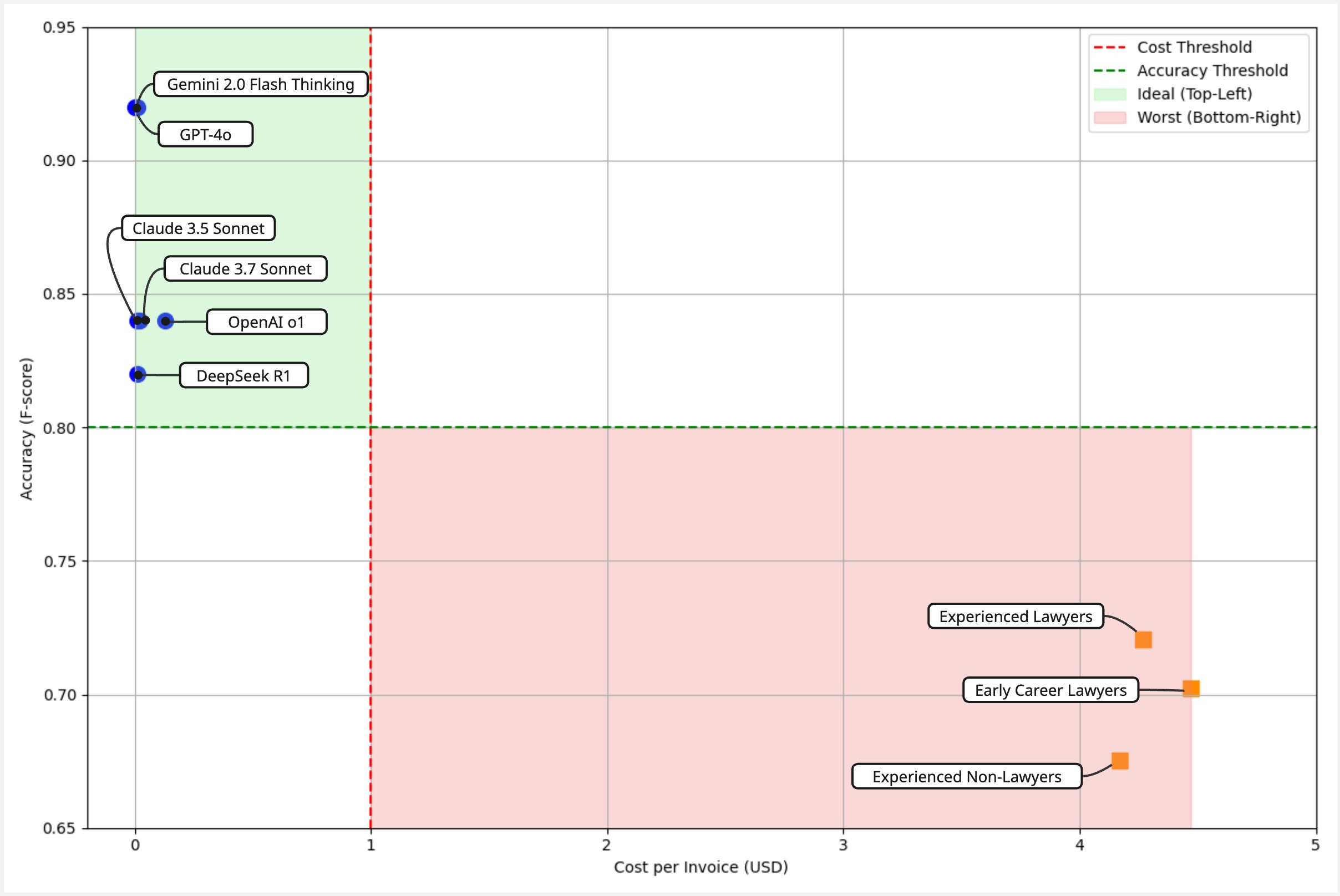
Figure 1: Invoice specific Cost vs. Accuracy Scatter Plot with Quadrant Analysis.
Discussion
While the empirical results highlight the proficiency of LLMs in surpassing human performance, they also echo the necessity for integrating AI with existing legal operations thoughtfully. Human invoice reviewers bring nuanced judgment and domain-specific interpretation that AI currently cannot fully replicate. The potential lies in a hybrid approach, leveraging AI's strengths in speed and scalability while retaining strategic human oversight for nuanced and sensitive decisions.
Implications for the Legal Industry
The findings suggest imminent changes in legal operations, with AI-set to redefine workflows, governance, and compliance in billing practices. However, the adoption and integration of LLMs must address existing cultural and regulatory challenges. The legal industry must focus on designing processes that harmonize AI capabilities with human expertise to optimize outcomes.
Conclusion
"Better Bill GPT" advocates for the integration of LLMs into legal invoice workflows, highlighting their superior performance across key domains of accuracy, speed, and cost-effectiveness. The study signals a paradigm shift, emphasizing the importance of harmonizing technology with human expertise to fortify legal operational efficiencies and compliance standards. As AI adoption progresses, strategic incorporation will define the future landscape of legal financial operations.

