- The paper introduces a multi-resolution super learner that combines regional classifiers with spatial smoothing to enhance voxel-wise prostate cancer detection.
- The methodology integrates Gaussian kernel smoothing with cross-validated risk minimization to capture both global and local heterogeneities in mpMRI data.
- The results demonstrate improved accuracy, reduced false positives, and enhanced clinical decision-making compared to conventional voxel-wise classification methods.
Multi-resolution Super Learner for Voxel-wise Classification of Prostate Cancer Using Multi-parametric MRI
Introduction
The paper "Multi-resolution Super Learner for Voxel-wise Classification of Prostate Cancer Using Multi-parametric MRI" (2007.00816) introduces a novel approach for enhancing prostate cancer detection from multi-parametric MRI (mpMRI) data. The key innovation lies in a machine learning-based method that captures regional heterogeneity and between-voxel correlation, providing significant improvements over conventional methods. The proposed framework leverages an ensemble learning strategy to effectively address the complexity and spatial structure inherent in mpMRI data.
Prostate cancer (PCa) poses a major health challenge, being highly prevalent among men. Although mpMRI is a vital tool in PCa management, the manual interpretation of MRI scans is subject to high variability and error rates, motivating the need for automated predictive models. Traditional voxel-wise classification approaches often overlook the spatial relationships and heterogeneous characteristics of the prostate gland, leading to suboptimal detection performance. This paper proposes a multi-resolution modeling technique that uses the super learner algorithm to integrate classifiers trained at varying resolutions, thus encapsulating both global and local data features.
Methodology
The core methodology involves a two-stage modeling strategy using ensemble learning. In the first stage, classifiers are developed independently within different spatial resolutions, each generating insights into various scales of regional heterogeneity. This segmentation allows classifiers to focus on specific sub-regions of the prostate, but maintaining the ability to generalize over the entire gland. In the second stage, these classifiers are synthesized through the super learner algorithm, forming an optimal weighted combination based on cross-validated risk minimization.
The super learner framework is a powerful ensemble method that outperforms individual models by averaging across predictions from multiple learners. The paper extends this concept by integrating classifiers not only across different types but also across multiple resolutions. Spatial correlation is further refined through a Gaussian kernel smoother applied to classifier outputs, which adjusts predictions to account for local spatial dependencies. This smoothing step enhances the robustness of predictions by mitigating random noise and leveraging spatial relationships between voxels.
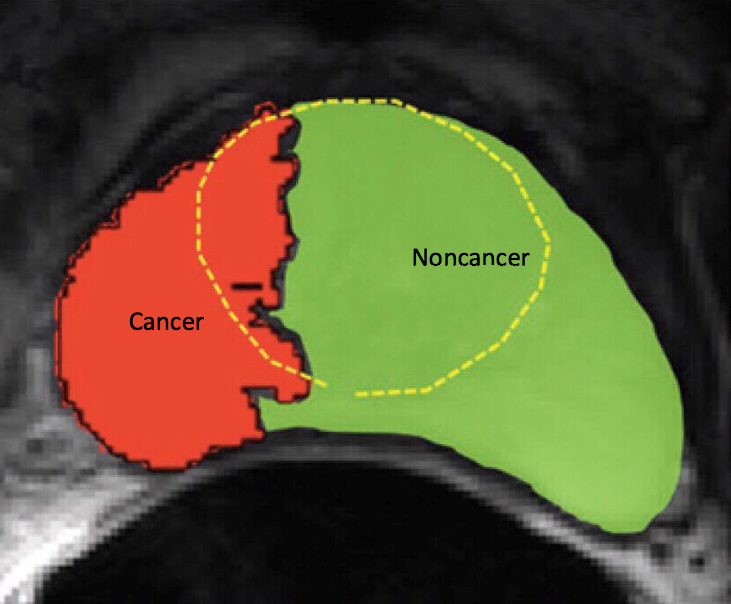
Figure 1: Annotated voxel-wise cancer status of an example prostate slice, illustrating cancerous and non-cancerous regions.
Algorithm Implementation
The algorithm development is meticulously detailed, starting with the selection of a base learner — a model or algorithm employed for initial classification tasks. The prostate gland is segmented into sub-regions with resolutions, typically ranging from 1×1 to 3×3. Each sub-region permits localized training of the base learner, leading to classifiers specialized at different scales of anatomical zoning.
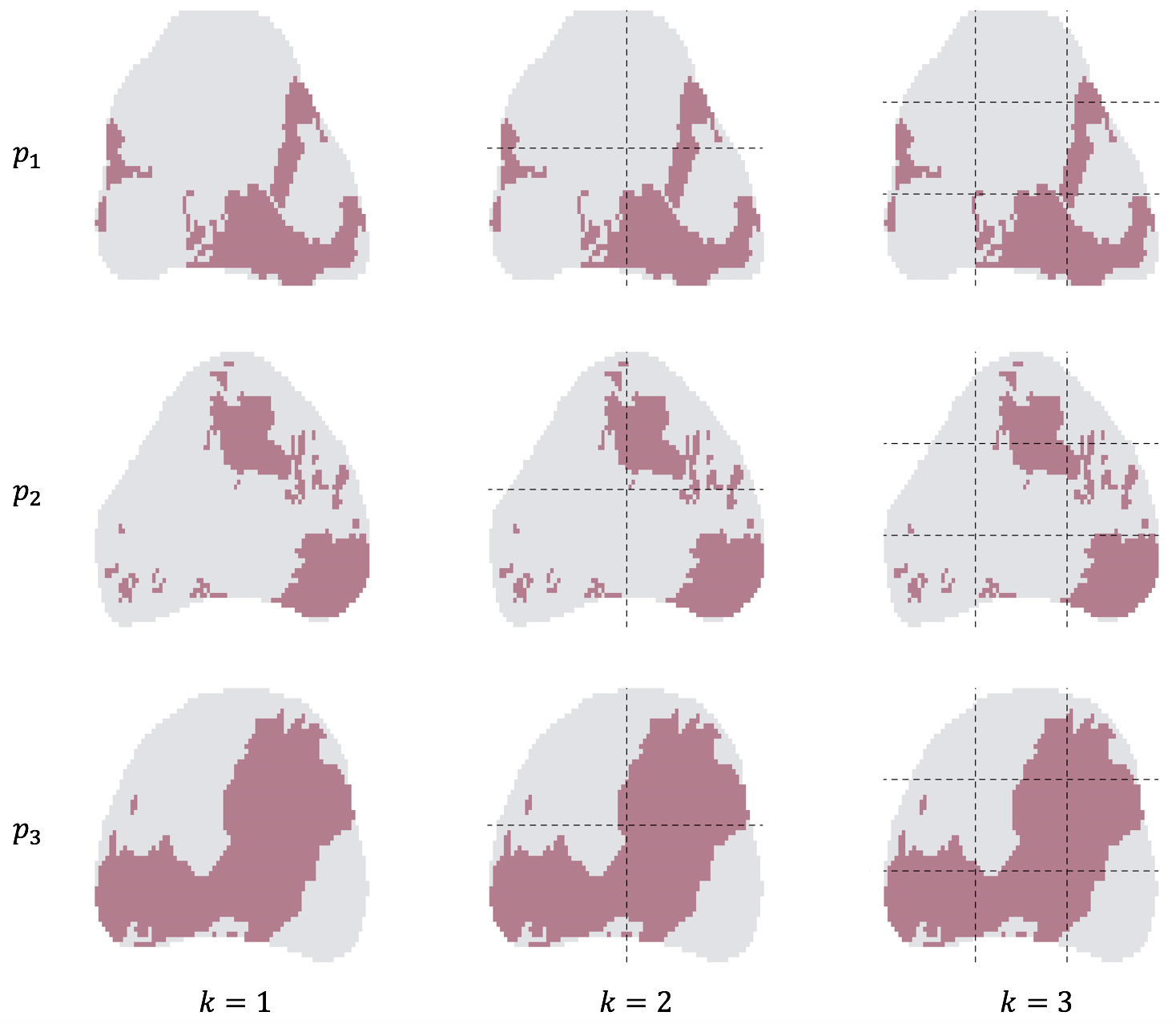
Figure 2: Region segmentation for three example prostates demonstrating segmentation at multiple resolutions.
The intermediate spatial smoothing step is crucial, capitalizing on Gaussian kernels to refine predictions. The final stage of the algorithm entails a stage-two generalized linear model equipped with a probit link function, which assimilates spatially smoothed results to categorize voxels accurately. The flexibility of the proposed framework allows incorporation of various base learners and adjustments to incorporate cutting-edge classification algorithms as they become available.
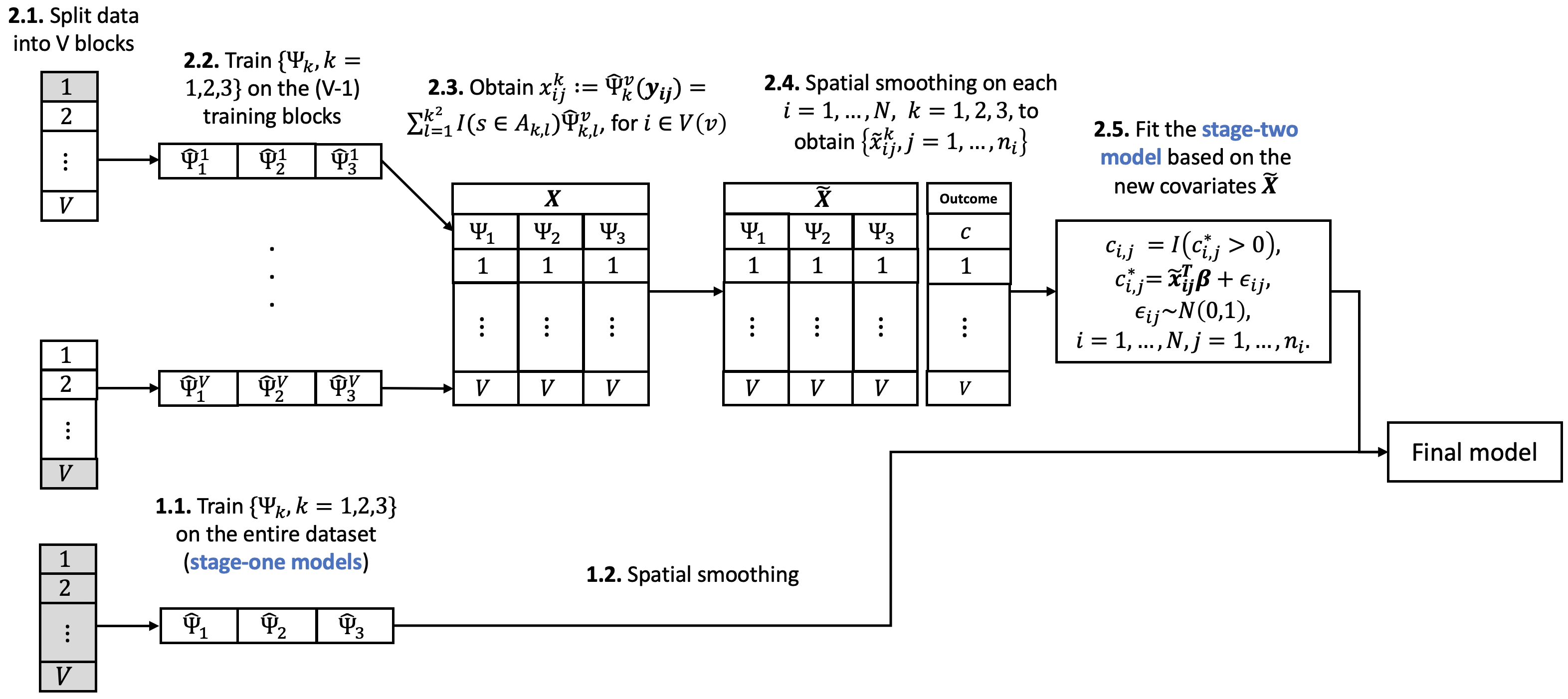
Figure 3: Workflow of the proposed classification algorithm for voxel-wise binary PCa status.
Simulation and Results
Extensive simulations and application to a motivating dataset demonstrate the efficacy of the proposed approach. The novel multi-resolution strategy, combined with spatial smoothing, significantly enhances classification accuracy, particularly in detecting prostate cancer at the voxel-level. Evaluation metrics used include the area under the ROC curve and sensitivity scores at specified specificity levels, consistently indicating superior performance compared to baseline models.
The results reflect large improvements in detecting clinically significant PCa, reducing false positives, and enhancing decision-making accuracy. Notably, these gains underscore the importance of modeling spatial dependencies and heterogeneities inherent in medical imaging data.



Figure 4: Maps showing the groundtruth and predicted voxel-wise PCa status using different modeling approaches.
Conclusion
This paper advances the field of PCa detection with a method that effectively integrates ensemble learning and spatial data considerations. By acknowledging the complex spatial distribution and variability present in mpMRI data, the proposed model offers a pathway to higher accuracy in clinical diagnoses and treatment planning for prostate cancer. The flexibility inherent in the super learner framework allows adaptation and improvement as newer machine learning techniques emerge, ensuring continued advancements beyond current capabilities. The findings and methodology present in this work hold promise for extending similar strategies to other forms of medical imaging, providing a scalable approach to addressing regional heterogeneities in complex datasets.