- The paper demonstrates the non-canonical geoeffectiveness of narrow, westward CMEs, challenging traditional classifications based only on halo or wide events.
- The paper integrates multi-site SAA muon detector data with spaceborne observations to capture precise ground-level Forbush Decrease signatures and CME impacts.
- The paper underscores the need for updated forecasting models that incorporate narrow CME behavior and complex recovery dynamics for improved space weather readiness.
The 2015 Summer Solstice Geomagnetic Storm: Multisite Cosmic Ray Observations and CME Geoeffectiveness
Overview
This paper presents a thorough analysis of one of the most significant geomagnetic storms of solar cycle 24, the 22-23 June 2015 Summer Solstice event, leveraging ground-based cosmic ray observations (specifically New-Tupi, Muonca, and CARPET El Leoncito detectors located in the South Atlantic Anomaly (SAA)) and correlating these with a comprehensive set of space-borne observations and cataloged coronal mass ejection (CME) parameters. Distinctive emphasis is placed on the geoeffectiveness of narrow angular-width CMEs situated in the western ecliptic hemisphere, challenging the prevailing association between severe storms and only wide or halo CMEs.
Solar Cycle 24 Context and Storm Rarity
Solar cycle 24 was characterized by low sunspot numbers and unusually mild space weather relative to previous cycles. The cycle featured a split-dual peak profile, with the second maximum exceeding the first, but the overall number of severe geomagnetic storms was drastically reduced compared to cycle 23.
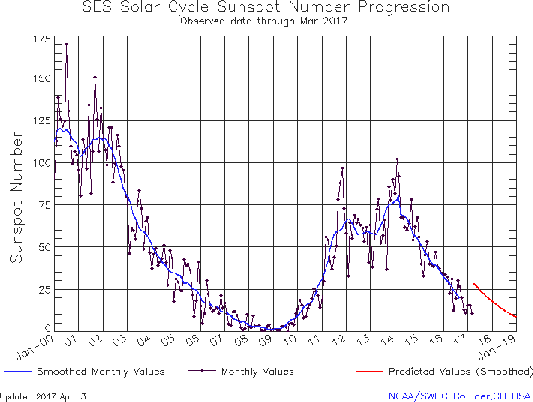
Figure 1: Sunspot progression from cycles 23 to 24, highlighting dual-peaked structure and the diminished maximum of cycle 24.
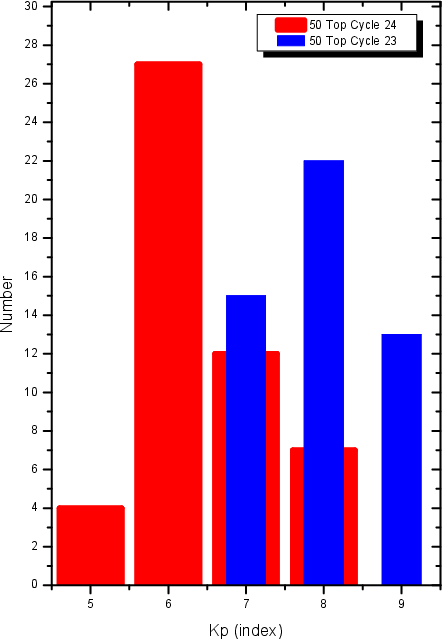
Figure 2: The Kp index distribution demonstrates the significant reduction in G4/G5 storms during cycle 24 compared to 23.
This context underscores the importance of the June 2015 event, which, with a Kp index of 8 (G4), ranks as the second largest of the cycle.
Experimental Configuration and Ground-Level Response
Three ground-based detectors in the SAA—New-Tupi, Muonca (Brazil), and CARPET El Leoncito (Argentina)—were used to capture the secondary cosmic ray (primarily muon) flux and its response to space weather disturbances.
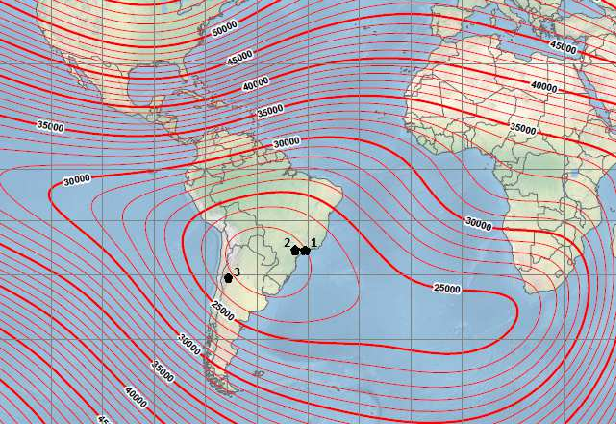
Figure 3: Detector locations superimposed on the geomagnetic field map, illustrating SAA's uniquely low total field intensity.
Muon-based telescopes (New-Tupi, Muonca) provide directional (vertical, west, east) and scaler (single-particle rate) data products, minimally affected by atmospheric pressure variations.
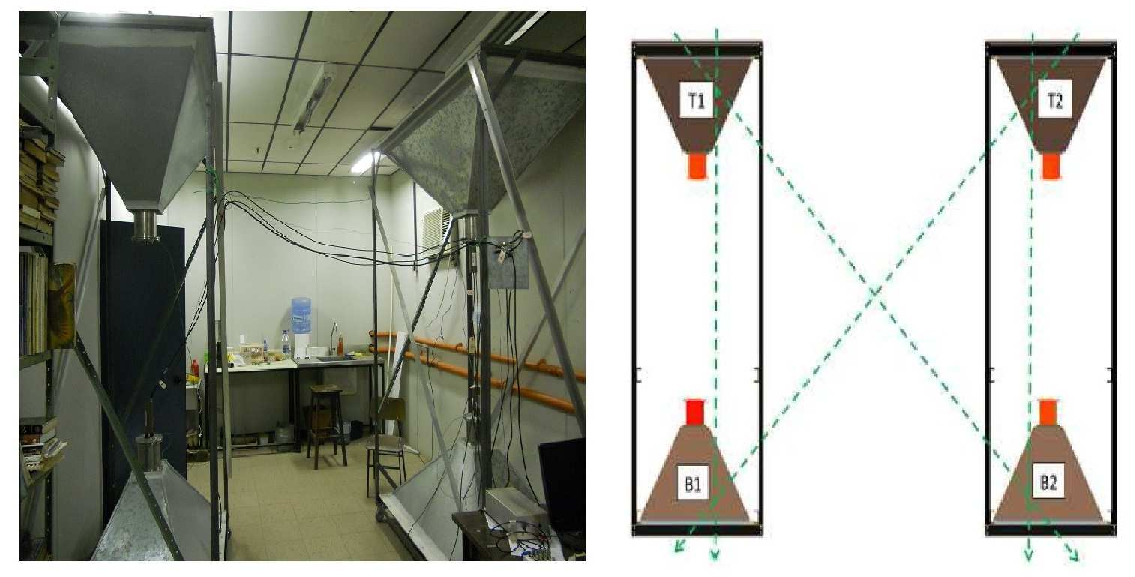
Figure 4: New-Tupi telescope: physical implementation and geometry for detecting directional muon fluxes.
A key result is the muon barometric coefficient at Muonca: βp=(−0.22±0.04) %/mbar, demonstrating ~7–10 times lower pressure sensitivity compared to neutron monitors.
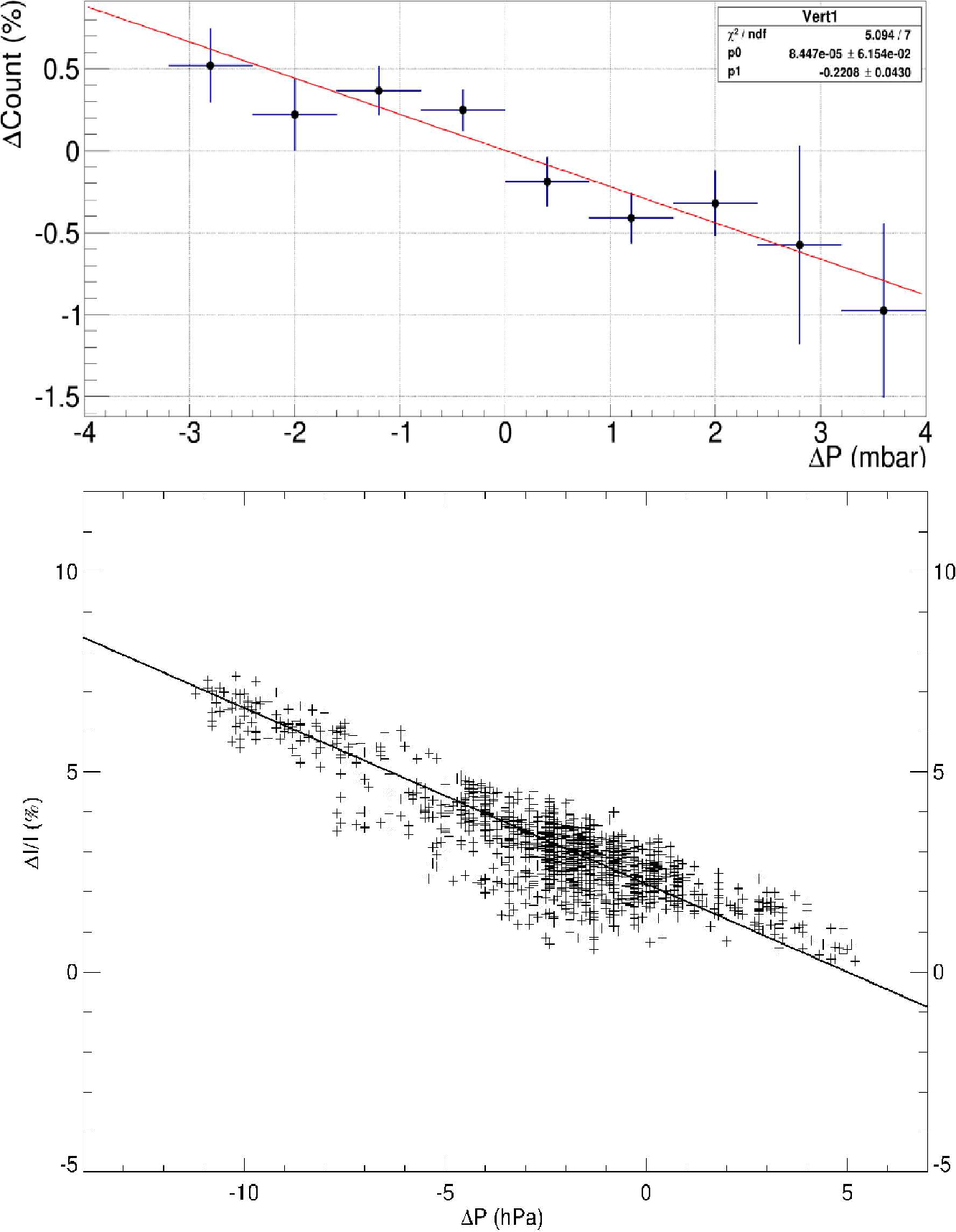
Figure 5: Barometric coefficient estimation for Muonca and El Leoncito, confirming lower atmospheric influence for muon detectors.
CME Sequence, Shock Arrivals, and Ground-Level Forbush Decreases
From 18–22 June 2015, solar AR 2371 produced a cascade of M-class flares and 5 CMEs, including both partial/full halos and a notably narrow CME.
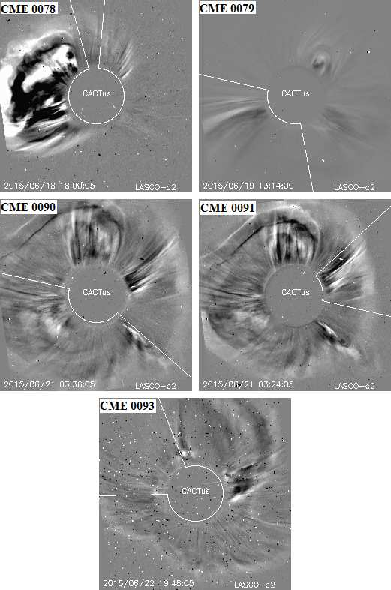
Figure 6: SOHO LASCO imagery for the five CMEs, annotated with CACTus catalog designations and associated flare classes.
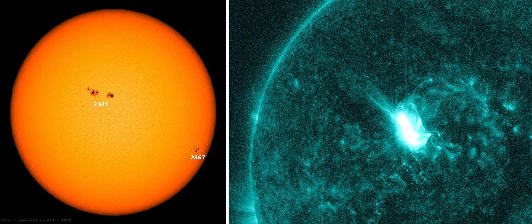
Figure 7: AR 2371 sunspots and associated CME eruption site; CME origin mapped to near-central meridian location.
Successive CME-driven shocks at Earth resulted in multi-step geomagnetic activity:
- First Impact: Weak geomagnetic effect (CME 0078).
- Second Impact: Minor, associated with CME 0090, partial-halo.
- Third Impact: Severe FD onset at ground, temporally correlated with a narrow CME (0091, da∼56∘, pa∼285∘), triggering the main G4 storm.
- Fourth Impact: Full-halo CME 0093, associated with later moderate G2 activity and a clear 'mini-FD'.
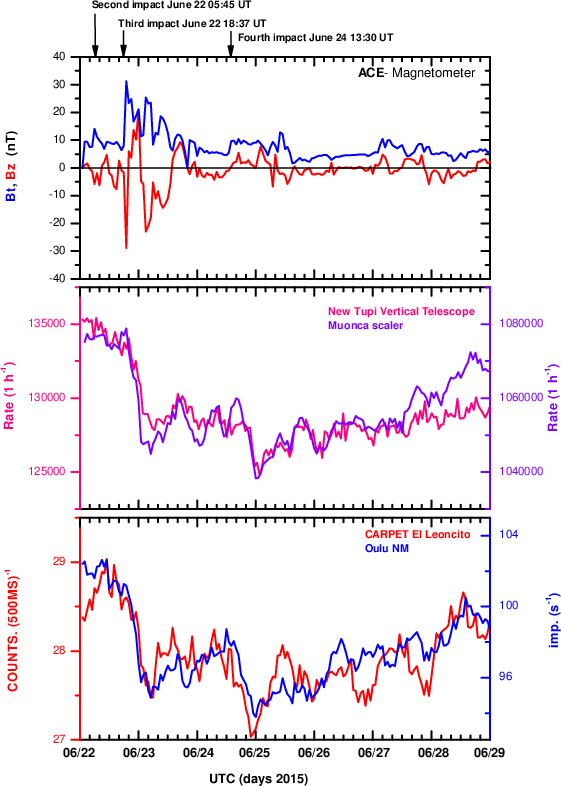
Figure 8: IMF Bt and Bz evolution (ACE), with muon count rate depression in New-Tupi and Muonca during shock arrivals.
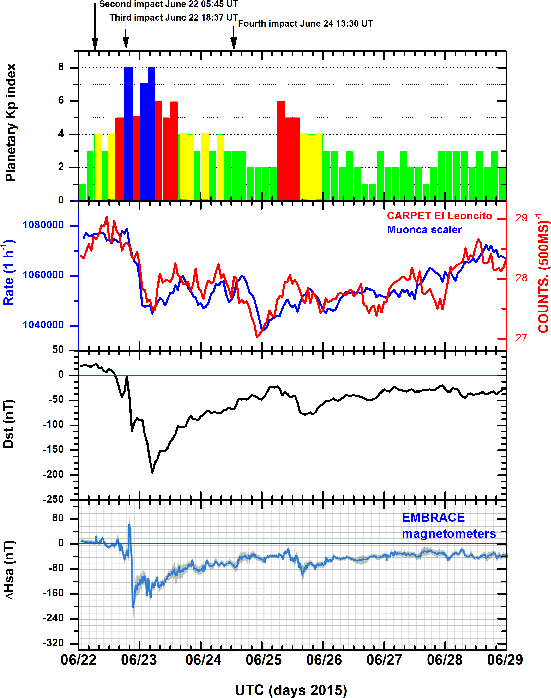
Figure 9: Time-aligned signatures of the geomagnetic field, ground muon count, Kp, and Dst indices during the storm.
The primary FD observed at New-Tupi and Muonca reached ∼4% depression coincident with the Dst∼−200 nT minimum, validating coordinated ground/space response.
Non-Canonical Geoeffectiveness of Narrow CMEs
A prominent finding is the geoeffectiveness of CME 0091—a narrow, high-speed CME originating westward (pa ≈ 270°), which contradicts the previous assumption that only wide (halo or partial halo) CMEs produce severe storms.
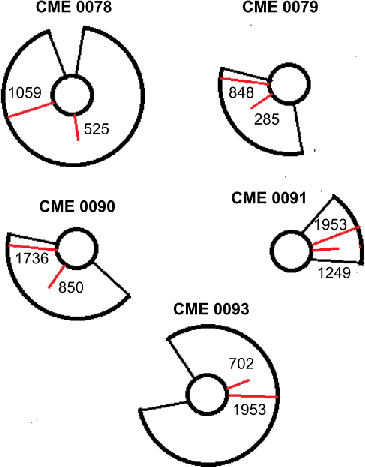
Figure 10: CACTus phase-space diagrams for 18–22 June CMEs, illustrating narrow CME 0091's geometry and high velocity.
Cross-comparison with CACTus catalog data shows:
- Halo/partial-halo CMEs present wide pa distributions.
- Narrow CMEs resulting in strong storms are strongly clustered at pa∼270∘ (western ecliptic).
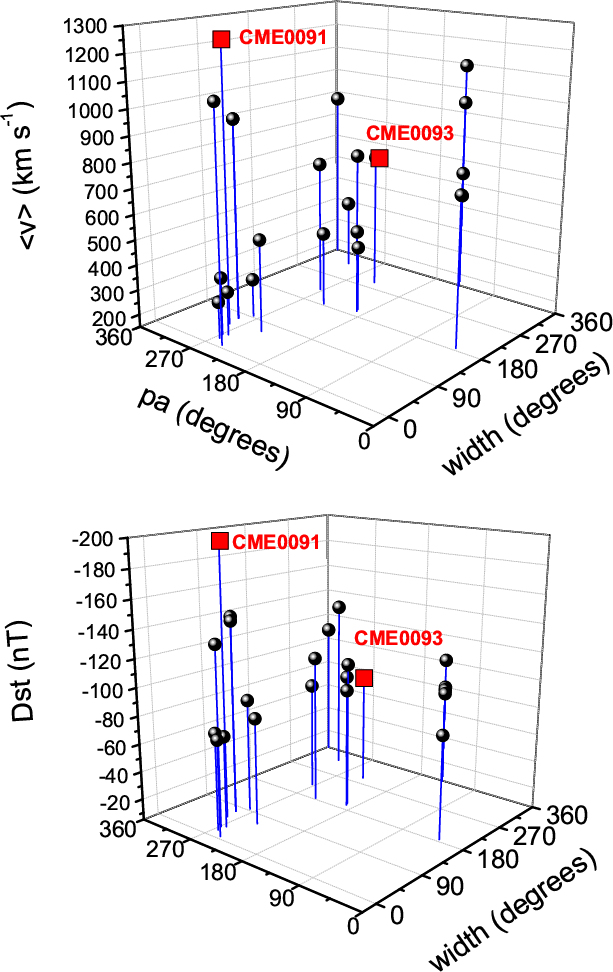
Figure 11: Distribution of CME median speed, pa, da (top), and associated Dst (bottom) for strong storms (Dst<−70 nT). Narrow, westward events (including the solstice storm) are clear outliers.
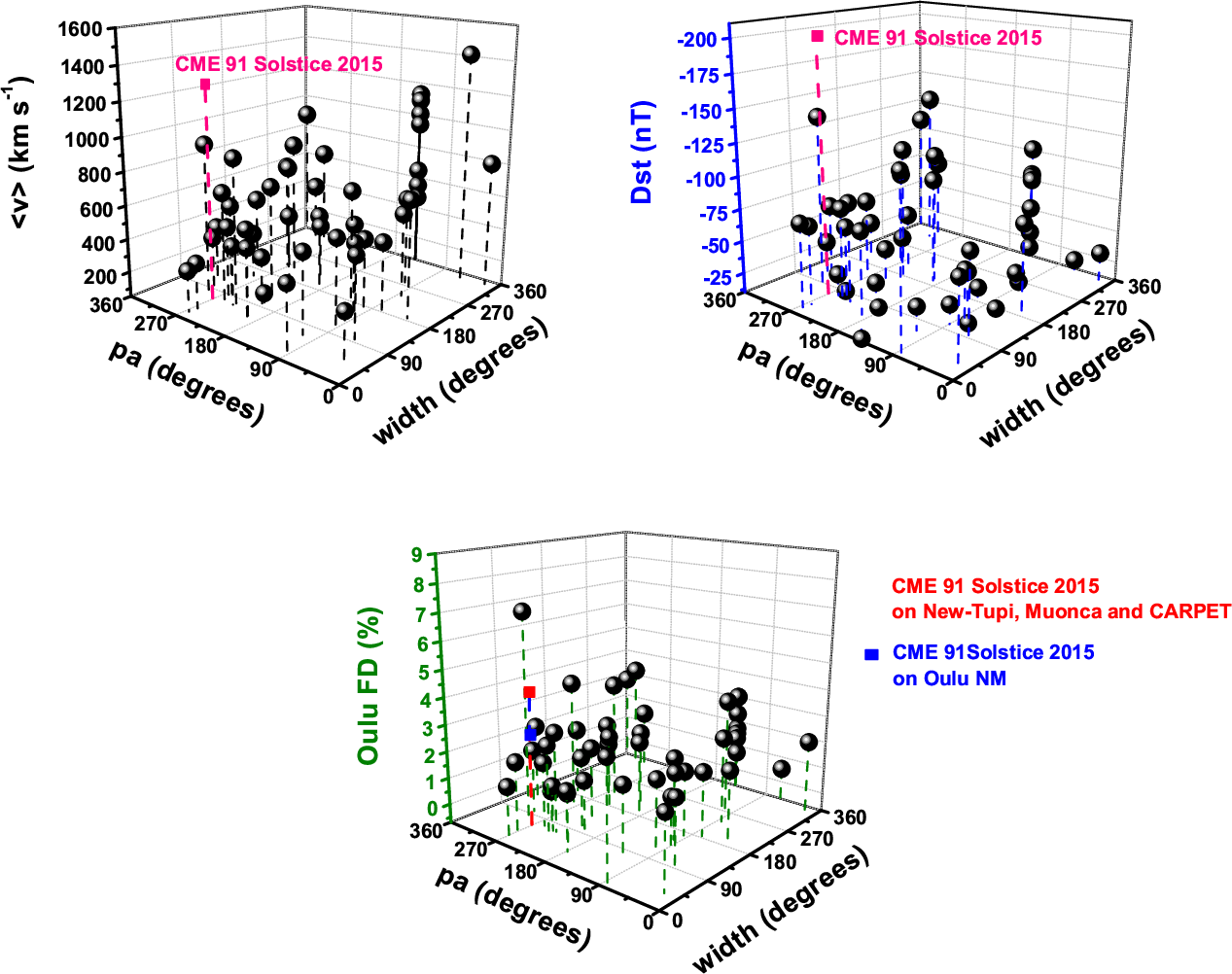
Figure 12: Inclusion of all FDs >1%, reinforcing the preference for geoeffective narrow CMEs in the west.
This structural result was previously rare in cycle 24 and is theoretically significant for space weather forecasting.
Mini-Forbush Decreases and Recovery Analysis
The 24 June CME (0093) generated a mini-FD, with a delayed geomagnetic response due to preconditioning from preceding shocks.
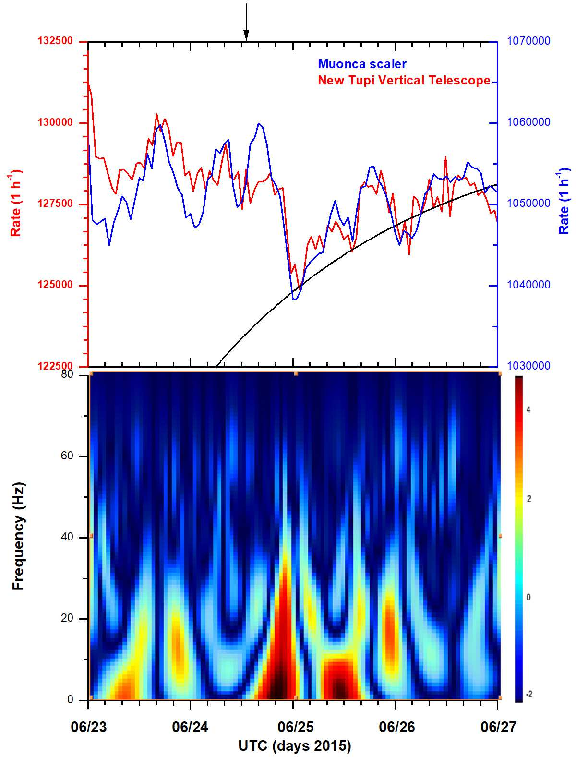
Figure 13: Recovery profile and CWT analysis of New-Tupi/Muonca data (23–26 June), showing time-frequency segmentation of FD dynamics and clear mini-FD signatures post-fourth impact.
Recovery fitting yields a characteristic mini-FD time constant of τ=51±5 h; total recovery to pre-storm levels spans ∼6 days when both FD and mini-FD are considered.
Solar Proton Event and Energetic Particle Observations
Despite a strong S1-level radiation storm and ground-level signatures of GLEs being sought rigorously, no significant enhancement was detected by New-Tupi, Muonca, or neutron monitor networks. This underscores the confinement of SEP access and/or the magnetic connectivity during the event sequence.
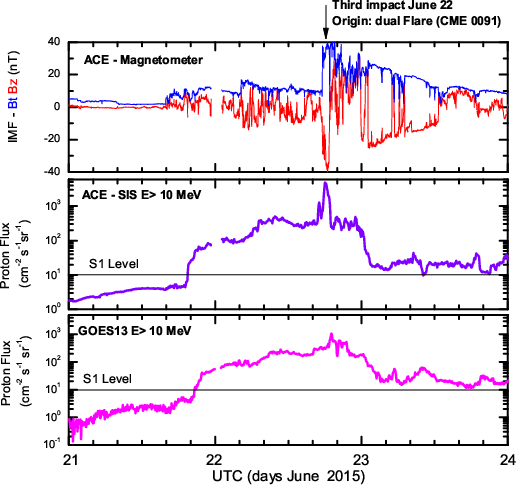
Figure 14: ACE/GOES proton fluxes (E >10 MeV) and IMF response, indicating timing and magnitude of radiation storm and the lack of ground-accessible enhancement.
Implications, Theoretical and Practical
- Storm Prediction: The results directly impact geoeffective CME classification—narrow, westward CMEs with high speeds must be included in operational forecasting schema for potential major geomagnetic activity, not just halo events.
- Space Weather Readiness: SAA-located muon telescopes (lower rigidity cut-off) offer robust, rapid detection of FDs and provide redundancy vs. classic high-latitude neutron monitors, with additional tolerance to atmospheric confounders due to reduced barometric sensitivity.
- Multi-Impact Dynamics: The observed sequence and superposition of CME-driven shocks highlight the importance of interplanetary preconditioning, with delayed and complex recovery dynamics deviating from idealized models; this impacts HF communication, satellite drag prediction, and ionospheric modeling.
Conclusion
This analysis establishes the 2015 Summer Solstice geomagnetic storm as both a critical space weather event and a case study in the non-canonical geoeffectiveness of narrow, westward CMEs. Ground-based muon detectors within the SAA provided precise, directionally resolved confirmation of Forbush Decreases, which, when cross-correlated with CACTus-cataloged CME characteristics, expose previously underappreciated storm drivers in cycle 24. These findings necessitate updated forecasting strategies considering all CME morphologies, improved global coverage of muon telescopes, and ongoing comparative analysis with space-borne datasets to disentangle the dynamics of solar-terrestrial coupling in future cycles.

