- The paper surveys LLM collaboration mechanisms and introduces a framework to classify multi-agent interactions.
- It analyzes various collaboration types including cooperation, competition, and coopetition along with rule-, role-, and model-based strategies.
- It highlights applications in 5G/6G networks, Industry 5.0, NLP, and social simulations, emphasizing future research in safety and ethics.
Multi-Agent Collaboration Mechanisms: A Survey of LLMs
The paper "Multi-Agent Collaboration Mechanisms: A Survey of LLMs" explores the evolving field of LLM-based Multi-Agent Systems (MASs) and their capabilities to solve complex, real-world tasks collaboratively. This paper surveys the mechanisms that enable collaborations—and provide a framework for understanding these mechanisms more comprehensively.
Introduction
With the increasing capabilities of LLMs in understanding and generating language, researchers are now focusing on using these models in Multi-Agent Systems (MASs). These systems allow multiple LLMs to cooperate, compete, or evolve collectively toward predefined objectives, transitioning from isolated to collaboration-centric models. This paper surveys the existing methodologies in MAS and offers a new framework to guide future research in this dynamic field.
Framework for Multi-Agent Collaboration Systems
The paper introduces a framework that distinguishes collaboration systems based on the actors, types, structures, strategies, and coordination protocols essential for MAS deployment:
- Actors: Defines the agents involved in the collaboration.
- Types: Identifies whether the collaboration is cooperative, competitive, or a mix of both.
- Structures: Outlines the interaction structure (peer-to-peer, centralized, distributed).
- Strategies: Discusses how roles, rules, or models guide collaboration.
- Coordination: Describes the protocols and methods for orchestrating seamless interaction between agents.
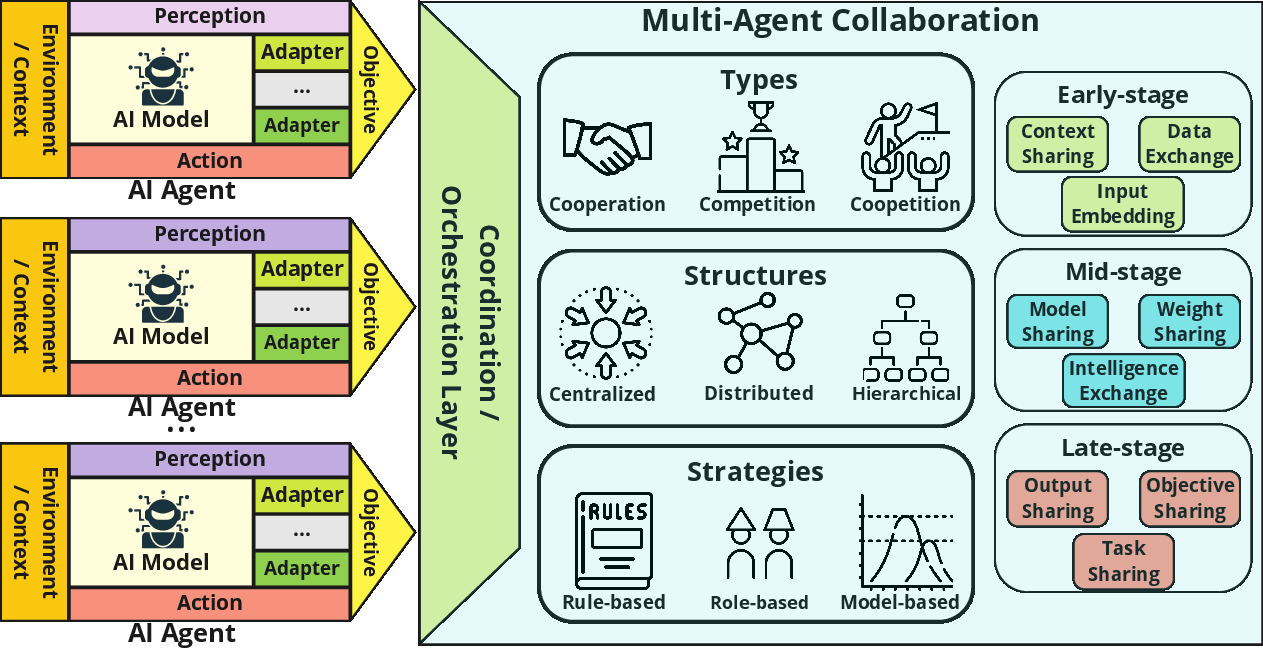
Figure 1: Our proposed framework for LLM-based multi-agent collaborative system. Each agent consists of a LLM m as the neural processor, current objective o, environment e, input perception x and corresponding output/action y. The framework's central focus is on collaboration channels C.
Collaboration Types
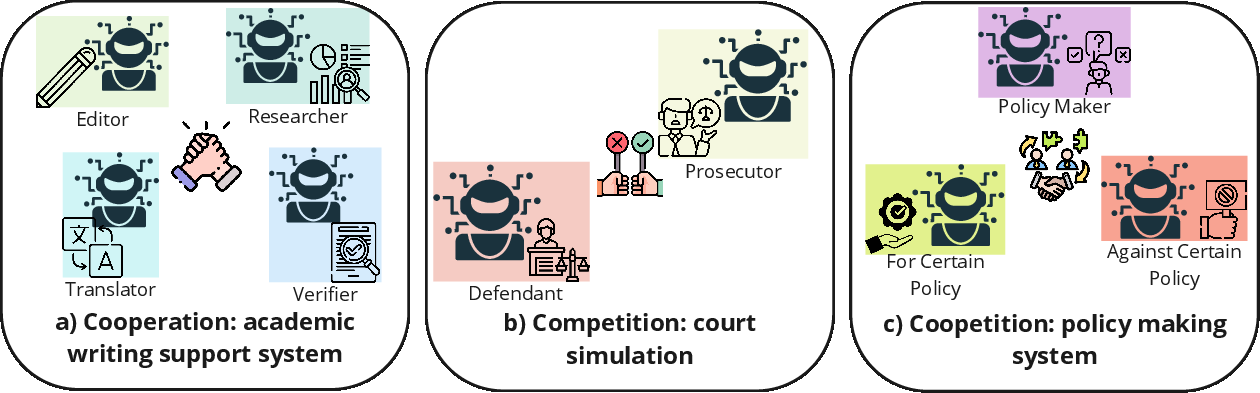
The paper categorizes collaborations in MAS into three primary types:
Collaboration Strategies
MASs can employ various strategies to foster collaboration:
- Rule-based: Interactions are governed by predefined rules to ensure predictability and fairness.
- Role-based: Agents are assigned specific roles that leverage their strengths in completing tasks.
- Model-based: Agents use probabilistic decision-making to adapt to dynamic environments.
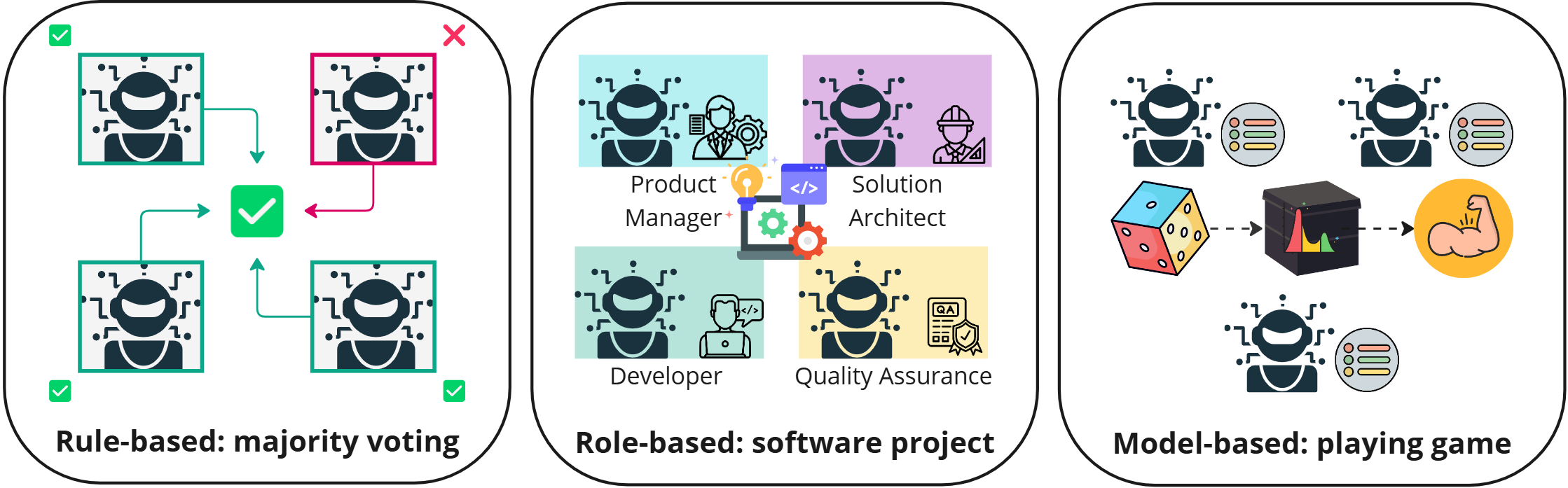
Figure 3: Different types of collaboration strategies. In the rule-based example, agents debate and participate in majority voting. A software project is an instance of a role-based protocol. In games, agents communicate and perform probabilistic decision-making.
Applications
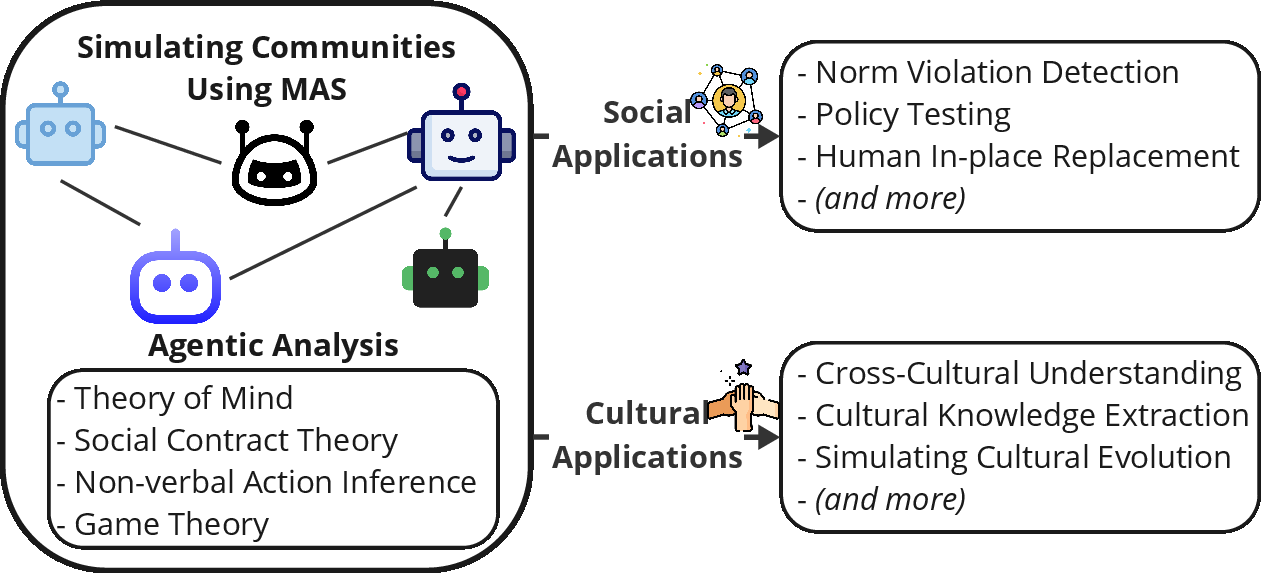
LLM-based MASs have been applied across various domains, including:
Conclusion
The integration of LLMs into multi-agent systems holds promise for advancing AI's capabilities in addressing complex, dynamic challenges. The framework introduced in this paper provides a structured approach for understanding and designing these systems. Continued exploration of collaboration types, strategies, and applications will be critical to advancing the field toward developing more intelligent, adaptive, and cooperative AI systems. The paper identifies that future improvement and study will be needed in collective intelligence, safety and ethical considerations, and sustainability challenges in large-scale systems.