- The paper demonstrates that DenseNet201, with densely connected layers, achieves a 99.67% accuracy in fruit quality classification.
- It employs runtime data augmentation to address class imbalance and enhance model robustness across 18 fruit quality classes.
- The study utilizes Grad-CAM for explainability, confirming that key fruit features are accurately emphasized in quality assessments.
Fruit Quality Assessment with Densely Connected Convolutional Neural Network
Introduction
The paper "Fruit Quality Assessment with Densely Connected Convolutional Neural Network" (2212.04255) explores the application of DenseNets to automate fruit quality assessment, a critical task in the agricultural industry. The proposed method utilizes the computational prowess of densely connected convolutional neural networks (DenseNets) to efficiently classify fruit quality, thus potentially reducing manual labor and enhancing processing speeds in food sectors. DenseNets, known for overcoming vanishing gradients through feature reuse and propagation, have demonstrated impressive results across diverse classification contexts. The study evaluates the efficacy of DenseNets on a substantial dataset, achieving a notable accuracy of 99.67%.
Methodology
Dataset
The FruitNet dataset, introduced by Meshram et al., serves as the foundation for experimentation. It encompasses 19,526 images depicting six distinct fruits, each categorized into three quality grades: good, bad, and mixed. This amounts to a total of 18 classes, presenting significant challenge due to intrinsic visual similarities among samples and class imbalances. Notably, higher numbers of images for certain classes, such as 'good' quality, necessitate thoughtful data augmentation strategies to maintain model robustness.
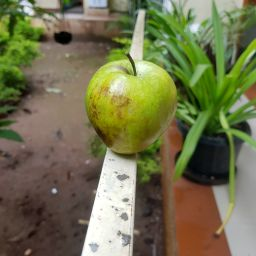
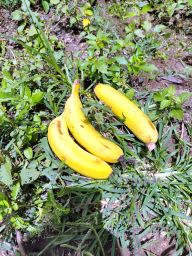
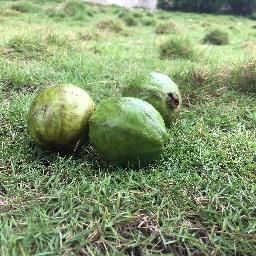
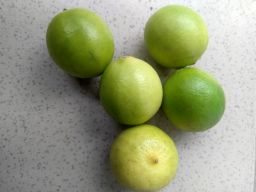
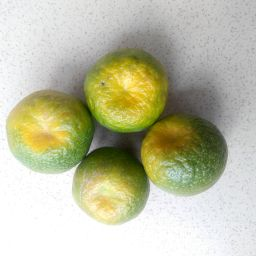
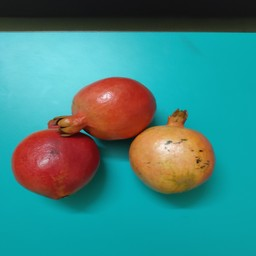
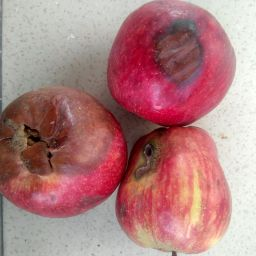
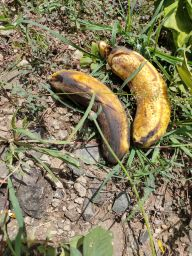
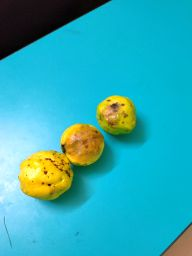
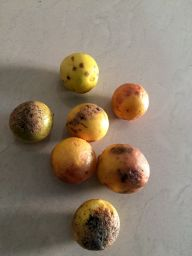
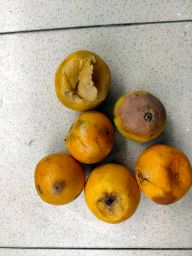
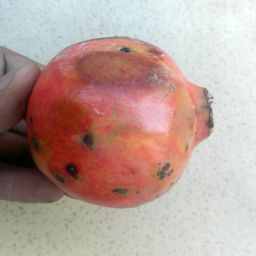
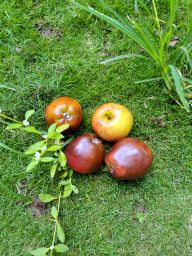
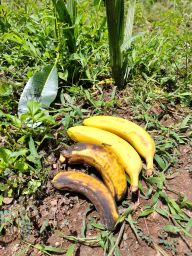
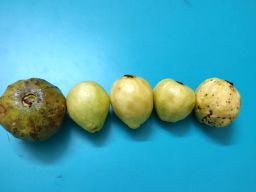
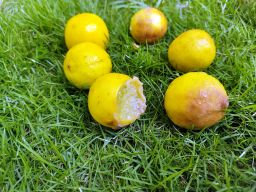
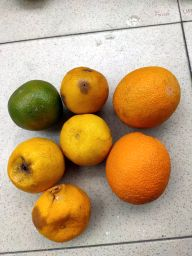
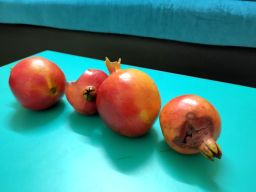
Figure 1: Sample images of the FruitNet dataset
These images are captured under varying conditions, contributing to their diversity and posing challenges for model training. The dataset's richness necessitates a model capable of discerning fine-grained quality variations amidst similar visual features—an ideal testing ground for the DenseNet architecture applied in three tasks: fruit classification, quality assessment, and combined fine-grained analysis.
Model Description
DenseNets offer an architecture that integrates dense connectivity, where each layer receives concatenated outputs from all preceding layers, thereby mitigating data loss and reinforcing feature propagation. This structure is instrumental in maintaining model performance across deeper network layers, which typically face vanishing gradient issues.
DenseNet201, chosen for its superior performance on ImageNet tasks, was implemented as the backbone for quality assessment. To address depth-related challenges without bloating parameters, the model incorporates transition blocks for downsampling, reducing dimensionality between dense blocks and maintaining computational efficiency.
Data Augmentation
To combat class imbalance and enhance learning, the paper employs runtime augmentation—an approach that introduces variation during training rather than pre-processing. Techniques include random rotations, flips, shifts, and shear transformations, which dynamically generate new sample variants for each epoch, thus fostering novel challenges and refining the model's capacity to adapt and generalize.
Results and Discussions
Experimental Setup
The experiments, conducted using a NVIDIA Tesla T4 GPU, involved resizing input images and partitioning them into training, validation, and test sets. Utilizing the Adam optimizer with specified learning rates and early stopping mechanisms, the DenseNet201 model was trained under controlled conditions to maximize performance without overfitting.
The paper benchmarks various CNN architectures using transfer learning and fine-tuning techniques on the FruitNet dataset. Remarkably, despite competitive accuracies across architectures such as MobileNetV2 and ResNet152, the DenseNet201 architecture exceeded expectations with an accuracy of 99.67%. Its optimal balance of trainable parameters and performance underscores its suitability for the task, enhanced further by data augmentation strategies.
The results indicate impressive class-wise precision, recall, and F1 scores, with dense connections supporting high class separability. Despite slight variances in AUC-ROC among challenging classes, overall performance remained robust. Misclassified samples resonate with human error patterns, hinting at nuanced visual similarities beyond computational separation (Figure 1).
Explainability
Utilizing Grad-CAM for model explainability, the paper illustrates the decision-making process within DenseNet201, emphasizing its focus on relevant fruit regions while discounting background interference. The class activation maps demonstrate accurate emphasis, reinforcing model confidence in detected features.
Conclusion
DenseNet architectures exhibit formidable capabilities in fruit quality assessment, leveraging dense connections to bolster feature reuse and mitigate gradient issues. The impressive accuracy achieved by combining sophisticated architectural strategies with runtime augmentation positions the model as a valuable tool for real-world agricultural applications. Future work may explore integrating segmentation techniques and decomposition assessments to further refine fruit quality insights.