When AI Becomes Hard to Understand
This lightning talk explores how cognitive demands emerge in real-world human-AI conversations, revealing that response complexity is multidimensional and context-dependent. Drawing on nearly 85,000 finance and health conversations, the research shows that conversational difficulty depends not on individual response features like length or readability, but on how these characteristics combine with each other and with user intent, introducing the concept of a conversational complexity budget.Script
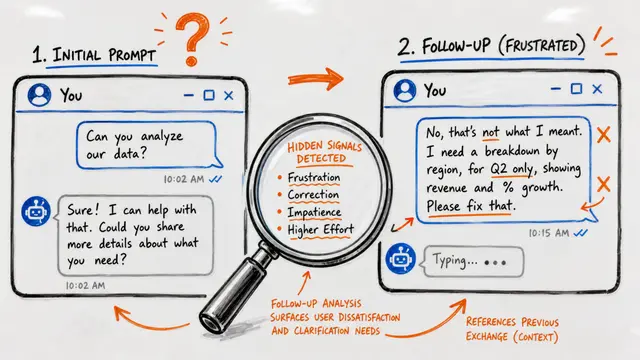
When you ask ChatGPT or Gemini for financial advice or health information, the conversation sometimes breaks down. Users repeat themselves, ask for clarification, or start over, revealing moments when AI responses become too difficult to process.
The researchers analyzed nearly 85,000 finance and health conversations from real users, tracking two behavioral signals of difficulty: when people repeat or reformulate their prompts, and when they explicitly ask for clarification because they misunderstood the AI's response.
Here's the surprise: no single response feature consistently helped or hurt comprehension. Lexical diversity reduced repeated prompting in short responses, but this benefit weakened as responses grew longer, and the relationship could even reverse past 600 words.
Information density and length interacted too. In finance conversations, longer responses reduced misunderstanding when density was low, likely providing helpful explanation. But when density was already high, additional length increased misunderstanding, crossing over around 150 to 200 words.
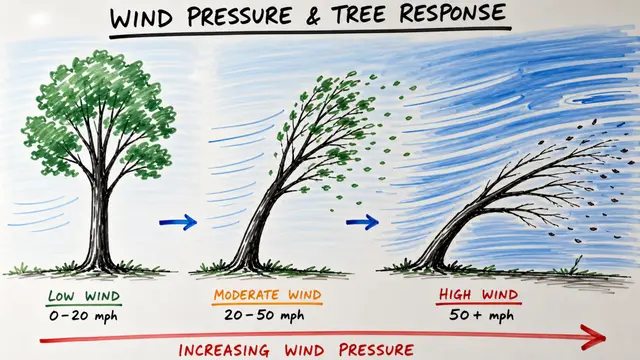
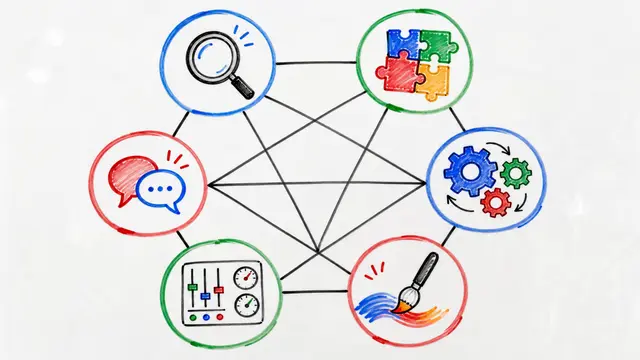
The authors propose a conversational complexity budget: different demands may be manageable in isolation, but they accumulate and interact. There's no universally optimal response style; instead, systems need to adapt based on the combined configuration of user, task, and response characteristics, using repair behaviors as real-time adaptation signals.
Understanding when AI becomes hard to understand isn't just an academic question; it shapes how millions of people make consequential decisions every day. To explore this research further and create your own video summaries, visit EmergentMind.com.