The Severance Problem: LLMs are Unaware of the Person Beyond the Prompt
This presentation explores a fundamental flaw in personalized AI assistants: they lack structural awareness of what they don't know about you. The Severance Problem reveals that language models suffer from meta-ignorance, operating over fragmented user context while remaining oblivious to the categories of missing information. The Severance Schema offers a simple prompt-level solution that makes unknowns explicit, dramatically reducing harmful advice and hallucination while improving safety and calibration in real-world assistance scenarios.Script
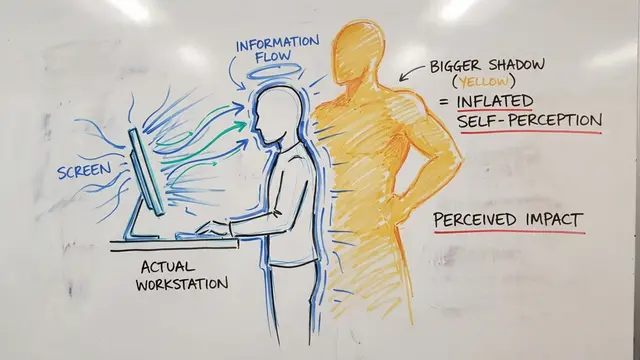
Personal AI assistants today see only a thin slice of who you are. They operate over chat history and a few saved facts, confidently generating advice while remaining structurally unaware of the vast categories of your real life they're missing entirely.
The Severance Schema introduces six explicit context dimensions into the model's prompt. Each slot is either populated with known facts or marked as unknown, transforming invisible gaps into structured, actionable awareness that the model can reason about.
Across five model families, the schema approximately doubles unknown awareness and cuts harmful advice rates by more than half, dropping from 14 to 19 percent down to 2 to 10 percent, with similar reductions in sycophancy.
Here's the counterintuitive finding: adding memory without structured awareness actually increases hallucination rates from near zero to as high as 11 percent. The schema prevents this, keeping hallucination low even as personal data grows.
In multi-turn interactions, schema-driven assistants convert their initial asking behavior into better calibration and usefulness. When the model's clarifying questions are answered, it outperforms both baseline and memory-only approaches on safety and accuracy.
The Severance Schema demonstrates that personalization isn't just about collecting more data. It's about making the boundary of knowledge visible, giving models the meta-awareness to ask rather than guess. Visit EmergentMind.com to explore this research further and create your own video summaries.