Taxonomy of User Needs and Actions
This presentation introduces TUNA, a comprehensive three-level framework that classifies what users actually do when interacting with conversational AI. Developed through analysis of nearly 900 real human-AI dialogues, TUNA reveals that users don't just ask questions—they build context, repair misunderstandings, manage system behavior, and blend instrumental work with social interaction. The taxonomy organizes 57 specific request types into 14 strategies across 6 fundamental interaction modes, making visible the complex user labor that existing frameworks overlook and providing a new lens for evaluation, safety analysis, and system design.Script
When you talk to an AI system, you're doing far more than just asking questions. You're building context, correcting mistakes, managing the conversation itself, and blending instrumental goals with social interaction in ways existing frameworks completely miss.
The authors analyzed 899 real human-AI dialogues to build TUNA, a three-level hierarchy that captures 6 interaction modes, 14 strategies, and 57 specific request types. Unlike previous taxonomies that focus on system capabilities or simple dialogue acts, this framework classifies observable user actions situated in their conversational context.
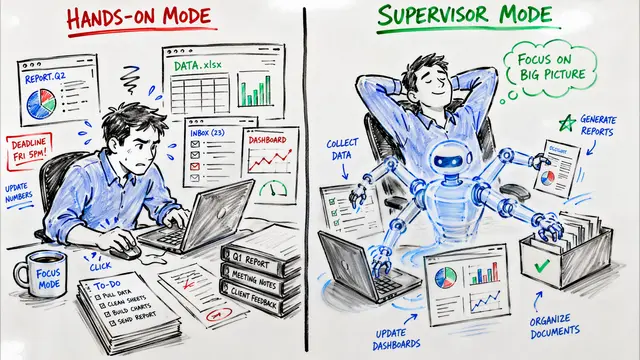
The six modes span the full range of human-AI interaction. Information seeking treats the AI as an informant. Processing and synthesis cast it as an analyst. Procedural guidance positions it as advisor or agent, while content creation frames it as producer. Social interaction establishes it as conversational partner, and meta-conversation reveals users actively supervising the system itself.
What makes TUNA powerful is how it reveals the invisible labor users perform. A single turn might combine an instrumental request with politeness markers, background context, and stylistic constraints. Users don't just complete tasks—they establish shared understanding, repair communication breakdowns, express frustration, and constantly redirect system behavior to work around limitations.
The framework makes behavioral patterns visible that matter for safety and evaluation. You can distinguish a harmful topic from a procedural request that carries real-world risk, identify when users abandon tasks after poor responses, and analyze sequences where contextual commands precede harmful generation. TUNA provides the vocabulary to measure performance across realistic, multi-turn interactions instead of isolated prompts.
TUNA shifts the lens from what systems can do to what users actually do with them. The authors validated it across 1,247 user turns in 20 languages, and while it needs further refinement for specific domains and languages, it already provides a foundation for better evaluation, safer design, and shared understanding across research and policy. To dive deeper into how people really use conversational AI and to create your own video summaries of research like this, visit EmergentMind.com.