Beyond Thurston-Bennequin: New Invariants for Legendrian Surfaces
This lightning talk introduces the Maximal Page Crossing Number, a novel invariant for Legendrian surfaces in contact 5-manifolds. When classical invariants like Thurston-Bennequin fail to distinguish different Legendrian isotopy classes, these new invariants exploit the geometry of open book decompositions to provide computable, discriminative data. Through concrete examples like the Clifford torus, we demonstrate how maximal page crossing numbers succeed where traditional methods collapse, opening new avenues for classifying higher-dimensional Legendrian embeddings.Script
The Thurston-Bennequin invariant is the gold standard for distinguishing Legendrian knots in 3 dimensions, but it utterly fails for Legendrian surfaces in contact 5-manifolds, often collapsing to zero when you need it most.
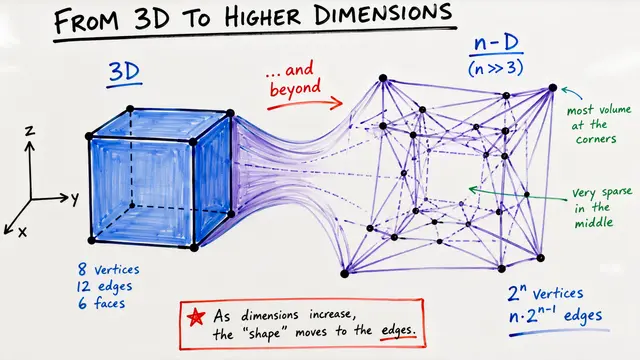
The authors exploit open book decompositions, where a 5-manifold is carved into a binding and pages, and measure how a Legendrian surface crosses these pages. Each crossing yields a link whose geometry encodes Legendrian data invisible to classical invariants.
Here's the construction: take a Legendrian surface, slice it with the double of a page to get a link, then compute Thurston-Bennequin numbers for each component. Sum these contributions across all components, then maximize over all possible Legendrian representatives isotopic to your original surface.
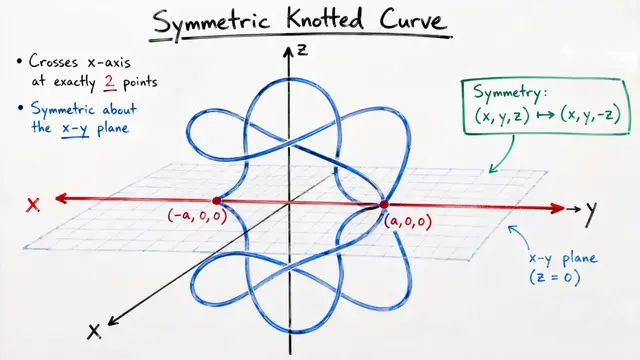
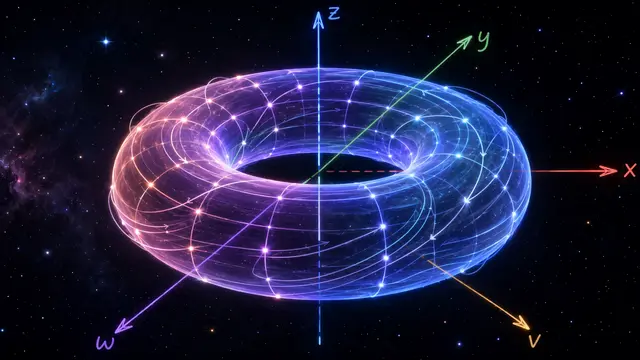
Consider the Clifford torus in the standard contact 5-sphere. It intersects each page double as a pair of unlinked Legendrian unknots, each with Thurston-Bennequin number negative 1. The maximal page crossing number comes out to negative 2, while the classical Thurston-Bennequin invariant is exactly zero.
The invariant is well defined because compactness and Zorn's lemma guarantee maximal representatives exist, and the authors prove it's invariant under all Legendrian isotopies. Crucially, homotopically trivial link components have strictly negative contributions, so maximality forces you toward nontrivial topology with minimal binding intersection.
These maximal page crossing numbers give us computable invariants that distinguish Legendrian surfaces when all classical tools fail, turning the geometry of open books into a practical classification engine. To explore more cutting-edge mathematics like this and create your own visual explainers, visit EmergentMind.com.