GPU Offload in Rust: Portable, Safe, and Fast
This presentation examines a compiler-integrated framework that brings GPU acceleration to Rust while preserving its ownership and memory-safety guarantees across NVIDIA and AMD hardware. We explore how the system balances three competing demands—portability, safety, and performance—through a family of interfaces that range from automatic compiler-managed offload to explicit device-resident staging, and examine the stark performance consequences when data movement is not carefully controlled.Script
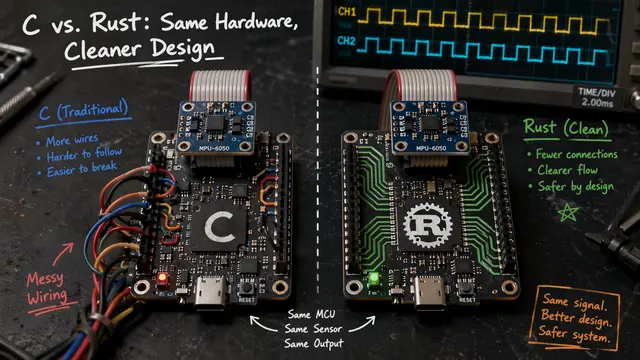
Conventional GPU programming forces you to choose: write unsafe pointer-heavy code for performance, or accept vendor lock-in for safe abstractions. This paper shows Rust can deliver portability across NVIDIA and AMD accelerators while preserving ownership and memory safety, but only if you control where data lives.
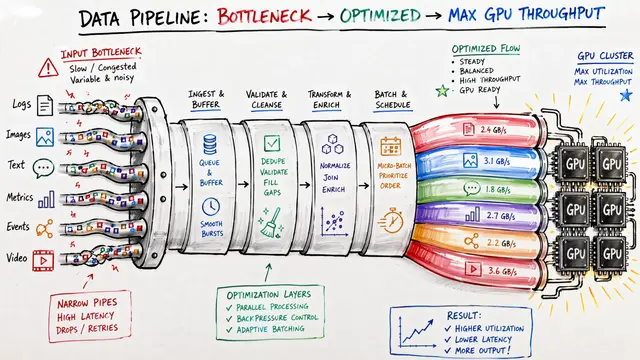
Automatic data movement sounds convenient, but the authors measured a slowdown of more than 400 times on AMD hardware when the runtime repeatedly shuttles data between host and device. That penalty vanishes only when explicit staging or compiler optimization keeps data resident on the GPU.
The framework offers three interfaces with increasing control. Interface A lets the compiler handle everything, Interface B wraps vendor libraries like cuBLAS with shared mapping logic, and Interface C gives you explicit staging types that lock data on the device until you deliberately drop them.
Safe parallel kernels rely on partitioning strategies that carve memory into disjoint views, one per thread. The unsafe proof obligation lives in the strategy implementation itself, not in every kernel you write, so vector addition and similar patterns need no unsafe blocks from the programmer.
On the evaluated subset of RAJAPerf, Rust kernels ranged from 32 percent faster to 46 percent slower than native implementations. The largest gaps appeared in instruction-light microbenchmarks sensitive to compiler heuristics, and the same workload could be faster than HIP but slower than CUDA, revealing backend-specific optimization differences rather than a uniform Rust penalty.
The framework demonstrates that safe abstractions need not sacrifice kernel performance, but shared memory remains unsafe, richer types need ABI validation, and the optimizer prototypes are not yet fully characterized. Visit EmergentMind.com to explore the paper in depth and generate your own video summaries of cutting-edge research.