EvolvingWorld: Characters and Worlds That Grow Together
This presentation introduces EvolvingWorld, a breakthrough framework for simulating literary worlds where characters and environments co-evolve dynamically over long narrative arcs. Unlike prior systems constrained by fixed character profiles and static world states, EvolvingWorld employs open-schema extraction to discover and persistently update character traits, relationships, and environment properties directly from books. Through supervised fine-tuning on 138,596 annotations from 57 canonical novels, the system demonstrates unprecedented ability to maintain narrative coherence, adapt character profiles smoothly across extended simulations, and track rich entity-level world state—capabilities that dramatically outperform existing dialogue-only and fixed-schema baselines.Script
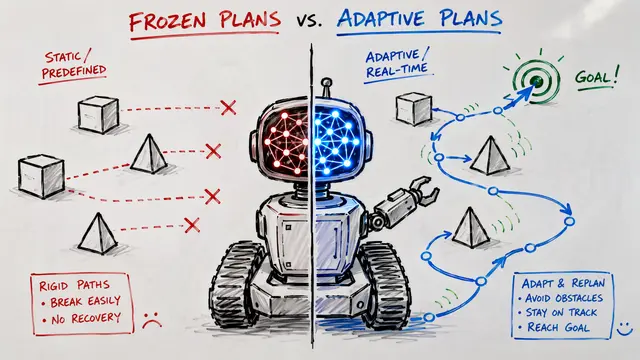
Most language model simulations treat literary characters like chatbots with frozen personalities and ignore the world around them entirely. EvolvingWorld changes that by letting both characters and their environments grow, adapt, and influence each other across entire novels.
Existing systems lock characters into fixed attribute schemas that miss what makes each story unique. The researchers designed an open-schema extraction process that discovers character dimensions directly from each book, capturing Victorian social hierarchies in one novel and supernatural powers in another, without forcing both into the same template.
The framework decomposes simulation into seven supervised tasks, from selecting which characters appear in each scene to updating both character profiles and world state after every interaction. This structured pipeline creates an explicit trail of how the story world evolves, enabling models to maintain causally consistent trajectories across dozens of scenes.
When tested on long simulations, models trained on EvolvingWorld maintain smooth character evolution and narrative coherence even as trajectories extend beyond 30 scenes. Competing systems degrade sharply, their profile updates becoming noisy and inconsistent as they lose track of accumulated story context.
A hidden tracker component solves a critical problem: it accumulates weak narrative signals without triggering premature profile changes. Ablation studies confirm that removing this mechanism destabilizes character evolution, reducing quality metrics by up to 8 points as models overreact to every minor story event.
EvolvingWorld demonstrates that literary worlds can serve as rich, persistent training grounds for multi-agent systems that must adapt over long horizons. To dive deeper into this open-schema approach and create your own explorations, visit EmergentMind.com.