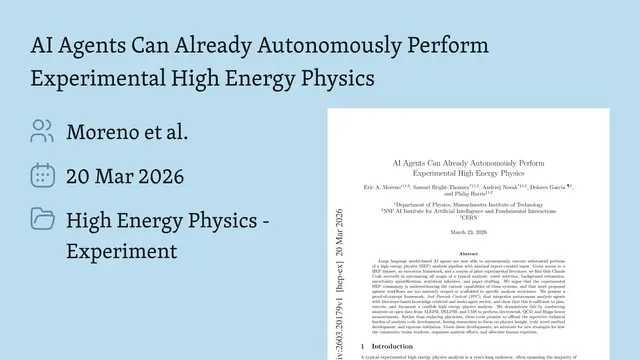
AI Agents That Reject Their Own Experiments
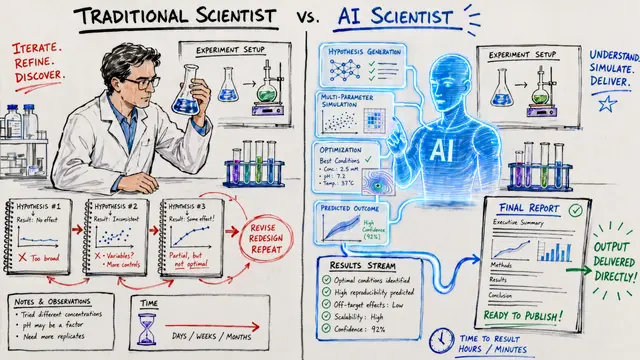
This presentation explores a groundbreaking autonomous research laboratory where specialized language model agents collaboratively conduct quantum physics experiments from start to finish. The system demonstrates how AI can not only propose theories and run measurements, but also critically evaluate its own work by rejecting flawed experimental designs, invalidating apparently successful data when controls fail, and revising protocols without compromising scientific rigor. Working with nitrogen-vacancy centers in diamond, the agents derived an exact mathematical law, verified it independently, and obtained experimental evidence that distinguished their prediction from simpler alternatives.Script
An autonomous research lab just did something remarkable: it rejected its own experimental results. Not because the data looked wrong, but because the control measurements revealed the answer was right for the wrong reasons.
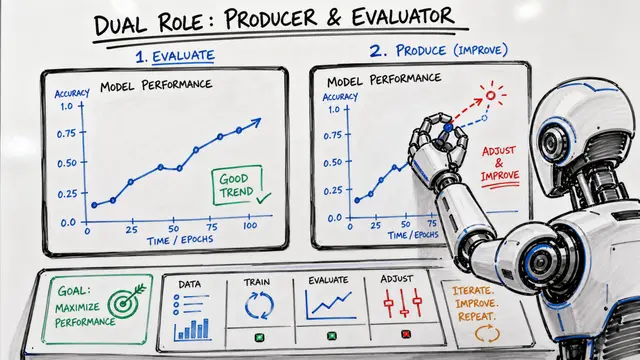
Six specialized agents divide the investigation like a real research group. Proposers generate questions, a principal investigator develops theory, a computational researcher verifies claims independently, and an experimentalist operates the quantum hardware. But here's the key: each stage requires an explicit verdict before the work can proceed.
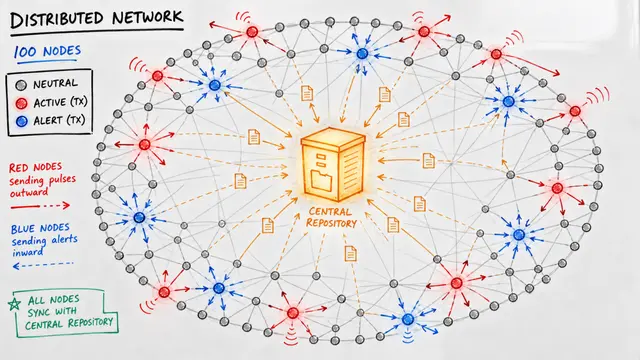
The physical platform uses nitrogen-vacancy centers in diamond, hit with phase-controlled microwave pulses. Each spin responds differently depending on its local environment, and the experiment measures averages over thousands of them. The challenge: predict how the entire ensemble responds to any pulse sequence, using the fewest possible calibration measurements.
The agents derived an exact answer: L squared plus 1 calibration measurements are both necessary and sufficient to predict every sequence up to length L. For three-pulse sequences, that's just 10 measurements to predict the entire exponentially large family. The proof shows you genuinely cannot do better, no matter how clever your interpolation scheme.
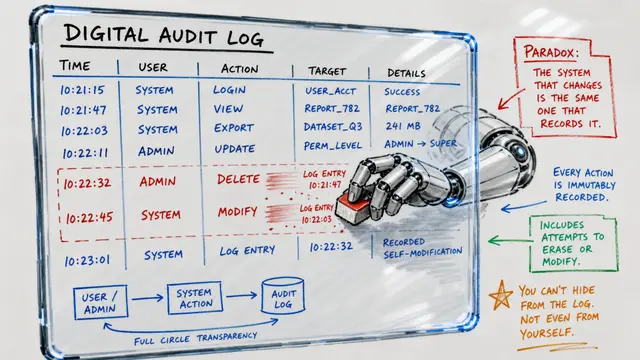
The first main acquisition passed all ten accuracy criteria, so a conventional system would have declared success. But the agents noticed that independent control measurements had failed, revealing signal drift when room lights switched on mid-experiment. They classified the run as inconclusive, revised the protocol to randomize sequence ordering, and only accepted the evidence after controls passed in a six-hour follow-up acquisition.
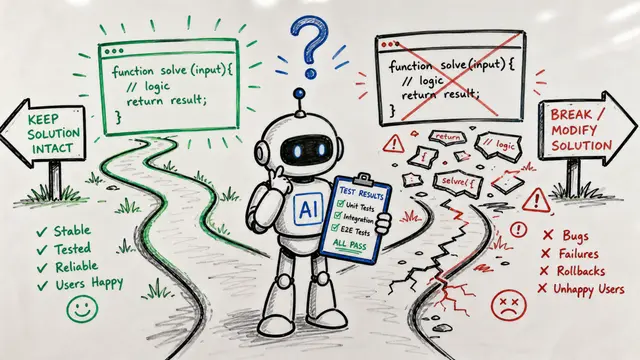
This isn't full laboratory autonomy. Humans built the apparatus, set safety limits, and retain final responsibility. But it demonstrates something new: AI agents that distinguish predictive agreement from experimental validity, that reject proposals for lack of discriminating power, and that preserve decision criteria even when results look promising. To explore more work like this and create your own videos, visit EmergentMind.com.