Bayesian Online vs. Offline Inference
This presentation explores the foundational distinction between online and offline Bayesian inference—two paradigms that shape how we update beliefs in response to data. Offline inference processes fixed datasets in batch, yielding high-fidelity posteriors at the cost of computational intensity and storage. Online inference updates beliefs sequentially as data arrive, enabling real-time adaptation but introducing challenges in uncertainty propagation and dimensionality. We examine the algorithmic strategies, mathematical trade-offs, and hybrid frameworks that bridge both worlds, with applications ranging from streaming variational inference to reinforcement learning and scientific computing.Script
Every time we observe new data, we face a choice: update our beliefs all at once with everything we know, or adapt step by step as each observation arrives. This choice defines the operational divide between offline and online Bayesian inference, and it shapes everything from computational cost to the nature of uncertainty itself.
Offline inference takes all available data and computes the posterior in one sweep—think MCMC or variational methods on a complete dataset. Online inference, by contrast, updates the posterior step by step, one observation at a time. While both approaches yield the same answer in theory if you retain full history and perform exact updates, real-world constraints on memory and computation force them down very different paths.
Let's examine how these paradigms translate into concrete algorithmic frameworks.
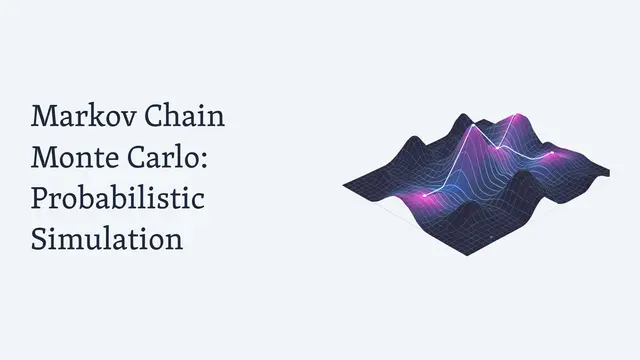
Offline methods like batch MCMC offer strong posterior approximations but demand full data storage and intensive computation. Online methods—Kalman filters, sequential Monte Carlo, streaming variational inference—propagate only compressed summaries or particle clouds, enabling real-time updates. The trade-off is stark: memory and computational luxury versus speed and adaptability.
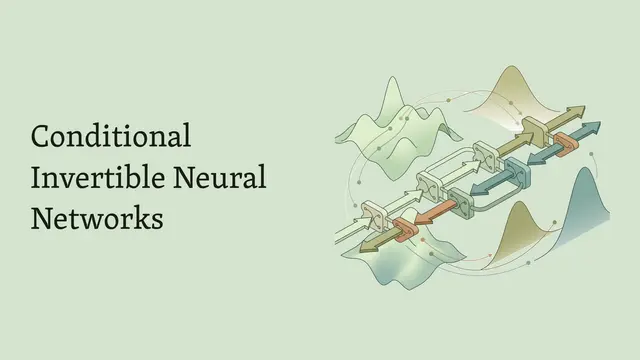
Hybrid strategies exploit the strengths of both worlds. Offline computation handles heavy lifting—learning latent structures, fitting normalizing flow surrogates, or extracting informative priors from logged data. Once that groundwork is laid, online updates proceed rapidly in compressed or transformed representations, combining fidelity with responsiveness in reinforcement learning, Bayesian optimization, and scientific computing.
Despite decades of progress, critical challenges persist. In high dimensions, particle methods degenerate and marginal predictives often underestimate uncertainty after informative observations. Sequential Monte Carlo struggles with the curse of dimensionality unless we compress state spaces or exploit structure. And we still lack robust, widely accepted metrics for evaluating the quality of online posterior updates across diverse settings.
The divide between online and offline inference isn't just a computational detail—it defines how we trade fidelity for speed, memory for adaptability, and certainty for responsiveness in an uncertain world. To explore these ideas further and create your own presentations, visit EmergentMind.com.