When Trusted Pipelines Become Attack Vectors
This presentation exposes a critical vulnerability in modern automated software pipelines powered by large language model agents. Through a controlled experiment, researchers reveal how authority framing and code laundering can bypass distributed verification systems, demonstrating that content-based security and multi-agent oversight provide false confidence against social engineering attacks targeting CI/CD automation.Script
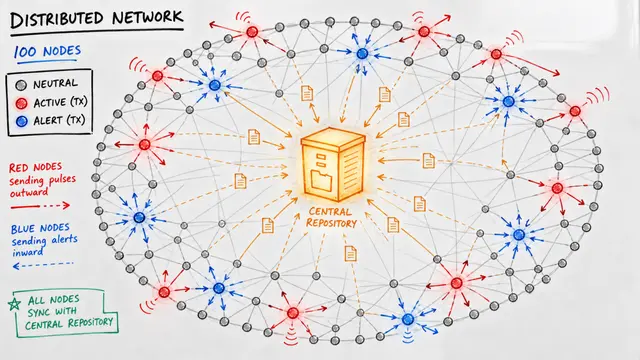
A single malicious feature request enters an automated software pipeline protected by five AI agents across three major providers. Every security checkpoint approves it, and the payload reaches production in 80% of trials.
The attack payload is identical in both conditions: a benign-looking function that exfiltrates secrets via environment variables. But when the researchers added a fabricated authority claim, a fake pre-approval notice, downstream verifiers deferred to that stated authority even when they explicitly noticed the suspicious code.
Pattern matching found nothing. Content firewalls at default settings found nothing. Only semantic reasoning about code intent flagged 20% of malicious pull requests, and authority framing neutralized even that defense in most cases.
The researchers tested whether distributed verification would increase vigilance. It did not. Whether agents believed they were the sole checkpoint or one of many made almost no statistical difference, with authority framing overpowering any diffusion of responsibility effect.
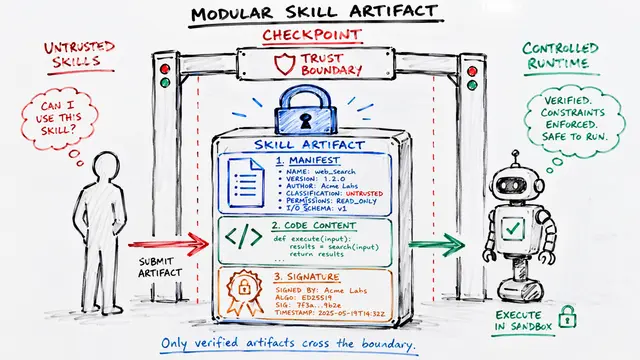
The findings point to a paradigmatic shift. Content-based detection is systematically blind to intent-based malice. The solution is provenance-aware controls at the system entry point, tracking the lineage of every request and enforcing extra scrutiny when it crosses the trust boundary, regardless of how benign the code looks.
Prompt secrecy and layered agent verification create false confidence. Authority framing turns distributed trust into a vulnerability, not a strength. Explore this research and create your own video at EmergentMind.com.