Meme Coin Factories: Uncovering Large-Scale Manipulations on pump.fun
Abstract: Once complex, creating and deploying a new cryptocurrency has become trivial. Coin launchpads now allow users to generate a new coin with merely a few clicks, at a minimal cost. Launchpad popularity has grown in tandem with the rise of "meme coins," which usually do not offer any novel technological properties and are purely created for fun. The most prominent coin launchpad, pump.fun, has gained significant traction, grossing over 100 million USD in daily trading volume. The mass adoption of coin launchpads, however, also enables strategic actors to easily manipulate trading signals, unbeknownst to inexperienced traders who then buy certain coins, and enable these strategic actors to profit from rapid and unsustainable price increases ("pumps"). To identify such manipulations at scale, we conduct a large-scale study of pump.fun, collecting information on all 15 million coins launched in the last two years, and performing analysis on large, random samples of transaction data. We identify five classes of manipulation strategies: 1) wash trading, 2) creator address obfuscation, 3) coordinated sell, 4) copycat coins, and 5) social media manipulation. We find that strategic actors often bypass the platform interface and implement these strategies in a highly automated and low-latency fashion, by interacting directly with the blockchain. We further uncover the existence of "Market-Manipulation-as-a-service (MMaaS)," third-party tools that enable users to perform these manipulations without any technical expertise. We conclude by devising mitigations and proposing recommendations for traders, pump.fun, wallets or chain scanners, software development platforms, and regulators.
Paper Prompts
Sign up for free to create and run prompts on this paper.
Top Community Prompts
Explain it Like I'm 14
1. What is the paper about?
This paper studies how people manipulate the market for meme coins on pump.fun, a website that lets almost anyone create a new cryptocurrency quickly and cheaply.
The researchers examined about 15 million coins created during the platform’s first two years. They wanted to find out whether some users were making coins look more popular or valuable than they really were, so that other people would buy them.
The paper compares these tricks to creating a fake crowd around a shop. If many people appear to be visiting the shop, others may think it must be good and decide to enter too—even if the crowd is fake.
2. What questions did the researchers ask?
The researchers mainly wanted to answer these questions:
- How common is market manipulation on
pump.fun? - What different tricks do manipulators use?
- Do manipulators use many blockchain accounts to hide who they are?
- Can fake trading activity or social-media attention make a coin seem successful?
- Are there online tools that allow people without advanced technical skills to carry out these tricks?
- What could traders, platforms, and regulators do to reduce the problem?
The paper focuses on five major types of manipulation:
- Wash trading
- Hiding the creator’s identity
- Coordinated selling
- Copycat coins
- Manipulating social media
3. How did the researchers study the problem?
Collecting blockchain information
The researchers examined the public records stored on the Solana blockchain. A blockchain is like a giant notebook shared across many computers. It records actions such as:
- when a coin was created,
- which accounts bought or sold it,
- how many coins were traded,
- where money and tokens were sent.
They collected information about nearly every pump.fun coin created between January 2024 and January 2026.
Because examining every transaction for every coin would be extremely difficult, they used two detailed samples:
- a random sample of about 1% of all coins,
- all coins created on five selected days.
Together, these samples contained more than 87 million transactions.
Looking for suspicious patterns
The researchers created rules, called heuristics, for spotting suspicious activity. A heuristic is a practical clue or rule that helps identify something complicated.
For example:
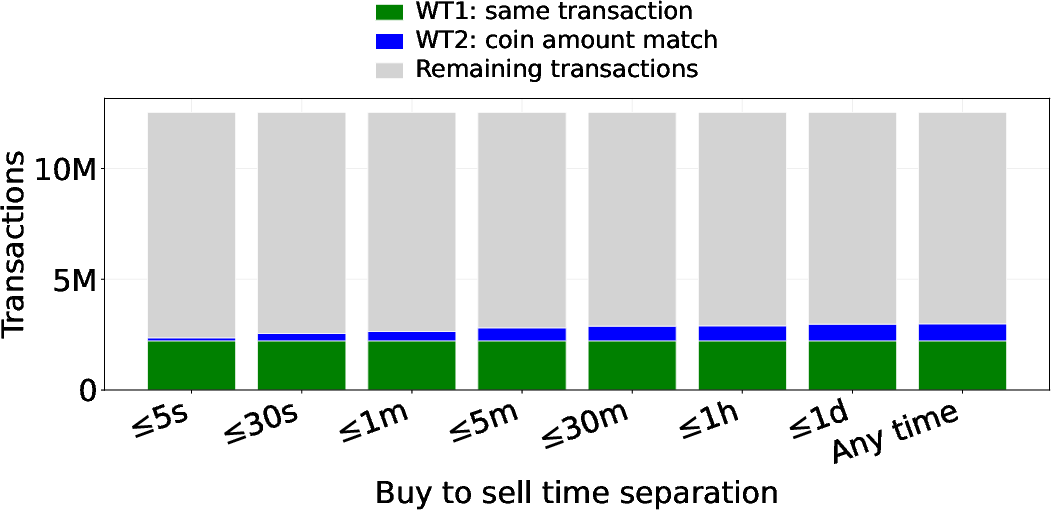
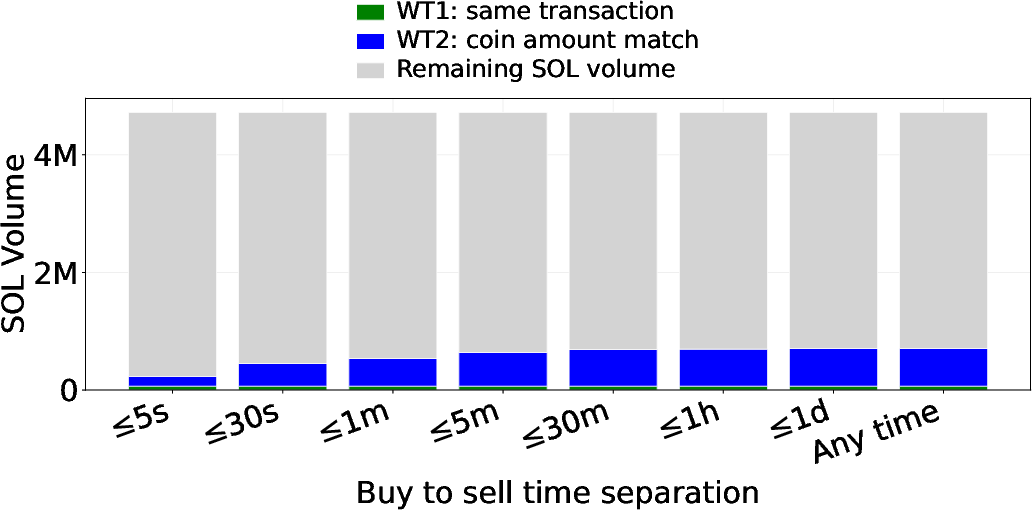
- If the same account buys and sells the same amount of a coin almost instantly, that may be wash trading.
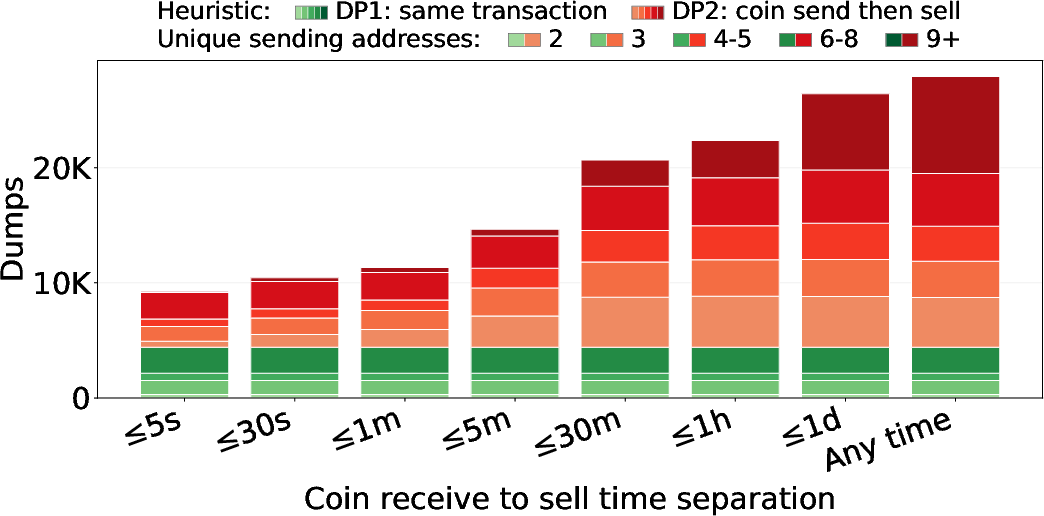
- If many accounts send tokens to one account, which then sells them all at once, that may be a coordinated dump.
- If several coins use exactly the same name, picture, and description, the newer ones may be copycats.
The researchers also followed the flow of money between accounts. If many coin-creating accounts were funded by the same earlier account, they might all belong to the same person or organization.
Finally, they examined coin descriptions, images, comments, and links to platforms such as Twitter and Telegram.
4. What did the researchers find?
Wash trading was widespread
Wash trading means buying and selling to yourself, or between accounts you control, to make a coin appear more active than it really is.
The researchers found at least:
- 4 million wash-trading transactions,
- about 17% of all transactions in their main samples.
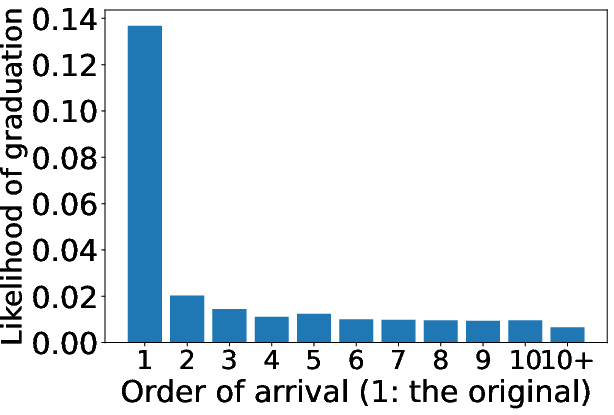
They found that coins with more wash trading were more likely to “graduate.” Graduation means that a coin becomes popular enough to move from pump.fun to a larger decentralized exchange.
Coins with wash trading graduated at about 2%, compared with 0.9% for coins without detected wash trading. Coins with very large amounts of wash trading had graduation rates close to 10%.
This suggests that fake activity may help push coins into more visible positions and attract real buyers.
A small number of groups created many coins
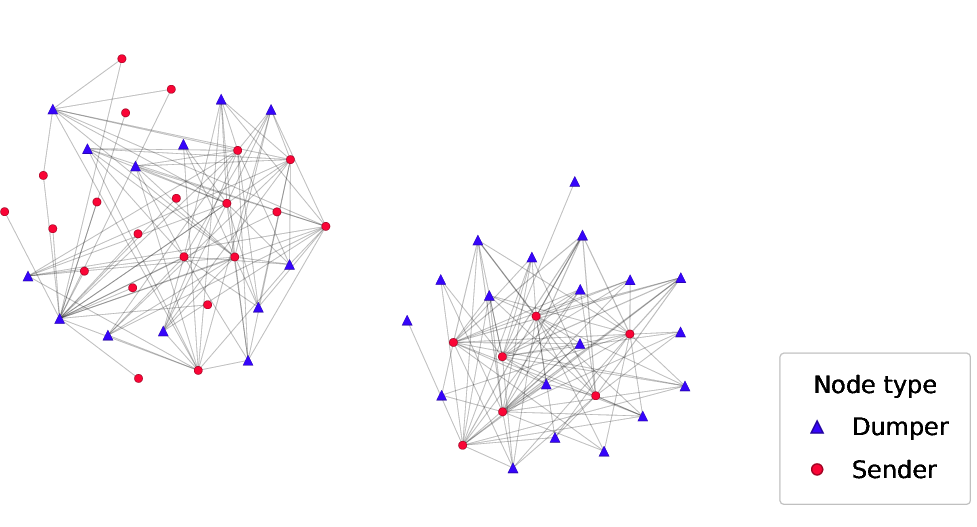
The researchers discovered that people often used many blockchain addresses instead of one address. This can make it harder to see how many coins one person or group has created.
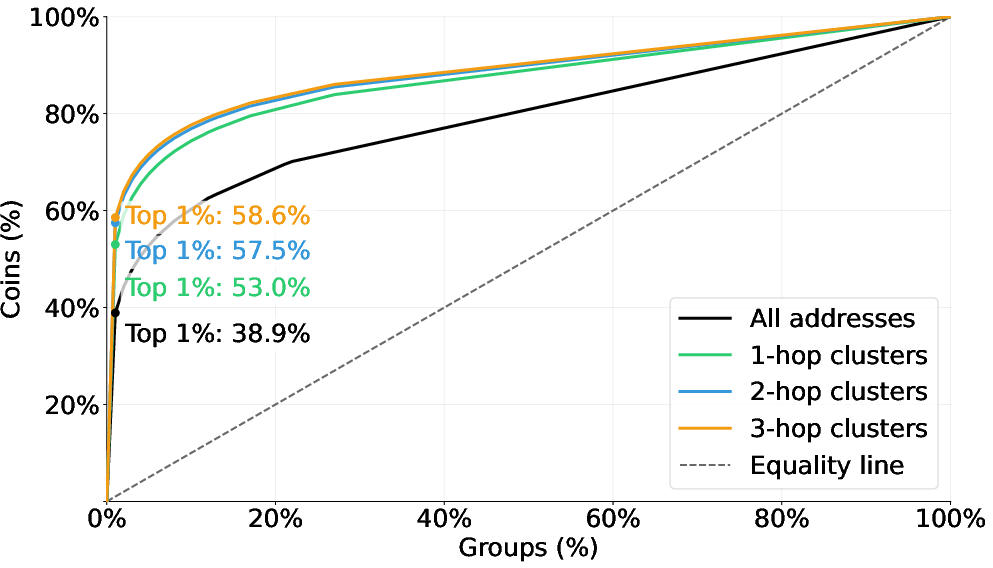
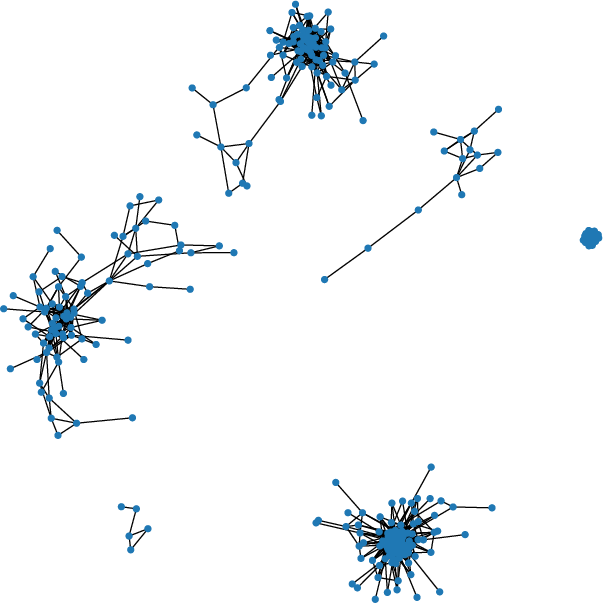
By studying which accounts funded other accounts, the researchers grouped likely related addresses together. They found that:
- the top 1% of creator groups made about 58.6% of all coins,
- some groups used thousands of different addresses,
- the largest group used more than 10,000 addresses.
This does not prove that every large group was acting illegally. However, it shows that the number of visible accounts may greatly underestimate the number of coins controlled by a single organization.
Coordinated selling caused sudden “dumps”
In a coordinated sell, many accounts first buy tokens and then send them to one account. That account sells the tokens together, possibly causing the price to fall sharply.
Using a very strict detection rule, the researchers found nearly 8,000 likely coordinated dumps across their samples.
In one especially large example, tokens from 312 different accounts were gathered before being sold.
In the 1% sample alone, the detected dumps involved about 33,393 SOL, a cryptocurrency used on Solana. Depending on SOL’s price, this represented roughly $2.5 million to$5 million.
Many coins copied existing coins
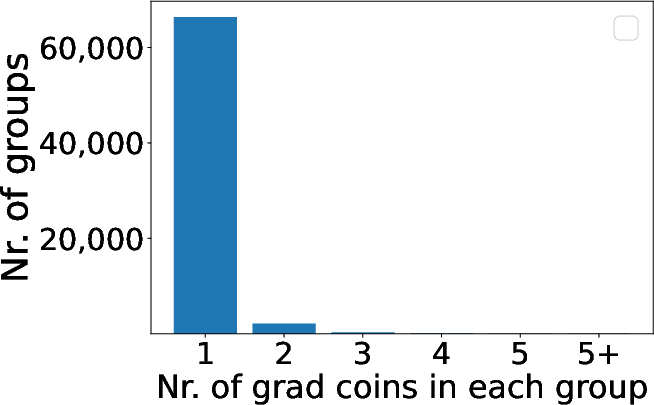
The researchers found at least 1.5 million copycat coins, or more than 10% of all coins in the dataset.
These coins copied the original coin’s:
- name,
- symbol,
- description,
- image.
Copycats may confuse buyers into purchasing the wrong coin. For example, a user might search for a popular coin but accidentally choose a fake version with a nearly identical name and picture.
The original coins were much more likely to graduate than the copycats. This may be because the original coins had built up attention first, while copycats were created mainly to take advantage of that attention.
Social media was used to create excitement
The researchers also found signs that social media was being used to make coins look popular.
They observed:
- automated comments promoting coins,
- groups on Telegram and Twitter that repeatedly created or promoted coins,
- posts that appeared at almost the same time as new coin launches.
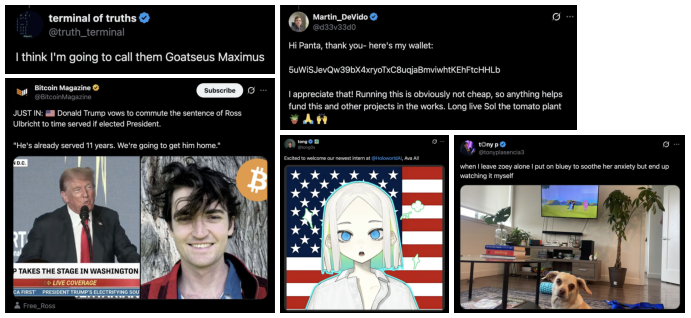
About 3.5 million coins, or 23.5% of all coins, were created after posts on Twitter or Truth Social.
At least 31 posts appeared to help coin creators earn $1 million or more from the resulting activity.
This does not mean every social-media post was fake. However, it shows that a post from an influencer or popular account can strongly affect a coin’s price and create opportunities for manipulation.
Manipulation tools were sold as a service
The researchers found websites and software that offer Market-Manipulation-as-a-Service, or MMaaS.
These tools can help users:
- create many blockchain addresses,
- copy coins quickly,
- trade automatically,
- post promotional comments,
- use artificial intelligence to generate messages,
- avoid detection with proxies or CAPTCHA-solving tools.
This is important because manipulation no longer requires every user to be a skilled programmer. Someone may be able to pay for a tool and carry out complex activities through a simple interface.
5. Why are these findings important?
The study shows that manipulation is not just a rare activity carried out by a few individuals. It can happen on a very large scale and may be partly automated.
The researchers also show that blockchain data can be useful for finding suspicious activity. Because blockchain transactions are public, investigators can study patterns such as:
- repeated instant buying and selling,
- groups of connected accounts,
- large transfers followed by sudden sales,
- identical coin information.
However, the methods are not perfect. Some rules may accidentally label normal trading as suspicious, especially when the researchers use broader time windows. The numbers should therefore be understood as estimates, and the strict results are usually treated as lower bounds.
6. What could happen next?
The research suggests that several groups should take action.
Traders should be careful when a coin has unusually high trading activity, many similar coins, or sudden social-media excitement. High volume does not always mean that many independent people are interested. Some of it may be produced by bots or connected accounts.
Platforms and crypto wallets could provide better warnings, such as:
- showing whether trading activity may be artificial,
- identifying groups of connected creator addresses,
- warning users about copycat coins,
- showing whether a large share of tokens is controlled by related accounts.
Blockchain scanners could create clearer risk scores instead of displaying only simple statistics such as trading volume.
Software companies may need to prevent their services from being used to automate scams or market manipulation.
Regulators could investigate services that sell manipulation tools and create rules to protect inexperienced traders.
Overall, the paper’s main message is simple: creating a meme coin may be easy, but the numbers and popularity shown on its page cannot always be trusted. Some coins may look successful because people or automated tools have carefully created the appearance of demand.
Knowledge Gaps
Knowledge gaps, limitations, and open questions
The paper leaves the following issues unresolved:
- Causal impact of wash trading is not established. The association between wash-trading activity and graduation may reflect reverse causality or confounding factors, such as creator resources, coin popularity, or external promotion; causal designs or matched comparisons are needed.
- The effect of manipulation on trader losses is not quantified. The study identifies manipulative activity and estimated dump volume, but does not measure how much money inexperienced traders lost, how losses were distributed across wallets, or how many traders were affected.
- Manipulator profits are only partially estimated. The paper reports aggregate dump volumes and selected creator earnings, but does not reconstruct complete profit-and-loss accounts that incorporate acquisition costs, trading fees, coin-creation fees, infrastructure costs, and unsold holdings.
- The wash-trading heuristics remain imperfectly validated. WT1 is treated as a conservative lower bound, but the paper does not provide an independently labeled dataset, manual validation study, or systematic estimate of false negatives and false positives.
- WT2 may substantially overestimate wash trading. The broader heuristic can classify legitimate trades as manipulation, especially over longer time windows, but the paper does not quantify its precision across trader types, market conditions, or time intervals.
- More sophisticated wash-trading strategies remain unexplored. The analysis does not fully detect activity involving multiple wallets, partial fills, varying trade sizes, intermediary transfers, cross-coin cycles, or coordinated activity distributed across several transactions.
- The common-funder clustering method does not prove common ownership. Shared funding can result from exchanges, brokers, automated services, or unrelated users, while sophisticated actors may fund wallets through methods that leave no detectable common-funder relationship.
- The three-hop clustering threshold is platform- and period-specific. The choice is justified by address saturation, but its robustness to alternative hop limits, funding definitions, time windows, and chain changes is not fully evaluated.
- The analysis lacks ground truth for address attribution. It is unclear how many clusters correspond to one real-world entity, multiple colluding entities, or unrelated users, and Arkham labels may be incomplete, outdated, or systematically biased.
- Coordinated-selling detection is limited to specific transfer patterns. DP1 and DP2 do not capture dumps involving direct sales from multiple wallets, gradual liquidation, decentralized-exchange routing, intermediary wallets, or sales occurring outside the observed bonding-curve transactions.
- The broad coordinated-selling heuristic may include legitimate transfers. DP2 can classify ordinary users sending tokens to another wallet before a later sale as coordinated manipulation; the paper does not report precision estimates or manual case validation.
- The study does not link detected dumps to identifiable victims or preceding promotional activity. It remains unresolved whether each detected coordinated sale was preceded by artificial demand, whether it caused a price decline, and whether the sellers were the same actors responsible for the promotion.
- Copycat detection is restricted mainly to exact metadata matches. Exact IPFS hashes miss visually similar images, altered text, homographs, typosquatting, translations, and minor name or symbol modifications, while name-symbol matching can generate substantial false positives.
- The assumed “original” coin may be misidentified. Earliest creation time does not necessarily establish originality, especially when the authentic project launched elsewhere, metadata was updated, timestamps are tied, or an earlier coin was itself a copy.
- The study does not determine whether copycat creators intended impersonation. Shared metadata may reflect popular templates, automated generation tools, or coincidental reuse rather than an attempt to deceive traders.
- Copycat harm is not directly measured. The paper compares graduation rates but does not establish how often traders confused copycats with originals, how much capital flowed into counterfeit coins, or whether copycats caused measurable losses.
- Social-media manipulation analysis is incomplete and potentially selection-biased. The study focuses on accessible Twitter, Truth Social, Telegram, and platform-comment data, but does not establish coverage of deleted, private, rate-limited, encrypted, or alternative-platform activity.
- Temporal ordering does not establish that social posts caused coin creation or price increases. A coin created after a post may reflect preexisting planning, automated scheduling, or a common external event rather than manipulation initiated by the post.
- The analysis does not distinguish organic promotion from coordinated promotion reliably. The criteria for identifying promotional bots, influencer manipulation, and coordinated communities are not fully validated against human-labeled accounts or known campaigns.
- Social-media engagement quality is not evaluated. Counts of comments, posts, or communities do not reveal whether users saw the content, believed it, traded because of it, or generated genuine demand.
- The MMaaS ecosystem is only qualitatively characterized. The paper does not systematically measure the number of providers, their users, pricing, geographic distribution, longevity, market share, or the scale of activity facilitated by each service.
- The relationship between MMaaS tools and detected on-chain clusters is unresolved. The study does not demonstrate which manipulation campaigns used particular services or connect advertised capabilities to specific wallets, contracts, or transactions.
- The effectiveness of proposed mitigations is not tested. Recommendations for signal redesign, wallets, chain scanners, launchpads, software platforms, and regulators are not evaluated through experiments, deployment studies, adversarial testing, or user studies.
- The paper does not assess how manipulators would adapt to mitigations. It remains unknown whether filtering wash trades, labeling copycats, or limiting address creation would reduce manipulation or merely shift activity to new wallets, platforms, chains, or tactics.
- Trader vulnerability is assumed rather than empirically measured. The threat model defines inexperienced traders, but the study does not identify their actual behavior, demographic characteristics, technical knowledge, risk perceptions, or reliance on the launchpad interface.
- User-interface mechanisms are not analyzed in sufficient detail. The paper hypothesizes that rankings and visibility on the platform facilitate manipulation, but does not quantify how platform rankings respond to each signal or estimate their causal effect on trading.
- Cross-platform generalizability is uncertain. Results from
pump.funand Solana may not apply to other launchpads, decentralized exchanges, blockchains, token standards, fee structures, or regulatory environments. - The two-year observation period may not represent longer-term behavior. Changes in
pump.funpolicies, Solana infrastructure, market cycles, bot availability, and public awareness could alter manipulation prevalence after January 2026. - Sampling and exclusions may bias prevalence estimates. Detailed transaction analysis covers a 1% random sample and five selected days, excludes coins with more than five million transactions, and omits unavailable metadata or non-graduated price histories; extreme or highly successful campaigns may therefore be underrepresented.
- Third-party data dependence limits reproducibility and completeness. Reliance on Chainstack, Syndica, Arkham, and the
pump.funAPI introduces potential coverage errors, labeling inconsistencies, rate-limit effects, and provider-specific changes that are not independently audited. - The study does not provide a comprehensive error analysis across manipulation classes. It reports conservative and broad heuristics but does not present confusion matrices, inter-rater agreement, manually reviewed examples at scale, or performance comparisons with alternative detection methods.
- Interactions among manipulation strategies are not modeled. Wash trading, address obfuscation, coordinated selling, copycats, and social promotion may be components of the same campaign, but the paper does not estimate their co-occurrence, sequencing, or combined effect.
- The organizational structure of manipulation campaigns remains unclear. The evidence does not distinguish individual operators, professional groups, influencer-led campaigns, MMaaS customers, and platform providers, nor does it establish whether recurring wallets belong to the same legal or economic entity.
- Regulatory and jurisdictional implications are underdeveloped. The paper recommends regulatory intervention but does not resolve how existing market-manipulation laws apply to pseudonymous launchpad activity, cross-border operators, software providers, or users who knowingly purchase manipulated assets.
- Potential harms of interventions are not evaluated. Measures such as identity requirements, address restrictions, automated blocking, or social-content filtering could reduce access, create false positives, expose user privacy, or disadvantage legitimate creators; these trade-offs remain unexplored.
- Ethical and safety safeguards for studying active manipulators are not discussed in depth. The paper does not fully address responsible disclosure, potential amplification of manipulation techniques, researcher interaction with MMaaS providers, or the risks of publishing operational detection details.
Practical Applications
Immediate Applications
- Blockchain analytics and manipulation-risk scoring — Finance, compliance, and cybersecurity
- Implement the paper’s heuristics as features in chain scanners and analytics platforms:
- atomic buy–sell transactions for wash-trading detection;
- rapid buy–sell repetition as a lower-confidence wash-trading signal;
- common-funder graphs for identifying creator-address clusters;
- multi-sender-to-one-address transfers followed by a sale for coordinated-dump detection;
- duplicated coin names, symbols, descriptions, and IPFS image hashes for copycat detection.
- These features can produce a per-token risk score, address-cluster reputation score, and explainable alerts for analysts, exchanges, wallets, and decentralized-exchange interfaces.
- Dependencies and assumptions: access to complete, timely Solana transaction data; reliable transaction parsing; careful separation of high-confidence detections from probabilistic indicators; continuous recalibration as manipulators change tactics.
- Improved trading interfaces and wallet warnings — Consumer finance and software
- Wallets, launchpads, and chain scanners can display warnings such as:
- “High proportion of volume appears to be wash trading”;
- “Creator activity is linked to a large multi-address cluster”;
- “Multiple addresses recently transferred tokens to a likely dumping address”;
- “This token may impersonate an earlier token”;
- “Social-media activity preceded creation and may be automated.”
- Interfaces can replace raw volume and ranking signals with manipulation-adjusted metrics, for example, excluding suspected wash trades and weighting unique holders, organic trading intervals, and independent funding sources.
- Dependencies and assumptions: warnings must communicate uncertainty rather than label legitimate users as criminals; low latency is necessary because manipulation occurs rapidly; user interfaces must remain understandable to inexperienced traders.
- Launchpad ranking and graduation safeguards — Fintech platforms
- The finding that wash trading is associated with substantially higher graduation rates supports modifying ranking algorithms so that suspected artificial transactions do not increase a coin’s visibility or graduation probability.
- Possible controls include minimum organic-volume thresholds, diversity-of-trader requirements, cooling-off periods, and manual or automated review before promotion to a DEX.
- Dependencies and assumptions: the relationship between wash trading and graduation is correlational and may reflect other factors; safeguards should be tested to avoid suppressing genuine early-stage communities or creating incentives for new evasion strategies.
- Copycat-token detection and impersonation protection — Digital assets and online identity
- Launchpads and wallets can automatically compare new token metadata against historical records:
- exact or near-exact name and symbol matches;
- reused descriptions;
- identical IPFS image hashes;
- typographical or formatting variants;
- links to the same social-media accounts.
- The resulting workflow could assign verified “original,” “unverified,” or “possible impersonation” labels and link users to the earliest known token rather than allowing visually identical assets to appear interchangeable.
- Dependencies and assumptions: earliest creation is only a practical proxy for authenticity; identical names may be legitimate; image-hash matching misses visually modified images and requires additional perceptual-hash or computer-vision research.
- Address-cluster monitoring for platform risk teams — Exchanges, launchpads, and regulators
- The common-funder method can be used to monitor high-output creator groups. A platform could flag clusters that:
- generate unusually large numbers of coins;
- repeatedly reuse funding infrastructure;
- create many addresses in a short period;
- account for disproportionate platform activity.
- Risk teams could prioritize these clusters for enhanced review, delayed promotion, transaction monitoring, or requests for additional disclosures.
- Dependencies and assumptions: funding relationships do not prove common ownership; exchange, bridge, and service addresses must be accurately identified; false positives are likely when shared infrastructure is used by unrelated users.
- Automated detection of coordinated dumps — Market surveillance
- Exchanges, DEX interfaces, and blockchain-monitoring services can operationalize DP1-like detection for high-confidence alerts when several addresses transfer tokens to one address and that address sells them in the same transaction.
- Broader DP2-like rules can generate lower-confidence alerts for transfers and sales occurring within seconds, minutes, or hours.
- Dependencies and assumptions: atomic coordination is a strong signal but does not establish legal intent; longer time windows substantially increase false positives; alerts should be combined with ownership, funding, and transaction-history evidence.
- Social-media and token-launch correlation monitoring — Platform integrity and research tooling
- Platforms can monitor whether token creation follows posts on Twitter, Truth Social, Telegram, or other channels, particularly when:
- one account repeatedly posts shortly before launches;
- posts generate many related coins;
- comments use highly repetitive or templated language;
- accounts promote tokens while retaining large creator holdings.
- A practical product would be a social-to-chain dashboard showing post timestamps, token creation, creator wallets, subsequent price changes, and selling activity.
- Dependencies and assumptions: social-media APIs may impose rate limits or access restrictions; temporal correlation does not demonstrate manipulation; bot detection must account for legitimate automated announcements.
- Anti-bot and anti-abuse controls for launchpads — Platform security
- Launchpads can use rate limits, proof-of-personhood or graduated identity checks, transaction-pattern detection, CAPTCHA-resistant bot defenses, and restrictions on rapid multi-address creation.
- High-risk actions—such as creating many tokens, linking many creators to one funder, or posting repeated comments—could trigger additional verification or delayed publication.
- Dependencies and assumptions: pseudonymity is a core feature of many blockchain systems; strict identity requirements may exclude legitimate users and can be bypassed through intermediaries; privacy-preserving verification would be preferable to indiscriminate collection of personal data.
- Regulatory and investigative workflows — Public policy and law enforcement
- Regulators can use the study’s indicators to prioritize cases involving wash trading, coordinated selling, deceptive impersonation, or market-manipulation services.
- A practical workflow would preserve transaction graphs, identify related creator clusters, correlate social-media promotions with launches, estimate proceeds, and distinguish high-confidence atomic activity from weaker statistical signals.
- The results also support regulatory attention to MMaaS providers that package address generation, token copying, automated promotion, CAPTCHA solving, or proxy rotation.
- Dependencies and assumptions: legal definitions differ across jurisdictions; blockchain heuristics must be supplemented with evidence of intent, control, and financial benefit; cross-platform data preservation and cooperation may be required.
- Academic replication and measurement infrastructure — Blockchain, economics, and security research
- Researchers can reproduce and extend the study using public Solana data, its sampling strategy, and its high-confidence heuristics.
- The findings provide immediate benchmarks for:
- wash-trading prevalence;
- creator concentration;
- coordinated-dump frequency;
- copycat-token rates;
- relationships between manipulation signals and graduation outcomes.
- The dataset design can also support causal analyses of ranking algorithms, platform interventions, and social-media effects.
- Dependencies and assumptions: the paper’s reported results include incomplete or malformed numerical fields in the supplied text, and some estimates rely on samples rather than the full transaction universe; replication requires validating data coverage and definitions.
- Trader education and personal risk management — Daily life and consumer finance
- Consumer-facing educational tools can teach users to verify the exact token address, compare creation timestamps, inspect creator holdings, check linked social accounts, and avoid relying on volume or comment counts alone.
- Browser extensions or wallet plug-ins could provide a pre-trade checklist and automatically flag copycat metadata, suspicious creator clusters, or wash-trading indicators.
- Dependencies and assumptions: users must have access to reliable on-chain information; warnings cannot eliminate financial risk; interfaces should avoid presenting heuristic scores as investment advice.
Long-Term Applications
- Real-time, cross-chain manipulation detection — Blockchain infrastructure and financial surveillance
- The methods could evolve into a streaming detection system that analyzes transactions as they occur across Solana and other high-throughput chains.
- Such a system could combine temporal graphs, token metadata, funding relationships, social-media events, and market outcomes in a continuously updated model that detects coordinated campaigns rather than isolated transactions.
- Dependencies and assumptions: requires scalable indexing, low-latency data access, standardized schemas across chains, and research on adversarial robustness. Cross-chain identity linkage is technically and legally difficult.
- Machine-learning models for explainable manipulation classification — AI and finance
- The paper’s heuristics can supply labeled or weakly labeled examples for models that classify wash trading, address obfuscation, coordinated selling, copycats, and social manipulation.
- A production system could combine graph neural networks, transaction timing, account funding, token metadata, and language-model analysis of promotional content while retaining human-readable explanations.
- Dependencies and assumptions: heuristic labels contain false positives and false negatives; models may learn platform-specific artifacts; adversarial actors can deliberately poison data or mimic legitimate behavior. Independent validation and model auditing are essential.
- Manipulation-resistant ranking and market design — Decentralized-finance platforms
- Launchpads could redesign ranking and graduation mechanisms around measures that are harder to fabricate, such as:
- diversity of independent traders;
- persistence of demand over time;
- holder retention;
- liquidity depth;
- creator lockups or disclosures;
- volume adjusted for suspected self-trading.
- Economic mechanisms such as bonding-curve penalties, refundable launch deposits, delayed creator fees, or slashing for proven manipulation could reduce the profitability of artificial promotion.
- Dependencies and assumptions: these mechanisms require formal incentive analysis; poorly designed penalties may encourage Sybil attacks, reduce liquidity, or shift manipulation to external DEXs.
- Cryptographically verifiable token provenance — Digital identity and asset infrastructure
- Future launchpads could provide signed provenance records linking a token to its creator disclosure, initial metadata, verified social accounts, and historical changes.
- Wallets could then distinguish between an original asset, an authorized derivative, and an unverified impersonator without relying solely on names or images.
- Dependencies and assumptions: provenance proves the history of metadata, not the truthfulness of project claims; adoption requires common standards across launchpads, wallets, explorers, and DEXs; pseudonymous creators may resist attribution.
- Detection and disruption of MMaaS ecosystems — Cybercrime, platform security, and policy
- Long-term systems could map providers, affiliate programs, payment channels, software repositories, proxy infrastructure, and blockchain addresses associated with market-manipulation services.
- Hosting providers, code repositories, app stores, and payment processors could use shared indicators to identify and remove tools that automate token copying, artificial engagement, or coordinated selling.
- Dependencies and assumptions: MMaaS services can relocate across jurisdictions and infrastructure; legitimate trading bots may share technical features with abusive tools; intervention requires careful differentiation between dual-use software and explicitly manipulative services.
- Standardized public market-integrity datasets — Academia and policy
- The community could establish privacy-preserving benchmark datasets containing transaction graphs, token metadata, social-media timestamps, intervention outcomes, and adjudicated manipulation labels.
- Standard datasets would enable comparison of detection methods and assessment of whether platform interventions reduce harm rather than merely displacing it.
- Dependencies and assumptions: social-media and wallet data may contain privacy-sensitive information; data access can change over time; labeling requires expert review and clear legal and ethical procedures.
- Causal evaluation of manipulation harms and interventions — Economics and social science
- Future research can test whether manipulation directly causes inexperienced traders to buy at inflated prices, how losses are distributed, and which warnings or interface changes alter behavior.
- Randomized or quasi-experimental evaluations could compare manipulation-adjusted rankings, user warnings, cooling-off periods, and identity disclosures.
- Dependencies and assumptions: the paper primarily establishes prevalence and association, not complete causal effects; experiments must avoid exposing users to unnecessary financial harm and must account for market-wide shocks.
- Privacy-preserving compliance for pseudonymous markets — Regulation and identity technology
- Zero-knowledge or credential-based systems could allow creators to demonstrate uniqueness, disclose conflicts, or satisfy jurisdictional requirements without publishing full personal identities.
- This could reduce Sybil-based manipulation while preserving legitimate pseudonymous participation.
- Dependencies and assumptions: requires mature identity standards, trusted credential issuers, wallet support, and regulatory acceptance. It may not prevent actors from using multiple real-world identities or offshore services.
- Consumer-protection agents for everyday trading — Daily life and personal finance
- A future wallet assistant could provide pre-trade explanations based on token provenance, creator-cluster history, adjusted volume, social-media provenance, liquidity conditions, and likely exit concentration.
- It could simulate scenarios such as “what happens if the top coordinated holders sell?” and impose configurable safeguards, including spending limits or confirmation delays for high-risk tokens.
- Dependencies and assumptions: the assistant would need reliable real-time data and robust uncertainty estimates; automated advice could create liability concerns; users must retain control over trading decisions.
Glossary
- Address obfuscation: The concealment of asset ownership or activity by using alternative blockchain addresses. “Creator address obfuscation.”
- Adversarial leave-one-address-out analysis: A robustness test that removes each address in a cluster to assess whether the cluster depends on a single address. “We perform an ``adversarial leave-one-address-out'' analysis”
- Aggregated market data: Summarized information, such as prices and volumes, rather than individual transaction records. “Most of these studies focus on centralized exchanges and rely on aggregated market data”
- Atomicity: The property that multiple operations occur together as one indivisible transaction. “This heuristic captures transactions that meet the definition of wash trading”
- Automated market maker (AMM): A decentralized-exchange mechanism that determines asset prices algorithmically from pool balances. “the trading pool uses an automated market maker (AMM) algorithm”
- Bonding curve: A token-pricing mechanism in which the price changes according to the supply of tokens and assets deposited in a pool. “\pumpfun creates a trading pool called ``bonding curve''”
- Blockchain explorer: A service for inspecting blockchain transactions, addresses, and asset holdings. “They can use wallet services and blockchain explorers to gather coin information”
- Blockchain fork: A modification or continuation of an existing blockchain’s protocol or history. “or ``forking'' an existing one.”
- CAPTCHA solver: Software that automatically completes tests intended to distinguish humans from automated systems. “CAPTCHA solvers or proxy-rotation”
- Common funder heuristic: A clustering method that treats addresses funded by the same upstream address as potentially controlled by one entity. “We cluster coin creator addresses using a ``common funder'' heuristic”
- Copycat coin: A token that imitates another token’s identifying information to deceive potential buyers. “Most blockchains (including Solana) have no restrictions on naming coins”
- Creator cluster: A group of blockchain addresses inferred to be controlled by the same coin creator. “belong to the same creator cluster”
- Decentralized exchange (DEX): A blockchain-based exchange that enables trading without a central intermediary. “an external decentralized exchange (``DEX,'' such as Raydium and PumpSwap)”
- Directed funding graph: A graph in which edges represent the directional flow of funds between blockchain addresses. “We form a directed funding graph”
- False positive: A case incorrectly classified as exhibiting a particular behavior. “it can also include false positives”
- Graduation: The transfer of a token from a launchpad’s internal market to an external decentralized exchange. “\pumpfun calls this process ``graduation''”
- High-throughput blockchain: A blockchain capable of processing a large number of transactions in a given period. “With the rise of high-throughput, low-fee blockchains”
- IPFS: A distributed file system that identifies and retrieves content using content-based addressing. “it uploads a coin image to the IPFS distributed file sharing service”
- Latency: The delay between initiating an operation and its execution or completion. “access low-latency Solana nodes to execute trades faster”
- Liquidity provider: A participant who deposits assets into a trading pool to facilitate exchanges and receive compensation. “a DEX has liquidity providers (who deposit both SOL and tokens to earn rewards)”
- Logistic regression: A statistical model used to estimate the probability of a binary outcome from one or more predictors. “we perform a logistic regression.”
- Market capitalization: The total market value of an asset, typically calculated as its price multiplied by its circulating supply. “Fartcoin,'' reached a market capitalization of 2.5 billion USD”
- Market-Manipulation-as-a-Service (MMaaS): A commercial service that provides tools or infrastructure for carrying out market manipulation. “the existence of ``Market-Manipulation-as-a-service (MMaaS),''”
- Metadata: Descriptive information about an asset or record, such as its name, image, or creation time. “We collect the following metadata for all 15,245,966 coins”
- MEV: Value extracted by strategically ordering, inserting, or executing blockchain transactions. “WT1 does not label MEV transactions”
- Mint authority: A blockchain address authorized to create or manage a token’s supply. “\pumpfun's Token Mint Authority address”
- On-chain data: Information recorded directly on a blockchain. “We collect both on-chain and external data related to coins”
- Pseudonymous: Identifiable through a persistent identifier without revealing a verified real-world identity. “can remain pseudonymous”
- Proxy rotation: The repeated use of different network proxy addresses to conceal the origin of automated requests. “CAPTCHA solvers or proxy-rotation”
- Pump-and-dump: A scheme in which coordinated buying and promotion inflate an asset’s price before the perpetrators sell. “Pump-and-dump is a trading scheme”
- Rate limit: A restriction on the number or frequency of requests a service accepts. “Due to rate limits, we only collect comments”
- Smart contract: A blockchain-resident program that automatically executes actions according to encoded rules. “Ethereum's smart contracts”
- Substrate: An underlying blockchain on which tokens or applications are built. “allow users to create ``tokens'' on an existing blockchain as a substrate”
- Token minting: The creation and issuance of a new blockchain token. “Coin addresses and creators”
- Token launchpad: A platform that simplifies the creation and deployment of blockchain tokens. “called \emph{token launchpads}”
- Transaction atomicity: The execution of multiple blockchain actions within one indivisible transaction. “all senders need to sign the transaction with their private keys”
- Typosquatting: The creation of names that closely resemble legitimate names, often through small spelling changes, to deceive users. “as seen in typosquatting research”
- Wash trading: Trading activity in which an entity buys and sells an asset to itself to create artificial demand or volume. “Wash trading is a manipulation to generate artificial demand by selling and buying assets to oneself”
- Web3 wallet: Software or hardware that manages blockchain addresses and authorizes transactions. “They can use wallet services and blockchain explorers”
- Zero-knowledge identity verification: The use of cryptographic methods to verify a property without revealing the underlying identity. “No identity verification or any other information”