- The paper provides an empirical analysis of agentic coding tools by studying 25,264 PRs across 2,361 repositories, revealing distinct adoption patterns.
- It demonstrates that smaller teams exhibit higher participation ratios and PR productivity compared to larger projects where agentic tools remain marginal.
- The study highlights the dominance of single-human oversight in agentic workflows, underscoring the need for scalable review processes and workflow enhancements.
Introduction
The adoption of agentic coding tools, defined as automated agents capable of generating, testing, and submitting pull requests (PRs), is transforming open-source software practices by introducing new paradigms of human-agent collaboration. The analyzed paper presents a comprehensive empirical study of 25,264 agentic PRs across 2,361 popular GitHub repositories during a three-month period, with a focus on characterizing patterns of adoption, productivity, and collaboration at the project level. The study provides detailed quantitative comparisons by project size (small, medium, large) and explores the organizational structures that mediate effective integration of agentic toolchains.
Adoption Patterns Across Project Sizes
The data reveal a highly non-uniform landscape of agentic tool adoption. The median repository initiates only one to two agentic PRs within the three-month window, signaling that intensive use remains restricted to a minority of projects. Adoption is strongly modulated by team size: small projects (1-5 contributors) distinguish themselves by both higher participation ratios (proportion of contributors involved in agentic PR workflows) and higher average PR activity than medium (6-15 contributors) and large (>15 contributors) projects. In small teams, a larger fraction of contributors engages directly with agentic workflows, whereas in medium and large teams, involvement is typically limited to a small subset of participants.
These findings are supported by robust statistical analysis, including significant differences in participation ratios across all pairwise project-size categories (Kruskal-Wallis p<0.001 and large Cliff's Delta values), indicating a strong practical association between project size and engagement in agentic workflows.
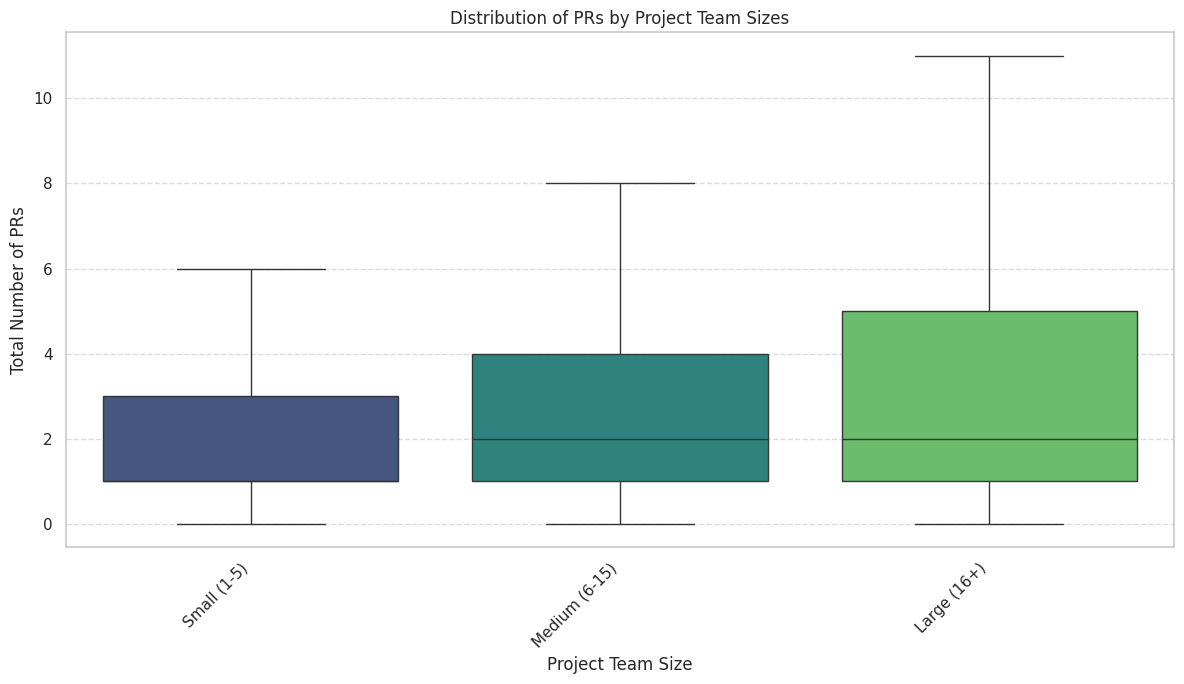
Figure 2: Distribution of agentic PR counts across small, medium, and large project teams (excluding outliers), highlighting the narrow but occasionally highly skewed activity in small projects.
The participation ratios themselves are generally low across the population: 42% of projects have participation ratios below 0.05, and over 70% are below 0.20. This demonstrates that, even where agentic tools are present, they often remain peripheral to the main development workflow for most contributors.
Agentic PR Productivity Benchmarked
The study operationalizes productivity as agentic PRs per unique human participant, benchmarking against an industry baseline of 36 PRs per developer over three months. The data show a wide spread: although a few projects substantially exceed this baseline (notably among small teams), the overwhelming majority produce far fewer agentic PRs per human participant.
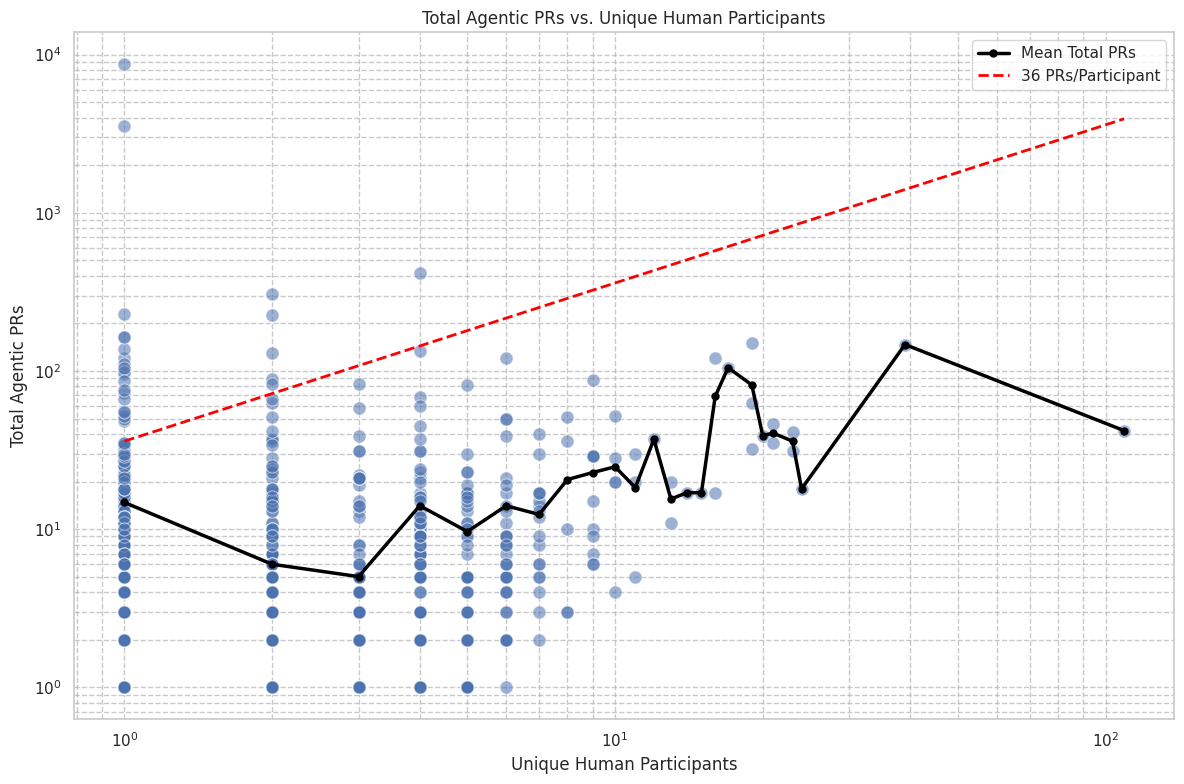
Figure 4: Distribution of total agentic PRs by number of unique human participants per project, with the red dashed line at the 36-PR-per-participant reference.
Only approximately 1% of projects surpass the 36-PR productivity threshold. Projects with few human participants are more likely to achieve highly elevated agentic PR productivity, suggesting a dependence on concentrated, possibly workflow-optimized, human oversight in these scenarios.
Human-Agent Collaboration Structures
The analysis of collaboration patterns reveals that the predominant workflow is single-human oversight. In nearly 79% of agentic PRs, one individual acts as both reviewer and committer, directly supervising and integrating agentic contributions. Dual or team-based review, wherein multiple humans review or modify agentic PRs, is comparatively rare (occurring in only ~11% of cases).
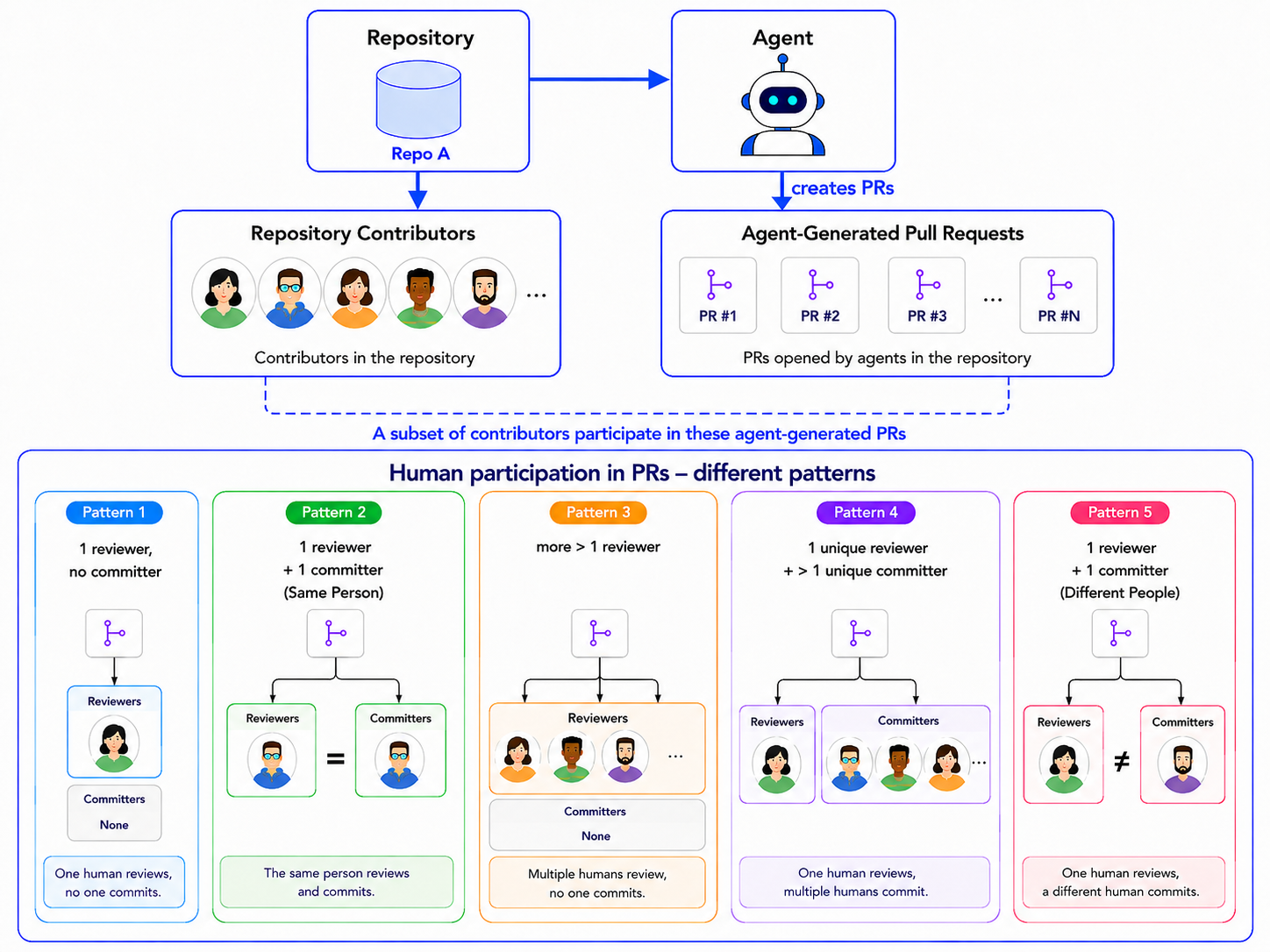
Figure 1: Different human participation patterns in agentic PRs, illustrating the dominance of single-human oversight scenarios.
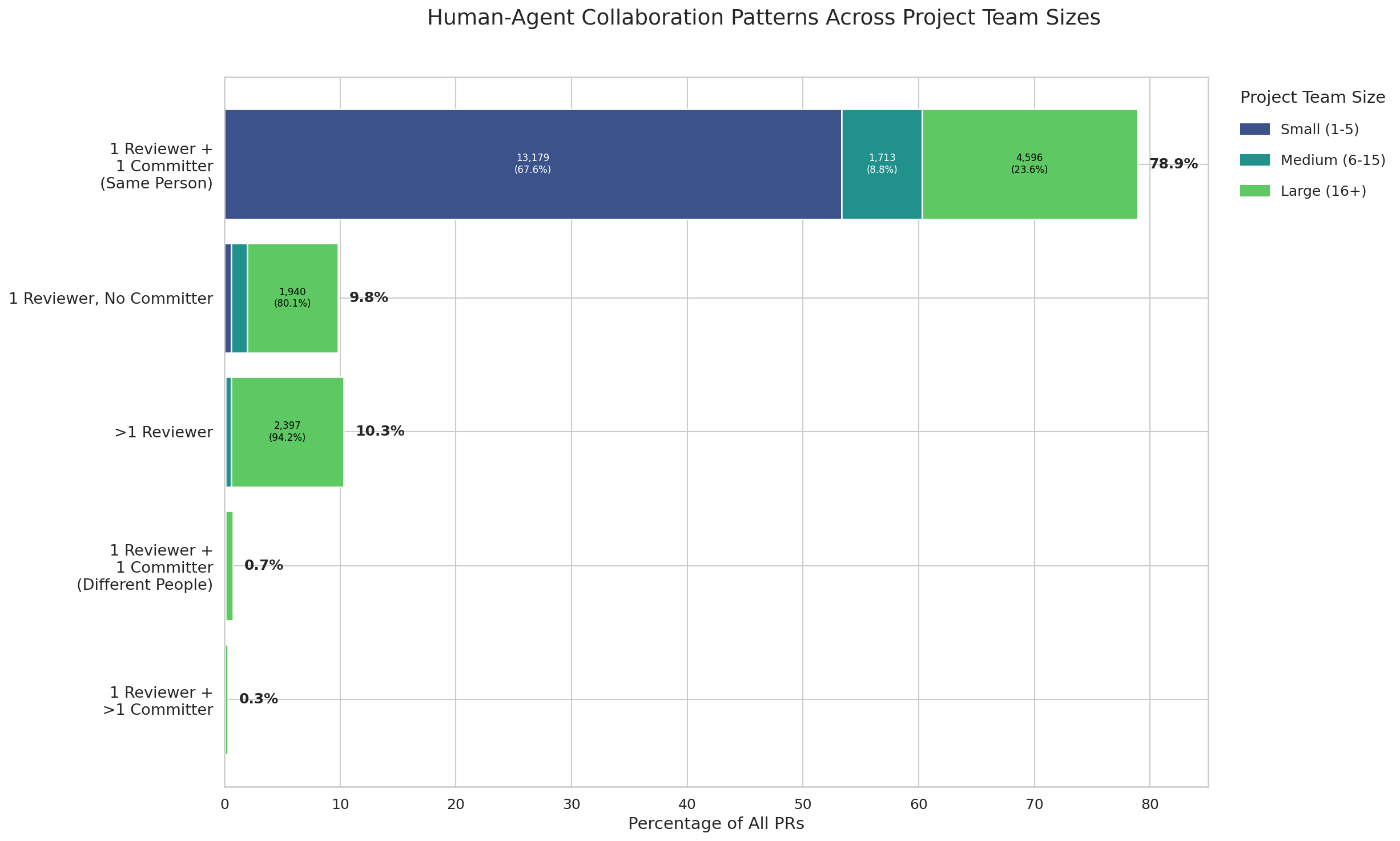
Figure 3: Distribution of human-agent collaboration patterns across project contributor size, showing only modest increases in distributed review for larger teams.
Even in larger teams, the prevalence of more distributed review and commit practices is limited. The data indicate that as of the time of analysis, agentic PR integration predominantly enhances, rather than supplants, traditional single-developer accountability models.
Implications and Future Developments
These results underscore that the influence of agentic coding tools on open-source workflows is not solely a function of tool capabilities; it is mediated fundamentally by human and organizational processes. The dominance of individual oversight models raises questions about scalability, quality assurance, and accountability as agentic tool adoption broadens. Furthermore, the low typical PR productivity and limited contributor engagement highlight organizational inertia and the absence of mature, multi-human review processes tailored to agentic workflows.
From a practical standpoint, these findings suggest substantial untapped potential for workflow engineering, policy development, and tooling refinement to facilitate more robust, scalable, and distributed human-agent collaboration. As agentic coding agents advance, future developments in AI-assisted software engineering are likely to focus on:
- Automating more granular review and integration processes to mitigate over-reliance on individual contributors.
- Developing governance frameworks that ensure code quality, security, and contributor accountability in the presence of high agentic PR volumes.
- Implementing organizational and technical interventions to improve participation ratios, especially in larger teams.
Empirically, continued study is needed to track longitudinal adoption patterns and to identify causal organizational or cultural factors driving high-productivity, high-engagement agentic collaboration models.
Conclusion
This work provides rigorous empirical evidence that the early-stage adoption of agentic coding tools on GitHub is clustered in smaller projects with highly concentrated individual oversight and modest contribution volumes in most repositories. The pronounced variation in adoption and productivity across team sizes, and the near-universal reliance on single-human review, indicate that the broader integration of agentic tools will require advances in both human factors and process engineering. As agentic contributions proliferate, the sustainability and impact of AI-assisted development will be contingent on evolving the organizational structures and review practices governing human-agent workflows.