- The paper demonstrates that using an SU(3) framework with nonlocal drivers overcomes gap closures in rugged quantum annealing landscapes.
- Introducing two-driver protocols allows precise path selection in parameter space, leading to efficient global wavefunction transitions and smooth residual energy decay.
- Leveraging conserved Casimir invariants, the method restricts dynamics to irreducible multiplets, enabling effective optimization in complex spin glass and Hopfield-type systems.
Quantum Annealing in SU(3) Multiplet Space with Nonlocal Drivers
Framework and Motivation
The paper establishes an algebraic foundation for quantum annealing (QA) using the su(3) Lie algebra, extending previous approaches that utilized su(2) (angular momentum) structures. The motivation is rooted in overcoming the computational bottlenecks associated with exponentially large Hilbert spaces in frustrated systems, especially those exhibiting first-order phase transitions with exponentially closing gaps. The su(3) approach leverages the conservation of the Casimir invariant to restrict dynamics to irreducible multiplets, thus sidestepping the scaling issues endemic to spin glass Hamiltonians while enabling richer energy landscape engineering. The Cartan subalgebra in su(3), with two commuting generators, facilitates the creation of controllable, complex landscapes not feasible in the traditional su(2) context.
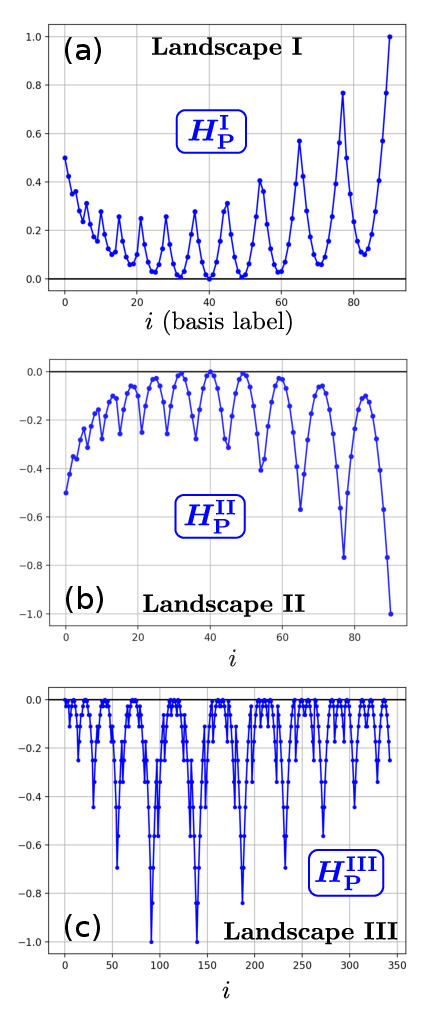
Figure 1: Panels (a)-(c) depict the rugged energy landscapes of problem Hamiltonians HPI to HPIII studied in the QA framework.
SU(3) Multiplet Structure and Nonlocal Drivers
Multiplet spaces in su(3) are parametrized by (p,q), leading to a multiplet dimension dm(p,q)=21(p+1)(q+1)(p+q+2). These states are organized in asymmetric hexagonal diagrams characterized by two quantum labels: su(2)0 and hypercharge su(2)1.
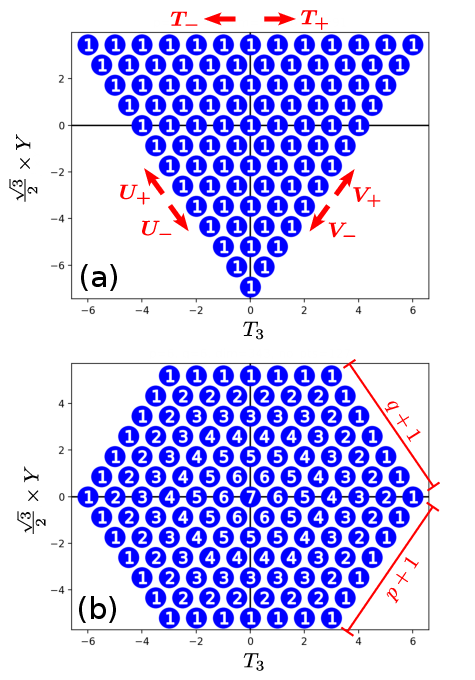
Figure 2: Multiplet diagrams for su(2)2 and su(2)3, visualizing the geometric relations in su(2)4-su(2)5 space.
The operators su(2)6, su(2)7, and su(2)8 formed from ladder operators show distinct connectivity. su(2)9 is tridiagonal and local (akin to su(3)0 in su(3)1), but su(3)2 and su(3)3 feature substantial off-diagonal elements, giving rise to nonlocal transport properties in multiplet space.
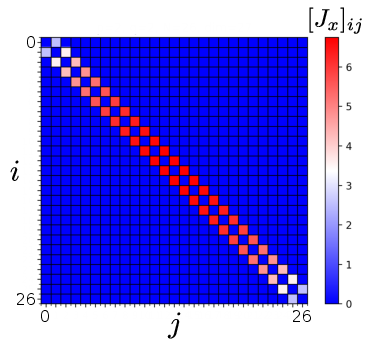
Figure 3: Tridiagonal matrix structure for su(3)4 exposes its local nature as a QA driver.
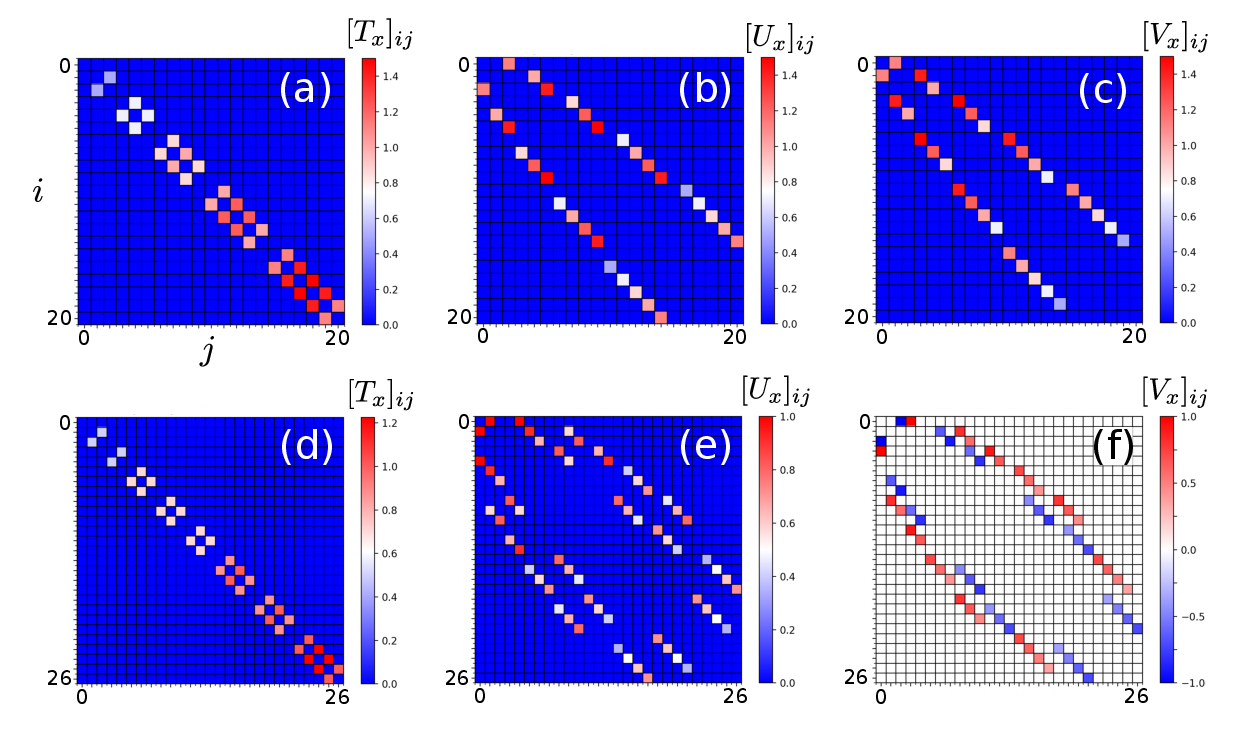
Figure 4: Heatmaps of su(3)5, su(3)6, su(3)7 matrices illustrate nonlocality as off-diagonal connections that directly link distant multiplet states in configuration space.
This nonlocality enables wavefunction transitions between distant minima without traversing intermediate states, providing mechanisms to circumvent trapping in rugged landscapes.
Numerical Analysis on Rugged Landscapes
Landscape I: Convex Basin with Rugged Interior
The problem Hamiltonian is set as a convex basin with interior valleys:
su(3)8
Single-driver QA (with su(3)9) exhibits multiple gap closures. Ground state transitions are abrupt and the wavefunction is trapped in local minima.
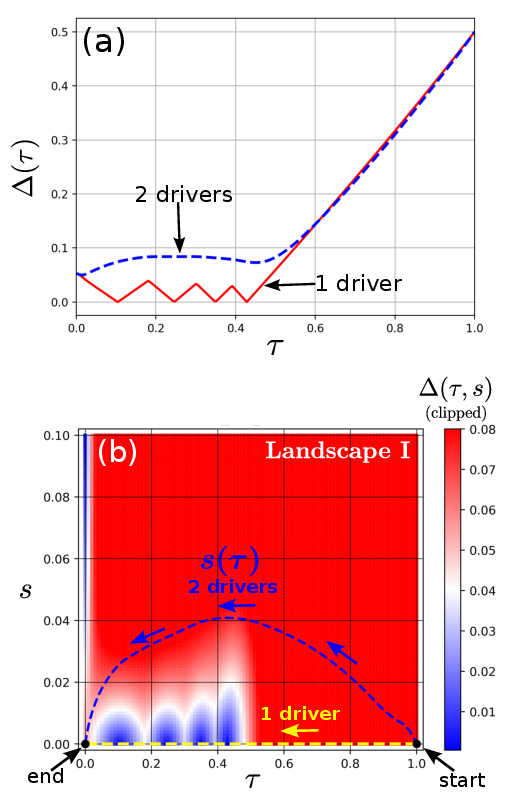
Figure 5: Multiple gap closures are apparent for single-driver Hamiltonian su(3)0, signifying first-order transitions.
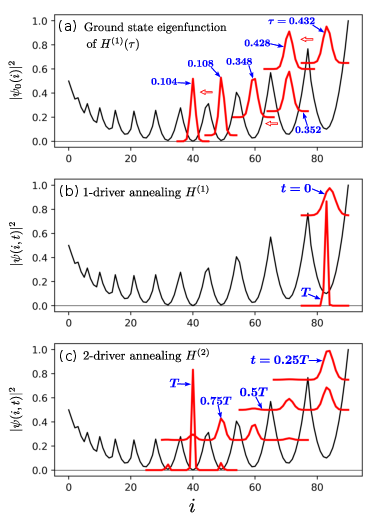
Figure 6: Ground state wavefunctions show abrupt localization shifts at gap closures, indicative of trapping.
Introducing a second driver su(3)1 and utilizing a two-parameter path in su(3)2 allows selection of trajectories in parameter space that avoid gap closures entirely. Along these paths, the wavefunction attains the global minimum efficiently, without reliance on tunneling, and the residual energy decays smoothly.
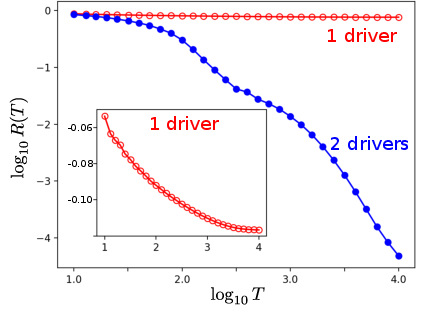
Figure 7: Residual energy curves highlight efficient annealing via nonlocal drivers; single-driver paths show stagnation, while two-driver paths facilitate steady decay.
Landscape II: Concave Envelope with Energy Barriers
Landscape II is su(3)3, shaped as a concave barrier separating deep minima—analogous to escaping spurious states in Hopfield systems. Single-driver Hamiltonians trigger gap closures, but two-driver combinations (su(3)4, su(3)5) and suitably chosen paths bypass these closures.
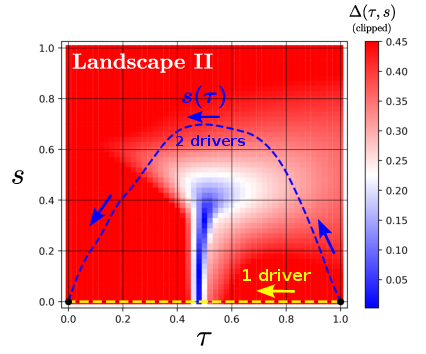
Figure 8: Vertical regions of gap closures highlight bottlenecks for single-driver annealing; curated paths avoid these regions.
Wavefunctions in multiplet space show nonlocal traversal across barriers, validating the utility of nonlocality.
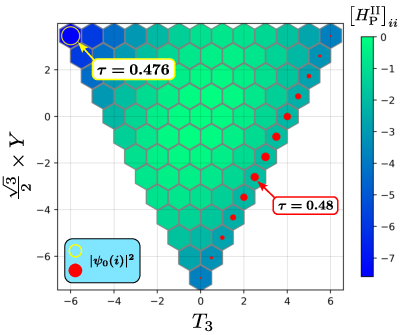
Figure 9: Ground state density in multiplet space reveals first-order transition across energy barrier.
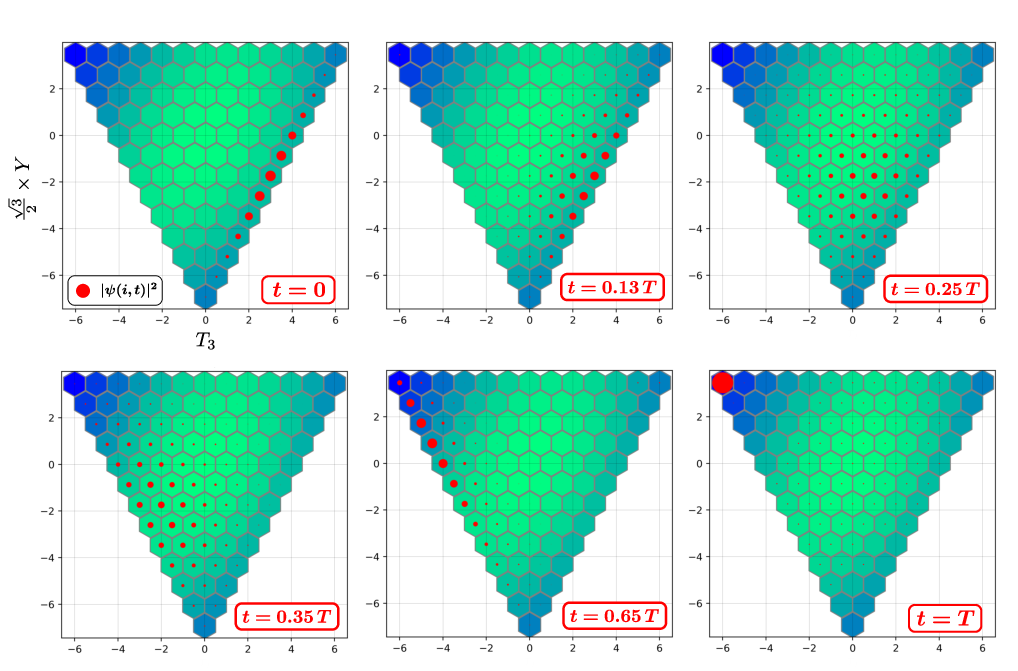
Figure 10: Time evolution demonstrates nonlocal escape from barriers and attainment of global minima with two-driver protocols.
Landscape III: Multi-layered Energy Surface
In su(3)6, the energy surface acquires multi-layered structure due to multiplicities. Landscape III requires both intra- and inter-basin optimization, challenging for local drivers.
Annealing along single-driver paths manifests sharp "V-shaped" gap closures and ground state jumps, emblematic of first-order transitions. By traversing gentler gradients on the gap landscape (two-driver su(3)7, su(3)8), these closures are lifted and bifurcating final states are achieved.
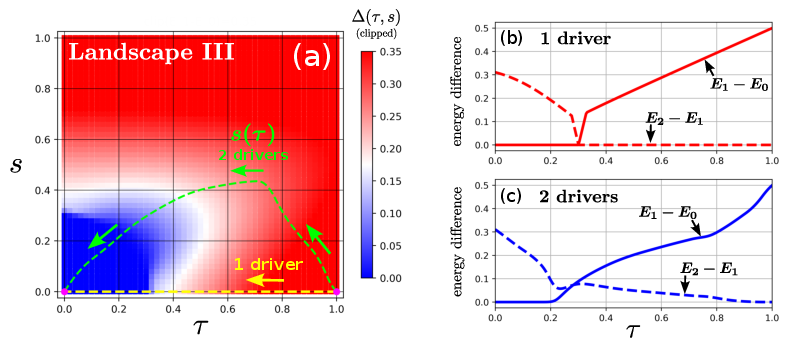
Figure 11: Gap landscape for two-driver Hamiltonian shows lifted degeneracies, avoiding simultaneous closure.
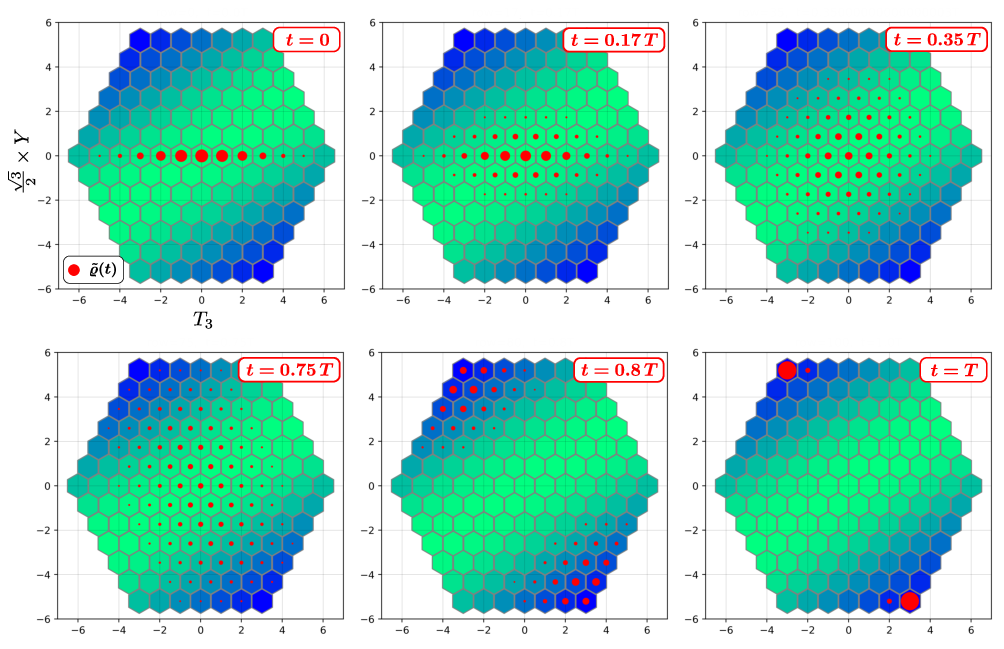
Figure 12: Annealing dynamics show bifurcation of density, achieving degenerate global minima.
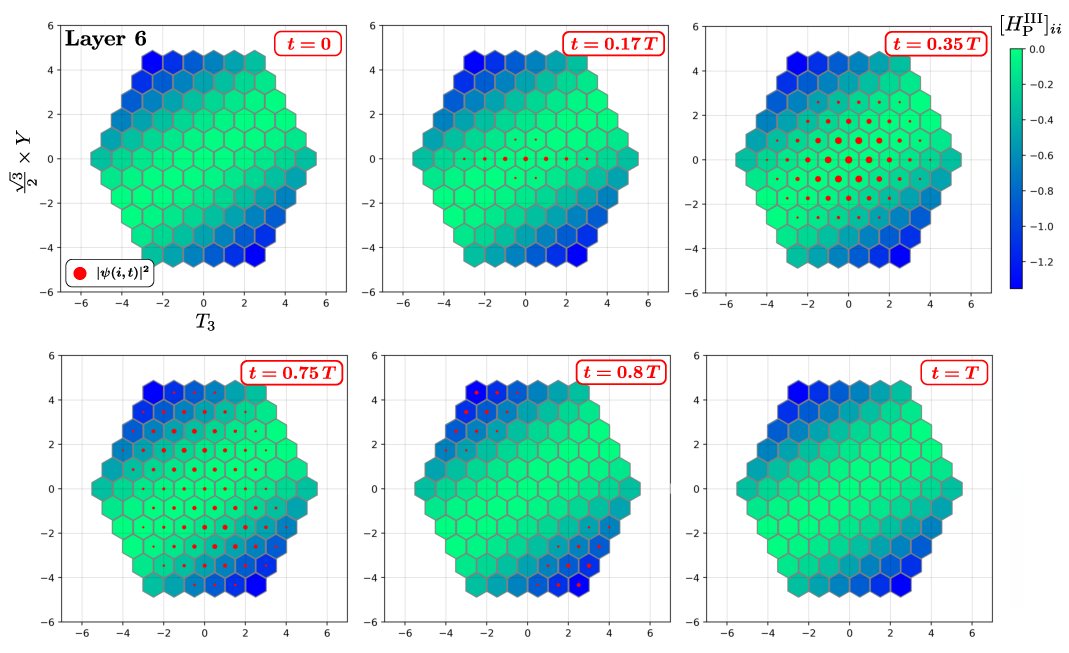
Figure 13: Layer-specific evolution reveals temporary diffusion into auxiliary layers, supporting global search.
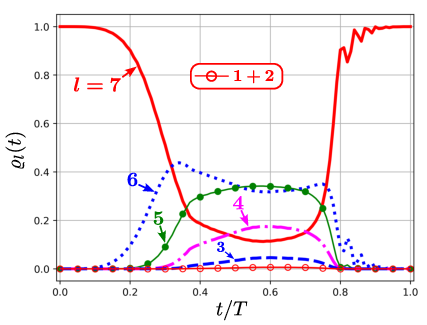
Figure 14: Probability dynamics across layers; nonlocal drivers enable exploration across all layers.
Comparative Analysis: SU(3) vs Conventional QA Drivers
Traditional QA drivers (su(3)9) perform reliably only for smooth landscapes; in rugged scenarios, su(2)0 and its combinations with antiferromagnetic terms su(2)1 are prone to gap closures and trapping.
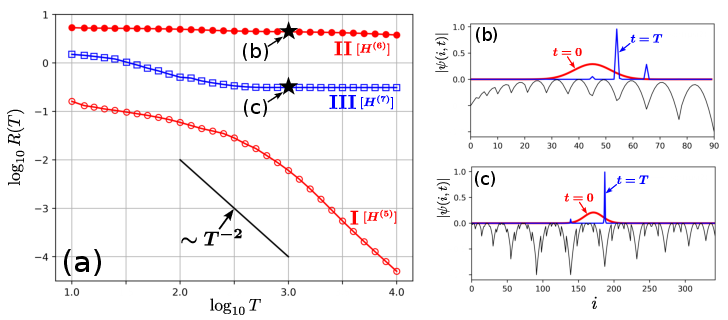
Figure 15: Residual energy traces for su(2)2 show stagnation in rugged landscapes; systems remain localized in non-global minima.
In contrast, su(2)3 drivers consistently avoid gap closures and facilitate attainment of global minima, even for increasing multiplet size where su(2)4 exhibits erratic and unpredictable performance.
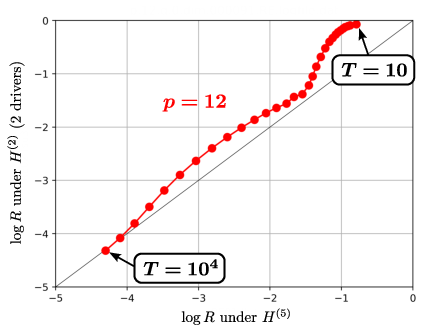
Figure 16: Comparison between su(2)5 for su(2)6 and su(2)7 highlights comparable performance only in simple landscapes.
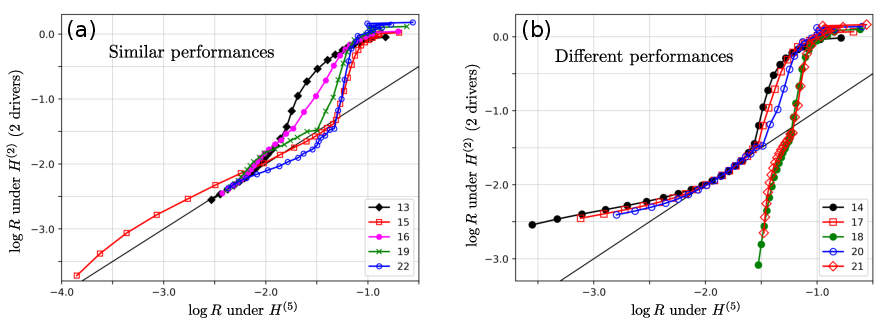
Figure 17: Multiplet size variations lead to robust decay in su(2)8 under su(2)9, whereas HPI0 performance is non-monotonic.
Augmenting HPI1 with nonlocal SU(3) drivers (e.g., HPI2) markedly improves outcomes but still falls short compared to pure HPI3 two-driver protocols.
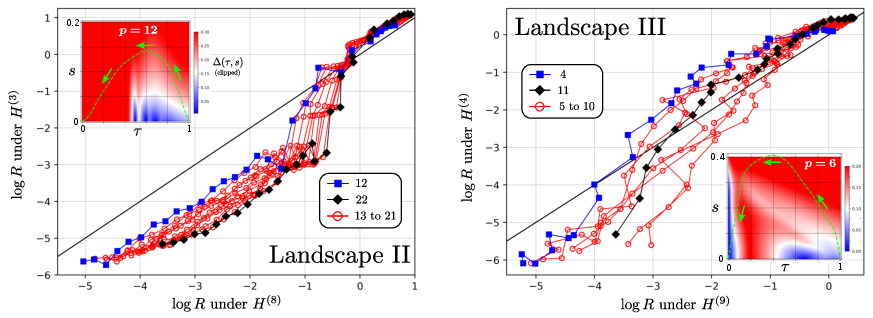
Figure 18: Two-driver HPI4 outperforms HPI5+SU(3) in residual energy across all landscapes.
Attempts to employ antiferromagnetic drivers HPI6 in rugged scenarios are fundamentally flawed, with gap landscapes exhibiting "chasms" that cannot be avoided, making these ineffective for QA.
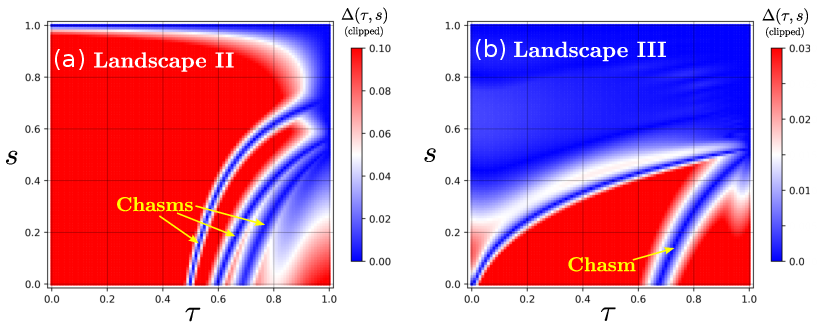
Figure 19: Gap landscapes for HPI7 drivers show unavoidable closures, negating their usefulness in complex energy surfaces.
Theoretical and Practical Implications
The HPI8 QA framework enables efficient optimization in intermediate-complexity systems, addressing bottlenecks inherent to spin glass and Hopfield-type models. The nonlocality of HPI9 drivers produces wavefunction dynamics that can escape local minima, circumventing first-order transitions without necessitating quantum tunneling. This algebraic approach is scalable due to conserved Casimir invariants and tractable multiplet dimensions.
Future developments may include automated pathfinding in parameter space (e.g., via Dijkstra algorithmic search), variational optimization, and analytical treatments using many-body representations or mean-field path integrals. A systematic driver selection criterion based on Frobenius-norm measures of noncommutativity with the problem Hamiltonian is suggested for further exploration.
Conclusion
The manuscript rigorously demonstrates the advantages of quantum annealing in HPIII0 multiplet space with nonlocal drivers. Numerical evidence is provided for robust avoidance of gap closures and efficient attainment of global minima in rugged landscapes. The nonlocal features of HPIII1 ladder operators fundamentally enhance QA performance beyond what is possible using conventional local drivers. The theoretical framework and its practical implications suggest promising avenues for scalable optimization in quantum computational settings, with broader applicability to artificial intelligence and condensed matter systems.