- The paper demonstrates that multiwavelength monitoring reveals a prolonged rebrightening phase and sustained AGN accretion, challenging standard TDE paradigms.
- X-ray spectral analysis shows an initial soft excess evolving to a hard spectrum with a delayed peak, supporting continuous accretion rather than a transient event.
- Radio SED modeling uncovers a dual-component synchrotron outflow, with equipartition analysis indicating outflow-cloud interactions that regulate AGN variability.
Multiwavelength Rebrightening and Outflow Dynamics in a Partially-Obscured Extreme Changing-Look AGN
Introduction and Context
The subject of this study is SDSS J154843.06+220812.6, a nuclear transient initially flagged for a mid-infrared (MIR) outburst and radio variability in a nearby galaxy. This event has been systematically monitored across optical, MIR, X-ray, and radio bands, spanning ∼2500 days post-discovery. The source's observational properties challenge canonical transient classification, displaying characteristics inconsistent with both classical tidal disruption events (TDEs) and established changing-look AGNs (CLAGNs). This essay critically summarizes the paper's multiwavelength datasets, spectral analyses, equipartition modeling, and physical implications for AGN accretion and outflow phenomena.
MIR and Optical Light Curve Evolution
The MIR light curve exhibits a rise to peak over ∼1090 days, followed by a slow decline, yet remains above pre-flare baseline even six years post-outburst. Blackbody fits yield Tbb≈1000 K and Rbb≈0.05 pc, corresponding to a MIR luminosity near 2×1043 erg/s (0.1 LEdd for a BH mass of 105.87 M⊙). Notably, there is no optical counterpart, suggesting either intrinsic weakness or significant dust absorption, with partially-covering obscuration preferred given persistent broad-line and coronal emission in subsequent optical spectra.
X-Ray Spectral and Temporal Behavior
Rigorous spectral analysis of XMM-Newton, Swift/XRT, and Einstein Probe/FXT observations reveals a complex evolution. The X-ray spectrum initially exhibits a soft excess, requiring both an absorbed power-law (Γ=1.8) and blackbody (kT=0.115 keV) in the XMM-Newton epoch. Subsequent Swift and EP/FXT epochs display pronounced spectral hardening (Γ∼0.9) at ∼0 confidence with little change in column density. The X-ray flux undergoes a protracted rise (∼11000 days), peaking at ∼2 days with ∼3 erg/s (∼4), followed by slow decline, remaining in a high state (Figure 1).
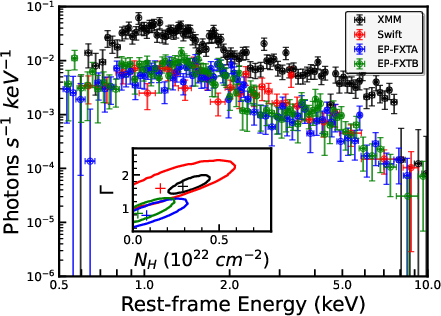
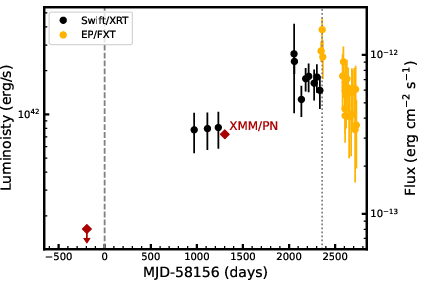
Figure 1: Composite X-ray spectra across XMM-Newton, Swift, EP-FXTA/B epochs showing spectral evolution and light curve with late-time flaring.
Gaussian-rise and power-law decay fits to the X-ray light curve produce statistically superior results over classical TDE models (∼5), highlighting an unusually long rise timescale and supporting sustained accretion activity beyond transient TDE paradigms.
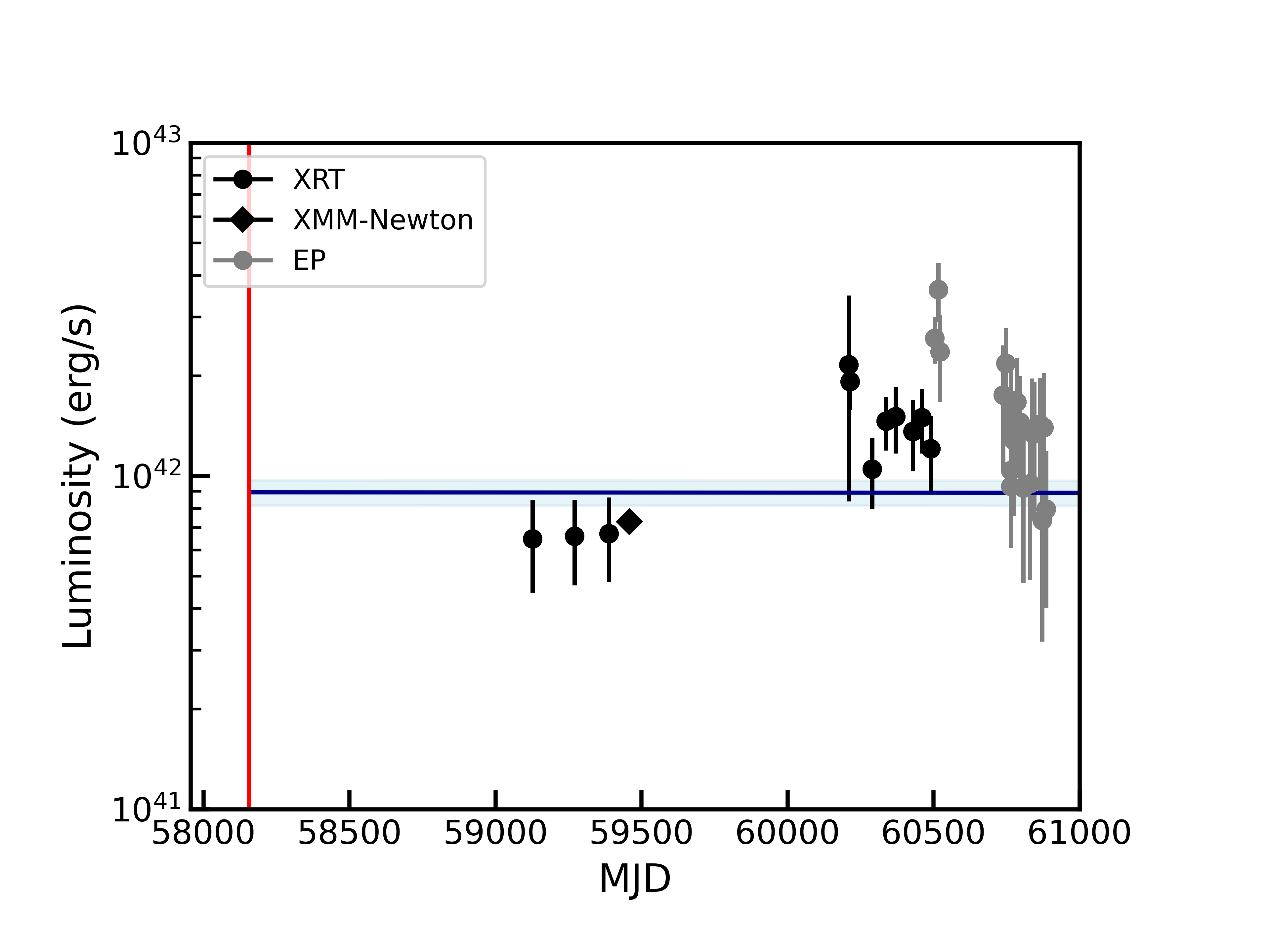
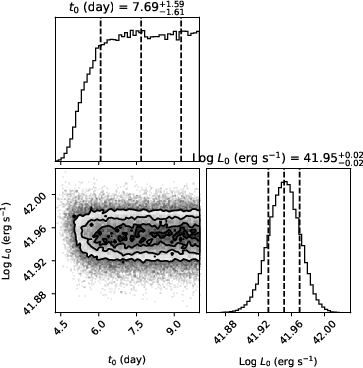
Figure 2: Power-law decay fits to X-ray light curve illustrating model uncertainties and parameter posteriors.
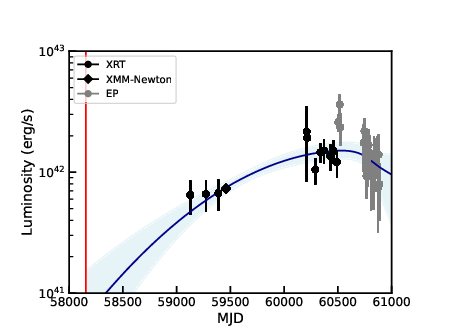
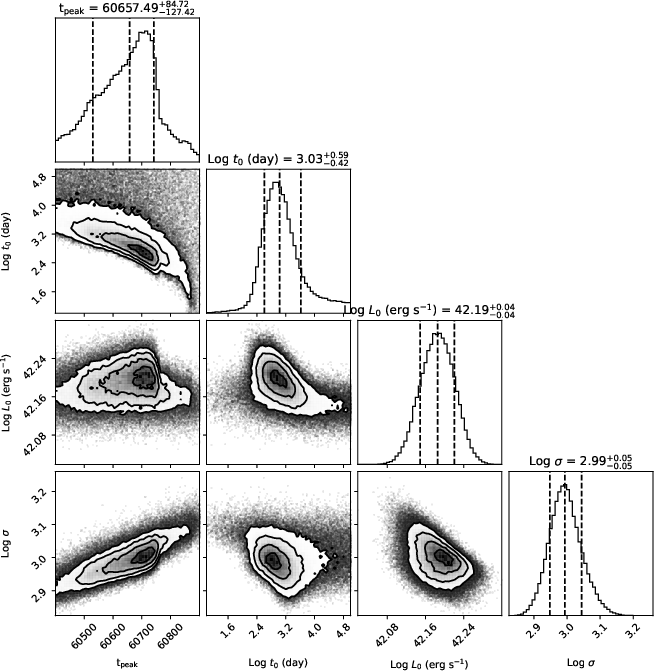
Figure 3: Gaussian-rise plus power-law decay model for X-ray light curve, demonstrating improved fit for delayed X-ray peaking.
Radio SEDs: Evidence for Multi-Component Synchrotron Outflows
Radio monitoring with VLA and uGMRT uncovers a double-peaked spectral energy distribution (SED) spanning 0.65–15 GHz, requiring a two-component synchrotron model rather than single-component standard blastwave theory. Initially, a steep rise in 3 GHz flux (∼6) is observed, well in excess of theoretical expectations for outflows in uniform media. Radio rebrightening is detected at ∼7 GHz around ∼8 days, coincident (within sparse sampling) with the X-ray flare, strongly favored by ∼9 significance (Tbb≈10000).
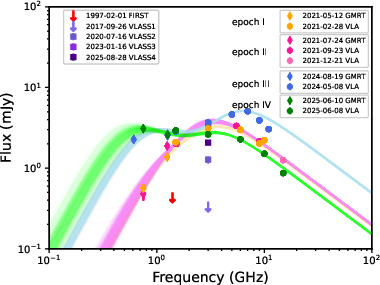
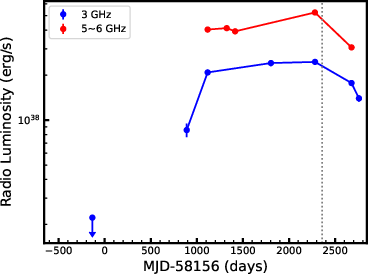
Figure 4: Four-epoch radio SED showing dual synchrotron peaks and temporal evolution; right panel displays radio light curve with late-time rebrightening aligned with X-ray flare epoch.
Multi-epoch SEDs, modeled via MCMC techniques, show temporal evolution of both low-frequency (Component 1) and high-frequency (Component 2) peaks. Component 1 exhibits increasing equipartition radius and energy, signifying ongoing outflow expansion; Component 2's radius and energetics remain nearly constant or decrease, inconsistent with classical outflow-CNM interaction and indicative of environmental effects such as shock-cloud interaction.
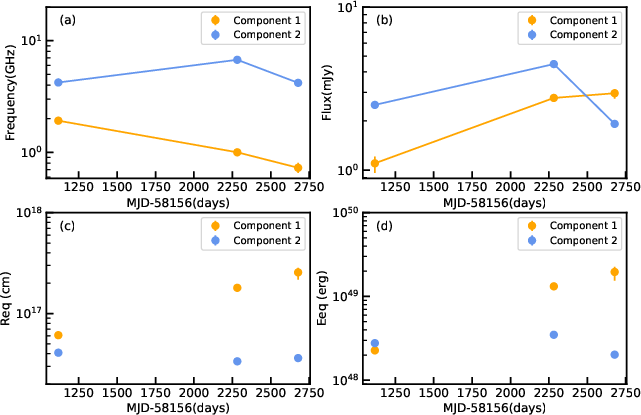
Figure 5: Equipartition analysis displaying temporal trends in peak frequency, peak flux, radius, and minimum energy for both synchrotron components.
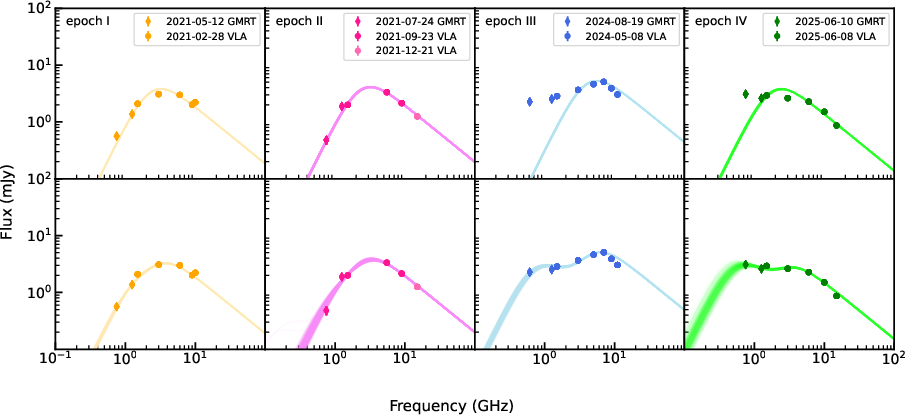
Figure 6: Radio SED fits comparing single-component versus two-component models; two-component fits strongly preferred under AIC/BIC.
Optical Spectral Variability: Emission Line Echoes
Follow-up optical spectroscopy reveals a persistent, transient enhancement in broad HTbb≈10001 and high-ionization coronal lines ([Fe X], [Fe XI]), with flux rising by factors Tbb≈10002 above pre-flare limits and lasting Tbb≈10003 years. This longevity of emission-line echoes, together with non-detection of characteristic TDE lines (He II 4686, N III 4640), further disfavors a TDE origin and indicates sustained photoionization by central source X-rays.
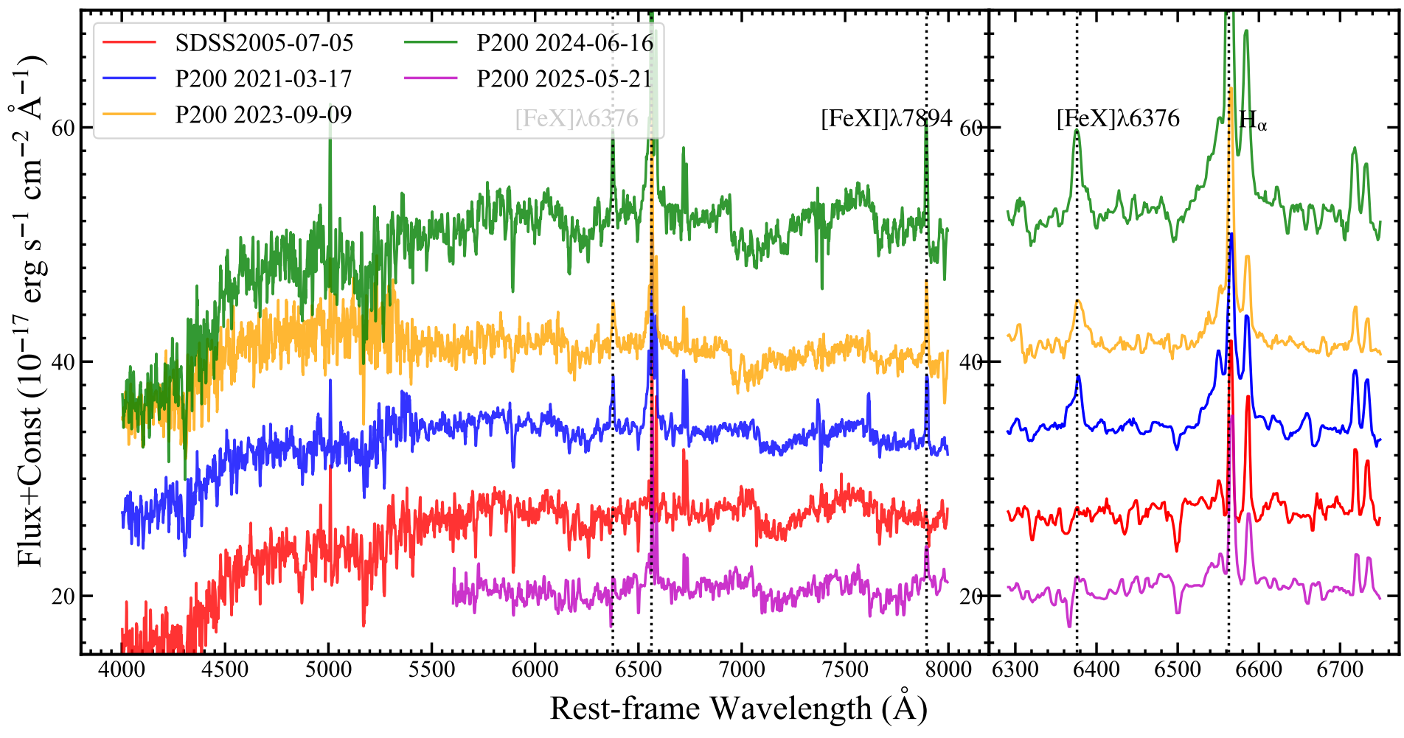
Figure 7: Optical spectral evolution highlighting emission line variability and key diagnostic transitions.
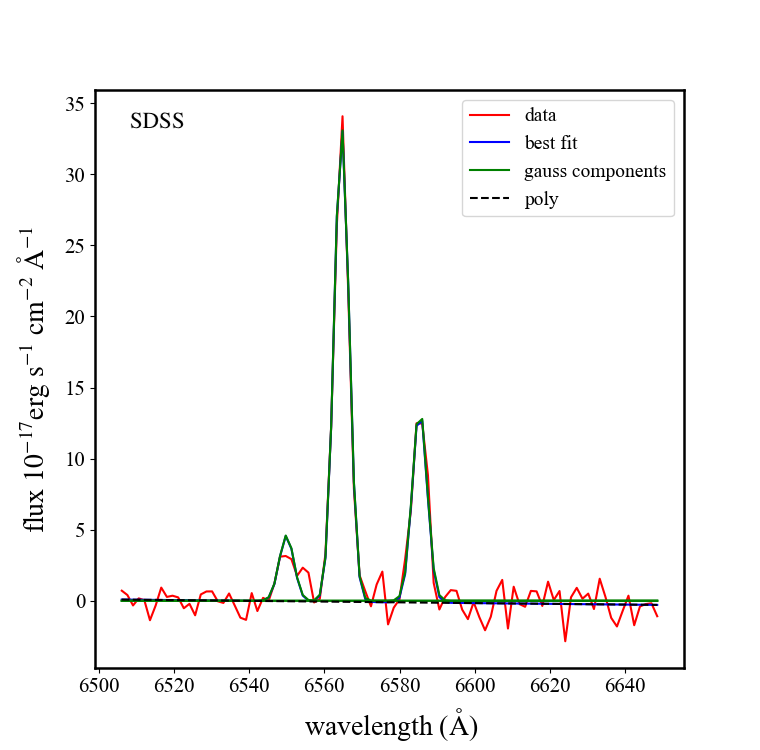
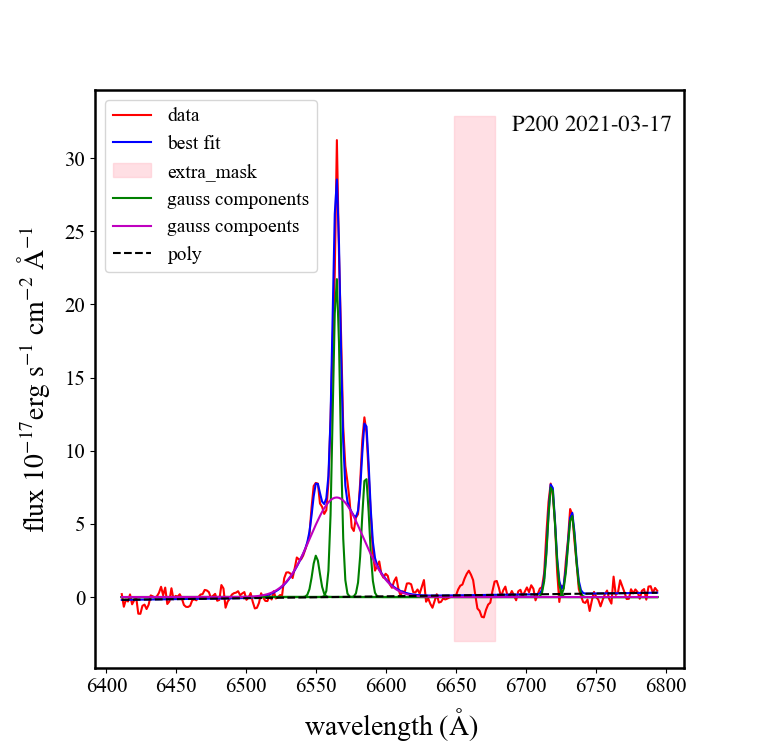
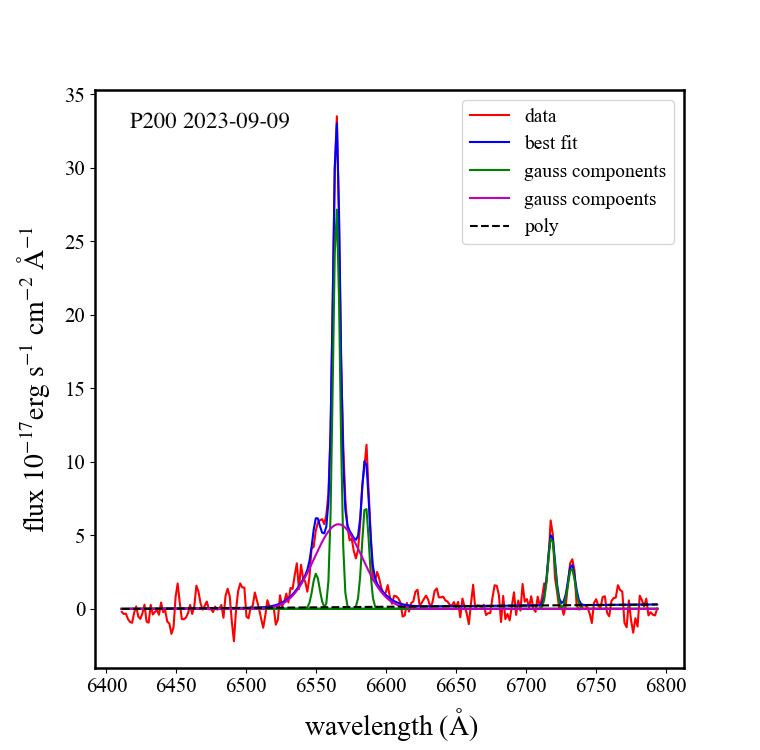
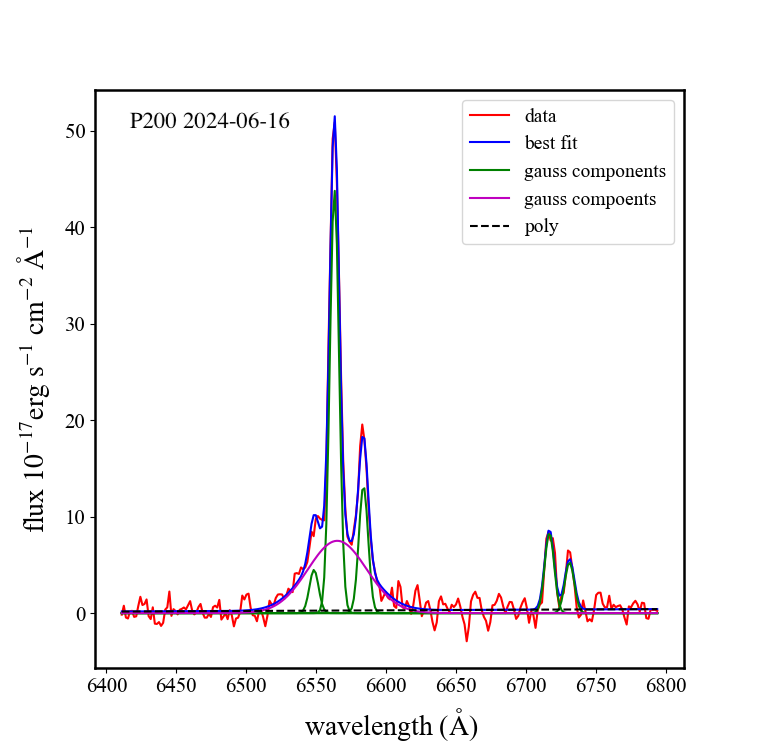
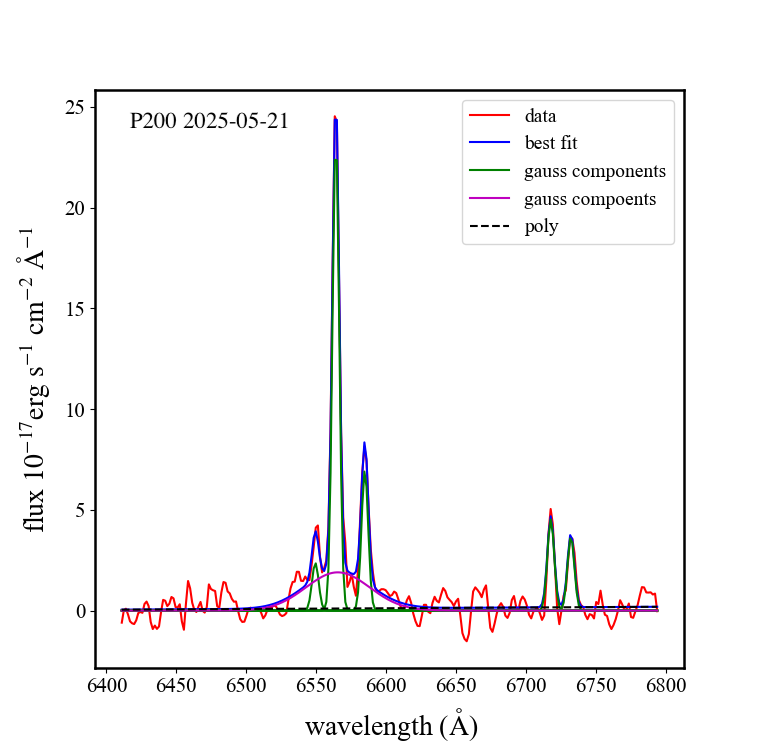
Figure 8: Detailed HTbb≈10004 fitting for five epochs, tracking broad and narrow components.
Discriminating Between TDE and CLAGN Origin
Comprehensive analysis of MIR color variation rates (CVR), X-ray spectral hardness, emission-line diagnostics, and radio properties demonstrates incompatibility with classical TDEs. The MIR color turns blue slowly (Tbb≈10005 mag/yr), far below TDE thresholds (Tbb≈10006 mag/yr), and falls within CLAGN probability regions.
(Figure 9)
Figure 9: MIR color-CVR distribution for TDE/CLAGN classification, with Tbb≈10007 marked distinctly as a CLAGN outlier.
Sustained, slow-evolving X-ray and MIR emission, hard X-ray spectral slopes, broad and coronal emission lines, and absence of TDE spectral fingerprints all point to the source as an extreme, partially-obscured changing-look AGN.
Physical Implications: Outflow, Cloud Interaction, and Environmental Regulation
The dual-peaked radio SED, late-time radio and X-ray flares, and equipartition energetics suggest the presence of a nascent outflow interacting with a circumnuclear medium containing dense clouds. State-of-the-art hydrodynamic simulations corroborate that bow shocks formed at cloud boundaries can generate both radio and X-ray transients, explain the observed SED broadening and equipartition radius stasis, and drive high-ionization emission lines through photoinization.
The possibility of a new outflow launched at late epochs is considered but rejected based on equipartition radius evolution and lack of corresponding X-ray transient origin.
Conclusion
This multiwavelength campaign establishes SDSS J154843.06+220812.6 as a rare, partially-obscured extreme changing-look AGN undergoing prolonged, sustained accretion outbursts with atypical radio and X-ray evolution. The event's slow MIR and X-ray rise, persistent high-state emission lines, and unique double-peaked radio SED, together with evidence for late-time rebrightening via outflow-cloud interaction, suggest environmental regulation of AGN changing-look phenomena. Continued monitoring and spatially resolved mapping of the pc-scale dust/gas distribution will be essential for elucidating the mechanisms controlling AGN state transitions and outflow feedback.