- The paper establishes explicit formulas for the ℓ1 isoperimetric profile in double tilings, detailing regime transitions and unique minimizers.
- It applies rigorous variational methods to analyze both rectangular and general lattice configurations, highlighting anisotropic rigidity.
- The work extends to local minimality and nonperiodic limits, with potential applications in materials design and crystallography.
Anisotropic Isoperimetric Double Tilings under the ℓ1 Perimeter
This work rigorously addresses periodic double tilings of the plane that minimize total interface energy with respect to anisotropic norms, focusing specifically on the Manhattan (ℓ1) perimeter. The paper aims to explicitly determine the (G,ℓ1)-isoperimetric profile for periodic double tilings relative to a given lattice G, and further considers the minimization problem among all planar lattices. The primary objects of study are two-region (N=2) planar tilings, a direct generalization of the periodic isoperimetric problem for single domains, now allowing for two repeating cell types with arbitrary area constraints.
The main motivations stem from geometric measure theory (multi-phase isoperimetric clusters) and variational problems in discrete geometry, such as the planar Kelvin problem. The work is situated in the rapidly developing theory of isoperimetric partitions for anisotropic interfacial energies, leveraging and extending techniques from the study of crystalline perimeters and Wulff shapes.
Main Theoretical Results
Isoperimetric Profile for Rectangular Lattices
The authors derive an explicit, piecewise formula for the isoperimetric profile IG,ℓ1(x), the minimum total ℓ1-perimeter of a plane periodically tiled by two regions with areas x and $1-x$, under a rectangular lattice G with prescribed generators ℓ10, ℓ11 (with ℓ12, ℓ13):
ℓ14
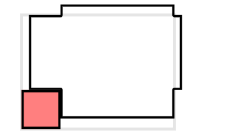
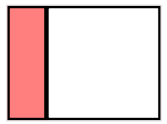
Figure 1: Isoperimetric profile ℓ15 as a function of ℓ16, with insets showing the optimal configurations in each regime.
There is a distinct regime transition as a function of the small cell area ℓ17: for ℓ18 small, an isoperimetric tiling arises from a square (of area ℓ19) and a "chipped rectangle" (the remainder of the fundamental cell); for larger (G,ℓ1)0 the minimizers become two adjacent rectangles.
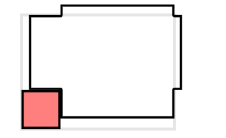
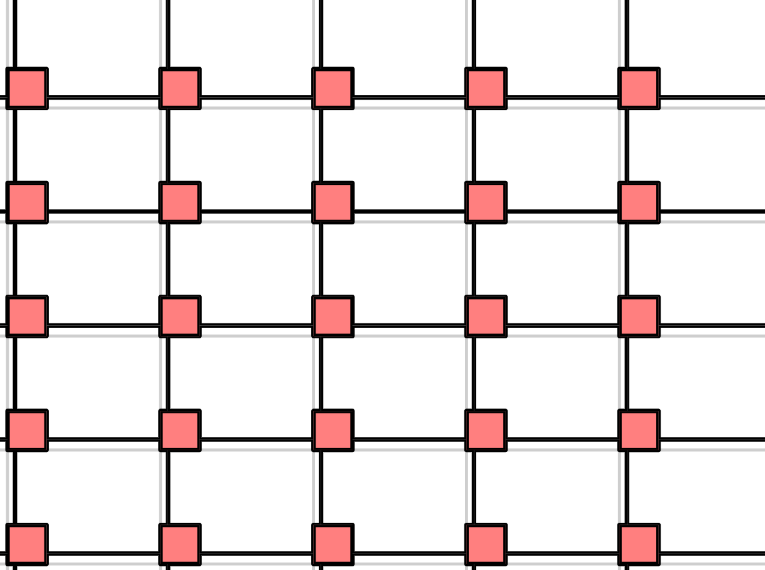
Figure 2: The (G,ℓ1)1-isoperimetric double tiling generated by a square and a chipped rectangle.
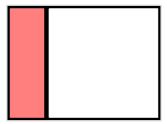
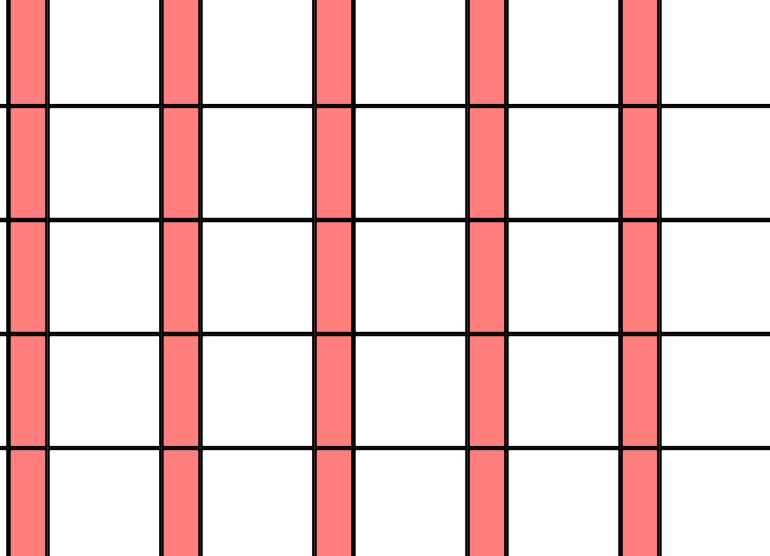
Figure 3: The (G,ℓ1)2-isoperimetric double tiling generated by two adjacent rectangles.
The transition point at (G,ℓ1)3 corresponds exactly to the area where the perimeters of both configurations are equal. The paper also proves that these minimizers are unique (modulo translation) within each regime.
Explicit Minimization Over All Lattices: Pythagorean Double Tiling
Moving beyond rectangular lattices, the authors consider the global minimization of the (G,ℓ1)4-isoperimetric profile (G,ℓ1)5 over all planar lattices of unit area. The analysis reveals a strong rigidity result: the infimum is always achieved by the so-called "Pythagorean double tiling," in which the plane is tiled by two axis-aligned adjacent squares whose side lengths correspond to (G,ℓ1)6 and (G,ℓ1)7.
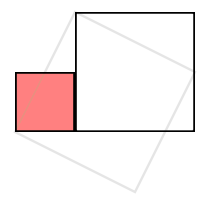
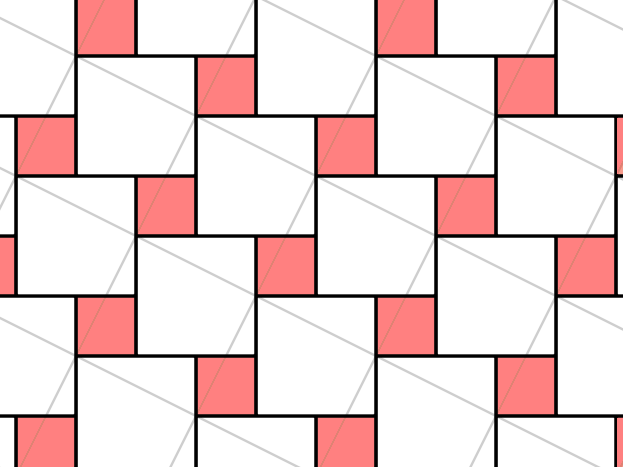
Figure 4: The Pythagorean double tiling realized by two axis-aligned adjacent squares.
The isoperimetric profile in this optimal case is given explicitly by:
(G,ℓ1)8
in complete agreement with the equality case for the planar Wulff ((G,ℓ1)9) isoperimetric inequality. Uniqueness holds except for the symmetric case G0, where strips of squares constitute further minimizers, reflecting the non-strict convexity of the squared perimeter in this regime.
Limiting Nonperiodic Partitions and Local Minimality
The study extends to the description of nonperiodic limiting clusters obtained by sending one cell's area to infinity while keeping the other fixed (G1, G2). Such partitions are proven to be locally G3-isoperimetric. The authors classify these partitions, which may comprise, e.g., the union of a finite square (the Wulff cell) and four unbounded connected components, as depicted below.
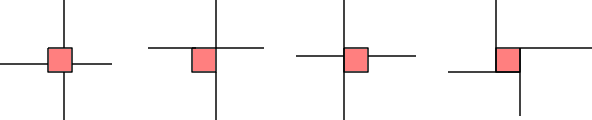
Figure 5: Local structure of limiting partitions as one cell's area diverges; various cases from the small cell/chipped rectangle construction and the Pythagorean-type "vortex."
A separate configuration occurs for the symmetric and degenerate case (equal-area cells, G4), where analogues of "wall" tilings are possible.
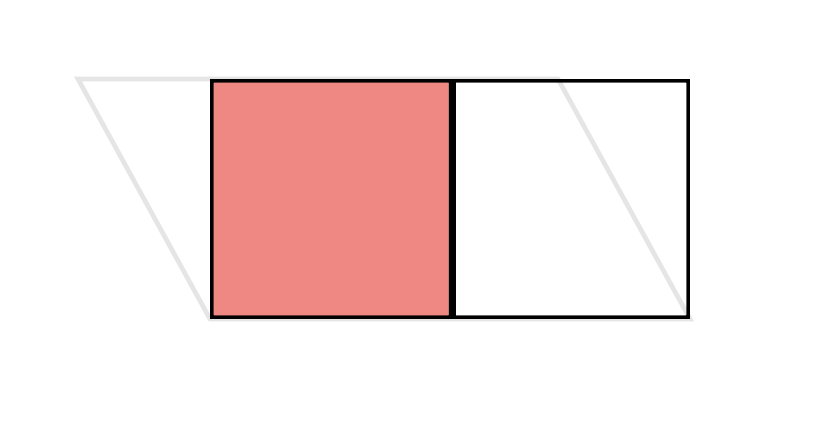
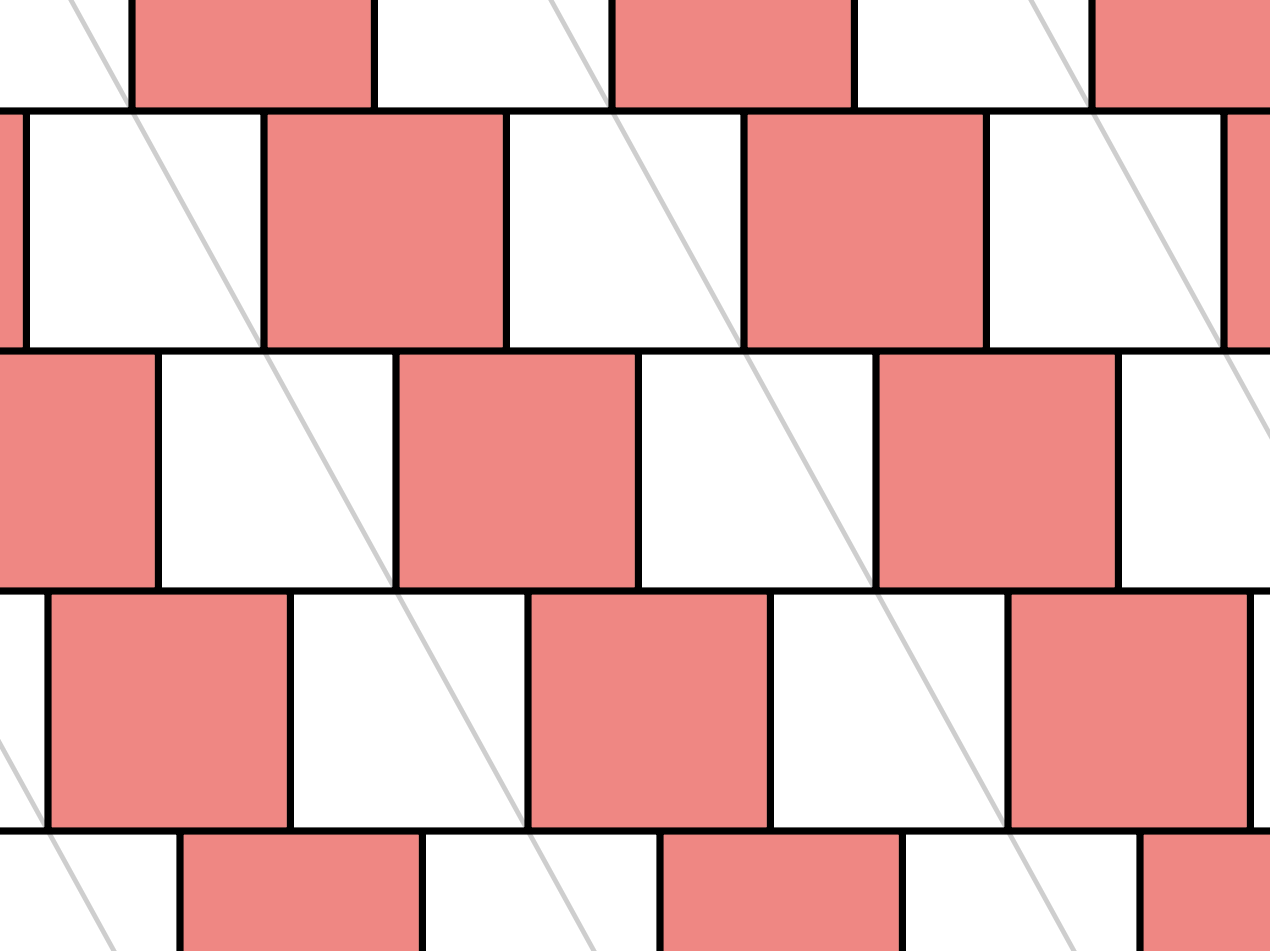
Figure 6: A double tiling of two equal-area cells with matching perimeter to the Pythagorean tiling.
Topological and Regularity Properties
A detailed analysis of the regularity and topology of isoperimetric tilings is carried out. For planar G5-isoperimetric double tilings with open, bounded generators (the typical situation in minimizers), each generator is shown to be connected and essentially a geometric rectangle or square, depending on the area regime, reflecting the anisotropic geometry induced by the Manhattan norm. This rigidity is a consequence of the equality cases in side-projected perimeter estimates, and majorizes the flexibility seen in isotropic (G6) cases.
Implications and Future Directions
On the practical side, the explicit classification and uniqueness of anisotropic isoperimetric tilings could inform the design of materials and tessellations with prescribed interface energies. The analysis establishes a robust mathematical framework for studying minimal interface partitions under anisotropic surface tensions, relevant for crystallography and materials science, especially for lattice-based processes.
Theoretically, the results contribute to a deeper understanding of multi-bubble type problems in the anisotropic context, showing that the interplay between periodicity constraints and anisotropy can result in strong structural rigidity—contrast this with the richer set of possible minimizers for isotropic energies. Furthermore, the rigidity of the G7 case (lack of rotational symmetry, uniqueness of axes-aligned squares) provides a stark comparison to the classical honeycomb theorem of the isotropic case.
Potential extensions include the analysis of higher-order tilings (more than two regions), higher dimensions, other anisotropies (e.g., polygonal norms), non-convex cells, and nonlocal perimeters. The classification of local versus global minimizers, and the structure of minimizers in the presence of volume or homotopy constraints, remain compelling directions for further inquiry.
Conclusion
This work provides a definitive characterization of anisotropic isoperimetric double tilings of the plane for the G8 (Manhattan) perimeter, both for a fixed rectangular lattice and among all planar lattices. The study not only gives explicit formulas for the isoperimetric profiles and the geometry of optimal partitions but proves strong uniqueness and regularity theorems. The optimal configurations are shown to be highly rigid and aligned with the coordinate axes, a direct consequence of the anisotropy of the perimeter functional. These advances consolidate the theory of anisotropic multi-region partitioning problems and suggest new avenues in the calculus of variations and discrete geometry (2607.10636).